I’ve previously worked for eXputer as a Senior News Writer for several years. Now with Tech4Gamers, I love to devoutly keep up with the latest gaming and entertainment industries. I have a Bachelor’s Degree in Computer Science and years of experience reporting on games and breaking exclusive stories. Besides my passion for gaming journalism, I love spending my leisure time farming away in Stardew Valley. VGC, IGN, GameSpot, Game Rant, TheGamer, GamingBolt, The Verge, NME, Metro, Dot Esports, GameByte, Kotaku Australia, PC Gamer, and more have cited my articles.
Story Highlight
Resident Evil Requiem has become the fastest-selling title in the franchise, selling 5 million copies at launch.
It surpassed the previous record holder, Resident Evil 6, which shipped 4.5 million units after release.
Furthermore, the title has outperformed the Resident Evil 4 remake, which took 4 months to reach 5 million sales.
Resident Evil Requiem isn’t doing too badly on the commercial front either. The game sold out across most physical retailers even before launch, and according to Capcom, the horror title has now surpassed 5 million sales since launch.
Why It Matters: A legacy single-player franchise breaking sales records in a market where all publishers are looking for a live-service hit is a big indictment of the industry’s current strategy.
As revealed by Capcom in a press release, Resident Evil Requiem has become the fastest-selling game in the series, shipping 5 million copies in just 5 days. The sequel has overtaken the first week sales of the previous record holder, Resident Evil 6, which sold 4.5 million units when it came out in 2012.
Furthermore, Resident Evil Requiem commercially outperformed the RE4 remake by a huge margin, selling 2 million copies more in its first week. Moreover, it took Resident Evil 4 remake 4 months to reach 5 million sales, a milestone Requiem has achieved in 5 days.
In the press release, Capcom attributed the record-breaking success of Resident Evil Requiem to the critical acclaim it received before launch, as reviews called it the perfect blend of action and survival horror.
The game has now broken several commercial and critical franchise records.
Do you think Resident Evil Requiem is a GOTY contender after its overwhelming success? Tell us in the comments below or head to the Tech4Gamers forum for discussion.
At Tech4Gamers, I contribute as a Senior News Reporter, combining my skills and gaming enthusiasm to keep our audience updated on the latest developments.
Story Highlight
A known insider says that Capcom has begun production of Resident Evil 1 Remake.
The game is still in the early stages of development, and it could take 4 to 7 years to be completed.
Capcom is also said to be working on Resident Evil Zero and Code Veronica remakes.
Following Resident Evil Requiem, excitement for the franchise is at an all-time high. Before Requiem, Capcom was already on a roll, thanks to the success of Resident Evil 4 Remake, and it’s clear that the Japanese giant intends to continue this momentum.
New reports from a reliable source now confirm that multiple Resident Evil remakes are being worked on by Capcom. Among these, one of them is a remake of the very first title of the series.
Why it matters: Capcom began its big-budget remake spree with Resident Evil 2, leaving fans of the very first entry longing for similar treatment.
Resident Evil 1 Remake Is In The Works | Image via Twitter
As reported by Dusk Golem, the same insider who confirmed Leon’s return in the series’ latest release, Resident Evil 1 Remake has entered production.
The insider notes that this project is anywhere from four to seven years out at the time of writing. For context, Resident Evil 0 and Code Veronica are said to be the next two remakes for the series.
Dusk Golem also admitted that there is a possibility that this remake could be cancelled early in production, stating that Capcom has a tendency to do so for its projects.
Resident Evil 1 Remake Could Be Another Big Success For The Team
Interestingly, this would not be the first time Capcom would remake Resident Evil 1. The original title was already remade over two decades ago, but this particular re-release would be a much more ambitious project.
Fans can expect Capcom to utilize the RE Engine and give Resident Evil 1 Remake the premium treatment if the title does indeed see the light of day.
At T4G, my task is to cover the latest news around the gaming globe ASAP and with the utmost precision. I adore all the games and respect all the devs behind the amazing games that we get all year. So, whether it’s a PC or a Console game, I got it all covered.
Story Highlight
Wildlight Entertainment has announced that Highguard servers are shutting down on March 12.
They weren’t able to maintain a healthy player base, so they can’t support it further.
It will receive one final content update before being shut down for good.
Highguard was among the most controversial releases in recent months. It was put in a very weird position, after its The Game Awards finale announcement and dubbed as Concord 2.0, and it is now suffering a similar fate.
Wildlight Entertainment has confirmed that Highguard is shutting down on March 12. The game was a colossal failure despite having a nice debut with over 100K players, but just after a couple of weeks, it lost 99% of its player base.
Why it matters: Highguard might not have garnered this much attention if it hadn’t gotten that TGA finale spot. However, it crumbled under all the pressure and couldn’t carry on much further.
Wildlight is officially shutting down Highguard after just over a month
Highguard was released on January 26, so it is shutting down for good just over a month later. This comes after the studio promised to support the title and even add a single-player mode down the line.
The studio penned a note of X, saying that due to a faltering player base, they are unable to continue supporting the game. The servers will go offline from March 12. But there will be one last update that adds new content.
The title was already being labelled Concord 2.0 before release
Highguard’s failure also put the studio in a very weird spot, which led to most of the developers being laid off. The studio blamed the audience for the failure, citing that all the hate was totally unwarranted.
Nonetheless, while Highuard did technically better than it, it has now officially taken the ‘Concord 2.0′ label, after being announced to be shutting down just over a month after launch.
Currently serving as a News Reporter at Tech4Gamers, I have the privilege of combining my love for gaming with the art of storytelling. My role involves crafting engaging narratives that keep our audience abreast of the latest developments in the gaming world.
Story Highlight
Testing revealed that the CPU cores in Nvidia’s GB10 superchip deliver desktop performance on par with AMD and Intel’s CPUs.
Since it is based on ARM, it isn’t the best for the desktop market.
That said, Nvidia does plan to enter the desktop CPU market soon.
While traditionally known as a desktop GPU-maker, Nvidia has seemingly evolved beyond its status with a heavy emphasis on the enterprise market, becoming the leading force in the AI push.
The company also just recently launched the GB10 Grace Blackwell Superchip, aiming to bring data-centre-level performance into mini PCs. Now, a new analysis has delved deeper into the SoC and revealed that the CPU cores in the superchip deliver desktop-class performance on par with AMD and Intel’s offerings.
Why it matters: Nvidia’s entry into the CPU market could pose a serious threat to AMD and Intel, the latter of which has already been struggling against Team Red.
The Shift To ARM-Based Chips Is Changing The Future For Portable Gaming Machines
Analysts at Chips and Cheese found that Cortex X925, the cores used in the GB10 Grace Blackwell Superchip, rivals Zen 5 and Intel’s Lion Cove CPUs. The cores designed by ARM are specifically licensed for the GB10 SoCs.
This is the same reason barring Nvidia from entering the desktop CPU market. The lack of an x86 architecture means the Cortex X925 will be unable to directly compete with AMD and Intel, since emulation will incur a significant performance hit.
That said, the GB10 has been exclusively made to be used in these mini data centers-esque systems for software engineers.
Nvidia And Intel’s Partnership Is Mainly Focused On Enterprise
That said, the tech giant has confirmed that their upcoming N1 chips are based on the GB10. The N1 chips have been facing engineering issues, but that makes sense considering it’s Nvidia’s first venture into the consumer processor market, and we’ll get to see what they’ve been working on with new handhelds and laptops this year.
Beyond that, CEO Jensen Huang has also teased desktop CPU plans, and with everything going on, that dream isn’t impossible. If anything, these moves could be the tech giant testing the waters.
Currently serving as a News Reporter at Tech4Gamers, I have the privilege of combining my love for gaming with the art of storytelling. My role involves crafting engaging narratives that keep our audience abreast of the latest developments in the gaming world.
Story Highlight
Reports suggest that Microsoft is gearing up to launch Windows 12 later this year.
The new OS will be entirely modular and will be AI-focused.
Unfortunately, the upgrade requires NPU processors, which will lock out millions from getting into the new ecosystem.
Update: Following this article’s publication, it has gained widespread attention, and Windows Central has since debunked the rumor that Windows 12 will be released in 2026. Moreover, the publication also dismissed much of the information from PCWorld’s quoted report as false.
The original report follows…..
As Microsoft shifts to an AI-first operating model, the tech giant is now seemingly gearing up to release a new iteration of the Windows OS, and spoiler alert: Artificial intelligence will be a core experience of the software.
Windows 12 could be released as early as this year and will be a modular OS, meaning users will have the option to add or remove features, aiming to provide more flexibility.
Why it matters: Even though Windows is the most used OS worldwide, Microsoft is seemingly taking advantage of the situation, forcing AI adoption on users by making it a part of the Windows experience.
Microsoft Calls All Windows PCs ‘AI PCs’
As PCWorld‘s new report goes, the new OS, codenamed ‘Hudson Valley Next,’ is set to release later this year, right around the time when Windows 10’s support ends (for the extended ESU).
The modular aspect of the OS is Microsoft’s CorePC architecture project that they’ve been working on for years. It will redefine the Windows experience by allowing the addition and removal of components. This will help customise the OS for each build, whether it’s a lighter-weight system, a gaming-prioritized build, etc.
Generally, Windows 12 will be a much more adaptive and customizable OS than any of its past versions. Visually, we may also see a major leap, as a new visual layout is expected to include transparent glass elements and a floating taskbar.
Unfortunately, these are the only bright sides to this new OS. Microsoft’s Copilot, the AI assistant the company has been aggressively injecting across the ecosystem, will now be a core part of the next Windows iteration rather than a supplementary feature.
Some features of Windows 11 might also be locked away behind a subscription model that are expected to be “advanced AI services”, but the core OS will be a one-time purchase only.
Microsoft Imagines AI Companions That Will Live Alongside People In Around 5 Years
These AI features won’t come cheaply, with Windows 12 set to debut a new hardware requirement just as its predecessor did with the TPM 2.0 requirement. This time around, a dedicated NPU would be required, a specialized processor designed to handle AI tasks.
NPUs are still early-stage chips and not widely adopted across all systems. This requirement will lock out millions of PC owners from updating to Microsoft’s next OS, but fortunately, Windows 11 support will last for another few years.
At T4G, my task is to cover the latest news around the gaming globe ASAP and with the utmost precision. I adore all the games and respect all the devs behind the amazing games that we get all year. So, whether it’s a PC or a Console game, I got it all covered.
Story Highlight
Pearl Abyss has revealed that Crimson Desert has crossed 3 million wishlists.
It is one of the most anticipated games of 2026, and preparing for a huge opening.
The numbers are expected to climb ever further as the release draws closer.
Crimson Desert is arguably the most anticipated release of 2026 after GTA 6. The game is brimming with potential and is on the radar of almost every gamer. It will undoubtedly also have one of the biggest game opening days this year.
Just 2 weeks ahead of its March 19 release, Pearl Abyss has revealed that Crimson Desert has now crossed over 3 million wishlists. This number stacks up to some of the most anticipated titles of all time.
Why it matters: For a new IP, these numbers are staggering and put the title in line with many huge names in gaming. With 2 weeks still to go in the release, the number is expected to grow even further.
Crimson Desert has reached an impressive 3 million wishlists
Pearl Abyss took to X to thank players for making Crimson Desert reach 3 million wishlists. The countdown to the release has begun, and it is potentially gearing up for a massive launch based on the wishlist numbers.
The expectations from the title are through the roof. A former Rockstar dev even claimed that if GTA 6 doesn’t manage to live up to expectations, Crimson Desert might win the Game of the Year Award for 2026.
It is arguably the most anticipated release of the year after GTA 6
The game has built a solid foundation to succeed upon. The initial reviews have been brilliant, praising the gameplay, visuals, and the open-world. If all goes well, it could record its name in the history books.
What are your thoughts on Crimson Desert reaching 3 million wishlists? Are you looking forward to it? Let us know your opinions in the comments or join the discussion at the official Tech4Gamers Forum.
At Tech4Gamers, I’m the PC Hardware Specialist, primarily contributing to the “Best-Ofs” section. I provide thoughtful buying advice based on thorough testing and personal expertise. I also review hardware products and games to keep things fresh.
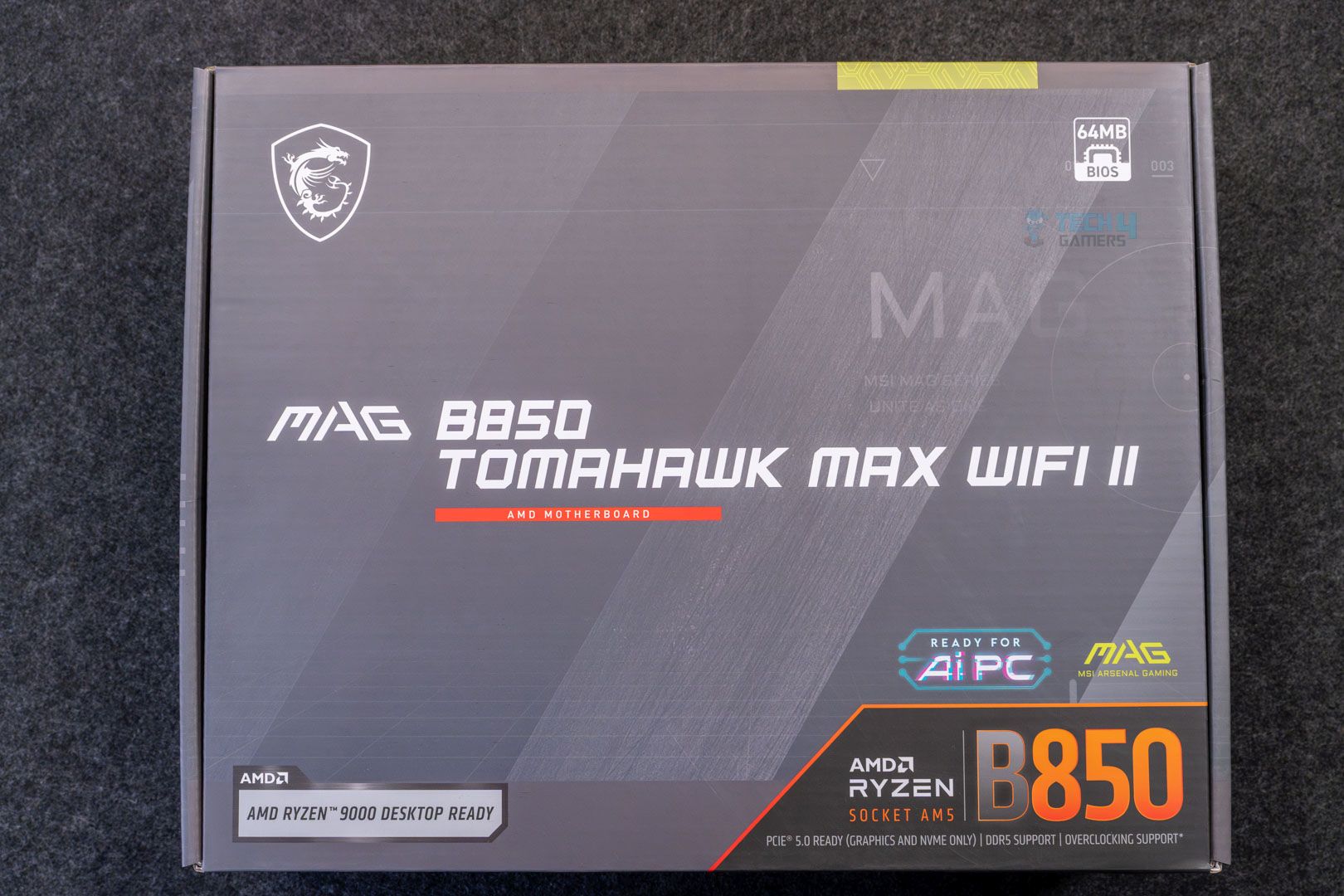
Recently, we’ve been seeing many AMD X870 and B850 motherboard refreshes, with subtle design and performance improvements. While the X870 chipset is best for AMD’s high-end CPUs, the B850 fits within a tight budget, providing amazing value and performance. Today, let’s take a look at the MSI MAG B850 Tomahawk Max WiFi II.
We have also reviewed the original B850 Tomahawk Max WiFi, and we have to say, the design improvements pleased us. Of course, it goes without saying that there are slight performance changes, too, mainly with the BIOS storage and BCLK jumpers for enthusiasts who want to overclock their CPU to the next level.
Why Trust Tech4Gamers
Usman Saleem is our hardware tester who loves to put all the latest GPUs, CPUs, RAM, and motherboards for a spin.
40+ motherboards tested and reviewed by our team of hardware experts (Tech4Gamers Team).
800+ hours spent testing different motherboards for our reviews.
At Tech4Gamers, ensuring you get reliable information is our priority. That’s why every hardware round-up undergoes a meticulous review process by our team of experts and editors. Each review is carefully examined against our strict editorial guidelines, guaranteeing you trustworthy insights you can depend on.
Here are the basic specifications of the motherboard:
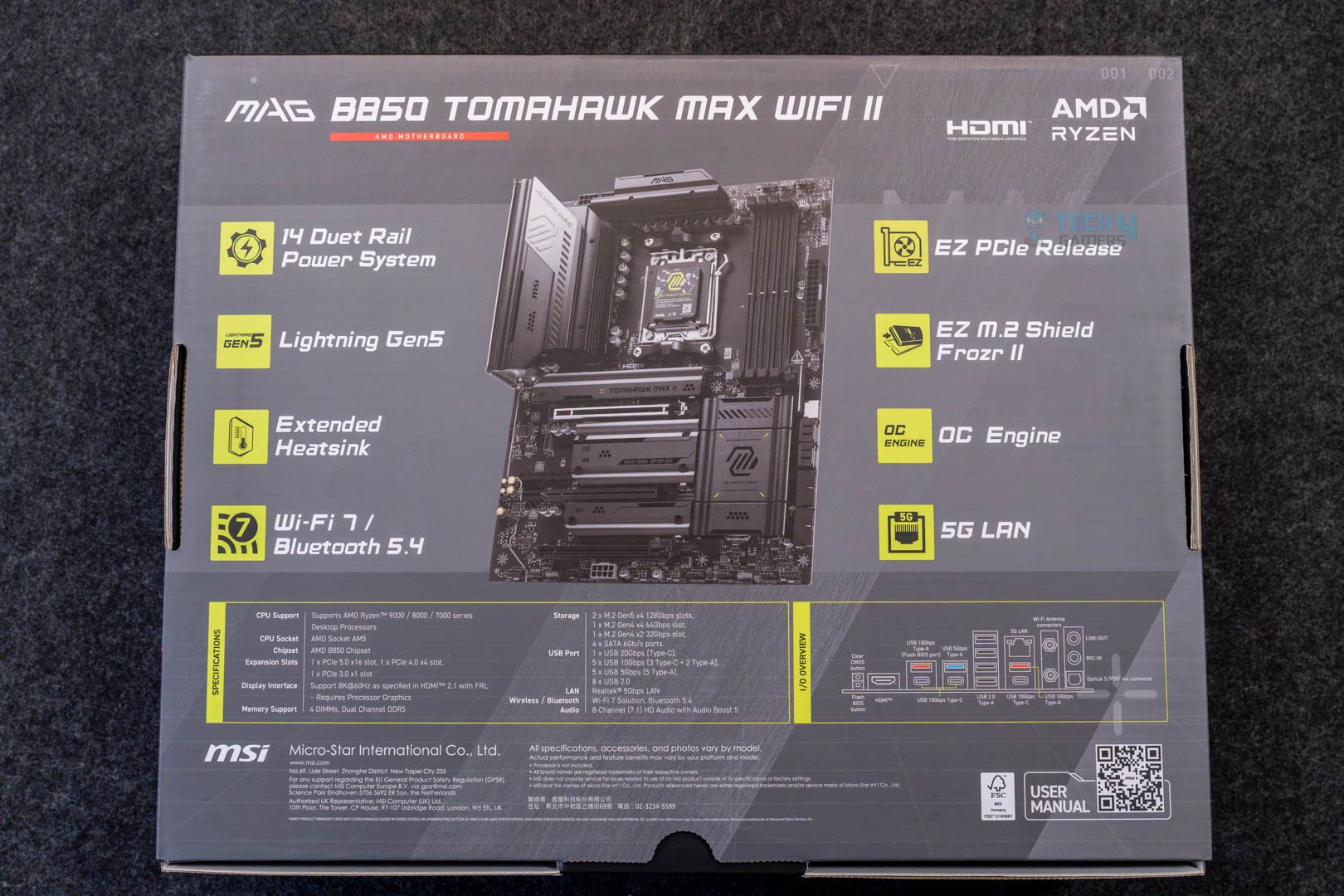
The motherboard comes in the standard packaging, as we’ve seen with the original Tomahawk Max WiFi and other Tomahawk models. The box is painted grey, with the back showcasing prominent features of the board.
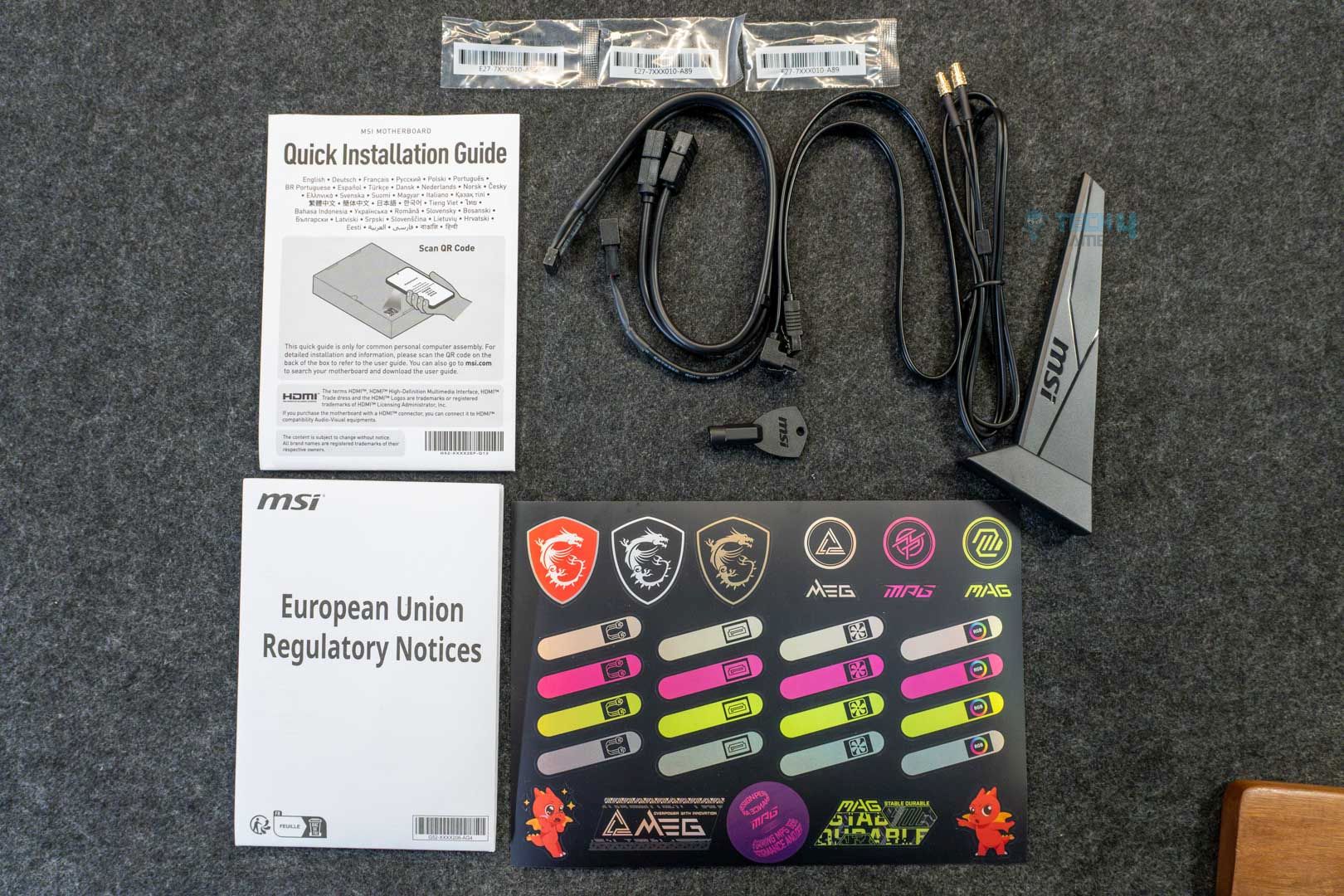
Upon opening the box, you are greeted with the following accessories:
1x ATX-sized motherboard
Quick installation guide
European Union Regulatory Notice
1x SATA cable
EZ M.2 clips II
EZ M.2 clip II remover
Cable stickers
EZ WiFi antenna
1 to 3 EZ conn-cable (V2)
The most intriguing accessory, aside from the motherboard, is the 1 to 3 EZ conn-cable, which combines USB 2.0, A-RGB, and fan connectors into a single connector, reducing overall cable clutter. This time, we weren’t given the EZ front panel cable, which makes cable management easier by combining the little LED and power cables into one.
The EZ WiFi antenna is, of course, always welcome for its handy magnetic attachment to the chassis. Lastly, the box has multiple EZ M.2 clips II and a clip II remover for an easier M.2 drive installation.
Design
First look of the motherboard. (Image by Tech4Gamers)
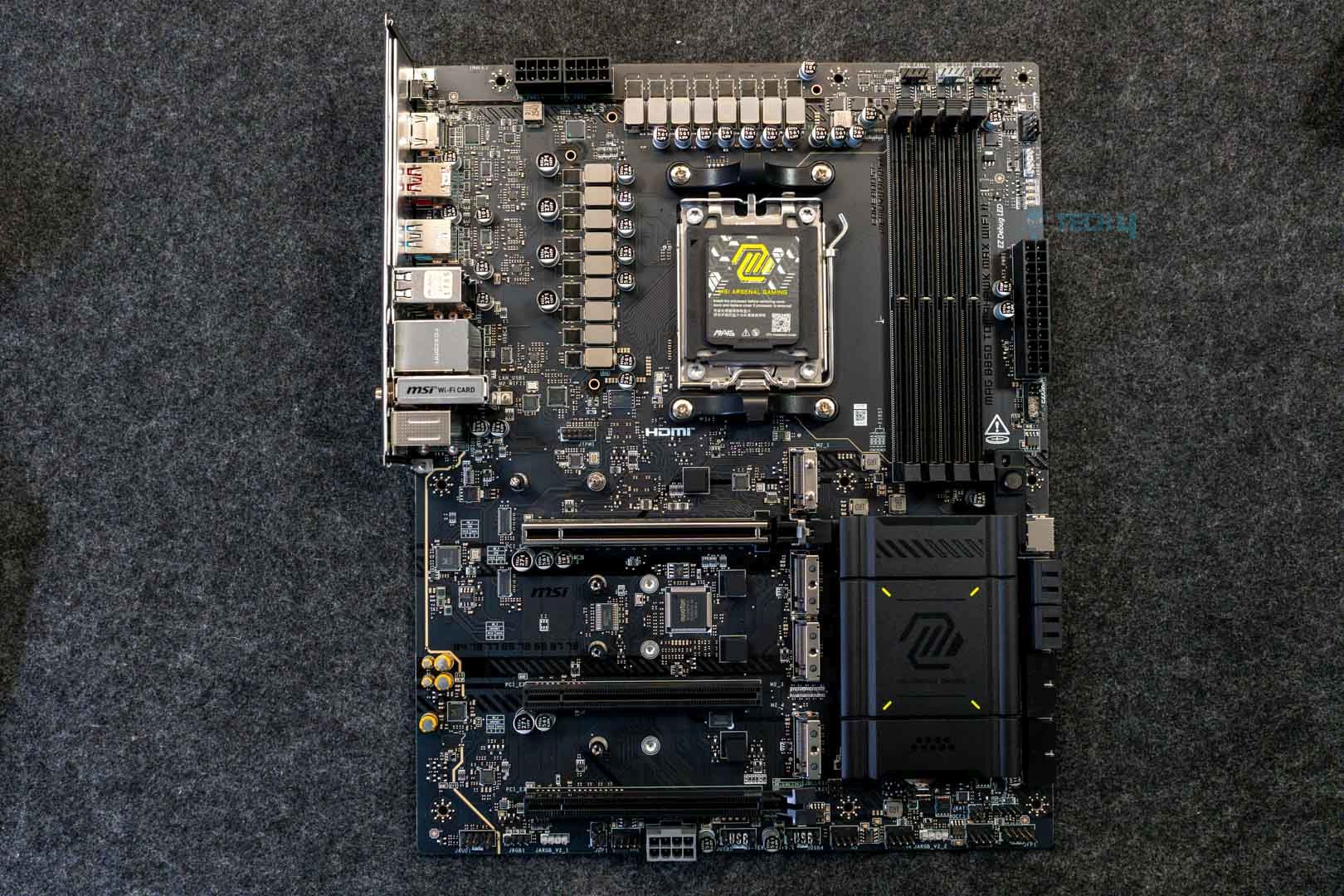
The MSI MAG B850 Tomahawk Max WiFi II’s refreshed look brings a wave of fresh air. It’s an elegant design, featuring a matte-black PCB and heatsinks, with a gunmetal-grey accent around the VRMs and shrouds. Meanwhile, the distracting yellow-green highlights of the previous version have been removed. The board doesn’t have any on-board RGB, but that’s to be expected.
Chipset cover
VRM heatsink
The motherboard utilizes an 8-layer NPG-170D server-grade PCB with 2oz thickened copper. Moreover, as is common practice, the VRMs are scattered around the AM5 socket to optimize current and voltage flow.
The CPU is responsible for powering the M.2s and PCIe Gen 5 expansion slots, 10Gbps USB, USB2, and DDR5 RAM. The chipset powers the PCIe slots, USB connectors, M.2 slots, SATA drives, WiFi 7, 5G ports, and the on-board audio.
Power Delivery System
Close up of VRMs
CPU socket
All B850 motherboards house AMD’s LGA1718 AM5 socket, powering the Ryzen 7000, 8000, and 9000 series CPUs out of the box. MSI uses PCB Fabric Technology, which delivers higher bandwidth and faster data transfer while minimizing signal loss. The technology also reduces thermals, allowing the board to endure harsher conditions.
Just like the original, the MAG B850 Tomahawk Max WiFi II features a 14+2+1 (VCore+SOC+Misc) phase Duet Rail power delivery with 80A, providing a theoretical 1120A capacity to the CPU. You can easily overclock your Ryzen 7000 or 9000 series processors on this motherboard without any worries. Extreme OCing is not recommended, though.
VRM + MOSFET close up
VRM + MOSFET close up
Upon closer inspection, we see an MP87670 VRM variant using MPS2516 for the 80A power stages. The board itself offers many overclocking tools, including the OC Engine, which enables independent Base Clock (BCLK) control for precise tuning in the MSI BIOS. You can also use EZ OC Tuning to achieve an instant performance boost.
CPU connectors. (Image by Tech4Gamers)
The CPU is powered via a 2×8 EPS connector that delivers up to 300W. AMD’s Ryzen 9000 series CPUs are pretty power-hungry, with the Ryzen 9 9950X requiring up to 220W. Hence, it should be easy to use any processor on this motherboard.
VRM heatsinks removed
VRM heatsinks removed
The VRM heatsinks don’t have a flashy design, but they look elegant with their matte-black and gunmetal-grey finishes. On the other hand, we see a similar stacked-fin design with 6 fins. The heatsink has 7W/mK thermal pads, so temperature shouldn’t be a problem.
DIMM Slots
Top half design. (Image by Tech4Gamers)
There’s not much to look at in the DIMM slots, as the motherboard offers standard 4x DDR5 slots with a RAM capacity of up to 256GB (64GB per slot). Also, the board supports a maximum speed of 8,400 MT/s. We also see MSI’s memory boost feature, which helps overclock RAM easily, along with two new features called “High Efficiency Mode” and “Latency Killer.
The former is designed to optimize memory performance by increasing bandwidth and reducing latency. MSI offers up to four sets of RAM timing settings to help choose the optimal CL timings. The latter can be enabled in the BIOS to reduce latency by up to 12% when running at higher frequencies.
Here are the maximum memory speeds supported at different configurations:
1DPC 1R up to 8,400+MT/s
1DPC 2R up to 6,400+MT/s
2DPC 1R up to 6,400+MT/s
2DPC 2R up to 6,400+MT/s
Editor`s Note
While the board supports CUDIMM RAM, it can only be run in Clock Driver bypass mode, which runs the CUDIMM kit as a regular UDIMM. While manual overclocking is possible after a restart, certain CPUs might not be compatible and refuse to boot.
– Dr. Usman Saleem
PCIe Slots
PCIe slot. (Image by Tech4Gamers)
Full motherboard design with SSD ports
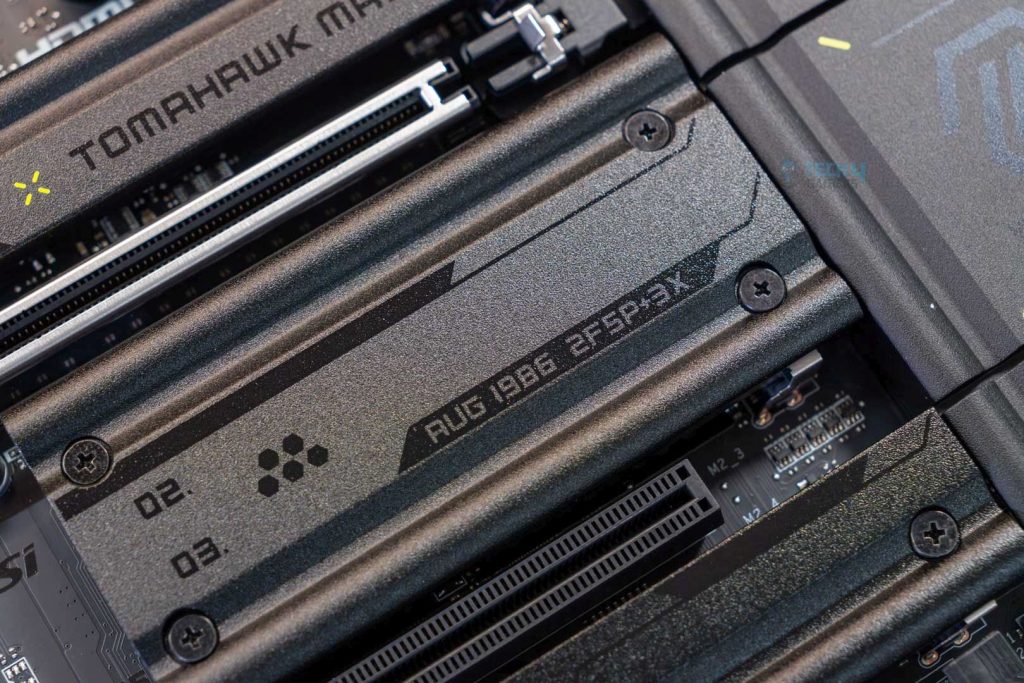
The MSI MAG B850 Tomahawk WiFi II motherboard features 3x PCIe x16 slots, with PCI_E1 being PCIe Gen 5.0, supporting up to x16 lanes from the CPU. The PCI_E2 Gen PCIe 3.0 supports up to x1 lanes from the chipset, and the PCI_E3 Gen PCIe 4.0 supports up to x4 lanes.
The PCIe Gen 4.0 slot shares bandwidth with the M2_3 slot, so if you install an SSD there, the PCIe slot will run at half speed. For the Gen 5.0, MSI features an EZ PCIe release mechanism, making GPU installation simple, effective, and quick. All you have to do is press the EZ PCIe release button, change your PCIe expansion card, and press the release button again to lock it in place. You can see a small padlock icon that indicates whether the slot is locked.
PRO TIP: You can switch PCI_E3 slot to x4 in the BIOS but doing so will disable the M2_3 slot.
Storage
SSD heatsink
SATA connectors
Although it’s an affordable motherboard, we see 4x SATA 6G drives and 4x M.2 slots. The M2_1 and M2_2 support PCIe 5.0 x4, while M2_3 supports PCIe 4.0 x2, and M2_4 supports PCIe 4.0 x4. All the M.2 drives support RAID 0, RAID 1, and RAID 10.
The board supports different NVMe M.2 sizes:
M2_1: 22110/2280
M2_2, M2_3, M2_4: 2280/2260
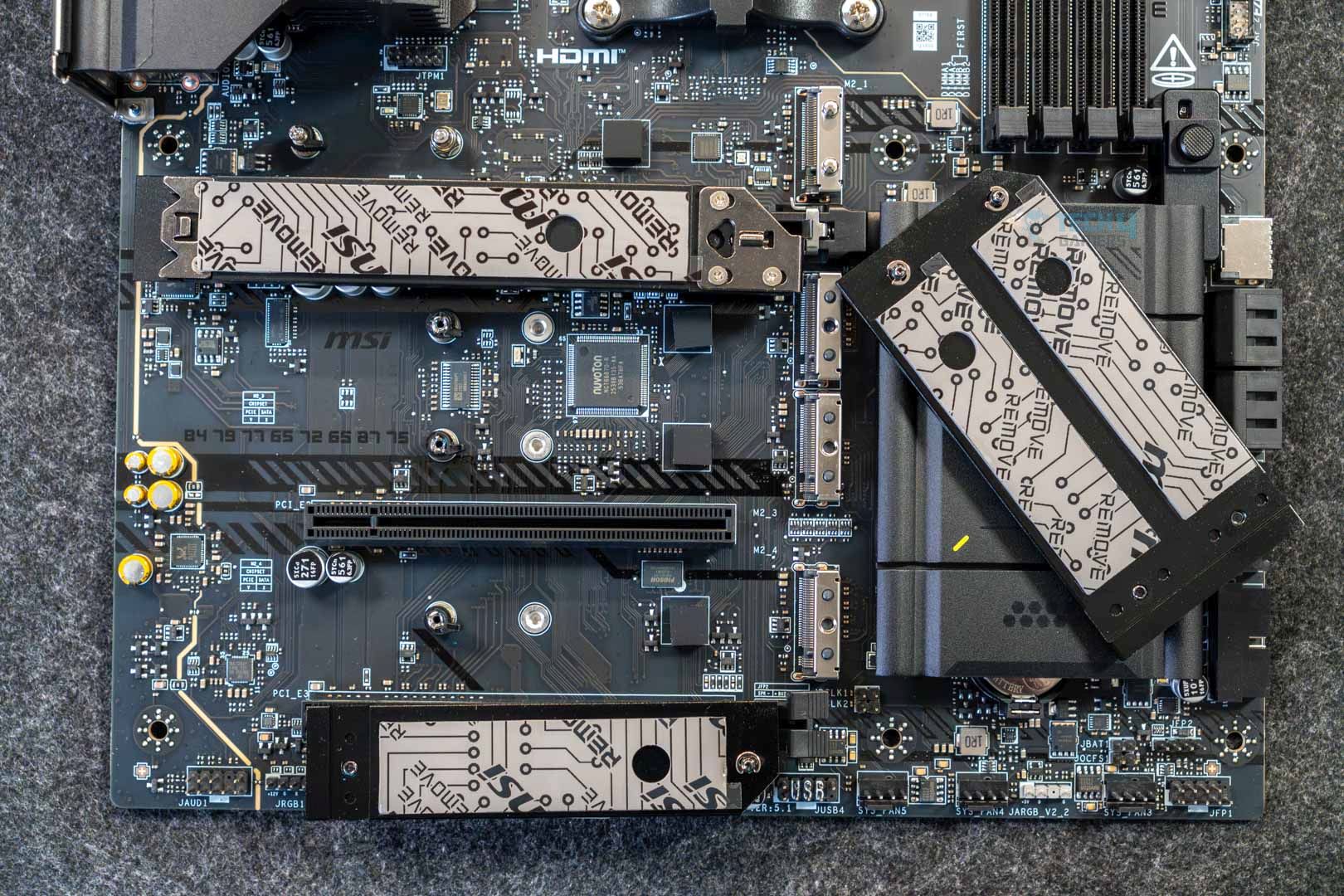
For cooling, we see three heatsinks are doing the job for four SSDs. The M2_2 and M2_3 are cooled by a single heatsink, while the M2_1 supports toolless removal and installation with the EZ M.2 Shield Frozr II. Here’s what they look like after removal.
SSD covers removed. (Image by Tech4Gamers)
Unfortunately, like the original B580 Tomahawk Max WiFi, this board doesn’t have any double-sided thermal pads. We would have liked to see one, at least on the M2_1, which supports PCIe Gen 5.0 for better thermals. In any case, we do find thermal pads on all the heatsinks, which is pretty standard.
MSI boasts simple storage installation with EZ M.2 and EZ M.2 Clip II Remover. We see a mixture of latch designs and EZ clips II for SSD installation. The EZ M.2 Clip II Remover is a handy tool for switching or repositioning your EZ M.2 Clip II to another M.2 slot.
USB Connectivity
The motherboard offers 19x USB ports:
4x USB 2.0 (Rear)
4x USB 2.0 (Front)
1x USB 5Gbps Type A (Rear)
4x USB 5Gbps Type A (Front)
2x USB 10Gbps Type A (Rear)
3x USB 10Gbps Type C (Rear)
1x USB 20Gbps Type C (Front)
There are no changes to USB connectivity from the original motherboard, and it’s unfortunate that MSI did not include a USB 4.0 port, though understandable given the motherboard’s price.
Network and Connectivity
LAN controller. (Image by Tech4Gamers)
The MSI MAG B850 Tomahawk Max WiFi II motherboard offers several networking and connectivity options, including 5G LAN for wired connectivity and WiFi 7 and Bluetooth 5.4 for wireless connectivity. One of the more intriguing features of MSI motherboards in terms of connectivity is the MSI AI LAN Manager. This feature automatically prioritizes latency-sensitive applications for online games, providing the lowest latency.
To utilize WiFi 7 and Bluetooth 5.4, you need Windows 11 24H2.
Audio Solution
Audio chip. (Image by Tech4Gamers)
Utilizing the mid-range Realtek ALC4080 audio solution, we see MSI also promoting its Audio Boost 5 to deliver the best audio experience, featuring high-quality audio capacitors, high-quality audio jacks with S/PDIF, a dedicated headphone amplifier, and de-pop protection.
The board has isolated audio signals with separate PCB layers powering the left and right audio channels. This should, in theory, provide cleaner audio quality.
Internal Connectors And Components
Connectors. (Image by Tech4Gamers)
Here’s a list of all the connectors on the board:
1x Power Connector(ATX_PWR)
2x Power Connector(CPU_PWR)
1x Power Connector(PCIE_PWR 8pin)
1x CPU Fan
1x Combo Fan (Pump_Sys Fan)
6x System Fan
1x EZ Conn-header (JAF_2)
2x Front Panel (JFP)
1x Chassis Intrusion (JCI)
1x Front Audio (JAUD)
3x Addressable V2 RGB LED connector (JARGB_V2)
1x RGB LED connector(JRGB)
1x TPM pin header(Support TPM 2.0)
2x Direct OC Jumper (JBCLK)
4x USB 2.0 ports
4x USB 5Gbps Type A ports
1x USB 20Gbps Type C ports
8-pin PCIe power connector
24-pin ATX connector
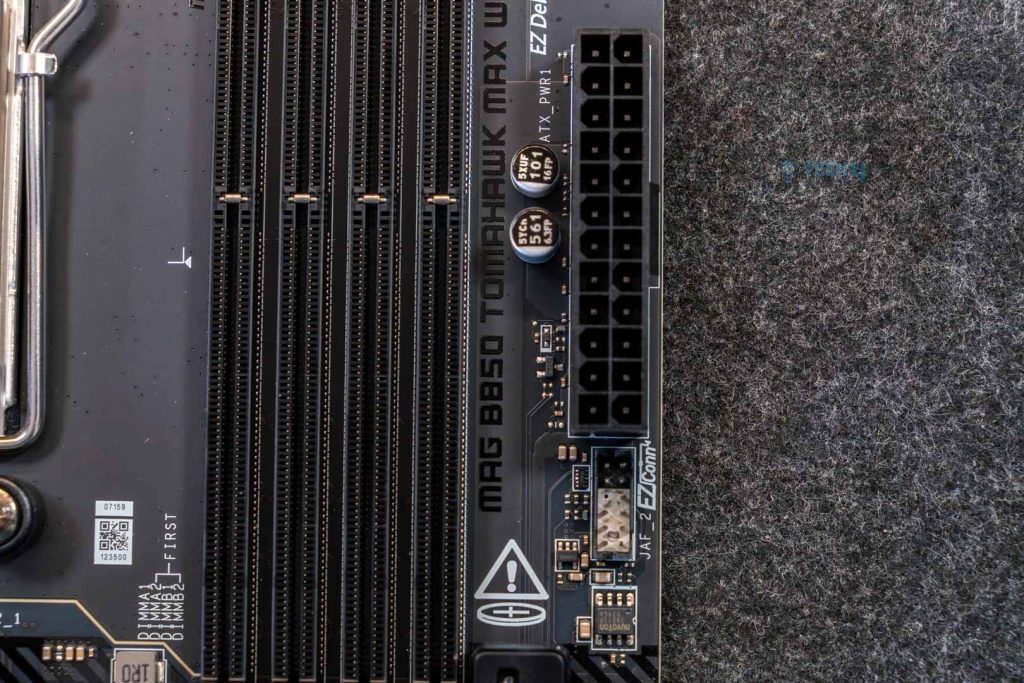
We don’t see any special connectors other than the 8-pin PCIe power connector, which provides up to 252W and up to 420W when combined with the 24-pin ATX connector. Both connectors use the solid-pin design, which increases their lifespan and makes them more durable.
Super I/O controller. (Image by Tech4Gamers)
The board features Nuvoton’s NCT6687D super I/O controller to monitor voltages, temperatures, and fan speeds around the motherboard.
MSI logo branding. (Image by Tech4Gamers)
We see a bunch of debug LEDs around the corners of the motherboard, and dedicated LEDs for the RAM slots that light up when the system detects faulty memory in those slots. MSI has not included a debug code LED panel, which would have been a decent improvement, but the LEDs are still appreciated.
Heatsinks Removed
MSI MAG B850 Tomahawk Max WiFi II naked. (Image by Tech4Gamers)
Here’s an image of the motherboard after removing all the heatsinks.
Rear I/O Panel
Rear I/O panel. (Image by Tech4Gamers)
Here’s a list of all the rear I/O panel connections on the board:
Clear CMOS button
USB 10Gbps (Type-A)
USB 5Gbps (Type-A)
USB 2.0
5G LAN
WiFi/Bluetooth
Audio connectors
Flash BIOS button
HDMI
USB 10Gbps (Type-C)
USB 10Gbps (Type-C)
USB 10Gbps (Type-A)
Optical S/PDIF-OUT
The rear I/O panel houses a clear CMOS and flash BIOS button, both of which can be handy for troubleshooting. We see a total of six USB ports in the rear I/O shield, so you should be able to easily plug in all your devices without any issues.
It’s good that all the ports have been labeled, making it easier to identify and install devices accordingly. Lastly, the rear I/O shield is pre-installed on the motherboard, so you don’t have to go through the trouble of doing that yourself.
Test Bench
Here’s the rig we used to rigorously test the motherboard:
The motherboard has similar performance to the original, completing the render in 50 seconds.
Cinebench 2024 multi-core and single-core test
The MSI MAG B850 Tomahawk Max WiFi II averaged 2,307 points in the multi-core test in Cinebench 2024 and 140 points in the single-core test.
Corona 11
The board completed the render in 63.4 seconds, being slightly faster than its predecessor.
CPU-Z multi-core and single-core tests
We don’t see much difference in the scores across the motherboards in this test.
Geekbench 6 multi-core
Surprisingly, in the Geekbench 6 test, the original Tomahawk WiFi beat the refreshed Tomahawk WiFi II by a single point, with the latter scoring 21715.
V-Ray
The MSI MAG B850 Tomahawk Max WiFi II motherboard takes the cake in this test, scoring 48,930 points.
Overall, both motherboards offer similar performance as we expected.
Gaming Benchmarks
We have three games in our gaming benchmarks, so let’s see how the motherboards perform in these tests.
Cyberpunk 2077
The board averaged 143 FPS with a minimum of 109 FPS.
Far Cry 6
There’s almost no difference between any of the motherboards in Far Cry 6, with the Tomahawk WiFi II averaging 184 FPS.
Starfield
The Tomahawk WiFi II averaged 111 FPS in Starfield, with a minimum of 82 FPS.
Overall, all the motherboards deliver almost the same performance in games, but are decent at 1080p.
Power Consumption and VRM Temperatures
After the performance tests, let’s check the total power consumption and VRM temperatures. For this test, we have used Cinebench 2024.
Power draw
The MSI MAG B850 Tomahawk WiFi II has slightly higher power consumption under load at 384W, 114W in gaming, and 107W at idle. In retrospect, the ASRock B850I has the least power consumption under load at 361W.
VRM Temperatures
The thick VRM heatsink seems effective, as the motherboard’s VRMs averaged only 58°C during the entire Cinebench 2024 stress test. The original Tomahawk Max WiFi is right behind, sitting at 59°C, so it seems there isn’t a big difference.
Boot Times
Boot times
Both MSI motherboards beat the competition by booting into Windows in 21 seconds, gaining a 1-second advantage.
Should You Buy It?
Well, is it your cup of tea? Let’s find out!
Buy It If
64MB BIOS ROM looks intriguing: If you’re new to PC building and don’t want to meddle in the BIOS, this motherboard might be perfect because of its 64MB BIOS storage, which comes with some pre-installed drivers and also ensures better compatibility.
You’re not looking for a flashy design: Unlike its predecessor, the MSI MAG B850 Tomahawk Max WiFi II has removed most of the green and yellow, leaving the motherboard with an elegant matte-black and gunmetal grey color.
You want to try basic overclocking: If you’ve been wanting to try basic overclocking, this motherboard might be a good fit thanks to its BCLK OC Engine, which makes overclocking as simple as possible, requiring only one click.
Don’t Buy It If
You want more USB connectivity options: While the Tomahawk Max WiFi II offers decent USB connectivity, including a USB4-equivalent USB 20 Gbps Type-C front header, it doesn’t have a built-in USB4 port. If you want faster ports, you might want to look elsewhere.
My Thoughts
The MSI MAG B850 Tomahawk Max WiFi II is a refresh of the original Max WiFi motherboard, introducing only a few differences, most of which are positive. The motherboard’s price is around $239, keeping it at the original board’s MSRP. For its price point, we see some features that go beyond a “mid-range” offering, increasing its overall value.
While most of the technicalities remain the same between the two motherboards, the biggest differences come down to design changes and a higher BIOS ROM for the refreshed model. MSI decided to remove the distracting yellow-green accents and instead focused on a subtle matte-black and gunmetal grey finish, which makes the motherboard stand out in a different way.
In terms of BIOS storage, the upgraded 64MB ensures your board will be compatible with many future updates. Regarding performance, we see the same 14+2+1 VRM phase with 14x 80A SPS for the CPU VCore. The most notable feature was the VRMs’ cooling, which kept temperatures at 58°C throughout the Cinebench 2024 stress test.
Expansion slots and USB ports remain the same, with the motherboard providing 1x PCIe Gen 5 x16 slot. Meanwhile, the PCI_E2 Gen PCIe 3.0 supports up to x1 lanes, and the PCI_E3 Gen PCIe 4.0 supports up to x4 lanes. USB connectivity could have been better, but we do see a 20Gbps Type-C port and 5x 10Gbps ones.
Again, for a mid-range motherboard, most features are adequate, including WiFi 7, Bluetooth 5.4, strong Realtek ALC4080 audio drivers, multiple PCIe 5.0 M.2 slots, and a range of AI features that improve the overall user experience and performance.
At Tech4Gamers, I contribute as a Senior News Reporter, combining my skills and gaming enthusiasm to keep our audience updated on the latest developments.
Story Highlight
Capcom replaced Denuvo with Enigma DRM in Resident Evil 4 Remake on 3rd February.
Nearly a full month later, the change has been reverted due to fan backlash and criticism.
Enigma DRM degraded performance by up to 50% in the remake.
However, Capcom wasn’t having such a great time a few weeks back, primarily due to backlash regarding Resident Evil 4 Remake after the addition of Enigma DRM. Today, this DRM has been removed from the game.
Why it matters: Fans review bombed Resident Evil 4 Remake soon after the addition of the new DRM, with many complaining about worse performance in the title.
The Enigma DRM Has Been Removed | Image via Twitter
As seen on SteamDB, Capcom has updated Resident Evil 4 Remake to remove Enigma DRM. It should be noted that this change has come nearly a full month after the anti-tamper service was first added to the title on 3 February.
Previously, Capcom replaced Denuvo DRM with Enigma, and while many already had their grievances with Denuvo, this replacement did little to help the bottom line of Capcom’s most popular remake.
As a reminder, performance degraded by anywhere between 30 to 50% following this update. However, with this change now reverted, Resident Evil 4 Remake should be back in its original state.
RE4 Remake Remains A Fan Favorite
Generally, Resident Evil 4 Remake performs quite well on PC. The game has sold over 10 million copies since launch, making it one of the series’ most popular releases in recent years.
It’s good news, then, that Capcom has addressed one of the few fan criticisms regarding this remake.
I’ve previously worked for eXputer as a Senior News Writer for several years. Now with Tech4Gamers, I love to devoutly keep up with the latest gaming and entertainment industries. I have a Bachelor’s Degree in Computer Science and years of experience reporting on games and breaking exclusive stories. Besides my passion for gaming journalism, I love spending my leisure time farming away in Stardew Valley. VGC, IGN, GameSpot, Game Rant, TheGamer, GamingBolt, The Verge, NME, Metro, Dot Esports, GameByte, Kotaku Australia, PC Gamer, and more have cited my articles.
Story Highlight
Microsoft discusses a cloud-based Xbox system to let human or AI helpers take over your games.
These helpers can guide the player through segments, explain mechanics, and then return control.
Microsoft says the current solutions to seek help are rudimentary.
While gaming, players still have to sift through online forums or watch videos to get the specific assistance they need. Microsoft appears to have made a major breakthrough in solving this issue.
We have found a series of new Microsoft patents that explore an innovative cloud-based Xbox system to let pre-approved human or AI helpers join your session on command and play games in your place.
These helpers can temporarily take over your gameplay and guide you through the segments, making for a dynamic assistance system that would no longer require players to leave the game to find help via external sources.
the help sessions can assist video game players in overcoming difficult in-game situations where they may tend to fail or otherwise become frustrated with the gaming experience.
Why it matters: Microsoft wants to introduce a new seamless and integrated way for gamers to receive help during gameplay, whether it’s through human helpers or AI models.
The figure shows a pop-up to the player asking if they want to let a helper take over the game.
The patent called “STATE MANAGEMENT FOR VIDEO GAME HELP SESSIONS” describes multiple examples where a pop-up might ask a player to let a helper take over the gameplay for a while.
Imagine if a user were struggling to find a rare gem in an RPG; if allowed, the helper would take control from the player. They would proceed to chat and guide the user through the process of acquiring the gem.
Microsoft also discusses an example of a racing game in which the helper might assist the player in passing a difficult track. The session would be handed back to the player once the helper has provided assistance.
The publisher argues that current methods to seek help from other players are ‘rather rudimentary’ and indirect, leaving users frustrated with the experience.
Help sessions are implemented where control of a video game is temporarily transferred from a current gaming session of a current video game player to a help session. After the help session, control is transferred back to the current video game player,.
The helper can play the game temporarily and guide the player through challenges.
In addition to this document, which discusses the core features, the four additional patents cover various other aspects of the system.
One wants to ensure that players are paired with helpers in the same age range and experience only age-appropriate content. The second one talks about tracking achievements to record who earned them.
Do you think it is a good idea for Microsoft to work on this Xbox system? Let us know your thoughts in the comments below, or join the discussion on the Tech4Gamers forum.
At T4G, my task is to cover the latest news around the gaming globe ASAP and with the utmost precision. I adore all the games and respect all the devs behind the amazing games that we get all year. So, whether it’s a PC or a Console game, I got it all covered.
Story Highlight
Resident Evil Requiem is censored in Japan to comply with the region’s restrictions.
Japanese fans have called this out, saying it breaks the overall immersion.
The game displays black, shader-like textures over gore, mutilated body parts, and more.
Resident Evil Requiem has been an absolute blast so far, garnering great reviews and becoming the game with the highest user score on Metacritic. However, in Japan, it is being criticized for removing a key aspect.
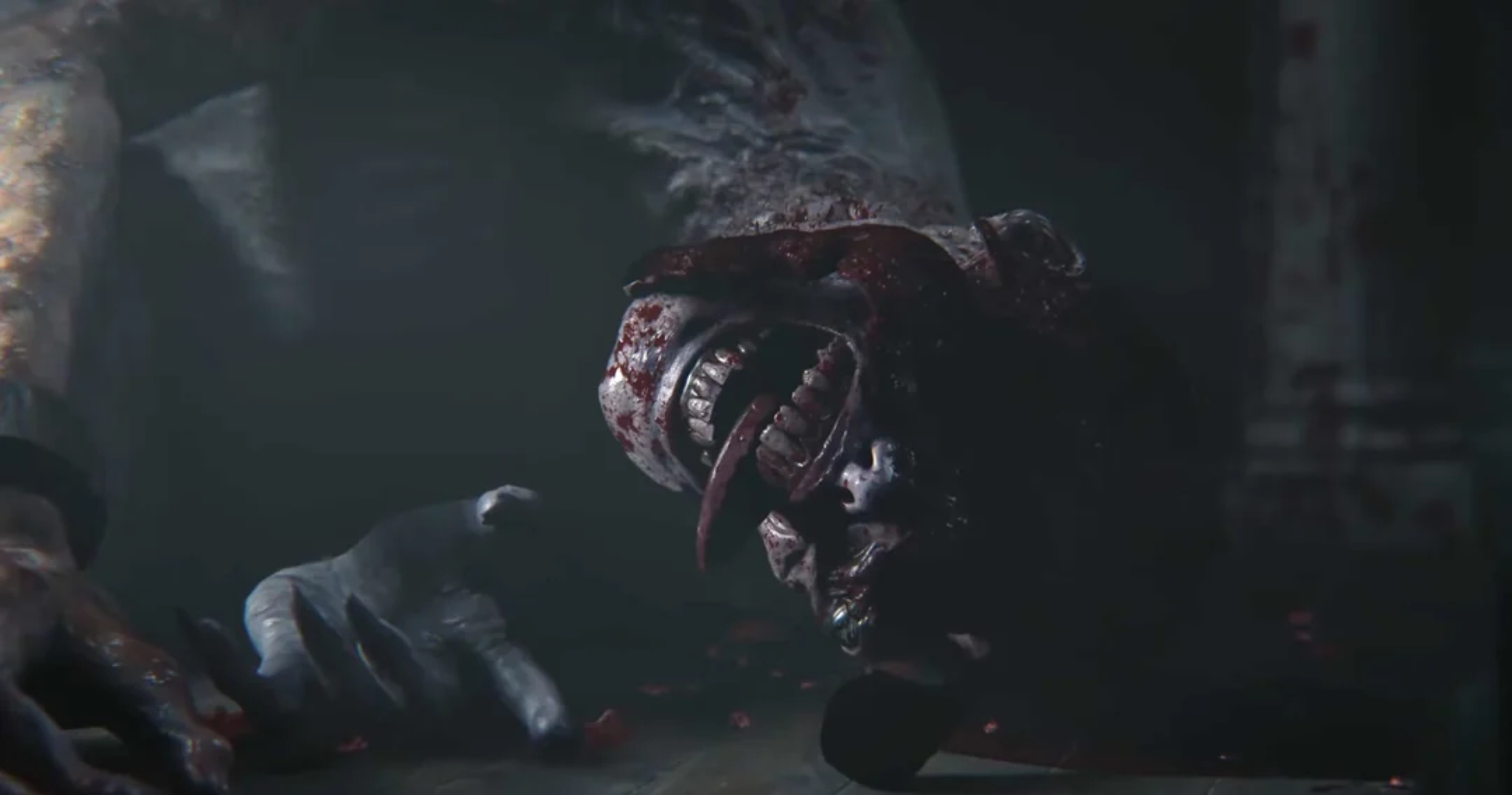
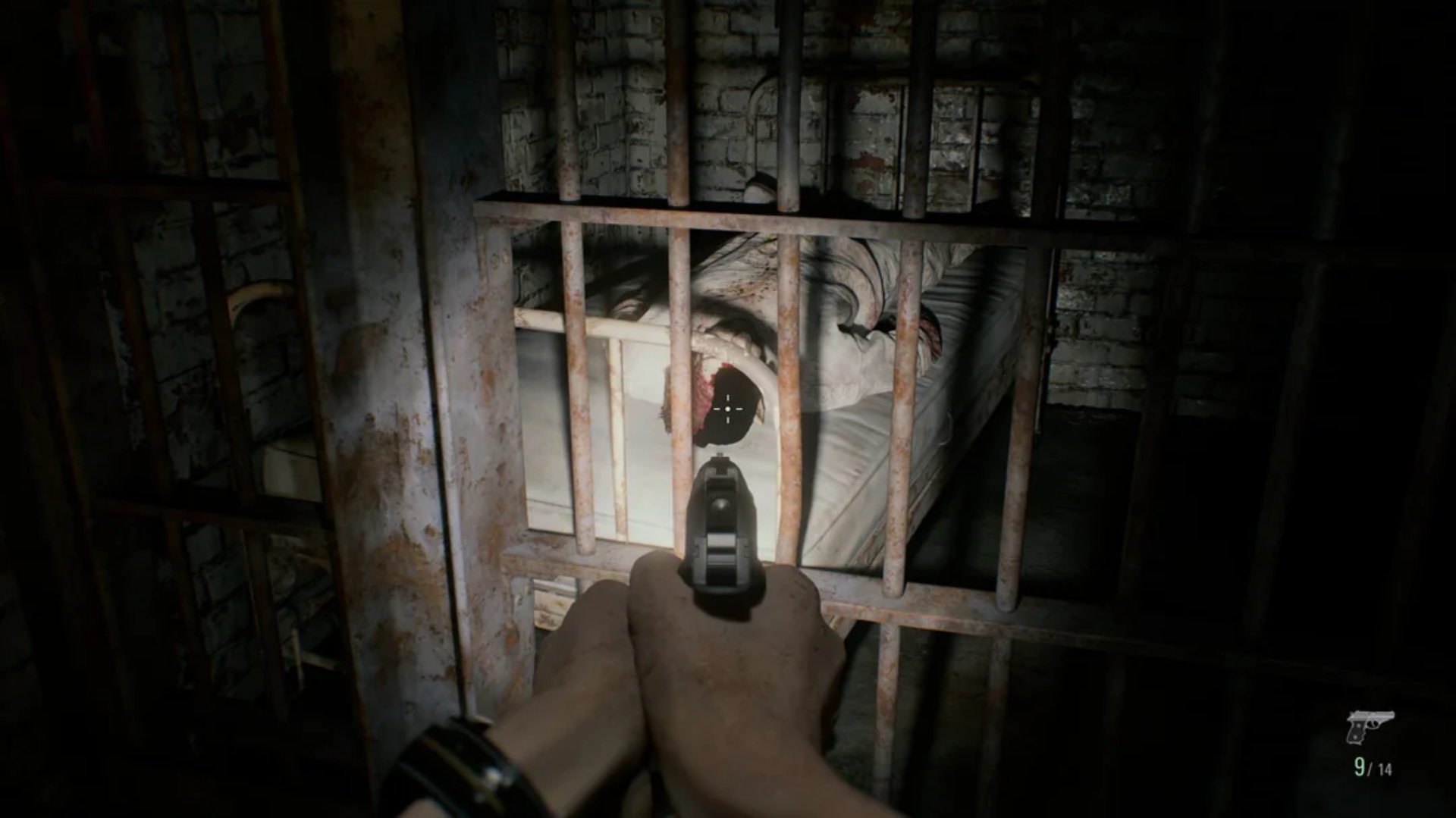
Capcom has censored all gore in Resident Evil Requiem in Japan, and players are criticizing it as a break in immersion. Black textures have censored dismemberment, exploding heads, and general gore.
Why it matters: The game has been censored in Japan to comply with the region’s guidelines that restrict the display of extreme violence; however, doing so removes the immersion of the gameplay.
Players are calling out Resident Evil Requiem censorship in Japan for breaking immersion
In the Japanese version of Requiem, if there’s any gore or mutilated body parts, the game puts a black shader-like texture over them. So, taking out zombies isn’t as satisfying or immersive as it normally is.
Now, fans are calling this out, saying it detracts from the overall game experience. However, given that the regulations strictly prohibit the display of gore, Capcom might not change much.
1 of 3
This has been the case with previous Resident Evil games in Japan as well. While they also use the black shaders, they mostly feature toned-down violence and cut extreme parts of the game altogether, again breaking immersion.
What are your thoughts on Resident Evil Requiem being criticized for censorship in Japan? Let us know your opinions in the comments or join the discussion at the official Tech4Gamers Forum.
I’ve previously worked for eXputer as a Senior News Writer for several years. Now with Tech4Gamers, I love to devoutly keep up with the latest gaming and entertainment industries. I have a Bachelor’s Degree in Computer Science and years of experience reporting on games and breaking exclusive stories. Besides my passion for gaming journalism, I love spending my leisure time farming away in Stardew Valley. VGC, IGN, GameSpot, Game Rant, TheGamer, GamingBolt, The Verge, NME, Metro, Dot Esports, GameByte, Kotaku Australia, PC Gamer, and more have cited my articles.
Story Highlight
At least 10 Studios Have pitched a game in the Bloodborne universe to Sony, according to Necrosoft Games developer Brandon Sheffield.
According to Sheffield, none of the titles were approved by FromSoftware, putting the IP on ice.
The game director worked directly with Sony for games that launched on PS Vita and PlayStation Mobile.
Due to the closure of Bluepoint Studios, Bloodborne’s long-awaited remake has come to the attention of mainstream media once again. Reports following the developer’s closure have revealed that Sony had approved a remake of the title, but FromSoftware weren’t too keen on the project.
Regardless of the reason, the IP is lying dormant at Sony. But it isn’t due to a lack of trying, as almost a dozen developers have pitched a sequel or spin-off of Bloodborne to the Japanese giant, according to a former PlayStation developer.
Why It Matters: As the owner of the IP, FromSoftware getting the final say in any Bloodborne-related title makes complete sense. However, a creative entity like that lying dormant is a big loss for the gaming community.
Brandon Sheffield, who developed several titles for the PlayStation Mobile service, has revealed that at least 10 studios pitched a sequel, spinoff, or a remake based on Bloodborne, including his own Necrosoft Games.
However, according to the developer, none of the projects were approved by FromSoftware, and as it has the final say, any Bloodborne-related title will be cancelled unless the studio approves it.
Brandon Sheffield worked directly with Sony on titles for PS Vita and the now-discontinued PlayStation Mobile service. Hence, the game director’s word does hold weight as his studio, Necrosoft Games, was a close collaborator of the PlayStation brand.
A Bloodborne remake won’t happen unless Miyazaki gives his go-ahead.
Currently, the Japanese gaming giants have no plans to put a game in the Bloodborne universe in development. However, if Sony and Miyazaki mend their professional relationship, who knows what can transpire.
Do you think fans should give up hope of a Bloodborne remake ever happening, or is a new title based on the IP possible after FromSoftware gets done with The Duskbloods? Tell us in the comments below or head to the Tech4Gamers forum for discussion.
As Tech4Gamers’ Founder and Editor-in-Chief, I bring over 13 years of PC Hardware Reviewing and 8+ years of IT Project Management experience. Certified in Google IT Support , my focus is on providing honest product reviews and analysis and fostering a strong gaming community with 130k+ members in PPG.
Story Highlight
AMD has launched the Ryzen 5 5500X3D in China.
This chip consists of a 6C/12T setup, in addition to 99MB of L2+L3 cache.
The 3D V-Cache makes this budget-friendly chip quite impressive in games.
AMD has officially announced the Ryzen 5 5500X3D, an entry-level processor featuring 3D V-Cache technology, in China. It’s worth mentioning that this processor first appeared in Latin America, and China will now benefit from its expansion into new markets.
Even though it is true that this CPU is based on an outdated architecture, its main advantage is the utilization of 3D V-Cache. This compensates for the older architecture, providing a significant speed boost over other models lacking this layered cache technology.
Why it matters: This enables AMD to recycle less complex and more cost-effective production processes, allowing it to continue supplying the market with affordable CPUs that are ideal for developing low-cost gaming PCs.
Alongside the rising cost of DDR5 RAM, several businesses have decided to take a generational step back and build systems with DDR4 RAM.
Initially, it was far cheaper, and while the price has risen somewhat since then, any DDR4 memory capacity remains more cost-effective than its DDR5 equivalent. As a result, the Ryzen 5 5500X3D becomes an excellent choice for developing a “low-cost” gaming PC using the lowest components imaginable.
In terms of configuration, we’re talking about a processor with six cores and twelve threads, a base speed of 3.0 GHz, a boost clock of 4.0 GHz, and a TDP of up to 105W. The most noteworthy cache figure here is the L3 cache: 96 MB, plus an additional 3 MB of L2 cache (thus the “99 MB total L2+L3” that appears in specifications and materials).
Furthermore, the AM4 platform in China is getting a new low-cost processor for updating older systems with Ryzen 1000 or 3000 series processors. This is an interesting option to gain a significant performance boost without needing to change to a DDR5 platform.
As demonstrated in the benchmark above, additional cache memory only improves game performance. Synthetic testing, such as CPU benchmarks, will only show the raw performance of the cores.
In simple terms, the Ryzen 5 5500X3D is a downgraded Ryzen 5 5600X3D. The big question remains its price in China. Only the price of less than $200 or €200 has been specified. This makes sense given that the same processor debuted in countries such as Mexico and Argentina for approximately $185 or €156.













 64MB BIOS ROM looks intriguing: If you’re new to PC building and don’t want to meddle in the BIOS, this motherboard might be perfect because of its 64MB BIOS storage, which comes with some pre-installed drivers and also ensures better compatibility.
 You want more USB connectivity options: While the Tomahawk Max WiFi II offers decent USB connectivity, including a USB4-equivalent USB 20 Gbps Type-C front header, it doesn’t have a built-in USB4 port. If you want faster ports, you might want to look elsewhere.