I’ve previously worked for eXputer as a Senior News Writer for several years. Now with Tech4Gamers, I love to devoutly keep up with the latest gaming and entertainment industries. I have a Bachelor’s Degree in Computer Science and years of experience reporting on games and breaking exclusive stories. Besides my passion for gaming journalism, I love spending my leisure time farming away in Stardew Valley. VGC, IGN, GameSpot, Game Rant, TheGamer, GamingBolt, The Verge, NME, Metro, Dot Esports, GameByte, Kotaku Australia, PC Gamer, and more have cited my articles.
Story Highlight
Silent Hill F release date could be revealed soon, as the game has just been rated by South Korea’s rating board.
The game was first announced in October 2022 as the next mainline entry in the popular horror franchise.
Not much has been unveiled since then, which has kept fans highly excited about what’s to come.
After many mediocre projects, Silent Hill 2 Remake has proven to be the golden goose that has revived interest in the franchise like in the old days. Since its highly successful launch, expectations surrounding the series have increased tenfold.
Regardless, a new finding suggests that Neobards Entertainment is possibly preparing to reveal a release date—or a launch window—for Silent Hill F, the next mainline game in the series.
Why it matters: The studio might finally be getting ready to reveal more information regarding Silent Hill F, if the rating is anything to go by.
Google Translation of South Korean Rating Board.
Silent Hill F has suddenly been rated by the South Korean game rating board, which suggests that new details might finally be revealed for the horror title. It has quietly been in development behind the scenes since its official reveal three years ago, all this time.
The rating has appeared along with other upcoming projects such as Elden Ring: Nightreign and Avowed, which further implies that it might be closer to release than we’ve thought so far.
On the flip side, the reveal trailer confirmed that the footage was not from an in-dev build of the game, which could mean that it is in the mid-stages of development.
Silent Hill F was revealed in October 2022.
Overall, it’s wise to be cautious about rumors regarding the next mainline Silent Hill game. The recent rating might not mean much for now, given all the uncertainties.
Do you think we will finally learn more official details regarding Silent Hill F in the near future, or is the rating just a dud for us? Let us know your thoughts in the comments below, or join the discussion on the official Tech4Gamers forum.
I intitally started by writing CPU comparisons and since then have written articles of all kinds, from Wikis and How-Tos to dedicated CPU reviews. Currently, I test and review CPUs, motherboards, and sometimes, RAM.
After reviewing various MAG Tomahawk boards (X870, Z890, B850) recently, we’ve received the new MAG X870E Tomahawk WiFi from MSI. The MAG (MSI Arsenal Gaming) is MSI’s entry-level lineup, and the Tomahawk models are MSI’s main arsenal from this lineup, promising impressive performance and I/O with toned-down aesthetics.
It is priced at $329, $30 higher than the X870 counterpart, only it supports two full-speed Gen 4 M.2 drives, and there’s no bandwidth sharing between the PCIe and M.2 slots.
Why Trust Tech4Gamers
Ali Touseef is our hardware reviewer who tests and reviews different components, including coolers, RAM, motherboards, and processors.
40+ motherboards tested and reviewed by our team of hardware experts (Tech4Gamers Team).
800+ hours spent testing different motherboards for our reviews.
At Tech4Gamers, ensuring you get reliable information is our priority. That’s why every hardware round-up undergoes a meticulous review process by our team of experts and editors. Each review is carefully examined against our strict editorial guidelines, guaranteeing you trustworthy insights you can depend on.
The MSI MAG X870E Tomahawk WiFi is an excellent mid-range option for the AM5 platform. It shows good performance and features and has enough I/O for most, for $299.
Get this board if you want a true mid-range motherboard that does the job and can run any AM5 CPU with ease.
Don’t buy the board if you expect heavy overclocking capabilities.
Compared to the previous generation’s X670E Tomahawk model, we get more USB ports (plus 40Gbps), 5G LAN (vs 2.5G), dual Gen 5 M.2 slots (vs single), and the ALC4080 codec (vs ALC1200). The MAG X670E Tomahawk also had four PCIe slots, compared to three here.
It is a bit odd, though, that the motherboard is almost a carbon copy of the X870 Tomahawk and costs the same. While the board tackles the shared bandwidth complications of the X870 model due to the extra PCIe lanes, the number of USB ports remains the same.
[toc]
Packaging And Unboxing
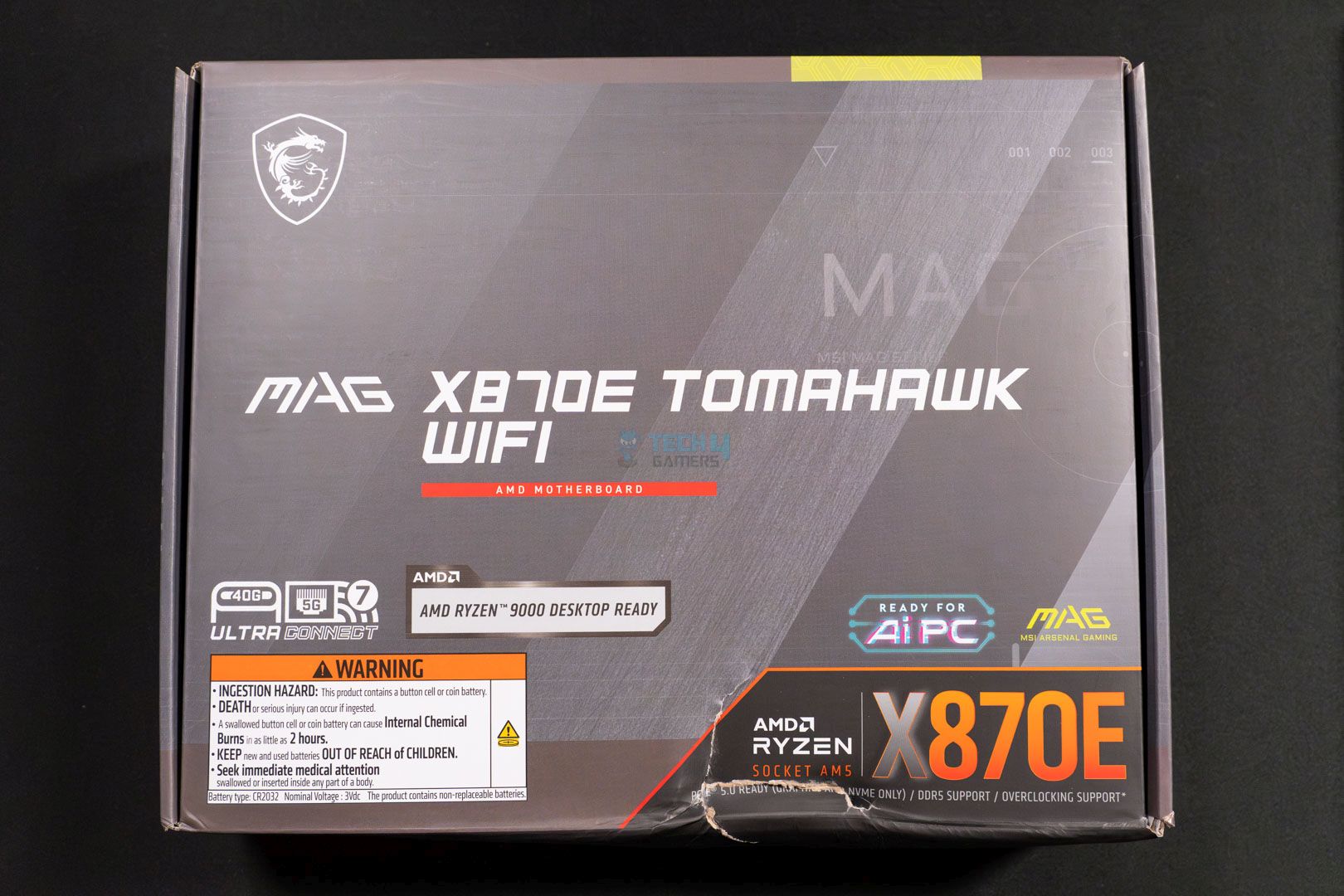
The packaging of the board is similar to the other Tomahawk models we’ve viewed recently; MSI is essentially using the same cardboard packaging for all boards.
Box Front
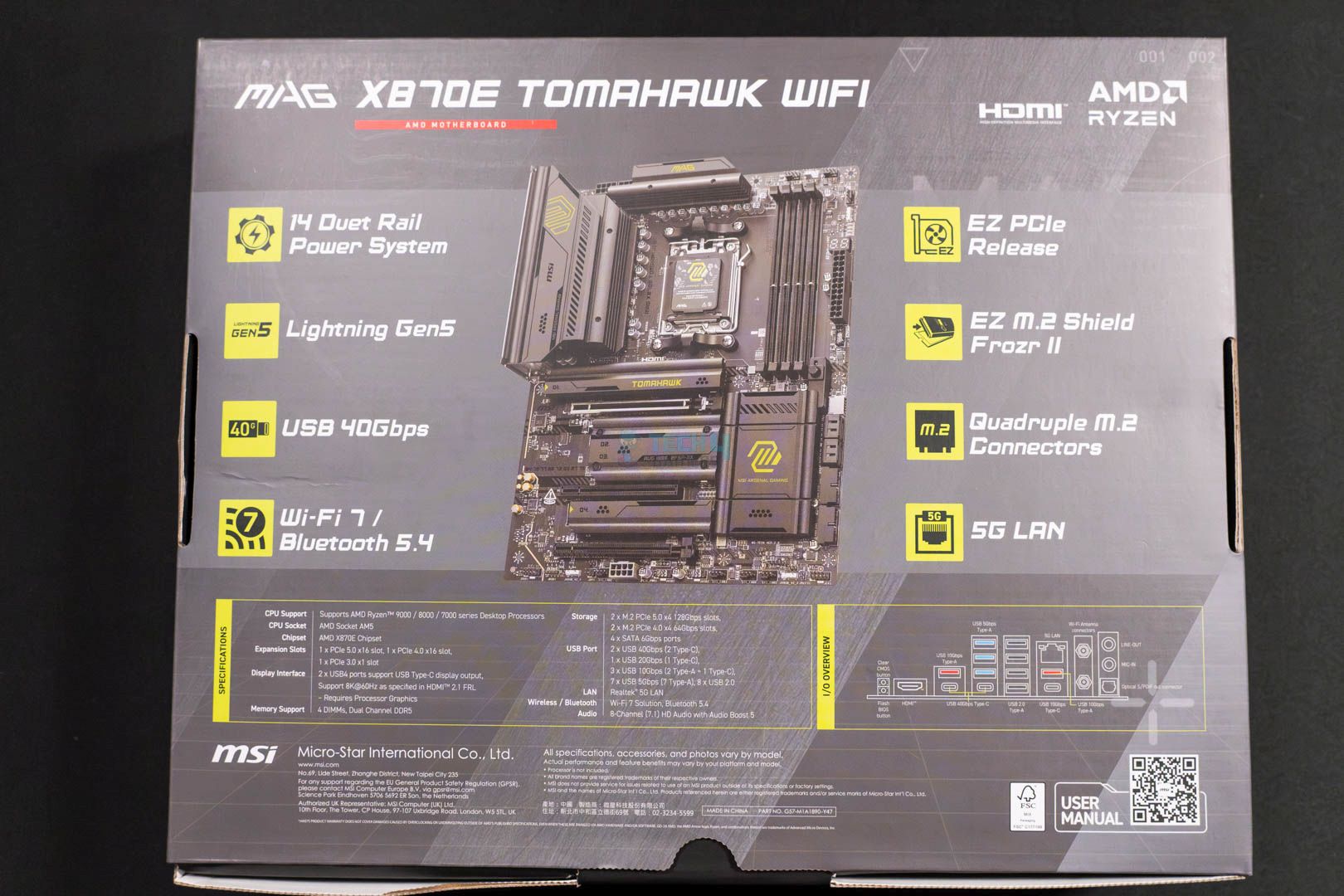
Box Back
The front of the box names some key features and a warning against the misuse of the battery. On the back, we get more features, a list of the specifications, a rear I/O layout picture, and a QR code to be scanned to open the manual.
Let’s take a look inside the box.
Accessories
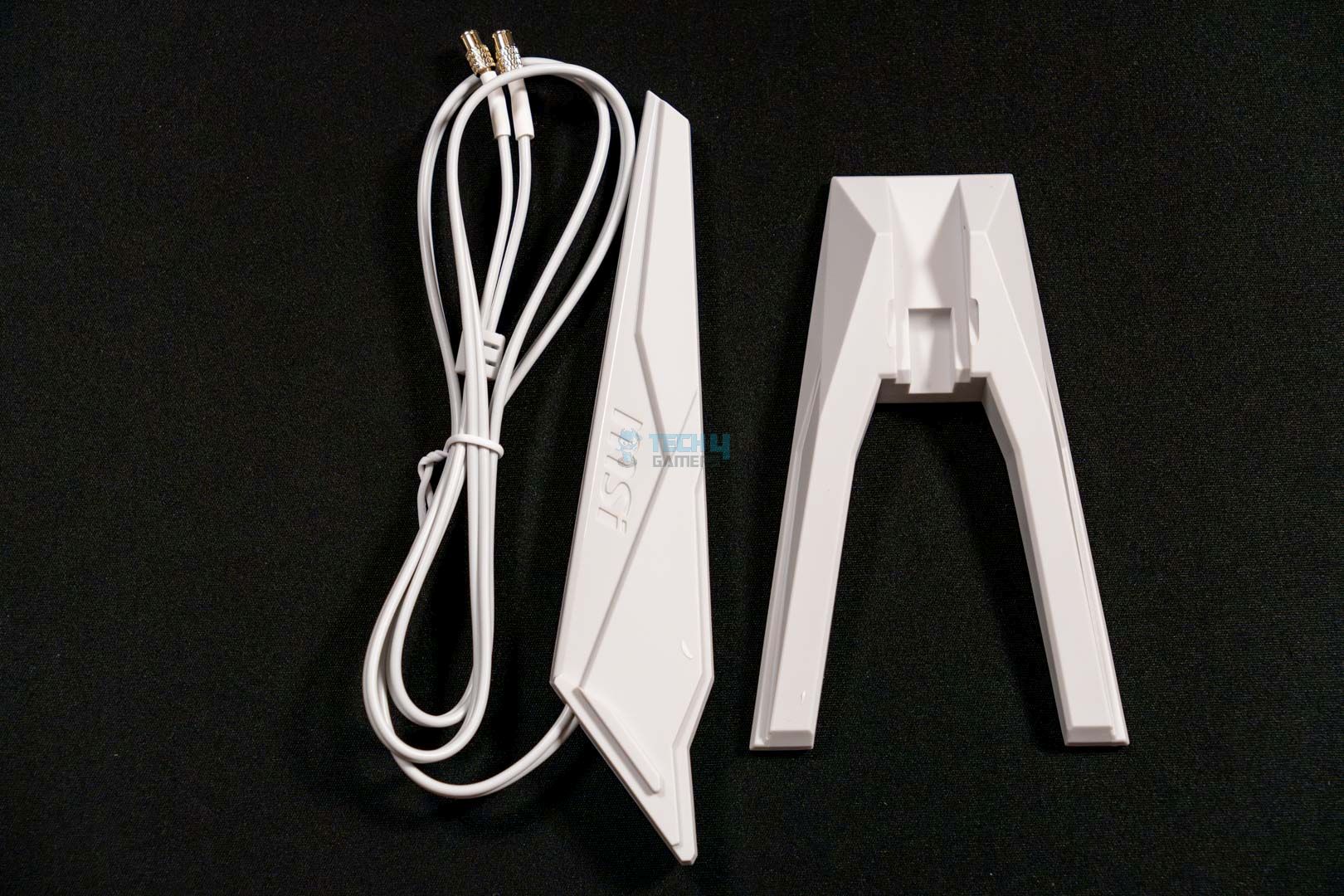
Antennas
Here’s what we get:
Quick installation guide
EU regulatory notice
2x SATA Data Cables
EZ M.2 Clip II Remover
M.2 plate screw
EZ WiFi Antenna
1-to-3 EZ Conn-Cable (V2)
EZ front panel cable
USB drive (containing drives & utilities)
Cable stickers
Shout-out flyer
Interestingly, we get the EZ Antenna in white; not sure if this is an error on MSI’s end or intentional. This connects to the back of the motherboard to give you WiFi 7 and Bluetooth 5.4. The EZ M.2 Clip II remover is to remove the already-installed EZ M.2 II clip on the board, and you don’t get any extra.
A couple of EZ connectors are also included. The EZ front panel cable (combines front panel headers), while the 1-to-3 EZ Conn-Cable V2 combines fan, A-RGB, and 4-pin USB in one to power (many) AIOs (available today), including MSI’s own.
Design
Design (Image by Tech4Gamers)
The MSI MAG X870E Tomahawk uses the same theme and heatsink design as the other Tomahawk models of this generation. We get a black PCB and matte-black heatsinks with yellow-green prints on them, highlighting the branding the MAG Tomahawk branding across the various heatsinks. There’s no onboard RGB, but connectors on the board allow you to connect your own, of course.
The board uses an 8-layer PCB (NPG-170D) with 2oz thickened copper. It features overcurrent and overvoltage (courtesy of transient voltage suppressors) protection. A patented grounding structure, using copper rings, is built in to reduce electromagnetic interference of the VRMs.
Block Diagram
The X870E chipset uses two Promontory 21 chips, which provide most of the I/O. However, the CPU is responsible for all your PCIe Gen 5 connections (x16 and the dual M.2 slots), DDR5 memory support, two USB 10 ports, and USB4. The chipsets connect to the CPU and each other with PCIe x4 links and are responsible for the remaining USB ports, PCIe slots, and M.2 slots. They also power WiFi 7, audio, and SATA.
CPU Socket and Power Delivery System
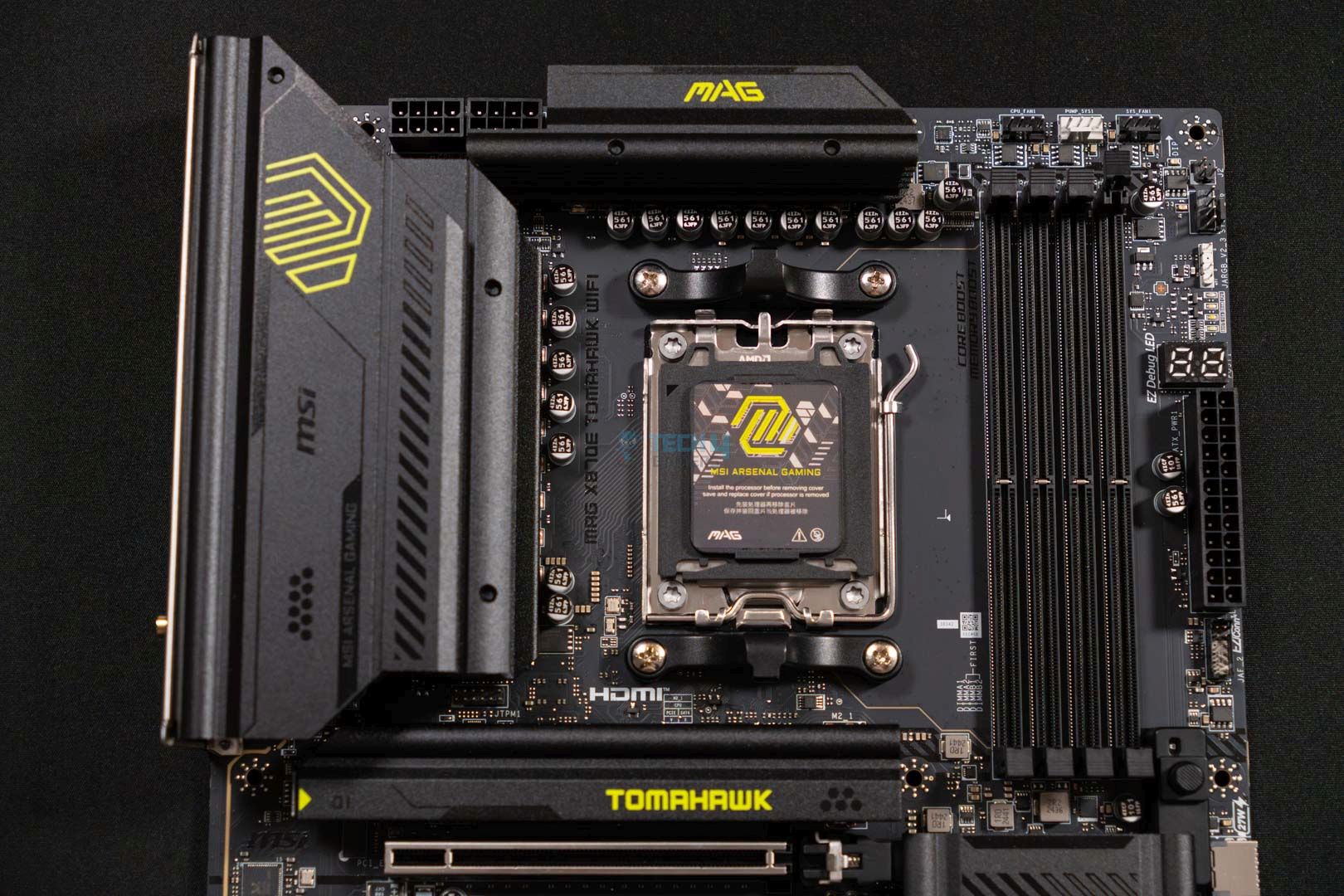
Upper Design
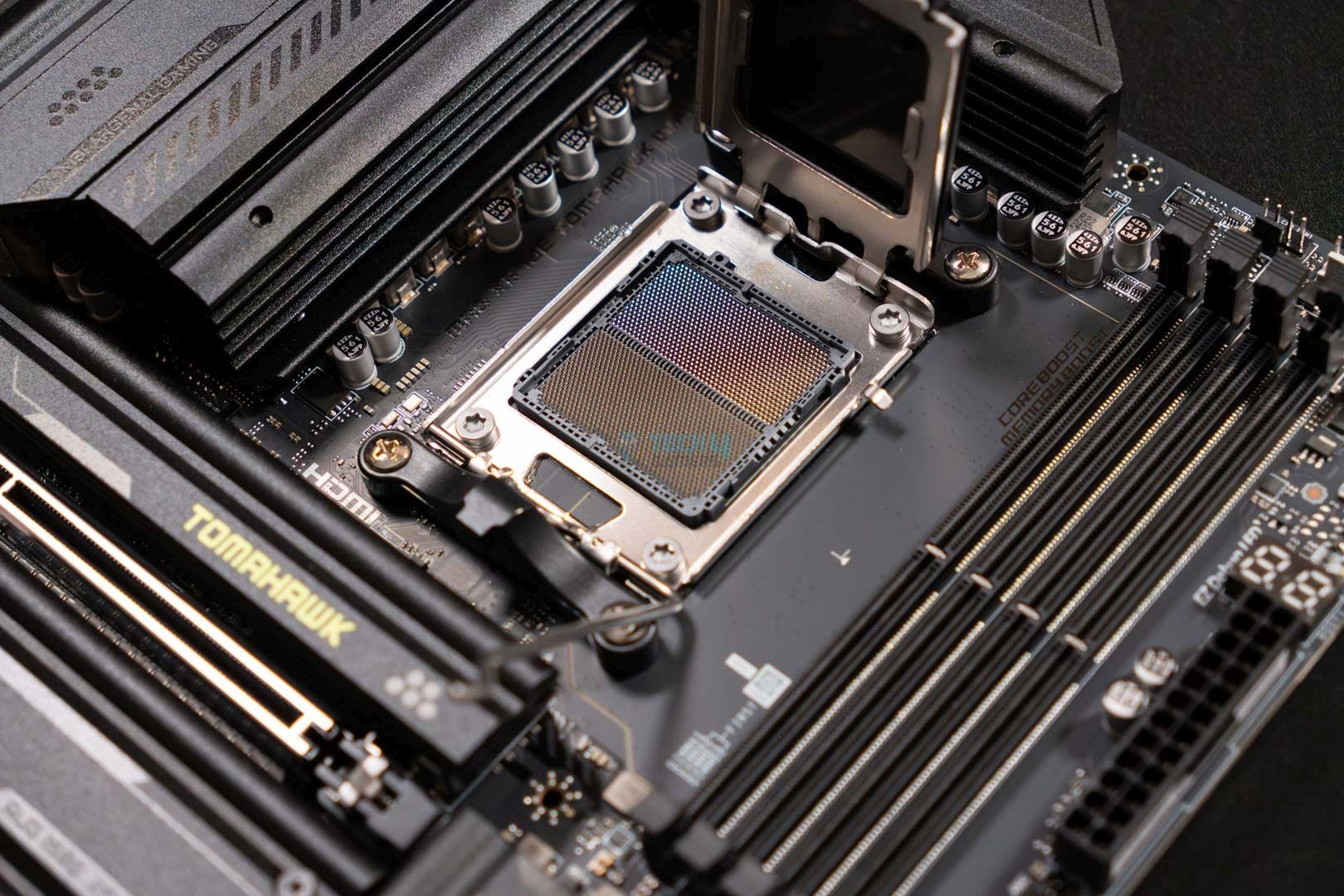
Socket Opened (Image credit: Tech4Gamers)
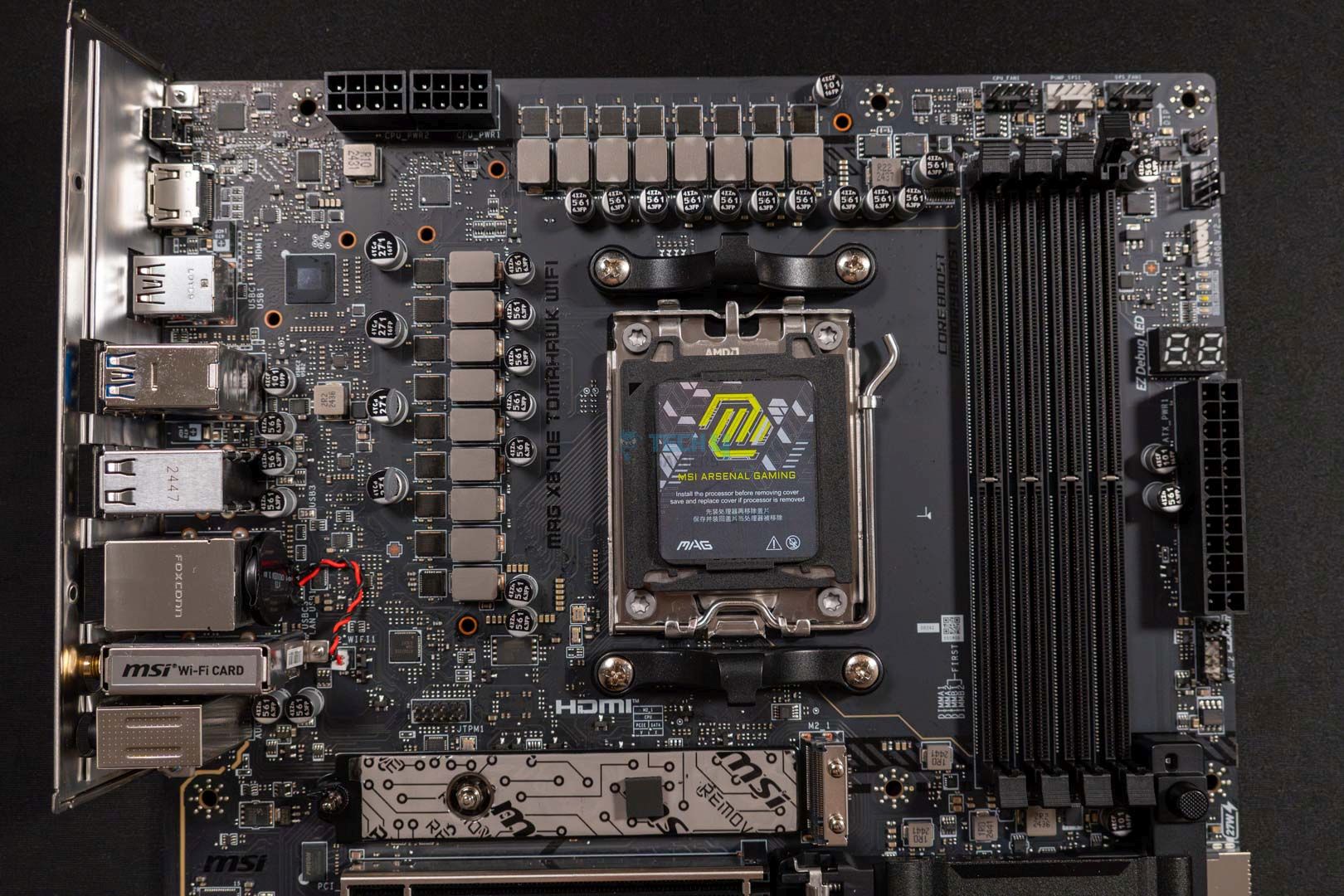
The X870E Tomahawk WiFi uses AMD’s AM5 (LGA1718) socket, with support for Ryzen 7000, 8000, and 9000 series CPUs out of the box.
Top Heatsinks Removed
VRM Drivers
The board uses a 14+2+1 (VCore+SOC+Misc) duet-rail power design, with 14x 80A SPS dedicated to the CPU VCore. In this DRPS design, two stages receive the same signal from the PWM controller. We have 1,120A available for the CPU in total, plenty for any supporting Ryzen CPU.
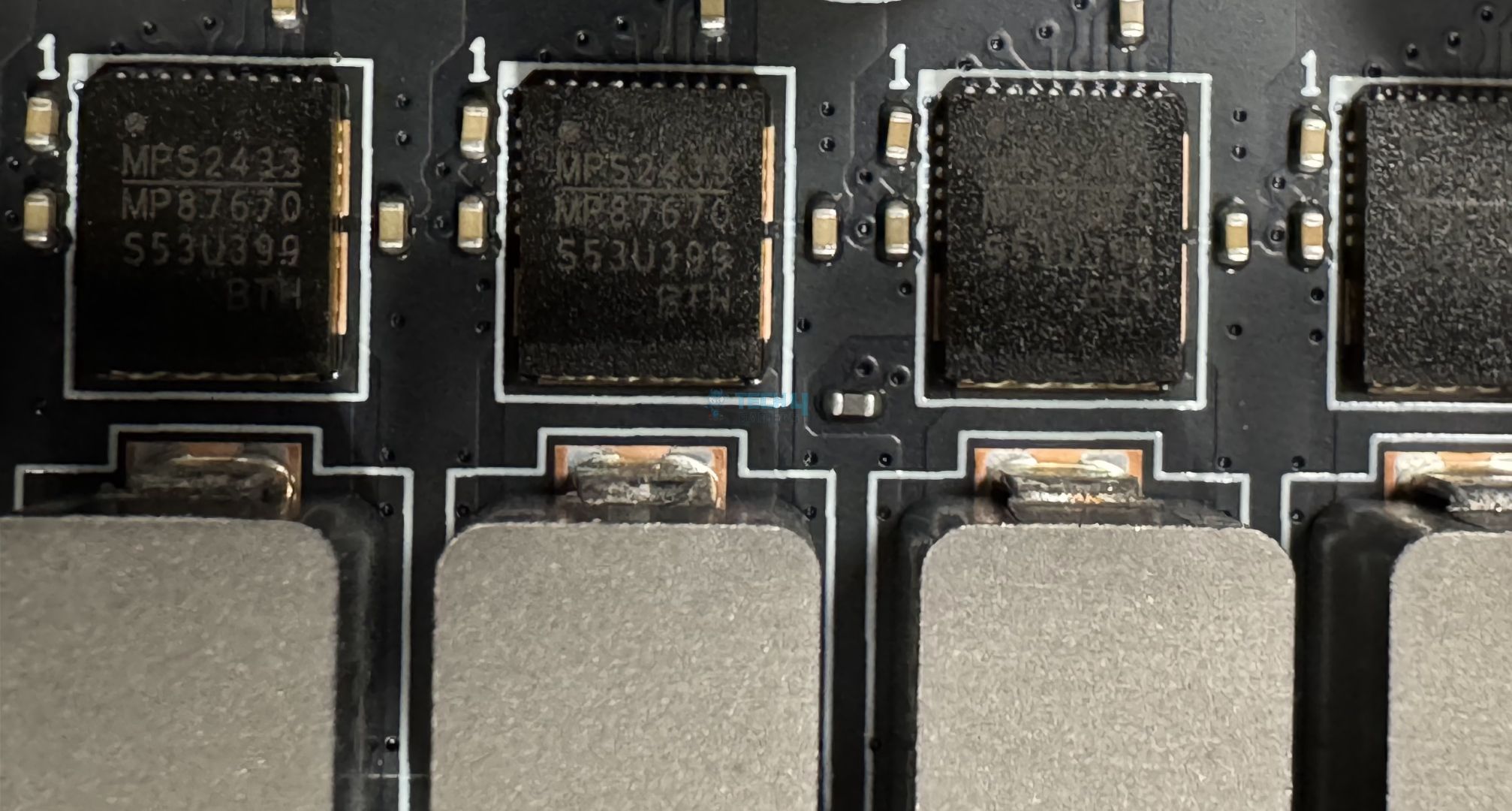
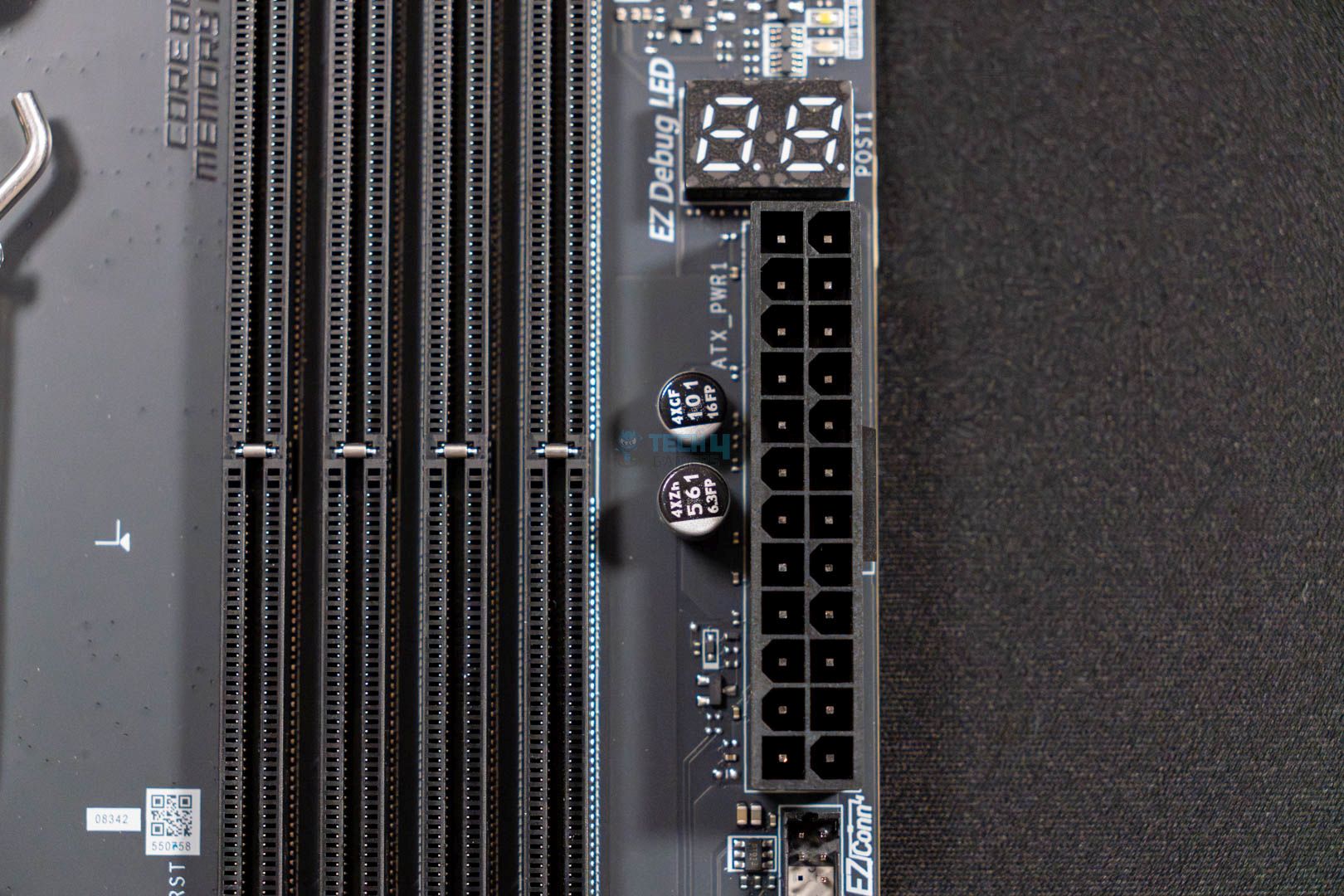
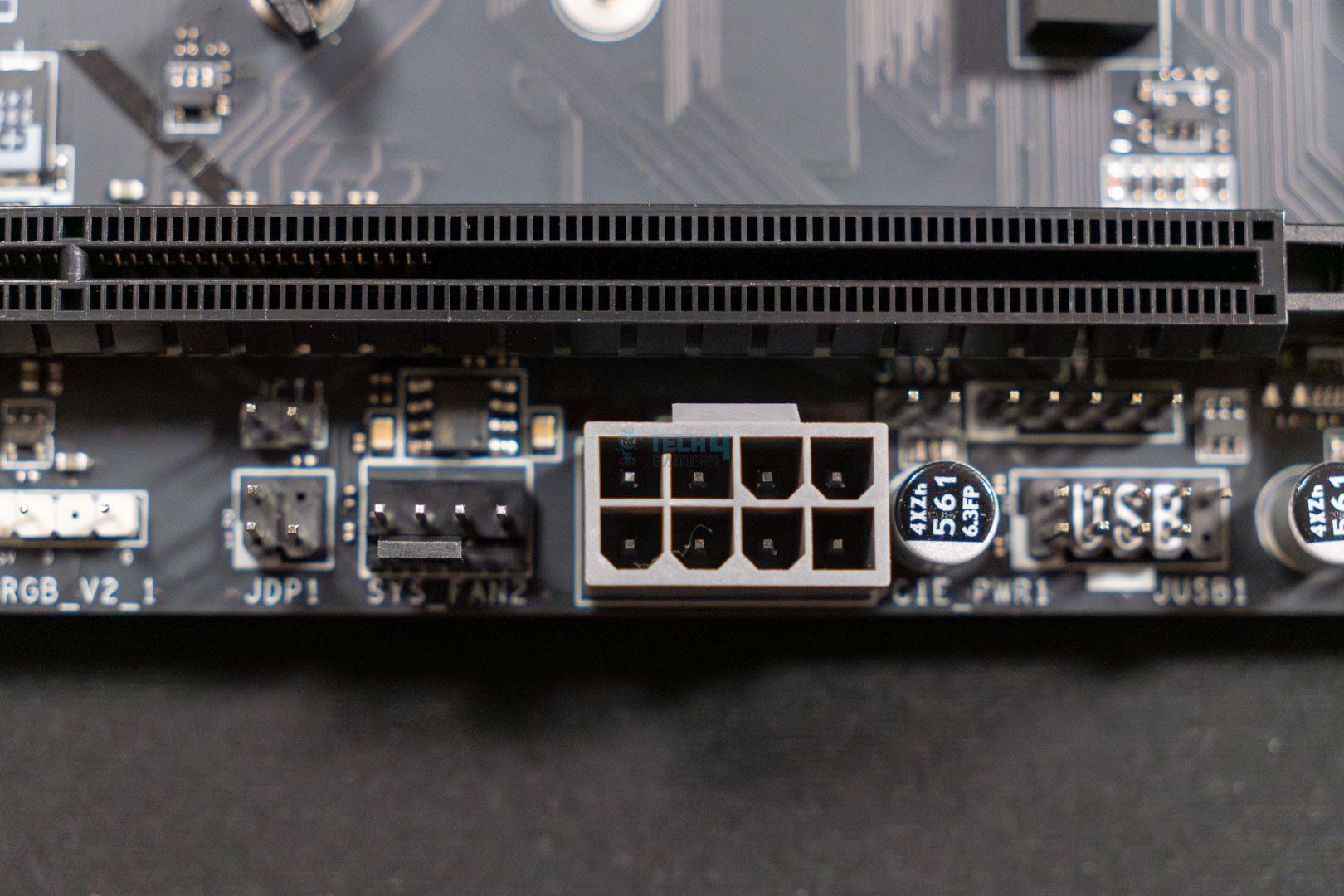
Taking a closer look at the VRMs reveals that they are using MPS’ MP87670 MOSFETs. The capacitors have “561 6.3FP” printed on them, meaning they are rated at 560µF and 6.3V. MSI also provides handy overclocking tools, including a one-click overclocking option.
CPU connectors (Image by Tech4Gamers)
The power for the CPU comes from the dual 8-pin connectors. These use solid pins, which enable low impedance and better durability, according to MSI.
Two heatsinks are responsible for cooling the VRMs. Both use fin-stacking, with six fins each, but they are not connected by a heat pipe. They have MOSFET (7W/mK) and choke thermal pads underneath to ensure efficient heat transfer.
DIMM Slots
DIMM slots (Image by Tech4Gamers)
The board has 4x surface-mounted memory slots, supporting up to 256 GB in total. The maximum memory speed supported is DDR5-8400 with overclocking, with MSI’s Memory Boost technology promising “improved” overclocking capability. Here are the maximum speeds supported in different configurations:
1DPC 1R = 8400 MT/s
1DPC 2R = 6400 MT/s
2DPC 1R = 6400 MT/s
2DPC 2R = 4800 MT/s
Editor`s Note
The maximum memory speed at which the Ryzen 7000 and 9000 memory controllers can sync with the RAM is 3200 MHz (6400 MT/s). So, 6400 MT/s is the speed you want to aim for with your Ryzen 9000 build unless you’re a heavy overclocker looking to push beyond the 8000 MT/s mark.
– Ali
CUDIMMs are supported, but as with other recent MSI AM5 motherboards we’ve seen, only with clock driver bypass mode only. The clock driver on CUDIMMs is their main advantage, as they don’t rely on the CPU and can thus function faster and can be overclocked more. Without it, the CUDIMMs function as UDIMMs, so there’s not much to be excited about just yet.
PCIe Slots
The motherboard has three PCIe slots, including a full-speed PCIe 5.0 x16 slot. On the lower side, you get PCIe 3.0 x1 and PCIe 4.0 x4. The main PCIe slot is surface-mounted and steel-reinforced (MSI Steel Armor II) to handle the weight of heavy graphics cards.
You also get the EZ PCIe release button with this slot. Simply pushing the button releases your card from the slot, and you can then remove it. Installing a new card requires you to seat it into the slot while the button is in the “unlocked” configuration. The padlock icon indicates whether the lock is in place or not. An excellent design!
Storage Options
SATA Connectors
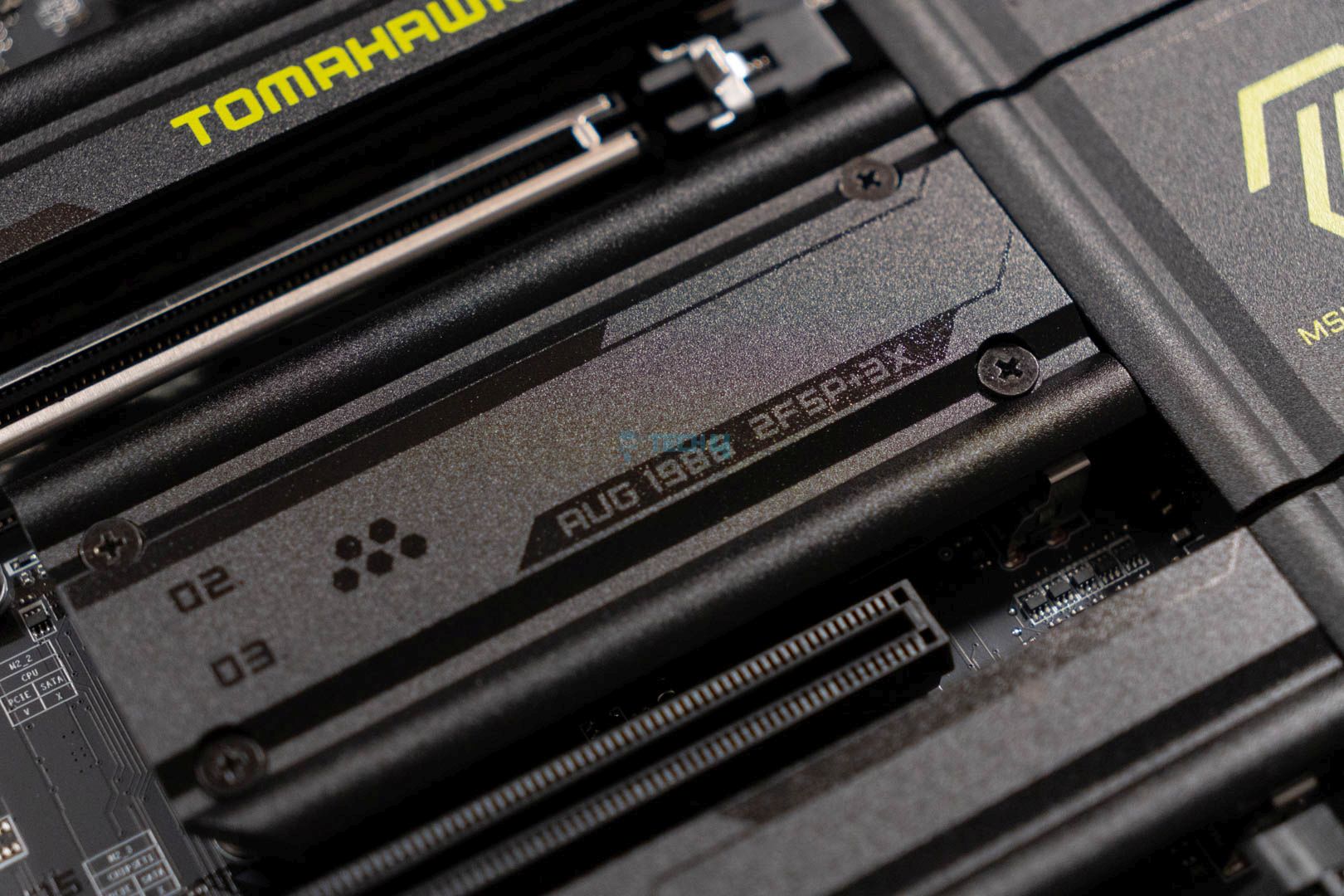
M.2 2 and 3 Cover
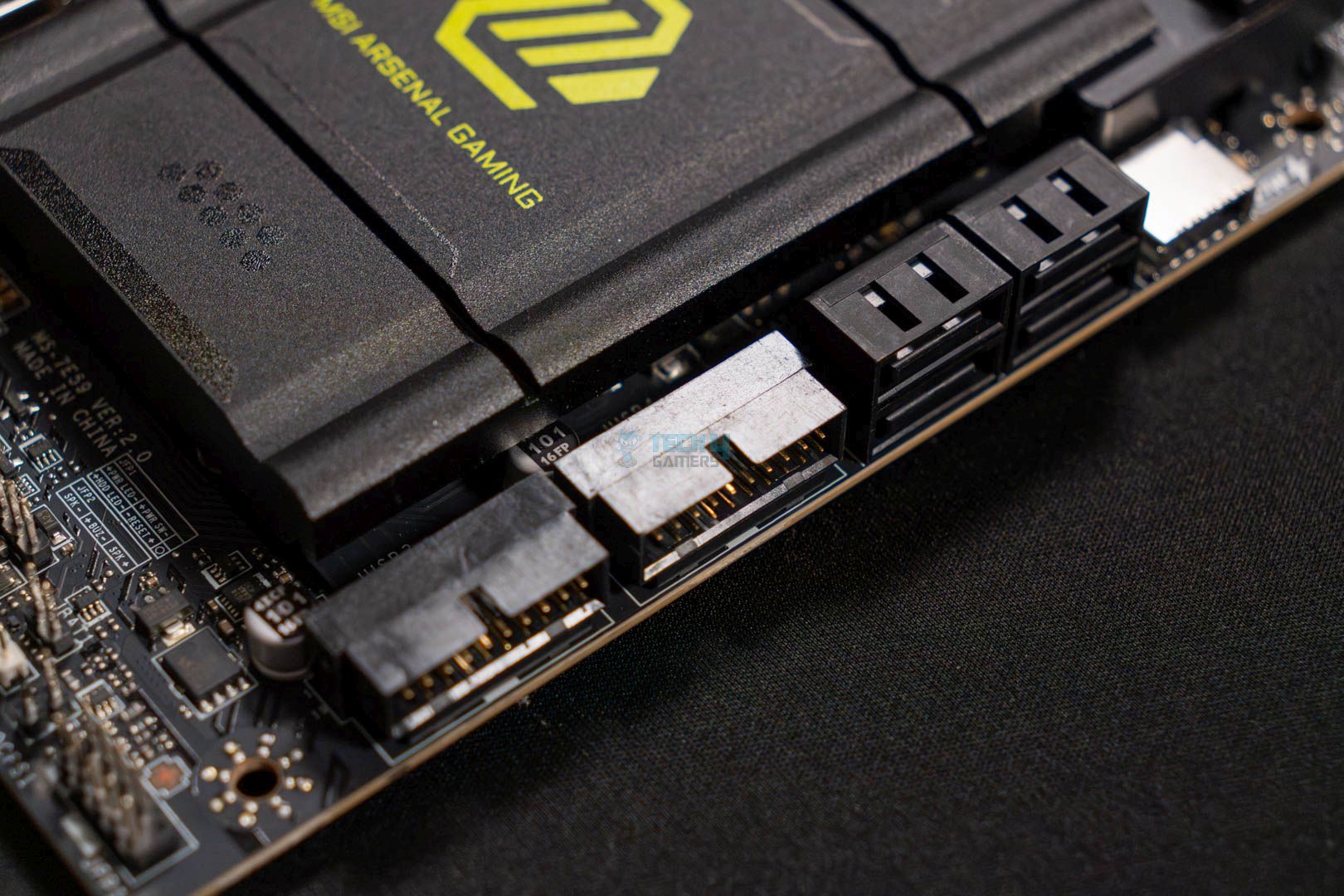
There are 4x SATA ports and as many M.2 slots on the MSI MAG X870E Tomahawk WiFi. Two of the M.2 slots are Gen 5, while the remaining two are Gen 4. RAID 0, RAID 1, and RAID 10 configurations are supported for any/all SATA and M.2 drives. Here are the different drives supported by the various slots:
M2_1: 22110/2280
M2_2, M2_3, M2_4: 2280/2260
All the M.2 slots come with dedicated heatsinks. The top-most and bottom heatsinks can be removed by a simple push in the arrow’s direction (EZ M.2 Shield Frozr II). Between these two is a heatsink supported by four screws. All the heatsinks have similar designs and have the slot numbers printed. The primary M.2 heatsink is bulkier than the rest. Let’s remove them all and see what we have.
M.2 heatsinks removed (Image by Tech4Gamers)
We have thermal pads attached to the heatsinks for efficient heat transfer. The primary M.2 slot also has a thermal pad at the base to handle the higher heat output of these drives.
WARNING: Make sure to remove the thermal pad stickers before installation.
We can see that the EZ M.2 II clip is pre-installed on the primary M.2 slot; this can be removed and installed on another slot if required. By default, the remaining slots have latches on them for drive installation. We would’ve liked to see MSI include a couple of these clips in the package, too.
USB Connectivity
We get 19x USB slots on the motherboard:
USB4 controller (Image by Tech4Gamers)
4x USB 2.0 (Rear)
4x USB 2.0 (Front)
3x USB 5Gbps Type A (Rear)
4x USB 5Gbps Type A (Front)
2x USB 10Gbps Type A (Rear)
1x USB 10Gbps Type C (Rear)
1x USB 20Gbps Type C (Front)
2x USB 40Gbps Type C (Rear)
So, we have plenty of high-speed ports, including dual 40Gbps and a 20Gbps port. The USB4 port comes from the ASM4242 controller (pictured above), powered by the CPU.
Network and Connectivity
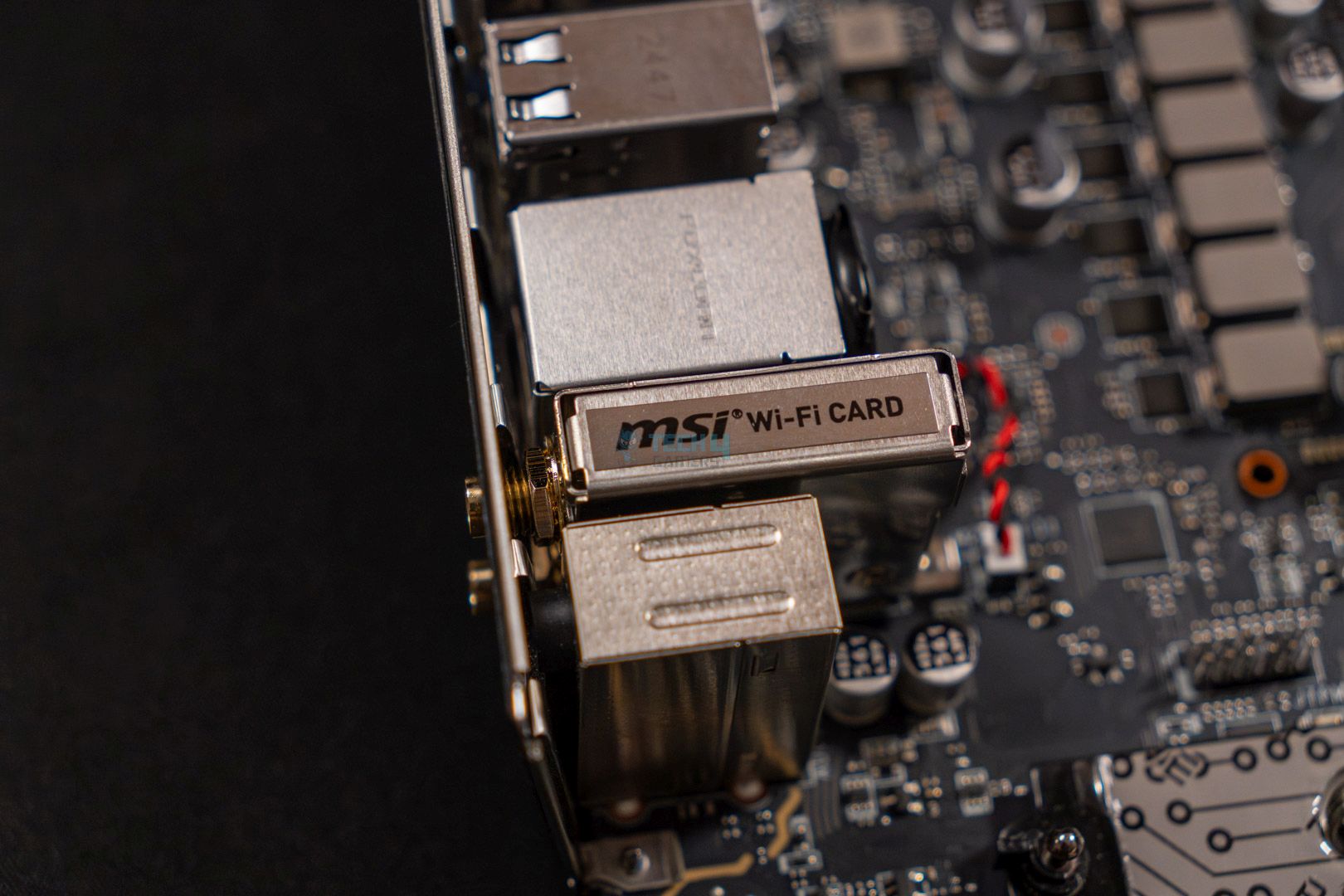
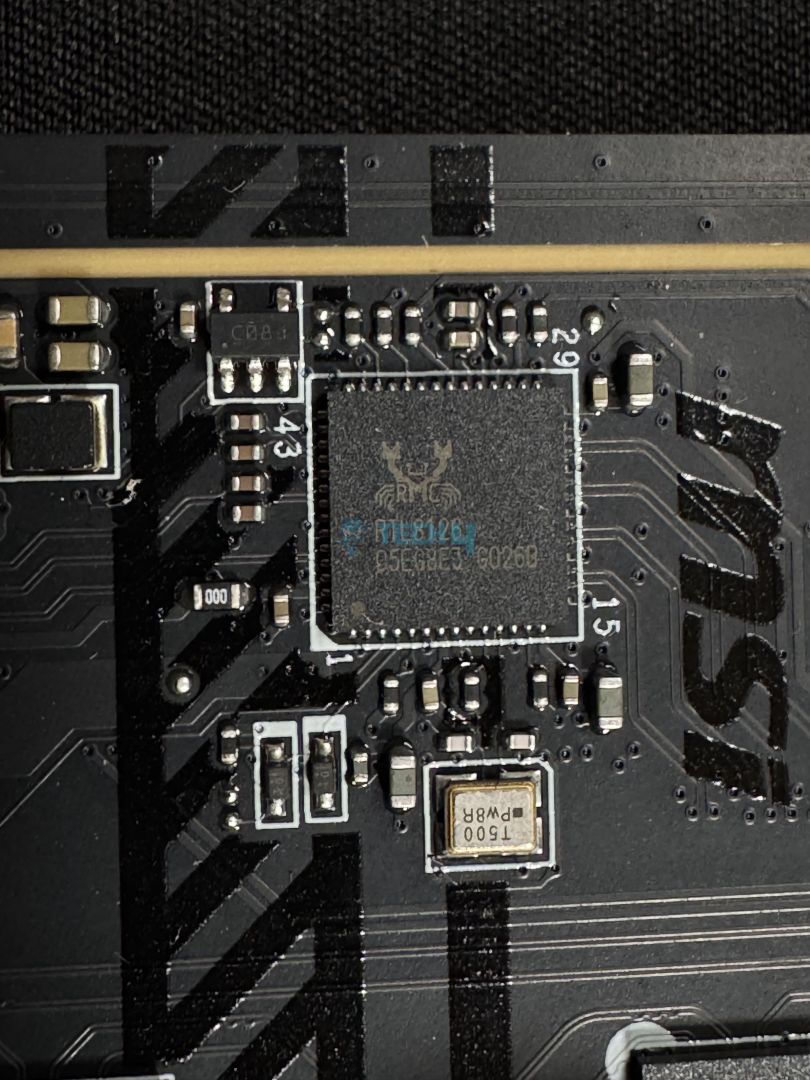
WiFi card and LAN controller
1 of 2
WiFi Card
Realtek Chip
The board supports 5G LAN (powered by Realtek 8126 chip), plus WiFi 7 and Bluetooth 5.4 for wired connectivity. MSI’s AI LAN manager tool (inside the MSI Center) provides some handy network management tools. It includes automatic bandwidth prioritization for games and finds the best WiFi signals for connection, among other features.
Audio Solution
The X870E Tomahawk WiFi motherboard uses Realtek’s ALC4080 audio codec for 7.1-channel USB audio. MSI implemented different PCB layers for the right and left channels, and the isolated analogy structure ensures clear audio from the rear 3.5mm jacks. This design “separates the external framework of these connectors from the internal layout.”
Also, as part of MSI’s “Audio Boost 5” solution, you promise high-quality audio capacitors, a dedicated headphone amplifier, and de-pop protection.
Internal Connectors and Components
Here are all the internal connectors on the board:
Top-right connectors (Image by Tech4Gamers)
1x Power Connector(ATX_PWR)
2x Power Connector(CPU_PWR)
1x Power Connector(PCIE_PWR 8pin)
1x CPU Fan
1x Combo Fan (Pump_Sys Fan)
6x System Fan
1x EZ Conn-header (JAF_2)
2x Front Panel (JFP)
1x Chassis Intrusion (JCI)
1x Front Audio (JAUD)
3x Addressable V2 RGB LED connector (JARGB_V2)
1x RGB LED connector(JRGB)
1x TPM pin header(Support TPM 2.0)
4x USB 2.0 ports
4x USB 5Gbps Type A ports
1x USB 20Gbps Type C port
Motherboard Connector
PCIe Connector
There isn’t much going on here. The 24-pin ATX connectors and the supplemental 8-pin PCIe connector also use the solid pin design. In case you’re not familiar with the latter, it can provide up to 252W, increasing the total board supply to 420W. This includes 2.5x power excursion through the PCIe slots (up to 165W), 132W for the fans, and 36W for RGB.
In a nutshell, you should be able to comfortably load the board with fans and RGB without having to worry about overloading, so long as your PSU has enough to supply.
27W charging is supported through the front 20Gbps USB port. You can monitor its output power, voltage, and current in real time through MSI center.
We get the EZ digi-debug LED panel along with 4x LED lights to troubleshoot booting issues The LED panel can also function as a temperature monitor.
Super I/O controller (Image by Tech4Gamers)
The Nuvoton NCT6687D chip serves as the board’s Super I/O controller, responsible for controlling fans and monitoring voltages, temperatures, and fan speeds across the board. We can spy M.2 signal source lists on the side, indicating slot numbers and whether they’re coming from the CPU or the chipset. I fail to see the average user being interested in this, though.
Rear I/O Connectivity
Here’s what we get on the rear:
Rear I/O (Image by Tech4Gamers)
Clear CMOS Button
USB 10Gbps Type-A
USB 5Gbps Type-A
USB 2.0
5G LAN
Wi-Fi / Bluetooth
Audio connectors
Flash BIOS Button
HDMI™
USB 40Gbps Type-C
USB 10Gbps Type-C
USB 10Gbps Type-A
The USB ports are labelled with their supported maximum speeds. Flash BIOS (to update BIOS without CPU, GPU, etc.) and clear CMOS button (to reset BIOS settings) are also present, but there’s no “Smart Button.
The I/O shield is made of stainless steel and comes preinstalled on the board. On top is a rear I/O cover, which covers all the rear I/O components.
Test Setup
Let’s take a look at our test bench for the motherboard:
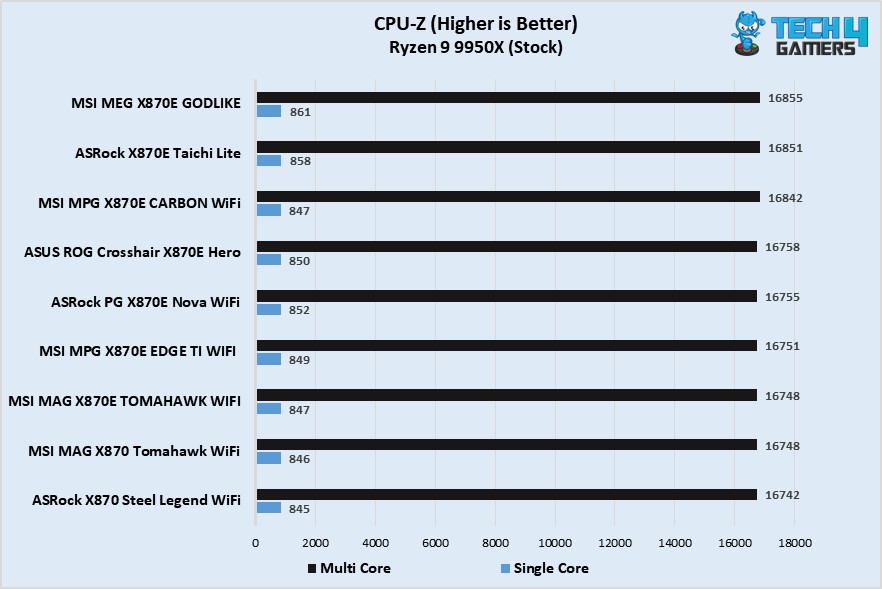
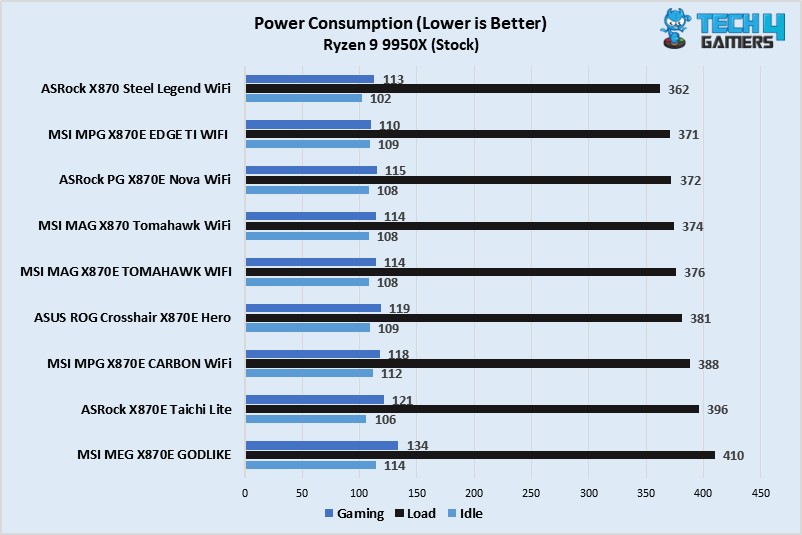
The CPU/motherboard power consumption numbers from the board are at the middle of the list. We noted 376 watts under Cinebench 2024 load, 114 watts while gaming, and 108 watts while the system was left idle.
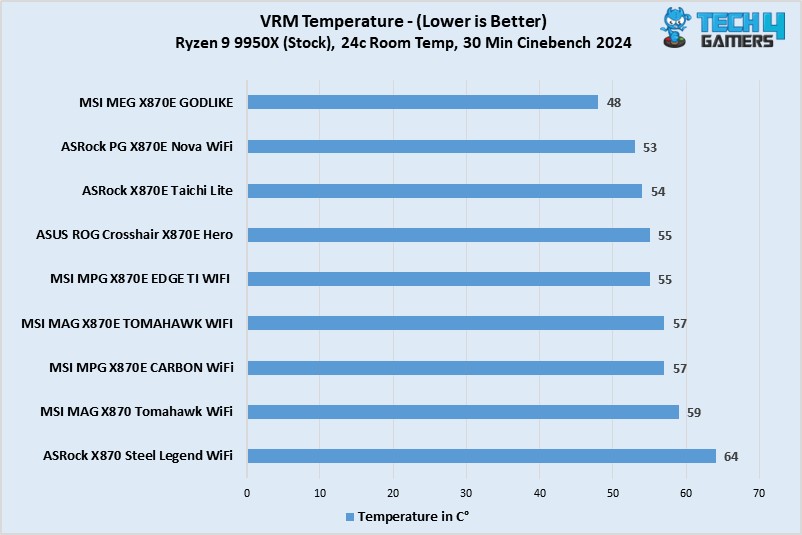
VRM temperatures from the board are good, with a maximum of 57°C recorded during our testing involving Cinebench 2024.
Boot Times
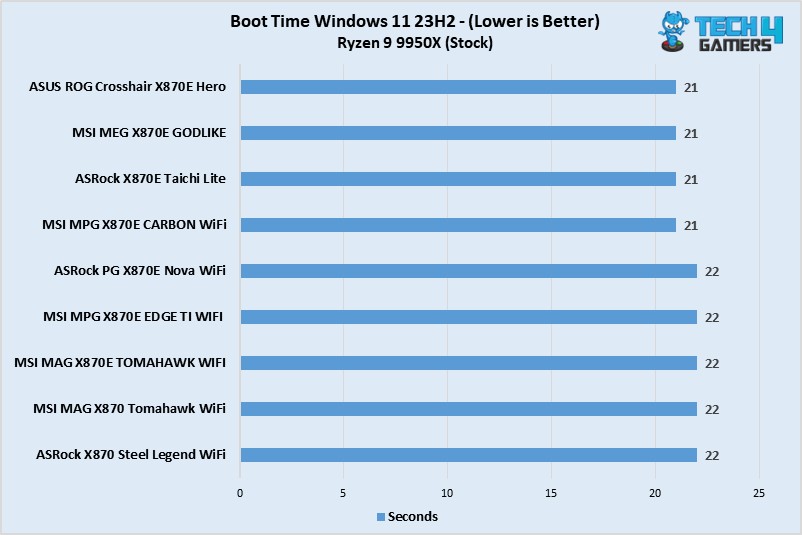
The board showed a boot time of 22 seconds, just a second less than the fastest option.
Should You Buy It?
Let’s decide!
Buy It If:
✅You’re seeking a well-rounded mid-ranger: The motherboard offers good performance, decent VRMs, and an excellent set of I/O (like 5G LAN, USB4, and Gen 5 storage) for a tag of $299.
✅You have plenty of USB devices and fans to connect: With its supplemental PCIe connector, the board provides up to 420W for your components, including fans, RGB, and USB devices.
✅You want ease of use and installation: The motherboard is quite convenient to work with and set up, with EZ-DIY mechanisms and peripherals making your tasks easier.
Don’t Buy It If:
❌You’re looking to overclock heavily: While some basic overclocking room is available, you won’t be able to push high-end Ryzen CPUs to their limits on this board.
My Thoughts
The MSI MAG X870E Tomahawk WiFi is an excellent addition to this budget-oriented series. It offers good performance, impressive I/O, and plenty of EZ-DIY features making it a breeze to work with. Talking looks, the board has a fairly basic design, but one that is fitting for a budget-oriented board. There’s no RGB, but if you prefer it, you can always add your own!
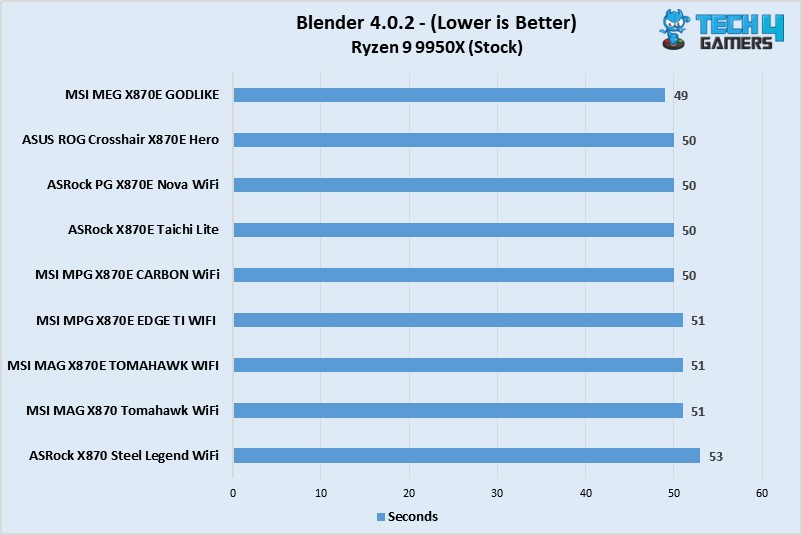
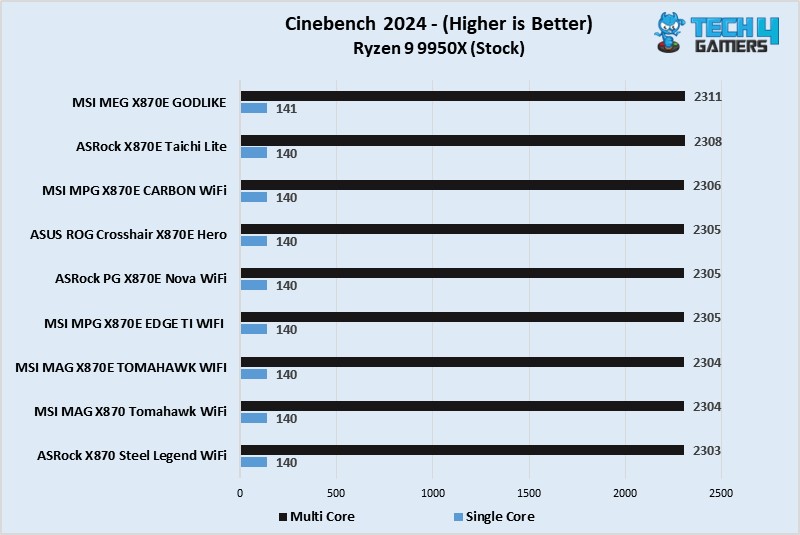
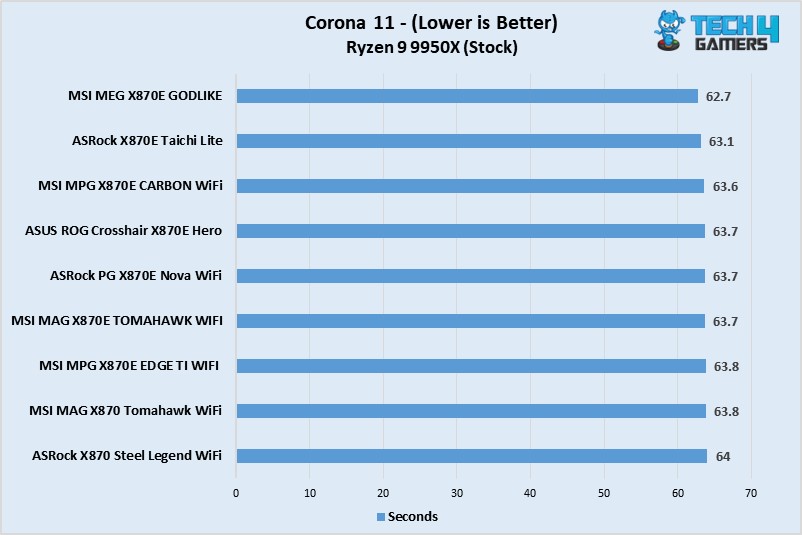
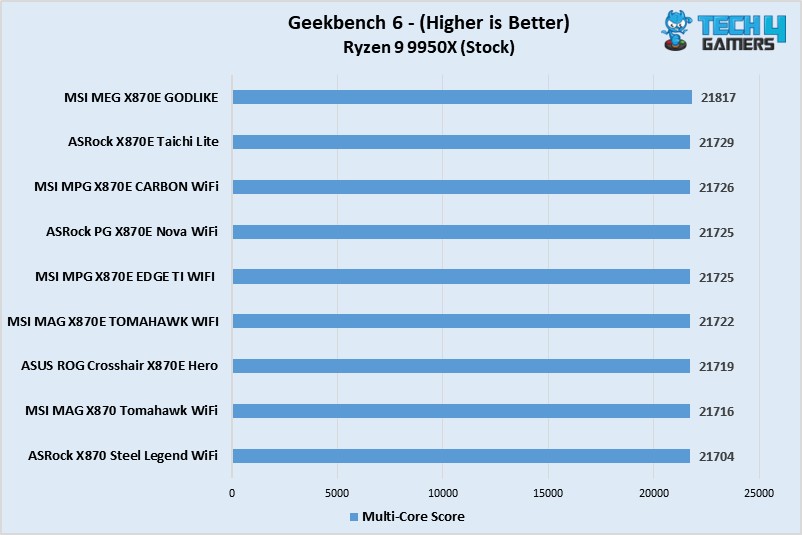
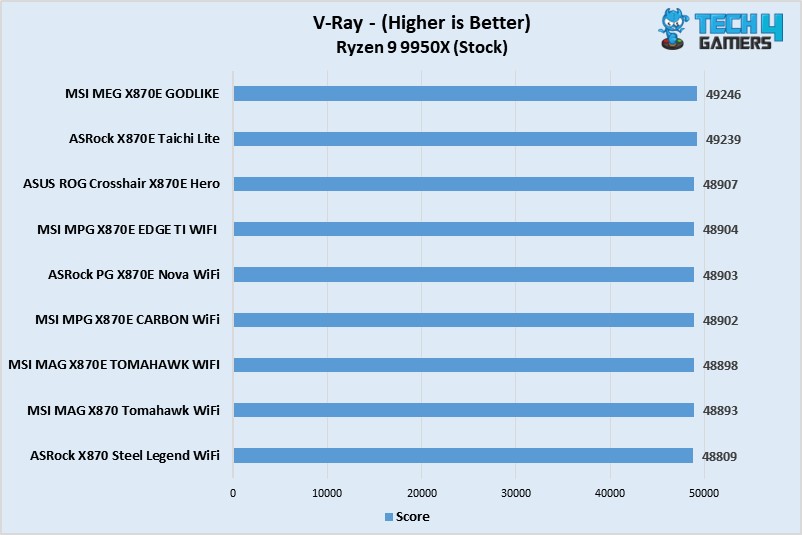
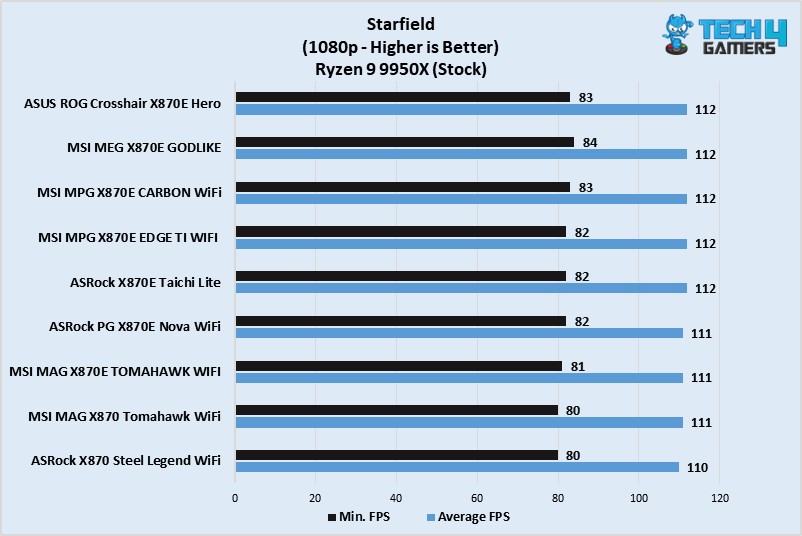
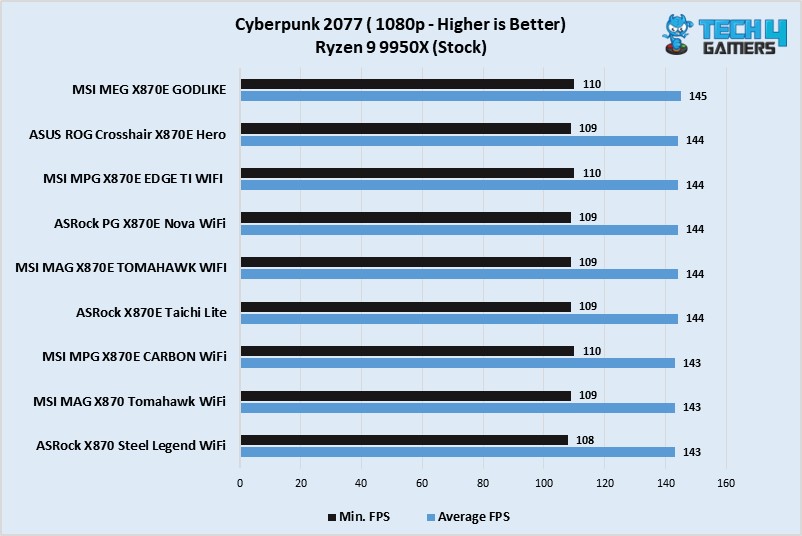
You get a 14+2+1 VRM solution with 80A SPS for the CPU VCore providing 1,120A. The VRM cooling does its job, keeping the setup under 58°C during our testing. Overall, the performance of the board is good; it did well in all our benchmarks.
The board has 3x PCIe slots, including a full Gen 5 x16 one. This slot is coupled with the EZ PCIe release mechanism and is steel-reinforced to handle heavy GPUs. You also get dual Gen 5 M.2 slots on top of dual Gen 4 ones. Two of the M.2 heatsinks can be removed by EZ mechanisms. Meanwhile, installing/removing the drives may rely on the “latch” clips or the singular EZ M.2 clip II, which you can relocate by using the provided remover.
For USB, there are an impressive 21 USB ports, including dual USB4. The board offers 5G LAN, WiFi 7, and Bluetooth 5.4 provisions, which is impressive and adequate for most users (I doubt you were expecting 10G LAN at this price!). The audio solution is Realtek’s ALC4080, a mid-range solution that’s plenty for even high-end gaming headsets.
The various EZ-DIY mechanisms and peripherals (the EZ front panel cable and 1-to-3 connector) are another major highlight. Working with the board is a breeze!
The board is priced at $299, and MSI is offering a 3-year warranty for it. We thank them for sending us this model for review!
As a News Reporter at Tech4Gamers, I bring the latest findings from the tech industry to our readers. Specializing in processors, graphics cards, and more, I strive to deliver detailed insights that keep our audience well-informed and engaged. Periodically, I also delve into the vibrant world of gaming to share captivating stories.
Story Highlight
The GeForce RTX 5090 is expected to offer roughly a 20% performance boost over the RTX 4090 in gaming.
In tests like ray tracing, TimeSpy, and FireStrike, the RTX 5090 outperforms the RTX 4090 by significant margins.
The new Blackwell architecture may not deliver the same performance uplift as the previous Ada Lovelace architecture.
A few reviewers have recently finished testing the GeForce RTX 5090 in synthetic benchmarks, and Videocardz has collected their findings. This compares the RTX 5090 and 4090 in games with identical configurations.
While the data is reliable, synthetic benchmarks typically show higher performance gains than real-world gaming. According to the reviewers, gamers should anticipate a performance boost of roughly 20% over the RTX 4090.
Why it matters: Synthetic benchmark results provide information on the expected performance improvements of the upcoming RTX 5090, which could help users make informed decisions when considering an upgrade.
In synthetic benchmarks, the GeForce RTX 5090 scored 46% higher in the ray tracing test, 33% higher in TimeSpy, and 36% higher in FireStrike compared to the GeForce RTX 4090.
Furthermore, the official 3DMark scores for the GeForce RTX 4090, 4080S, and Radeon RX 7900XTX were included to ensure that this data is as comparable as possible.
This should help you get a sense of what the RTX 5090 is capable of compared to the current generation. However, don’t expect the new Blackwell architecture to show similar performance gains as Ada Lovelace.
The current flagship GeForce RTX 4090 on average is about 50% better than the GeForce RTX 3090 in rasterization. Keeping that in mind Nvidia Blackwell might be the worst generational upgrade since Turing.
The performance gain of the 5090 might also give us an idea about other cards in the GeForce RTX 50 lineup. Though, it’s not looking good for anyone looking to upgrade over the last generation.
At Tech4Gamers, I contribute as a Senior News Reporter, combining my skills and gaming enthusiasm to keep our audience updated on the latest developments.
[Press Release] Colorful has announced a new set of motherboards for the Intel Core Ultra 200 lineup. Aimed at the mid-range segment, the B860 motherboards offer compelling features like PICe Gen 5 SSD support, Wi-Fi 7 connectivity, and more.
The iGame B860M Ultra Comes With A White And Silver PCB
The iGame B860M Ultra leads the lineup with its pleasing aesthetic. It offers three M.2 slots, one of which supports the PCIe Gen 5 interface. Elsewhere, this motherboard comes with support for up to DDR5-9200 MT/s memory and the Intel Core Ultra 9 265K.
Also included are 4 USB 2.0 ports, 4 DDR5 RAM slots, and Wi-Fi 7. On the other hand, the CVN B860M Gaming Frozen and B860I Gaming Frozen come in micro-ATX and mini-ITX form factors, respectively.
Both Gaming Frozen Motherboards Offer A Sleek And Stylish Look
Like the B860M Ultra, the B860M Gaming Frozen offerings include three M.2 slots and 10Gbps USB-C support. Moreover, Wi-Fi 6 and a 12+1+1+1 power phase are included out of the box. Elsewhere, the mini-ITX variant sports two M.2 slots and Wi-Fi 6E.
It also comes with an 8+1+1+1 power phase design, offering a lot for its incredibly compact form factor. For all the details details on these motherboards, visit the official Colorful website through this link.
I’ve previously worked for eXputer as a Senior News Writer for several years. Now with Tech4Gamers, I love to devoutly keep up with the latest gaming and entertainment industries. I have a Bachelor’s Degree in Computer Science and years of experience reporting on games and breaking exclusive stories. Besides my passion for gaming journalism, I love spending my leisure time farming away in Stardew Valley. VGC, IGN, GameSpot, Game Rant, TheGamer, GamingBolt, The Verge, NME, Metro, Dot Esports, GameByte, Kotaku Australia, PC Gamer, and more have cited my articles.
Story Highlight
According to an insider Bungie developers wanted to work on single-layer titles after Sony Acquisition.
However, the company only had a live service-based future in mind.
The studio is currently working on Marathon after Gummy Bears got canceled.
The PlayStation 5 generation has been defined by Sony’s push for live-service titles instead of focusing on single-player games. And, over the past year or so, this approach has crumbled slowly and surely with the company canceling a fair share of its live-service projects in the pipeline and doing a 180.
Bungie Studios has a major live-service project titled Marathon set to release in the near future. But, as it turns out, the developer has always been willing to work on single-player games for Sony, but the Japanese giant insisted otherwise.
Why it matters: Sony’s focus on live-service games is a key reason why the PS5 generation has seen fewer game releases. This further shows that the company’s strategy has backfired.
Bungie Also Fell Victim To This Ill-fated Approach From Sony.
Insider Zuhaad Ali From Destiny Bullet revealed that a lot of developers at Bungie wanted to work on single-player games but the leadership at Sony had other plans. While working on a story last year, the insider found that the company’s heavy insistence on a live-service future led to the development of titles like Marathon.
In addition, Zuhaad also says that smaller and less risky video games that were not live service would never see the light of day and get shut down immediately. Sony only wanted live service to be the focal point of the PlayStation 5 generation and onwards.
Arrowhead’s Helldivers 2 Is The Standout Success From The Live Service Push.
However, Sony’s focus on live service games, deviating from its success with single-player experiences, was misguided, and canceling half of these projects reflects this. Due to this humongous waste of time and resources, many are calling the PlayStation 5 generation the worst in history.
I’ve previously worked for eXputer as a Senior News Writer for several years. Now with Tech4Gamers, I love to devoutly keep up with the latest gaming and entertainment industries. I have a Bachelor’s Degree in Computer Science and years of experience reporting on games and breaking exclusive stories. Besides my passion for gaming journalism, I love spending my leisure time farming away in Stardew Valley. VGC, IGN, GameSpot, Game Rant, TheGamer, GamingBolt, The Verge, NME, Metro, Dot Esports, GameByte, Kotaku Australia, PC Gamer, and more have cited my articles.
Story Highlight
A huge survey has revealed that at least one in three AAA developers is currently working on live-service games.
The 33% figure comes as a shock when the recent flops and declines in the genre are considered.
Despite this, almost half the surveyed developers expressed a lack of interest in the genre.
Sony also recently canned a bunch of its live-service projects, making Bluepoint and Bend Studio potentially waste an entire generation.
However, it appears that the industry is still not ready to move on from the genre. A new survey suggests that one in three AAA developers (33%) is currently working on live service games.
Why it matters: Recent reports over the past few months have suggested that live-service games are losing popularity due to several failures. However, the survey indicates that many of these games might still be in development.
At least one in three AAA developers is currently working on live-service projects.
GDC’s 2025 State of the Game Industry survey also reveals that 13% of developers want to make more live-service titles if given the chance. Interestingly, a live-service game is deemed successful if it retains 40% of daily active users and 32% of monetized players.
The study also confirms that nearly half the developers expressed a lack of interest in live-service games because of huge risks. Another 29% simply do not care about the genre.
The GDC survey has also revealed that at least 80% of developers are currently making titles for the PC market instead of consoles.
While the genre appears to be on a decline, the survey suggests that many studios’ unannounced projects might be live service or have similar elements. Nevertheless, it is best to take the survey with a grain of salt as it does not count the data of every single developer.
Do you think the live-service genre will continue to thrive in the upcoming console generation? Let us know your thoughts in the comments below, or join the discussion on the official Tech4Gamers forum.
I’ve previously worked for eXputer as a Senior News Writer for several years. Now with Tech4Gamers, I love to devoutly keep up with the latest gaming and entertainment industries. I have a Bachelor’s Degree in Computer Science and years of experience reporting on games and breaking exclusive stories. Besides my passion for gaming journalism, I love spending my leisure time farming away in Stardew Valley. VGC, IGN, GameSpot, Game Rant, TheGamer, GamingBolt, The Verge, NME, Metro, Dot Esports, GameByte, Kotaku Australia, PC Gamer, and more have cited my articles.
Story Highlight
BioWare is assisting in the development of the new Battlefield.
The studio is already busy with othe projects following the failure of Dragon Age: Veilguard.
Work on BioWare’s own new game, Mass Effect 5, isn’t starting anytime soon.
BioWare hasn’t exactly had a happy last few months in retrospect. If their premium AAA title Dragon Age: Veilguard flopping massively wasn’t enough, the game’s director also left the studio just recently following an internal investigation into the game’s failure.
The studio isn’t just waiting around for its next major project. Instead, it’s actively assisting EA in developing other internal games, including Battlefield.
Why This Matters: BioWare’s PR has been badly damaged by the failure of Dragon Age: Veilguard. Despite this, it’s an interesting choice to have its developers assist with the story and writing for the new Battlefield, a game that really needs to do well.
According to Harel Eilam’s LinkedIn, some of the BioWare staff including him are working on the next Battlefield with DICE as part of the Electronic Arts’ Rotational Experience Program.
The developer will help with the narrative design and writing of the upcoming game. Given that many fans criticized the writing in Dragon Age: Veilguard, this move doesn’t inspire much confidence.
Despite the BioWare RPG turning out to be a disappointment for the ages, it seems like EA still trusts the studio a lot. The company has already assigned BioWare its next major AAA title, which is going to be Mass Effect 5, even though work on the game is not starting anytime soon.
BioWare’s Veilguard Was A Failure EA Didn’t Forsee.
EA also has big expectations from the next Battlefield title, saying it will go on to outsell Call of Duty that year and promising features like ultra-realistic destruction and open-world gameplay.
Attaching BioWare’s name to its project, however, isn’t a positive sign for a franchise trying to go back to its roots and win over older fans in the face of competition.
I’ve previously worked for eXputer as a Senior News Writer for several years. Now with Tech4Gamers, I love to devoutly keep up with the latest gaming and entertainment industries. I have a Bachelor’s Degree in Computer Science and years of experience reporting on games and breaking exclusive stories. Besides my passion for gaming journalism, I love spending my leisure time farming away in Stardew Valley. VGC, IGN, GameSpot, Game Rant, TheGamer, GamingBolt, The Verge, NME, Metro, Dot Esports, GameByte, Kotaku Australia, PC Gamer, and more have cited my articles.
Story Highlight
A survey revealed that 80% of game developers out of the 3000 surveyed are only targeting the PC market instead of consoles.
The figure has risen from 66% in 2024, seeing significant gains over the last few years as more developers move towards PC.
One in ten developers was also laid off last year.
The gaming industry has been adapting in various ways to maximize profits and reach the widest gaming audiences. Over the years, PC gaming has also continued to grow exponentially compared to consoles due to various advantages.
A new survey now reveals that 80% of game developers producing games are now targeting PC markets instead of consoles.
Why it matters: The survey shows developers shifting focus to PC markets, suggesting consoles may become less important in the future.
80% of surveyed game developers are targeting the PC market instead of consoles.
GDC’s 2025 State Of The Game Industry survey reveals that 80% of game developers are making games for PC—up from 66% last year. The figure has increased massively in the last few years, as only 58% of developers were working on projects for PC in 2021.
On the flip side, only 38% of developers are targeting PS5 or its Pro variant, while only 34% are involved with Xbox Series X|S.
A past report also recently uncovered that PC gaming has become bigger than ever, surpassing consoles in terms of games sold. Additionally, PC gaming contributed the most to the whole industry’s growth by generating $40.4 billion in revenue two years ago.
It is best to take this survey with a grain of salt, as only 3000 developers were surveyed to reach this conclusion out of the entire industry. Console makers are also battling the changing trends by going multiplatform—while also adapting in various other ways.
Will this figure continue to increase as the disparity between PC and console gaming grows, or do you see it settling down in the next few years? Let us know your thoughts in the comments below, or join the discussion on the Tech4Gamers forum.
At Tech4Gamers, I mainly cover new gaming news, leaks, and rumours. Aside from that, I love to write features about my favourite games while inserting my opinion about their different aspects.
Story Highlight
Unknown 9 Awakening, a game advised by Sweet Baby Inc., has been deemed a total failure by Reflector Entertainment’s CEO.
The developer revealed that the game failed to come close to expectations, resulting in canceling of future projects.
The title’s failure has also caused many developers to lose their jobs, but they will be given some benefits for the time being.
Unknown 9 Awakening, backed by Bandai Namco, didn’t perform well. One of the main reasons for that was Sweet Baby’s interference with the game. The majority of fans hate this company because, according to them, it forces agendas into video games.
Now, its developer, Reflector Entertainment, has revealed in a recent post that the title has been a complete failure and due to that, future projects have been canceled. Many employees will also lose their jobs.
Why it matters: Unknown 9 Awakening launched to just 300 players on Steam, and it reportedly had zero pre-orders on PS5 and Xbox Series S|X across 2900 stores. So, a failure on this scale usually has dire consequences.
The CEO of Reflector Entertainment Has Revealed Important Important Information Regarding the Studio’s Future | Via LinkedIn
Herve Hoerdt, Reflector Entertainment’s CEO and Bandai Namco Entertainment Europe’s COO, has recently revealed that Unknown 9 Awakening has been a colossal failure for the studio.
He revealed due to this game’s failure, he had to make a decision not to greenlight any future project that was conceptual phase.
Today, I informed our teams that I made the decision to not greenlight further work on a future project that was in conceptualization phase.
The title didn’t even come near Reflector Entertainment’s expectations. So, after numerous timeline adjustments and investments, the CEO had to make this hard decision.
This decision correlates directly with the failure of the studio’s ambitious and courageous first project, a new IP with a rich transmedia universe. Unfortunately, this also affects back-office staff.
Given the extent of the game’s failure, it has affected not only future projects but also the employees. Many developers will now lose their jobs, but the CEO ensured that they would be provided with adequate severance packages, extended health benefits for their families, and more.
What do you think about the developer facing such a massive blow from its first IP? What do you think about the title? Share your thoughts with us in the comments section below or join the discussion at the official Tech4Gamers forums.
At Tech4Gamers.com, I cover the latest news and rumours in the gaming industry, from new game releases to hidden gems and video game leaks. Furthermore, I occasionally write tech articles about video game consoles, providing insights into the hardware and software that powers our gaming experiences.
Story Highlight
Activate Gaming combines physical activity with cutting-edge technology to create a unique, immersive entertainment experience.
The concept was born from the desire to create engaging, replayable entertainment that combines video games with physical activity, filling a market gap.
Activate offers RFID wristband tracking, regular game updates, and in-house design and manufacturing for quality and fast innovation.
Activate Gaming is changing the way we experience entertainment by combining physical activity with the latest technology. It’s designed to engage both the body and mind, offering a unique gaming experience that mixes the excitement of video games with real-world movement.
With game rooms featuring advanced sensors, motion cameras, and RFID tech, Activate motivates players to move, think, and work together in ways traditional gaming can’t.
In this interview, we explore what makes Activate stand out in the world of active gaming. From the idea behind its creation to its focus on welcoming all fitness levels and its drive for innovation, Activate’s approach is as lively as its games.
We also discuss the technology behind their interactive rooms, how player feedback influences their games, and their vision for the future of gaming in our increasingly digital world.
Not your average gaming night.
Activate is a gaming facility full of innovation, but is the variety of games it features enough to replace a regular cardio session?
Play Activate: At Activate, we’ve designed our games to be as engaging for your body as they are for your mind while making them a ton of fun. Many of our challenges require continuous movement—running, jumping, dodging, and reaching—which can elevate your heart rate in the same way traditional cardio exercises do.
What sets Activate apart is the added mental stimulation. You’re not just playing; you’re solving puzzles, collaborating with teammates, and engaging in a dynamic, tech-driven environment. This combination of physical and cognitive effort can make the workout feel more like play, which is why so many of our players come back again and again.
Many guests tell us they get more steps in during an hour of gameplay than they do at the gym!
How did you come up with the idea of Activate?
Play Activate: My wife, Megan, and I were first introduced to the entertainment industry after experiencing an escape room. There weren’t a lot of entertainment options where we lived. We took the lessons from that experience and developed one of the most successful escape rooms in Western Canada.
While running that company, we also saw a gap in the market for interactive entertainment that encourages replayability. Inspired by this need, we embarked on a mission to merge the thrill of video games with physical activity. This led to the development of Activate. Our aim wasn’t just to redefine entertainment, but to create an experience that promotes social interaction, health, and fun.
One of the most exciting aspects of Activate is that it allows for constant innovation. Being an inventor at heart, I find it a platform to keep developing new content and share it globally.
In the past, games on Xbox Kinect, PS Move, and Nintendo Wii offered similar experiences at home. What are your thoughts on the lack of such experiences today?
Play Activate: While gaming consoles introduced a generation to motion-based gaming, they lacked the immersive and communal aspects that Activate offers. Today, the focus of gaming has shifted towards online and mobile platforms, which often isolate players.
Activate fills this void by offering a shared, interactive experience in physical locations. Unlike at-home gaming, Activate’s games are designed to foster social connections and collaboration. The real-time feedback and advanced technology also create an unparalleled level of immersion that home gaming systems cannot replicate. You can also challenge your friends at different locations and monitor their scores even if they’re on the other side of the world.
Do the players who join a session need to be physically fit to play? What about overweight or disabled people—are there any games that suit them?
Play Activate: Activate is designed to cater to various fitness levels ensuring that everyone can enjoy the experience. Our games are designed with this in mind. When you choose a game, you can pick your level. The levels range from one (easy) to ten (extreme).
Many of our games focus more on strategy and problem-solving than physical endurance. We also offer cooperative modes that emphasize teamwork over physical activity, ensuring everyone can participate and enjoy the experience. For those who enjoy competition, our games also feature competitive modes for an extra challenge.
Activate is all about creating an engaging and inclusive environment where everyone can immerse themselves in the fun.
Activate has spread globally, but what unique innovations have set it apart from competitors like other interactive gaming facilities?
Play Activate: Activate’s unique blend of real-time technology, physical interactivity, and gamification sets it apart from other gaming facilities. Unlike traditional VR or AR setups, Activate uses RFID wristbands to track progress, unlock rewards, earn badges, and create a personalized gaming journey.
The games are replayable, with frequent updates and new challenges ensuring fresh experiences for returning players. Additionally, the focus on physical activity and teamwork distinguishes Activate from competitors, offering an engaging alternative to passive entertainment.
Our game rooms are proudly designed and manufactured in Winnipeg, Manitoba, Canada, giving us unparalleled control over quality and innovation. By keeping everything in-house, we maintain rigorous quality standards at every step—from concept to production—ensuring product excellence and consistency across all locations.
If we need to make a change, we simply walk 10 feet to our manufacturing plant and implement it immediately. Should a game experience a minor issue, our tech support team can resolve it directly through our systems—no lengthy downtime or waiting weeks for a technician.
When it’s time to introduce a new game or mode, our advanced technology enables us to roll it out globally at the push of a button, delivering updates to every location in seconds. This hands-on, in-house approach allows us to stay ahead of the curve while delivering a seamless, top-tier experience to our players.
How have the difficulty levels been designed to satisfy every skill level and age group?
Play Activate: Activate’s games are designed with scalability, allowing players to select difficulty levels. This ensures accessibility for beginners while providing a challenge for experienced players. For example, families can enjoy entry-level games focusing on fun, while competitive groups can push their limits with advanced levels. The design considers players’ physical and cognitive abilities, making it an inclusive experience for all ages 6+ and skill levels.
Is player feedback a factor that influences and evolves the games?
Play Activate: Player feedback isn’t just important—it’s the cornerstone of our development process. We actively engage with our community through surveys, focus groups, and in-depth analysis of in-game data to uncover areas for improvement and spark ideas for new game concepts. This feedback has directly led to enhancements in-game mechanics, smarter difficulty scaling, and the creation of fan-favorite features like competitive modes.
By listening to our players, we ensure that every game remains dynamic, engaging, and relevant. At Activate, our players are more than participants—they’re partners in shaping the future of immersive gaming.
The world is constantly evolving—how do you plan on keeping up with advancements? Are there any upcoming technological features in the works?
Play Activate: Activate is deeply committed to innovation. We constantly integrate advanced technologies to elevate the gaming experience. We’re continually exploring new gamification elements and cutting-edge ways to enhance the tech in our rooms.
On the backend, we are working on enhancing tech support systems, allowing for self-diagnosis and issue resolution without players missing a beat.
As we move into different countries around the world, we have been adapting our gameplay for different languages paying attention to cultural considerations, and ensuring that our gaming experiences resonate while maintaining the core elements that make Activate unique.
How do you see active gaming evolving in the future, especially with the emergence of AR and VR technology?
Play Activate: While these technologies are still evolving, they hold enormous potential to deepen the level of engagement and interactivity in gaming. At Activate, we believe the future lies in blending physical activity with advanced technology to create experiences that are not only entertaining but also social, physically engaging, and mentally stimulating.
What role does Activate plan on playing in the future of active gaming, considering the dominance of conventional gaming media?
Play Activate: As a leader in active gaming, the company plans to continue expanding globally while continuously innovating to appeal to new audiences. By promoting health and social interaction, Activate positions itself as a counterbalance to the passive nature of traditional gaming media.
Shed some light on the technical side of the interactive rooms; what technology has been employed to handle them in real-time?
Play Activate: Each room is equipped with a network of sensors, cameras, and custom hardware that track player movements and actions with precision. These inputs are processed through our proprietary software, which ensures instant responses and dynamic adjustments based on gameplay. The system is designed for split-second accuracy, creating a fluid, uninterrupted experience.
We also leverage RFID technology to personalize the experience for each player. This allows our system to track progress, win rewards, and unlock achievements in real time, ensuring that every session feels unique and tailored.
On the backend, our centralized tech infrastructure monitors all rooms across locations. It performs real-time diagnostics. This ensures that our games run smoothly while maintaining a high standard of reliability and performance.
By combining state-of-the-art hardware, intelligent software, and real-time data processing, Activate delivers an unparalleled level of interactivity and innovation in active gaming.
What kind of sensors and hardware are used to respond to players' actions in real-time?
Play Activate: The hardware includes motion-sensing cameras, infrared detectors, touch-activated LED buttons, and LiDAR systems for precise tracking. These sensors enable the games to adapt instantly to player movements, creating a fluid and interactive experience.
What challenges did Activate face while producing seamless real-time challenges and various difficulty levels?
Play Activate: Creating seamless real-time challenges with adjustable difficulty levels required overcoming several technical and design hurdles. One major challenge was developing a system capable of processing player inputs instantly. With multiple players interacting simultaneously, it was critical to ensure that sensors, cameras, and our custom software could accurately track and respond in real time without lag.
This required extensive testing and optimization to ensure every action—whether a tap, jump or throw—was registered and reflected immediately in the game. Another challenge was balancing difficulty levels to cater to a wide range of players. Designing games that are equally engaging for beginners, casual players, and hardcore gamers meant creating intelligent systems that adjust complexity dynamically.
This involved significant time in prototyping and gathering player feedback to refine difficulty scaling without sacrificing the fun or challenge for any group. These challenges pushed us to innovate and refine our technology and design processes, resulting in the dynamic and inclusive gaming experiences that define Activate today.
Players must first sign a waiver before participating in a session. Are they responsible for any injuries or potential damages done to the game rooms? Please elaborate on that.
Play Activate: At Activate, player safety and the integrity of our game rooms are our top priorities. The waiver players sign is designed to ensure they understand the physical nature of our games and acknowledge any potential risks associated with active play. It’s a standard procedure meant to protect both the players and the company.
While we take every precaution to minimize risks through our safety guidelines and monitoring, the waiver helps clarify that players are participating at their own risk. This ensures that players are aware of the physical activity involved. We provide clear instructions, safety measures, and support to reduce any potential hazards.
As for damages to the game rooms, we take great care to ensure the technology and equipment are durable and built to withstand the energy of active play. Our team works hard to design rooms that can handle the demands of active gaming. The games are checked and tested daily to ensure our strict safety standards are met and exceeded.
Ultimately, our goal is to create a fun and safe environment where everyone can enjoy the excitement of active gaming without concern.
Activate Gaming is more than just a gaming space—it’s changing the way we experience entertainment. By combining the latest technology, physical activity, and inclusivity, Activate offers a place where fun, fitness, and innovation come together.
With exciting game designs and a global vision, Activate is setting the bar for interactive gaming. Constant updates, player feedback, and a focus on quality are helping Activate shape the future of active entertainment.
At Tech4Gamers, I contribute as a Senior News Reporter, combining my skills and gaming enthusiasm to keep our audience updated on the latest developments.
Story Highlight
A major GDC survey shows about 11% of developers were laid off last year.
This figure went up to nearly 50% when discussing the number of professionals impacted by the trend.
Developers point to practices like shifting trends and restructuring as major reasons behind the layoffs.
As the industry prepares to leave the trend of layoffs behind, a new survey highlights just how tough 2024 was for the entire industry. As per the survey, about one in ten developers were laid off last year.
Why it matters: The gaming landscape has made it incredibly difficult for professionals to stay free of concerns about potential job cuts. This figure once again emphasizes the seriousness of the situation.
No Major Publisher Was Safe From Job Cuts Last Year
The survey in question was conducted by GDC and involved a total of 3,000 developers across the indie and AAA space. This sample size was selected to give a broad overview of gaming’s current state.
The same survey showed 7% of developers were laid off in 2023, and the figure rose to 11% in 2024. Elsewhere, about 41% of respondents, or 1230 developers, stated that layoffs impacted them in one way or another.
4% of the developers also stated their studios were shut down. As per the participants, the major factors for the high layoff rates included poor management, declining revenues, and more.
Embracer Group Alone Laid off Thousands of Staff Members
However you look at it, 2024 was an extremely challenging year for everyone involved in the gaming landscape.
While there’s no telling how 2025 will turn out, developers will certainly hope for a more stable year, particularly because of releases like GTA 6, which should help the market rebound in meaningful ways.
What are your thoughts on these figures? Let’s discuss this in the comments and on the Tech4Gamers Forums.
At Tech4Gamers, I contribute as a Senior News Reporter, combining my skills and gaming enthusiasm to keep our audience updated on the latest developments.
Story Highlight
The former executive producer of the Dragon Age IP states that Mass Effect 5 is still in pre-production.
He recently revealed that BioWare developers have moved to other EA projects since they don’t have anything else to do.
This will likely result in the studio’s next game coming much later than expected.
Unfortunately, this much-anticipated comeback is unlikely to happen anytime soon. As revealed by a veteran developer, production on the game has yet to begin.
Why it matters: It’s not uncommon for gaming studios to work on multiple projects simultaneously so that one is ready to enter production once the other launches. BioWare itself used the same approach in the past, but the team is now working with a different mindset.
This information comes from Mark Darrah, who worked as a consultant on Dragon Age: The Veilguard. For context, Mark Darrah previously led the franchise and returned to the latest entry toward the end of development to provide notable feedback.
As per one of his recent videos, BioWare works very differently today. He explained that the team does not pursue the development of two projects at once, which has resulted in Mass Effect 5 staying in pre-production after Dragon Age: The Veilguard was released.
People who worked on Dragon Age: The Veilguard; some of them are moving into other parts of EA because Mass Effect isn’t ready for them.
-Mark Darrah
He also explained that many developers from the studio shifted to other EA projects because of the delay in Mass Effect’s production.
The studio is currently attempting to figure out the direction of the IP’s upcoming release, leaving it with little need for more developers. Ultimately, this means that the game will arrive later than initially anticipated.
Fans Are Hoping For A Return To Form With The Next Entry
Because the project was announced as early as 2020, fans might find the long waiting period a bit infuriating. However, BioWare seems to be in no rush, particularly after Dragon Age: The Veilguard’s commercial disappointment.
What are your thoughts on the team’s progress? When do you think the game will finally come out? Let’s discuss this in the comments and on the Tech4Gamers Forums.