Currently serving as a News Reporter at Tech4Gamers, I have the privilege of combining my love for gaming with the art of storytelling. My role involves crafting engaging narratives that keep our audience abreast of the latest developments in the gaming world.
Story Highlight
Corsair’s CEO recently put out a statement that GTA 6 is expected on PC in early 2026.
The comments made headlines in the gaming industry.
However, Corsair has now stated that the CEO’s comments were purely speculation and nothing official from Rockstar or Take-Two.
Corsair’s CEO recently claimed that GTA 6 might be released on PC in early 2026 as opposed to a Fall 2025 exclusive launch on the consoles.
The remarks made headlines throughout the gaming community. The manufacturer has now responded to the situation, clearing up the misconception.
Why It Matters: Rockstar’s radio-silent approach to GTA 6 has not been well received by fans and the gaming industry, who keep coming up with various theories and predictions.
Trevor Voice Actor Teased A Potential Appearance For His Character In GTA 6
Talking with IGN, a representative of Corsair came forward, stating that the CEO’s comments were just a guess and nothing official either from Rockstar or its parent company, Take-Two.
Rockstar has a history of spacing out its titles’ launch dates across different platforms. GTA 5 launched on PC two years after its console release, and so was the case with Red Dead Redemption 2.
GTA 6 Expected To Feature A Dynamic Weather System
As such, GTA 6 is also expected to be released for PC at a later date. However, nothing is officially confirmed as of yet, and it’s best to wait for Rockstar’s official word on the situation.
GTA 6’s marketing could be ramped up anytime soon with official details, as the game’s launch is just a few months away.
At Tech4Gamers, I contribute as a Senior News Reporter, combining my skills and gaming enthusiasm to keep our audience updated on the latest developments.
Story Highlight
A user has shared a report of a burnt RTX 5090.
Images show a burnt capacitor, which resulted in smoke and eventually led to the graphics card failing completely.
This particular variant of the flagship Nvidia GPU cost nearly $3000.
Nvidia can’t seem to escape the slew of controversies surrounding its latest graphics card series. Whether it be the multiple reports of RTX 5000 GPUs shipping with missing ROPs or the melting connector issue plaguing the RTX 5090, this series has been a disaster in numerous ways.
Adding to the reports of problematic RTX 5000 GPUs, one particular RTX 5090 has caught fire and completely malfunctioned.
Why it matters: Such reports showcase the larger problem with Nvidia’s flagship offering. Despite its unprecedented price, the RTX 5090 fails to deliver satisfactory levels of quality.
A Redditor Brought Up The Incident of His Burnt GPU Earlier Today
As shared on Reddit, the user’s Asus ROG Astral RTX 5090 no longer works. The Redditor states that he saw smoke coming from the PC as a gaming session was abruptly interrupted, and burn marks were clearly visible on the graphics cards and motherboard upon closer inspection.
The GPU caught fire, and smoke started coming out.
-u/impossible-weight485
Images attached in the post show what appears to be a burnt capacitor. Many are speculating that this was the source of the fire, which means that the connector is not to be blamed for this incident.
This situation is so shocking because this particular RTX 5090 sells for around $2800, a nearly 50% price hike over the MSRP. Positioned as one of Asus’ higher-end variants, the ROG Astral has completely failed to live up to its reputation as a premium offering.
The Motherboard Was Visibly Damaged By The Burnt Graphics Card | Image via Reddit
Fortunately, the user has found some relief in this situation. Gamers Nexus is covering the GPU’s cost and will investigate the burnt unit to discover the potential cause behind this incident.
While this report is certainly a rarity for the RTX 5090, there’s no telling when more incidents of burnt GPUs might show up. Nvidia’s latest generation seems to be a QA disaster, indicating that the new products could have used more extensive testing and quality control.
At Tech4Gamers, I contribute as a Senior News Reporter, combining my skills and gaming enthusiasm to keep our audience updated on the latest developments.
Story Highlight
A reliable insider says the God of War remasters are real.
He suggests an announcement will be made close to the series’ 20th anniversary next month.
It remains to be seen whether all the Greek games will be remastered by PlayStation.
PlayStation’s latest State of Play had plenty of new announcements, but one much-anticipated game was nowhere to be found. Rumors ahead of the show pointed to remasters of the Greek God of War saga, and fans were left with nothing but disappointment when the event went live.
While not much has been said about these remasters since then, a reliable insider has finally broken the silence. It is now being said that an official announcement regarding these games is coming sometime next month.
Why it matters: Despite the popularity of the Norse God of War saga, Kratos’ earlier adventures remain limited to streaming on modern consoles. This has created a demand for remasters to make these games available to a wider audience.
The Remasters Will Be Part of The 20th Anniversary Celebration | Image via BSKY
This update comes from Jeff Grubb, who needs no introduction to those closely following gaming leaks. As per his latest scoop, the God of War remasters are real and will be announced soon.
On his BSKY profile, Jeff Grubb quoted a post highlighting artwork celebrating God of War’s 20th anniversary. For context, the original PS2 title debuted on March 22, 2005, leaving exactly one month until the series turns 20.
I think those God of War rumors jumped the gun a bit.
-Jeff Grubb
The most interesting part about Jeff Grubb’s statement is that he was the first to leak Days Gone Remastered. This project was officially revealed at PlayStation’s latest State of Play, adding further credibility to the insider’s leaks.
Rumors Suggest Kratos Will Return To His Roots Soon
Following the BSKY post, excitement is high among series fans as they look forward to another outing in the Greek era of God of War. Whether all games will receive the remaster treatment remains to be seen, but fans won’t have to wait too long to find out.
What are your thoughts on this project? Would you buy the older titles if they were remastered for modern hardware? Let’s discuss this in the comments and on the Tech4Gamers Forums.
As Tech4Gamers’ Founder and Editor-in-Chief, I bring over 13 years of PC Hardware Reviewing and 8+ years of IT Project Management experience. Certified in Google IT Support , my focus is on providing honest product reviews and analysis and fostering a strong gaming community with 130k+ members in PPG.
Ali
I intitally started by writing CPU comparisons and since then have written articles of all kinds, from Wikis and How-Tos to dedicated CPU reviews. Currently, I test and review CPUs, motherboards, and sometimes, RAM.
Nvidia launched the RTX 5080 (along with the RTX 5090) late last month. The announcement of these GPUs did not receive great reception, owing primarily to Nvidia’s marketing of RTX 5090 performance figures using DLSS 4 Multi Frame Generation (which previous-gen cards do not support). Also, the RTX 5090 received a VRAM bump, but the RTX 5080 didn’t.
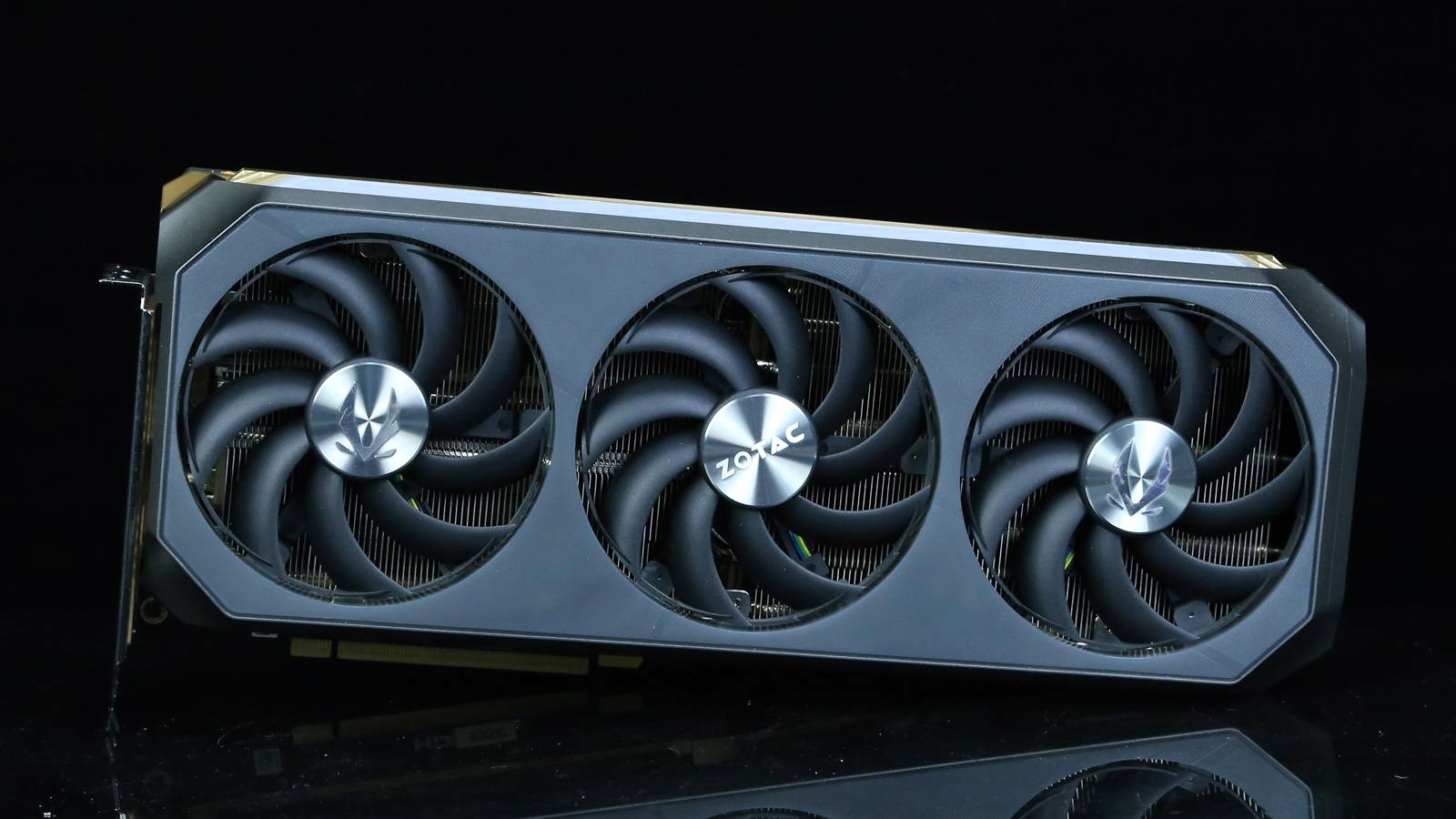
In any case, we’re putting the GeForce RTX 5080 AMP Extreme Infinity to the test today. The RTX 5080 is aimed at the 4K gaming market, like the RTX 4080 (Super), even with ray tracing to the mix. The RTX 5000 cards are the first to don this new “AMP Extreme Infinity” lineup, which features gold accents, an Infinity mirror RGB display on the front, and an impressive cooling design. Let’s dive in deeper and take a look.
Why Trust Tech4Gamers
Ali Touseef is our hardware reviewer who tests and reviews different components, including graphics cards, motherboards, and processors.
65+ graphics cards tested and reviewed by our team of hardware experts (Tech4Gamers Team).
1100+ hours spent testing different GPUs for our reviews.
At Tech4Gamers, ensuring you get reliable information is our priority. That’s why every hardware round-up undergoes a meticulous review process by our team of experts and editors. Each review is carefully examined against our strict editorial guidelines, guaranteeing you trustworthy insights you can depend on.
Key Takeaways
The Zotac GeForce RTX 5080 AMP Extreme Infinity is Zotac’s most premium RTX 5080 variant, offering unique aesthetics, better cooling, and marginally better performance than the RTX 5080 Founder’s Edition.
You should get this specific 5080 variant card if you prioritize unique aesthetics, as for the RTX 5080 as a whole, the only reason to buy it is if you’re upgrading from an older gen (like RTX 30-series or before) and want the latest card, even if it costs over MSRP.
You should not buy the RTX 5080 if you want the most value, as the performance uplift over the Founder’s Edition (considering the $250 higher price) isn’t worth it. Plus, the generational performance uplift isn’t good enough in general.
The Founder’s Edition card launched with a $1000 MSRP, the same as the RTX 4080 Super. We can also see that the specifications are quite similar between the two chips. The 5080 has marginally more shaders and RT cores, and its TDP is 40W higher. Not counting DLSS 4, we expect the two cards to perform similarly. That’s not very exciting, considering that their launch prices are the same, but we’ll see just how much they differ in a bit.
The Nvidia GeForce RTX 5080 is part of the fourth generation of Nvidia’s real-time ray tracing-capable RTX cards. It uses the Blackwell architecture. Powering the RTX 5080 is the GB203, the second most powerful die behind the RTX 5090’s GB202. The processing node is the same as RTX 4000, the “4N,” an optimized 5nm process.
Unlike the RTX 5090’s chip, the 5080’s GB203 has not increased in size, so there’s no room for more transistors. In fact, the transistor count has actually decreased from 45,900M (of the 4080) to 45,600M.
The new GPUs contain a PCIe 5.0 x16 host interface, making them the first consumer GPUs to support PCIe Gen 5. Additionally, they are using Micron’s GDDR7 memory, up from the GDDR6X of the previous generation’s big dogs. GDDR7 supports more than double the bandwidth compared to GDDR6. This memory is clocked at 1875 MHz for an effective memory clock of 30 Gbps and a bandwidth of 960 GB/s with a 256-bit bus.
Improvements
Architectural Changed With RTX 50-Series
1 of 4
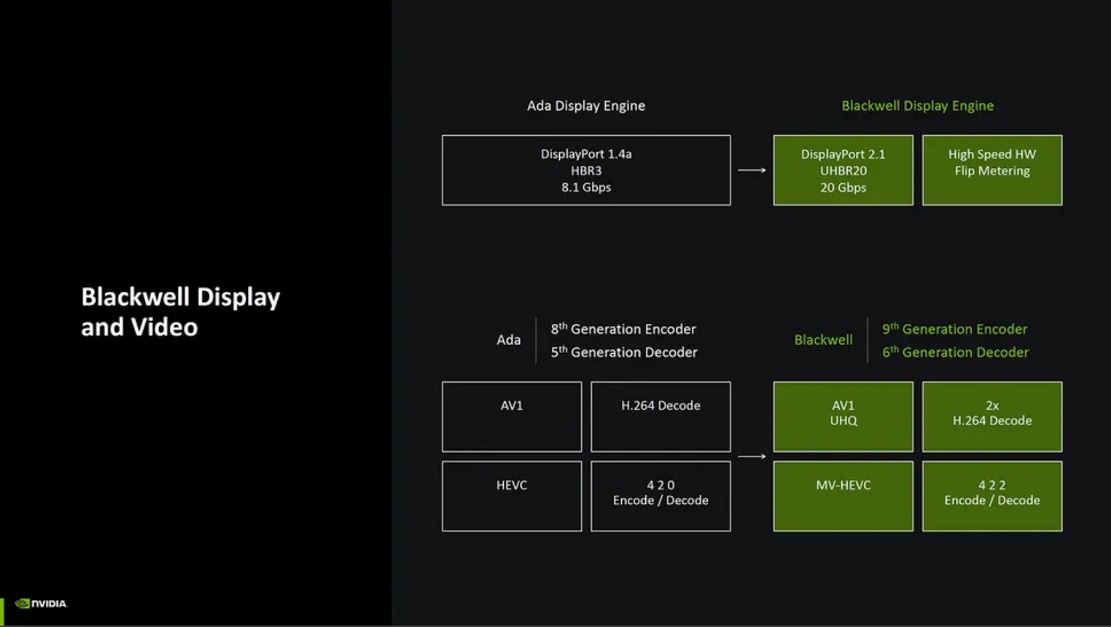
Video and display engine (Image Credits: Nvidia)
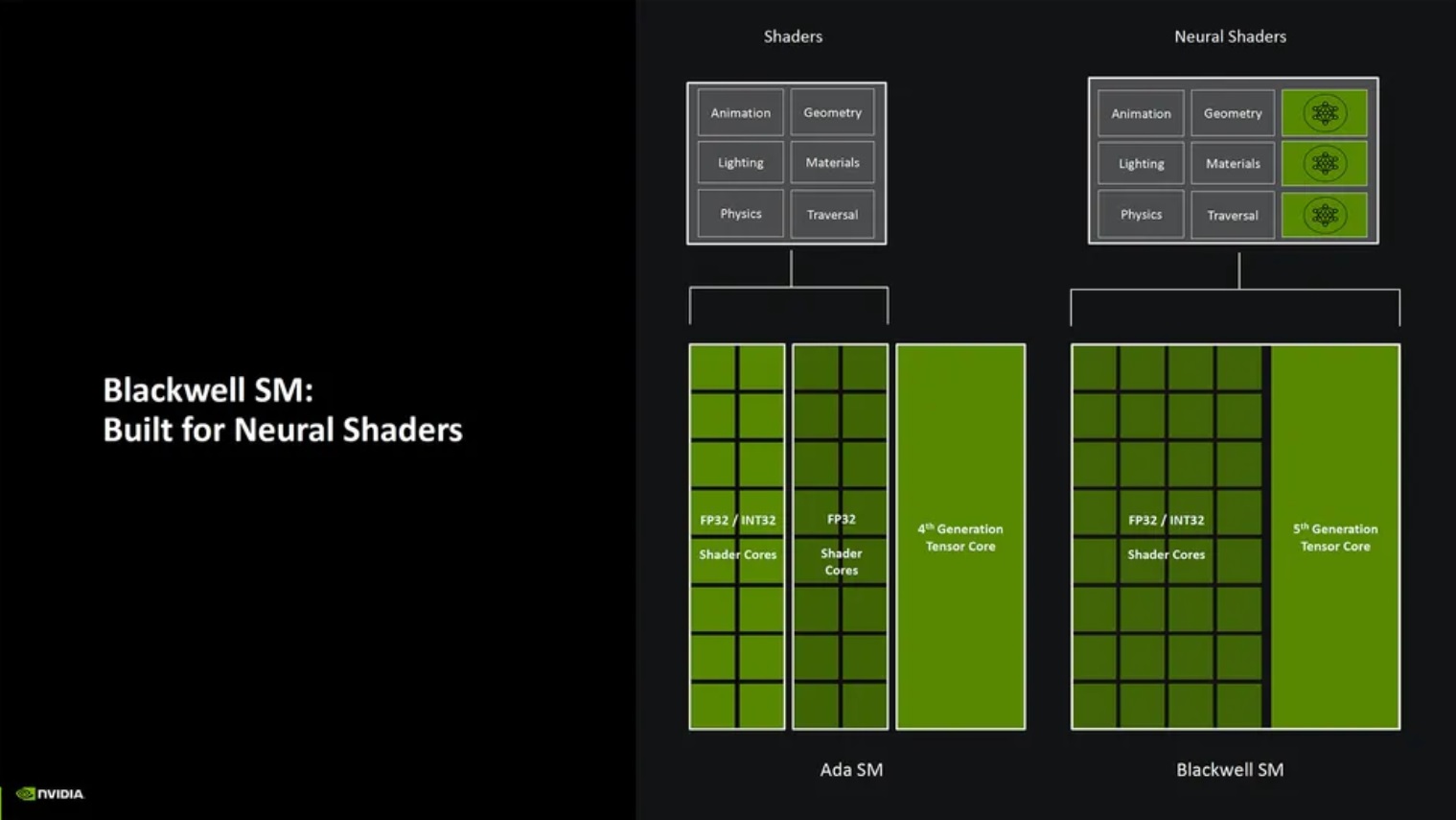
Neural shaders (Image Credits: Nvidia)
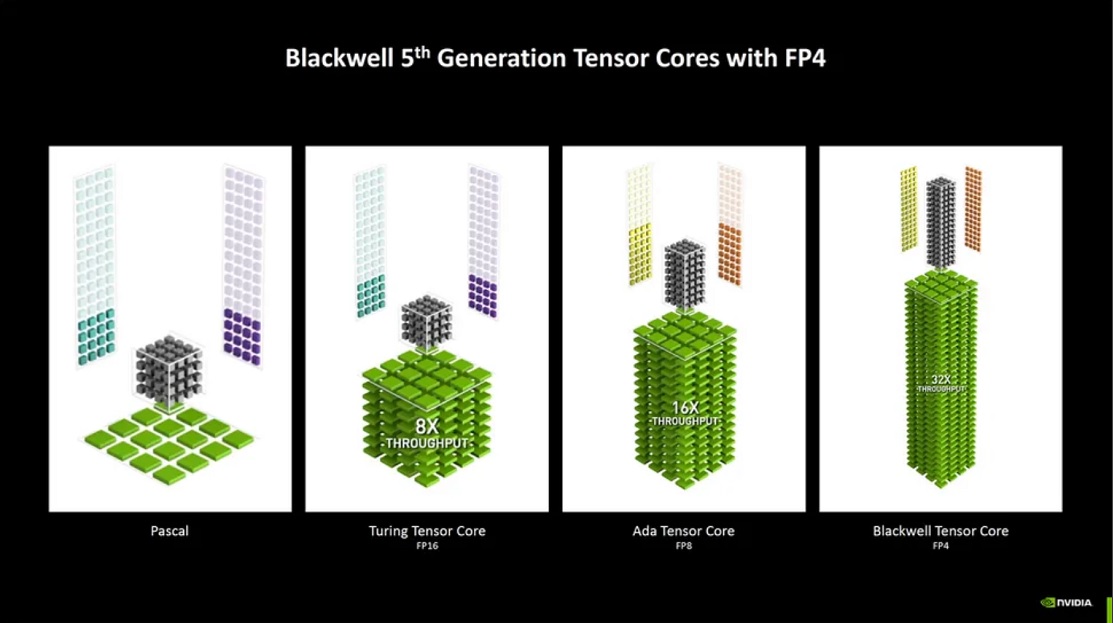
5th gen Tensor Cores (Image Credits: Nvidia)
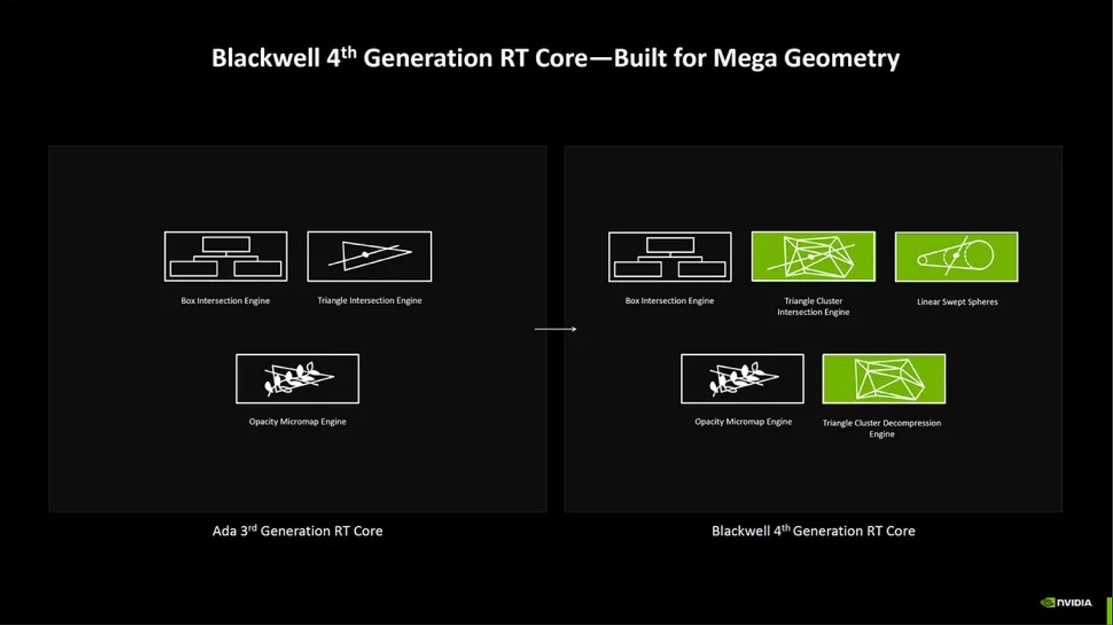
4th gen RT cores (Image Credits: Nvidia)
Video and Display Engines: The new Blackwell cards feature an improved display engine, which includes support for DisplayPort 2.1 (80 Gbps). Nvidia has also updated the media acceleration engine, which now includes updated NVENC video encode accelerators, including support for 4:2:2 AV1 color format, 2x H.264 Decode, and MV-HEVC.
Uniformity of SIMDs: The Blackwell SMs have 128 SIMD units, each capable of FP32+INT32 simultaneously, unlike Ada’s 64 FPS 32+INT32 and 64 FP32 units of.
Neural Shaders: The Tensor Cores can be accessed through the Shaders using Microsoft’s new DirectX Cooperative Vectors API.
Improved Tensor Cores: The Blackwell Tensor cores support INT4 and FP4, which are lower-precision formats but can be operated much faster and require less memory.
Improved Ray-Tracing Cores: The ray-tracing cores have been improved for better ray intersection performance. The new cores consist of an additional Triangle Cluster Intersection Engine, Linear Swept Spheres, and a Triangle Cluster Decompression Engine. These new components enable ray tracing of “Mega Geometry,” objects with very high polygon counts.
AI-management processor: Nvidia has added an AI management processor (AMP) to the cards, which will dedicate GPU resources to different, complex AI-related tasks, including multi-frame generation.
The Blackwell GPU
The GB203 chip consists of six GPCs (Graphics Processing Units), each with a dedicated Raster Engine, and six TPCs (Texture Processing Clusters) with two Stream Multiprocessors (SM) each. Each Stream Multiprocessor contains four clusters, each with 32 CUDA Cores and one 4th generation Tensor core.
It also contains a dedicated L0 cache, a Warp Scheduler, and a Dispatch unit capable of dispatching the 32 threads of Warp. We also have Register Files for the threads, four Load/Store units, and a Special Functions Unit (SFU). The SFU performs functions such as trigonometry and logarithmic operations.
Neural Rendering
Neural shaders (Image Credits: Nvidia)
Neural rendering promises to be the next big thing in video game optimization. Microsoft’s Cooperative Vectors API for DirectX will allow Tensor Core access directly from shaders. Developers will be able to integrate neural rendering techniques into graphics rendering processes. These include neural texters, neural materials, neural radiance fields, and more!
In summary, developers should be able to compress complex, computationally expensive functions into smaller pieces, reducing memory utilization and improving optimization.
DLSS 4 And Reflex 2
DLSS 4 features (Image Credits: Nvidia)
Nvidia DLSS 4 introduces a new Transformer Model for upscaling, ray reconstruction, and anti-aliasing. This model can double the parameters and four times the compute performance. The result is a much higher-quality image than was possible with the Convolutional Neural Network (CNN) model. What’s more, the new model can be utilized by all RTX users going back to the RTX 2000 series.
DLSS 4 also introduces Multi-frame generation, which relies on the 4th generation Tensor cores and is only compatible with RTX 5000. In this process, the Optical Flow Generator takes information from a conventionally rendered frame to generate three frames, compared to one frame of the previous-gen Frame Generation technique. Thus, the computational cost of generating one frame can generate four frames, boosting FPS.
Reflex 2 (Image Credits: Nvidia)
Nvidia Reflex 2 improves on the initial technology by using “Frame Warp.” The Frame Warp uses information about the most recent mouse movement and “warps” the frame to be rendered by the GPU based on that information. As a result, you’ll see the output of your mouse movement ingame as much as 75% faster. Reflex 2 will be supported by all RTX GPUs.
Design
Front
Fan closeup
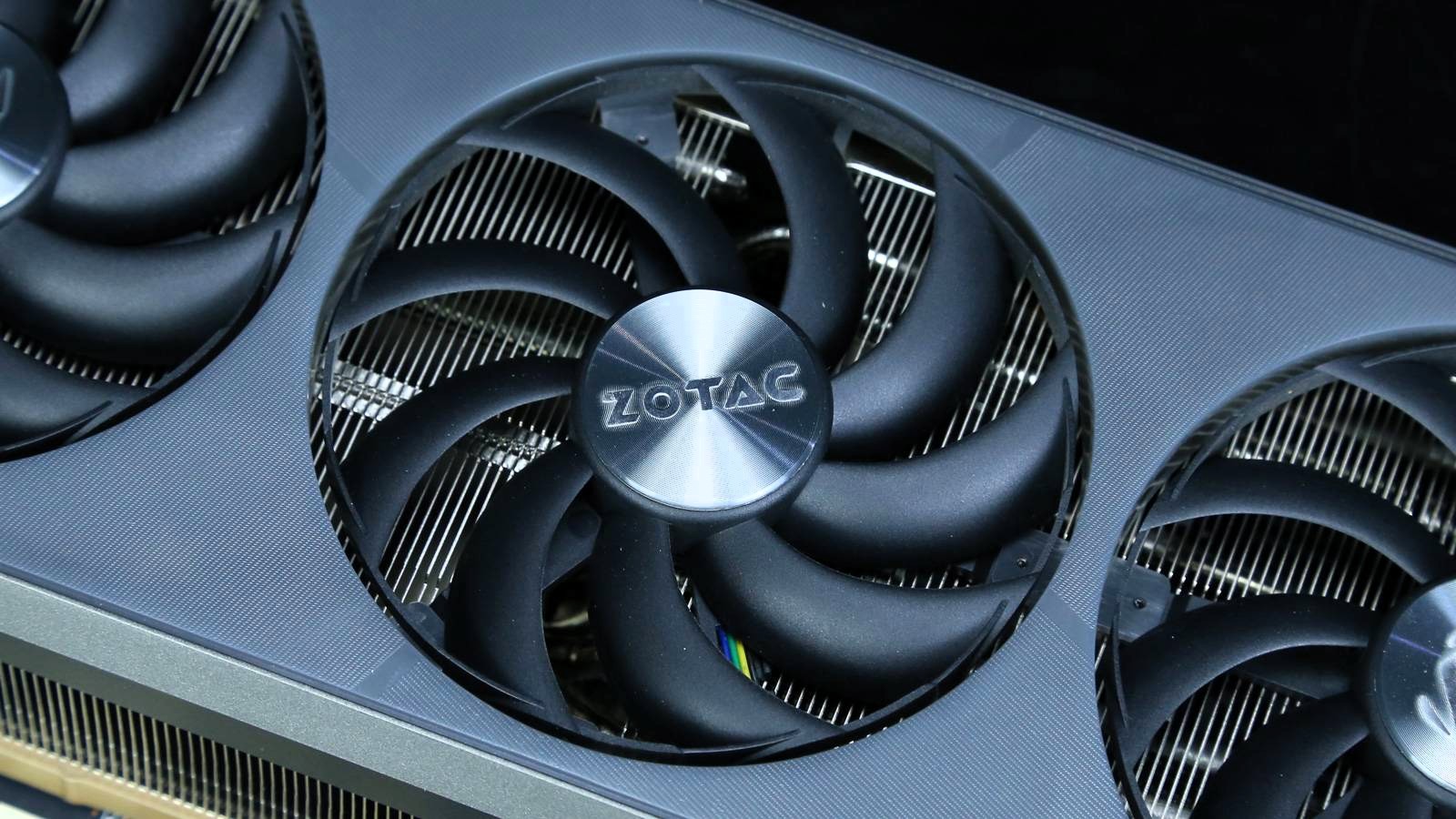
The Zotac GeForce RTX 5080 AMP Extreme Infinity features a gunmetal grey finish on the front and back. It has a triple-fan design with nine curved blades on each, optimized for axial airflow. These are Zotac’s new BladeLink fans. The fans support Automatic Fan Stop, which automatically controls fan speeds based on load.
Backplate
LED
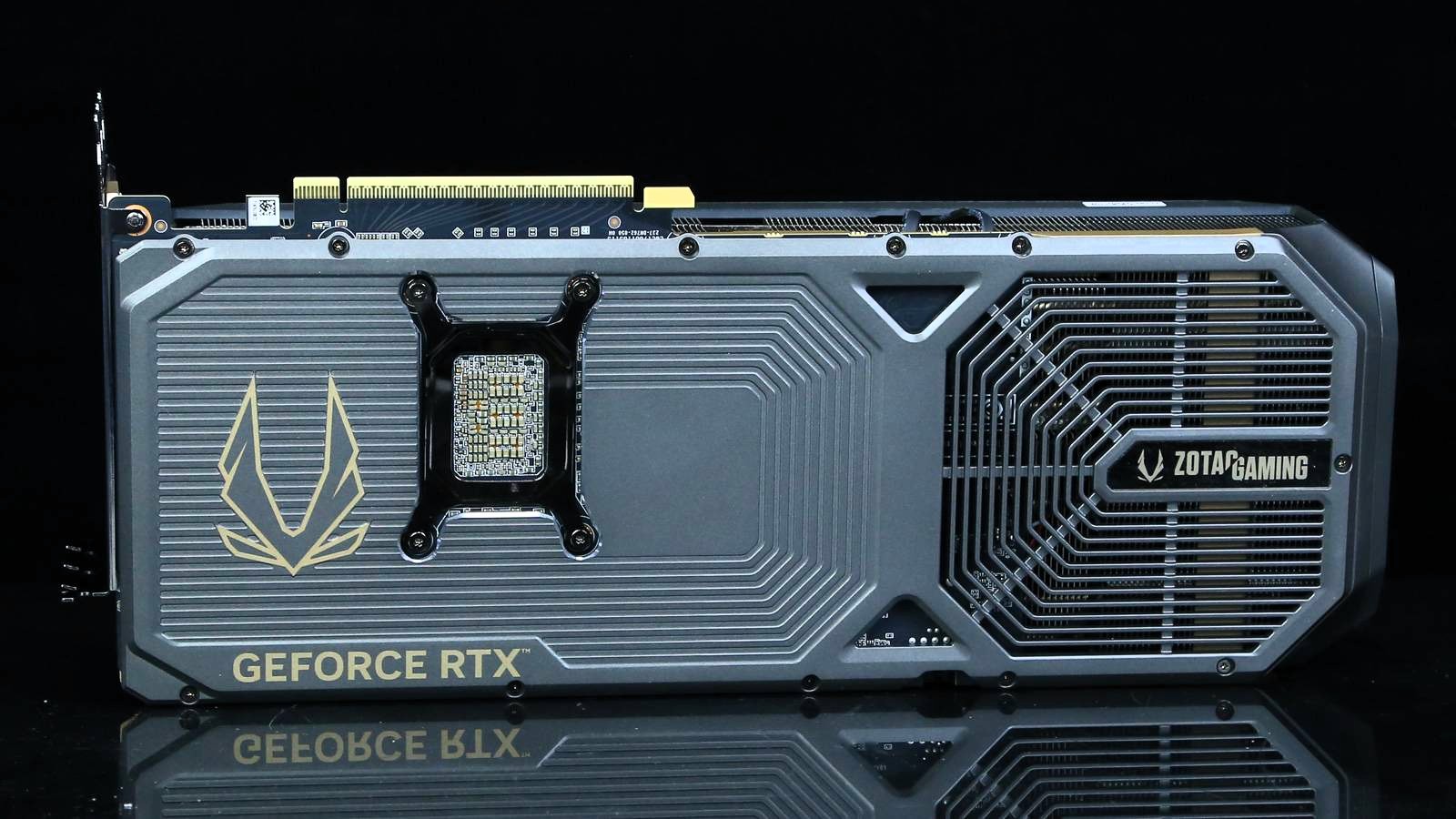
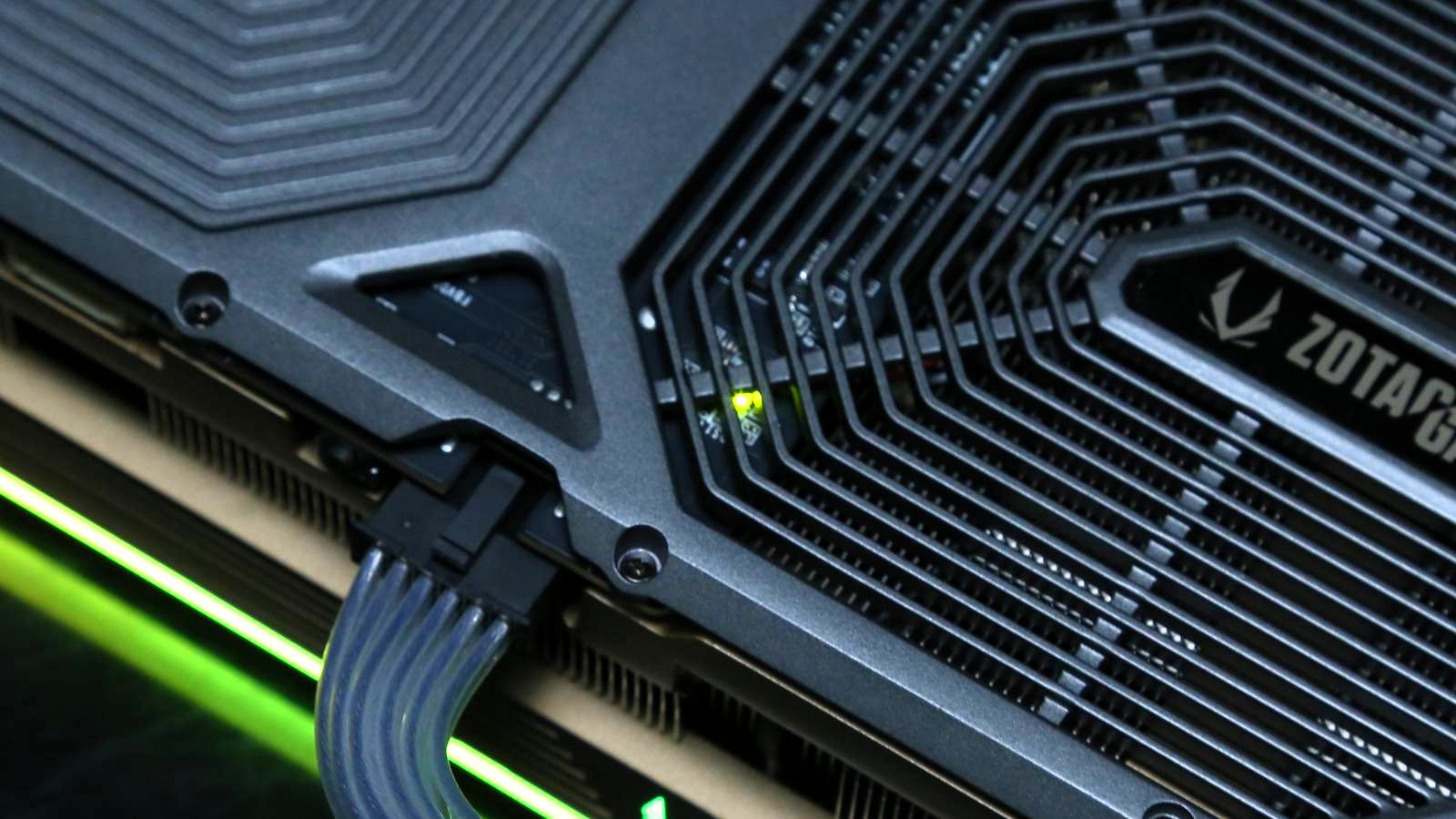
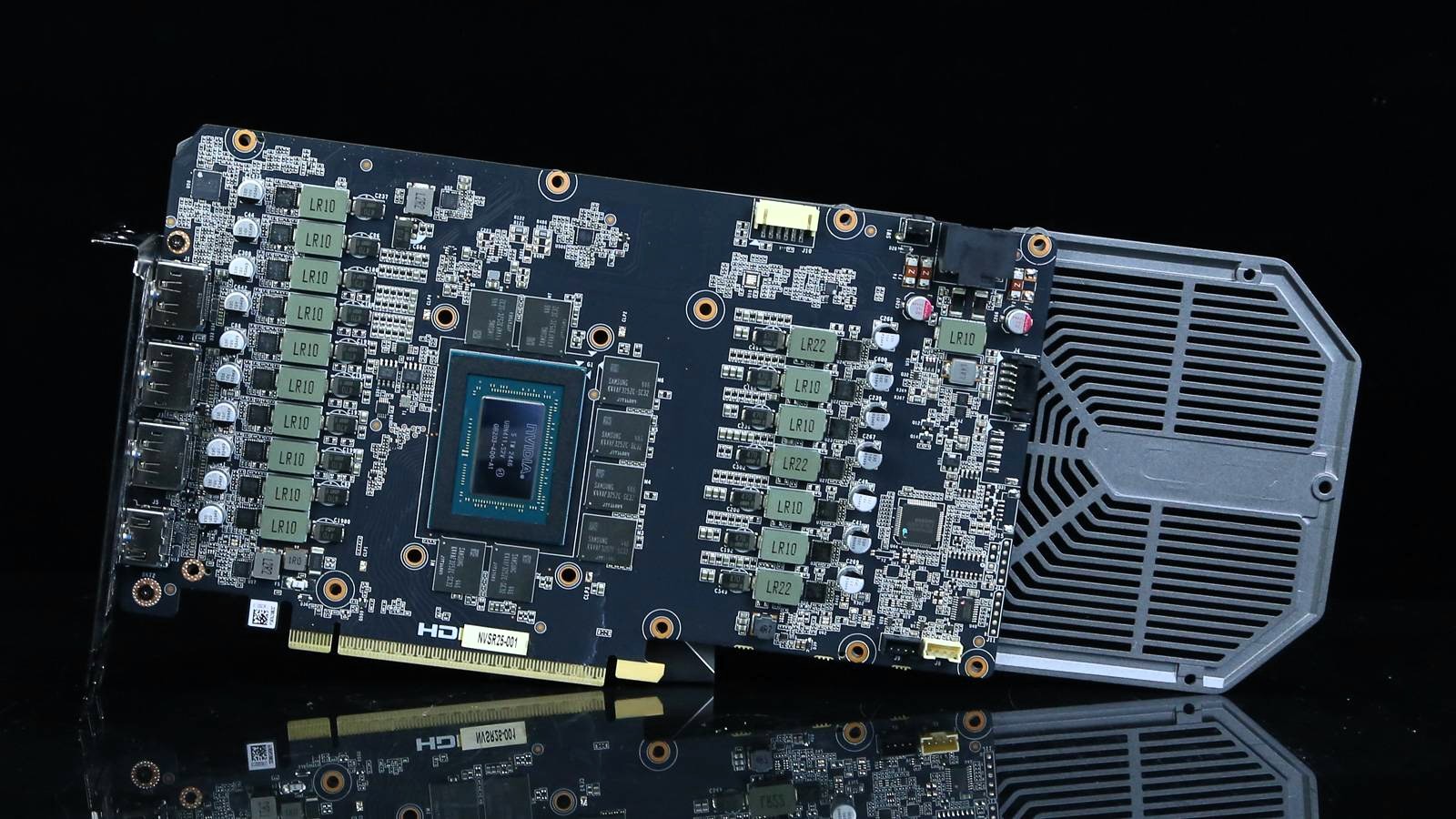
On the back, we have a metallic backplate with a vent-styled cutout for airflow. We can also see the back of the GPU die here, along with its supporting plate. There is an LED inside to indicate whether or not the power cable is plugged in all the way or not. If it is not plugged in all the way, the light will be red, and the card will not switch on. If everything is set, it will be green.
GeForce RTX logo
Zotac Gaming logo
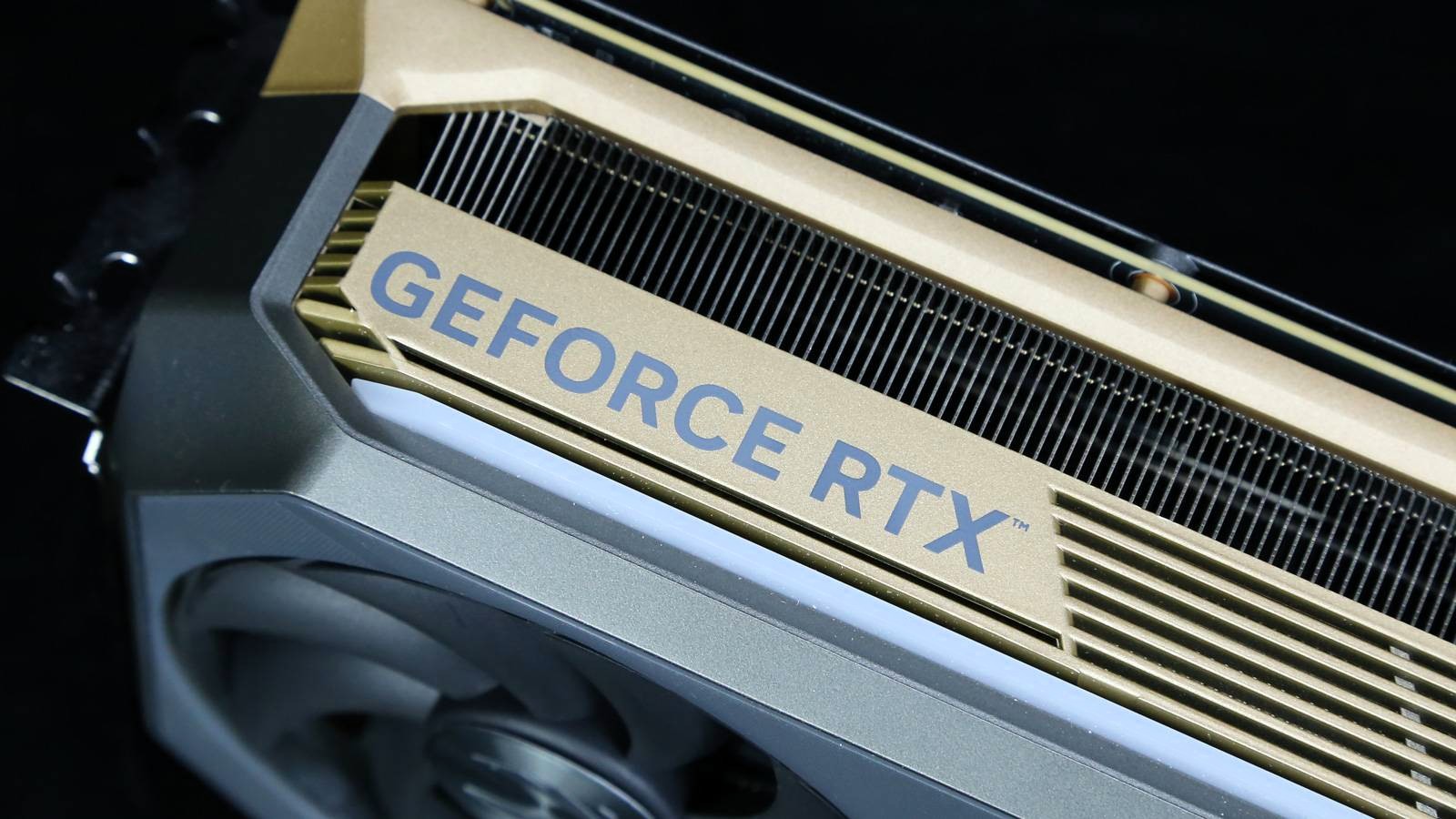
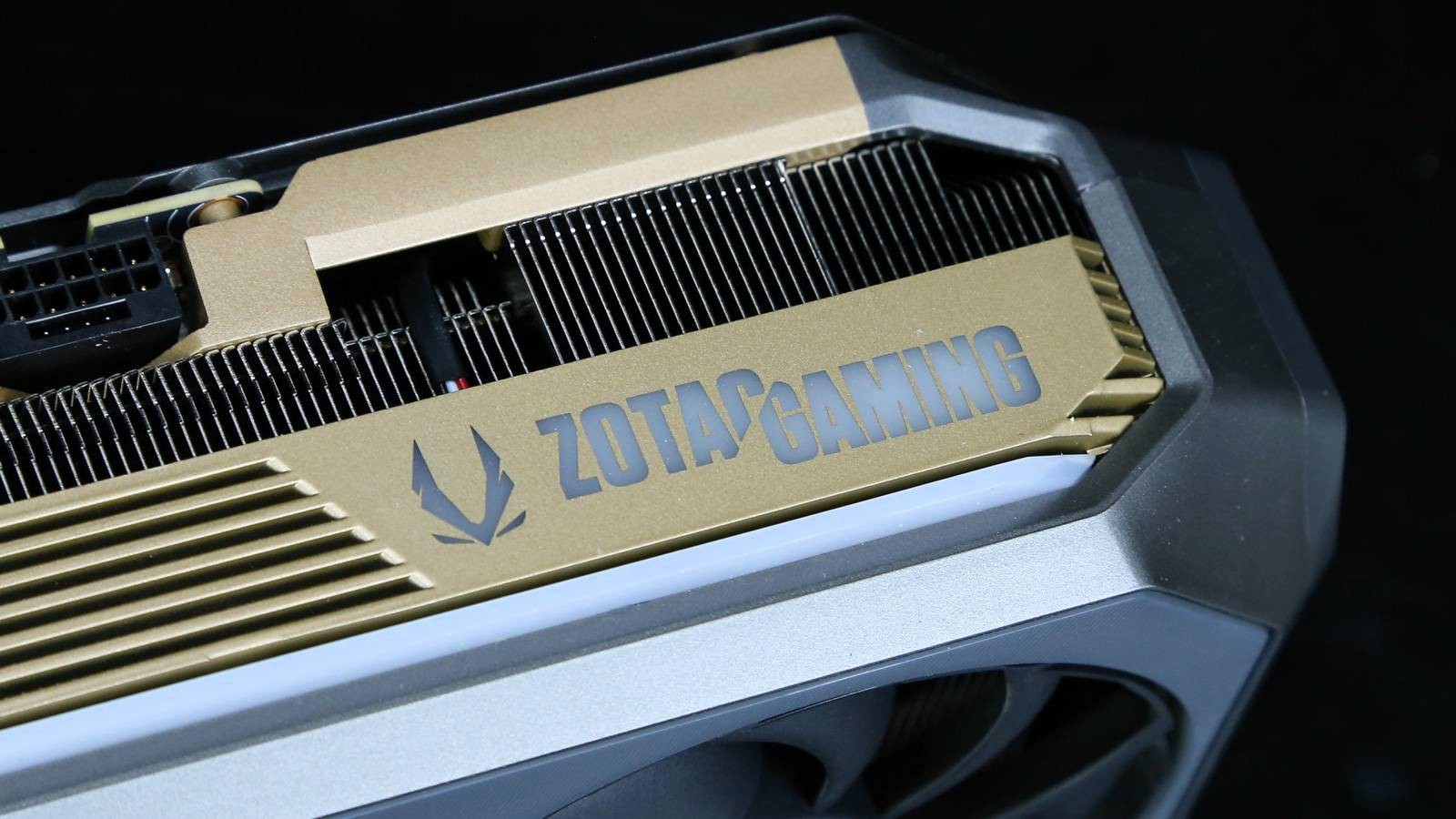
Looking at the top, we can see the supporting frame painted in golden. On the leftmost side (toward the display connectors) is the “GeForce RTX” text. Moving toward the right are the Zotac Gaming text and logos; the latter is RGB-illuminated. Between the gold frame and the front shroud of the GPU, there’s an RGB strip, the second RGB zone of the card.
We can see the heatsink between the two sides of the supporting frames.
RGB Lighting On The Zotac RTX 5080 AMP Extreme Infinity
Up above, you can see the GPU with its onboard RGB.
Display connectors
Connectors and BIOS switch button
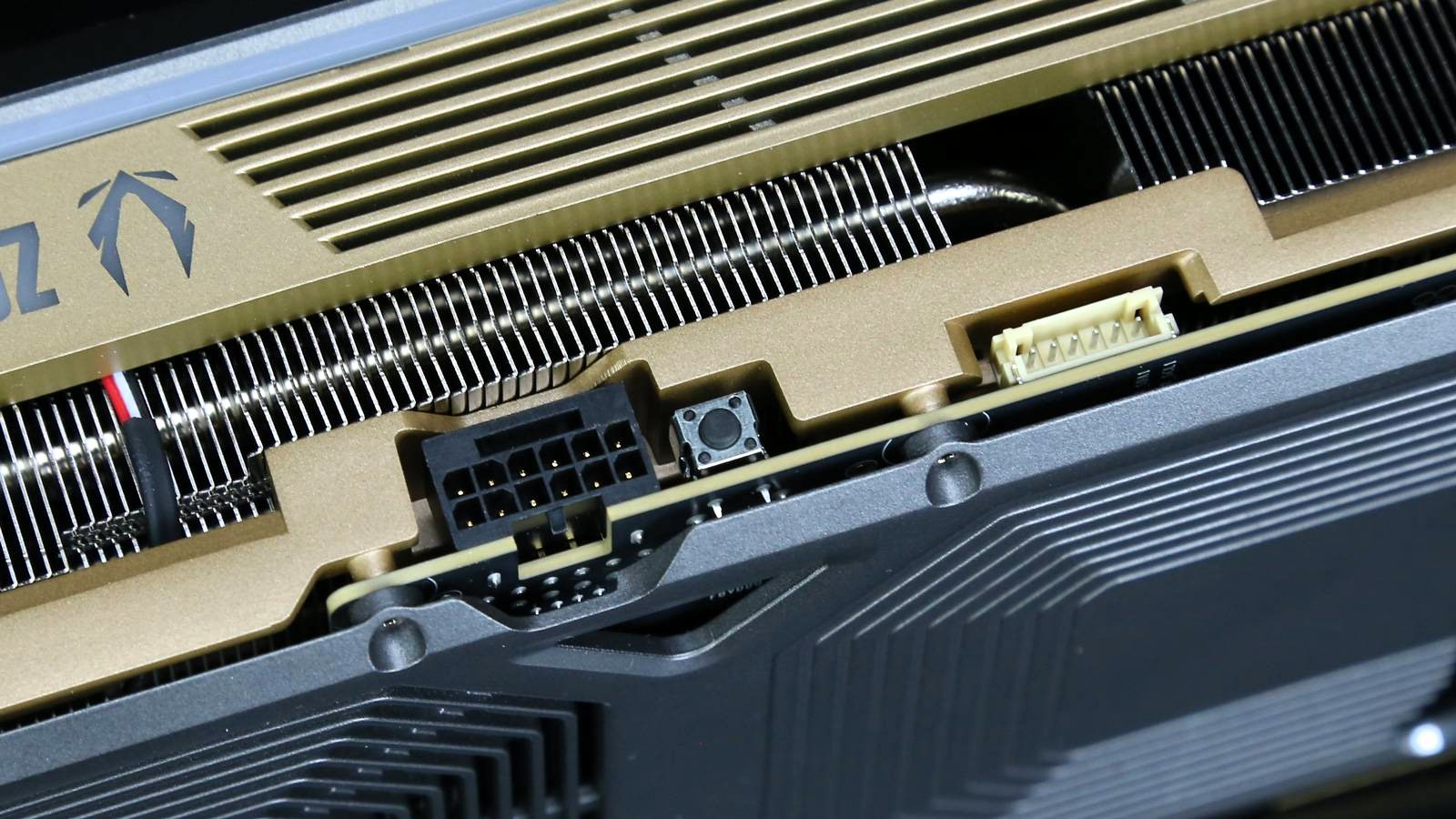
The 16-pin (including 12V-2×6) power connector is located in the center. This can provide up to 600W, while the card consumes 360W. Besides, it has a dual vBIOS button, which can be used to switch the BIOS modes (between Performance and Quiet modes). This will be especially helpful in overclocking scenarios.
Further on the right is a Spectra Link Port for the provided Spectra Connector. This allows you to sync the card’s RGB to your other RGB peripherals using your motherboard’s RGB sync software.
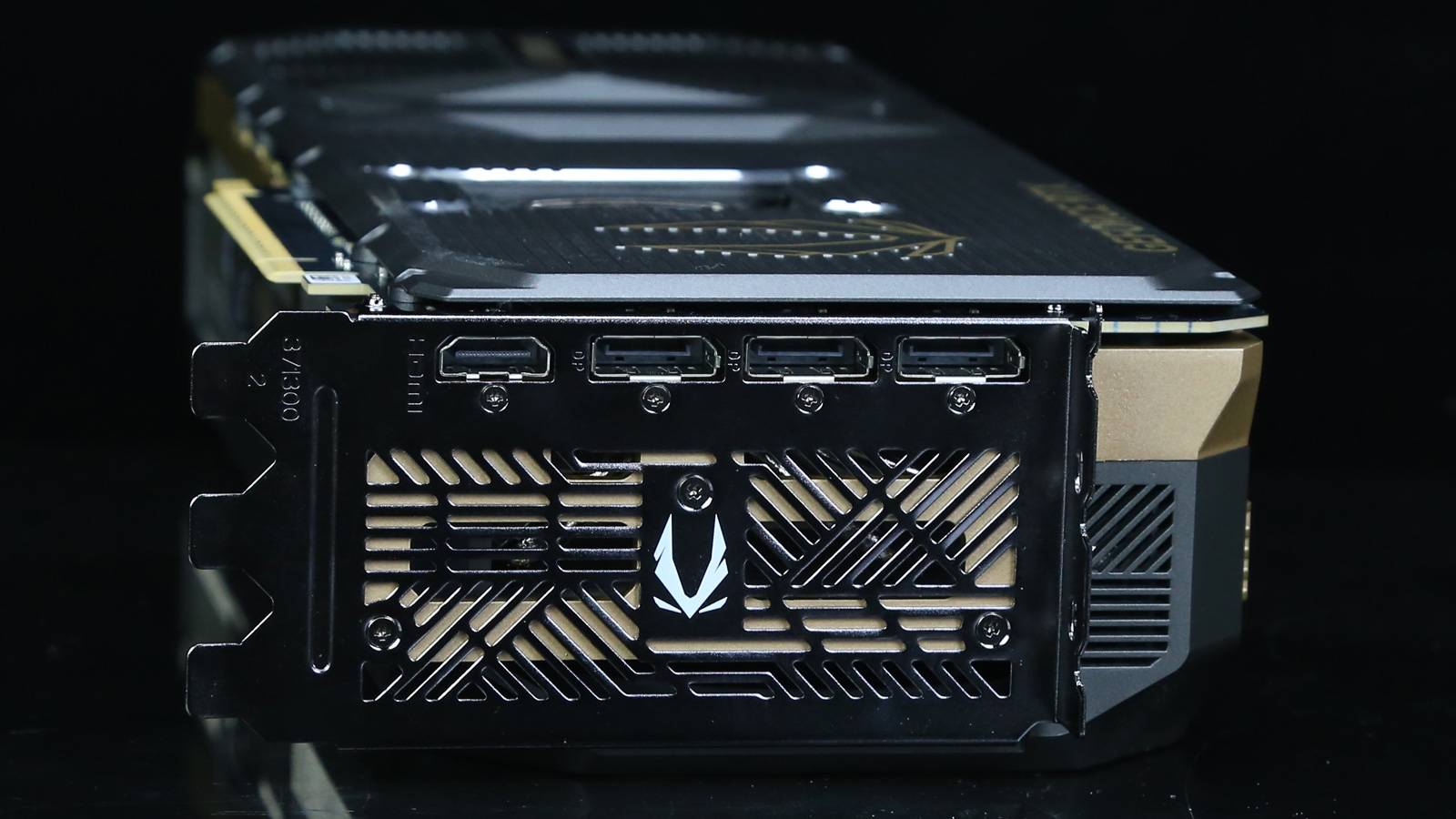
The new display engine on the RTX 5000 cards powers three DisplayPort 2.1b and an HDMI 2.1a. This is a 3.5-slot card, wider than the 3-slot Founders Edition.
Internals and Cooling
PCB
GPU and memory
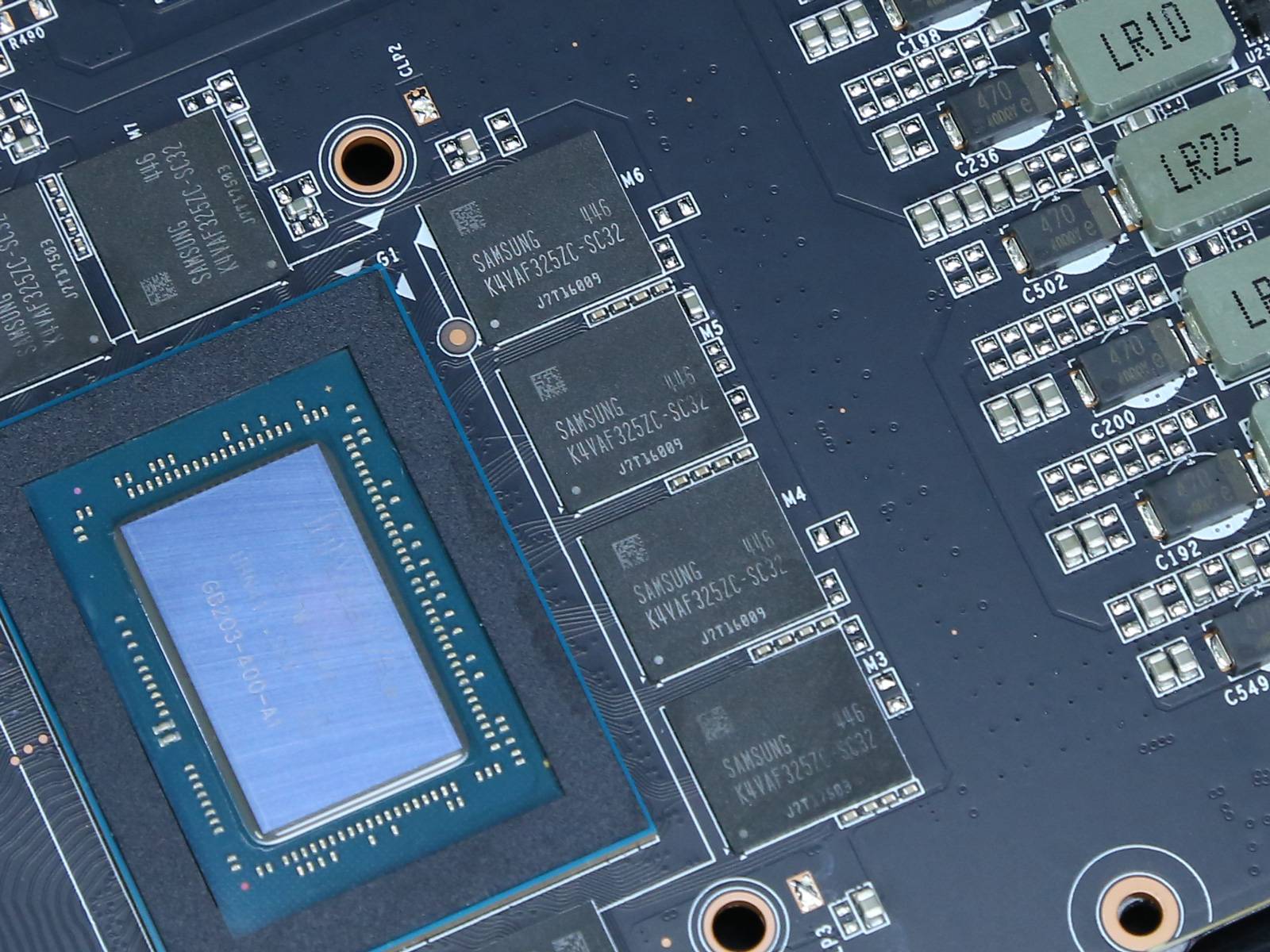
When the backplate and cooler are removed, we see thermal pads for the memory chips and VRMs. The PCB reveals the GB203 surrounded by eight 2 GB (32-bit, making the 256-bit bus) memory chips. These are from Samsung and labeled K4VAF325ZC-2C32, the 32 for 32 Gbps.
VRMs
On the VRM side, we have a 14-phase VRM setup for the GPU using MP87993 MOSFETs, controlled by MPS’ MP29816 controller. Meanwhile, three phases are dedicated to the memory chips. These use the same MOSFETs, but the controller is MP2988.
Cooling solution
The cooling solution involves the vapor chamber base plate and thermal pads, both of which cool the GPU, memory, and VRMs. According to Zotac, this new vapor chamber is 34% larger than the last generation’s. The heat flows from it to the heatsink, which lies over seven heat pipes. This aluminum heatsink is 3.5 slot-thick. All of this comes as part of Zotac’s IceStorm 3.0 cooling design.
Test Bench
Let’s dive in and see how it performs! Here’s what our test bench looks like:
Power Supply: Fractal Design ION+ 2P 860W Platinum
Operating System: Windows 11 Pro Build 22H2, Build 22621
GPU Drivers: 572.12 Press Driver
Gaming Benchmark Notes:
We tested 10 titles for rasterization performance at 1440P and 4K resolutions and five for ray tracing.
All games were tested at Ultra or equivalent preset.
Each Nvidia card used the latest available supported DLSS for ray tracing, and FSR was used for the 7900 XTX. Upscaling was not used in F1 24.
1440P Benchmarks
Let’s start with the 1440P tests.
1440P Benchmarks
1 of 11
10-game average
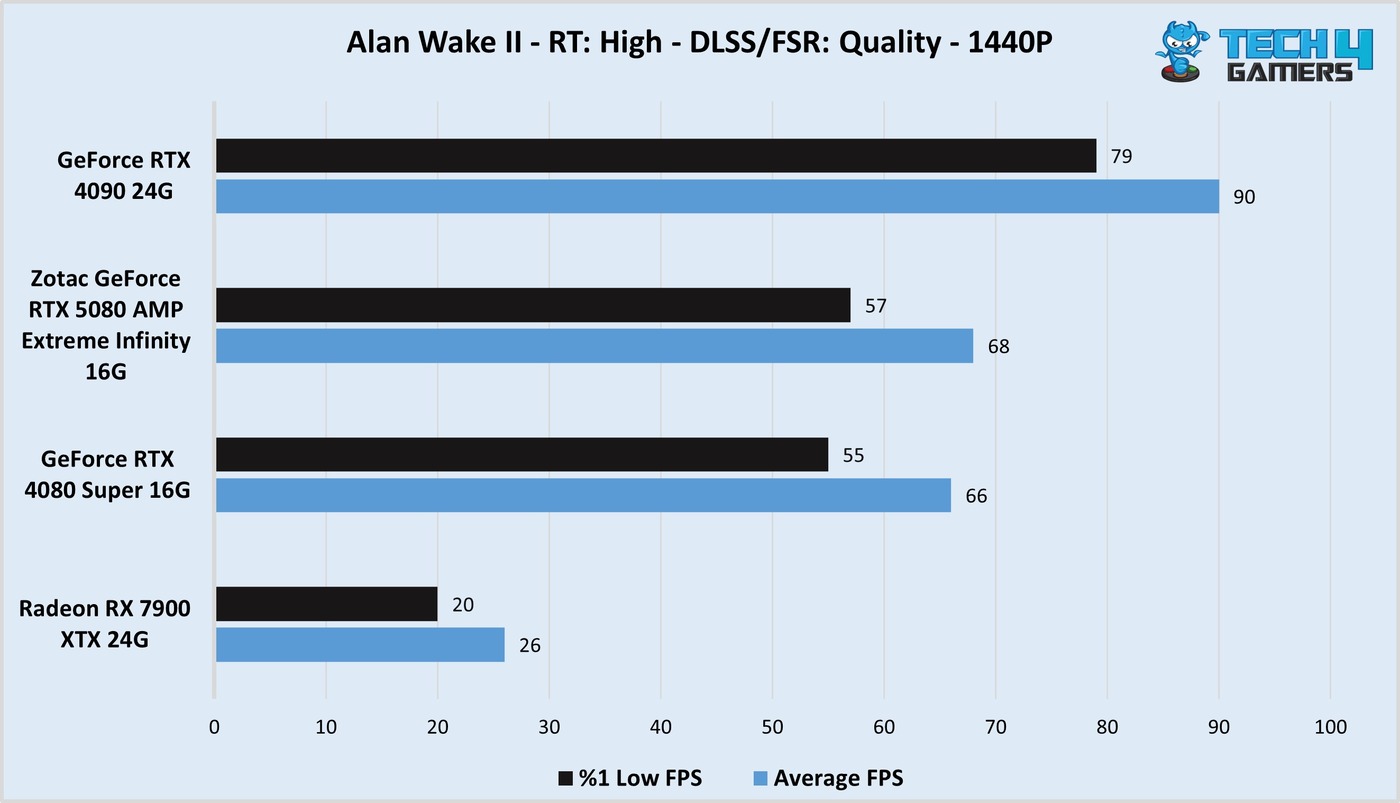
Starting with Alan Wake 2, the RTX 5080 starts with decent numbers, bettering the 7900 XTX and 4080 Super cards by a significant margin.
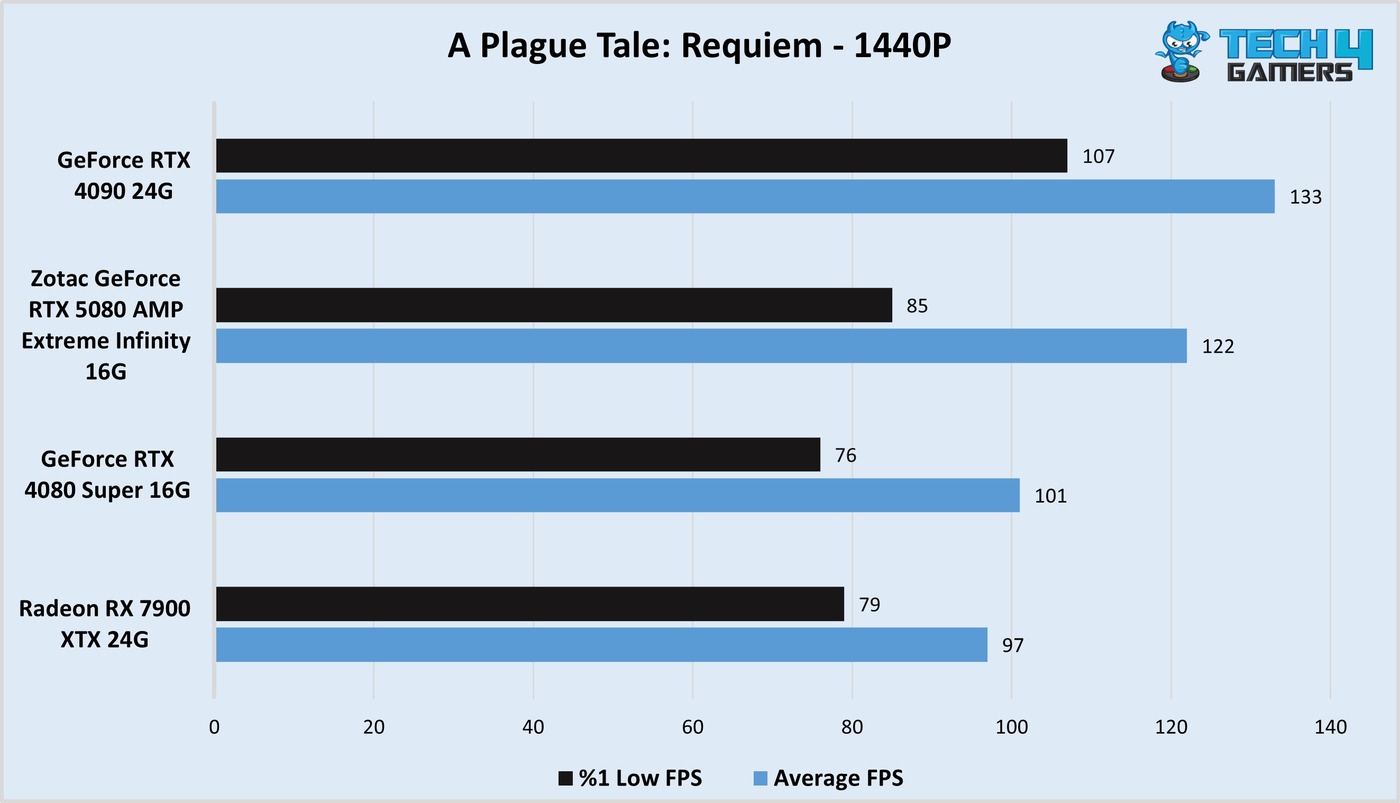
In A Plague Tale: Requiem, the card lies in the same position, trailing the RTX 4090 in average FPS.
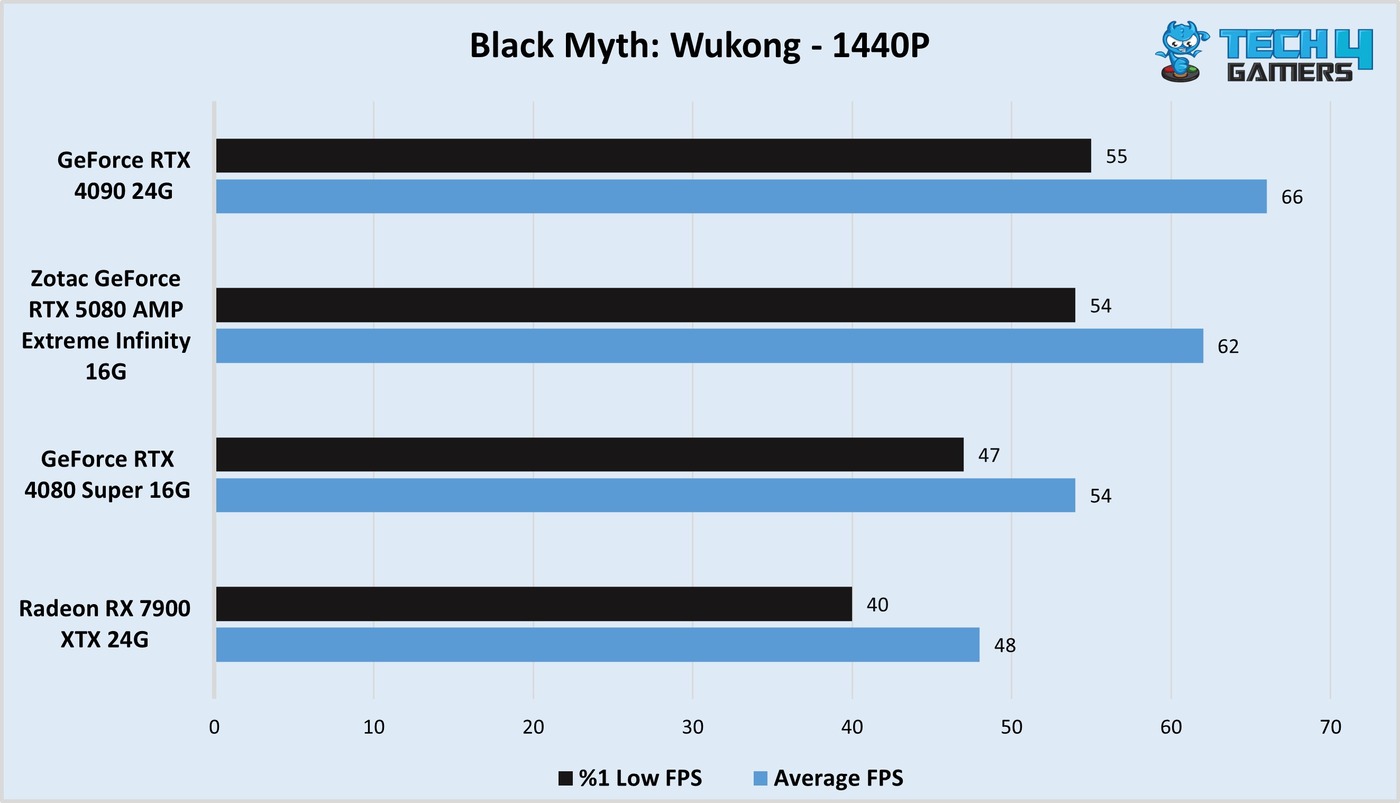
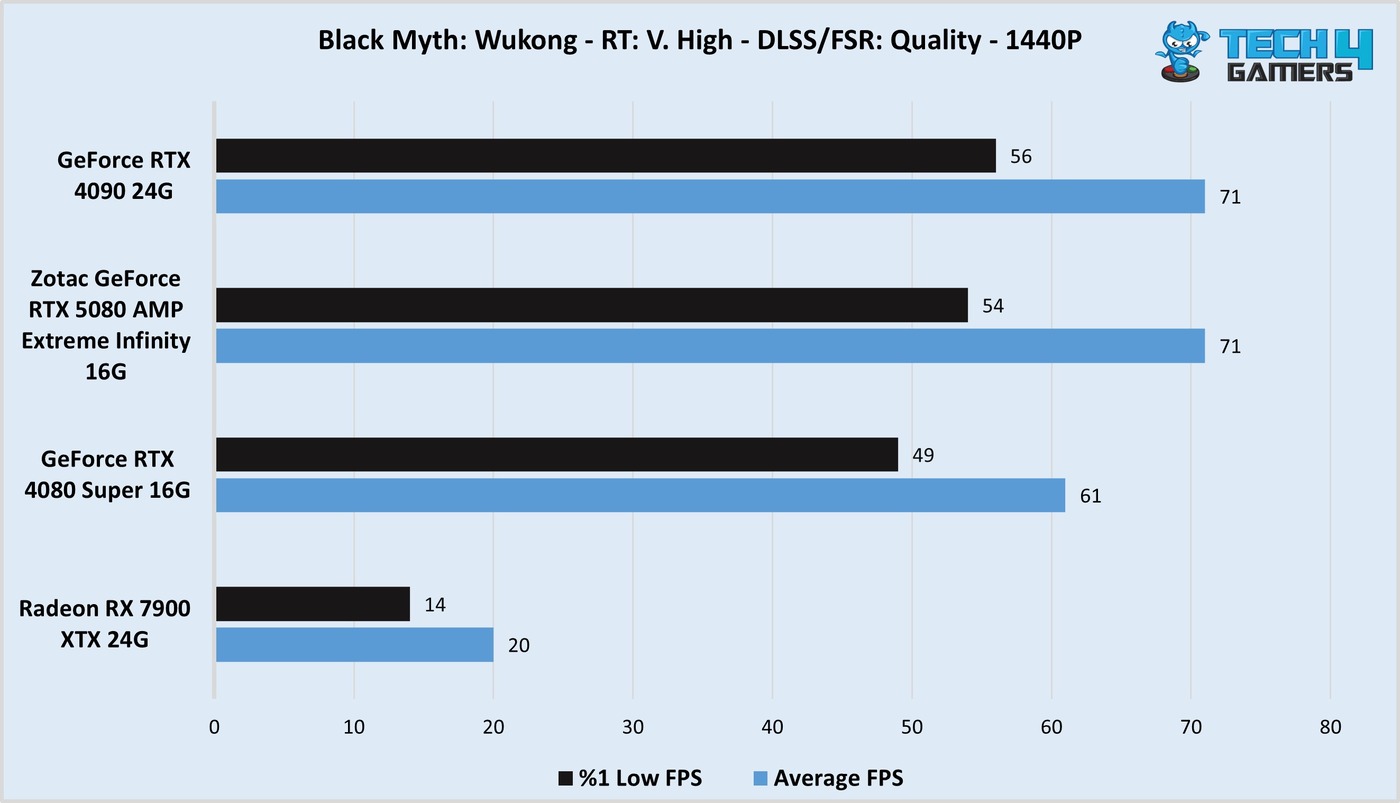
Moving on to Black Myth: Wukong, the RTX 5080 is only trailing 6.4%.
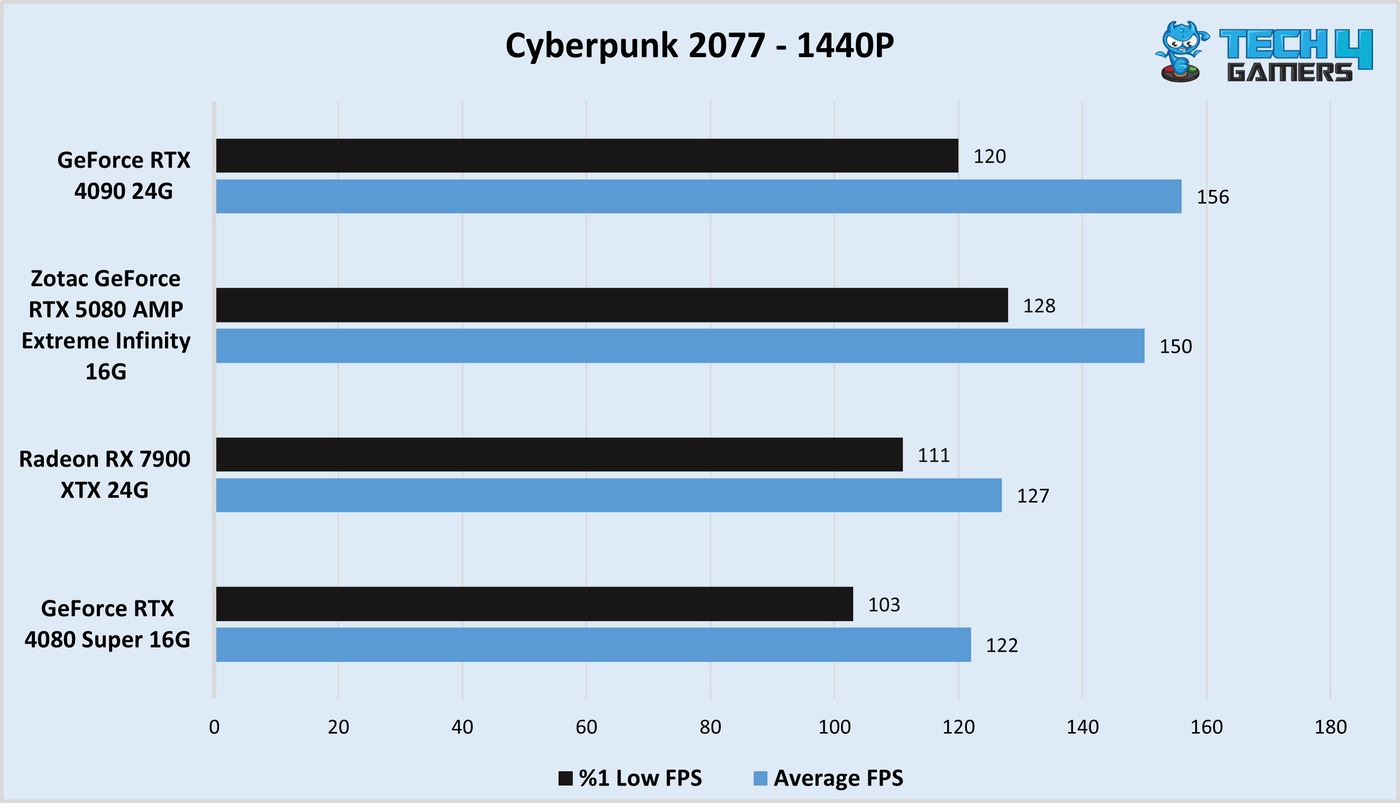
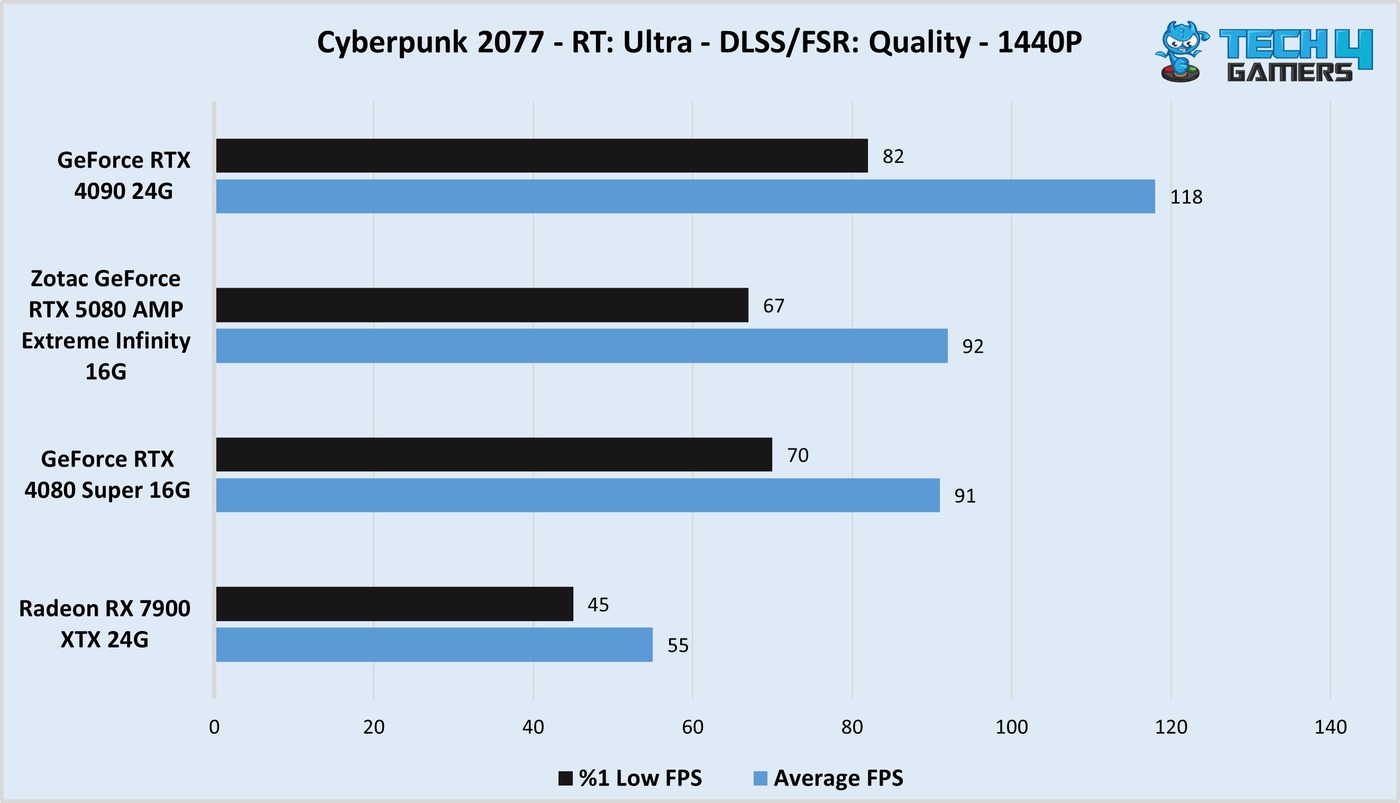
Cyberpunk 2077 shows us similar results. The RTX 5080 AMP Extreme Infinity is much faster than the 7900 XTX and 4080 Super, trailing the 4090 by a small margin.
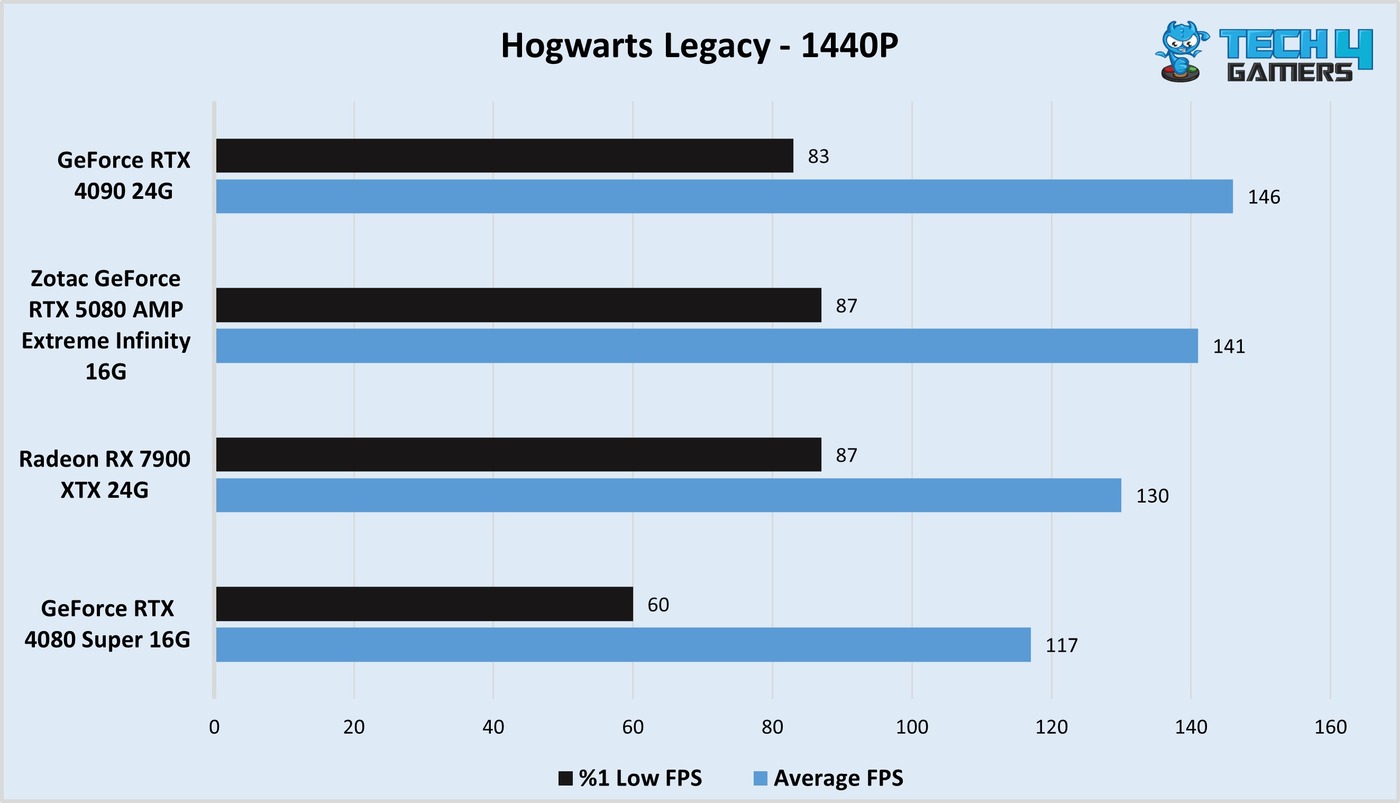
Moving on to Hogwarts Legacy, the same pattern continues.
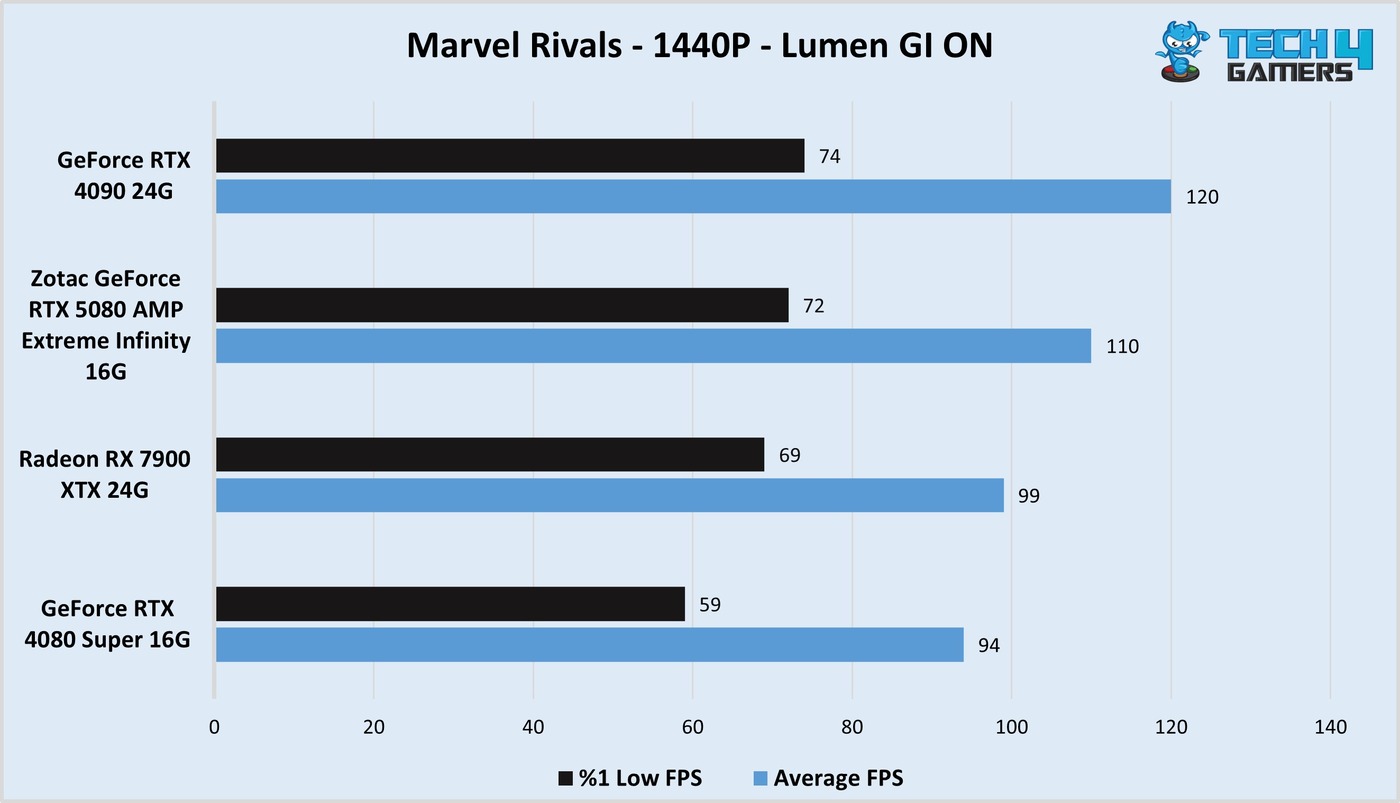
Marvel Rivals shows the Zotac GeForce RTX 5080 AMP Extreme Infinity scoring 100 FPS on average.
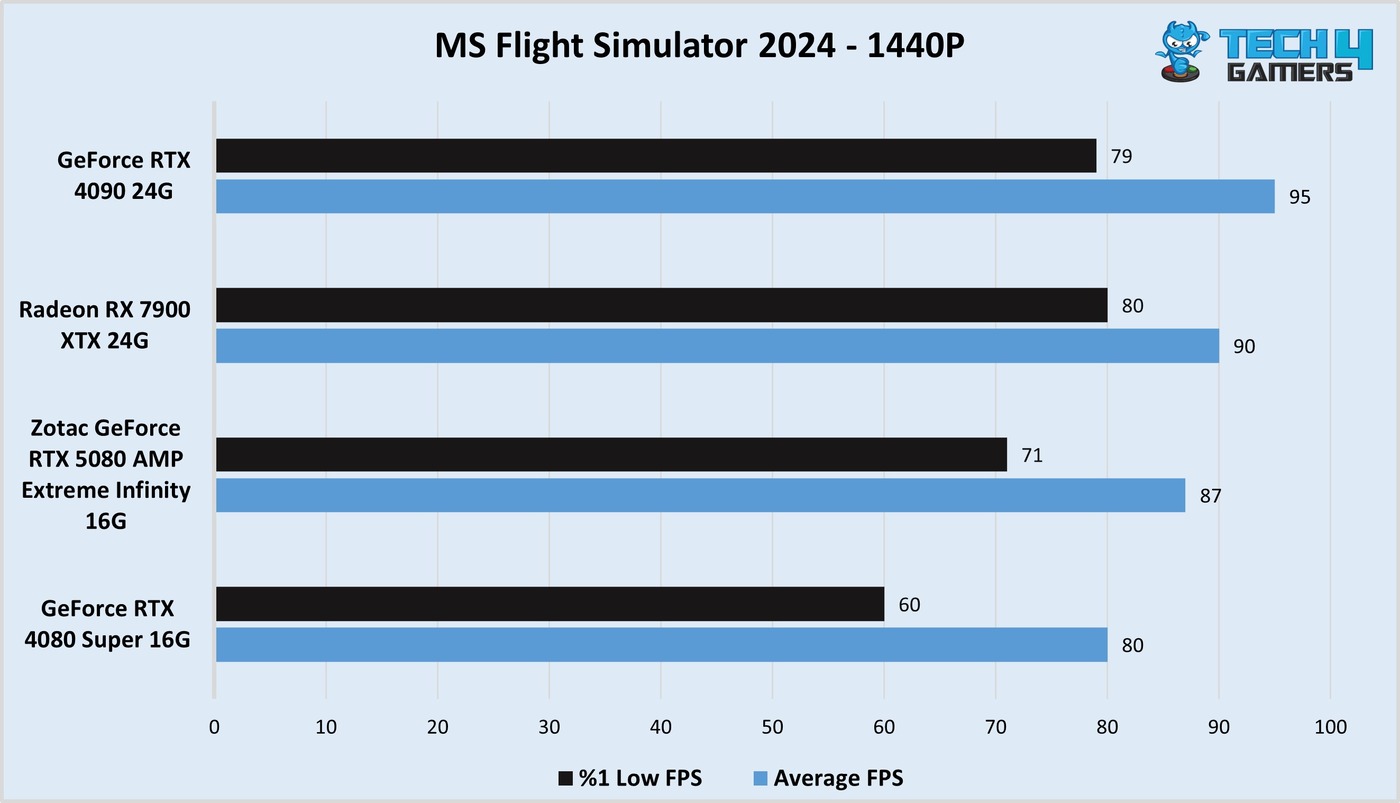
The RTX 5080 is beaten by AMD's RX 7900 XTX in Flight Simulator 2024, averaging 87 FPS.
All the cards are nicely stacked against each other, but the RTX 4090 has a notable lead.
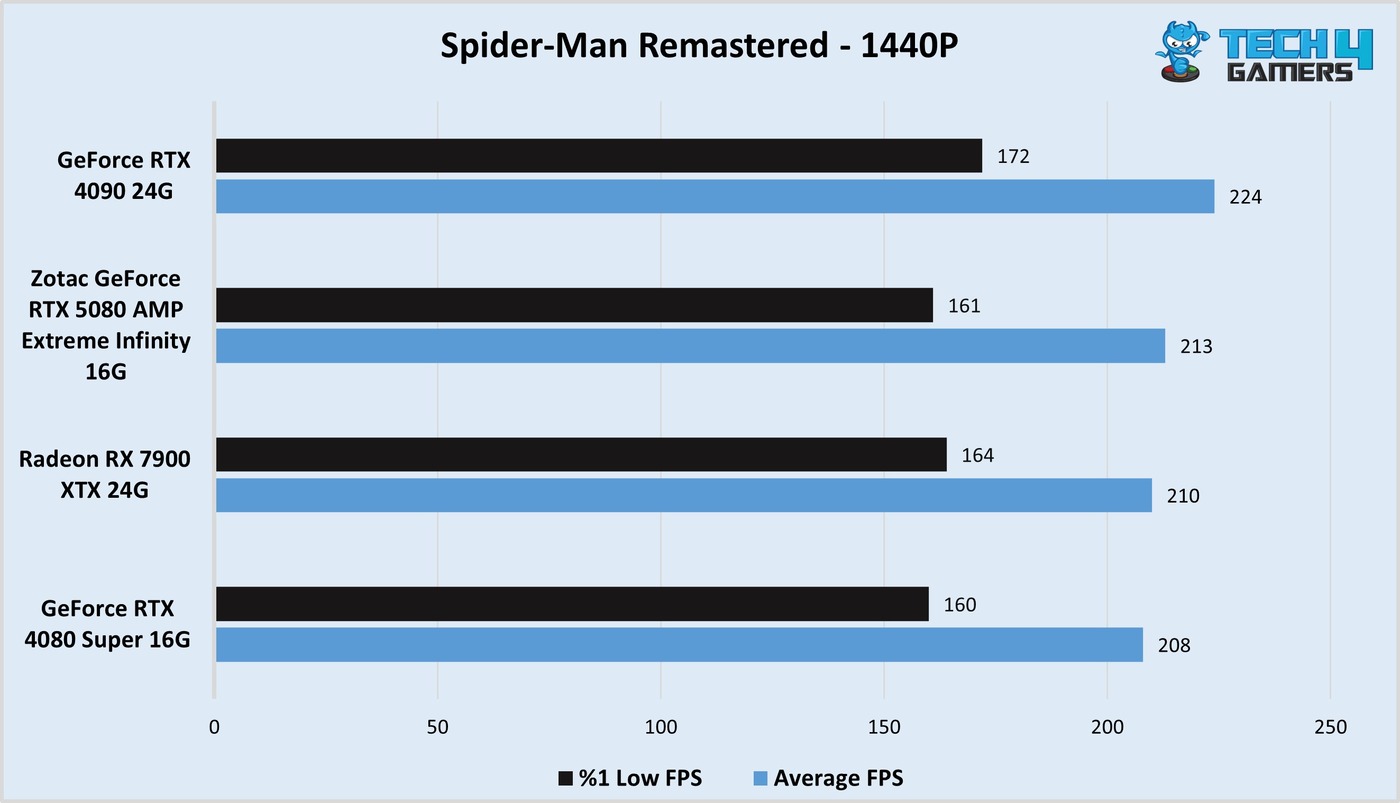
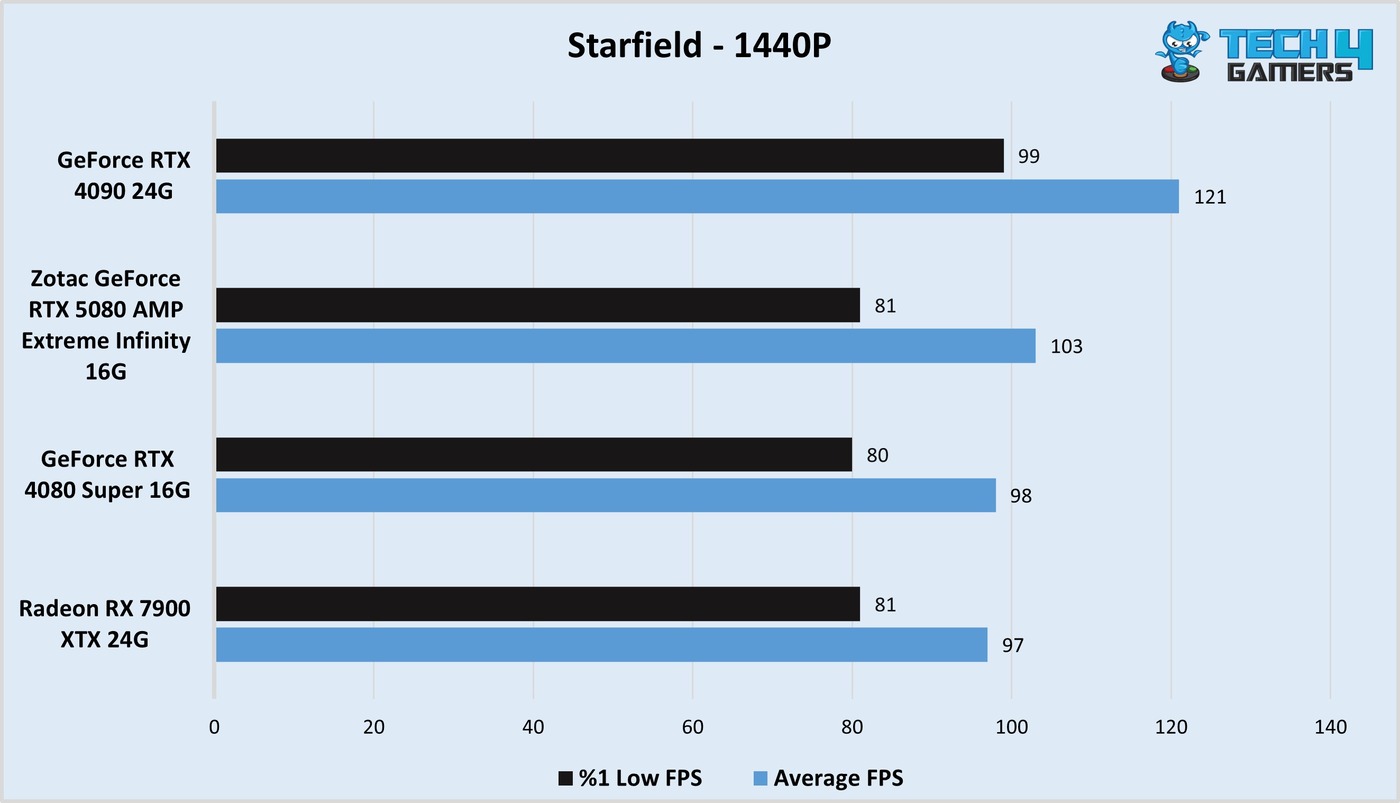
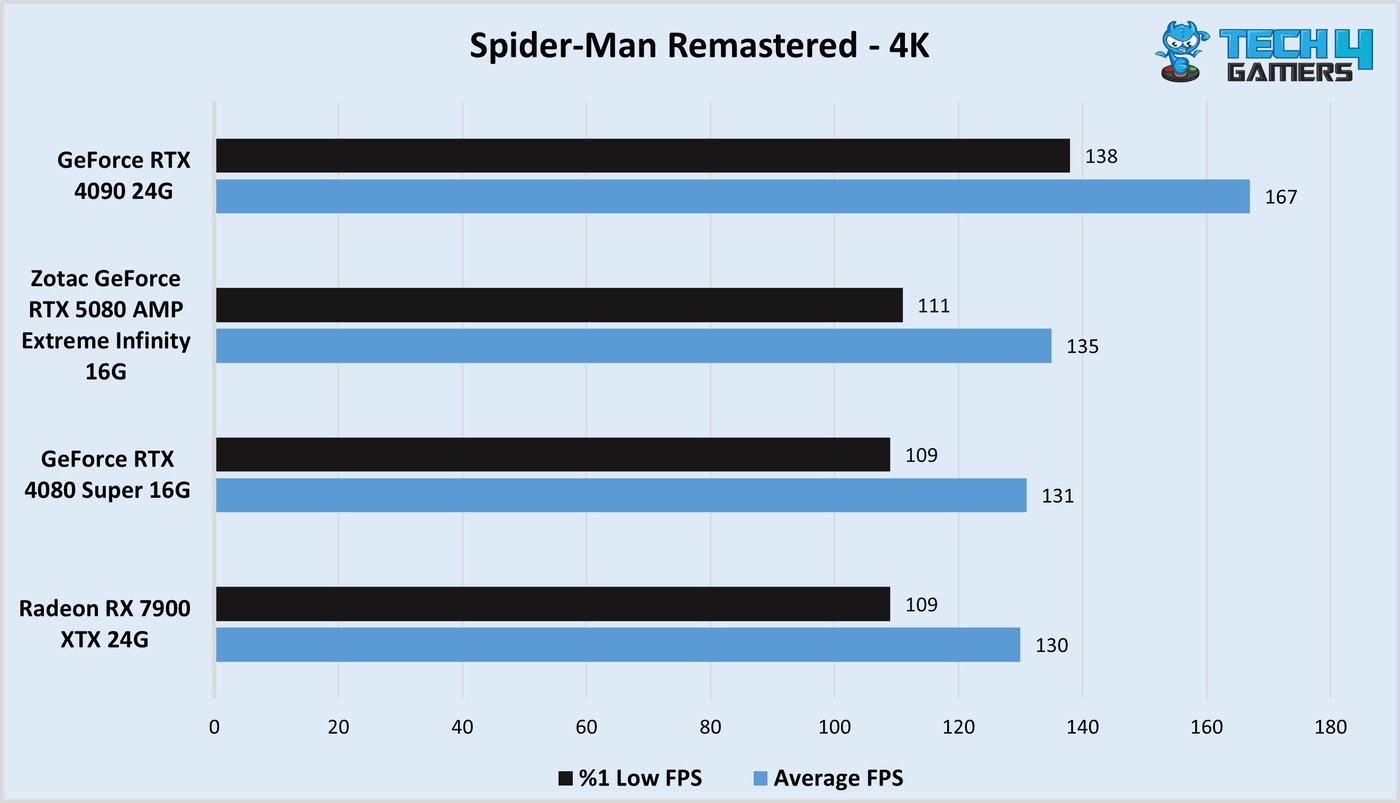
In Starfield, the RTX 4090 is a touch above the RTX 5080, which shows similar figures to the remaining cards.
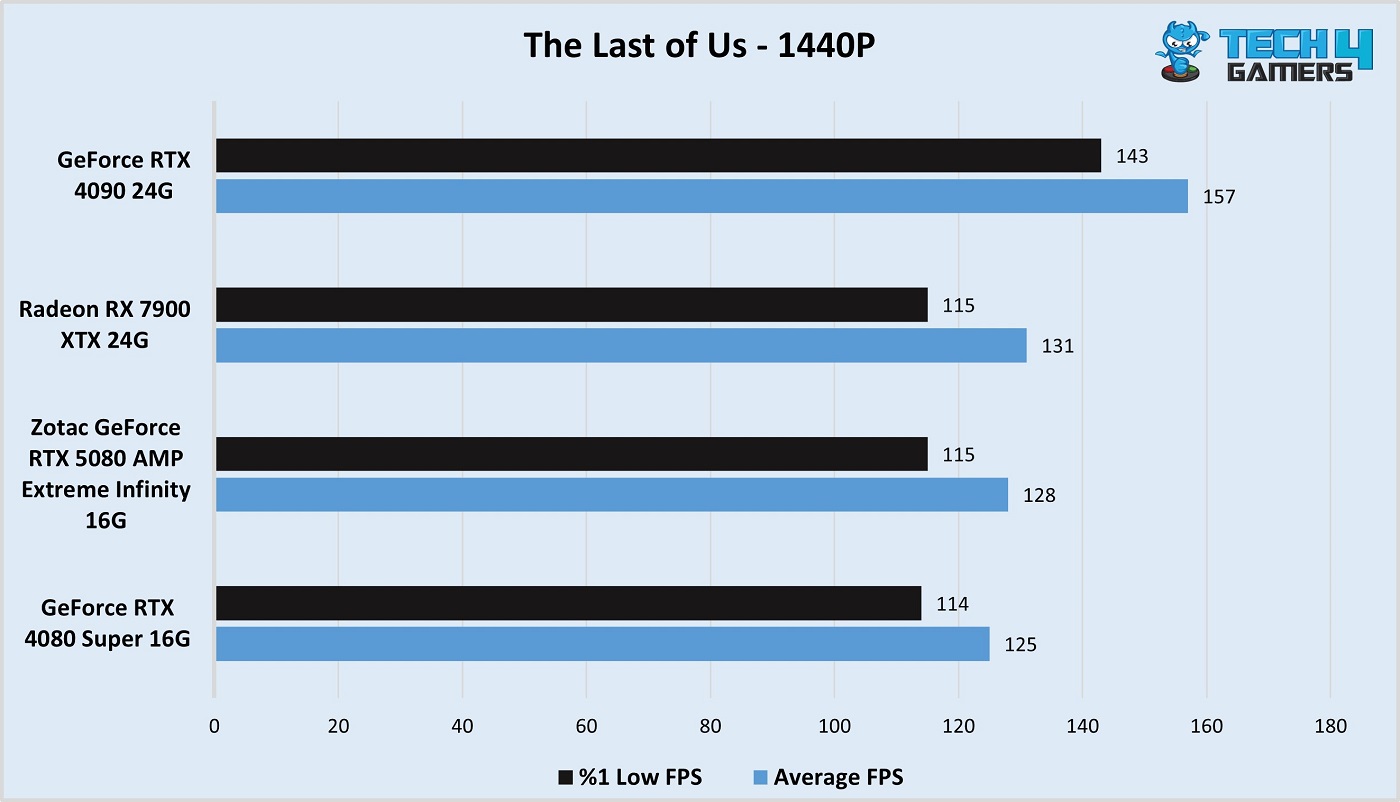
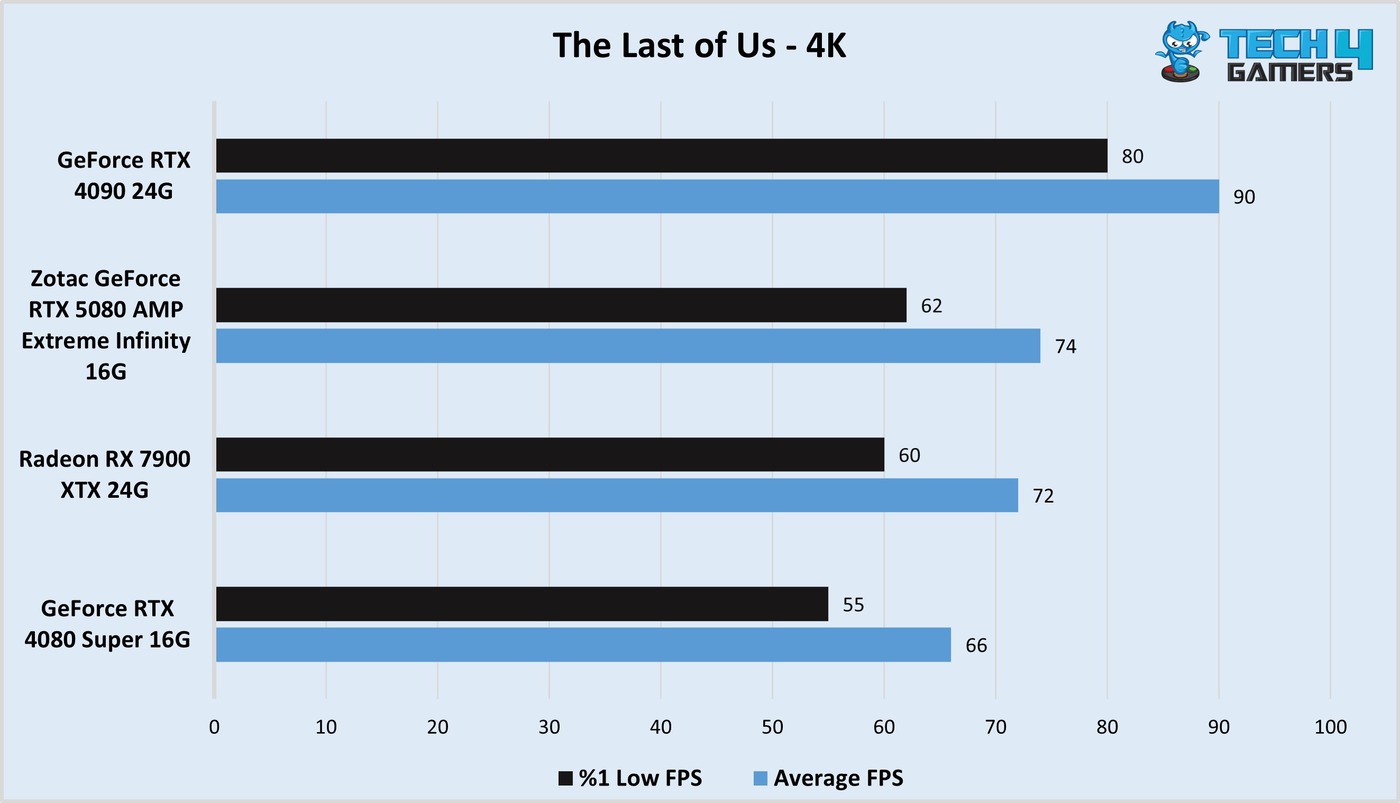
In The Last of Us, the 7900 XTX beats the RTX 5080 again, and the RTX 4090 is far ahead, again.
Looking at the 10-game average FPS,
The RTX 5080 AMP Extreme Infinity is only 8.9% faster than the Founder’s Edition RTX 4080 Super.
Compared to the 7900 XTX, the RTX 5080 AMP Extreme Infinity proved 12.1% faster.
4K Benchmarks
Let’s look at the 4K benchmarks.
4K Gaming
1 of 12
10-game average
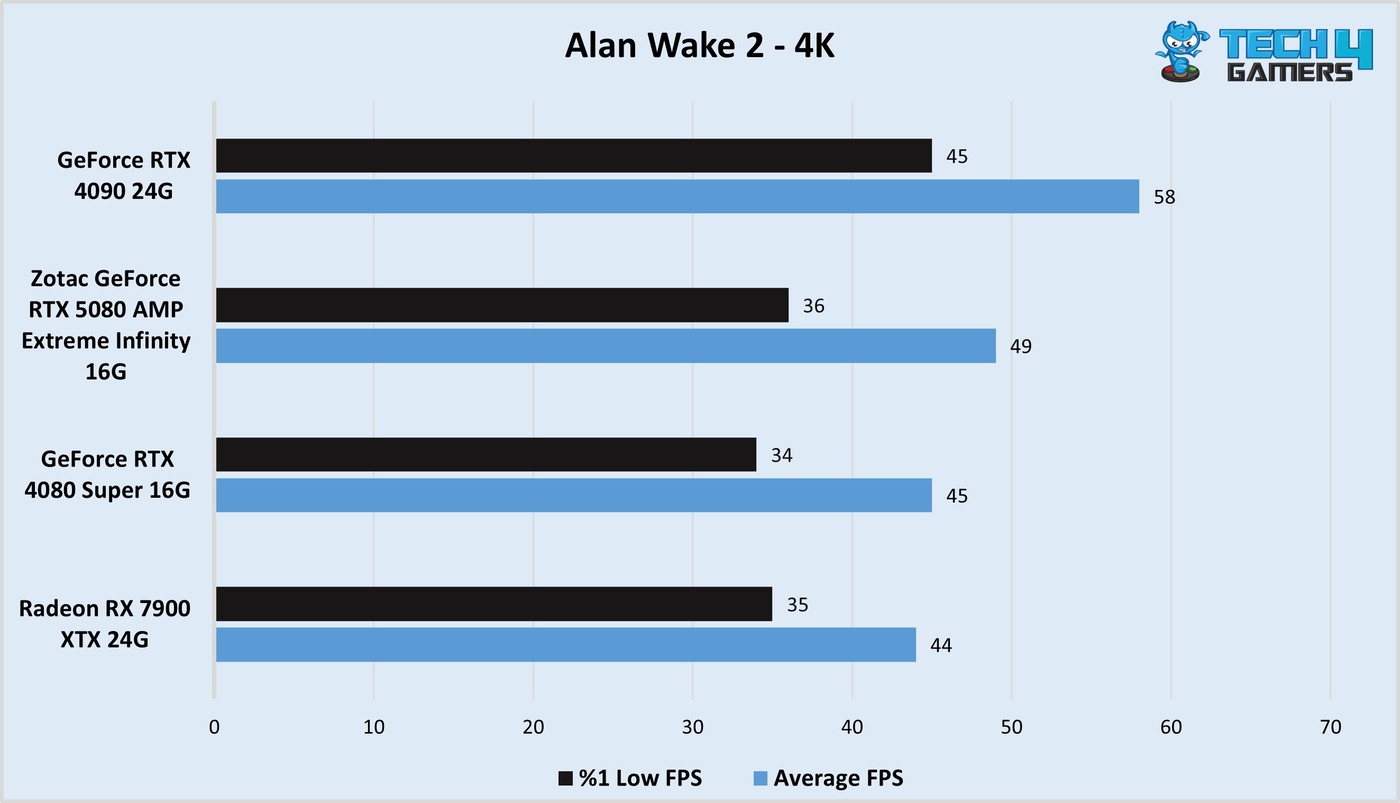
The card beats the 4080 Super by 4 FPS in Alan Wake 2 at 4K.
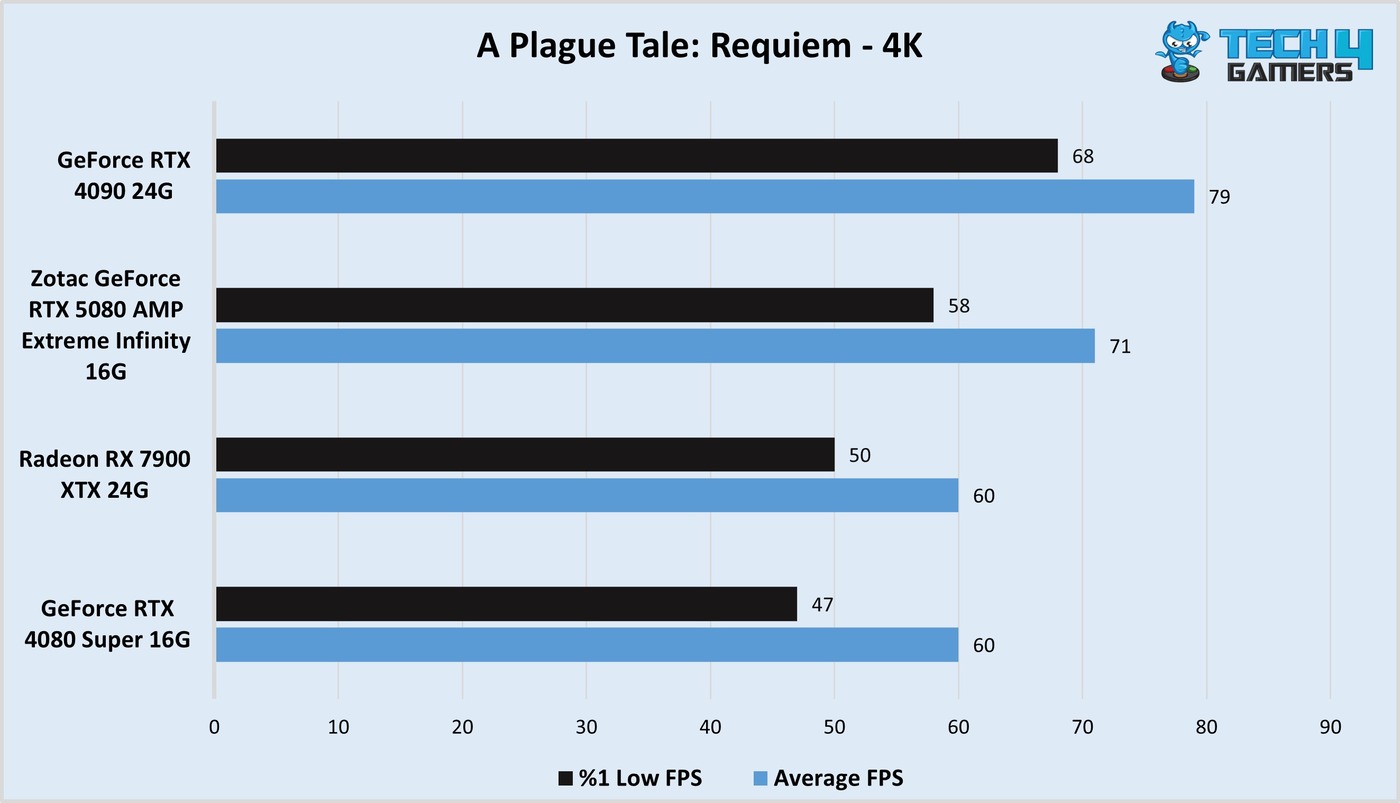
The RTX 5080 scored 71 FPS on average in A Plague Tale: Requiem, while the %1 low FPS dropped to 58 FPS at the worst.
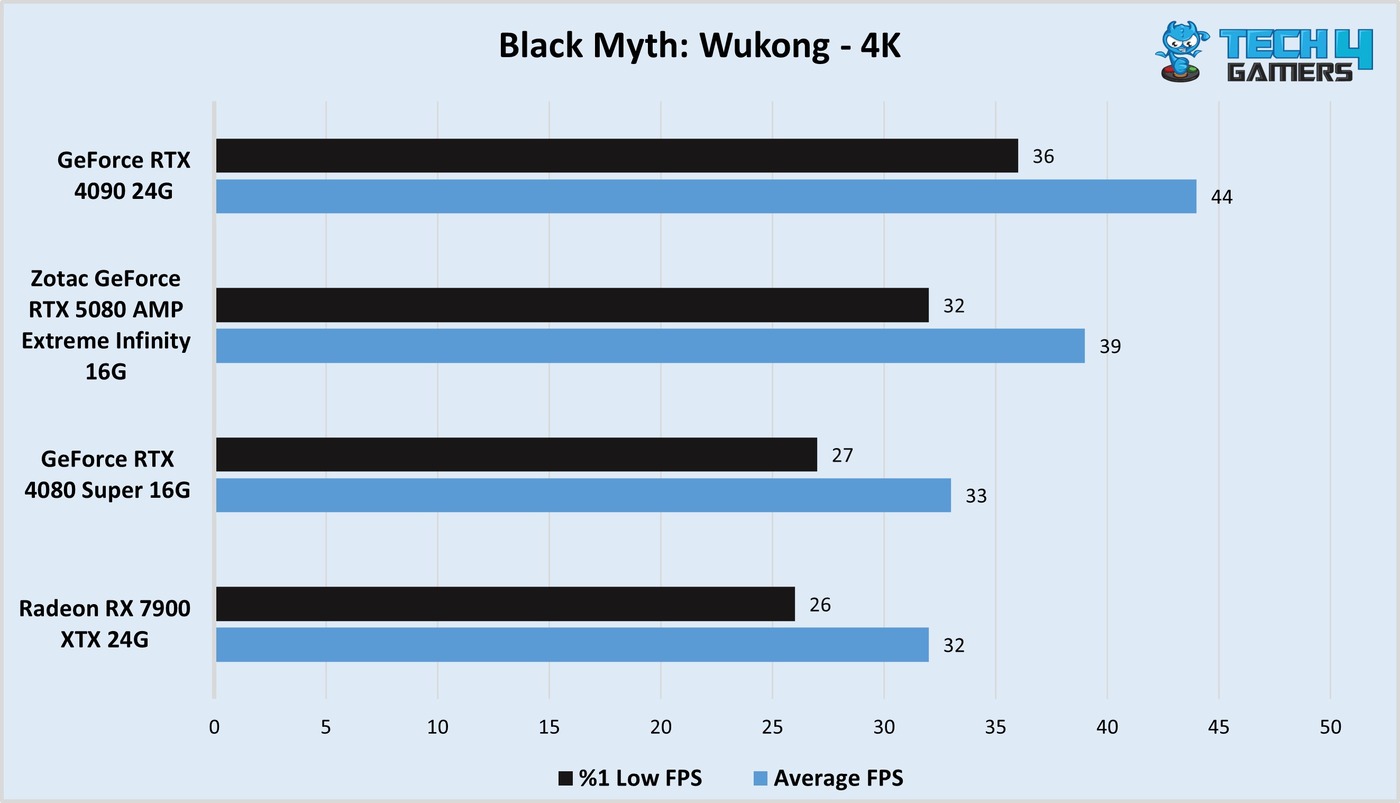
In Black Myth: Wukong, the numbers are decent. The card trails the RTX 4090 by 12.8%, beating the 4080 Super by 18.1%.
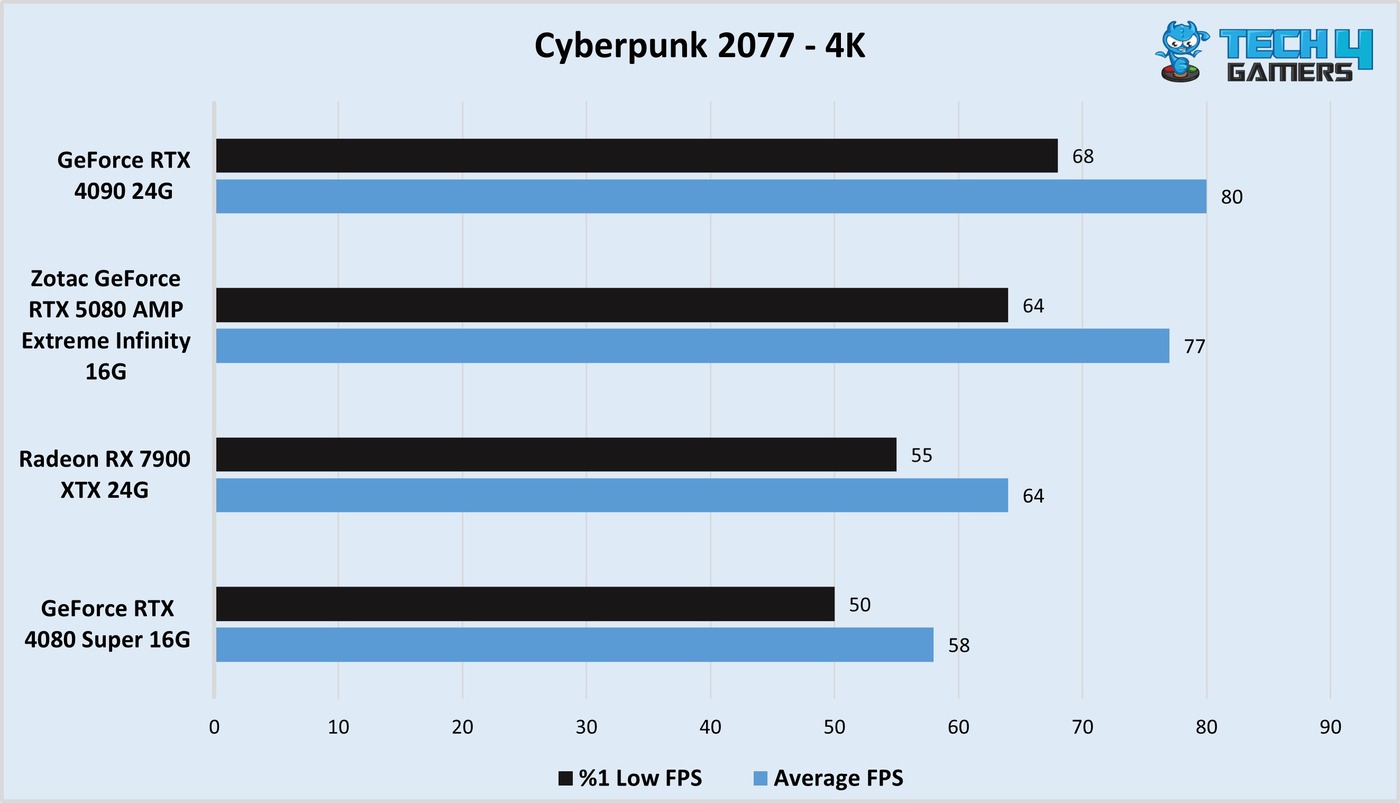
In Cyberpunk 2077, the card only trails the RTX 4090 by 3.8%, a good result.
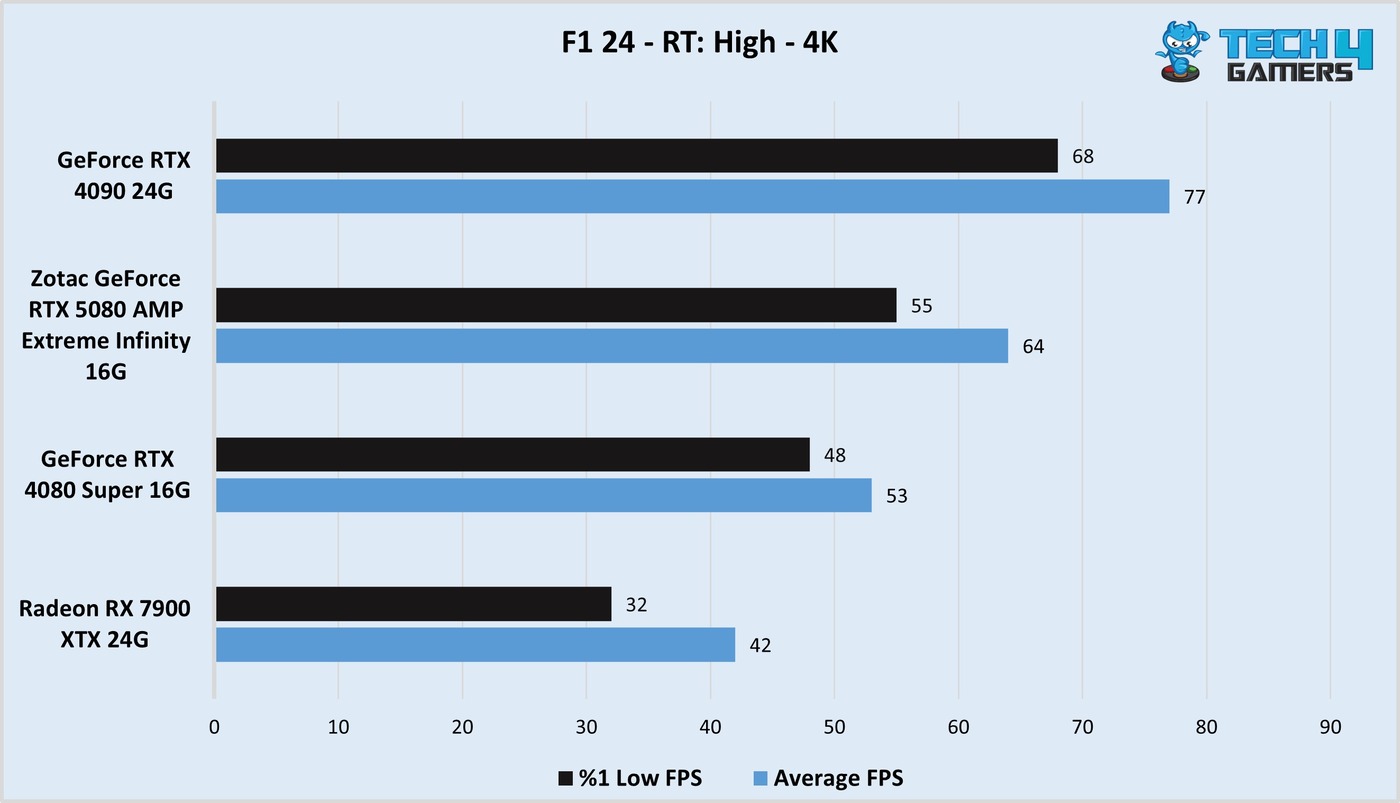
Moving on to F1 2024, the RTX 5080 is evenly placed between the RTX 4090 and RTX 4080 Super.
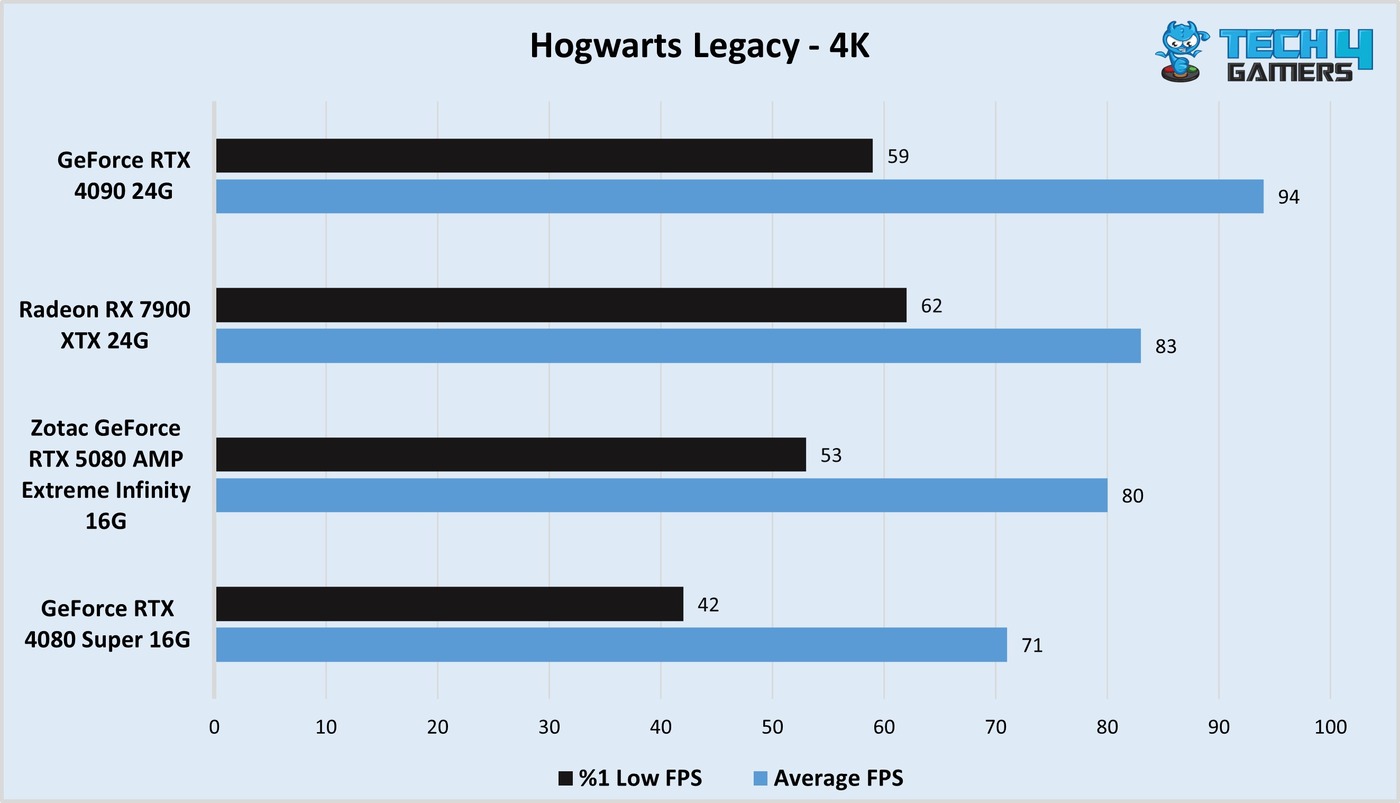
In Hogwarts Legacy, the Zotac RTX 5080 AMP Extreme Infinity is beaten by the much cheaper RX 7900 XTX.
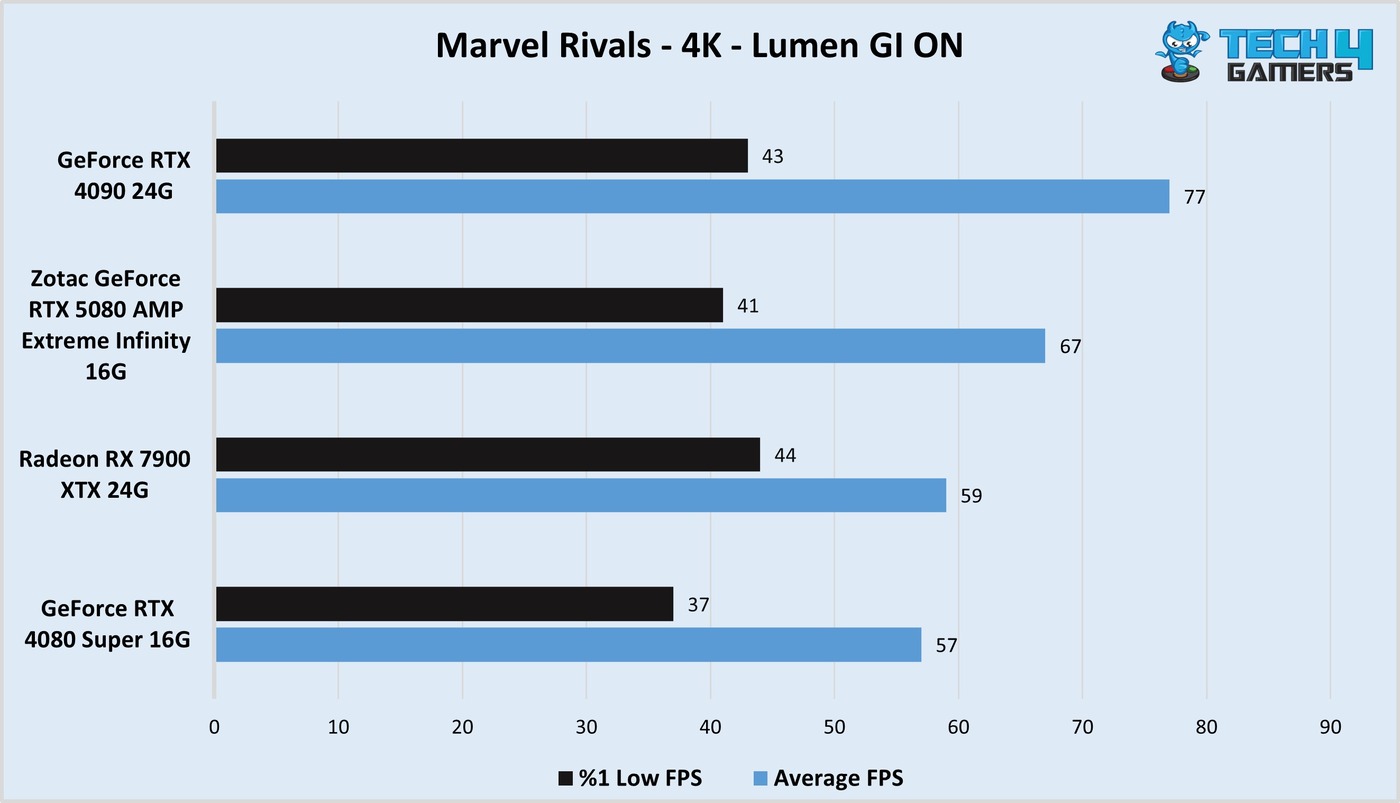
In Marvel Rivals, our RTX 5080 output 67 FPS on average, with a %1 low of 41 FPS.
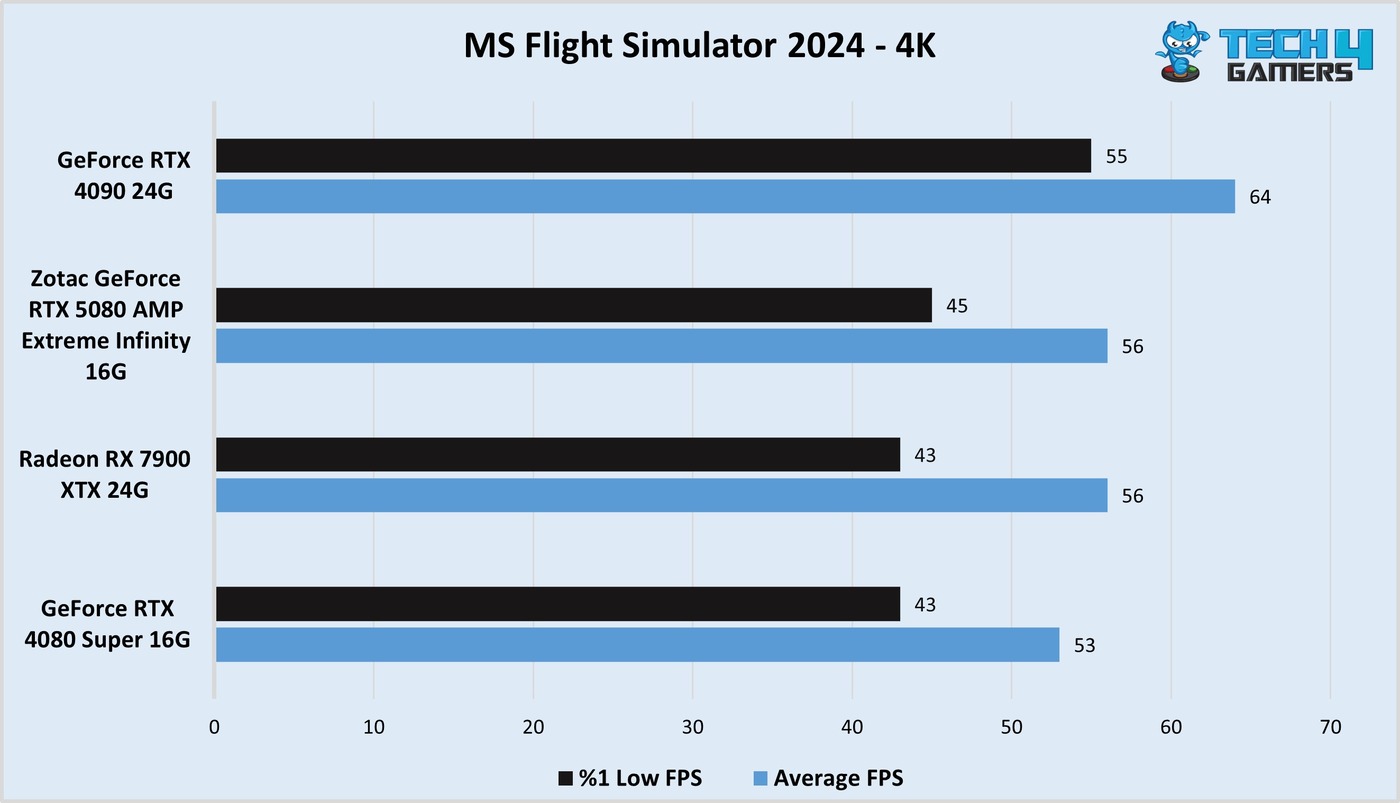
In Microsoft's Flight Simulator, both the 7900 XTX and RTX 5080 are head-to-head in average FPS.
The RTX 5080 only beats the RTX 4080 Super by 3% here.
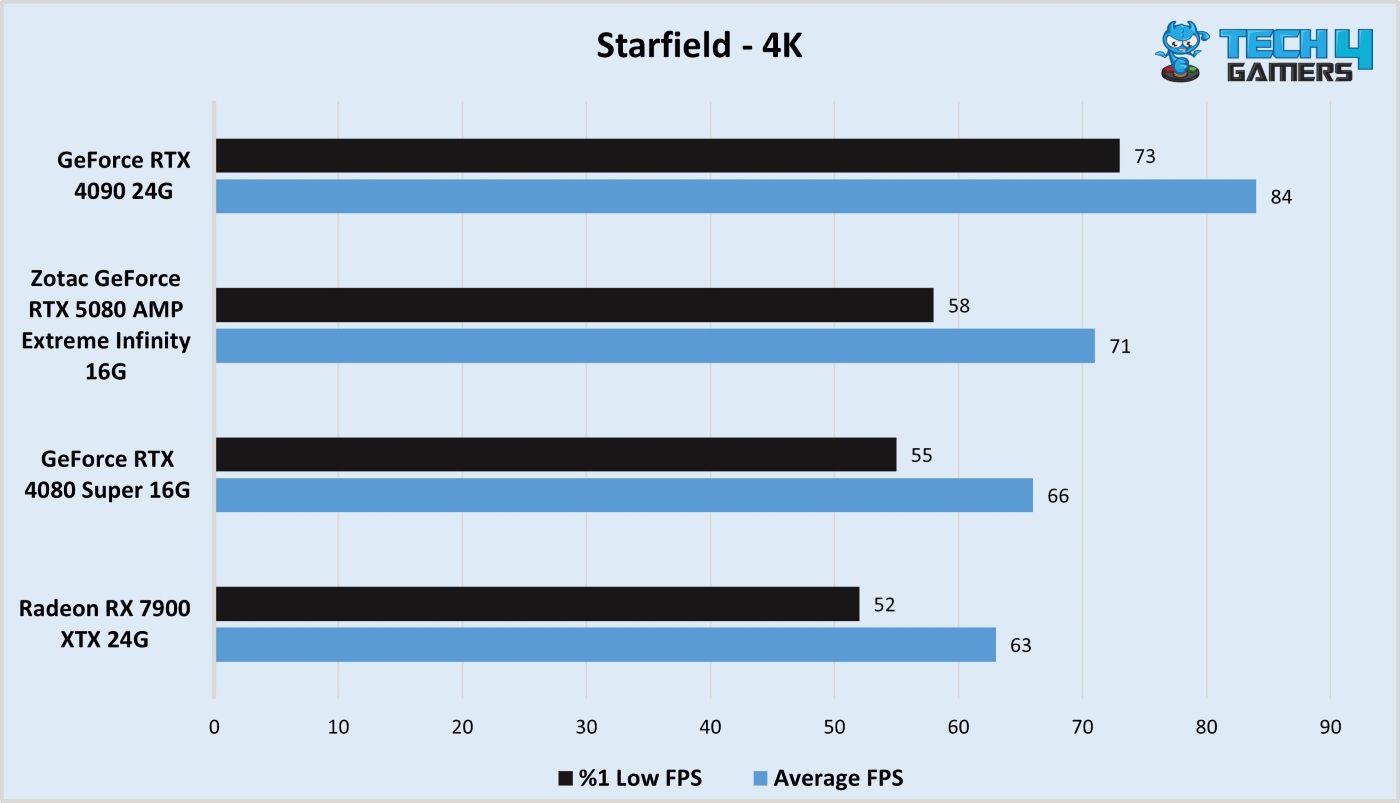
Moving on to Starfield, the RTX 5080 scored 71 FPS on average, beating the 4080 Super by 7.5%.
Finally, in The Last of Us, the RTX 5080 only beat the RX 7900 XT by a narrow margin.
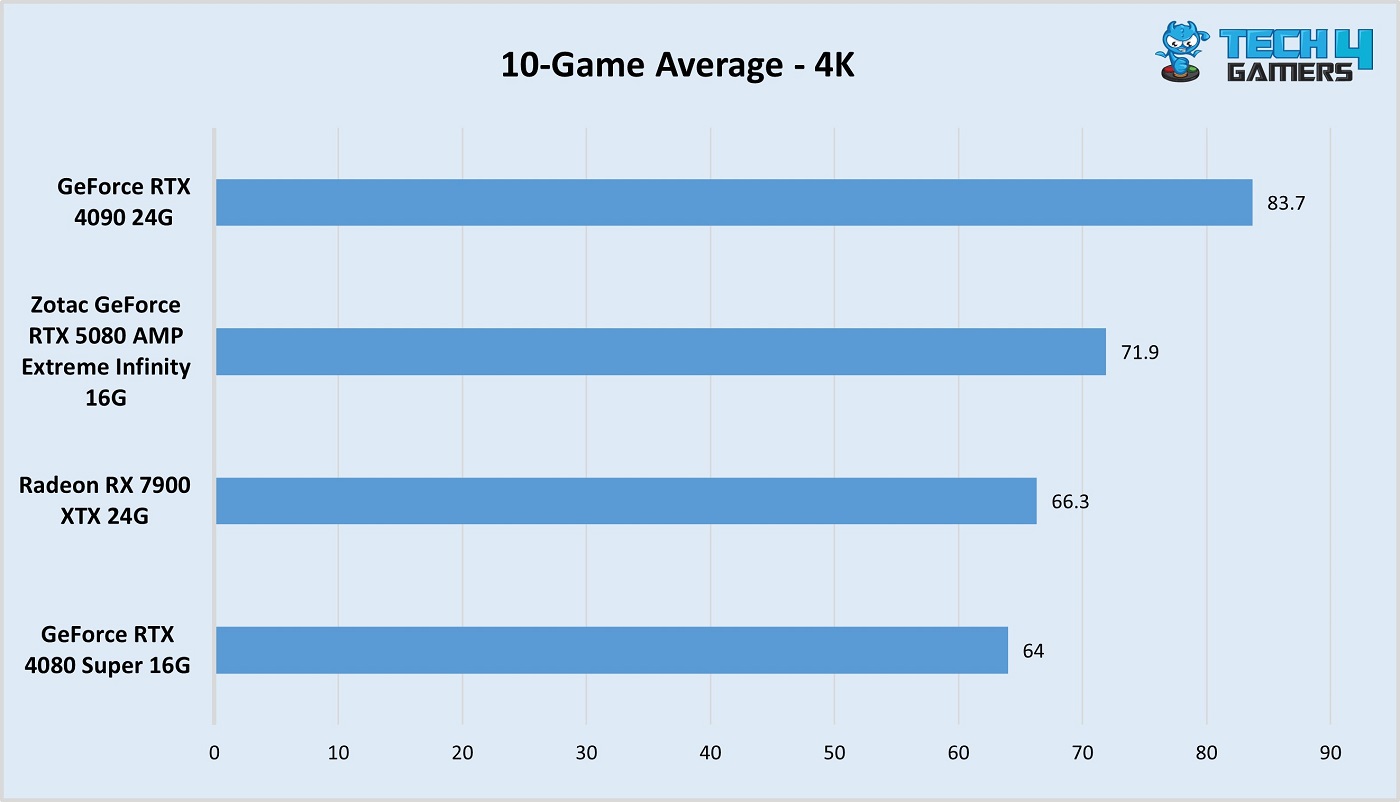
The RTX 5080 shows strong 4K gaming numbers, but not when compared to the other cards:
It is only marginally better than the RX 7900 XTX (MSRP: $750), but costs $500 more.
The RTX 4080 Super falls behind, trailing the RTX 5080 AMP Extreme Infinity card by 12.3%.
At 4K, the RTX 4090 is 16.4% faster than the RTX 5080.
Ray Tracing at 1440P
Here’s what things are like at 1440P with ray tracing.
Ray Tracing, 1440P
1 of 6
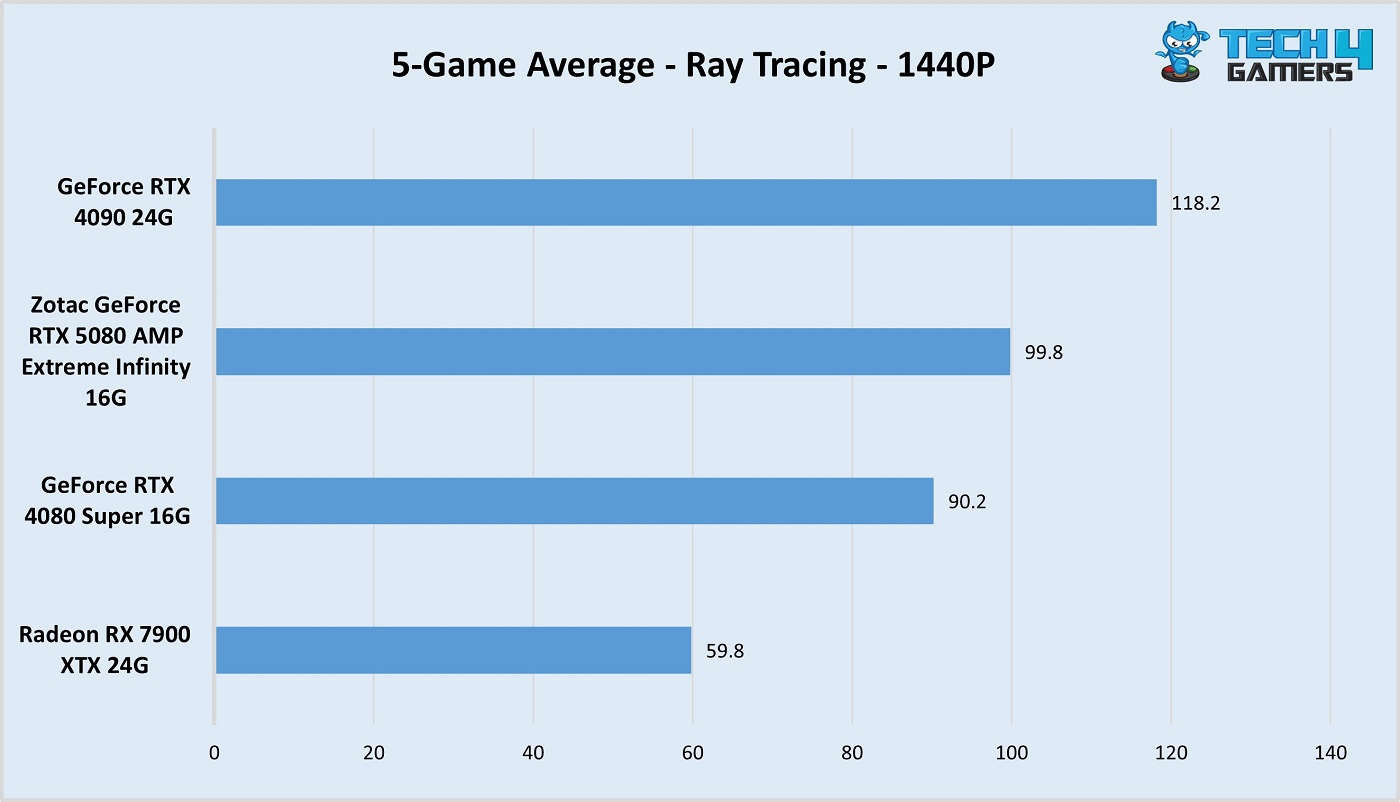
5-game average
In Alan Wake II, the card trails the RTX 4090 by a significant margin, and only beats the RTX 4080 Super by 2 FPS.
In Black Myth: Wukong, the RTX 5080 is head-to-head with the RTX 4090!
Moving to Cyberpunk 2077, the RTX 4080 Super is on par with the Zotac RTX 5080 AMP Extreme Infinity again.
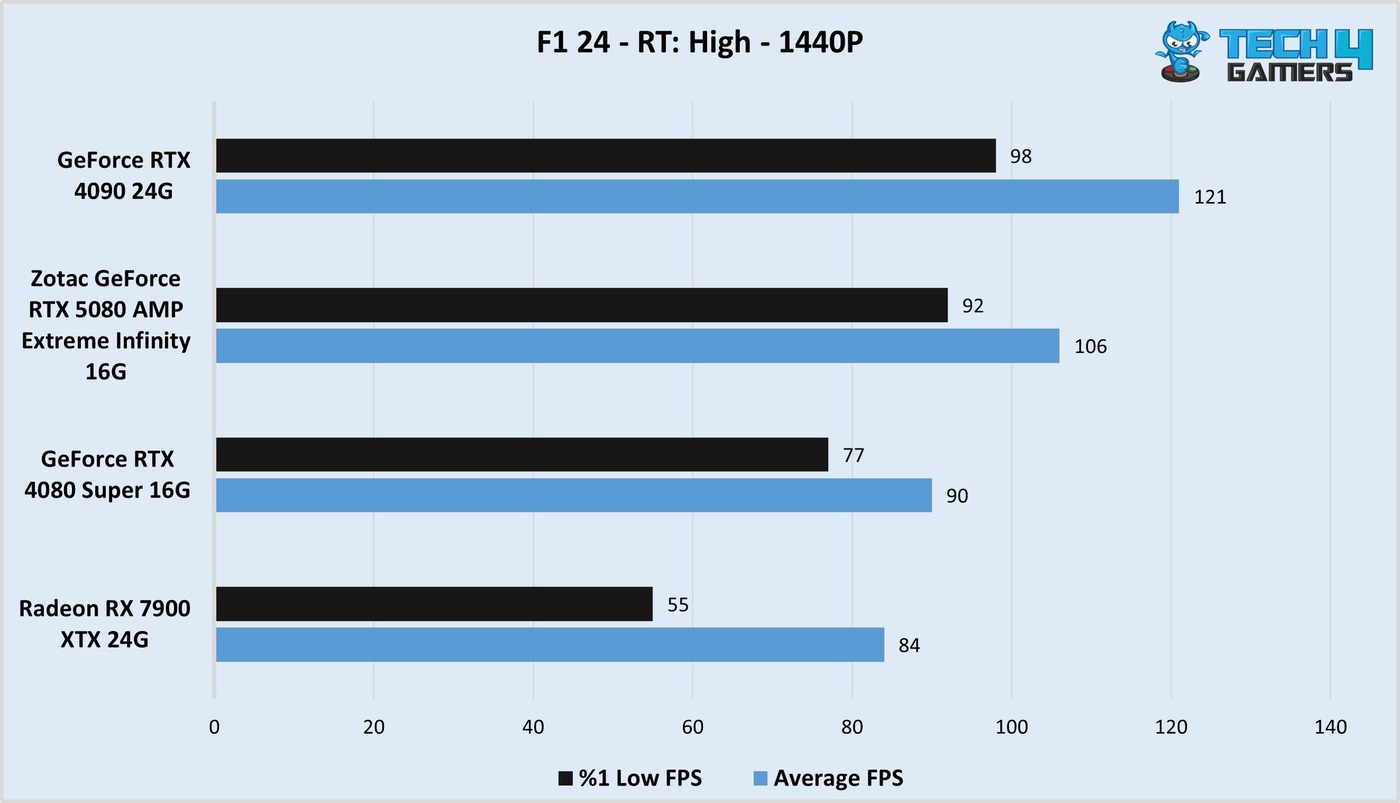
In F1 24, the we saw an average FPS of 106, 17.7% faster than the RTX 4090.
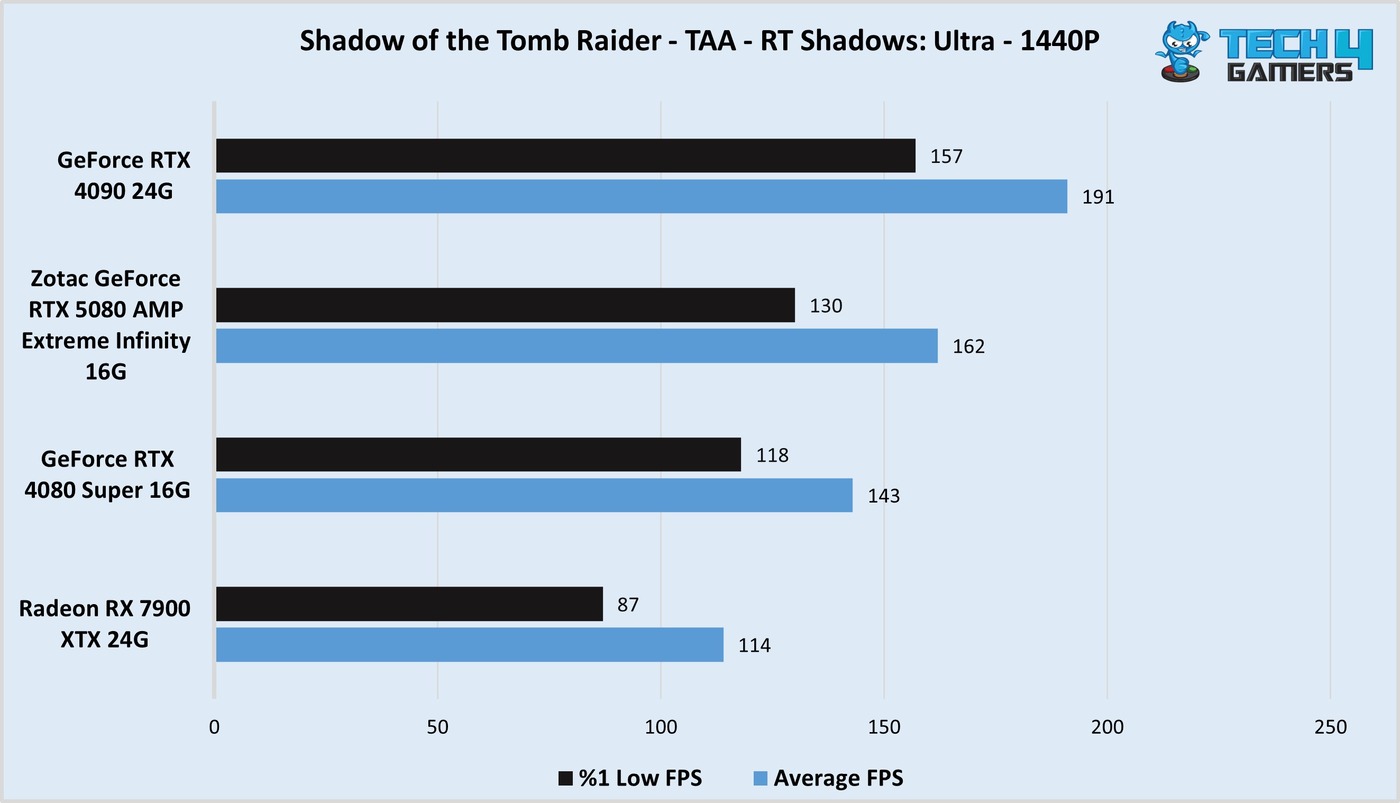
Finally, Shadow of the Tomb Raider saw an average of 162 FPS from the card.
Here are the key points for the GPU’s 1440P ray tracing performance:
The RTX 5080 AMP Extreme Infinity is 10.6% faster than the RTX 4080 Super.
It lags behind the RTX 4090 by 18.4%.
Ray Tracing at 4K
Finally, a look at the 4K ray tracing numbers.
Ray Tracing, 4K
1 of 6
5-game average
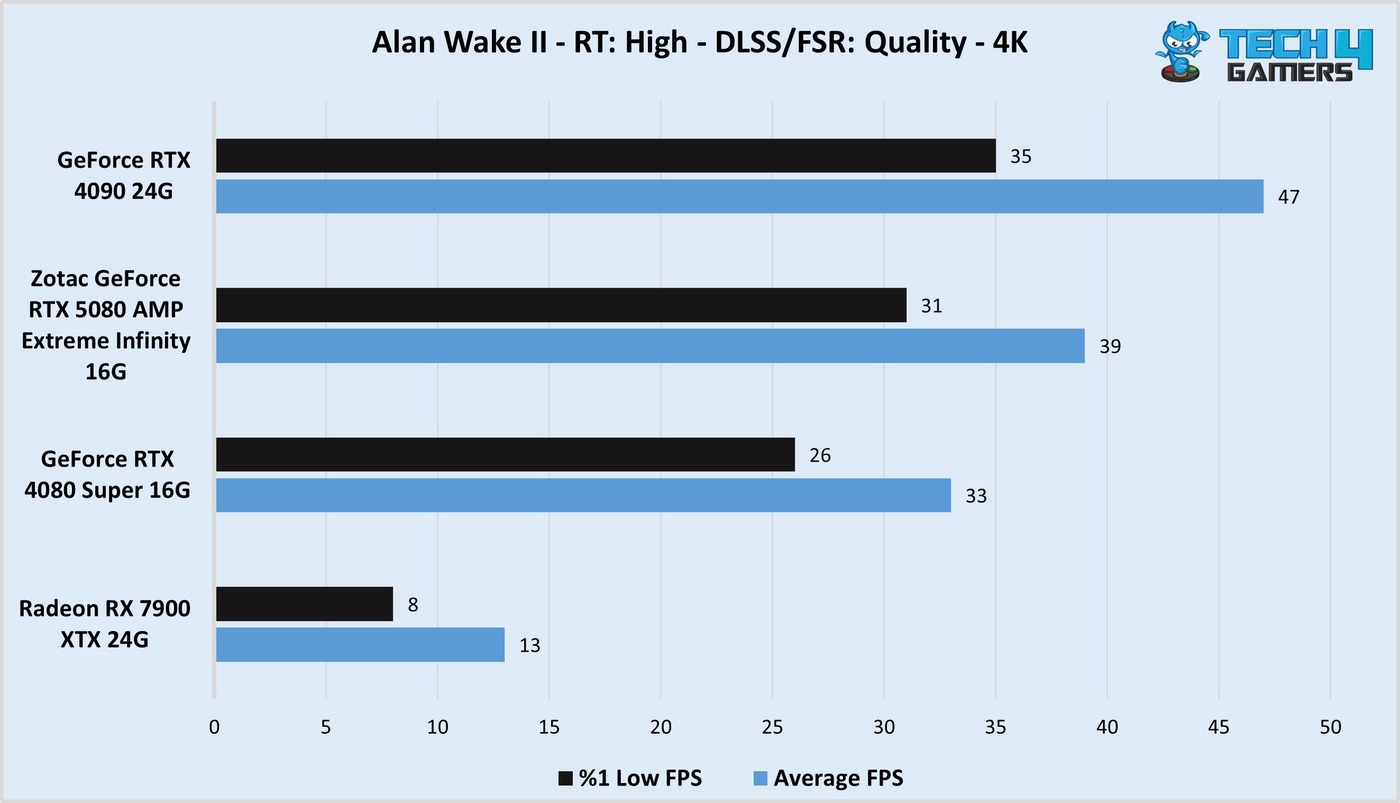
In Alan Wake II, the RTX 5080 AMP Extreme Infinity managed 39 FPS; decent numbers for this title.
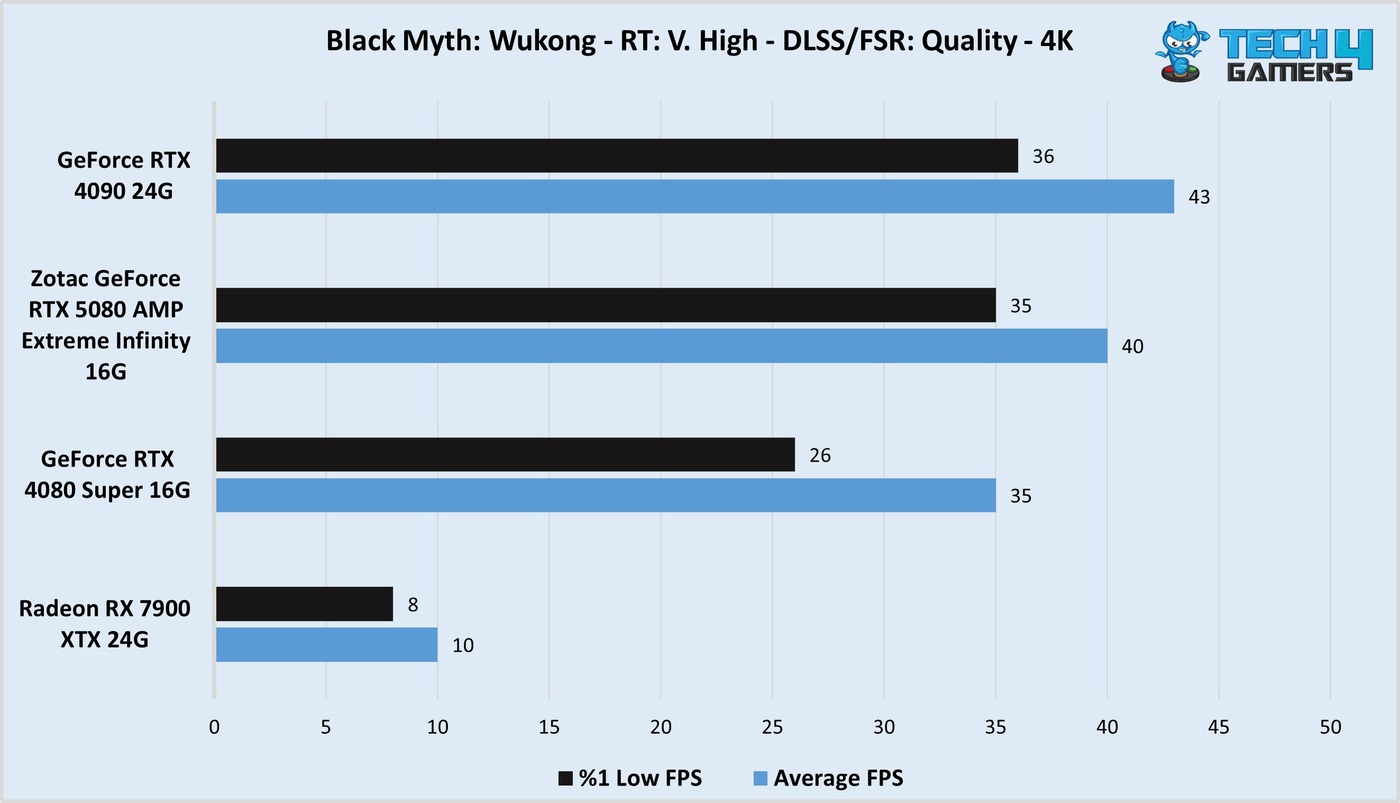
In Black Myth: Wukong, the card trails the RTX 4090 by 3 FPS.
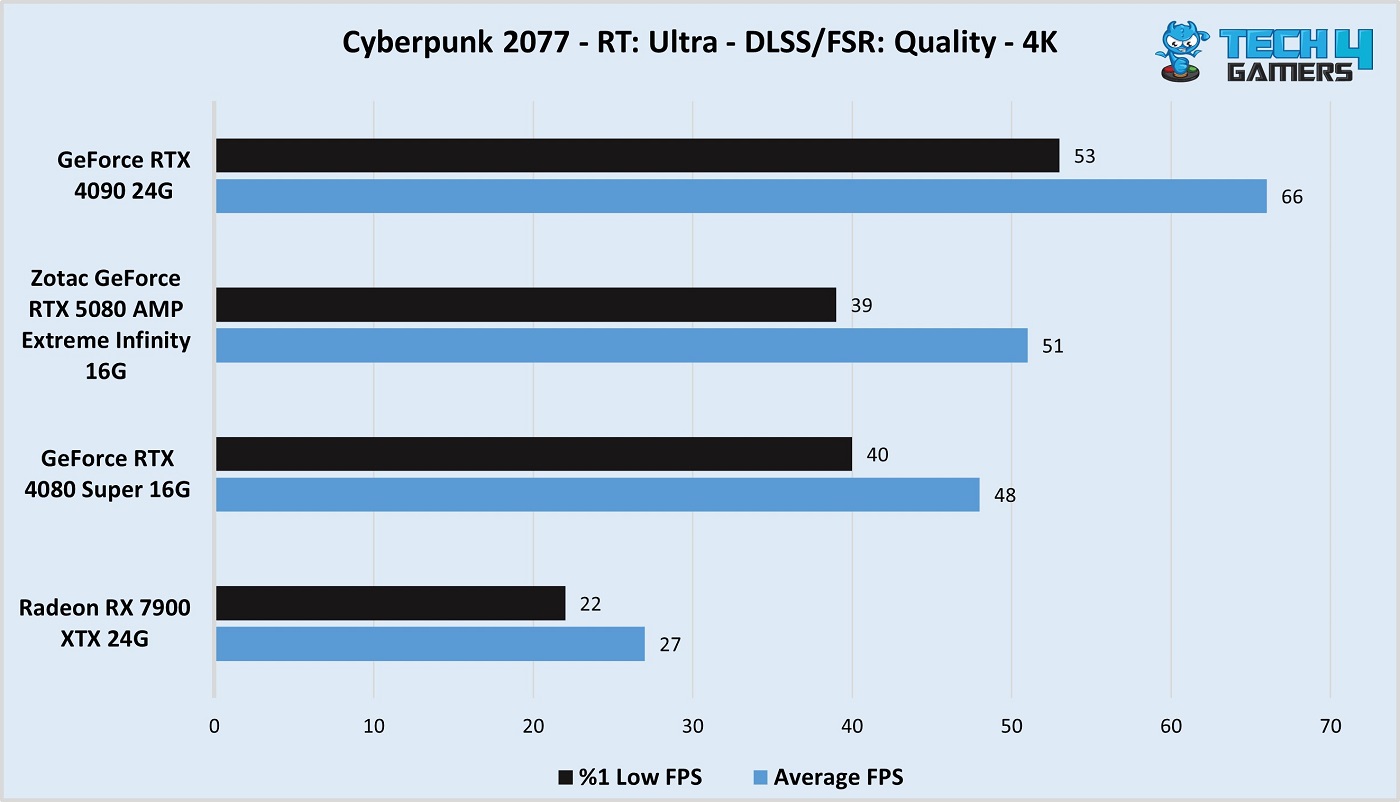
In Cyberpunk 2077, the RTX 5080 beats the RTX 4080 Super by 3 FPS while trailing the RTX 4090 by 15 FPS.
Moving on to F1 2024, the RTX 5080 is evenly placed between the RTX 4090 and RTX 4080 Super.
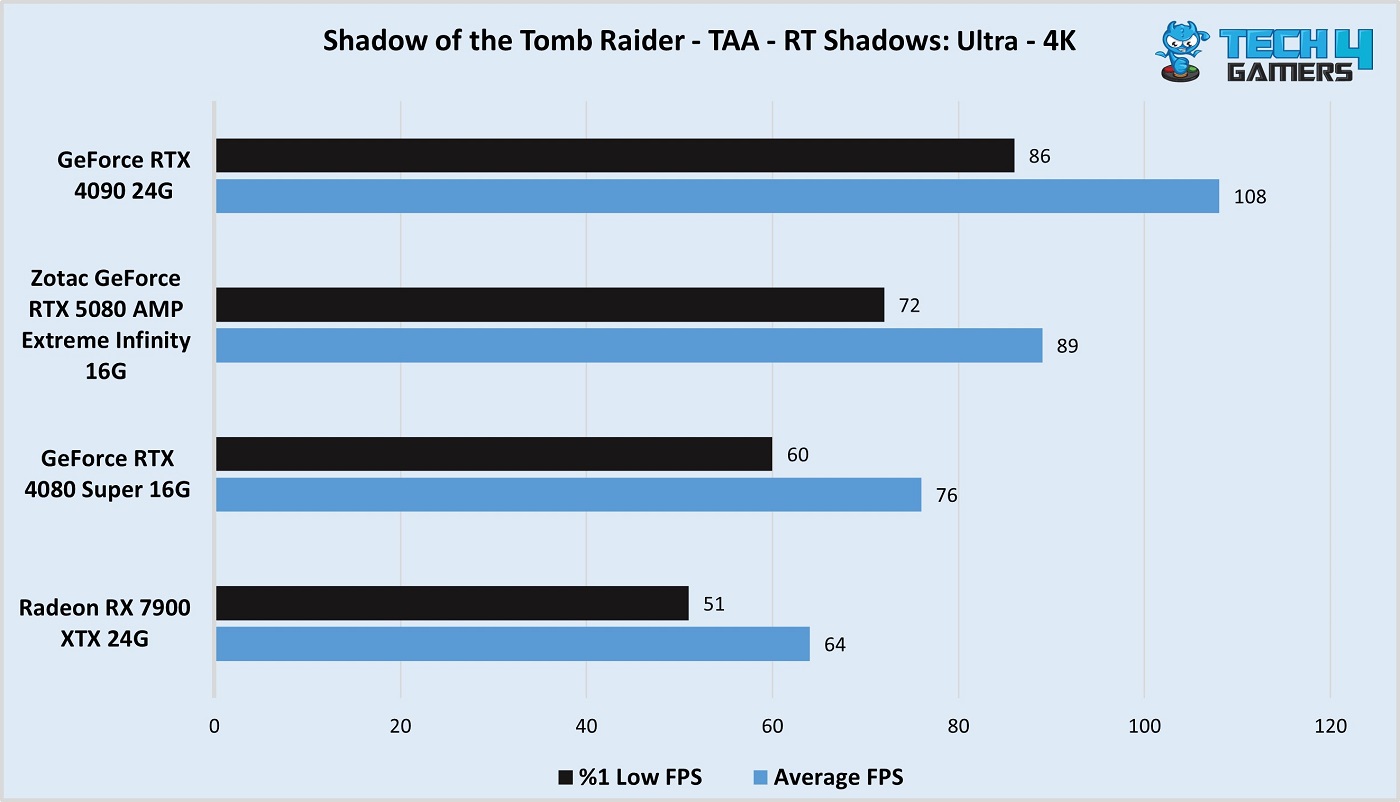
Wrapping things up, the RTX 5080 managed 89 FPS in Shadow of the Tomb Raider where RT shadows were set to Ultra.
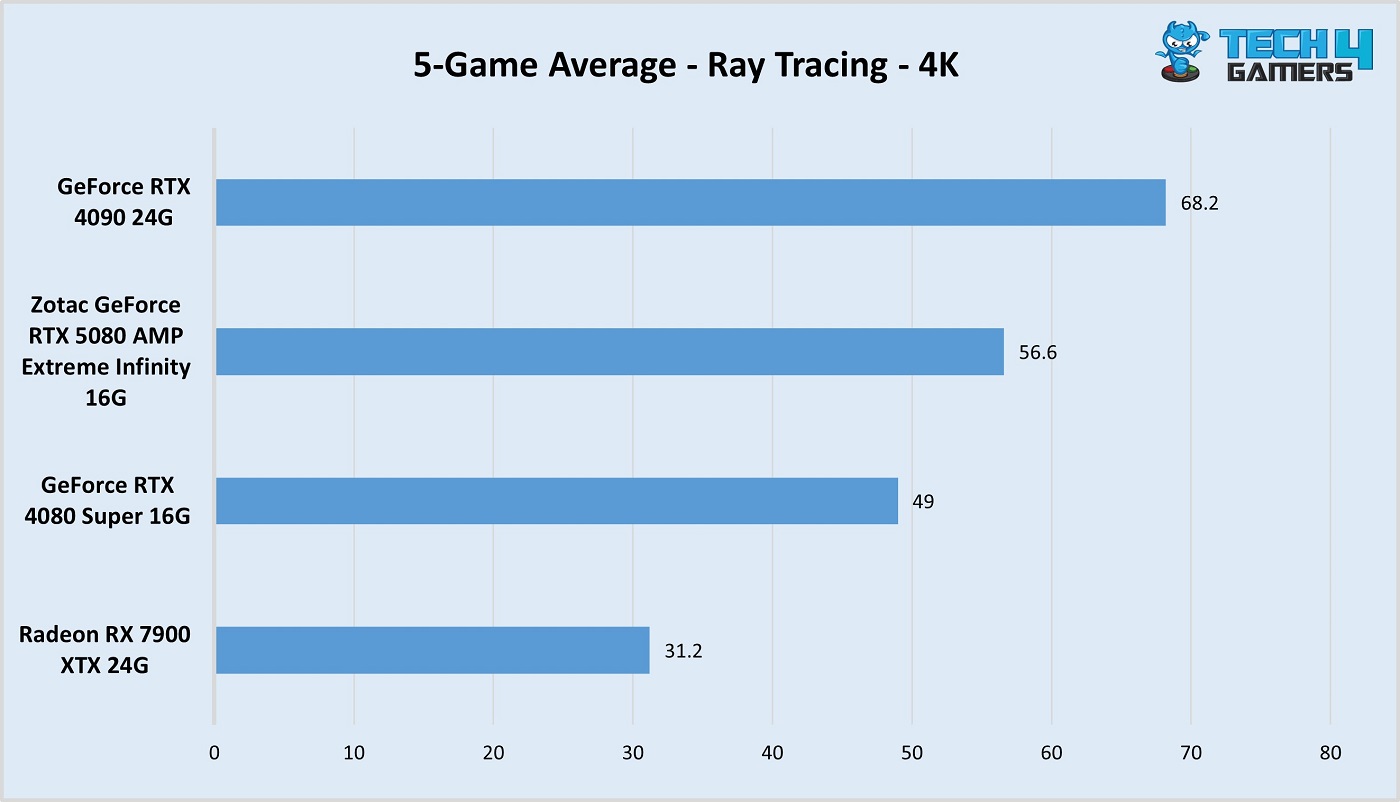
Turning things up to 4K, here’s the RTX 5080’s AMP Extreme Infinity’s performance compared to competitors when ray tracing is enabled:
The card outputs 15.5% more FPS than the RTX 4080 Super base model.
Meanwhile, it was 20.5% slower than the RTX 4090.
Power Consumption and Temperatures
Thermals and power draw (Image by Tech4Gamers)
The power consumption statistics reveal that the Zotac GeForce RTX 5080 AMP Extreme Infinity shows roughly the same numbers as the RTX 4080 Super reference card. It consumed 338W on average across our 4K ultra gaming tests while maintaining cool temperatures, maxing out at just 63°C. On average, it ran 1°C cooler than the RTX 4080 Super. The power draw numbers are quite good, considering it outperforms the RTX 4080 Super in all the tests.
Our Analysis: Is The Price Justified?
The Zotac RTX 5080 AMP Extreme Infinity launched with a price tag of $1250, $250 higher than the Founder’s Edition. Unfortunately, none of the cards in discussion today are readily available at MSRP, so we can only discuss their value in relation to the launch price. Nvidia’s “Verified Priority Access” program promises to counter scalping and sell Founder’s Edition cards to gamers, but this program is only available in the US.
Anyhow, compared to the RTX 4080 Super, for example, the card has a $250 higher MSRP (25% higher), but is only 8.9% faster in 1440P gaming, and 12.3% faster at 4K. The card’s best outcome is ray tracing at 4K, where it was 15.5% faster. Not very impressive numbers, especially given that the Founder’s Edition will show even less uplift.
The RTX 4090 FE was 20.5% faster than the RTX 5080 AMP Extreme Infinity (in a BEST-case scenario, i.e., ray tracing at 4K). This is still okay, as the card has a 28% higher MSRP. It also consumes less power, so I can generally recommend it over the RTX 4090.
While no AMD card thus far can compete with Nvidia’s high-end RTX cards in ray tracing, the RX 7900 XTX did well in rasterization benchmarks. Given its $849 MSRP, 47% lower, it only trailed the RTX 5080 AMP Extreme Infinity by 12.1% in 1440P gaming and by just 8.4% in 4K gaming.
Overall, I find it hard to recommend the variant as it costs $250 more than the Founder’s Edition, while the performance bump isn’t all that great. It doesn’t help that the 5080 generally doesn’t show a good enough uplift over Ada Lovelace! Unless you think you’ll be using multi-frame generation a lot, it simply isn’t worth it. As for this Zotac variant, it seems you’re paying the extra premium for the design, which I have to say is quite nice.
Should You Buy It?
Still confused? Here’s the break-down:
Buy It If:
✅You prioritize aesthetics: The Zotac GeForce RTX 5080 AMP Extreme Infinity possesses a unique design featuring two RGB zones and an RGB diffuser at the top side.
✅You’re planning to use Multi Frame-Generation: The RTX 5080 can give you impressive FPS boosts over older-gen Nvidia cards and all AMD cards thanks to Multi Frame-Generation. Without it, the performance uplift over the RTX 4080 (Super) is unimpressive.
✅You’re after impressive thermal efficiency:The card’s thermal efficiency is better than that of the Founder’s Edition variant.
Don’t Buy It If:
❌You don’t need the aesthetics: If aesthetics are not a priority, you’ll be better off with the Founder’s Edition card, saving $250 for a small performance loss.
❌You want the best rasterization performance: Without MFG, this card’s performance uplift isn’t worth it over the previous generation.
My Thoughts
The Zotac RTX 5080 AMP Extreme Infinity was our introduction to the RTX 5000 series. Being an AIB GPU, the card offers unique aesthetics and better cooling than the Founder’s Edition card. The only specification difference is the faster boost clock speed it offers. It shows a decent uplift over the reference card, but not one that justified its $250 uplift over it.
Compared to the RTX 4080 Super, the performance uplift is simply not good enough, especially considering the price tag. Similarly, the RX 7900 XTX offers the best value for rasterization as its MSRP is much lower than the RTX 4080 Super and RTX 5080 AMP Extreme Infinity, but the performance is comparable.
Nvidia brings software-level changes with the RTX 5000 series, including DLSS 4 and Reflex 2. So far, they seem to be the most exciting part of this launch. The new DLSS 4 Transformer Model means you can get improved image quality and (potentially) more FPS for even the old RTX 2000 series cards! Similarly, Reflex 2 will be supported by all RTX cards but initially, it will only be supported by RTX 5000 cards.
If you’re okay with using frame generation, which is the only way this card will significantly outperform the competition in gaming performance, then the RTX 5080 is a good investment. Multi-frame generation can boost FPS over eight times compared to native rendering. Combined with Super Resolution, up to 15 of every 16 frames can be generated by AI for a huge FPS boost. If AI-generated frames don’t excite you, skip this card (by “this card,” I mean the RTX 5080 in general).
Currently serving as a News Reporter at Tech4Gamers, I have the privilege of combining my love for gaming with the art of storytelling. My role involves crafting engaging narratives that keep our audience abreast of the latest developments in the gaming world.
Story Highlight
Avowed launched with strong reviews but had a low peak player count on Steam.
Despite this, the game’s director stated that they’re quite pleased with the sales.
The game briefly topped Steam’s charts before spiraling down to the 6th spot.
Despite earlier concerns, Obsidian’s latest RPG, Avowed, launched with positive reviews but a mixed reception from the players. The game launched with only a peak of 14k concurrent players on Steam.
This led to the public assumption that the game flopped. However, a new report debunks the claims, revealing that Avowed’s sales are doing quite well.
Why It Matters: Avowed faced tough competition from other releases in February. Despite having to compete against Kingdom Come Deliverance 2 and Monster Hunter Wilds in the near future, the game apparently holds up well.
Elder Scrolls IV Oblivion Holds Up Better Against Avowed In Comparisons
In an interview with Bloomberg, Carrie Patel, the game’s director, said this about the game’s financial performance.
Players have raved about the game, and the company said it is happy with sales so far.
The proper sales figures aren’t revealed, but it is speculated that they were enough to assure the studio. Despite the mixed public reception, Avowed‘s director claims that people were “raved” about the game.
The director went on to discuss the development process, especially considering the rough start and the complete shift in the game’s direction; the end result was quite satisfactory for the studio.
For those unfamiliar, Avowed started as a multiplayer Skyrim-esque project prior to Xbox’s acquisition of Obsidian. Later, it was massively downscaled into the single-player title we have today.
Regardless of the director’s claim that they’re happy with the sales, Avowed currently stands at the 6th best-selling paid title on Steam.
While it momentarily surpassed Kingdom Come Deliverance 2 at one point for the number one spot, it has spiraled down below massively, overtaken by the likes of NBA 2k25 and Civilization 7.
I’ve previously worked for eXputer as a Senior News Writer for several years. Now with Tech4Gamers, I love to devoutly keep up with the latest gaming and entertainment industries. I have a Bachelor’s Degree in Computer Science and years of experience reporting on games and breaking exclusive stories. Besides my passion for gaming journalism, I love spending my leisure time farming away in Stardew Valley. VGC, IGN, GameSpot, Game Rant, TheGamer, GamingBolt, The Verge, NME, Metro, Dot Esports, GameByte, Kotaku Australia, PC Gamer, and more have cited my articles.
Story Highlight
Avowed might get expansions or sequels later down the road, as implied by the RPG’s creative director in an interview.
Carrie Patel wants to do more with the world they’ve built in Avowed, but the dev hasn’t elaborated on its exact plans.
The RPG went through multiple reboots in development, and comparisons with the 2006 Oblivion reveal major downgrades.
Microsoft’s new AAA first-party entry, Avowed, is the single-player latest RPG to grace the gaming scene. Many critics have found Obsidian’s entry fun enough to experience without thinking too hard. However, the studio might already have grand plans for the game.
Avowed’s creative director, Carrie Patel, has teased in a new interview that the title might see DLCs or even sequels in the future.
Why it matters: Avowed has launched only recently, but Obsidian is possibly planning to expand the RPG into a proper franchise in the future. For now, it’s too early to tell whether Avowed will get a sequel in the future.
While speaking to Bloomberg’s Jason Schreier, Avowed’s creative director mentions that the idea of doing something new with the RPG is already pretty appealing. Carrie wants to do more with the world and the content that Obsidian has built over the years in Avowed.
I’d love to see us do more with it.
-Carrie Patel, Creative Director
On the flip side, Carrie also elaborates that Avowed took six years to develop and went through two reboots. The project even began as a multiplayer take on Skyrim, which makes the current single-player launch completely unimaginable when compared.
Avowed has performed notably well despite mixed user reviews on Metacritic and the mostly positive rating on Steam. However, the entry has been criticized for bland NPCs and a static world that doesn’t react to the player.
Do you think Avowed will eventually get DLCs or even become a franchise with sequels in the future, or are these remarks just PR talk? Let us know your thoughts in the comments below, or join the discussion on the Tech4Gamers forum.
At T4G, my task is to cover the latest news around the gaming globe ASAP and with the utmost precision. I adore all the games and respect all the devs behind the amazing games that we get all year. So, whether it’s a PC or a Console game, I got it all covered.
Story Highlight
Lost Soul Aside creator states that they made many mistakes at the beginning of development.
The morale was quite low because full-game development was very new for them.
PlayStation helped by providing a team and structure to aid in the process.
PlayStation’s upcoming action RPG, Lost Soul Side, is set to release later this year. The initial impressions and gameplay have truly stunned, but the developers say that it wasn’t always the case, as they initially made many mistakes.
Talking in an interview, the game’s creator revealed that at the beginning their morale was very low because they didn’t have much full game development experience, this was until PlayStation picked the project.
Why it matters: PlayStation’s recent State of Play was largely underwhelming, however, Lost Soul Aside was the title that stood out for many people, based on its Devil May Cry-inspired combat.
Talking to Julien Chieze, the Lost Soul Aside creator explained the process of game development. He states that when they started the project they made many mistakes which led to low morale because of lack of experience.
PlayStation, later came up with the China Hero Project and helped them out. So, what started as a solo endeavor by Yang Bing, became a properly structured project with a dedicated team working on it.
Lost Soul Aside is set to launch on May 30, 2025
The interview also delves into other details about the game. For one it’ll be PS5 Pro Enhanced, so you can expect 4K visuals with higher FPS. Moreover, story and exploration are two essential parts of the title.
Unfortunately, just like other PlayStation games, Lost Soul Aside will face the PSN region locking issue. Nonetheless, the title is set to release on May 30, 2025, and will be available on PS5, and PC via Steam.
What are your thoughts on the comments by the Lost Soul Aside creator? Did PlayStation do the right thing by picking the project? Let us know your opinions in the comments or join the discussion at the official Tech4Gamers Forum.
I’ve previously worked for eXputer as a Senior News Writer for several years. Now with Tech4Gamers, I love to devoutly keep up with the latest gaming and entertainment industries. I have a Bachelor’s Degree in Computer Science and years of experience reporting on games and breaking exclusive stories. Besides my passion for gaming journalism, I love spending my leisure time farming away in Stardew Valley. VGC, IGN, GameSpot, Game Rant, TheGamer, GamingBolt, The Verge, NME, Metro, Dot Esports, GameByte, Kotaku Australia, PC Gamer, and more have cited my articles.
Story Highlight
Marvel Rivals developer and publisher NetEase is allegedly divesting over a dozen Western studios, as per a new report.
These non-Chinese game studios, including Quantic Dream (51% stake) and Rebel Wolves (minor stake), might be sold off.
This info has not been officially acknowledged, but the recent Marvel Rivals layoffs further solidify the reported decision.
NetEase has rapidly expanded into the Western gaming market by acquiring talented studios, partnerships, and smart investments. However, a new report suggests that the company is about to withdraw just as fast out of the West shortly.
The notable gaming publisher is allegedly planning to divest over a dozen Western studios. In other words, we will soon see NetEase either sell off notable teams or lay them off entirely. The exact number and what studios will be impacted are unclear, however.
Why it matters: NetEase possibly closing off or selling over a dozen Western game studios suggests that a major shift is coming to the wider gaming industry. It is a massive blow to the many talented Western developers under the publisher.
The company’s controversial decision could also impact studios like Rebel Wolves and Quantic Dreams.
As per an exclusive report by Game File, the conglomerate wants to reduce its presence in the Western gaming market. The NetEase representative refused to explain the reported claims but did explain that:
‘all studios and projects are in constant review and evaluation, and NetEase will determine changes needed to be made throughout that process.’
-NetEase Representative.
NetEase shared a similar stance while explaining why the Seattle-based Marvel Rivals game director and the rest of the team were laid off. The company said layoffs were necessary for organizational reasonsand to optimize development efficiency for the game.
Recent Marvel Rivals layoffs also suggest that the developer is divesting from the Western market.
The publisher has shares in a vast array of non-Chinese studios, including the likes of Quantic Dream and Rebel Wolves. So, the Detroit: Become Human and The Blood of Dawnwalker teams could suffer from the ripple effects of this withdrawal from the Western market.
The exact reasons for the massive upcoming divestments have not been made clear by NetEase so far, but we may learn more shortly.
Do you think NetEase is about to pull out from the Western game development market after heavy investments? Will its games in the West suffer? Let us know your thoughts in the comments below, or join the discussion on the Tech4Gamers forum.
As a News Reporter at Tech4Gamers, I bring the latest findings from the tech industry to our readers. Specializing in processors, graphics cards, and more, I strive to deliver detailed insights that keep our audience well-informed and engaged. Periodically, I also delve into the vibrant world of gaming to share captivating stories.
Story Highlight
Nvidia confirms that some RTX 5090, 5090D, and 5070 Ti GPUs have missing render units, slightly impacting performance.
The number of affected GPUs is small due to the limited distribution of the RTX 5090 and 5070 Ti models.
Nvidia advises affected users to contact their board makers for a replacement, though delays are expected due to GPU shortages.
Nvidia has just confirmed that it sent some RTX 5090, RTX 5090D, and even RTX 5070 Ti graphics processors with missing render units, as reported by TechPowerUp and that you can receive a replacement if your card was affected.
Why it matters: The shortage of RTX 50 series GPUs means replacements may take time, causing inconvenience for affected customers.
Source: Nvidia
According to NVIDIA, the RTX 5090 and RTX 5090D GPUs, as well as the RTX 5070 Ti, are currently affected by the missing ROP unit. However, we’ve not seen any instances of missing ROPS on the 5070 Ti yet.
That said just 0.5% of the GPUs are impacted and each one is missing a single ROP unit, for a total of 8 ROPS. Nvidia also claims that the average GPU performance impact is 4%, which has a minor effect on workloads related to AI and computation.
Therefore, if you discover that your RTX 50 GPU is lacking ROPS, you should seek a replacement as soon as possible. NVIDIA notes that impacted customers can contact board makers for a GPU replacement
Affected users may also have to wait a long time to obtain a replacement due to the current shortage of RTX 50 GPUs. Furthermore, it’s difficult to determine the precise number of GPUs lacking ROPS because so few RTX 5090, 5080, or even 5070 Ti GPUs have been shipped out.
However, users who are affected by defective GeForce RTX 5090 and 5070 Ti units can verify whether they have a faulty card by using GPU-z and looking at the ROP count section.
I’ve previously worked for eXputer as a Senior News Writer for several years. Now with Tech4Gamers, I love to devoutly keep up with the latest gaming and entertainment industries. I have a Bachelor’s Degree in Computer Science and years of experience reporting on games and breaking exclusive stories. Besides my passion for gaming journalism, I love spending my leisure time farming away in Stardew Valley. VGC, IGN, GameSpot, Game Rant, TheGamer, GamingBolt, The Verge, NME, Metro, Dot Esports, GameByte, Kotaku Australia, PC Gamer, and more have cited my articles.
Story Highlight
Black Myth: Wukong’s art director has confirmed in an interview that nearly 70% of the game sales are from China.
The rest 30% are from overseas, as the RPG has performed exceptionally across the globe with over 25 million units sold.
Based on those statistics, the entry has sold about 17.5 million in China so far, with the other 7.5 million being sold overseas.
Black Myth: Wukong has been one of the best RPGs to release in recent years, with stellar player and sales reception. While its immense success can be attributed to the Chinese players, no one would have expected the sales figure to vary so starkly compared to overseas.
Now, the game’s art director, Yang Qi, has come forward in an interview to confirm that nearly 70% of Black Myth: Wukong sales emerge from China based on the Game Science Data. The remaining 30% of players are from overseas.
Why it matters: Black Myth: Wukong has proven to be one of the best Chinese game releases in recent times, and it surpassed all expectations in the local market. The RPG has also sold a lot overseas despite cultural differences.
As featured on the Chinese site, Weixin, Yang Qi answered queries about Black Myth: Wukong in a lecture for the China Academy of Art. He shared his astonishment about the game’s success, saying it succeeded worldwide because the gameplay went beyond cultural values.
‘The earlier data accounted for about 30%, but in fact, this proportion has exceeded our expectations, and it has also been recognized by many overseas players.’
For those not in the know, Black Myth: Wukong has sold over 25 million copies worldwide. So if these statistics are anything to go by, about 17.5 million sales have emerged from China alone, while the rest of 7.5 million are overseas sales.
Black Myth: Wukong still appears to have a good future ahead, as a DLC is rumored for the entry to launch in Q1 2025. Additionally, Game Science has also hinted at a potential sequel for the Black Myth franchise in the past.
Do you think Black Myth: Wukong’s success is only a result of the local market, or was it destined to perform well? Let us know your thoughts in the comments below, or join the discussion on the Tech4Gamers forum.
I’ve previously worked for eXputer as a Senior News Writer for several years. Now with Tech4Gamers, I love to devoutly keep up with the latest gaming and entertainment industries. I have a Bachelor’s Degree in Computer Science and years of experience reporting on games and breaking exclusive stories. Besides my passion for gaming journalism, I love spending my leisure time farming away in Stardew Valley. VGC, IGN, GameSpot, Game Rant, TheGamer, GamingBolt, The Verge, NME, Metro, Dot Esports, GameByte, Kotaku Australia, PC Gamer, and more have cited my articles.
Story Highlight
Doom The Dark Ages is set to have the biggest levels in the series that will take only an hour to complete.
The sequel will put more emphasis on the story with a return to the medieval period.
The game is launching on May 15, 2025.
When we talk about influence, arguably no game can come close to the Doom IP. Created back in the ’90s, the first-person shooting title pioneered the most profitable genre in the gaming world and influenced some of the biggest franchises in the industry’s history.
It’s showing no signs of letting up in the modern era either with its newest sequel, Doom The Dark Ages, set to launch in May this year. And, if the new gameplay details are true, it’s going to be the biggest Doom game in series history with more emphasis on story.
Why This Matters: The innovative level design coupled with more emphasis on the story makes the next Doom an interesting entry in the series.
Info about the upcoming Doom The Dark Ages
According to game director Hugo Martin’s interview with Edge Magazine, the sequel will feature some of the largest spaces with a sandbox design to the levels. In addition, they won’t take too long to finish as the director has developed them to culminate in about an hour, calling it a sweet spot.
Doom The Dark Ages will also break its levels into acts with a dungeon-crawler feel to them. Martin also explained that the upcoming FPS title is inspired by the Batman Year One comics which took the character back to his roots. And, with the guns attaining a more medieval theme, it does feel like a return to olden times for the Doom Slayer.
Doom The Dark Ages will paint the franchise in a new light
Moreover, Doom The Dark Ages will also be the first title in the series that puts emphasis on the story, with the director saying that it won’t be in the text notes like previous titles and will actually be at the forefront this time around.
With the game set to release on May 15, the hype for the sequel is through the roof, especially on Steam, as players can’t wait for the Doom Slayer’s next adventure. Do you think Doom The Dark Ages will be a hit? Tell us in the comments below or head to the Tech4Gamers forum for discussion.
At Tech4Gamers, I contribute as a Senior News Reporter, combining my skills and gaming enthusiasm to keep our audience updated on the latest developments.
[Press Release] G.Skill has announced revised DDR5 R-DIMM memory with an advanced 16-layer PCB.
This marks a major step forward over previous 8 to 10-layer PCBs. As per G.Skill, this upgrade offers significantly better data transmission due to more reliable and stable signal integrity.
G.Skill Is Famous For Its R-DIMM Kits
Adding to the company’s impressive security, the new DDR5 modules sport two bi-directional TVS diodes.
A fuse is also included to protect the memory against power surges. Ultimately, these upgrades make G.Skill’s latest offerings even more suitable for high-end computing and workloads.
The company will share more details on availability and pricing closer to launch, and you can find all the details through this link. The new modules arrive in mid-2025 and promise a new level of high-performance computing.