At T4G, my task is to cover the latest news around the gaming globe ASAP and with the utmost precision. I adore all the games and respect all the devs behind the amazing games that we get all year. So, whether it’s a PC or a Console game, I got it all covered.
Story Highlight
Last year was dominated by great indie titles, and 2026 has kicked off with a hit as well.
Cairn, a mountain climbing simulator, is the first indie hit of the year with an 87 score.
It is being praised for its beautiful visuals and very realistic climbing mechanics.
2025 was a year of surprise hits, where indie titles dominated. Led by Expedition 33 with other games like REPO, Silksong, and more, it was a great year. 2026 is set to continue the trend as we get our first proper indie hit of the year.
Studio The Game Bakers recently released Cairn, which has earned a critics’ score of 87, becoming the first surprise indie hit of 2026. It is a climbing simulator where you reach summits with very realistic feeling mechanics.
Why it matters: Indie games have been on a roll as they’re outshining big-budget games, especially in terms of creativity. The out-of-the-box approach is one of the primary reasons they are resonating with fans.
Cairn has managed to hit an 87 score on Opencritic
Cairn has received an 87 score on Opencritic, and it is being praised for its realistic gameplay and breathtaking visuals. This also makes it one of the highest-rated games of 2026, so far.
The game puts you in the shoes of Aava, a mountain climber, as she embarks on the journey to climb Mount Kami, a summit which previously wasn’t reached before. On the way, you learn history, meet people, and more.
The title features beautiful visuals and realistic mechanics
One of the most striking things about the game is the visuals. Its art style is very unique, making the overall experience a lot more beautiful. However, there are some complaints that it does get a bit boring as you go.
Nonetheless, it’s remarkable how far indie titles have come. They won almost every award last year and are continuing to do well this year, too. This makes the future prospect of these titles a lot more interesting as well.
What are your thoughts on Cairn becoming a surprise hit for 2026? Let us know your opinions in the comments or join the discussion at the official Tech4Gamers Forum.
At T4G, my task is to cover the latest news around the gaming globe ASAP and with the utmost precision. I adore all the games and respect all the devs behind the amazing games that we get all year. So, whether it’s a PC or a Console game, I got it all covered.
Story Highlight
Pearl Abyss claims Crismon Desert will run 4K 60 FPS without using any upscaling.
He said off-the-shelf engines weren’t capable enough, so they created their own.
The game is aiming to launch in an optimized state, as it has finally gone gold.
Crimson Desert is brimming with huge potential and could be one of the biggest hits of the year. After multiple delays, it recently went gold and is set to launch in just over a month. It is also promising a great optimization at launch.
In a recent interview, the studio director revealed that Crimson Desert will be able to run at 4K 60 FPS at launch, and without any upscaling like DLSS or FSR. He said they needed their in-house engine for that, as others weren’t capable.
Why it matters: In the age of games launching as an unoptimized mess, the studio is promising great results, that too without any major upscaler, despite every major game making it mandatory.
Talking to Destin Legarie, Pearl Abyss director Will Powers talked about Crimson Desert’s optimization. He said that now that the game has gone gold, they are concentrating on optimizing it further as much as they can.
Yeah, we’ll show 4K 60 native, sure, with ray tracing on, that’s not done through DLSS or FSR, that’s done natively in-engine.
– Will Powers
Powers said that the game is capable of 4K 60 FPS without DLSS or FSR, but of course, you’ll need powerful hardware. Most AAA games can’t do that at native resolutions, even if you use the highest-tier GPUs.
The game is set to launch in just over a month
He didn’t go into details about console modes, but did confirm PS5 Pro enhancements. Destin claimed off-the-shelf engines weren’t able to push through all this, so they had to create their own engine.
Nonetheless, the optimization would just be the cherry on top of a game that’s already being claimed as a soild GOTY contender from its early previews. The title finally releases on March 19 for PC, PS5, and Xbox Series.
What are your thoughts on Crimson Desert doing 4K 60 FPS without upscaling? Let us know your opinions in the comments or join the discussion at the official Tech4Gamers Forum.
I’ve previously worked for eXputer as a Senior News Writer for several years. Now with Tech4Gamers, I love to devoutly keep up with the latest gaming and entertainment industries. I have a Bachelor’s Degree in Computer Science and years of experience reporting on games and breaking exclusive stories. Besides my passion for gaming journalism, I love spending my leisure time farming away in Stardew Valley. VGC, IGN, GameSpot, Game Rant, TheGamer, GamingBolt, The Verge, NME, Metro, Dot Esports, GameByte, Kotaku Australia, PC Gamer, and more have cited my articles.
Story Highlight
Bethesda veteran says that the studio has stopped making dynamic worlds that players loved.
The ex-lead adds that The Elder Scrolls 6 needs impactful player choices as seen in Baldur’s Gate 3.
He argues ES6 will only succeed if it is like Baldur’s Gate 3, since that is the kind of RPG players want.
The expectations of players have soared to an all-time high since The Elder Scrolls 6 was revealed eight years ago. While it was announced early to calm the anticipated fans, successful RPGs like Baldur’s Gate 3 have become the giants of the genre in the last few years.
A Bethesda veteran and lead behind titles like Skyrim now adds that The Elder Scrolls 6 needs to step up and draw lessons from Baldur’s Gate 3 to perform well.
He argues that Baldur’s Gate 3’s meaningful player choices and dynamic world are something players want over just an expansive, static open world.
Why it matters: Baldur’s Gate 3 became popular because of its impactful player choices, with nearly every moment severely affecting the world and the game’s ending. The Elder Scrolls 6 needs similar dynamic gameplay to win players over.
The game was originally announced at E3 2018.
In an interview with Press Box PR, ex-Bethesda executive Bruce Nesmith says that Bethesda has stopped making unpredictable, lifelike worlds to meet the design requirements of games and audience expectations.
This strategy backfired for the studio, which can be seen with games like Starfield. It featured huge planets yet lacked the fluidity and dynamic emergent gameplay that players had come to expect of the studio.
Therefore, learning from Baldur’s Gate 3 and having player choices significantly impact the world and the story in The Elder Scrolls 6 is essential to meet players’ expectations.
Look at Baldur’s Gate 3 and draw lessons from that mash hit, that part of what made it so popular is that it felt like all choices were meaningful because you made a choice and it made a big difference in your play.
-Bruce Nesmith, Ex-Bethesda Lead Developer.
Baldur’s Gate 3 remains extremely popular because of its replayability.
Do you think The Elder Scrolls 6 will have a dynamic world and meaningful player choices as in Baldur’s Gate 3? Let us know your thoughts in the comments below, or join the discussion on the Tech4Gamers forum.
I’ve previously worked for eXputer as a Senior News Writer for several years. Now with Tech4Gamers, I love to devoutly keep up with the latest gaming and entertainment industries. I have a Bachelor’s Degree in Computer Science and years of experience reporting on games and breaking exclusive stories. Besides my passion for gaming journalism, I love spending my leisure time farming away in Stardew Valley. VGC, IGN, GameSpot, Game Rant, TheGamer, GamingBolt, The Verge, NME, Metro, Dot Esports, GameByte, Kotaku Australia, PC Gamer, and more have cited my articles.
Story Highlight
The Beyond Good and Evil 2 lead developer has promised that Ubisoft will deliver a remarkable game.
He reassured the worried fans amid the recent Ubisoft overhaul that affected multiple games.
The game will remain in development, as it aligns with the publisher’s open-world focus.
The creative director behind the game has now reassured fans that it is continuing development smoothly amid the ongoing chaos. In fact, Ubisoft is so confident that it promises to deliver a ‘remarkable’ experience.
Why it matters: A lot is riding on Ubisoft’s Beyond Good and Evil 2, and not abandoning it at this point means the higher-ups are confident in the game. It’s also a relief for many fans to know that the game has not been shelved yet.
Beyond Good and Evil 2’s creative director assures that it is still in development, as gamers worry.
Beyond Good and Evil 2 creative director Fawzi Mesmar discussed the Ubisoft changes in a new LinkedIn post, clarifying that it is sailing through the reset.
He is saddened by the cancellations and layoffs, but the team remains committed to making the best sequel it can deliver.
Ubisoft previously clarified that Beyond Good and Evil 2 wasn’t cancelled because the game aligns with its restructured open-world formula. It will remain in development despite consuming over a $500 million budget since work began nearly two decades ago.
Unfortunately, many fans are unsatisfied with the vague response because there’s no release window in sight, so Beyond Good and Evil 2 could still be years away.
He has led the creative direction of the game since at least October 2024.
While the next Ghost Recon game also survived Ubisoft’s latest purge, the Prince of Persia: Sands of Time remake was cancelled after being 99% completed; users worry that Beyond Good and Evil 2 could meet a similar fate in the future.
Do you think Beyond Good and Evil 2 will launch in the next few years, given the project’s snail-paced development? Are you looking forward to the game? Let us know your thoughts in the comments below, or join the discussion on the Tech4Gamers forum.
Lead the comparison and blog writing teams at Tech4Gamers.
Oversee teams with a keen eye for detail and precision.
Ensure hands-on writing, with benchmarks and testing as guiding principles.
Guarantee the delivery of the best possible results in concise yet impactful tech tales.
Story Highlights
Windows Auto HDR can outperform native HDR when games are poorly implemented.
Most HDR problems stem from calibration and panel limits, not Windows itself.
HDR400 monitors often deliver worse results than well-tuned SDR.
A consistent setup process makes HDR predictable instead of frustrating.
PC gamers have spent years arguing about HDR as if it were a lost cause. We buy expensive monitors that promise jaw-dropping contrast, enable HDR in Windows, load into a game, and immediately wonder why everything looks flat or strangely washed out. After enough bad experiences, many players turn it off and decide that HDR on PC is fundamentally broken.
It is not. What is broken is how HDR is understood, explained, and configured. Once you grasp how Windows Auto HDR, calibration, and panel limitations actually interact, HDR stops feeling random and starts behaving like something you can control.
How We Got Here
HDR Options In Windows 11 Settings – Image Credits (Tech4Gamers)
Microsoft rolled out Auto HDR with Windows 11 in late 2021 to bring HDR benefits to older SDR games that were never built for it. Instead of waiting for patches, Auto HDR expands brightness and contrast automatically, working behind the scenes.
A year later, Microsoft added the Windows HDR Calibration app, giving PC players real control over peak brightness and black levels instead of relying on factory defaults that rarely matched their displays.
At the same time, monitor makers pushed HDR certifications like HDR400, HDR600, and HDR1000 as quality markers, even though they said little about real contrast or gaming performance. Games followed suit with uneven HDR support, often tuned for consoles rather than Windows. HDR became widespread, but consistently good HDR remained hard to find.
Why HDR Confusion Refuses to Go Away
SDR VS HDR – Image Credits (Dangbei)
HDR should be thriving on PC right now. OLED and Mini-LED displays are increasingly affordable, GPUs handle HDR effortlessly, and modern engines are built with high dynamic range in mind. Yet many players still describe HDR as unreliable or actively worse than SDR.
A big reason is that Windows HDR defaults are poorly suited for most displays. Another is that Auto HDR sometimes looks better than native HDR, which feels backward if you assume native support should always win. Add in creators and reviewers testing on different panels with different calibration, and HDR impressions quickly become inconsistent and confusing.
PC gamers end up toggling HDR on and off with no clear rules, never quite sure when it is helping or hurting.
The Real Reasons HDR Looks Bad on PC
HDR True Black 400 – Image Credits (YT/optimum)
When HDR looks bad on PC, it is usually not one big failure. A few small problems are stacking up.
Peak brightness is the most common one. Windows often assumes a 1000-nit display, even when your monitor cannot get close. Highlights get tone-mapped beyond the panel’s limits, and the image loses contrast.
Paper white causes just as much trouble. It controls how bright midtones feel, and when it is off, the whole image suffers. Too high and highlights flatten. Too low and everything looks dim.
Display limitations matter too. Many HDR400 monitors lack proper local dimming, so the entire screen brightens at once. Blacks lift, contrast fades, and HDR can end up looking worse than SDR.
Finally, many PC games still assume console-style HDR tone mapping. Windows does things differently, and when those approaches clash, results vary from game to game.
Why Auto HDR Sometimes Looks Better
SDR Vs Auto HDR – Image Credits (BlueStacks)
Auto HDR gets dismissed as “fake HDR,” but that label misses the point. Auto HDR does not invent new lighting detail. It expands the luminance information already present in an SDR image using consistent tone curves that respect your calibrated display limits.
In games with broken HDR sliders or crushed highlights, that consistency matters. Auto HDR follows Windows rules, while native HDR follows developer rules, and not every developer gets those rules right.
When native HDR is poorly implemented, Auto HDR can produce a cleaner, more natural image simply by avoiding bad tone mapping. When native HDR is done well, it still wins. The issue is not Auto HDR itself, but how uneven native HDR quality remains on PC.
Making HDR Predictable Instead of Frustrating
Windows HDR Calibration – Image Credits (Tech4Gamers)
HDR gets easier once you stop treating it like a toggle and start treating it like a system. That begins with knowing your display’s real limits, especially peak brightness and whether it has local dimming.
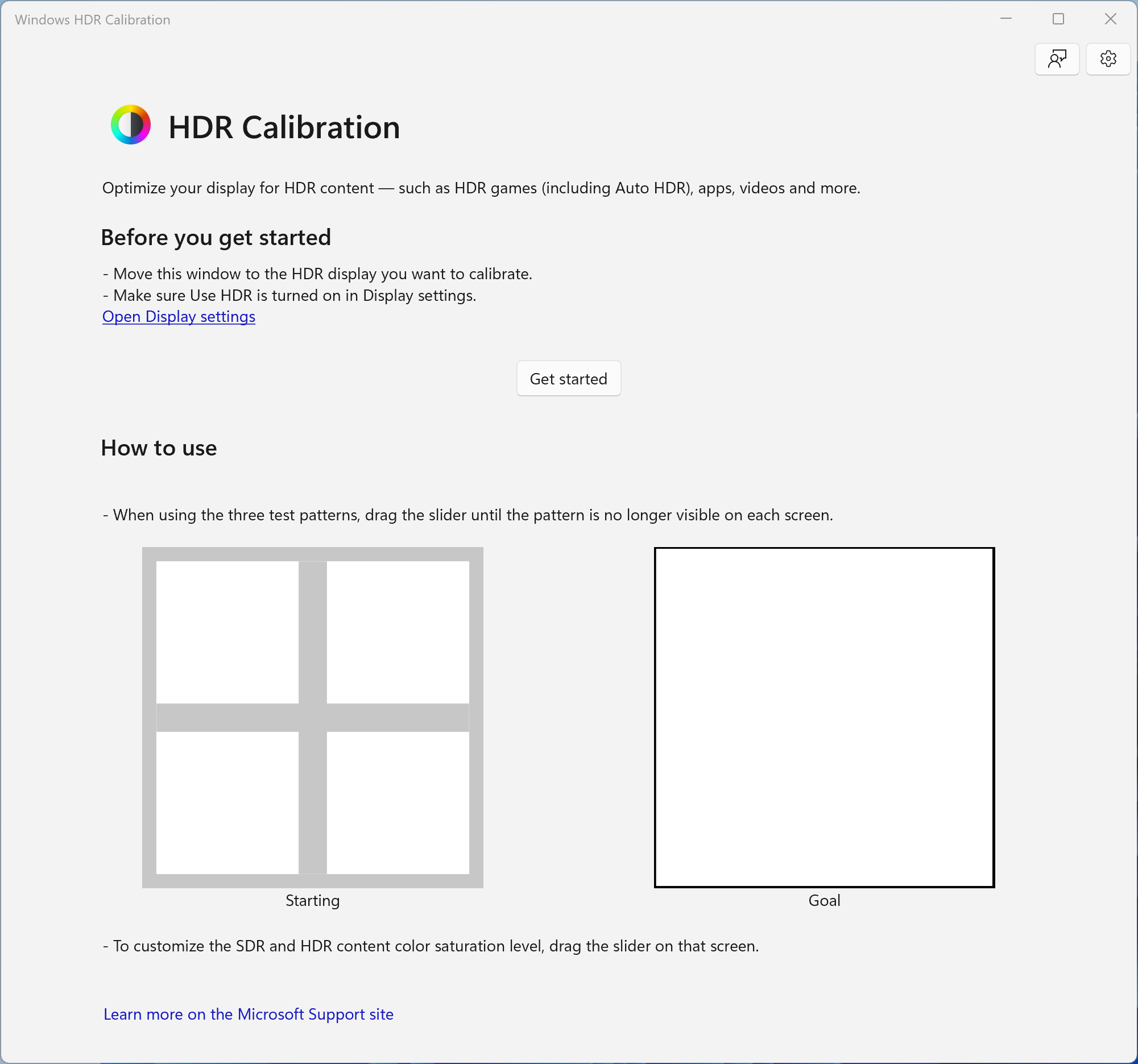
The Windows HDR Calibration apphandles most of the work. Set blacks until they just disappear, match max luminance to what your panel can actually reach, and avoid aggressive highlight clipping.
Paper white only needs a rough target. Around 200 nits works for OLED, while Mini-LED panels usually look better closer to 250 or 300.
With Auto HDR, less is more. Keep the intensity low, raise it until highlights pop without haloing, and compare it directly to native HDR in the same scene.
The Hard Truth About HDR400
For gaming, HDR400 often looks worse than SDR. Without local dimming, a display cannot control contrast, and HDR turns into a brightness trick rather than a visual upgrade. Blacks lift, highlights blur together, and the image loses depth.
This is not elitism. It is physics. If a panel cannot selectively control light, HDR has nowhere to go.
Auto HDR cannot fix bad art direction, and competitive players may still prefer SDR for clarity and consistency. HDR streaming also remains inconsistent across platforms.
Still, Windows HDR continues to improve quietly, and hardware keeps getting better. For PC gamers, the takeaway is simple. Stop chasing labels, stop trusting defaults, and learn your display. HDR on PC can look fantastic. You just have to understand the system instead of fighting it.
Currently serving as a News Reporter at Tech4Gamers, I have the privilege of combining my love for gaming with the art of storytelling. My role involves crafting engaging narratives that keep our audience abreast of the latest developments in the gaming world.
Story Highlight
Google just released Project Gemini, an AI tool that can create immersive 3D worlds with just a few prompts.
Investors are now scared that AI will take over video game development.
As such, shares of various video game companies are falling rapidly.
The concept of AI used in the development of video games is a hot topic and is often rebuked by gamers. Nevertheless, the industry still believes that Generative AI is the future of video games.
With billions of dollars being invested in this field, Google has been developing an AI model capable of creating playable, immersive 3D worlds from just a few prompts.
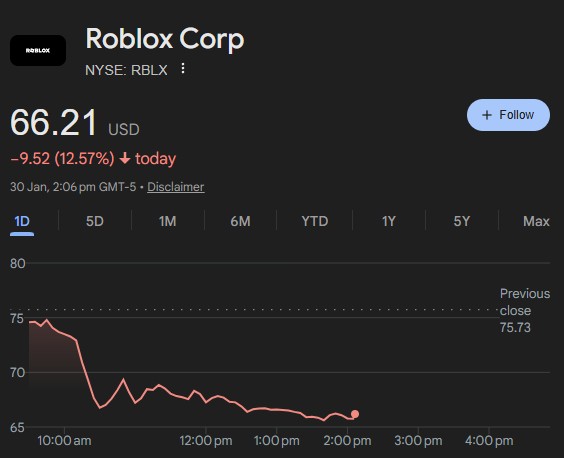
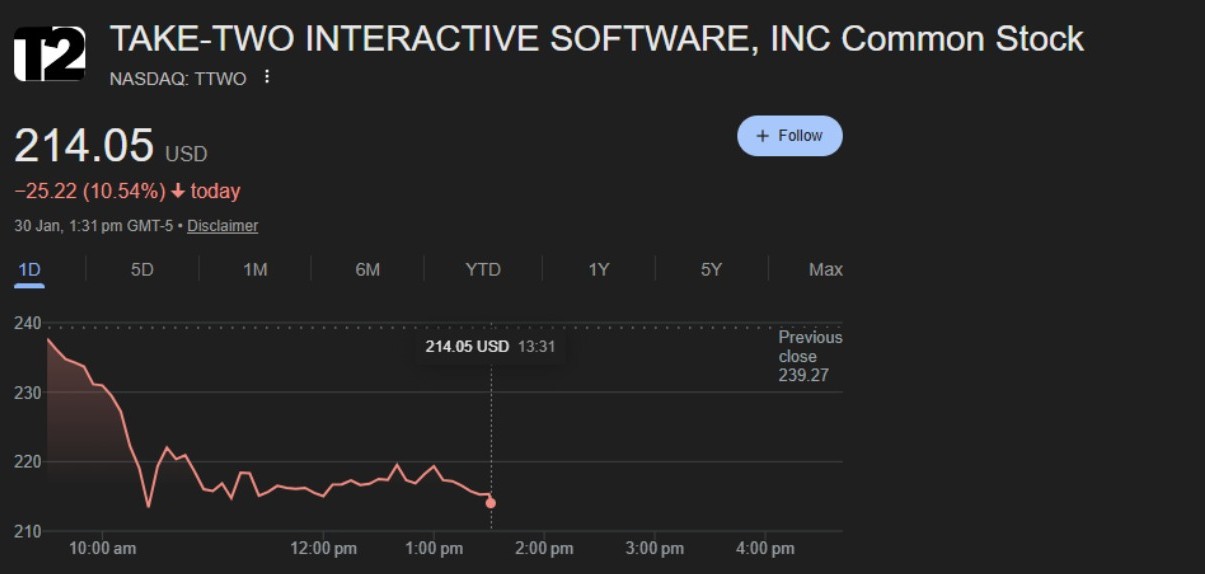
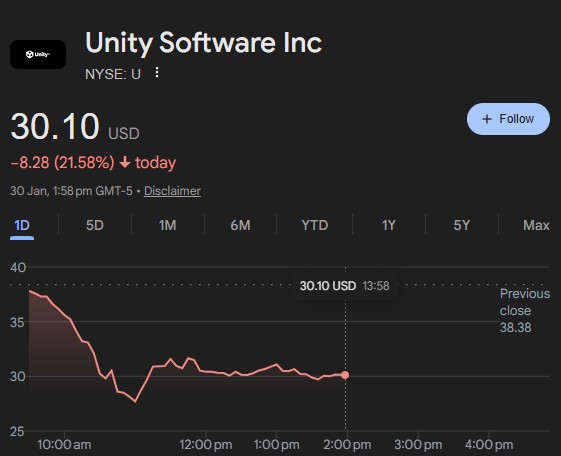
Project Genie launched today, and it’s already wreaking havoc, causing video game companies’ shares to drop as investors now think that the future of game development lies with Generative AI.
Why it matters: There are many aspects to developing a video game, and so far, Project Genie can provide only a baseline structure, which is helpful only for conceptual work. As such, investors who think AI can take over video game development are showing outright ignorance.
1 of 3
Roblox Share Drop
Take-Two Share Drop
Unity Software Inc. Share Drop
Take-Two, the parent company of Rockstar, had its share fall by a massive 10.59% today. On the other hand, Roblox‘s share also fell by 12.65%. Unity Software Inc., the company behind the Unity game engine, experienced the steepest decline, with its share value falling by a staggering 21.58%.Last but not least, CD Projekt Red’s share value also dropped by 8.91%.
Now, does Project Genie really pose a threat to the gaming industry? Not in the slightest. Project Genie only creates a structure rather than a complete game, with elements that will still be crafted by developers, and it’s something AI can’t replace completely anytime soon, to be precise.
In fact, Google itself advertises Project Genie as a multipurpose tool, creating new ways to learn and explore historical contexts such as Ancient Rome. In any case, projects made through AI models like Project Genie aren’t sellable products; they’re more like concepts that will certainly assist with video game development, not take over.
What are your thoughts on this matter? Do you think AI will ever take over video game development? Let us know in the comments below, or at the official Tech4Gamers Forums.
Currently serving as a News Reporter at Tech4Gamers, I have the privilege of combining my love for gaming with the art of storytelling. My role involves crafting engaging narratives that keep our audience abreast of the latest developments in the gaming world.
Story Highlight
Highguard developer states that he didn’t expect hate for the game.
He states that they made a game that can’t be found elsewhere.
Despite the developer stating that they emphasized creativity, Highguard seems repetitive, uninspired, and has become this year’s worst release so far.
Highguard was the standout reveal from The Game Awards 2025, all for the wrong reasons. The 3v3 shooter has been regarded as bland and repetitive by players who have already discarded the game just a few days into its release.
With the ongoing controversy and negative reception around the game, the developers are taken aback. In fact, one claims that he didn’t expect hate surrounding the title and that they made a game nobody else has.
Why it matters: Highguard seems like a typical hero shooter with no innovation or new elements. Players are tired of live-service hero shooters, but it seems like the developers are too ignorant to see that.
Speaking to Dexerto, creative and design director of the game, Jason McCord, said he was quite excited about the game’s initial reveal at the closing of The Game Awards 2025.
Discussing Highguard’s placement in the market, McCord stated that he believes shooters still have room for creativity and that they aimed to make a game that differentiated itself from an already crowded market.
“It always comes down to the fact that we had a game that you couldn’t find anywhere else, – So we felt very confident in that.”
Early on, the developers struggled to nail the game’s direction, but years of iteration helped steer it onto a proper path. Initially, heroes weren’t even present in the game, but were added later on to ‘make the game better.’
The Game Currently Has Overwhelmingly Negative Reviews On Steam
Yet Highguard still feels like a typical hero shooter, with no new elements, limited creativity, and borrowed elements from other shooters. This failure has pushed the title to become the worst-rated game on Metacritic for 2026, and it seems like it’s going to stay like that for a while.
Have you played Highguard yet? If yes, then what are your thoughts on the game? Let us know in the comments below, or at the official Tech4Gamers Forums.
I’ve previously worked for eXputer as a Senior News Writer for several years. Now with Tech4Gamers, I love to devoutly keep up with the latest gaming and entertainment industries. I have a Bachelor’s Degree in Computer Science and years of experience reporting on games and breaking exclusive stories. Besides my passion for gaming journalism, I love spending my leisure time farming away in Stardew Valley. VGC, IGN, GameSpot, Game Rant, TheGamer, GamingBolt, The Verge, NME, Metro, Dot Esports, GameByte, Kotaku Australia, PC Gamer, and more have cited my articles.
Story Highlight
A new Sony patent discusses an adaptive touch controller with no buttons.
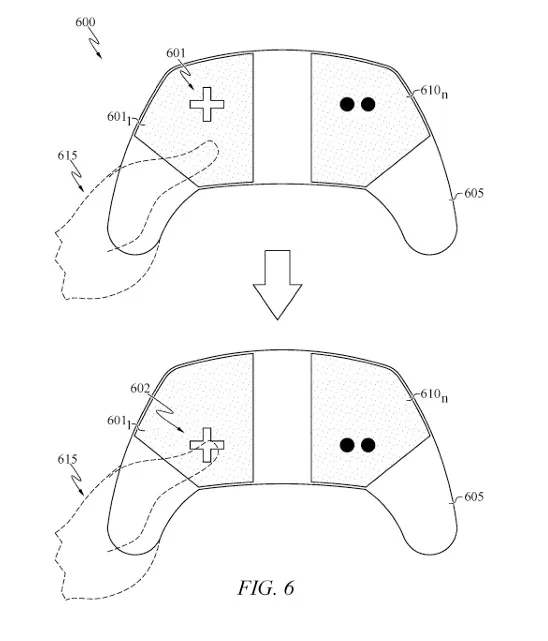
The controller works by creating virtual buttons that appear based on how the user holds it.
It could arrive with the PS6 or much later in the future if the patent is realized.
Many rumors have swirled about Sony’s next-gen console, but almost no one has focused on what its controllers could look like. The publisher might revolutionize controllers as we know them for the PS6.
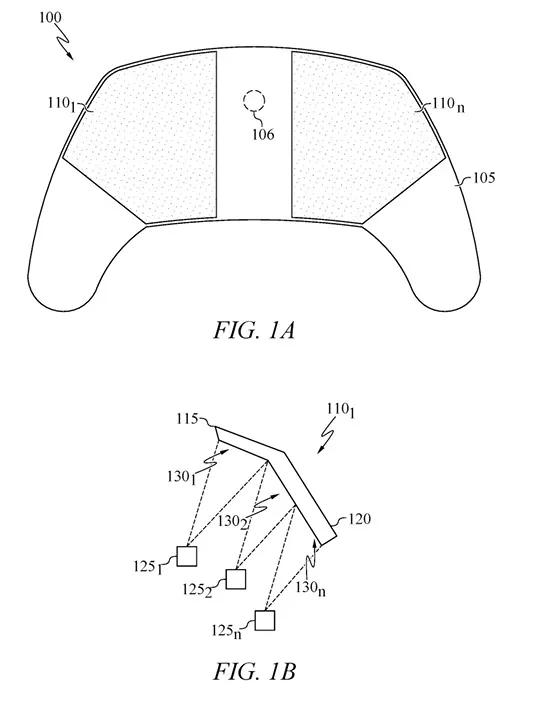
Sony has published a new patent that talks about a capacitive touch controller with no physical buttons. The controller accepts input via adaptive virtual buttons that are not fixed to any positions and instead work based on how the user holds it.
The patent’s convenient timing has led many gamers to believe that the controller might be planned for PS6, since it is reportedly still years away.
Input surfaces of the controller may be configured to detect user touch and user inputs similar to activation of a button or manipulation of a directional pad
without requiring actual push buttons or a directional pad.
Why it matters: This controller could be a huge innovation for gamers. However, without fixed physical buttons, it might require a whole lot of practice to feel comfortable in our hands.
The image shows the body and sensors of the controller.
The patent dubbed ‘DEVICES AND METHODS FOR A GAME CONTROLLER’ discusses a touch controller with smart gesture inputs and customizable layouts that account for different grip sizes, thumb positions, and other accessibility needs.
Sony argues that current controllers are not comfortable or functional for all players due to a standard layout, which can make gaming difficult. The buttonless controller will let players use all types of inputs without any fixed-button restrictions.
The input surface may eliminate the need for physical buttons and allow for a single surface to detect one or more of touch, tap, swipe, slide, press, pinch, etc.
The controller will adjust virtual controls based on how you hold it.
Sony has also published a motley of unique patents related to controllers, such as one that detects players’ sweat to monitor stress during gameplay, and another one that is a 3D grid-shaped controller that deforms to enhance immersion.
Sony has also published a motley of unique patents related to controllers, such as one that detects players’ sweat to monitor stress during gameplay, and another one that is a 3D grid-shaped controller that deforms to enhance immersion.
Do you think Sony will launch this controller for PS6, or will the patent never be materialized into a product? Let us know your thoughts in the comments below, or join the discussion on the Tech4Gamers forum.
At T4G, my task is to cover the latest news around the gaming globe ASAP and with the utmost precision. I adore all the games and respect all the devs behind the amazing games that we get all year. So, whether it’s a PC or a Console game, I got it all covered.
Story Highlight
A potential new DLC for The Witcher 3 has been reported for quite some time now.
CDPR wants to release new content to meet its goals amid no new major releases.
It has already seen share prices increase just based on the reports of potential DLC.
CD Projekt Red has been one of the most influential and successful studios in recent years. After turning things around with Cyberpunk 2077 and making it one of the finest RPGs ever created, fans are looking forward to the studio’s next move.
However, fans do have some great news that CDPR could be set to launch a potential The Witcher 3 DLC. Amid reports of the expansion, the company’s shares have climbed, suggesting fans can’t wait for the reveal.
Why it matters: The Witcher 3 is widely regarded as one of the best games ever created and is still a bar to meet for titles today. So, getting new content after so many years is certainly very exciting.
CDPR stocks rise amid rumors of the Witcher 3 DLC
Polish market analyst site, Strefa Inwestorow, has revealed a new report highlighting how CDPR’s shares have increased recently amid reports of the potential release of The Witcher 3 DLC, expected to release this year.
It was revealed that the studio had to achieve a target, and they were short of it. However, as they didn’t have a big release this year, to meet the target, they will reveal a new expansion for their beloved RPG after almost a decade.
The new DLC could launch before GTA 6
According to the report, the DLC could launch before GTA 6’s release and could take players to a new region. However, if the studio decides to hype the game and follow a marketing cycle, or release a trailer with a release date is yet to be seen.
Nonetheless, at this point, it is all but confirmed that The Witcher 3 is indeed getting a DLC. The shares have already increased, and the expansion will help it further and allow CDPR to meet its financial targets.
What are your thoughts on CDPR shares increasing amid The Witcher 3 DLC reports? Let us know your opinions in the comments or join the discussion at the official Tech4Gamers Forum.
At T4G, my task is to cover the latest news around the gaming globe ASAP and with the utmost precision. I adore all the games and respect all the devs behind the amazing games that we get all year. So, whether it’s a PC or a Console game, I got it all covered.
Story Highlight
Resident Evil Requiem is set to launch in under a month amid huge anticipation.
The director says it features 100 different zombie personalities, each with unique traits.
The zombies will retain memories from past lives, giving them a personality.
Resident Evil Requiem is under a month away and is already slated to be a hit. It reintroduces us to Leon for the first time since Resident Evil 6, and fans are hyped. It also features new elements never seen in the franchise before.
The game director has revealed that Resident Evil Requiem features about 100 different zombie personalities. Each has been meticulously crafted, and they will retain memories from their past lives, giving them a bit of personality.
Why it matters: Where most studios skip on things like this, Capcom is making sure Requiem is a fresh yet familiar experience, with new gameplay elements, and they’ve apparently put a lot of effort into ensuring that.
The game’s ombies will feature their own unique personalities
In an interview with Famitsu, the game director, Koshi Nakanishi, revealed that zombies in Resident Evil Requiem retain memories from their past lives. So, each zombie has their own voice and special features.
All of the development staff worked passionately on giving each zombie their own unique personality, and even they have their own voices and other special features. I think there are about 100 of them in total
– Koshi Nakanishi
Requiem marks the return of Leon Kennedy
They wanted to do it on a massive scale, but of course, there is a limit to what can be done, so now, in-game, there are about 100 different zombie personalities. This means they’ll be more unpredictable and scary than ever before.
He said that the development staff worked passionately to give each zombie its personality. So, while they mostly look mindless in most games, Requiem‘s zombies will have their unique traits, setting them apart.
What are your thoughts on Resident Evil Requiem featuring 100 different zombie personalities? Let us know your opinions in the comments or join the discussion at the official Tech4Gamers Forum.
At Tech4Gamers.com, I cover the latest news and rumours in the gaming industry, from new game releases to hidden gems and video game leaks. Furthermore, I occasionally write tech articles about video game consoles, providing insights into the hardware and software that powers our gaming experiences.
Story Highlight
Make the primary repeating action fun before adding anything else.
Build the basic gameplay and touch controls before making menus or levels.
Use simple goals like high scores to give players a reason to return
Everyone starts with the same dream. Your game on someone’s phone while they are killing time on a bus or chilling on the couch.
The part nobody talks about enough is the messy middle. Unity makes that middle easier to deal with, but only if you approach it the right way.
This is not a hype piece. It is a grounded take on how most indie and solo devs actually survive making a mobile game in Unity.
Mobile games live and die by what the player does every few seconds. That is it.
Before thinking about levels, menus, or anything fancy, ask yourself a simple question. What is the one action the player will repeat again and again?
Tapping, swiping, dodging, matching, aiming. If that single action is not fun on its own, no amount of polish will fix it. Most successful mobile games are built on very simple mechanics that just feel good to play.
If this is your first game, smaller is always smarter. One mechanic done well beats ten half finished ideas every time.
If you ever want a reality check, it helps to look at how professional teams actually work. Studio case studies are useful because they show the boring parts, not just the final polish. Looking at examples from Stepico mobile app development, you quickly notice that even experienced teams start with very basic builds.
Different genres, different platforms, same approach. Simple mechanics first, testing early, and only then expanding the idea. It is a good reminder that big mobile games rarely begin as big projects. They usually start rough and small, just like yours.
Set Up Unity For Mobile Early
Use stable versions and verify that a blank project runs on a physical device before developing complex features.
Unity is popular for mobile games for a reason. Android and iOS support are built in, and you do not have to fight the engine just to get something running on a phone.
Before you build anything serious, make sure you are using a recent stable version of Unity and that mobile build support is installed. Most importantly, confirm that a blank project can actually run on a real phone.
If a clean project does not launch on your device, stop and fix that first. Setup issues only get more annoying later.
For most mobile games, 2D is the fastest way to reach something playable. There is less setup, fewer performance problems, and quicker progress.
Create your project, choose 2D unless you have a strong reason not to, and switch the build platform to Android or iOS early. Test builds on a phone instead of trusting the editor preview.
Mobile games often feel fine in the editor and completely different on an actual device. Always trust the phone more.
Build A Prototype, Not A Full Game
This is where many projects fall apart.
Your first goal is not menus, shops, or multiple levels. Your goal is a rough prototype where the main action works, touch controls feel natural, and the player understands what to do without explanations.
Ask yourself honestly if the game is still fun after five minutes. Check if your thumb blocks important parts of the screen. Think about whether you would keep playing if it was not your own project.
If the answers are not great, fix that now. Adding more content on top of weak gameplay just creates extra work.
Mobile UI should be clear, readable, and easy to tap. Flashy designs often hurt usability more than they help.
Unity’s built-in UI tools are more than enough for large buttons, readable text, and basic menus. If players miss buttons or feel confused, they will quit. Mobile players have very little patience for cluttered screens.
Think About Performance Early
Phones are more powerful than they used to be, but they still have limits. If your game stutters or drains battery fast, players notice immediately.
Be mindful of how many objects are on screen, how large your textures are, and how much work your scripts are doing every frame. Heavy effects and unnecessary calculations add up quickly.
Test on real devices often. Something that runs perfectly on your computer can struggle on an average phone.
Give Players A Reason To Come Back
Use ready-made Unity assets if you need to save time.
Once the core gameplay feels solid, the next challenge is motivation.
Players need goals, even simple ones. Unlocking new levels, improving a character, or beating a personal high score can be enough. Progress does not need to be complex. It just needs to feel earned.
When effort leads to visible improvement, players are more likely to keep playing.
Publishing a build is not the same as launching a game.
Before release, make sure the game works across different screen sizes and handles interruptions like calls or notifications correctly. Check loading times and watch for crashes during startup.
First impressions matter a lot on mobile. Bad early reviews are hard to recover from.
Release Is Not The End
Many people think publishing a game means the work is done. In reality, it is just the next phase.
Players will find bugs, point out confusing parts, and suggest improvements. Even small updates show that the game is alive. Fixes and minor tweaks can noticeably improve ratings over time.
You do not need a big team or advanced tech to make a mobile game in Unity. What you need is patience and structure.
Start small. Build the core first. Test on a phone constantly. Release something complete, even if it is simple.
Your first game probably will not be a hit, and that is fine. The experience you gain from finishing and shipping it is what makes the next one easier, faster, and better.
I’ve previously worked for eXputer as a Senior News Writer for several years. Now with Tech4Gamers, I love to devoutly keep up with the latest gaming and entertainment industries. I have a Bachelor’s Degree in Computer Science and years of experience reporting on games and breaking exclusive stories. Besides my passion for gaming journalism, I love spending my leisure time farming away in Stardew Valley. VGC, IGN, GameSpot, Game Rant, TheGamer, GamingBolt, The Verge, NME, Metro, Dot Esports, GameByte, Kotaku Australia, PC Gamer, and more have cited my articles.
Story Highlight
52% of game developers believe generative AI harms game development.
Only 7% of game professionals favor the technology, down from 13% in last year’s report.
One-third of developers still use AI, primarily to manage tasks and support prototyping and coding.
Arguably, the most contentious topic in the industry last year was the implementation of generative AI in video game development. As with players, there is a divide among studios on the use of the technology.
While companies like Ubisoft are pushing to make AI an integral part of development, other developers like Larian Studios aren’t too keen. As it turns out, the tide is turning against generative AI: more than half of developers don’t want to implement it.
Why it matters: Disdain for generative AI is growing as developers learn more about it, and at this point, only business executives are really pushing to use the technology.
Companies like Microsoft are keen on utilizing AI.
According to GDC’s 2026 report, 52% of game developers oppose the use of generative AI in any form during production. More than half of the 2300 respondents in the survey said AI is negatively affecting the gaming industry.
These numbers represent a 22% increase from last year, when only 30% of developers strongly opposed the implementation of generative AI.
Furthermore, approval of the technology declined in this year’s survey. Only 7% of developers responded positively about the impact of generative AI, down 6% from the 2025 report.
However, many game professionals still use it in their work, with 33% implementing AI for prototyping, research, responding to emails, and addressing coding problems. Many of the developers surveyed reported that using generative AI helps them better manage game development.
Studios like Larian are currently using generative AI for prototyping.
Despite its advantages, other respondents were cautious about the technology’s widespread adoption, citing concerns about theft and plagiarism and saying they would rather leave the industry than use generative AI.
Do you think using AI for menial tasks to improve efficiency is a good idea, or are developers right to be worried about the technology? Tell us in the comments below or head to the Tech4Gamers forum for discussion.