Home Blog Page 343

Dragon Age Veilguard Already A PlayStation Plus Title Just 4 Months After Launch

Story Highlight
  • Dragon Age: Veilguard joins the PlayStation Plus catalog starting 4th March.
  • Other announced games for March include titles like Sonic Colors: Ultimate and Teenage Mutant Ninja Turtles: The Cowabunga Collection.
  • Following poor sales, the game will perhaps build a bigger player base after being on the platform.

Dragon Age Veilguard has been at the forefront of gaming news since its release, all for the wrong reasons. Almost a decade into making, Dragon Age: Veilguard came as an utter disappointment, even leading developer BioWare to shrink to less than 100 developers

It hasn’t been 4 months since the game’s launch, and Dragon Age: Veilgard is already announced as a PlayStation Plus title.

Why It Matters: Sony usually tends to add older games to its PlayStation Plus catalog every month. However, for them to add such a recent third-party title means that the game wasn’t doing well.

dragon age veilguard playstation plus
Dragon Age Veilguard Part Of PlayStation Plus Titles For March || Source: PlayStation Blog

Dragon Age: Veilgard and other titles like Sonic Colors: Ultimate and Teenage Mutant Ninja Turtles: The Cowabunga Collection will be available on the PlayStation Plus service starting March 4 next month.

Studio BioWare has already pulled the plug on the game. Dragon Age: Veilguard sold only 1.5 million units within its first quarter, which was 50% of what EA had expected

Perhaps Dragon Age: The Veilguard’s availability on PlayStation Plus will help build a stronger player base, something its sales struggled to achieve.

Dragon Age: The Veilguard
Dragon Age Franchise Isn’t Dead Amid Colossal Failure

Despite the public backlash, BioWare and EA still found themselves at the center of the game’s praise.

The studio co-founder praised the game, saying that people had unrealistic expectations of it. On the other hand, EA implied that Dragon Age could become a billion-dollar franchise.

Will you play Dragon Age: Veilguard when it’s available on PlayStation Plus? Let us know in the comments below or head towards the official Tech4Gamers Forum.

Best PSU For RTX 5080 [1000W, 1200W, All Tested]

Nvidia’s recent release of the RTX 50-series may have been greatly anticipated, but you and I both know the price we’d have to pay. Unsurprisingly, Nvidia dropped a bombshell on us with a TDP rating of 360W for the RTX 5080. In our RTX 5080 review, we saw that the card was taking around 340W on average during 4K gaming. Given its power consumption, my team and I have worked round-the-clock and spent dozens of hours testing, and reviewing to compile a list of the six power supplies that are perfect for the RTX 5080.

Why Trust Tech4Gamers
  • Arsalan Shakil is our power supplies expert who loves to put the latest PSUs through their paces and even take them apart.
  • 20+ PSUs tested and reviewed by our team of hardware experts (Tech4Gamers Team).
  • 180+ hours spent testing different power supplies for our reviews.
  • Objective testing criteria (See how we test peripherals).

At Tech4Gamers, ensuring you get reliable information is our priority. That’s why every hardware round-up undergoes a meticulous review process by our team of experts and editors. Each review is carefully examined against our strict editorial guidelines, guaranteeing you trustworthy insights you can depend on.

Take a look at our top favourite power supplies for the RTX 5080, combined with each other:

CPU
CORSAIR HX1200i
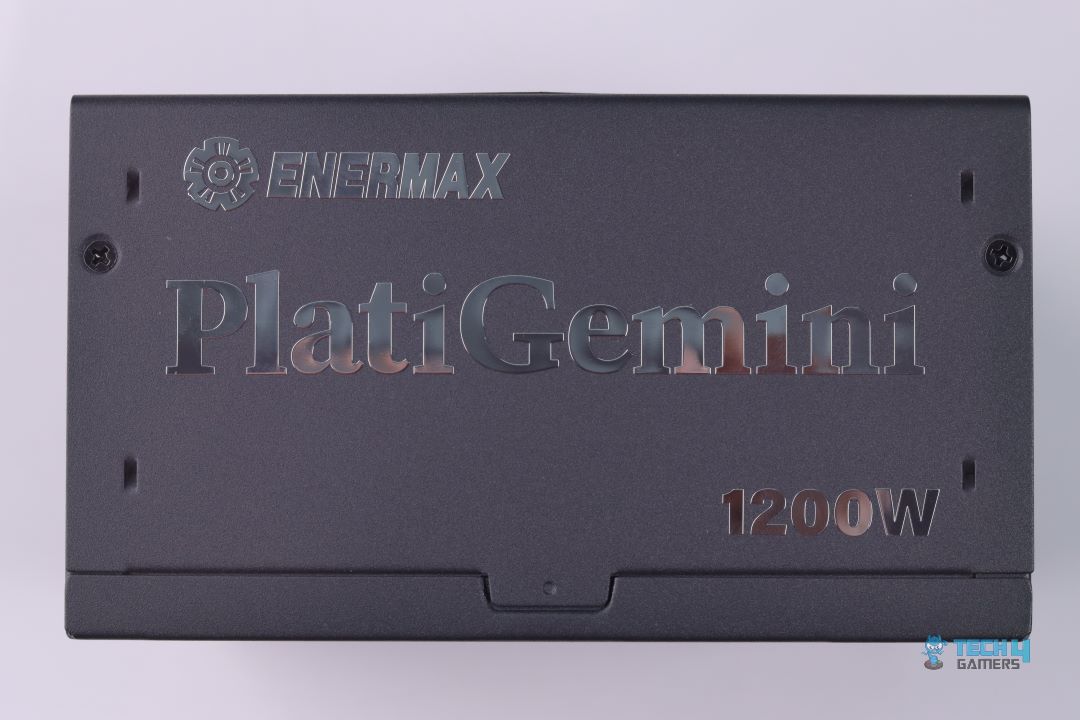
ENERMAX PlatiGemini 1200W
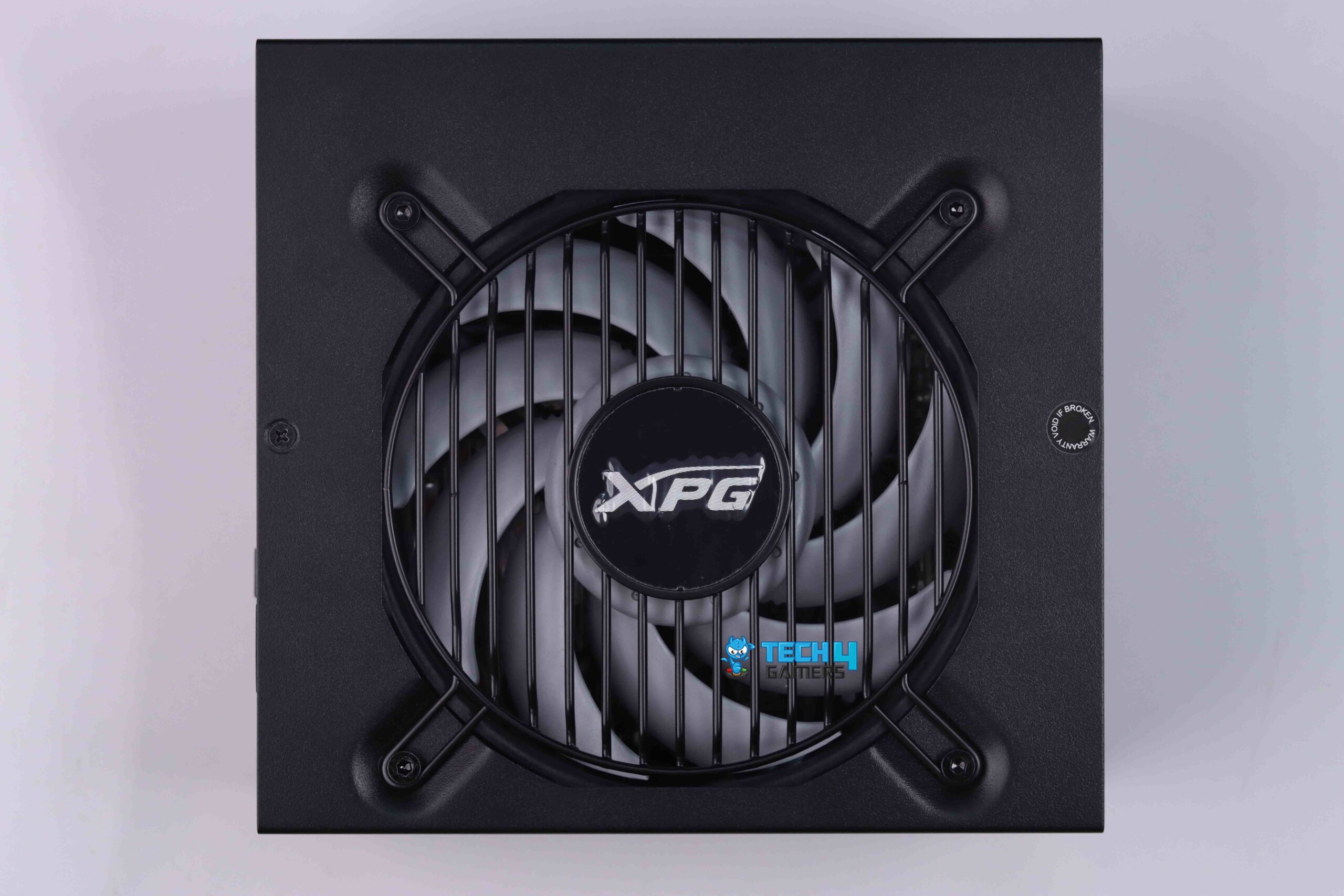
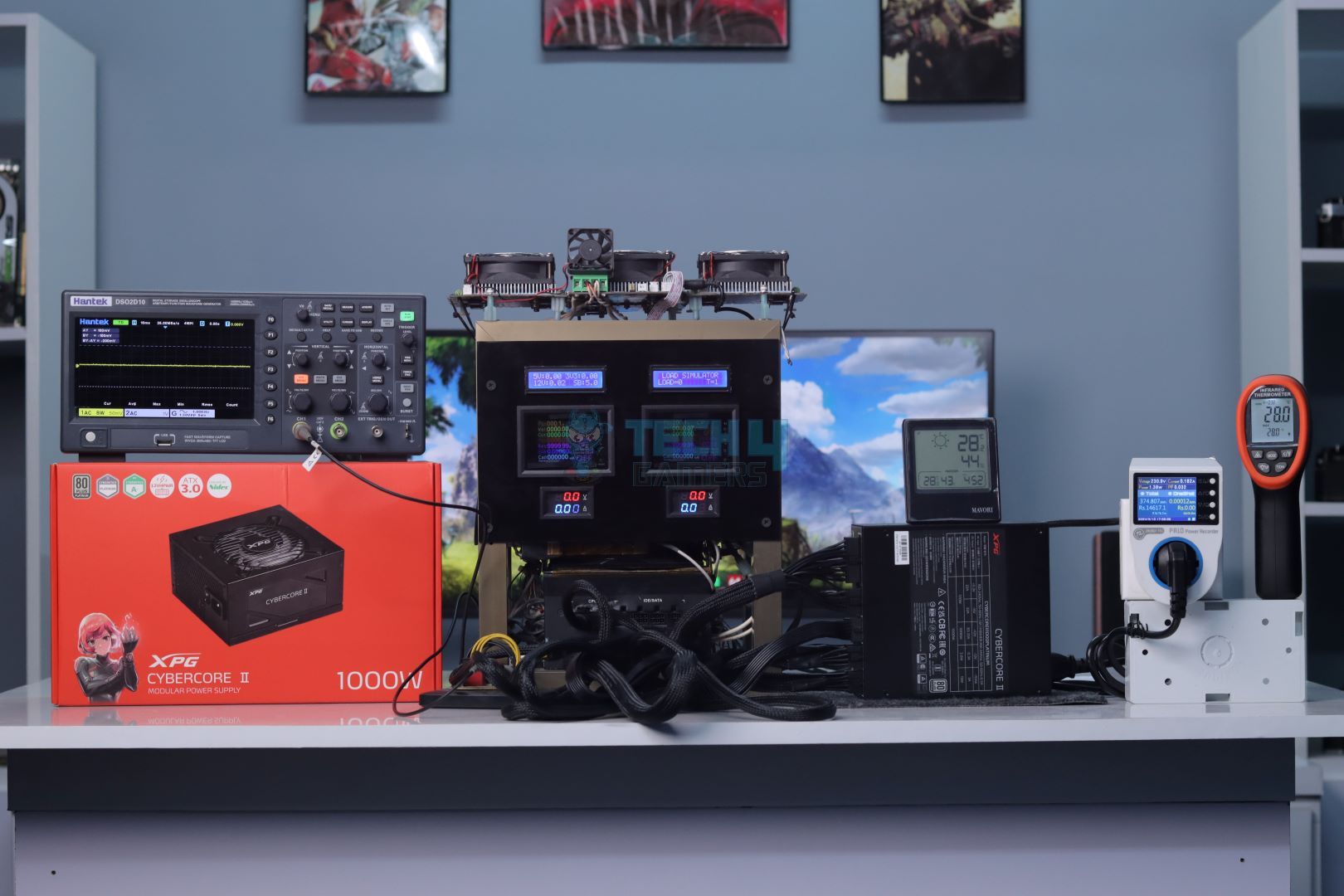
XPG CyberCore II 1000W
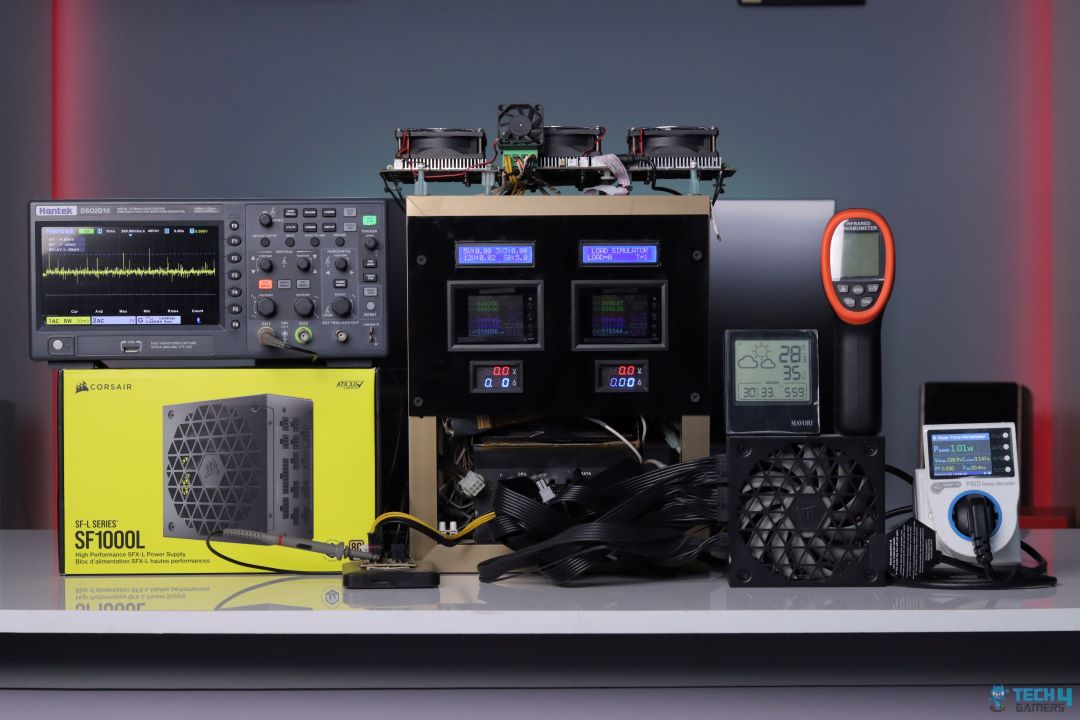
CORSAIR SF1000L SFX
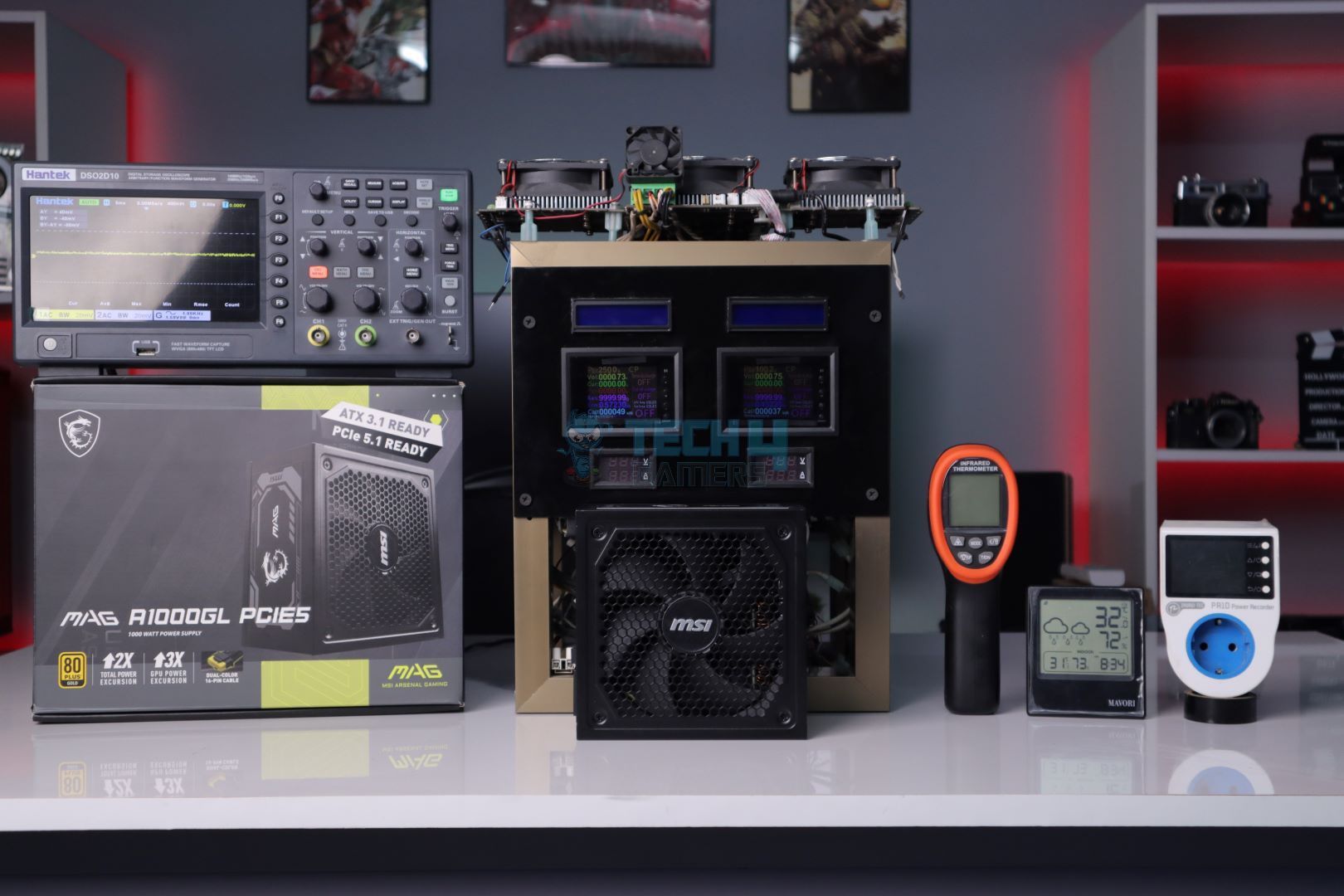
MSI MAG A1000GL
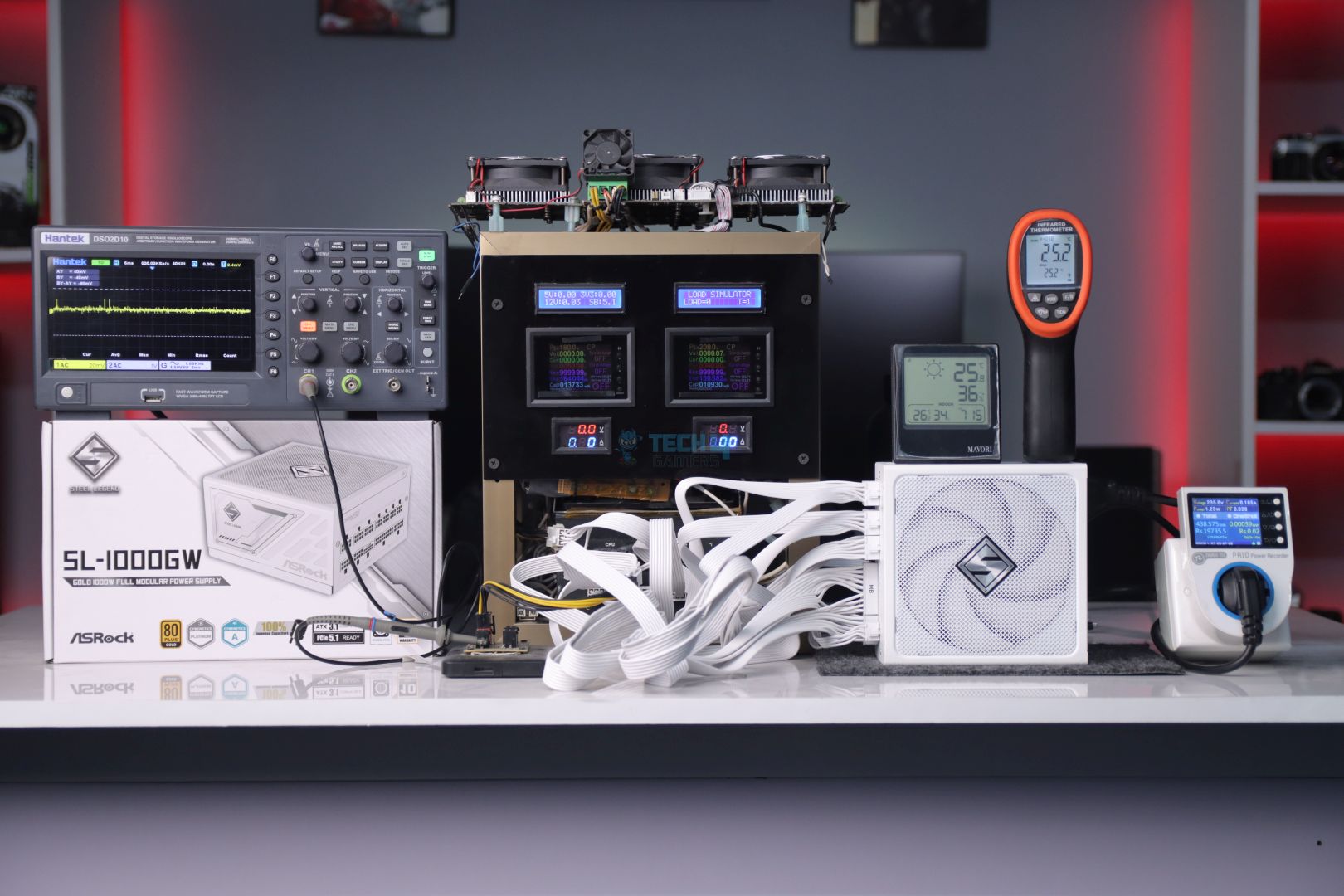
ASRock SL-1000GW
Looks
CORSAIR HX1200i Fully Modular Ultra-Low Noise ATX Power Supply - ATX 3.1 & PCIe 5.1 Compliant - Fluid Dynamic Bearing Fan - CORSAIR iCUE Software Compatible - 80 Plus Platinum Efficiency - Black
ENERMAX PlatiGemini 1200W, ATX 3.1 & ATX12VO Standard, PCIe 5 600W 12V-2x6 Connector, 80+ Platinum Full-Modular Power Supply, Compact 150mm ATX PSU, 10 Year Warranty; EGN1200P
XPG Cybercore II 1000W PCIE 5 & ATX 3.0 Power Supply - Full Modular - 80 Plus and Cybenetics Platinum Certified - 100% Japanese 105°C Capacitors -(CYBERCOREII1000P-BKCUS)
Corsair SF1000L Fully Modular Low-Noise SFX Power Supply - ATX 3.1 & PCIe 5.1 Compliant - Quiet 120mm PWM Fan - 80 Plus Gold Efficiency - Zero RPM Mode - 105°C-Rated Capacitors - Black
msi MAG A1000GL PCIE5, Fully Modular Compact Gaming 1000W Power Supply, 80+ Gold, ATX 3.1 & PCIe 5.1 Ready, Native Dual-Color 12V-2x6 Cable, 10 Year Warranty
ASRock Steel Legend SL-1000GW 1000W 80 Plus Gold & Cybenetics Platinum Full Modular Power Supply ATX3.1 PCIe5.1 Ready with Dual Color 12V-2x6 Cable 10 Years Warranty White Edition Japanese Capacitor
Award
Best 1200W PSU for RTX 5080
Best Performance PSU For RTX 5090
Best 1000W PSU For RTX 5090
Best SFX PSU for RTX 5080
Best Value PSU for RTX 5090
Best White PSU for RTX 5080
What We Liked
Excellent voltage ripple performance, Simple, understated design
Top-tier power, OC headroom, ATX12VO compliant
Quiet, thermally efficient, Enhanced hybrid performance
Top-notch Japanese capacitors, Outstanding performance, Tuned for OC’ing
10-year warranty, Value for money, Thermally efficient 
Gorgeous design, No compromise on internals
What We Disliked
Expensive
Premium pricing
Difficult cable management
Slightly noisy at full load
Lack of hybrid fan mode
Not the best for extreme OC
Form Factor
ATX
ATX 3.1
ATX 3.0
SFX
ATX
ATX
Wattage
1200W
1200W
1000W
1000W
1000W
1000W
Efficiency Rating
80 PLUS Platinum
80+ Platinum
80+ Platinum
80 PLUS Gold
80+ Gold
80 PLUS Gold
PCIe Cable
2x8-pin to 12VHPWR
12V-2x6
12VHPWR
12V-2x6
12V-2x6
12V-2x6
CPU
CORSAIR HX1200i
Looks
CORSAIR HX1200i Fully Modular Ultra-Low Noise ATX Power Supply - ATX 3.1 & PCIe 5.1 Compliant - Fluid Dynamic Bearing Fan - CORSAIR iCUE Software Compatible - 80 Plus Platinum Efficiency - Black
Award
Best 1200W PSU for RTX 5080
What We Liked
Excellent voltage ripple performance, Simple, understated design
What We Disliked
Expensive
Form Factor
ATX
Wattage
1200W
Efficiency Rating
80 PLUS Platinum
PCIe Cable
2x8-pin to 12VHPWR
Amazon
Newegg
Review
CPU
ENERMAX PlatiGemini 1200W
Looks
ENERMAX PlatiGemini 1200W, ATX 3.1 & ATX12VO Standard, PCIe 5 600W 12V-2x6 Connector, 80+ Platinum Full-Modular Power Supply, Compact 150mm ATX PSU, 10 Year Warranty; EGN1200P
Award
Best Performance PSU For RTX 5090
What We Liked
Top-tier power, OC headroom, ATX12VO compliant
What We Disliked
Premium pricing
Form Factor
ATX 3.1
Wattage
1200W
Efficiency Rating
80+ Platinum
PCIe Cable
12V-2x6
Amazon
Newegg
Review
CPU
XPG CyberCore II 1000W
Looks
XPG Cybercore II 1000W PCIE 5 & ATX 3.0 Power Supply - Full Modular - 80 Plus and Cybenetics Platinum Certified - 100% Japanese 105°C Capacitors -(CYBERCOREII1000P-BKCUS)
Award
Best 1000W PSU For RTX 5090
What We Liked
Quiet, thermally efficient, Enhanced hybrid performance
What We Disliked
Difficult cable management
Form Factor
ATX 3.0
Wattage
1000W
Efficiency Rating
80+ Platinum
PCIe Cable
12VHPWR
Amazon
Newegg
Review
CPU
CORSAIR SF1000L SFX
Looks
Corsair SF1000L Fully Modular Low-Noise SFX Power Supply - ATX 3.1 & PCIe 5.1 Compliant - Quiet 120mm PWM Fan - 80 Plus Gold Efficiency - Zero RPM Mode - 105°C-Rated Capacitors - Black
Award
Best SFX PSU for RTX 5080
What We Liked
Top-notch Japanese capacitors, Outstanding performance, Tuned for OC’ing
What We Disliked
Slightly noisy at full load
Form Factor
SFX
Wattage
1000W
Efficiency Rating
80 PLUS Gold
PCIe Cable
12V-2x6
Amazon
Newegg
Review
CPU
MSI MAG A1000GL
Looks
msi MAG A1000GL PCIE5, Fully Modular Compact Gaming 1000W Power Supply, 80+ Gold, ATX 3.1 & PCIe 5.1 Ready, Native Dual-Color 12V-2x6 Cable, 10 Year Warranty
Award
Best Value PSU for RTX 5090
What We Liked
10-year warranty, Value for money, Thermally efficient 
What We Disliked
Lack of hybrid fan mode
Form Factor
ATX
Wattage
1000W
Efficiency Rating
80+ Gold
PCIe Cable
12V-2x6
Amazon
Newegg
Review
CPU
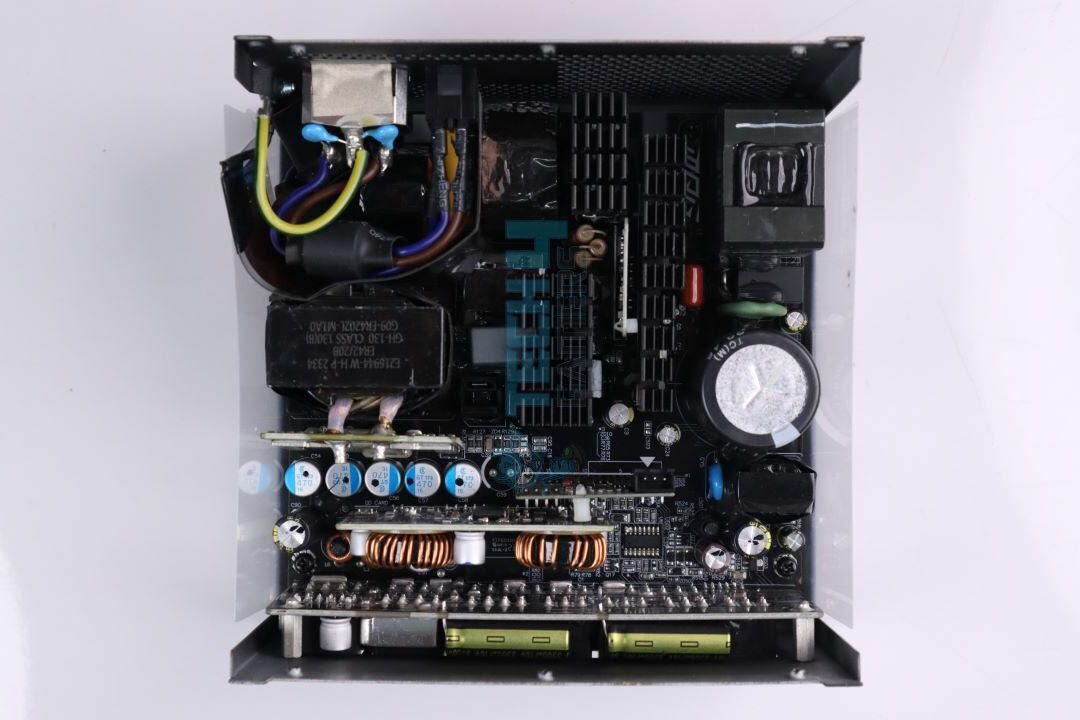
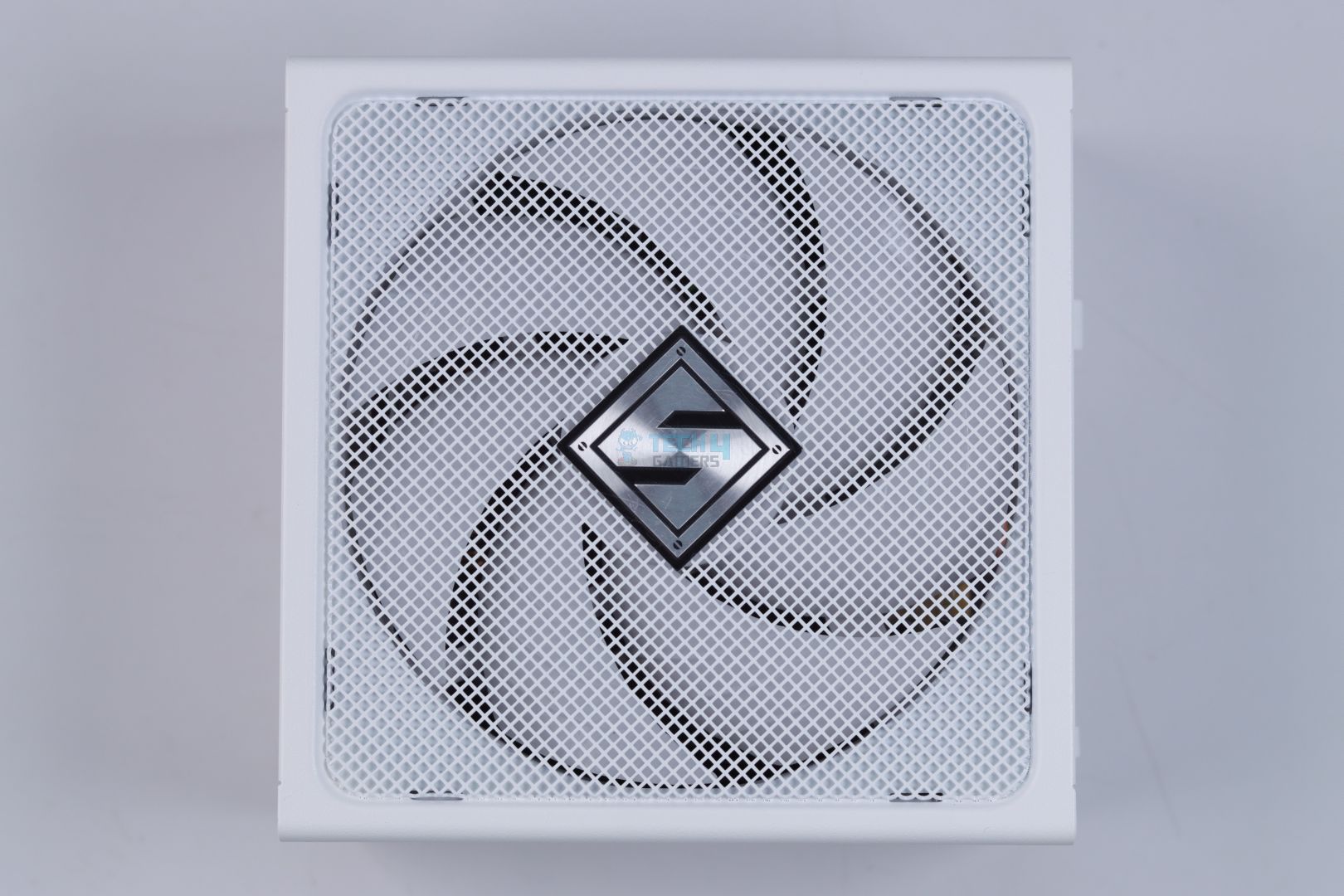
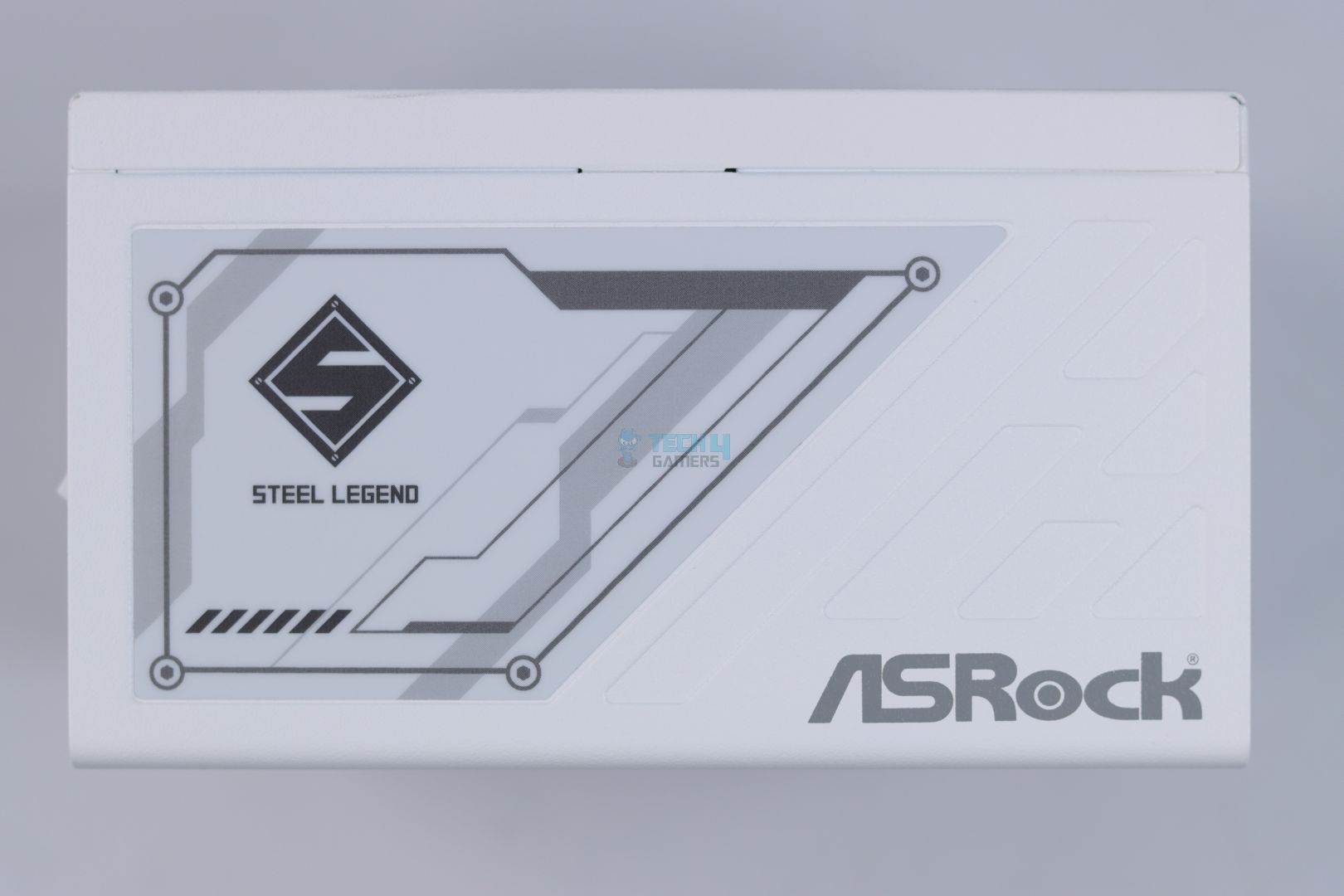
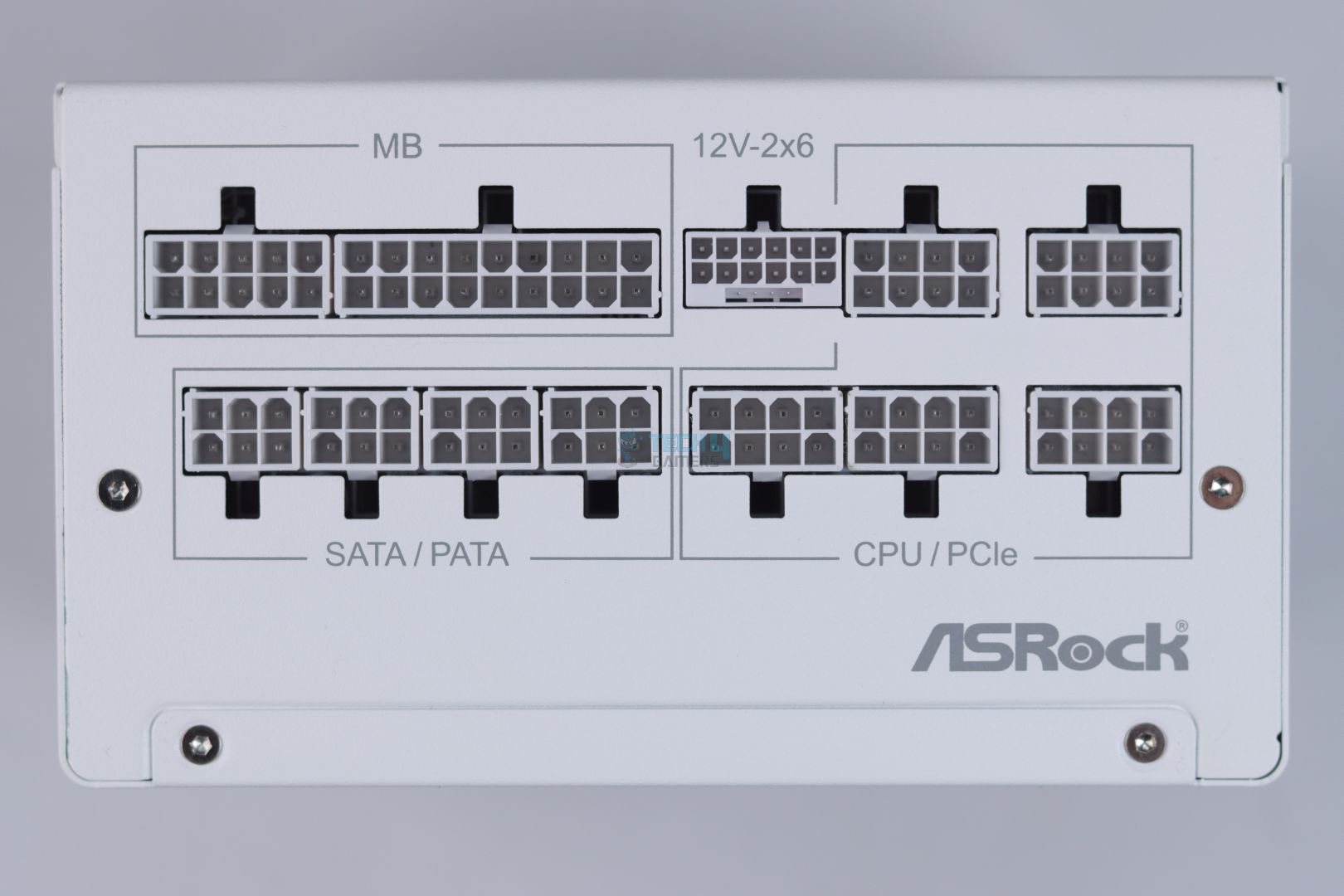
ASRock SL-1000GW
Looks
ASRock Steel Legend SL-1000GW 1000W 80 Plus Gold & Cybenetics Platinum Full Modular Power Supply ATX3.1 PCIe5.1 Ready with Dual Color 12V-2x6 Cable 10 Years Warranty White Edition Japanese Capacitor
Award
Best White PSU for RTX 5080
What We Liked
Gorgeous design, No compromise on internals
What We Disliked
Not the best for extreme OC
Form Factor
ATX
Wattage
1000W
Efficiency Rating
80 PLUS Gold
PCIe Cable
12V-2x6
Amazon
Newegg
Review

Before you scroll down, I’d highly recommend you give our PSU Watts Calculator a trial run. It’s an in-house tool that’s been designed to help you choose the most suitable PSU for yourself as per your gaming PC and its specific components.

Buying the RTX 5090 instead? Make sure to check:

Best PSUs For RTX 5080

Here’s my selection of PSUs for the RTX 5080.

  1. Best 1200W: Corsair HX1200i Platinum
  2. Best High-End: Enermax PlatiGemini 1200W Platinum
  3. Best 1000W: XPG CyberCore II 1000W Platinum
  4. Best SFX: CORSAIR SF1000L SFX Gold
  5. Best Value: MSI MAG A1000GL Gold
  6. Best White: ASRock SL-1000GW Gold

Corsair HX1200i Platinum

Best 1200W PSU for RTX 5080

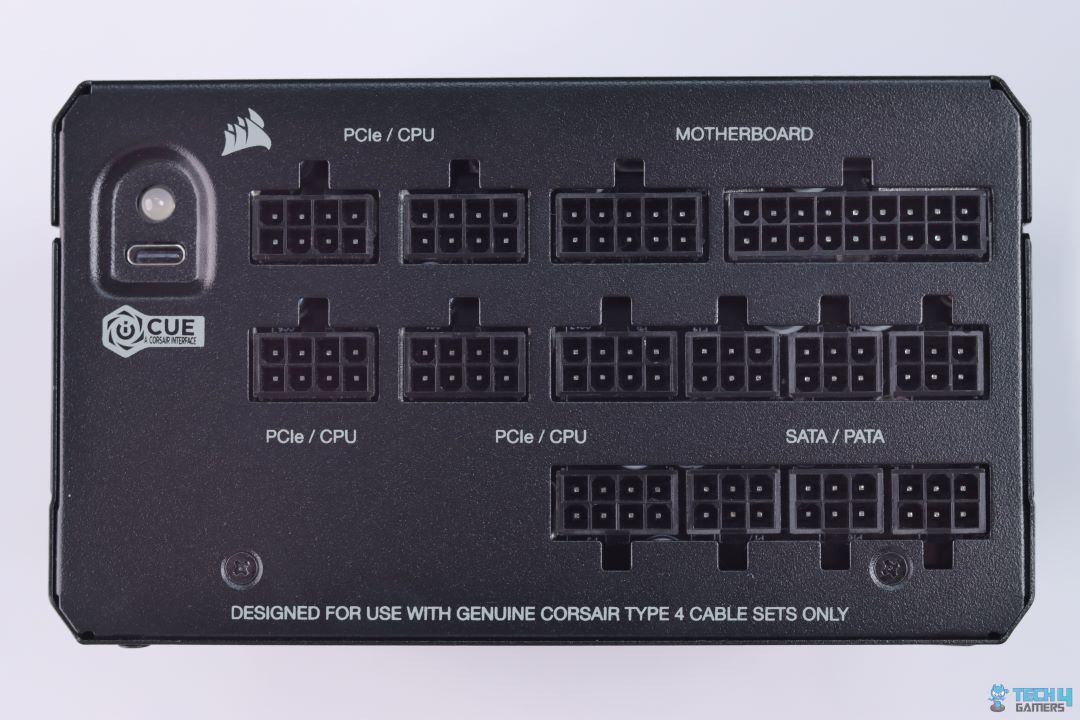
Form Factor: ATX | Generation: ATX 3.1 | Wattage: 1200W | Efficiency Rating: 80 PLUS Platinum | Modularity: Fully Modular | PCIe Cable: 2×8-pin to 12VHPWR

Pros

  • 10-year warranty
  • Simple, understated design
  • Excellent voltage ripple performance

Cons

  • Expensive
  • No native 12VHPWR connector

Read Our CORSAIR HX1200i Platinum Review

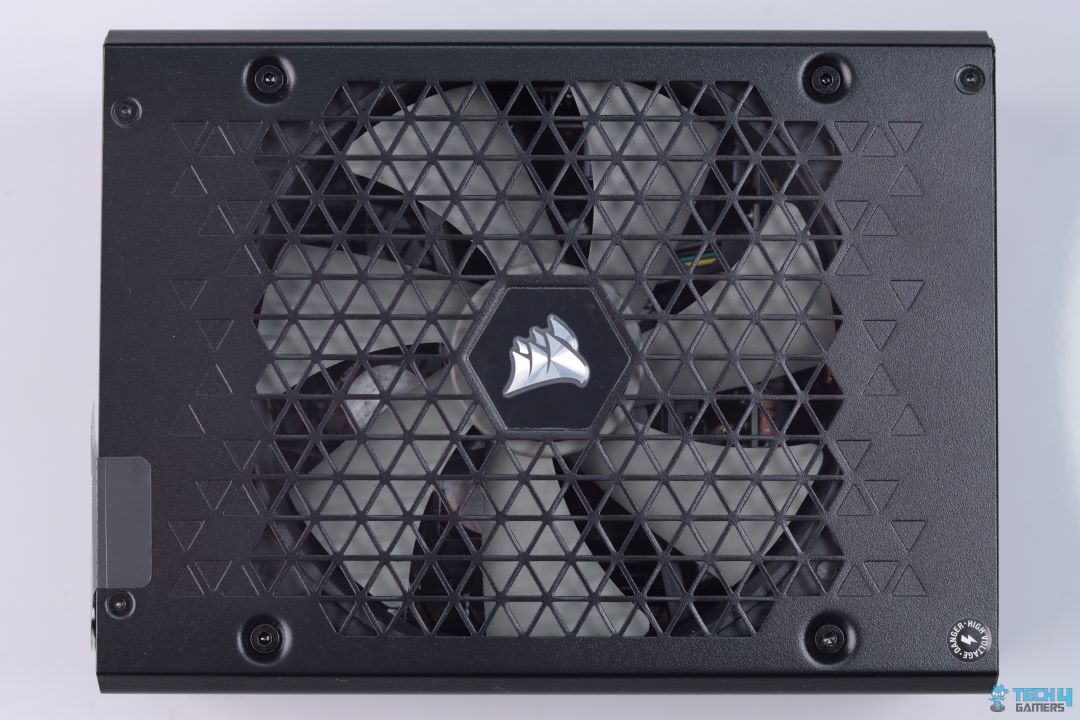
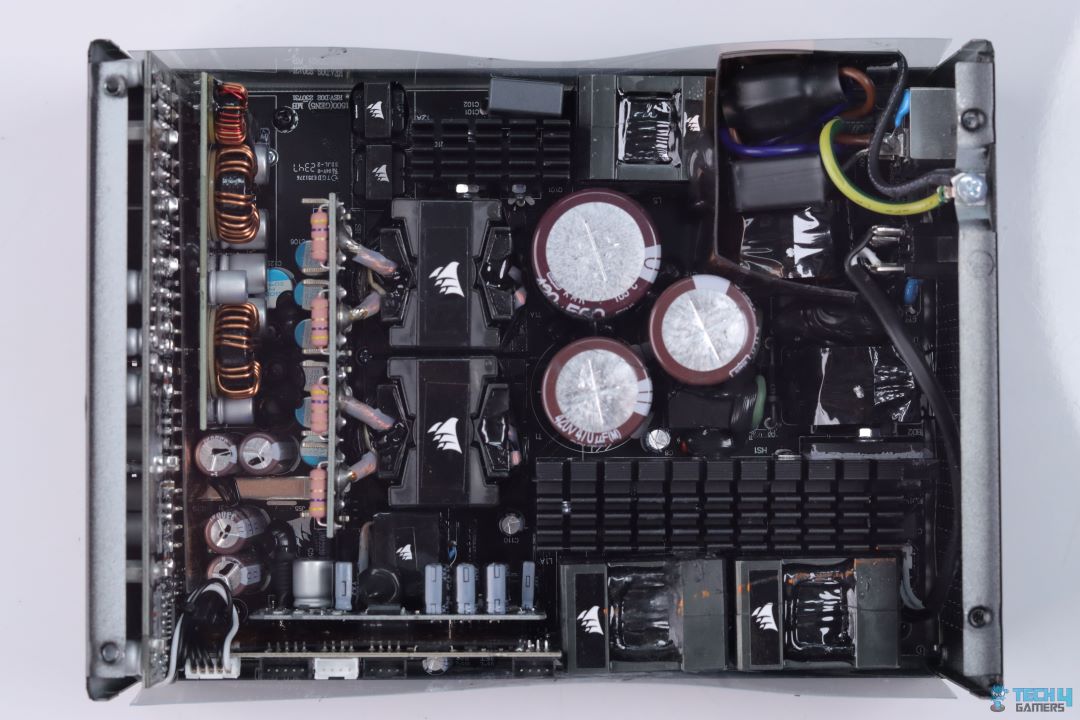
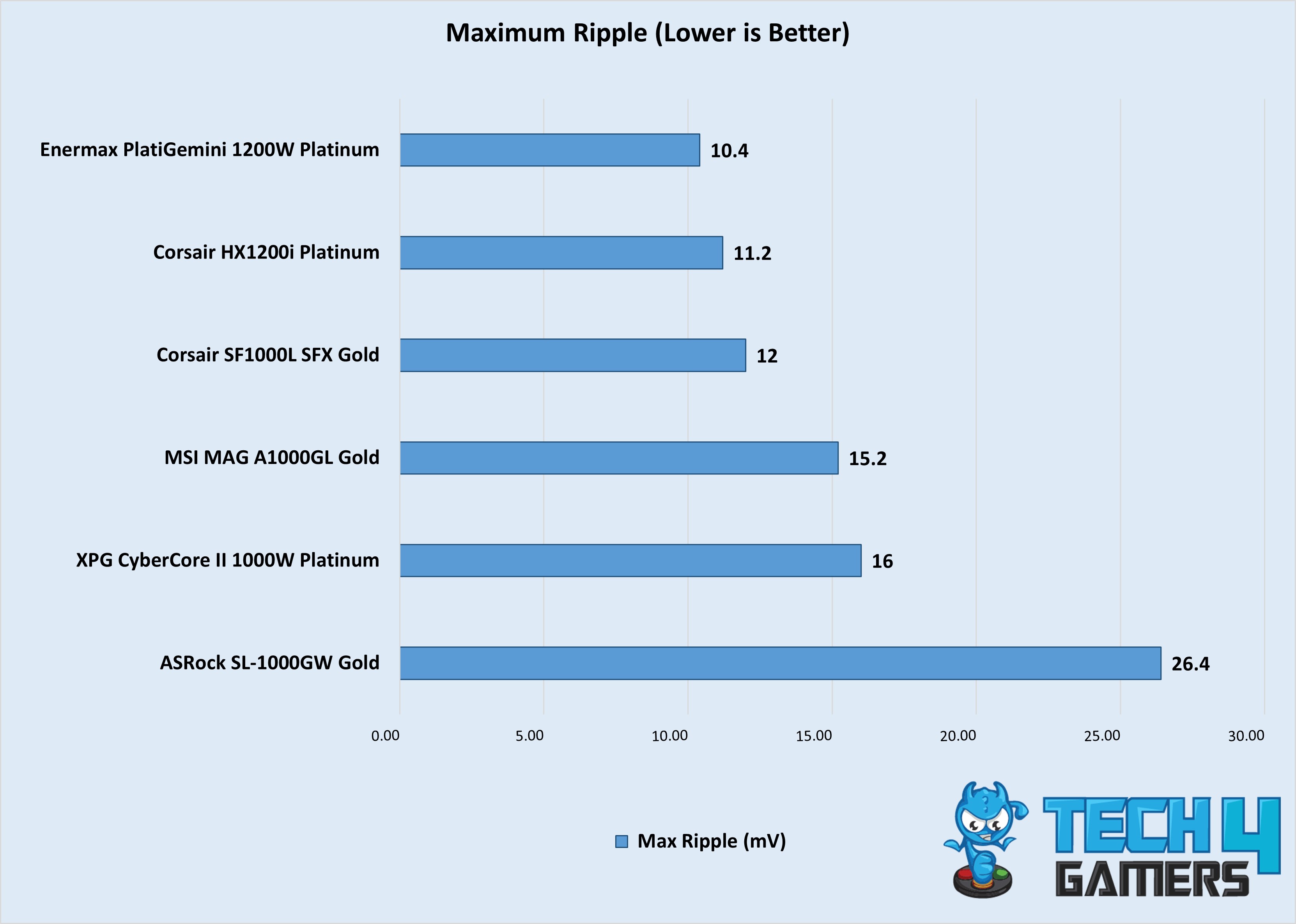
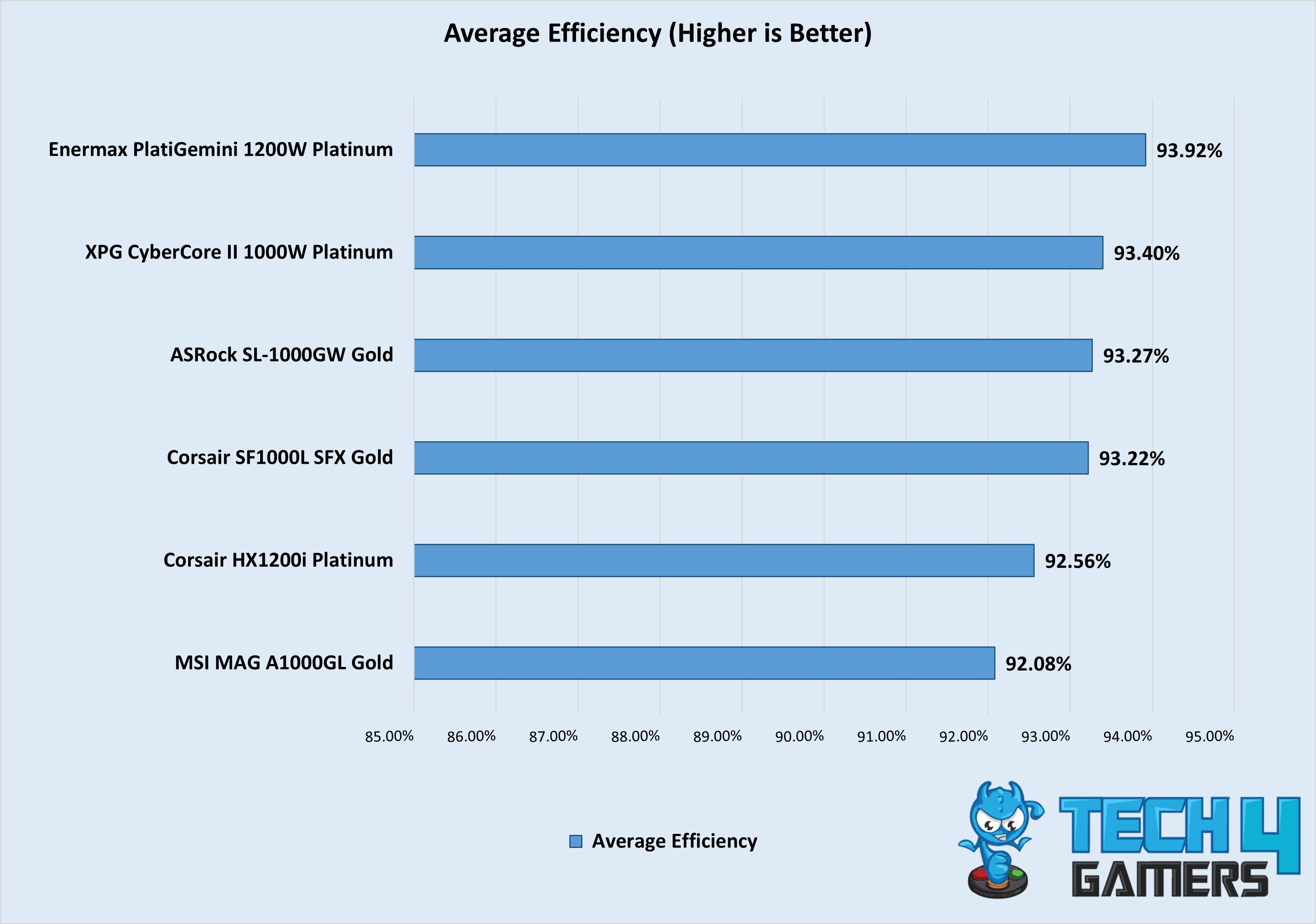
Corsair’s dropped an absolute banger of a PSU with the HX1200i. Right off the bat, I was greeted by ATX 3.1-compliant circuitry, thanks to an updated PCB from CWT (Channel Well Technology). As far as the PSU’s architecture is concerned, Corsair is utilizing a semi-digital design, courtesy of Interleaved PFC (Power Factor Correction) to help the HX1200i attain its Platinum rating. Subsequently, the HX1200i returned an average efficiency of 92.56% during my series of rigorous in-house testing.

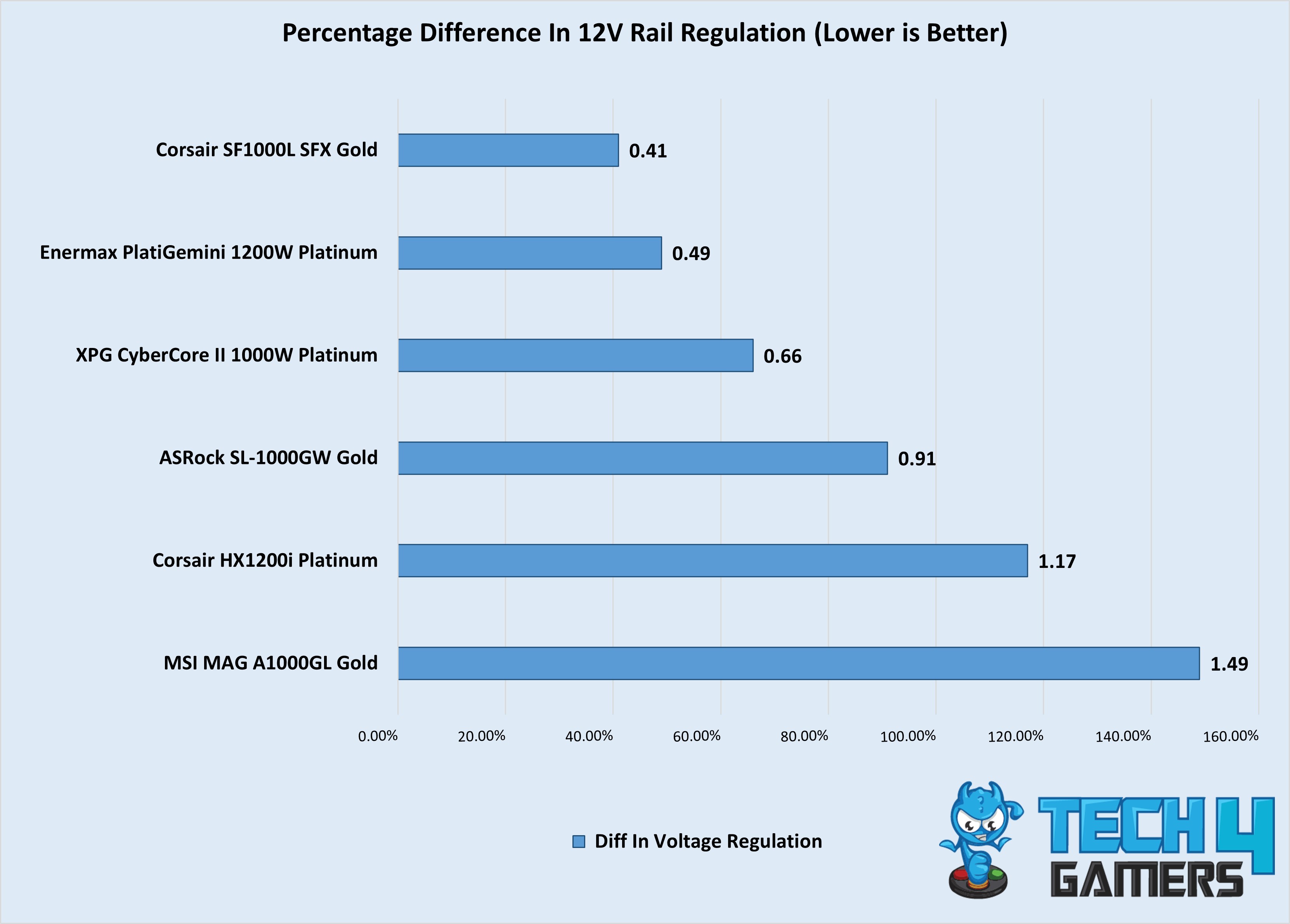
Furthermore, Corsair took the time to perfect its voltage ripple performance, which greatly supported my OC’ing activities. Moreover, the unit’s voltage regulation proved satisfactory during my benchmarks. On top of that, I also saw high-end Japanese capacitors throughout the PSU’s PCB that complement Corsair’s 10-year warranty period, instilling confidence in the end user.

Here’s how I described the performance of the HX1200i in my dedicated review:

The Corsair HX1200i offers excellent voltage regulation and ripple performance, making it ideal for overclockers and high-end system builders. While its efficiency is slightly below expectations for a Platinum-rated PSU, its superior voltage ripple control and solid thermal performance make it a strong contender in the market.

✅Buy It If

You’re a fan of noise isolation: The Zero RPM mode ensures that the HX1200i will remain completely silent until and unless you power through 650W of wattage or more.

You have durability concerns: Corsair’s employment of top-notch Japanese capacitors along with the 10-year warranty proves that the HX1200i will stand the test of time.

You’re an OC’ing enthusiast: Whatever the HX1200i’s flaws may be, voltage ripple, and by extension, overclocking performance isn’t one of them.

❌Don't Buy It If

You prioritize efficiency: Even though the HX1200i lived up to its Platinum rating in my efficiency tests, Corsair did leave slight room for improvement.

You want convenience and simplicity: It’s a bit inconvenient seeing how Corsair has decided to omit the inclusion of a native 12VHPWR connector.

What Makes It The Best 1200W PSU For RTX 5080?

Firstly, the Zero RPM mode keeps the HX1200i silent until 650W, and even then, its Fluid Dynamic Bearing fan with a 100,000 MTTF ensures years of near-inaudible operation. I also appreciated its sleek, mono-aesthetic design—free from flashy gamer vibes. Cherry on top, this unit excelled in voltage ripple performance, giving me confidence when overclocking my RTX 5080. Also, the HX1200i performs sufficiently when it comes to voltage regulation and power efficiency, although it won’t be winning any awards for either department, making it an ideal 1200W PSU for the RTX 5080.

Performance: 8.5/10 Value: 8/10
Overclocking: 9/10 Design: 8.25/10

Enermax PlatiGemini 1200W Platinum

Best Performance PSU for RTX 5080

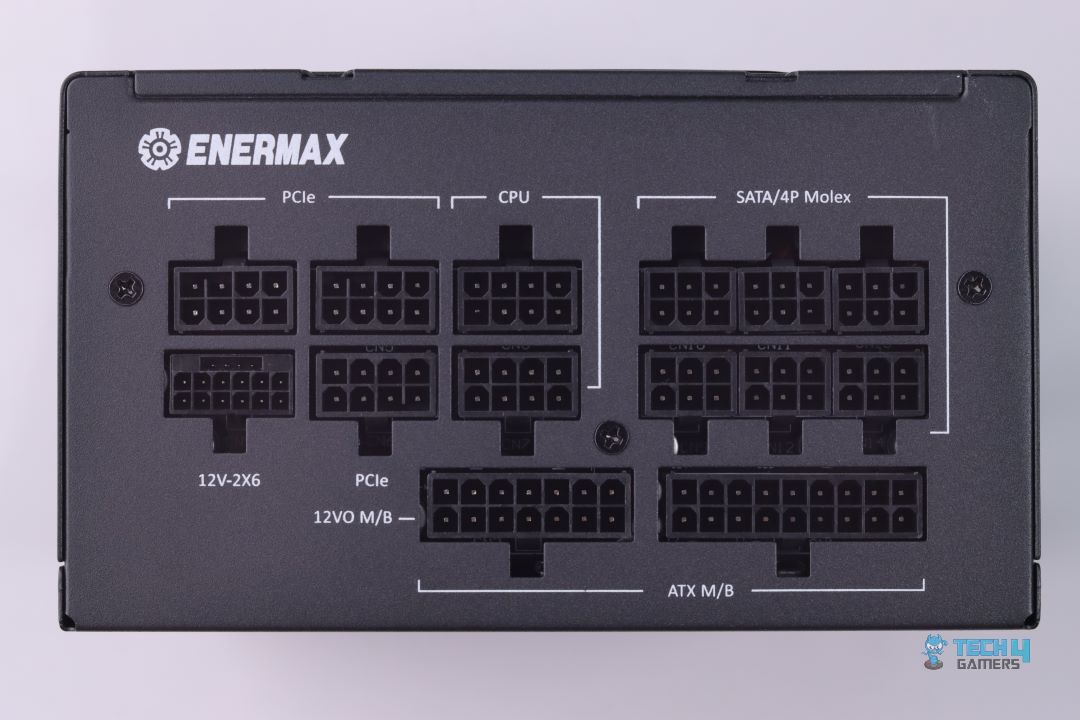
Form Factor: ATX | Generation: ATX 3.1 | Wattage: 1200W | Efficiency Rating: 80 PLUS Platinum | Modularity: Fully Modular | PCIe Cable: 12V-2×6

Pros

  • Top-tier power
  • Expansive overclocking headroom
  • ATX12VO compliant design
  • Mesh-sleeved cables for easy management
  • Minimal noise output

Cons

  • Premium pricing
  • Probably overkill

Read Our Enermax PlatiGemini 1200W Platinum Review

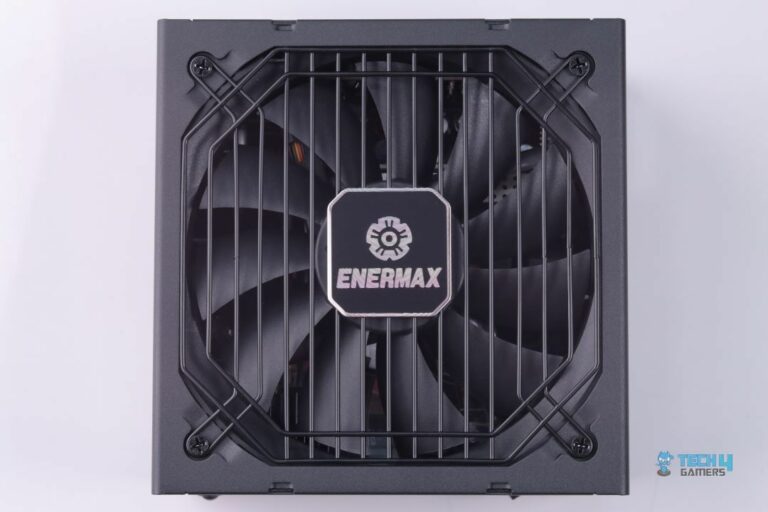
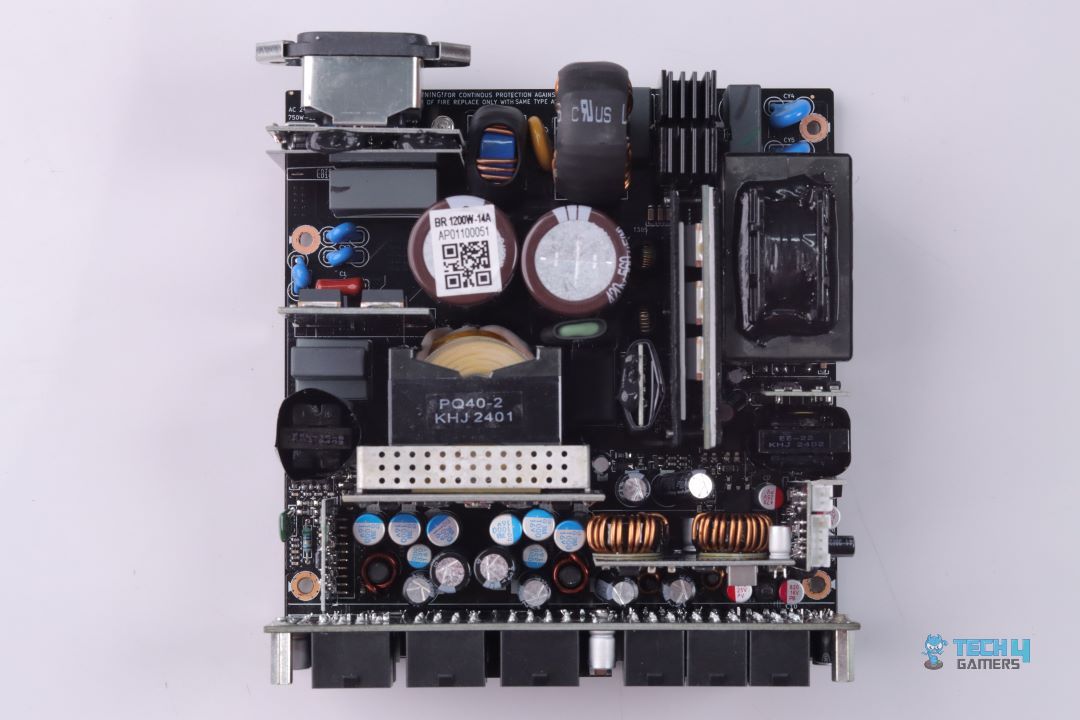
The Enermax PlatiGemini 1200W Platinum impressed me like no other unit. This fully modular ATX 3.1 PSU tops my rankings, excelling in nearly every category. It also supports the ATX12VO standard, making it highly future-proof if motherboard adoption increases. Thanks to ATX12VO compatibility, it delivered exceptional efficiency in my testing, setting it apart from the competition.

But efficiency isn’t its only strength. With record-breaking voltage regulation, top-tier ripple performance, and a 235% power excursion capability, it’s a powerhouse for overclocking. Remarkably, Enermax achieved this using traditional tech like an APFC circuit, keeping costs down without sacrificing performance—unlike competitors relying on pricier digital components. Plus, its mesh-sleeved cables simplify management while adding a premium touch.

This is how we concluded the Enermax PlatiGemini 1200W Platinum after testing the PSU:

The Enermax PlatiGemin 1200W Platinum takes the crown with its robust build, top-tier efficiency, and exceptional performance. It has a fully modular design, premium mesh-sleeved cables, superior voltage regulation, and excellent thermal management.

✅Buy It If

You want top-tier performance: The PlatiGemini stands out as the best PSU we’ve tested, excelling in voltage regulation, voltage ripple performance, and power efficiency.

You want a future-proof PSU: With 1200W of power and ATX12VO compatibility, this Enermax unit is designed to stay relevant and reliable for years to come.

You value quiet operation: The Enermax PlatiGemini’s fan stays off until power consumption exceeds 700W, ensuring near-silent performance during most of its operation.

❌Don't Buy It If

You’re on a budget: While the $230 price tag is reasonable considering its top-tier performance, it may still feel steep for some buyers.

You’re not into overclocking: The PlatiGemini is tailored for hardcore enthusiasts looking to push their CPU, GPU, and RAM to the absolute limit.

What Makes It The Best Performance PSU For RTX 5080?

The Enermax PlatiGemini 1200W is a powerhouse. With ATX12VO, ATX 3.1 certifications, 1200W capacity, and 80 PLUS Platinum efficiency, it handles everything with ease. In my testing, it excelled in voltage regulation, ripple, and efficiency. The mesh-sleeved cables add a premium touch and simplify installation. The fan stays silent under 700W, thanks to its smart fan curve and passive cooling. Plus, the 10-year warranty ensures long-term peace of mind. For all of these reasons and more, I’ve picked it as the best performance PSU for RTX 5080.

Performance: 9.75/10 Value: 8.75/10
Overclocking: 9.75/10 Design: 8/10

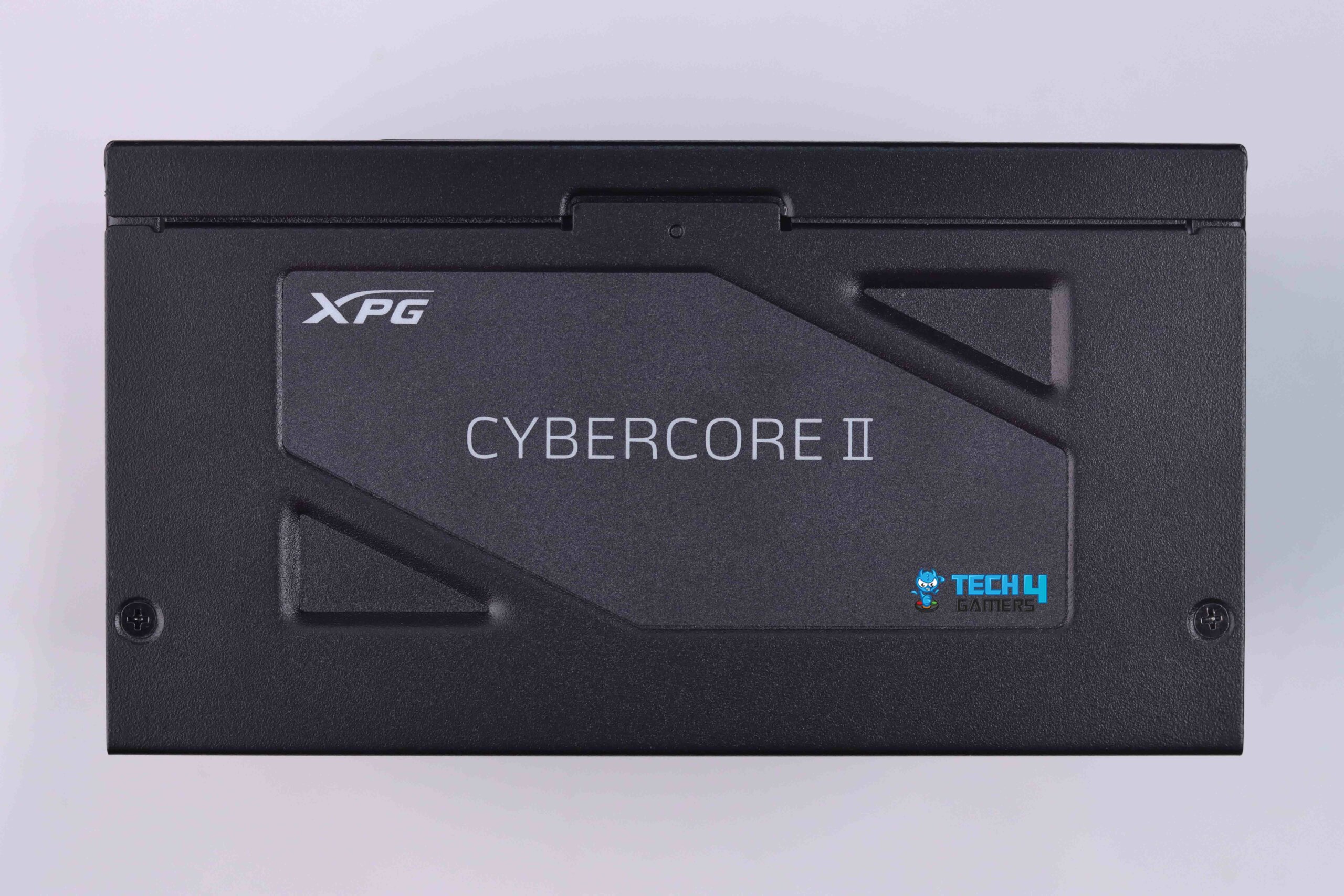
XPG Cybercore II 1000W Platinum

Best 1000W PSU for RTX 5080

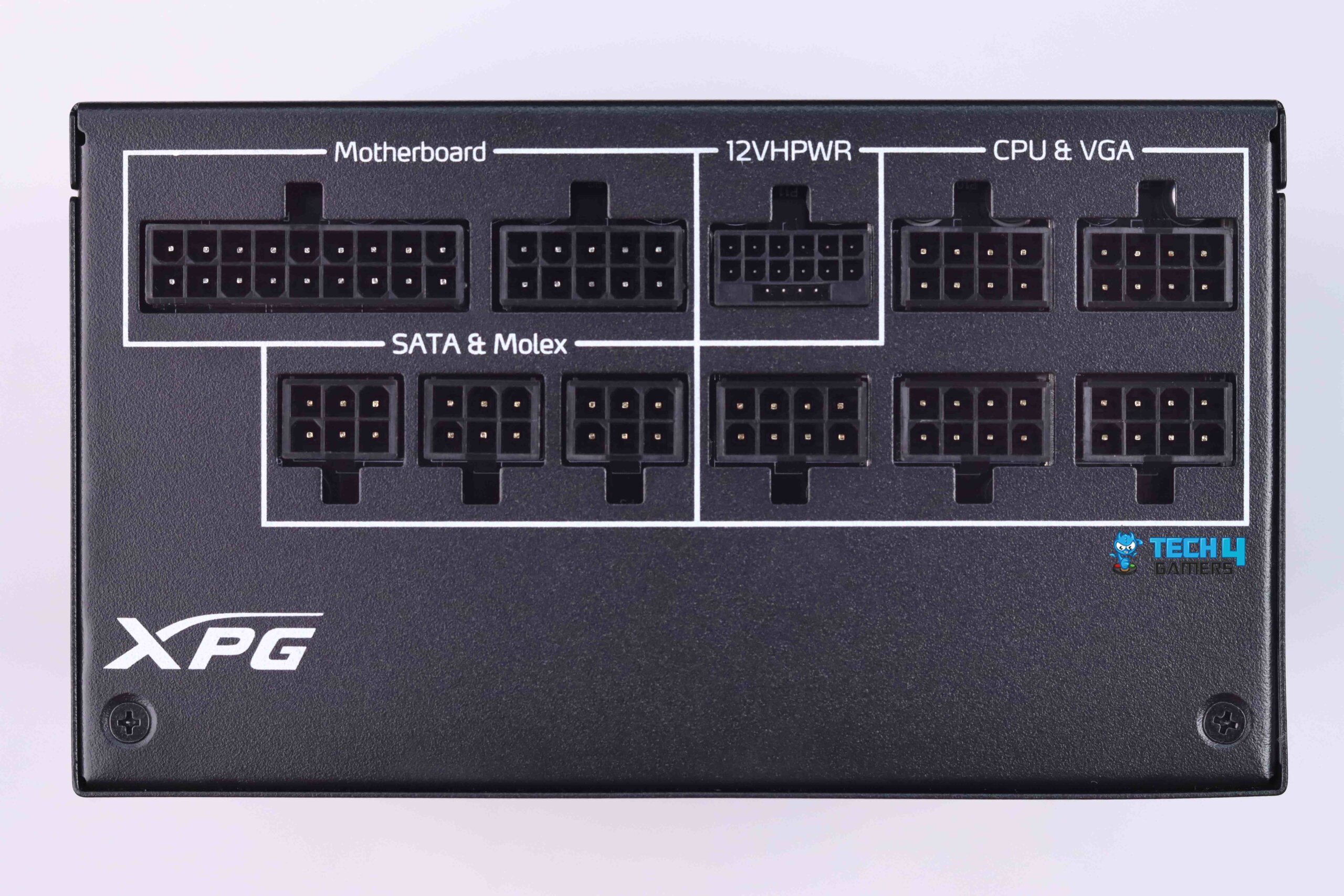
Form Factor: ATX | Generation: ATX 3.0 | Wattage: 1000W | Efficiency Rating: 80 PLUS Platinum | Modularity: Fully Modular | PCIe Cable: 12VHPWR

Pros

  • Enhanced hybrid performance
  • Effective Nidec cooling
  • Quiet, thermally efficient
  • Reliable 10-year warranty
  • Sleek, minimalist design

Cons

  • Expensive
  • No hybrid fan mode
  • Difficult cable management

Read Our XPG CyberCore II 1000W Review

I tested the XPG CyberCore II 1000W, now refreshed to meet Intel’s ATX 3.0 standards. A key upgrade is the Nidec VENTO PRO 120mm PWM fan, reaching 2150 RPM. With a dual ball bearing design rated for 60,000 hours at 60℃, it ensures long-term reliability. XPG also fine-tuned the fan curve, earning a Cybenetics A- acoustic certification—I found it impressively quiet.

Performance-wise, the CyberCore II uses a hybrid architecture on an updated CWT platform, reengineered for ATX 3.0. This blend of analog and digital components improves voltage regulation and efficiency while keeping costs in check. During my review, I was especially impressed by its balance of high performance and affordability, making it a strong contender in its class.

This is what Abdul Hannan, our PC component tester and reviewed, said about the CyberCore II 1000W in his review:

The compact design and premium components of the XPG CyberCore II PSU make it a solid choice for those seeking reliability and performance in their PC builds.

✅Buy It If

You value quiet operation: XPG’s redesigned cooling system, paired with a 120mm Nidec fan, ensures the CyberCore II stays cool, quiet, and highly performant.

You want reliability: The XPG CyberCore II features a hybrid CTT platform that enhances performance and durability, backed by a 10-year warranty for peace of mind.

You prioritize efficiency: With an 80 PLUS Platinum rating, this PSU not only meets but exceeds efficiency standards, as confirmed by our in-house testing.

❌Don't Buy It If

You’re on a tight budget: While the XPG CyberCore II packs premium features, its price tag is higher compared to competitors, making it less ideal for cost-conscious buyers.

You’re new to cable management: The CyberCore II’s long, hard-sleeved cables can be a bit challenging to route neatly, especially for beginners.

What Makes It The Best 1000W PSU For RTX 5080?

Upgraded to meet ATX 3.0 standards, the XPG CyberCore II 1000W is a standout—if you’re okay with its $200+ price. In testing, the 120mm Nidec fan impressed me with its durable dual ball bearing design and quiet operation. The semi-digital design improved voltage regulation and efficiency, enhancing overall performance. Backed by a 10-year warranty, this PSU is built to last, offering reliability and peace of mind for those willing to invest in quality, and that’s why it is truly the best 1000W PSU for RTX 5080.

Performance: 8.5/10 Value: 8/10
Overclocking: 8.25/10 Design: 8.75/10

CORSAIR SF1000L SFX Gold

Best SFX PSU for RTX 5080

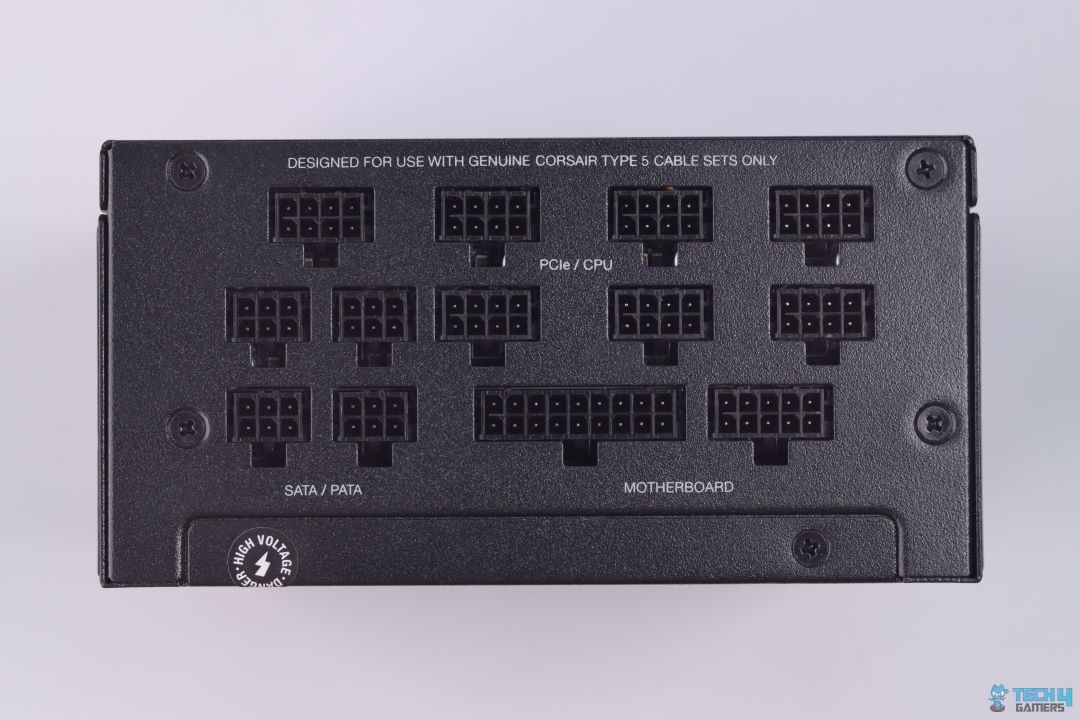
Form Factor: SFX | Generation: ATX 3.1 | Wattage: 1000W | Efficiency Rating: 80 PLUS Gold | Modularity: Fully Modular | PCIe Cable: 12V-2×6

Pros

  • Top-notch Japanese capacitors
  • Outstanding performance
  • Tuned for OC’ing
  • Superbly efficient

Cons

  • Slightly noisy at full load

Read Our CORSAIR SF1000L SFX Review

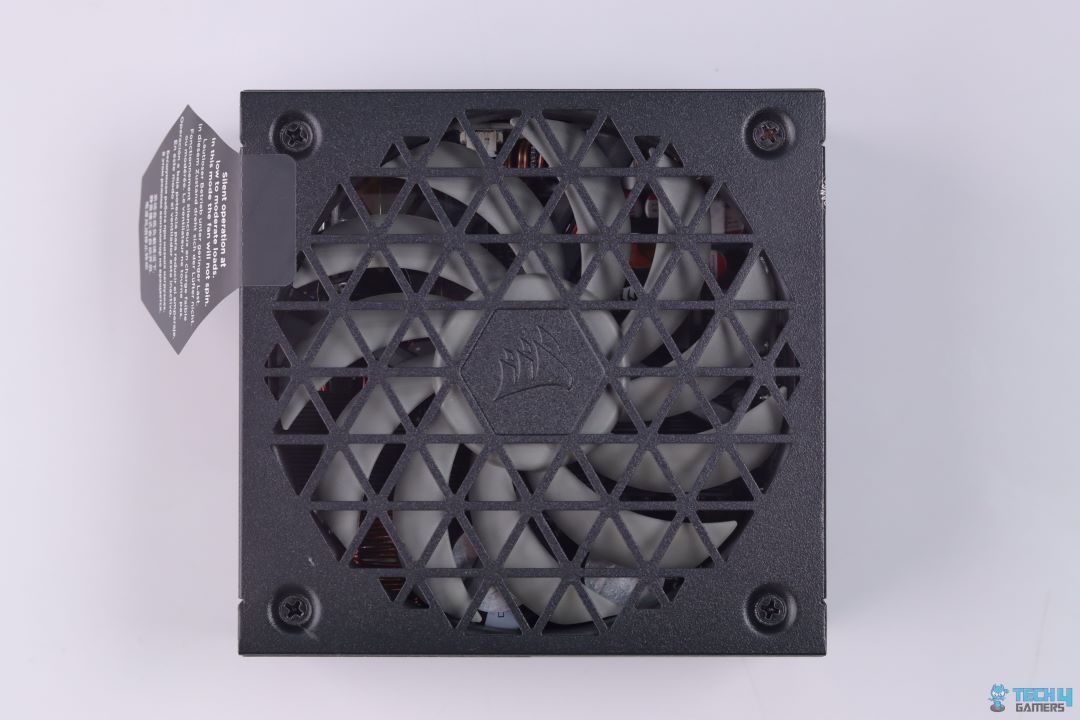
Corsair has never failed to impress me when it comes to their PSUs. I’m happy to report that that streak continues with the SF1000L SFX. Upon my teardown, I was greeted by a platform originally pioneered by Great Wall. Moving on, Corsair has finessed this platform to the extent that it beat quite a few full-sized ATX PSUs. The SF1000L utilizes a combination of flagship Japanese capacitors packed within a neatly designed layout that prioritizes airflow. 

Speaking of airflow, the SF1000L’s 120mm rifle bearing fan does a perfectly adequate job. The noise does ramp up past the 50% load threshold, but that’s no big deal. What is extraordinary is the fact that Corsair has fine-tuned this unit for expansive overclocking potential, thanks to tight voltage regulation and an impressive 12.0mV of voltage ripple at 100% load as seen in my in-house testing. Not only that, the SF1000L exceeded its Gold rating with an average efficiency of 92.33%, which falls in the Platinum ballpark.

Simply put, this is how I summarized the SF1000L in my hands-on review of the PSU:

The Corsair SF1000L PSU is an SFL power supply that exceeds expectations with its performance and efficiency. Slightly larger than SFX PSUs, it offers better results under max load due to improved heat dissipation. It is designed for high-end, power-hungry builds, with impressive cable management and high quality internals. Despite its compact size, the SF1000L performs on par with or better than many full ATX PSUs, making it a top choice for small form factor cases.

✅Buy It If

You’re looking for something small: The marketing headline of the SF1000L is its SFX form factor, where Corsair doesn’t compromise on performance for the sake of smaller dimensions.

You value efficiency: Even though the SF1000L is rated for Gold efficiency, I found it to meet the standard for the Platinum certification.

You want premium components: Regardless of its insignificant size, the SF1000L boasts high-quality Japanese capacitors, the likes of which are found in full-fledged ATX PSUs.

❌Don't Buy It If

You need a silent environment: Heat tends to build up faster in SFX PSUs, which is why the 120mm fan needs to work overtime, resulting in annoying noise output.

You’re finicky about customer support: While a 7-year warranty is perfectly acceptable, almost all rivals offer 10-12 years of warranties.

What Makes It The Best SFX PSU For RTX 5080?

Corsair took Great Wall’s ATX 3.1 platform and reengineered it for tighter voltage regulation, improved ripple performance, and mind-blowing efficiency. With deluxe Japanese capacitors and solid build quality, it’s clear why Corsair’s PSU engineering is so respected. Plus, this SFX unit’s 1000W capacity easily supports and even overclocks an RTX 5080 at the highest levels. As such, the Corsair SF1000L ticks all the right boxes to be the best SFX PSU currently available for the RTX 5080.

Performance: 9/10 Value: 8.5/10
Overclocking: 9/10 Design: 9/10

MSI MAG A1000GL Gold

Best Value PSU for RTX 5080

Form Factor: ATX | Generation: ATX 3.1 | Wattage: 1000W | Efficiency Rating: 80 PLUS Gold | Modularity: Fully Modular | PCIe Cable: 12V-2×6

Pros

  • Thermally efficient 
  • 10-year warranty 
  • Value for money

Cons

  • Lack of hybrid fan mode
  • Chinese/Taiwanese capacitors

Read Our MSI MAG A1000GL PCIE5 Gold Review

The MSI MAG A1000GL may not set new benchmarks, but in my testing, it delivered solid, well-rounded performance. Fully ATX 3.1 compliant with PCIe 5.1 support, it’s a modern, future-proof choice. The fully modular design made installation easy, and the 10-year warranty stands out at this price.

Under the hood, to cut costs, MSI used Chinese and Taiwanese capacitors instead of pricier Japanese ones, but the 10-year warranty reassures me of their durability. The 135mm fan kept temperatures in check but runs continuously due to the lack of a hybrid mode, causing slight noise even at idle as per my testing. While not the quietest PSU, its strong thermal performance and reliability make it a solid contender.

This is what we said about the MSI MAG A1000GL in our dedicated review of the power supply:

The MSI MAG A1000GL PCIE5 is an excellent mid-range PSU that balances cost with modern features like the 12VHPWR connector and ATX 3.1 compliance, offering impressive efficiency and reliable power regulation.

✅Buy It If

You’re on a tight budget: In my testing, the MSI MAG A1000GL stood out as the best value-for-money PSU, easily supporting the RTX 5080 and future high-performance GPUs.

You prioritize cooling over silence: The MAG’s fan runs 24/7 due to the lack of a hybrid mode, which increases noise slightly but ensures excellent heat dissipation.

You want long-term reliability: The 10-year warranty at this price point is a rare and confident move by MSI, showcasing their trust in the A1000GL’s durability.

❌Don't Buy It If

You’re an overclocking enthusiast: During my testing, I found the MAG A1000GL’s voltage ripple and regulation to be average—it works fine, but performance-focused users may want to explore higher-end options.

You prefer quiet operation: The MAG’s fan runs non-stop, which helps with cooling but results in noticeable noise, making it less ideal for those who value silence.

What Makes It The Best Value PSU For RTX 5080?

I found the MSI MAG A1000GL to be a solid 1000W performer, using cost-effective yet reliable Chinese and Taiwanese capacitors for stable performance. What surprised me most was its 10-year warranty—rare at this price. In testing, I confirmed its full ATX 3.1 and PCIe 5.1 compliance with the updated 12V-2×6 cable, making it future-proof. While not the quietest PSU, its thermal efficiency kept it cool under heavy loads. Overall, it’s a dependable, budget-friendly option without compromising performance, and that’s why I have picked it as the best value PSU for RTX 5080.

Performance: 8/10 Value: 9.5/10
Overclocking: 8/10 Design: 7.5/10

ASRock Steel Legend SL-1000GW Gold

Best White PSU for RTX 5080

Form Factor: ATX | Generation: ATX 3.1 | Wattage: 1000W | Efficiency Rating: 80 PLUS Gold | Modularity: Fully Modular | PCIe Cable: 12V-2×6

Pros

  • Gorgeous design
  • 10-year warranty
  • No compromise on internals

Cons

  • Not the best for extreme OC

Read Our ASRock Steel Legend SL-1000GW Review

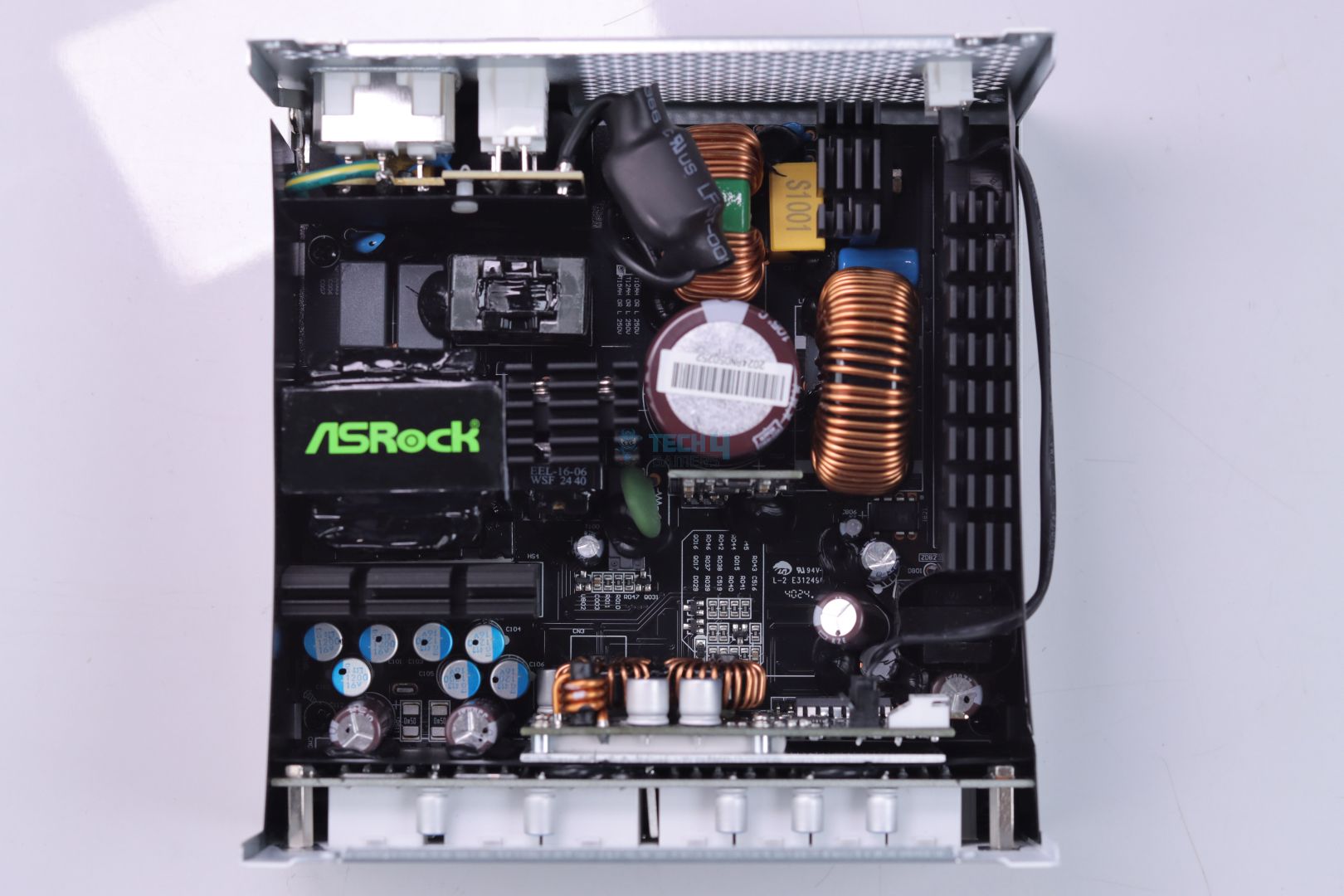
ASRock is already well-known for producing some of the best motherboards, so their penetration into the PSU market is a pleasant surprise. Speaking of which, the Steel Legend SL-1000GW represents part of their fully modular, ATX 3.1 lineup with a Gold rating, although I found this to be an understatement in my testing. That’s because the Steel Legend returned an average efficiency of 93.27% which puts it well into Platinum territory.

Not only that, the Steel Legend is packaged within a particularly breathtaking, all-white design that accentuates each and every one of its design cues. Furthermore, ASRock has utilized one of HEC’s platform and used flagship Japanese capacitors as a sign of zero compromise on the Legend’s internals. Additionally, the Steel Legend commands a very respectable asking price. Coupled with a 1000W rating and impressive voltage regulation, it’s safe to say we have a winner.

After thoroughly testing and benchmarking the Steel Legend SL-1000GW, this is how I described the PSU:

The ASRock Steel Legend SL1000GW is a reliable power supply with good efficiency and enough power for high-end GPUs. It meets the latest ATX 3.1 standard and comes with a 10-year warranty, which shows ASRock’s trust in its durability. Performance-wise, it does well in efficiency, with decent voltage regulation and ripple control. Overall, if you want a solid, future-proof PSU from a well-known brand, this one is worth considering.

✅Buy It If

You’re building a White PC: The Steel Legend SL-1000GW will uplift the aesthetic outlook of your PC in a very graceful manner thanks to its one-of-a-kind design elements.

You prioritize noise isolation: ASRock has integrated an ‘iCool’ button, which is their way of including a hybrid fan mode which helps keep sound output to a minimum.

You understand the importance of efficiency: Thanks to ASRock and HEC’s dynamic collaboration, the Steel Legend, though rated for Gold, was found to be exceeding the standards for Platinum efficiency. 

You want long-term peace of mind: The 10-year warranty at this price bracket is a rare, but welcome move by ASRock, showcasing their trust in the SL-1000GW’s durability.

❌Don't Buy It If

You’re an overclocking fanatic: During my testing, I found the Steel Legend’s voltage ripple to be unimpressive—it works fine, but OC’ing enthusiasts may want to look towards other options.

What Makes It The Best White PSU For RTX 5080?

This 1000W ATX 3.1 PSU, built on an HEC platform, impressed me with exceptional efficiency and impressive voltage regulation. ASRock’s use of premium Japanese capacitors reinforces its quality-first approach over cost-cutting. Despite being new to the PSU market, ASRock backs this unit with a 10-year warranty, proving it’s here to stay. Let’s not forget the 135mm Hydro Dynamic Bearing fan that’s part of the PSU’s ‘iCool’ feature that spun the fan when the load crossed 405W, according to our stress tests. All of these features, combined with its look, make the ASRock SL-1000GW a no-brainer option as the best white PSU for RTX 5080.

Performance: 8.5/10 Value: 8.75/10
Overclocking: 8.5/10 Design: 9.5/10

Our Test Results Of The Best PSUs For RTX 5080

To narrow down the list of power supplies that are great for the RTX 5080, we tested and benchmarked over two dozen power supplies, and these six stand out the most based on their performance, features, and overall value, keeping in mind the requirements of the RTX 5080.

How We Test Power Supplies

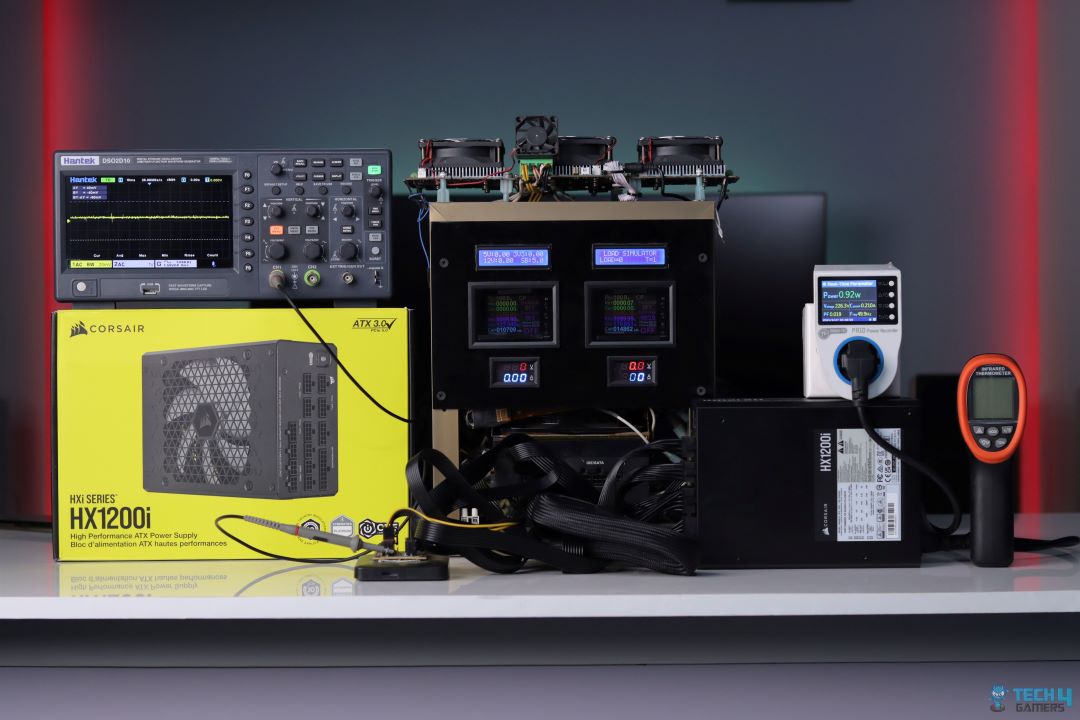
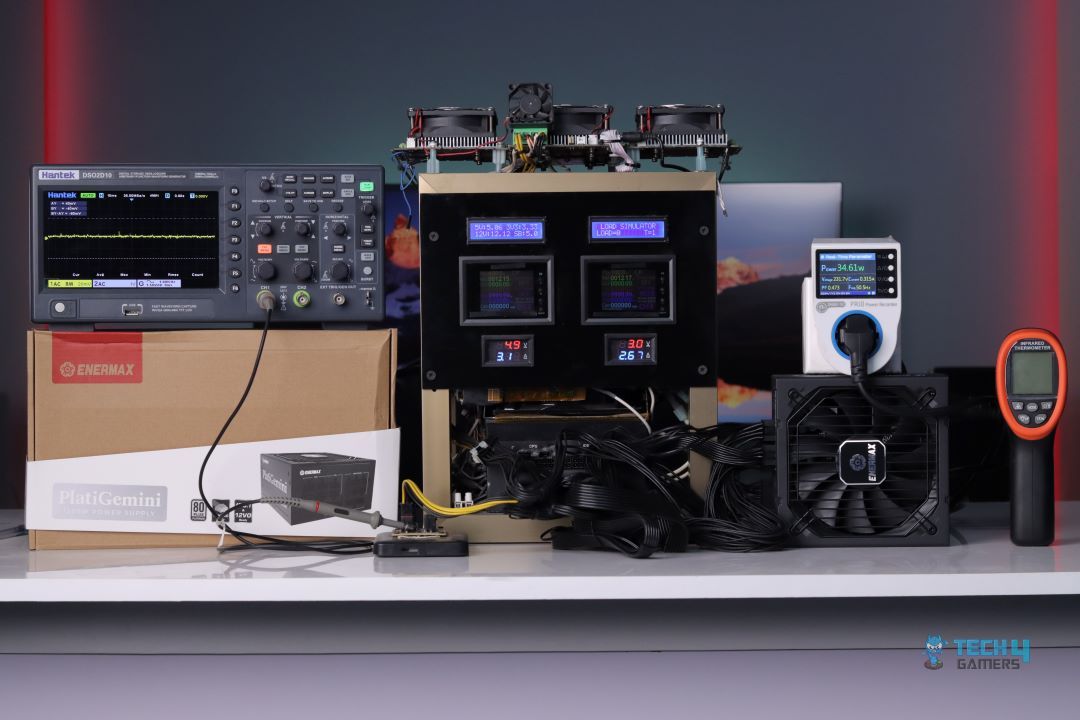
To bring you the top six PSU options, my team and I spent countless hours rigorously testing, analyzing, and comparing various models to identify the best choices tailored to your needs. Throughout this process, we focused on several key factors to ensure our recommendations meet the highest standards:

  • Performance: Our top priority was real-world performance. The RTX 5080 requires 360W at stock settings, so we prioritized PSUs that delivered the best balance of voltage regulation, voltage ripple performance, and power efficiency.
  • Efficiency: With electricity costs at record highs, efficiency is crucial. Even the smallest PSU on our list is 1000W, so we emphasized models with high-efficiency ratings to help reduce energy consumption.
  • Durability and Longevity: We disassembled each PSU to inspect their build quality and internal components, ensuring they’re safe and reliable for long-term use. Additionally, all recommended PSUs come with a 10-year or longer warranty, giving you peace of mind.
  • ATX 3.0/ATX 3.1 Compatibility: The RTX 5080 is a power-hungry GPU, and it demands a PSU that meets strict compatibility standards. We only included PSUs that are ATX 3.0 or ATX 3.1 certified, ensuring they can handle the GPU’s power requirements without the need for adapters or daisy-chaining cables. This guarantees a safer and more reliable setup for your high-end system.

FAQs

What PSU does an RTX 5080 actually need?

I’d recommend an 850W PSU as the baseline, but for optimal performance, I’d suggest an upgrade to a 1000W PSU or even a 1200W unit in order to ensure adequate power delivery and support OC’ing. ATX 3.1 compatibility is also strongly advised, but you can use ATX 3.0 PSUs as well or even older ones with adapters, but I wouldn’t recommend the latter option at all.

What factors should I prioritize if I’m to choose a PSU for OC’ing my RTX 5080?

For OC’ing, I’d recommend a PSU that excels in voltage regulation, but especially voltage ripple performance as that is the most crucial element for determining any PSU’s overclocking potential.

Should I take efficiency into consideration while selecting a PSU for my RTX 5080?

Efficiency measures how much power your PSU delivers to your PC versus how much is wasted as heat. A 1000W Titanium-rated PSU can outperform a 1050W Gold-rated one, offering better energy savings and lower electricity bills. Always prioritize efficiency when choosing a PSU.


 

With NVIDIA Confirming An Investigation Into RTX 50 Series Issues, Here’s What I Recommend To Owners

Story Highlight
  • The RTX 50 Series GPUs have been reported to malfunction under varying workloads, ranging from minor stuttering in games to full-fledged system reboots and BSODs.
  • The problem seems to target the high-end RTX 5080 and flagship RTX 5090 in particular, but all 50 Series GPUs and even previous generation GPUs are at risk.
  • Nvidia has released a couple of new drivers, but they’ve completely failed to rectify these GPUs’ erratic behaviour, resulting in a public outcry.
  • According to Nvidia’s forums, staff members are uninformed as to whether the fix will arrive in the form of a driver update or a VBIOS update.

The Nvidia RTX 50 Series was supposed to be a monumental leap in GPU technology, promising unparalleled performance for gamers and creators alike. 

However, instead of basking in the glory of next-gen graphics, many users have been greeted by the dreaded Blue/Black Screen of Death (BSOD). 

As someone who’s been following this issue closely, I’ve seen the frustration firsthand. 

Let’s dive into where this problem started, what Nvidia is doing to address it, and what users can expect moving forward.

Where Did The Problem Start?

The BSOD issues with the RTX 50 Series began surfacing shortly after its launch. 

Users reported frequent crashes, particularly during demanding tasks like gaming, 3D rendering, or even AI workloads. 

The crashes were often accompanied by error codes like “DPC_WATCHDOG_VIOLATION” or “VIDEO_TDR_FAILURE,” pointing to driver or hardware instability.

The DPC Watchdog Violation error is one of many affecting the RTX 50 Series GPUs.

From my analysis, the root cause seems to stem from a combination of factors. 

Firstly, the RTX 50 Series introduces a new architecture with significant changes to power delivery and thermal management. 

While these advancements are impressive on paper, they’ve also introduced compatibility challenges with existing drivers and system configurations. 

Second, early adopters often face the brunt of teething issues, as manufacturers rush to meet launch deadlines, sometimes at the expense of thorough testing.

Adding fuel to the fire, some users reported that the BSODs were more frequent when enabling certain features like Ray Tracing or DLSS. 

Similarly, users claimed that black screen issues were exacerbated when pushing their monitors’ refresh rates above 60 Hz.

This suggests that the problem isn’t just hardware-related but also tied to how the GPU interacts with software ecosystems.

Another possibility is that the RTX 50 Series shipped with faulty firmware, which has been exacerbated by the arrival of the buggy 570 Series drivers.

However, people are allegedly claiming that a few RTX 40 Series and even 30 Series GPUs are experiencing somewhat related issues as well, which hints towards these malfunctions being more widespread than we originally thought.

What Is Nvidia Doing To Fix It?

In a statement released after the arrival of GeForce driver 572.16, the company confirmed that they are actively investigating the BSOD reports and working on driver updates to address the instability. 

I should mention that Nvidia officially began an investigation into these BSODs after the GeForce driver 572.16 was released because that’s when all these GPUs started going haywire.

According to Nvidia’s official forums, the engineering team has identified a couple of potential culprits, including but not limited to:

  • Driver Conflicts: The initial drivers for the RTX 50 Series were optimized for performance but may have overlooked edge cases that cause crashes. Nvidia is rolling out incremental updates to improve stability.
  • Software Compatibility: Certain games and applications are triggering crashes more than others. Nvidia is collaborating with developers to patch these issues on a case-by-case basis.

Nvidia has already released a pair of driver updates, i.e., 572.42 & 572.47, but the former did nothing to resolve these BSODs while the latter just enabled support for the RTX 5070 Ti and fixed a relatively minor issue where users were plagued by driver instability issues when waking up their monitors after extended periods of time.

The Nvidia RTX 5070 Ti represents the latest installment of the RTX 50 Series lineup.

As far as the primary BSOD issues are concerned, there’s no word yet on when a fix will arrive. The icing on the cake is that Nvidia’s staff members don’t even know whether this fix will be issued in the form of a new driver or VBIOS (Video BIOS) update.

What Can Users Do In The Meantime?

If you’re one of the unlucky few experiencing BSODs with your RTX 50 Series GPU, there are a few steps you can take to mitigate the issue while waiting for a permanent fix:

  • Downgrade Your Drivers: A few users have been successful at alleviating these BSODs when they rolled back to the beta driver 572.41 or even an older driver like 566.45, but this isn’t a guaranteed solution.
  • Lower Your Refresh Rate: According to my research and my own experience, the chances of encountering BSODs are higher if you’re using a high refresh rate monitor, so you might want to try going down to 60 Hz and then stress-testing your GPU to see if you’re still being bugged by black screens or system crashes.
  • Underclock your GPU: Surprisingly, a few people have had success when they attempted to underclock their GPU’s base frequencies using software utilities like MSI Afterburner, even though you shouldn’t have to do this on such next-generation GPUs.
  • Turn down the settings: Feedback suggests that turning off Ray Tracing, DLSS, and Frame Generation may help as a temporary workaround, although this will severely impact your overall gaming experience.

What Can Users Expect Moving Forward?

While the BSOD issues are undoubtedly frustrating, there’s reason to be optimistic. 

Nvidia has a track record of resolving similar problems with past GPU launches. For example, the RTX 20 Series faced driver-related crashes at launch, but subsequent updates eventually stabilized the platform.

Based on my experience, I expect Nvidia to release a major driver/VBIOS update in the coming weeks that addresses the majority of BSOD complaints. 

That said, if you’re considering purchasing an RTX 50 Series GPU, I’d recommend waiting a few more weeks until the dust settles. 

Quite A Fire

The RTX 50 Series BSOD issue is a reminder that cutting-edge technology (cough) often comes with growing pains. 

This isn’t even Nvidia’s first rodeo with the RTX 50 Series GPUs. The newest hardware from Nvidia has had a myriad of problems since its launch, starting with melting PCIe connectors, supply chain/availability issues leading to merciless scalping. 

If that wasn’t enough, we’ve also confirmed that quite a few defective GPUs are floating around with fewer ROPs than advertised, leading to degraded performance. 

Needless to say, Nvidia has a lot of ground to cover.

Shadow of Mordor’s Nemesis System Still Owned By WB Games Until 2036 Despite Studio Closure

Story Highlight
  • The popular Nemesis system included in Shadow of Mordor is locked behind a patent owned by WB Games until 2036.
  • The company still has ownership of the feature despite the sudden closure of Monolith Productions. 
  • Fans are now wondering about the fate of the Nemesis system, as the canceled Wonder Woman game was supposed to have it.

WB Games has suddenly laid off multiple studios and abandoned the Wonder Woman project. Monolith Productions was expected to finally feature the highly anticipated Nemesis system again—alongside a now-canceled Batman title.

However, the Shadow of Mordor developer could not escape the grim restructuring by WB Games, but that does not mean Nemesis System is free for everyone to use now. It is still locked behind a patent owned by the company until 2036. 

Why it matters: The recent developments by Warner Games suggest that we might not see its Nemesis system being used in any games for a long time. It is unclear what the company will do with the sought-out feature.

Shadow of Mordor
Shadow of Mordor was the first game to introduce the famed Nemesis system.

WB Games patented the Nemesis system in 2021, making it impossible for other game studios to utilize it. If the company keeps paying the associated fees for the legal document, it is now expected to stay unavailable for over a decade

Now, gamers all over social media and forums are venting their frustration for the massive loss. Many blame WB Games for patenting such an important mechanic and not even using it after Shadow of Mordor. One user said:

They really patented the Nemesis System only to do absolutely nothing with it.

For those not in the know, the Nemesis system was well known for producing procedurally generated enemies that could remember encounters with players and evolve accordingly for the rest of gameplay.

EA is seemingly working on its own Nemesis-like system to emulate unique enemy encounters.

The Wonder Woman game was canceled 4 years into development, and a writer described it as a ‘dream come’ true.’ It is unclear whether WB Games will use the Nemesis system again.

Do you think the Nemesis system being locked away for so long is a major loss for AAA gaming? Let us know your thoughts in the comments below, or join the discussion on the Tech4Gamers forum.

Dragon Age Veilguard Praised By BioWare Cofounder; Says Fan Expectations “Incredibly High” Now

Story Highlight
  • The BioWare co-founder recently finished Dragon Age: The Veilguard and enjoyed the RPG.
  • He states that fan expectations are very high today, making the AAA industry challenging.
  • The co-founder is also upset that the game failed because he found it enjoyable.

Dragon Age: The Veilguard became one of the most forgettable releases of last year. With EA admitting the game failed to meet expectations, BioWare suffering layoffs, and director Corinne Busche leaving the studio after nearly two decades, the game has crushed fans in many ways.

However, there are still those who enjoyed the series’ latest RPG. Among them, the BioWare co-founder recently shared positive words for the title.

Why it matters: The veteran developer’s praise highlights an interesting divide between the opinions of industry professionals and fans. This is perhaps why many AAA titles are so polarizing today.

Dragon Age: The Veilguard Director Joins Wizards of the Coast
Dragon Age: The Veilguard Received Plenty of Backlash From The Fans

Greg Zeschuck originally co-founded the studio in 1995 and contributed to titles like Baldur’s Gate during his time at BioWare. He was also involved in the development of Dragon Age 2, an RPG many hold in high regard to this day. 

Speaking during the My Perfect Console podcast, Greg Zeschuck discussed modern fan expectations and pressure on developers. He discussed how waiting years upon years for a specific title can often lead to unrealistic expectations.

Greg Zeschuck recently played Dragon Age: The Veilguard and had a lot of fun with the title. He stated that the RPG’s failure is upsetting since BioWare’s latest work is praiseworthy in many aspects.

The BioWare co-founder believes fan expectations are incredibly high today, making it tough to survive in the modern AAA industry. Although many may disagree, he seems to suggest these expectations played a major role in the RPG’s failure.

Dragon Age The Veilguard Ultimate GOTY
The Franchise Is Unlikely To Return Anytime Soon After Its Recent Failure

Like Greg Zeschuck, developers from Larian also found the new Dragon Age entry quite impressive. Similarly, others like the Ubisoft CEO have noted that fan expectations are higher than over.

These comments highlight common sentiments regarding modern AAA titles. However, fan reception was completely flipped in Dragon Age: The Veilguard’s case, with many even voicing their concerns about the next Mass Effect title following Dragon Age’s latest outing.

What are your thoughts on Greg Zeschuck’s opinions? Do you agree? Share your views in the comments and on the Tech4Gamers Forums.

A Guide to the Best Non-Gaming and Tech Deals on G2A.COM [February 2025]

Story Highlight
  • Buying the right software can improve your everyday life, office tasks, and more.
  • This set of software can cost a hefty penny, so finding the best deals online is always recommended.
  • Discounts online can vary from 30% to 80%, giving you unprecedented deals.

Staying caught up on the latest and greatest technology can be a struggle these days. Whether it be the newest software, using the best VPN, or joining the rapidly growing user base of Windows 11, you must make the right choices for the best possible experience.

Costs for such things can add up, but if you’re looking in the right places, trusted marketplaces like G2A.com can offer incredible deals, completely transforming your online experience.

Why it matters: With the rising costs of essential services, finding the best deals is paramount to ensuring you save as much money as possible for other expenses.

Microsoft Office 2024 Professional Plus – 86% Discount

Microsoft Office
Microsoft Office Is Essential For Everyday Work

Microsoft Office is a must-have for nearly every PC user. Whether it be for note-taking, number-crunching, or corporate presentations, tools like Microsoft Word, Excel, PowerPoint, and more make life tenfold easier.

At the currently discounted price, Microsoft Office 2024 offers unbeatable value for all types of users.

NordVPN – 37% Discount

VPN at home
Picking The Right VPN Can Save You From All Types of Threats Online

VPNs are useful for everyday users, in addition to enthusiasts like gamers. NordVPN ranks among the best services available today, allowing you to browse the web, bypass regional restrictions, protect your privacy, and more.

While NordVPN is a great purchase at any price, the current discount makes it all the more valuable.

Tinder Gold 1 Month – 32% Discount

Online dating can be tough. With so many people furiously swiping left (and right), it can be hard to stand out in the crowd. So, upgrading to Tinder Gold is important if you want to find your special someone on the platform.

A gold subscription removes ads but also gets you unlimited likes, rewinds, and a passport to chat with people across the globe. You’ll get five Super Likes a week and one free boost, giving you the edge needed to find the best possible match.

Windows 11 Pro – 84% Discount

Windows 11
Windows 11 Helps You Get Things Done Quicker Than Before

Microsoft is currently gearing up to discontinue Windows 10. After over a decade of service, it’s time to put Windows 10 down, making 2025 the perfect time to upgrade to Windows 11.

The latest operating system offers an intuitive interface, new functions, and rock-solid security. Needless to say, Windows 11 is a steal at this price.

Adobe Creative Cloud 1 Month – 86% Discount

Adobe products don’t come cheap, so a discount is always welcome. Adobe Creative Cloud includes a range of services that you can use for graphic design, video editing, web development, and photography. Users can even access a set of mobile applications and optional cloud services.

That’s it for the best tech deals we could find on G2A.COM this month, but please keep your eyes peeled for more updates down the line!

Apex Legends Voice Actors Forced To Train Generative AI That Would Later Replace Them

Story Highlight
  • EA is requiring Apex Legends voice actors to sign agreements for their voice to train Generative AI models. 
  • Wraith’s French voice actor, Pascale Chemin, revealed that all 32 actors received this request.
  • The entire cast refused to sign, pushing back against AI’s growing role in replacing human talent.

Generative AI is rapidly taking over the gaming industry, and publishers aren’t hesitating to integrate these models within their games as a method of cost reduction. 

The latest victim of this takeover is Apex Legends. EA now forces voice actors to sign an agreement, allowing AI to train on their voices and eventually replace their jobs.

Why it matters: In an era when many video game developers are already losing their jobs rapidly, AI integration will further introduce a wave of turnovers. Moreover, the public has strongly opposed such usage to replace human input.

apex legend voice actor speaks against generative AI
Apex Legends Voice Actors Speak Out Against Generative AI || Text Translated From Instagram

This was revealed by Wraith’s French voice actor, Pascale Chemin, who posted a statement on Instagram.

While EA or Apex Legends aren’t explicitly mentioned in the statement, it’s plain obvious that she is pointing to them since she tagged all the Apex Legends French voice actors in the post.

According to Chemin, EA directly sent all 32 voice actors in the cast a confidential email requesting their consent to use their voices to train generative AI models

call of duty black ops 6 ai
Zombie In This Black Ops 6 Loading Screen Has 6 Fingers, Possibly AI-Generated.

The signatures were also mandatory and needed for the voice actors to be able to continue working. However, all of the 32 voice actors have refused to sign the agreement and collectively sent a refusal letter to EA.

I see myself forced to “let go” of the role to which I have lent my voice for almost 6 years

Moreover, she added that if they don’t oppose such absurd requirements and claim protection against AI takeover, all of the voice actors could soon lose their jobs

What are your thoughts on AI slowly replacing human talent? Let us know in the comments below or head towards the Tech4Gamers Forums.

RTX 5060 Ti Arrives In March With 180W TBP; Offering Both 8GB And 16GB Models

Story Highlight
  • Leaks point to a late-March launch for the RTX 5060 Ti.
  • The graphics card is said to come in 8GB and 16GB variants, with both offering a 180W TBP.
  • Nvidia’s current supply challenges are also expected to continue with the upcoming graphics card.

Nvidia has already launched four brand-new graphics cards into the market. As the Blackwell lineup attempts to deal with supply constraints, poor quality control, and melting connectors, another graphics card is expected to join the lineup next month.

New reports shed light on the more budget-oriented RTX 5000 offerings, suggesting the RTX 5060 Ti will arrive in a few weeks.

Why it matters: Nvidia’s 60-series releases have historically sold very well, appealing to a huge part of the PC gaming market. Therefore, fans always look forward to these mid-range offerings with high hopes.

Nvidia RTX 5060
The Blackwell Gaming Generation Has Been Nothing Short of a Disaster

As WCCFTech reports, the RTX 5060 Ti will arrive in the second half of March. The graphics card will also be divided into two variants, with Nvidia offering a 16GB option to address existing VRAM grievances.

The 16GB variant is expected to launch first, with the 8GB model following in April. Both graphics cards will be identical in specifications, boasting 448GB/s bandwidth, a 128-bit memory bus, and the BG206 GPU.
The report also states that Nvidia has decided on 180W TBP for the RTX 5060 Ti. This is a small uplift over the RTX 4060 Ti’s 160W TBP, though this difference will not matter much in real-world uses.
PC gamers can expect similar prices as the last generation, putting these two graphics cards in the $400-500 bracket. However, like the rest of the RTX 5000 lineup, supply will likely be limited.

With the launch much closer than expected, it will also be interesting to see how well the new 60-series offering stacks up against its predecessors. The RTX 4060 Ti already offered an abysmal leap over its predecessor, so many are concerned its successor will follow suit.

If the recent Blackwell gaming GPUs are anything to go by, the RTX 5060 Ti will be around 20-30% faster than its predecessor at best. While this does not sound too horrible, the market pricing is unlikely to reflect real-world performance due to the ongoing shortages.

Marvel Rivals Studio Will ‘Aggressively And Decisively Discontinue’ Games That Don’t Satisfy ‘Market Demand’

Story Highlight
  • Marvel Rivals studio CEO Ding Lei says it will aggressively discontinue projects that fail to bring big profits. 
  • The developer will also increase the support funding for games that live up to expectations. 
  • Ding claims that withdrawing funds from titles that don’t satisfy market demands will only benefit other successful projects.

NetEase has been making the rounds in the industry for its sudden departure from the Western gaming market. The studio explained these measures were necessary for ‘organizational reasons,’ but there is much more to this than we anticipated.

Now, the Marvel Rivals studio boss, Ding Lei, says it will ‘aggressively and decisively discontinue’ games that fail to turn in big profits. So, all projects under the publisher need to meet ‘market demand’ for support funds.

Why it matters: The remarks of the NetEase CEO vividly reflect the studio’s recent strategy in the Western market. NetEase has also pledged to support games that show promise and perform better.

Marvel Rivals has proven to be one of the most successful free-to-play games of this year.
Marvel Rivals has taken the gaming scene by storm after achieving staggering success.

In a recent conference call for the fiscal year ending December 30, 2024, NetEase CEO said that support from bad-performing games will be withdrawn so that the studio can focus on projects that satisfy the profit margins and the player base.

If we launch a game product that isn’t suited for market demand, we will aggressively and decisively discontinue it.

-Ding Lei, NetEase CEO.

Ding argues that making games of large scale takes up to 3 to 5 years, so NetEase needs to ‘constantly adapt to the market’ for best performance.

we will also boost our investment in projects that meet quality and efficiency standards.

After the recent strategy announcement, the Detriot: Become Human and The Blood of Dawnwalker developers have already come forward to assure fans they are safe from divestment.

Marvel Rivals
Even the DC boss is interested in challenging Marvel Rivals with its own hero shooter. 

Marvel Rivals has been a staggering success for NetEase, so fans are concerned about what meeting market demand means for the NetEase CEO. We might lose some promising games if they fail to perform as well as the studio expects.

Do you think more projects like Marvel Rivals will come out of NetEase’s portfolio in the future, or is this strategy too strict to work? Let us know your thoughts in the comments below, or join the discussion on the Tech4Gamers forum.

I Re-Tested The RTX 3060 In 2025: Is It Still Good Or Do You Need To Upgrade?

Story Highlight
  • New games like Spider-Man 2 and Marvel Rivals are extremely system-heavy, making older GPUs struggle even at lower settings.
  • The RTX 3060 provides fairly decent rasterization and ray tracing performance at 1080p, advocating its worth in 2025.
  • The competition is too strong to make an upgrade to the RTX 3060 look worthwhile. Cheaper, yet, better-performing products are available en-masse.

The latest GPU season hasn’t been going well with NVIDIA’s failed RTX 50 series launch and a massive GPU shortage in the market. We are expecting AMD’s RX 9000 series to launch in March, but the specifications haven’t been specified. According to Steam’s January 2025 hardware survey, the RTX 3060 is the most popular GPU. So, I got curious. Is the RTX 3060 still viable in 2025 or is it time for an upgrade? I’ve been using the RTX 3060 since it launched in 2021, and I’ll share my experience below, so buckle up!

New Games Are Extremely System-Heavy

Unlike the past when games used to be better optimized, recently, we have seen games with unreasonable system requirements. I recently opinionated this with whether DirectX12 should be a mandatory requirement in modern games. We have games like Marvel Rivals that don’t provide intense graphics but require a decent PC to run properly.

Similarly, there have been many issues with the latest Spider-Man 2 game, causing errors and crashes with slightly older GPUs. Therefore, I have noticed many people keep recommending the latest GPUs. However, what if you’re on the RTX 3060? Do you still need to upgrade to a better graphics card to run one of the latest games like Kingdom Come Deliverance II? Looking at the system requirements pages might give you a different answer than what I’m about to advocate in a little while.

My Test Bench

RTX 3060 (Image credit: Tech4Gamers)

Here is a quick rundown of my test bench:

How Does It Perform In 1080p?

I tested the GPU at 1080p with all games running at the highest settings. I tried using ray tracing in all the supported games. Here are the results:

RTX 3060 rasterization gaming benchmarks
Rasterization gaming benchmarks of the RTX 3060. (Image By Tech4Gamers)

What did I tell you? Solely relying on the game system requirements pages isn’t worth it anymore. There are multiple takeaways in this graph. For starters, I chose a few “older” titles while others are fairly new. Kingdom Come Deliverance II and Marvel Rivals are the newest, while Fortnite, in a way, is the oldest.

I utilized ray tracing in Fortnite and Marvel Rivals. In the former, I reduced the graphics settings from “ultra” to “high”, while I didn’t change any settings in the latter. Fortnite saw a major bump in FPS, dropping from 125 on average to 74 with 0.1% FPS dropping to single digits. On the other hand, Marvel Rivals dropped from 93 to 61 FPS on average.

As you can see, most games will easily run on 60 FPS at 1080p at high/ultra settings without any stutters. Dropping a few settings in Kingdom Come Deliverance II should provide a steady 60 FPS as well. You can also easily go over 120 FPS in all of these games by dropping the settings down to medium. So, if 1080p 60 FPS is your target at high settings, then the RTX 3060 is still fairly capable. But is there all there is to it, though?

The Competition Is Strong

We have already established that the RTX 3060 is still viable in 2025 for certain use case scenarios. Of course, I wouldn’t recommend this GPU for 1440p high gaming at better FPS. The competition, however? Well, there’s a lot, and all of it is from AMD. I mentioned the current GPU shortage earlier, and because of that shortage, NVIDIA GPUs are exponentially more expensive.

If you’re thinking of upgrading to the RTX 3060, I advise you not to do that. Why? Because you’re getting better options for similar or cheaper prices. For example, the ASUS Gaming Dual RTX 3060 is currently going for $300 on Amazon. Meanwhile, you can get the Gigabyte 3X WindForce RX 7600 XT for $318. Quite the trade-off, isn’t it? Want to stay strictly on the $300 budget? Go with an RX 7600.

Hence, there’s not much reason to buy the RTX 3060 unless you’re a green fan-boy or, for some reason, can’t find any AMD counterparts where you live.

Should You Stay Or Should You Change?

Honestly, there’s no single answer to this question. There are many upgrade paths for the RTX 3060. If you wish to attain 60 FPS at 1080p high in all the latest games, then it’s feasible to say that the RTX 3060 is still viable in 2025. However, if you want better FPS at a higher resolution, then it’s time you upgrade. Even the RX 7600 XT, which I mentioned above, provides decent 1440p performance.

However, you can always upgrade to the RX 7800 XT for ~$530 and not have to worry about any GPU constraints for a few years. All in all, the RTX 3060 is still great for 1080p 60 FPS at high/ultra settings for most modern games and can go above 120 FPS in most if the settings are brought down. Whether that’s your cup of tea is for you to decide.

Why You Should Be Concerned About Trump’s Tariffs

Story Highlight
  • President Trump has announced a 10% tariff on all imports from China, which directly affects almost all major consumer tech brands like Apple, Dell, Asus, HP, as well as big names like Nvidia, Intel, and AMD.
  • Subsequently, a 25% tariff has also been announced on all steel and aluminium imports, which could potentially raise manufacturing costs of devices with a high percentage of aluminium in their chassis.
  • A global trade war seems to be in the works with Canada, China, and Mexico all vowing retaliatory tariffs, which will ultimately disrupt the global supply chain and hurt the end consumer.

Trump’s Tariffs: A Storm Brewing For The Consumer Tech Industry

The tech world is no stranger to disruption, but the latest wave of tariffs imposed by the Trump administration has sent shockwaves through the industry. 

As someone who’s been closely following the intersection of politics and technology, I can’t help but feel concerned about the ripple effects these tariffs will have on the consumer tech market—especially for gaming PCs, laptops, and the semiconductor industry. 

Let’s break down what’s happening, why it matters, and what it means for companies like Nvidia, Intel, AMD, Apple, and Acer, to name a few.

What Are The New Tariffs And When Do They Kick In?

The Trump administration recently announced a new round of tariffs targeting a wide range of Chinese imports, including consumer electronics and components critical to the tech industry. 

These tariffs, set at 10% for finished goods, have already been declared effective as of February 2025.

As for Canadian and Mexican imports, a 25% tariff has been announced.

The list includes everything from motherboards and GPUs to finished products like laptops and gaming PCs.

For gamers and tech enthusiasts, this is particularly alarming. Many of the components that go into building a high-performance gaming PC—think GPUs from Nvidia and AMD, CPUs from Intel and AMD, and even SSDs—are manufactured or assembled in China. 

These tariffs will inevitably increase the cost of production, which will likely be passed on to consumers.

How Will This Affect The Silicon And Semiconductor Business?

The semiconductor industry is at the heart of the tech world, and it’s already facing challenges due to the global chip shortage. 

What’s worse is that Trump has now threatened a 25% tariff for all chip imports which means foundries like TSMC in Taiwan are worried.

These tariffs could exacerbate the situation. Companies like Intel, AMD, and Nvidia rely on Chinese and Taiwanese factories for chip manufacturing and assembly. 

A strategic meeting between two high-profile officials from TSMC and Nvidia.
A strategic meeting between two high-profile officials from TSMC and Nvidia. (Image Credits – REUTERS)

Therefore, Taiwan has vowed to try and reduce its trade imbalance with the U.S. having already invested $65 billion for the production of three new factories in Arizona.

Nonetheless, higher tariffs mean higher costs, which could slow down innovation and delay the release of next-gen products.

For example, the rest of the RTX 50 Series GPUs, which are highly anticipated by gamers, could see delayed launches or higher prices due to their reliance on silicon from TSMC.

Similarly, Intel’s upcoming processors and AMD’s Ryzen chips might become more expensive, affecting everything from gaming PCs to data centers and AI servers.

What Does This Mean For Gamers And Tech Enthusiasts?

As a gamer and tech enthusiast, I’m worried. The tariffs are likely to make high-end gaming PCs and laptops more expensive, putting them out of reach for many consumers.

For example, a gaming laptop that currently costs $1,500 could very well see a price increase of $150-200 or more. 

Acer, in particular, has already made an official statement that says they’ll be passing on the tariff to their customers in the form of a straightforward 10% increment on their laptops’ price tags within a few weeks from now.

https://www.whitehouse.gov/fact-sheets/2025/02/fact-sheet-president-donald-j-trump-imposes-tariffs-on-imports-from-canada-mexico-and-china/
AMD and TSMC are strategic partners where AMD sources TSMC chips while TSMC uses AMD processors in its data centers. (Image Credits – AMD)

Likewise, building a custom gaming PC could become significantly more expensive, especially if you’re aiming for top-tier components.

All of this could also delay the adoption of emerging technologies like Ray Tracing and AI-driven gaming features.

For instance, if GPUs and CPUs become more expensive, fewer people might upgrade their systems, which could hurt companies like Nvidia, AMD, and Intel. 

My Final Take

Trump’s new tariffs are a double-edged sword. On one hand, they aim to protect U.S. industries and reduce reliance on external manufacturing. On the other hand, they risk disrupting the global supply chain, increasing costs for consumers, and slowing down innovation in the tech industry.

For gamers and tech enthusiasts, the immediate impact will likely be higher prices and fewer options. For companies like Nvidia, Intel, AMD, and Apple, the challenge will be navigating these turbulent waters while continuing to deliver cutting-edge products.

As someone who loves technology, I hope cooler heads prevail, and a resolution is reached before these tariffs take effect. 

Otherwise, we might be looking at a very different—and more expensive—tech landscape in the near future.

Xbox Game Studios Boss Fully Supports Xbox’s Cross-Platform Strategy

Story Highlight
  • Xbox Games Studio head Craig Duncan has said that the multiplatform strategy is good for the studio.
  • The studio lead has come out in full support of the change, saying it’s good for gamers.
  • Forza Horizon 5 is the next first-party title confirmed for PlayStation 5.

Xbox has created waves in the gaming community for its new first-party strategy, becoming the first major developer to bring its exclusive titles to other platforms. With Phil Spencer reasoning that this u-turn allows Xbox to create new games, the multiplatform surge is in full flow.

Now, the head of Xbox Game Studios has also come out in support of this idea, corroborating Phil Spencer’s words.

Why this matters: Xbox going full multiplatform has severe implications for the overall outlook of the gaming world in the upcoming years.

Craig Duncan, the head of Xbox Game Studios, said in a new episode of the Xbox podcast that he fully supports the cross-platform strategy the company has adopted. Duncan further explained that it is good for the studio and, more importantly, it’s good for the gaming community.

The head of the studio also mentioned that he wants to see these titles cross the boundaries of different platforms and reach the broadest audience possible so everyone can enjoy them. Craig Duncan brought up the success of Sea of Thieves on PlayStation, saying it’s good that the studio’s art is reaching more people.

Yeah I think its good for the gamers and its good for our studios.

Therefore, the official position on the multiplatform spin is Xbox is trying to reach as many players as possible so the games can sell to their full potential. The company is releasing more titles on PlayStation this year than the Japanese giant itself, emphasizing its insistence on going multiplatform.

Fable Xbox
Fable is also reportedly launching on PS5 in 2026.

Rumors already suggest that the now-delayed Fable is going to launch day one on the PlayStation 5, and if that is true, the prediction of Xbox becoming a software-only company gains more weight with every passing day.

Do you think going multiplatform is a good idea, or is Xbox over its head? Tell us in the comments below or head to the Tech4Gamers forum for discussion.