I’ve previously worked for eXputer as a Senior News Writer for several years. Now with Tech4Gamers, I love to devoutly keep up with the latest gaming and entertainment industries. I have a Bachelor’s Degree in Computer Science and years of experience reporting on games and breaking exclusive stories. Besides my passion for gaming journalism, I love spending my leisure time farming away in Stardew Valley. VGC, IGN, GameSpot, Game Rant, TheGamer, GamingBolt, The Verge, NME, Metro, Dot Esports, GameByte, Kotaku Australia, PC Gamer, and more have cited my articles.
Story Highlight
Sony has recently bumped up the price of digital games in Brazil to keep up with the declining local currency.
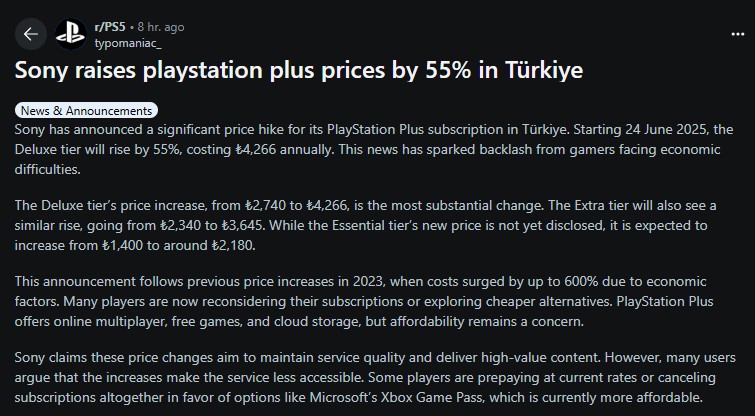
Similarly, it also increased the PlayStation Plus prices by 55% in Turkey, a move that many gamers are criticizing online.
The local PlayStation users are furious about these changes because these offerings were already expensive for them.
Sony has already adjusted the PlayStation Plus prices several times over the years because of the waning global economy. However, these price hikes have become unbearable in some regions, with Turkey now getting hit with a 55% increase.
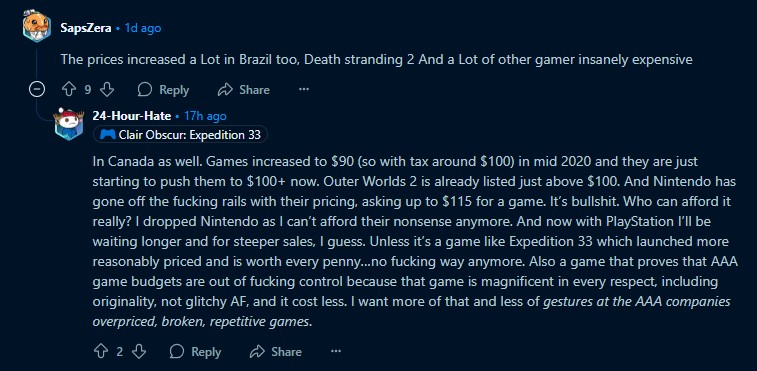
Additionally, many notable digital games, including Death Stranding 2, have also seen unexpected price bumps in Brazil due to challenging market conditions.
Why it matters: Sony has already implied earlier this year that it will continue to adjust the PS Plus price in the future. But the fans are already tired of these sharp hikes amid declining economies.
1 of 4
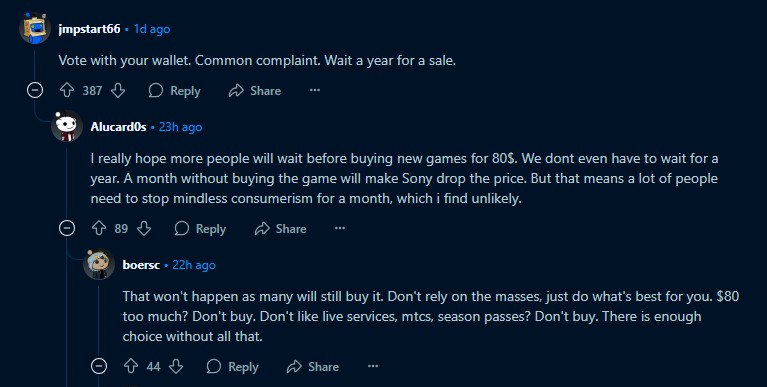
PlayStation users are calling upon the whole community to stop supporting the brand until prices are lowered again.
Turkish players are especially furious as they were already struggling to keep up due to declining currency.
Many digital games in Brazil were also hit with a sudden price hike.
The overall user sentiment is also negative across other forums, but some have blamed the economy instead.
The Turkey and Brazil price hikes have served as the last straw for many PlayStation members, causing a slew of forums and social media posts to be filled with angry remarks online.
These adjustments have left many local players unable to stay subscribed to PS Plus, while others have decided not to buy new games altogether. Most gamers are also worried that Sony may soon increase its premium game prices to $80, like Xbox.
The Deluxe tier now costs ₺4,266 instead of ₺2,740 in Turkey, while the Extra tier’s price has been changed from ₺2,340 to ₺3,645. The Essential tier’s pricing remains a mystery for now, but it will also likely see a similar change.
Despite past price hikes, the PlayStation Plus service has continued to grow in popularity.
On the other hand, Death Stranding 2 will now cost R$399.90 instead of R$349.90 in Brazil, and for Astro Bot, the local price has changed from R$299.90 to R$339.90. Silent Hill f’s price was also affected, going from R$349.90 to R$399.90.
Therefore, the anger of the PlayStation users from these countries seems justified. However, some have argued that Sony is merely adjusting the pricing of its offering according to the falling value of the local currencies.
Do you think Sony should be blamed for updating the pricing of digital games and PlayStation Plus to keep up with declining local currencies? Let us know your thoughts in the comments below, or join the discussion on the Tech4Gamers forum.
As a Hardware Expert at Tech4Gamers, I bring my decade-long expertise in electronics design, embedded solutions, and prototyping. My knack for exposing misconceptions in the tech world finds a perfect outlet here.
I have had the chance to review a few rock-solid PSUs from ASRock, and today, I am quite excited to also get my hands on their premium Gaming Monitor.
ASRock, with its vast line of products, both premium and enthusiast series, has recently been trying to excel in an already well-saturated PC market space, catering to the needs of every gamer from different price segments and their requirements.
Having recently reviewed their PSUs, I am certain I will get to see the same ASRock’s formula – impressive performance numbers with a pinch of unique features that no one seems to offer (maybe because no one has any appetite for them?)
In this article, I will be doing an in-depth review of ASRock’s PG27FFX2A, a 27″ 16:9 1080P Gaming Monitor from their Phantom Gaming lineup that has a whopping 520Hz refresh rate.
Key Takeaways
The ASRock PG27FFX2A is a 27-inch, 520Hz IPS gaming monitor that delivers smooth performance with good color accuracy for fast-paced gaming.
You should go for the ASRock PG27FFX2A if your graphics card can make the most out of its 520Hz refresh rate, and you don’t want to spend too much on an OLED.
You should skip the ASRock PG27FFX2A if its pixel density, considering the 1080p resolution and 27″ size, is too low for you.
Here are the main specs of the monitor:
Spec
Value
Panel Size
27″ (Flat)
Panel Type
IPS, Anti‑Glare
Resolution
FHD 1920 × 1080
Refresh Rate
520 Hz (Max.)
Response Time
1 ms (GTG)
Brightness
400 cd/m² (Typ.)
Contrast Ratio
1000:1 (Typ.)
Color Gamut
94% DCI‑P3 / 123% sRGB
Adaptive Sync
AMD FreeSync™ Premium
HDR Certification
VESA DisplayHDR™ 400
I/O Ports
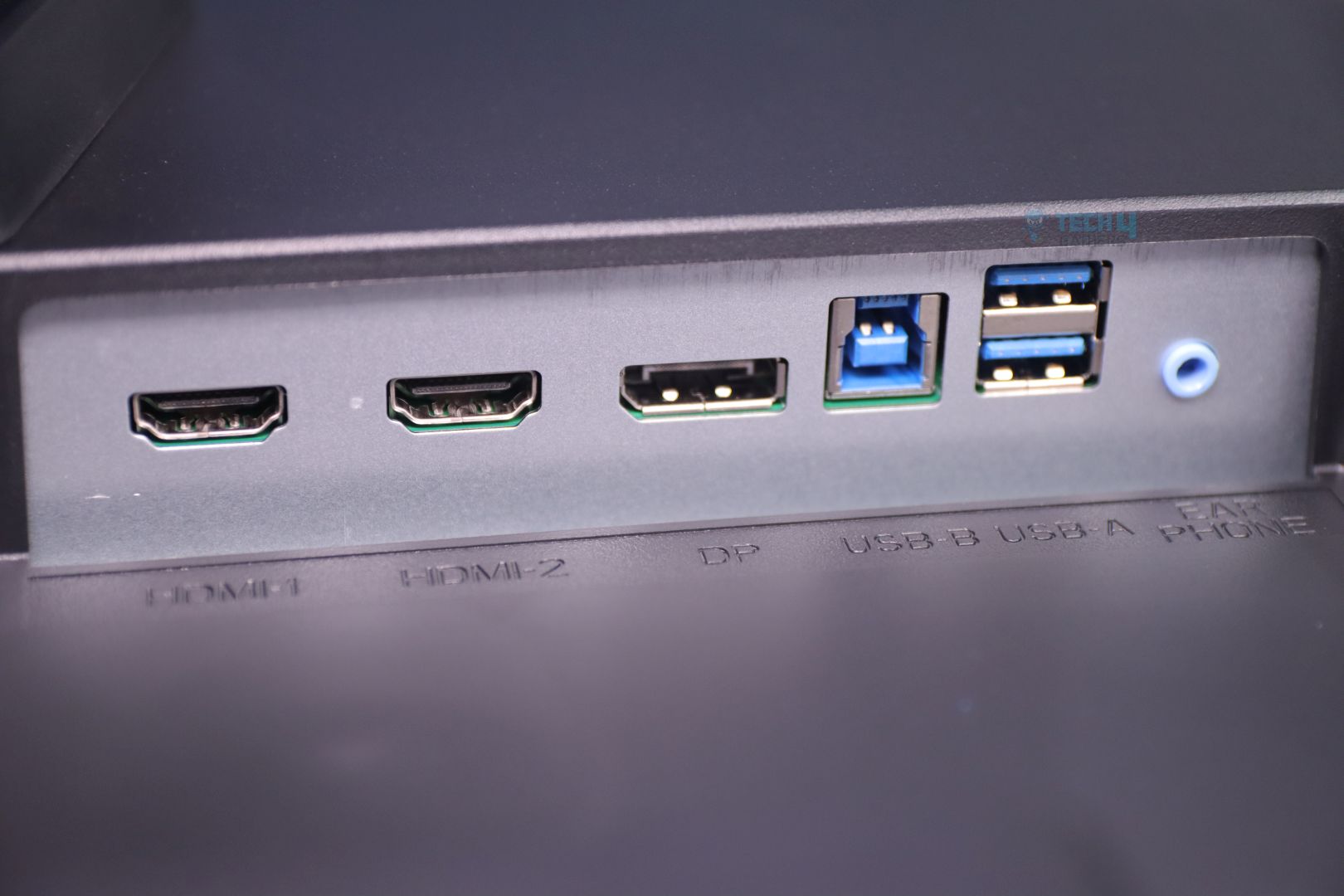
2 × HDMI 2.1,
1 × DisplayPort 1.4,
2 × USB‑A 3.2 Gen 1,
1 × USB‑B 3.2 Gen 1,
1 × Headphone Out
Ergonomics
Tilt ‑5° – +20°, Swivel ‑20° – +20°, Height 0 – 100 mm,
VESA 100 × 100 mm
Power Consumption (Max.)
≤ 68 W
[toc]
What Makes The ASRock PG27FFX2A Different?
There was a time when even 240Hz Monitors were considered the highest benchmark for fast-paced gaming, but thanks to the pace at which the competitive Esports industry is evolving, and now with the availability of extremely fast X3D processors from AMD, insanely fast refresh rate monitors have started to make sense these days.
Now to be honest, such high refresh rate numbers have been around for quite a while already using TN Panels, but the most impressive thing ASRock has done with PG27FFX2A is that they have achieved this using an IPS Panel, which is quite a remarkable achievement, if they have done this correctly, which we will see in our tests later.
Packaging & Unboxing
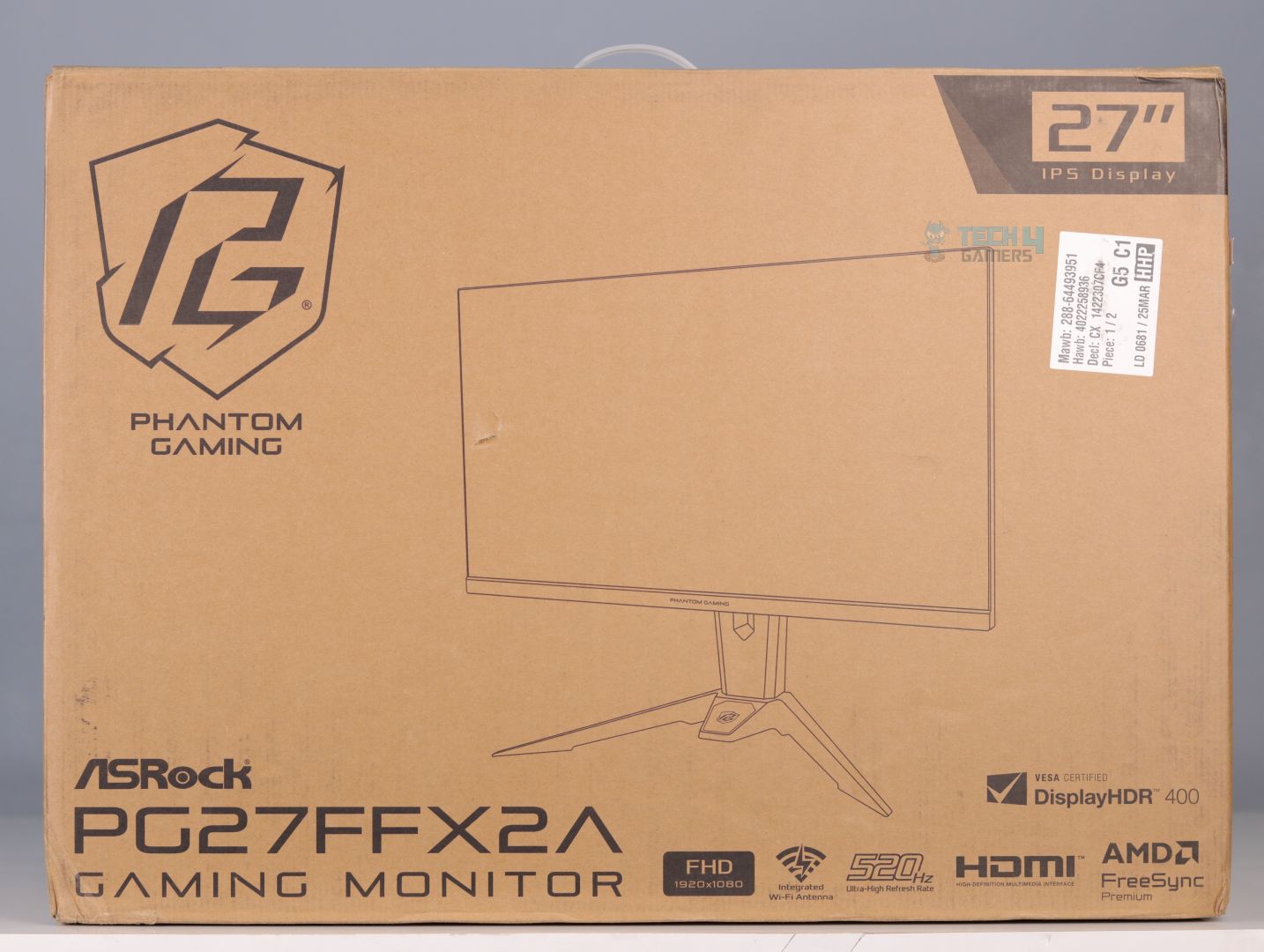
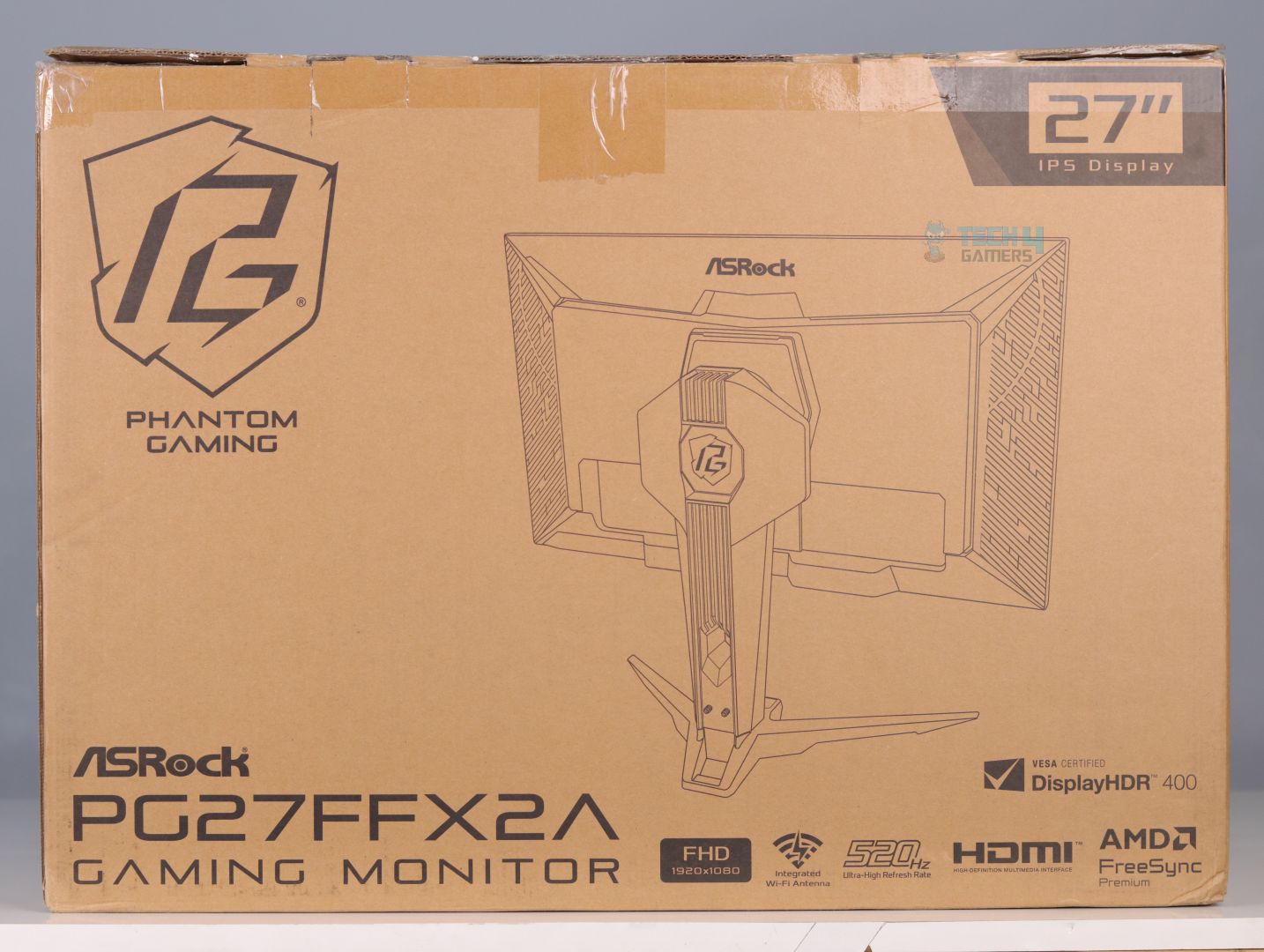
The monitor comes in a cardboard box.
Unboxing & Contents
1 of 10
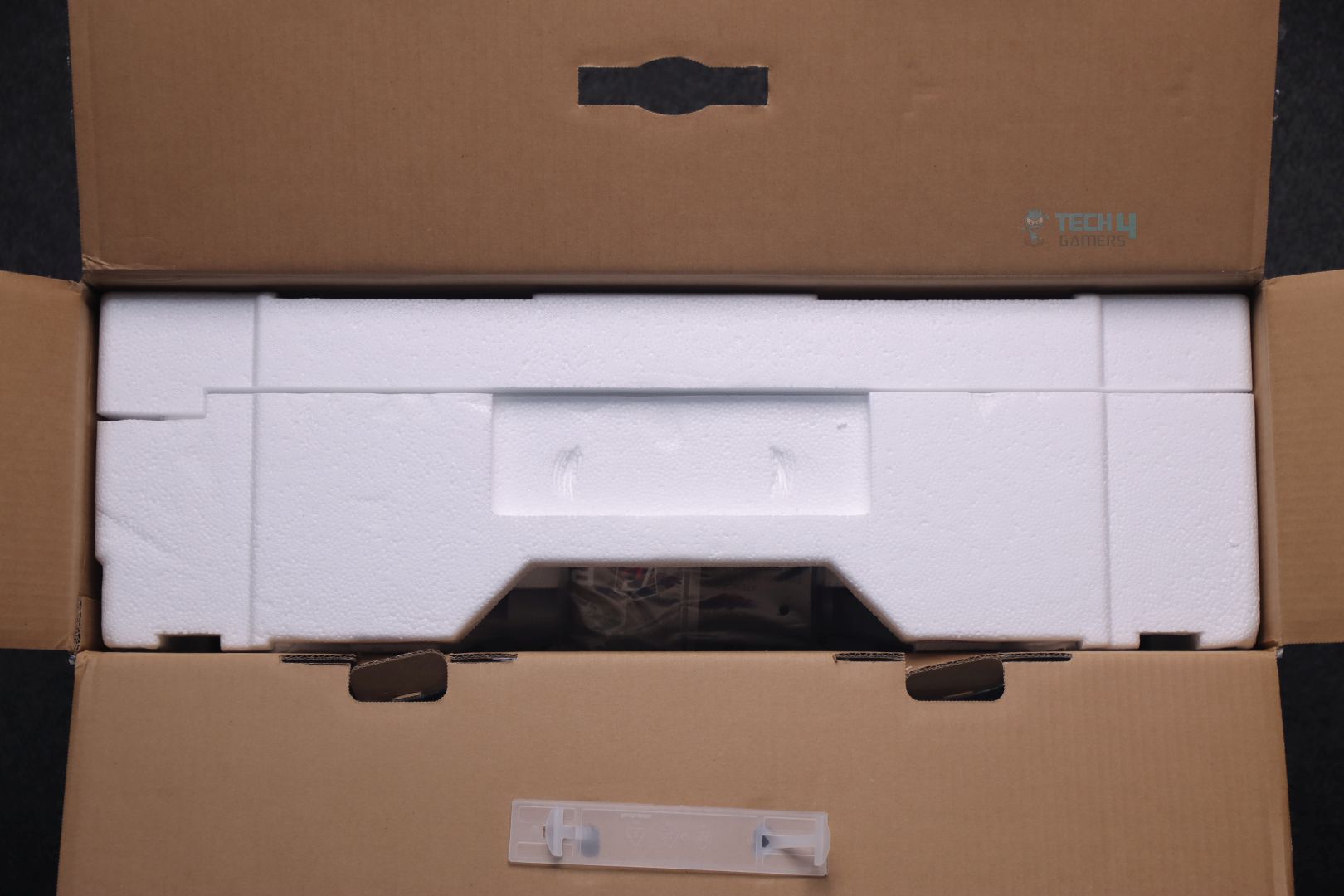
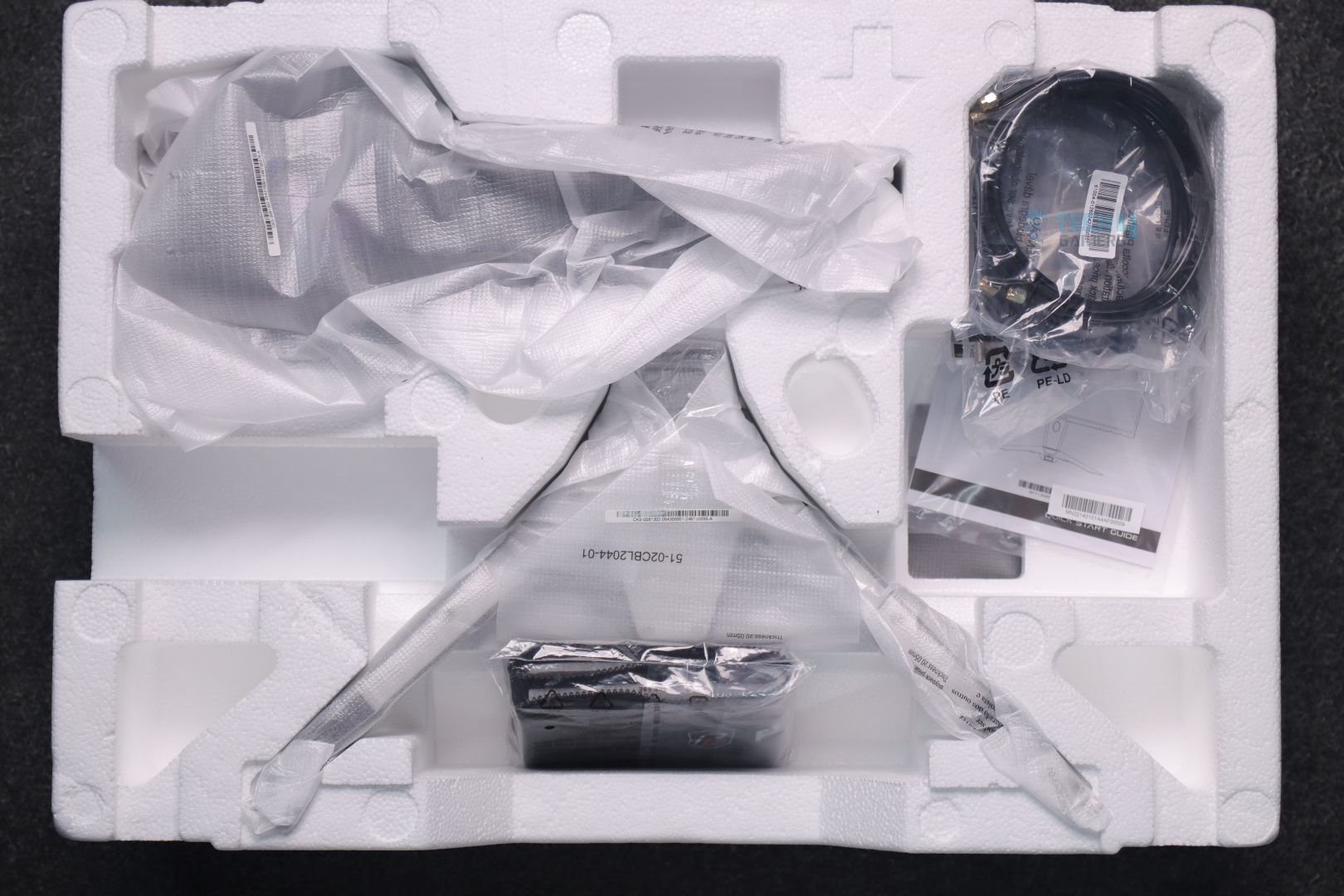
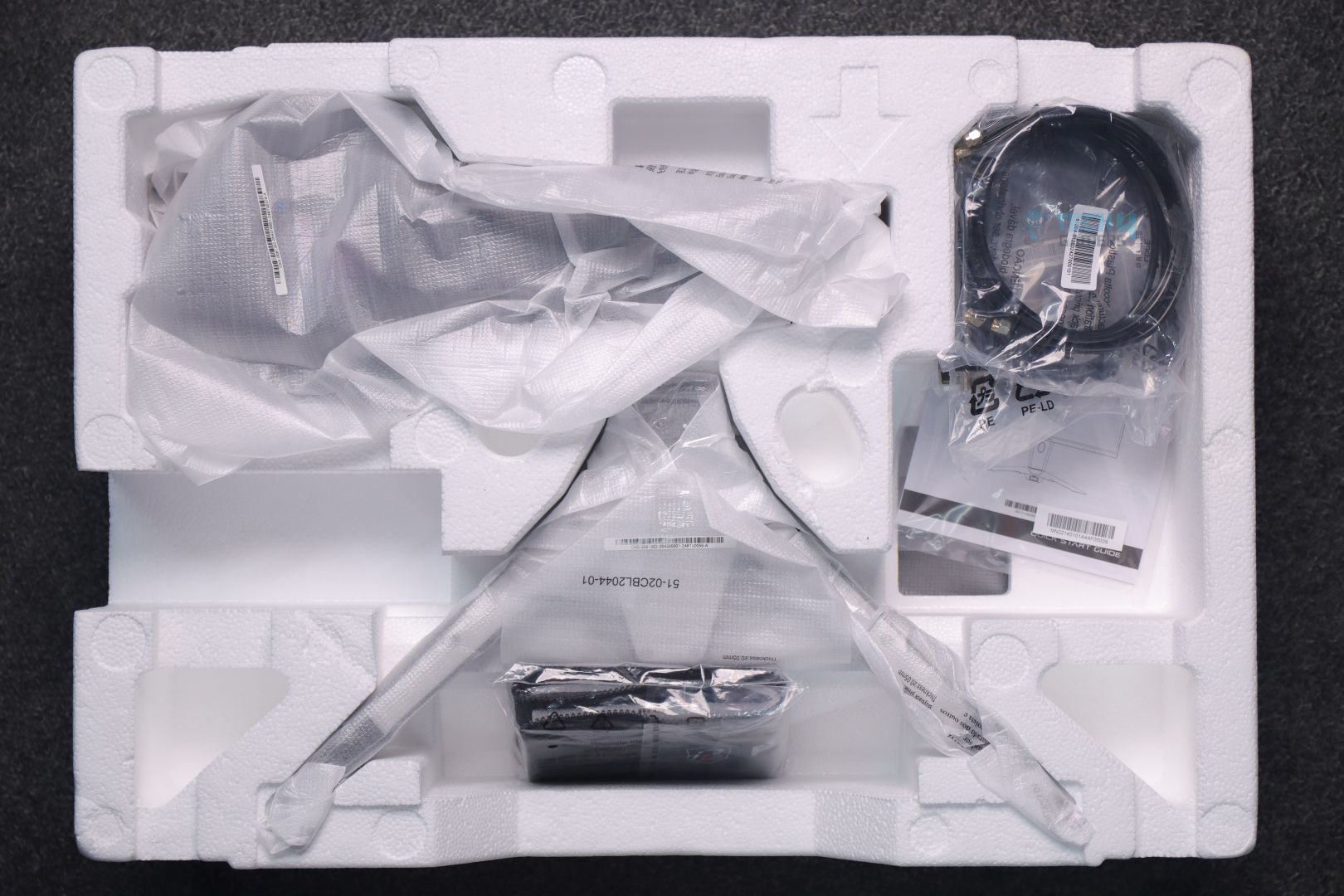
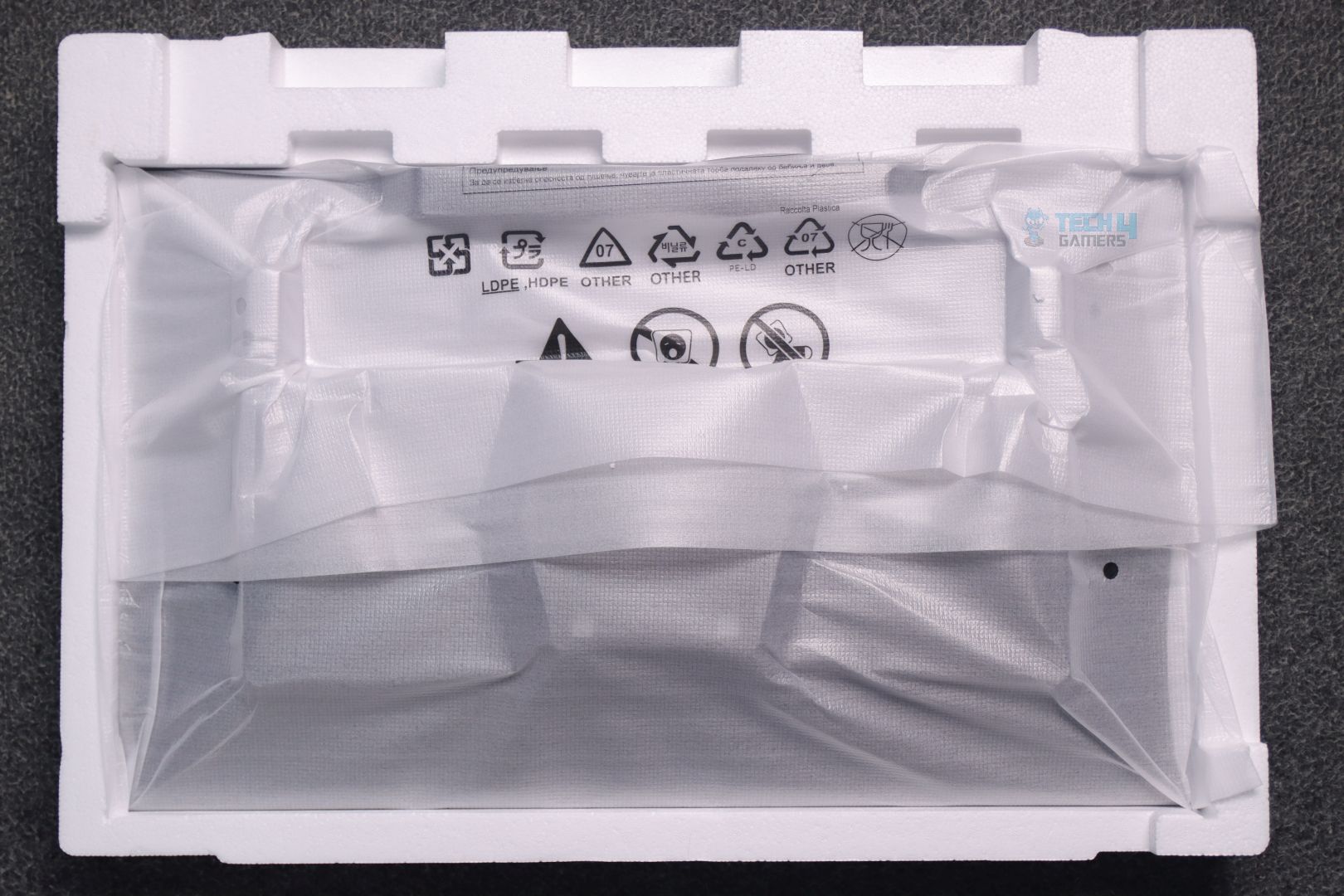
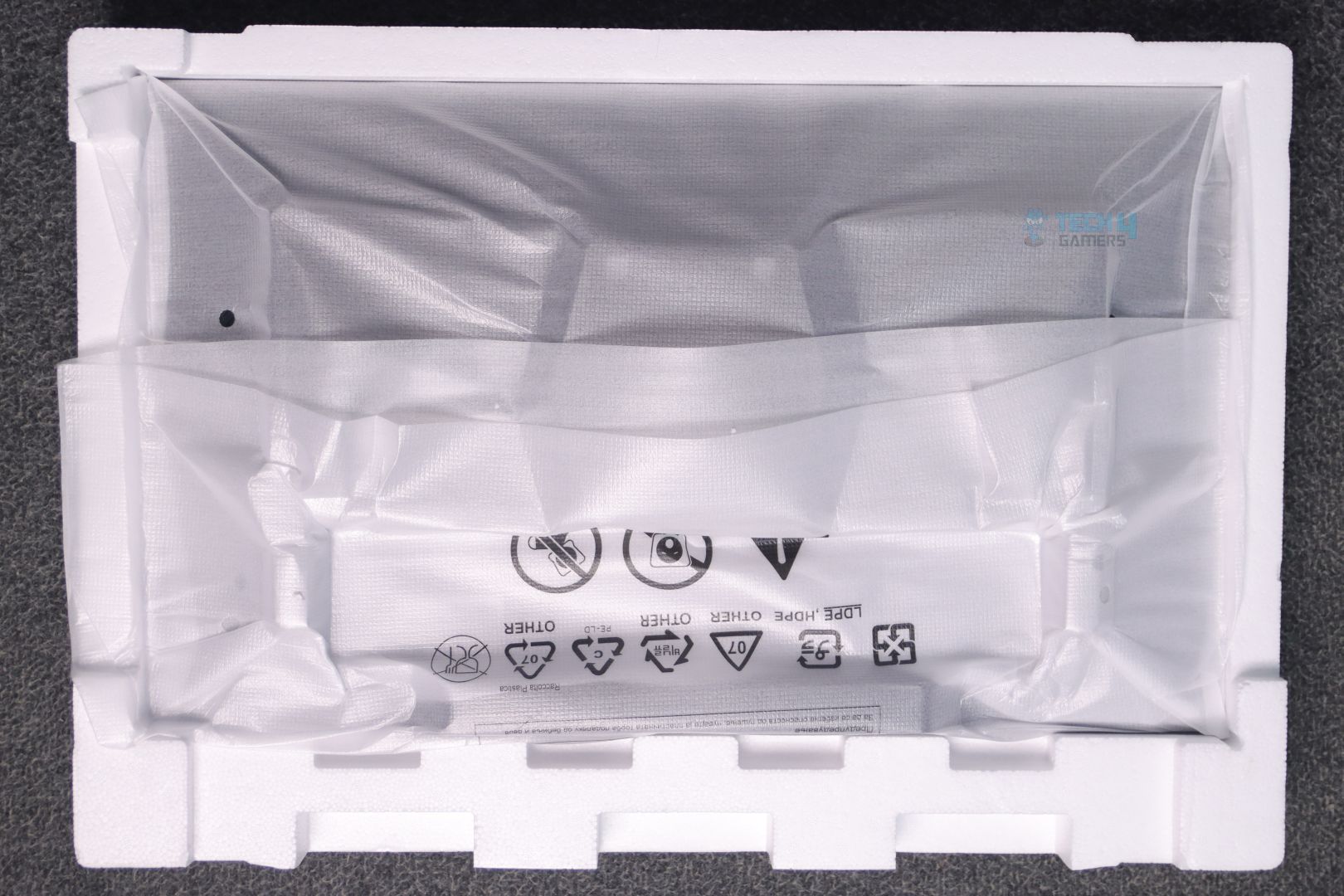
As expected, the monitor is packed securely in styrofoam, along with an additional wrap, so there are minimal chances of shipping damage.
Design
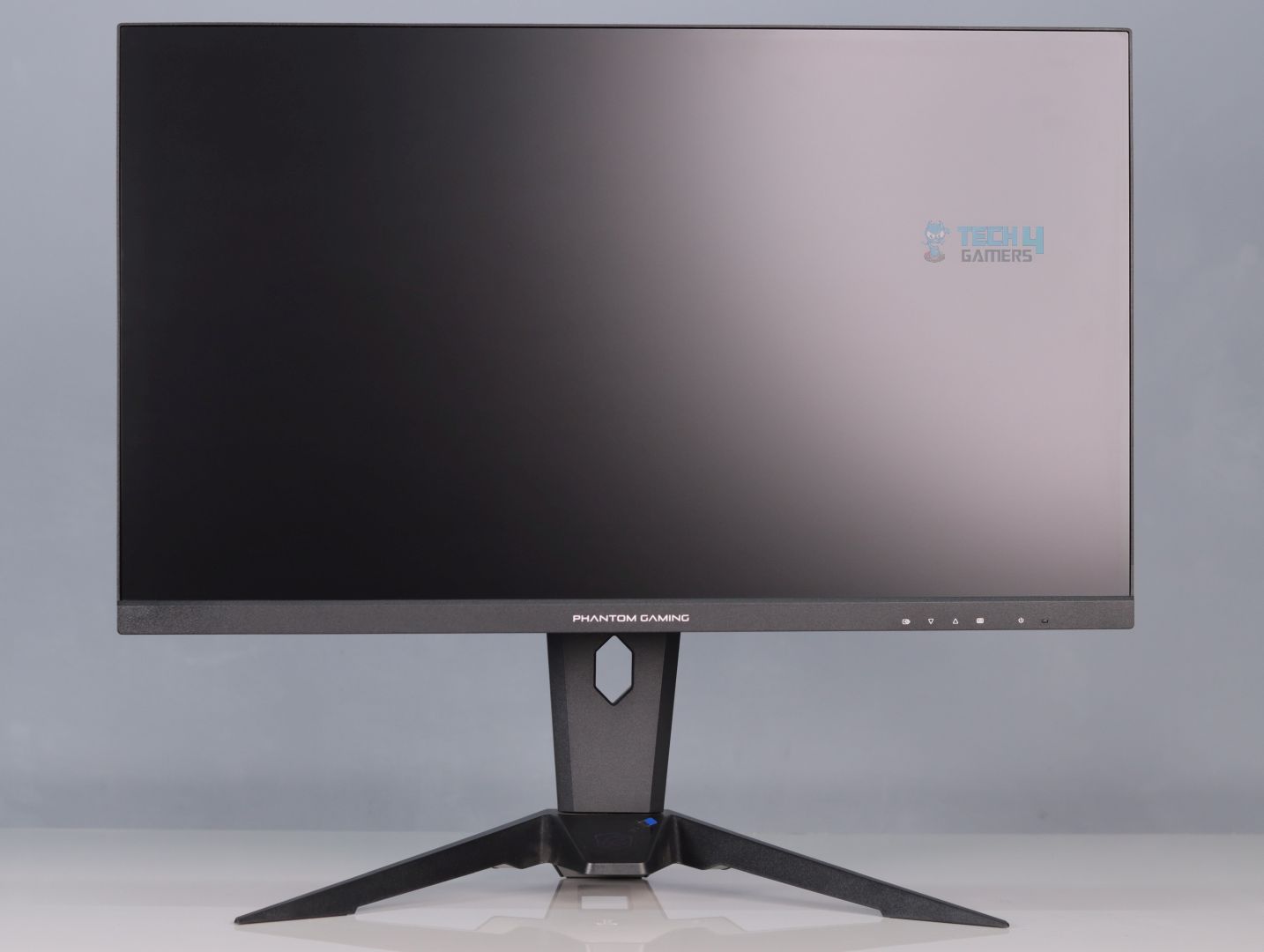
The ASRock PG27FFX2A has a practical, understated look that should fit in with most setups. From the front, you get a mostly borderless display on three sides, with thin edges along the top and sides that don’t really get in the way of the screen. The bottom bezel is thicker and features the Phantom Gaming logo in the center. Overall, it gives the monitor a clean appearance without looking plain.
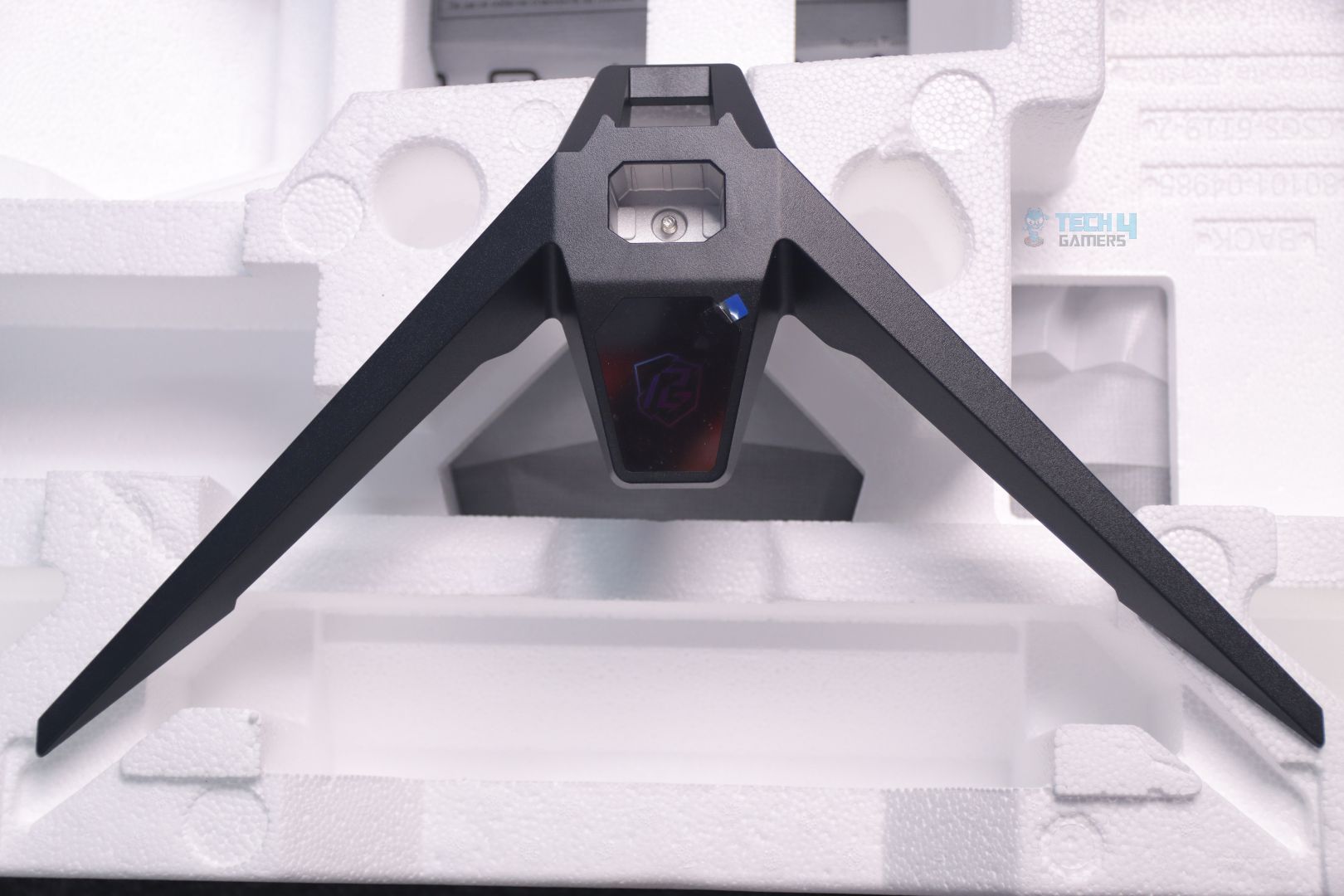
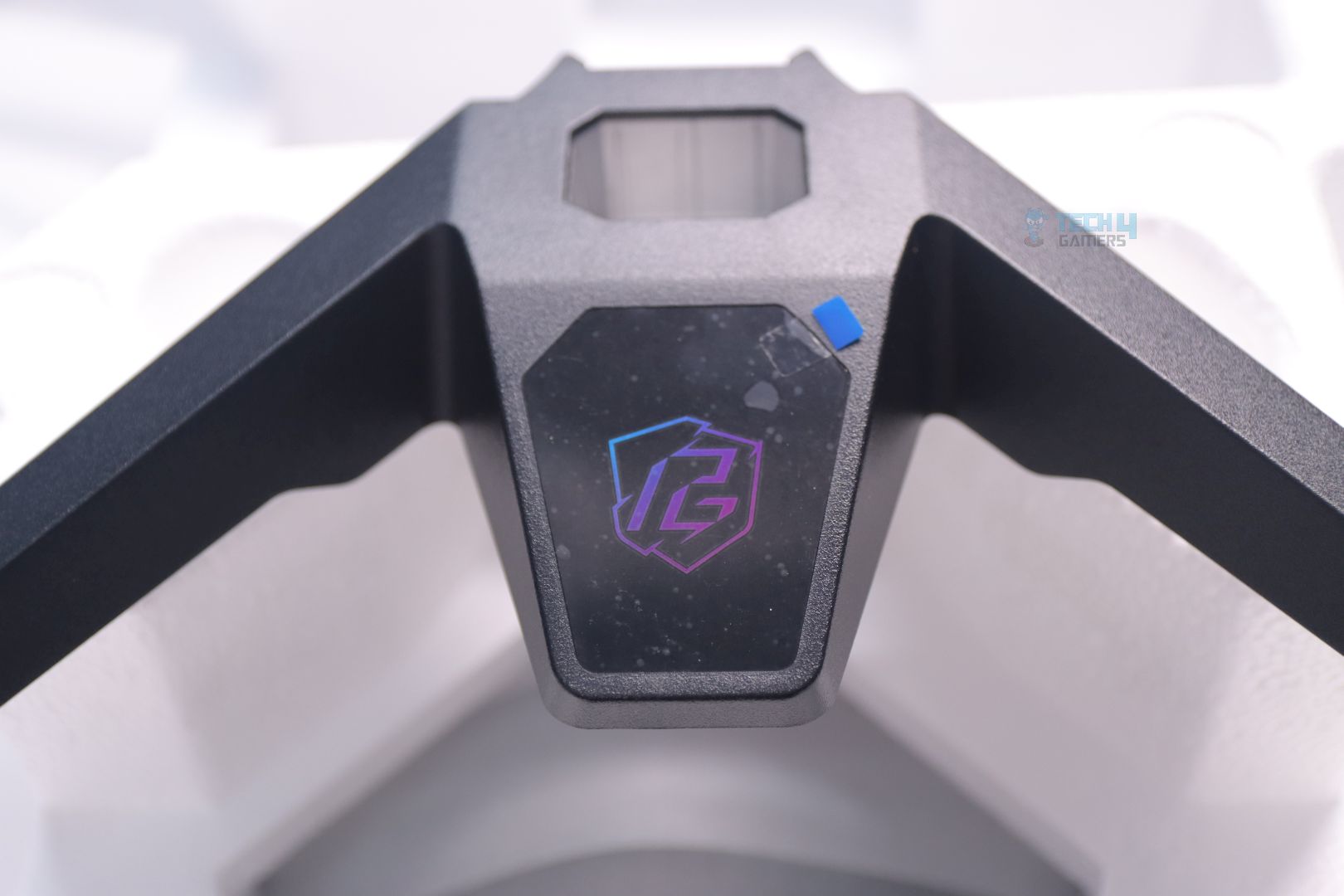
The stand and base follow the same matte black finish as the rest of the monitor. The base is fairly wide, which helps keep the monitor stable on your desk. There’s an ASRock logo on the stand’s foot, but no RGB lighting or anything flashy, which some users might actually prefer.
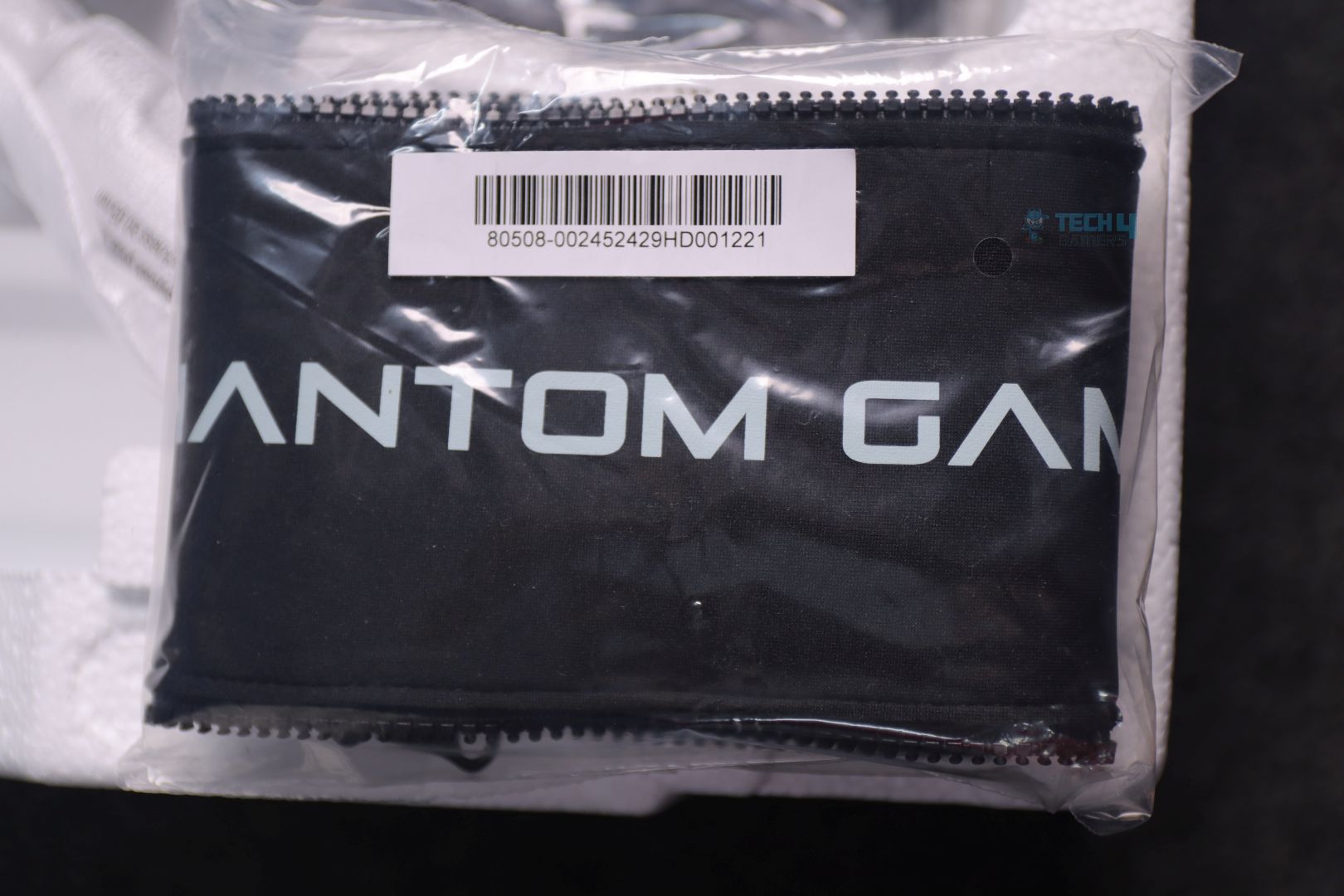
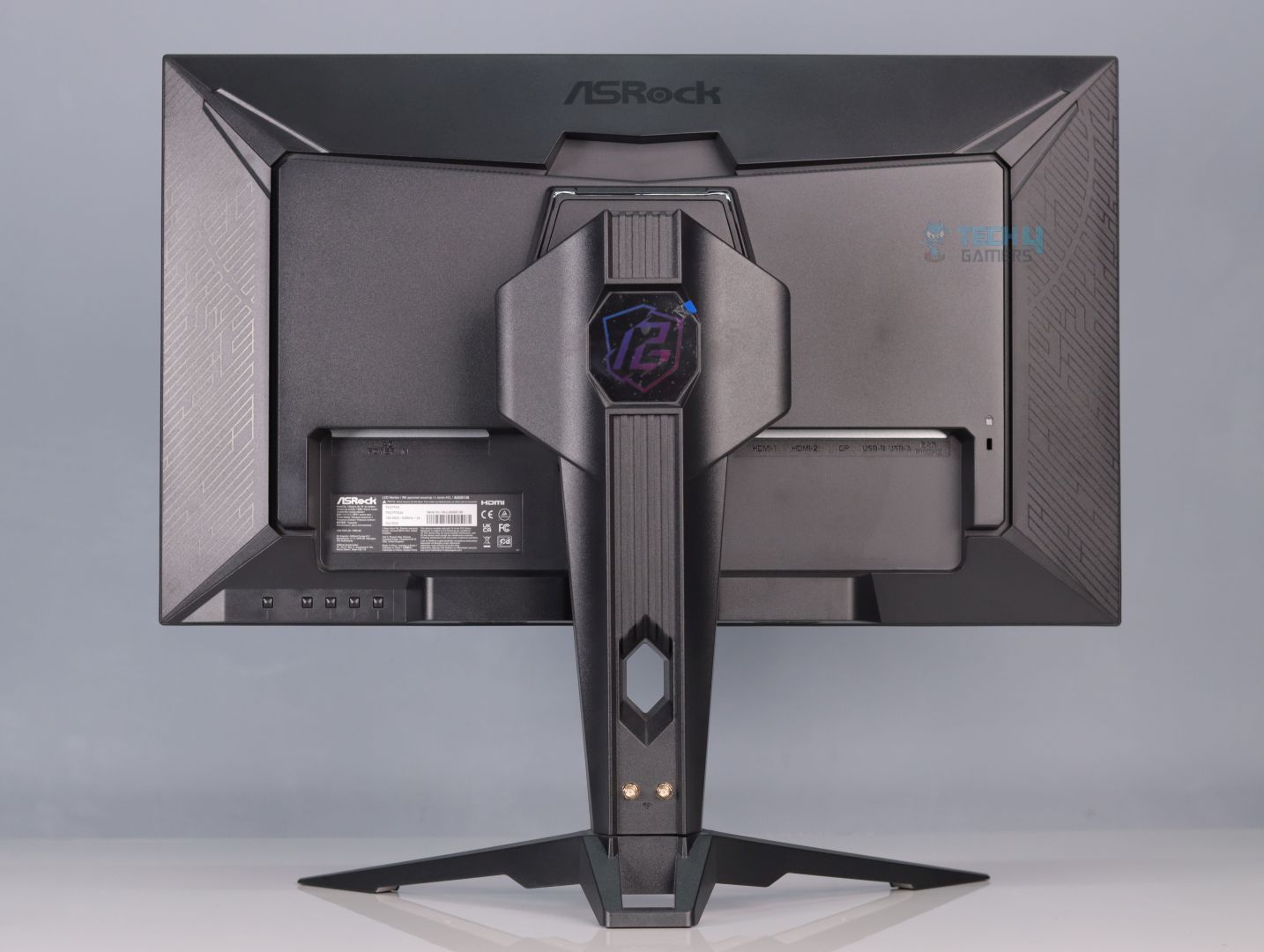
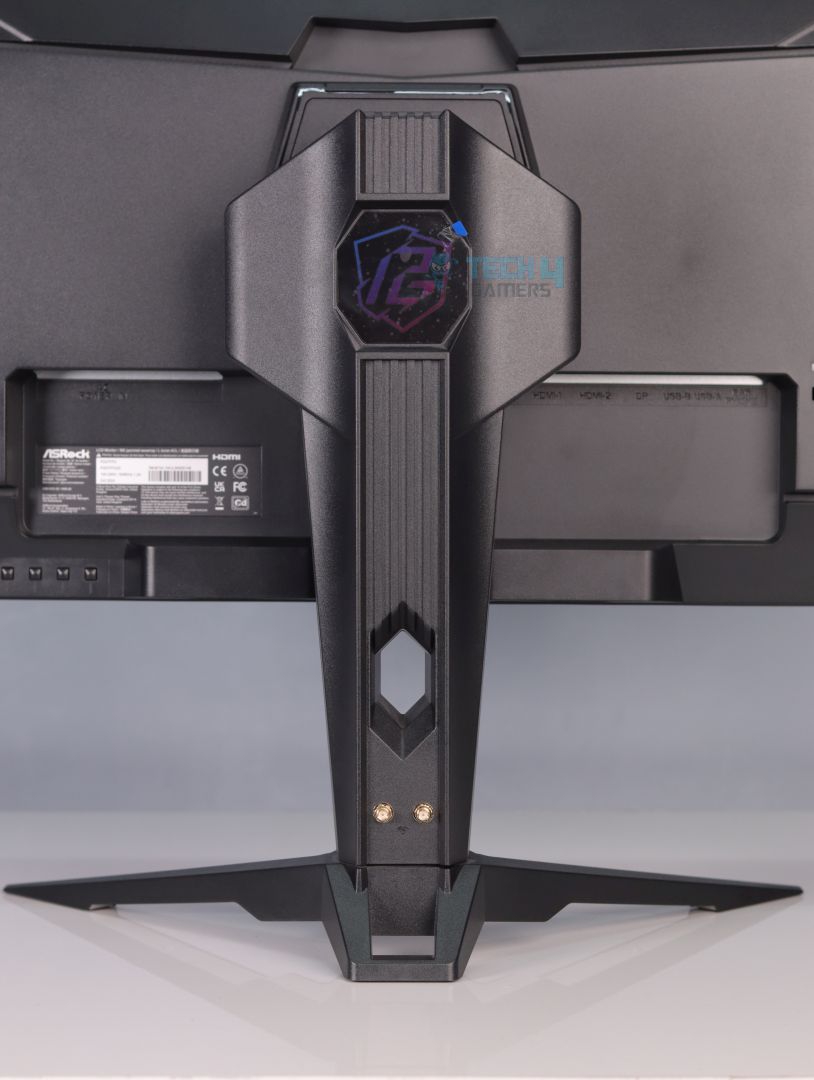
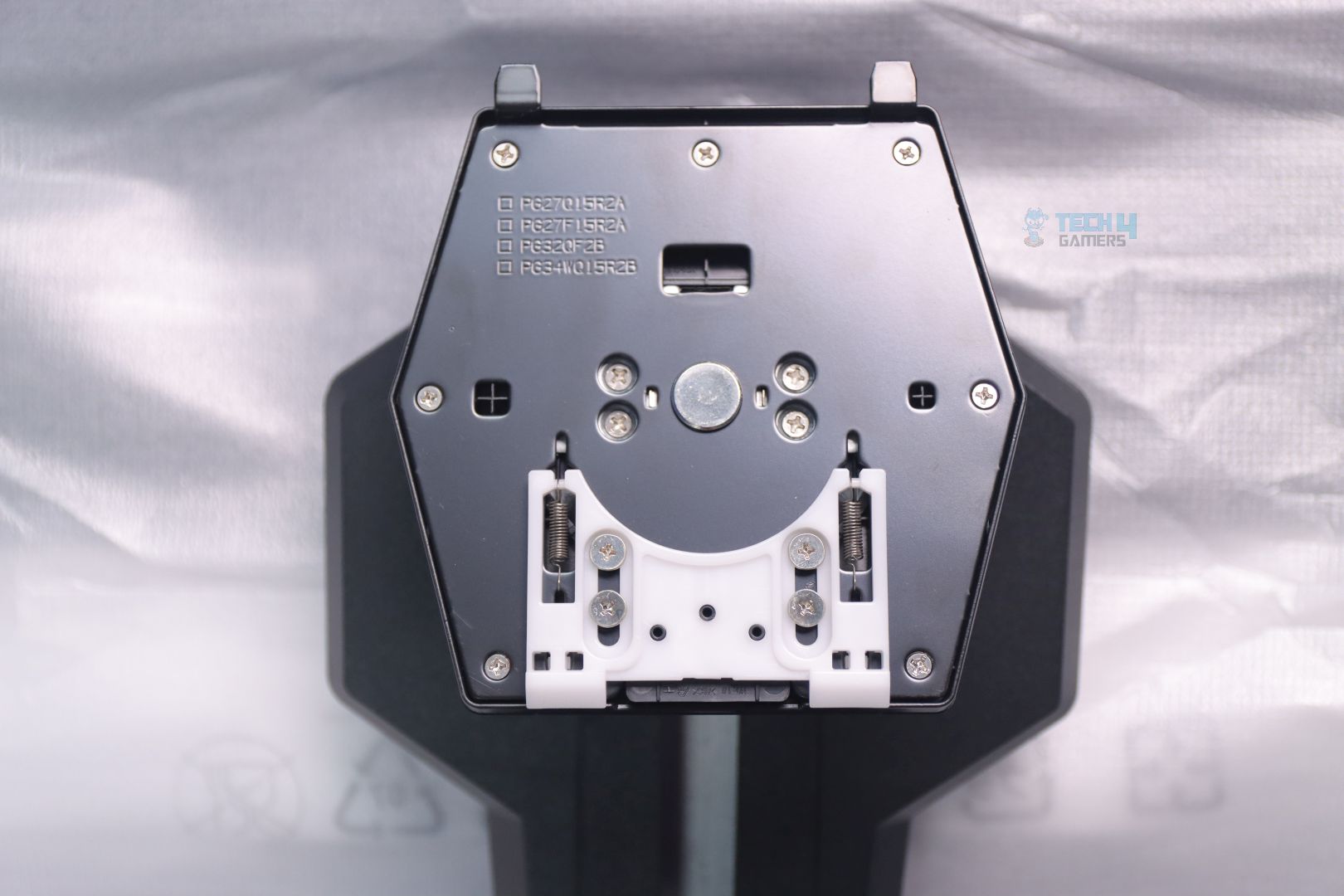
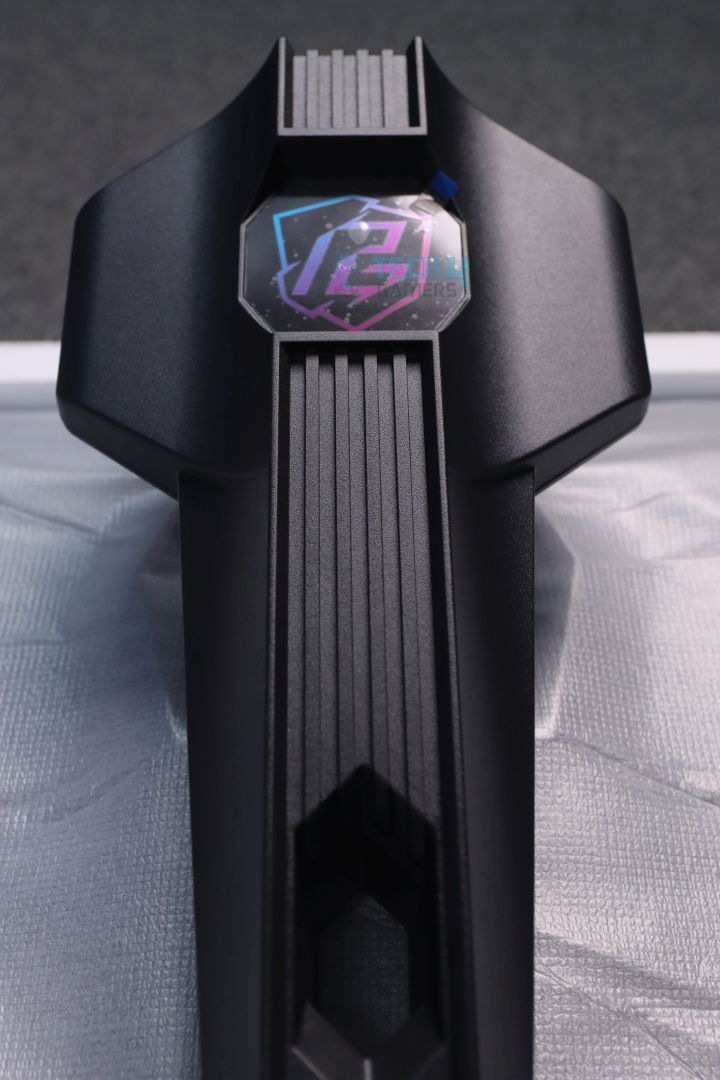
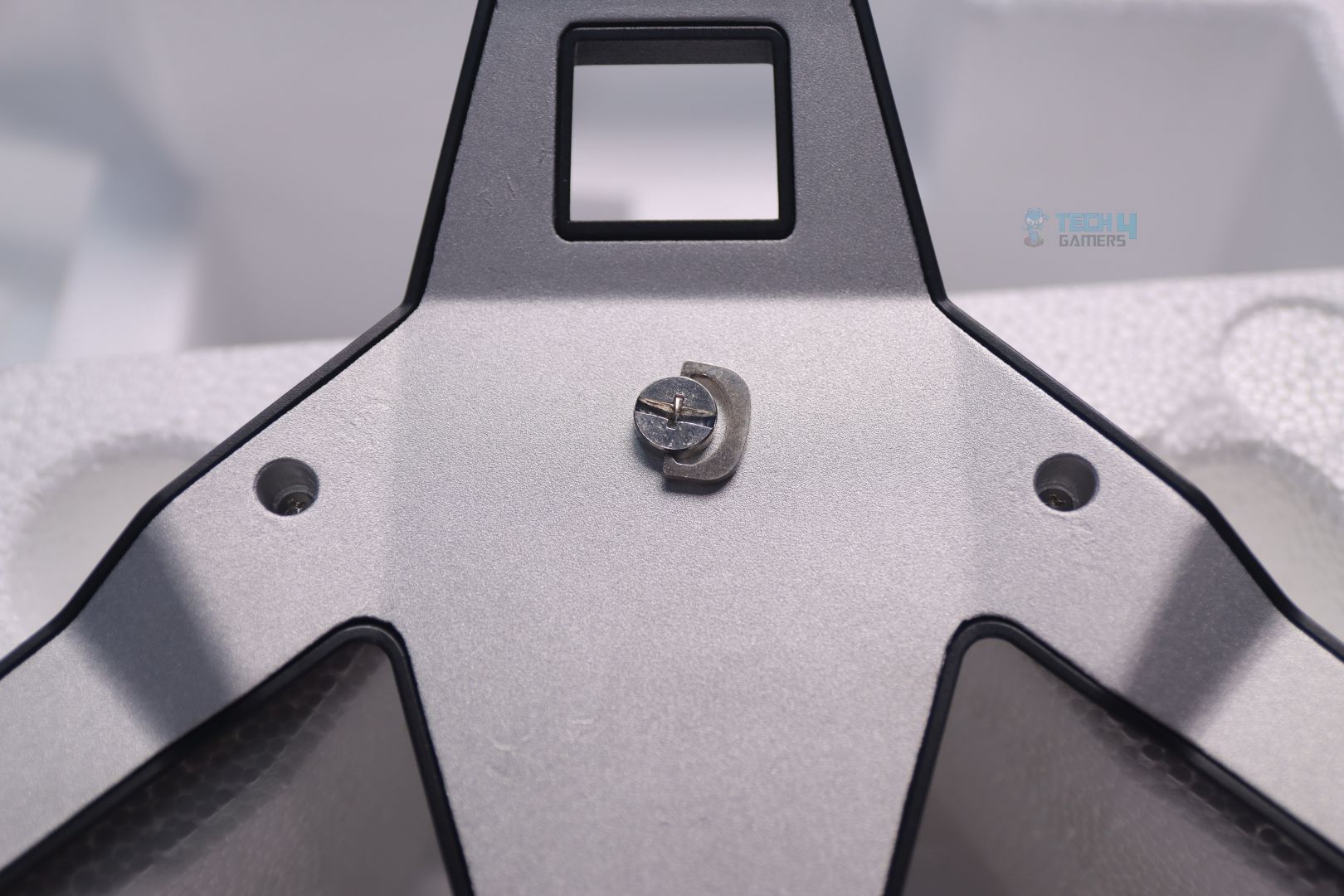
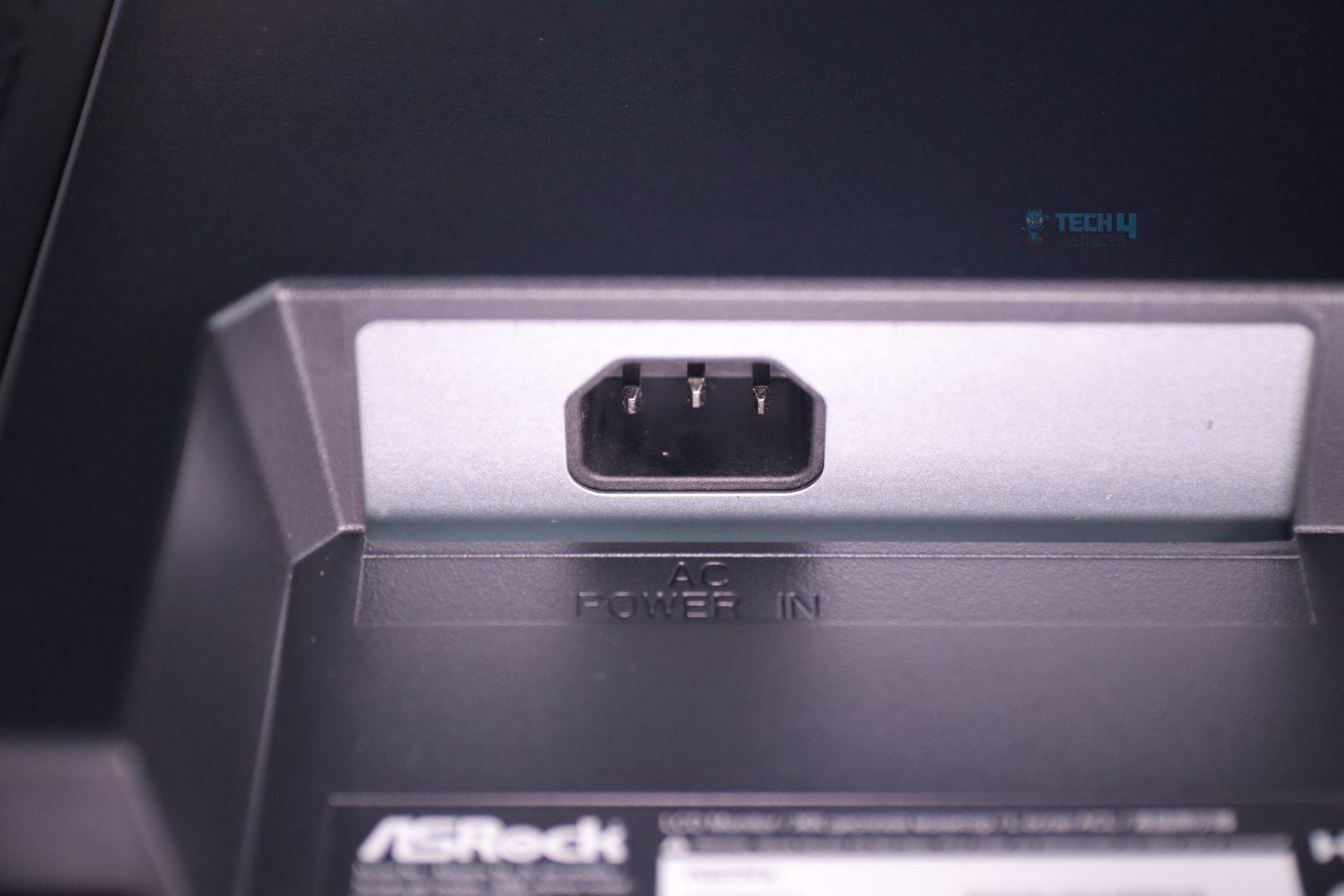
Looking at the back, the design stays simple. The matte black plastic continues all the way around, and there’s a carry handle at the top that makes moving the monitor easier. The stand attaches with a quick-release mechanism, and you can switch it out for a VESA mount if you want to use your own arm or wall mount. There’s a cable management hole built into the stand’s arm, plus ASRock includes a Phantom Gaming-branded cable sleeve in the box, which helps keep cables organized.
Stand Design
1 of 7
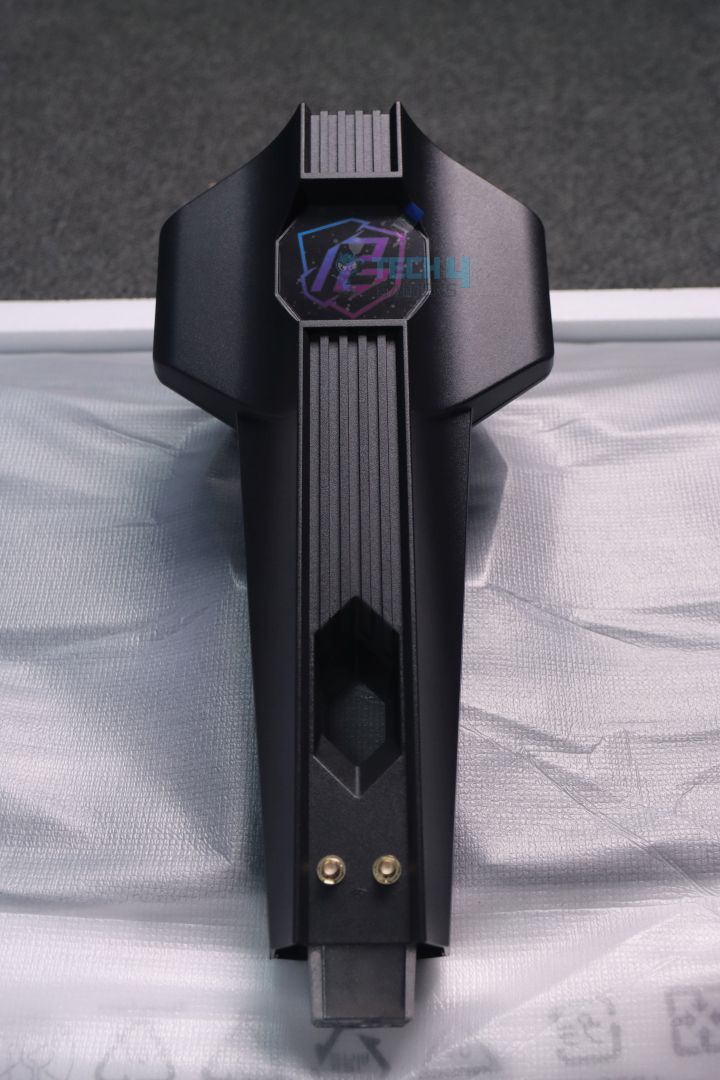
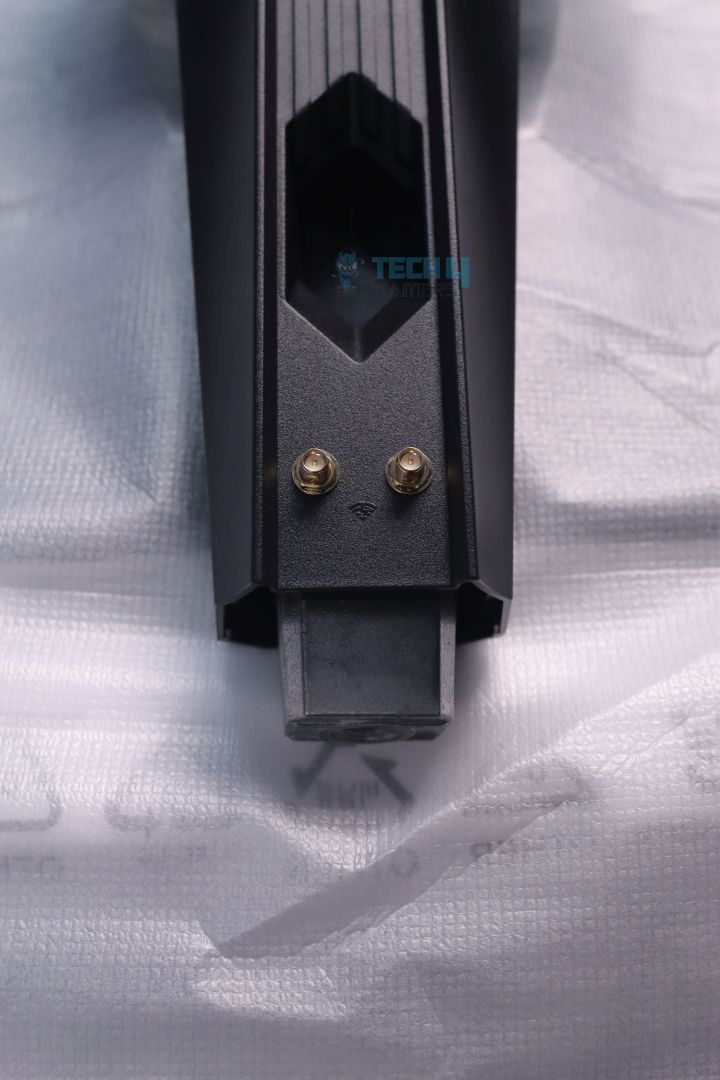
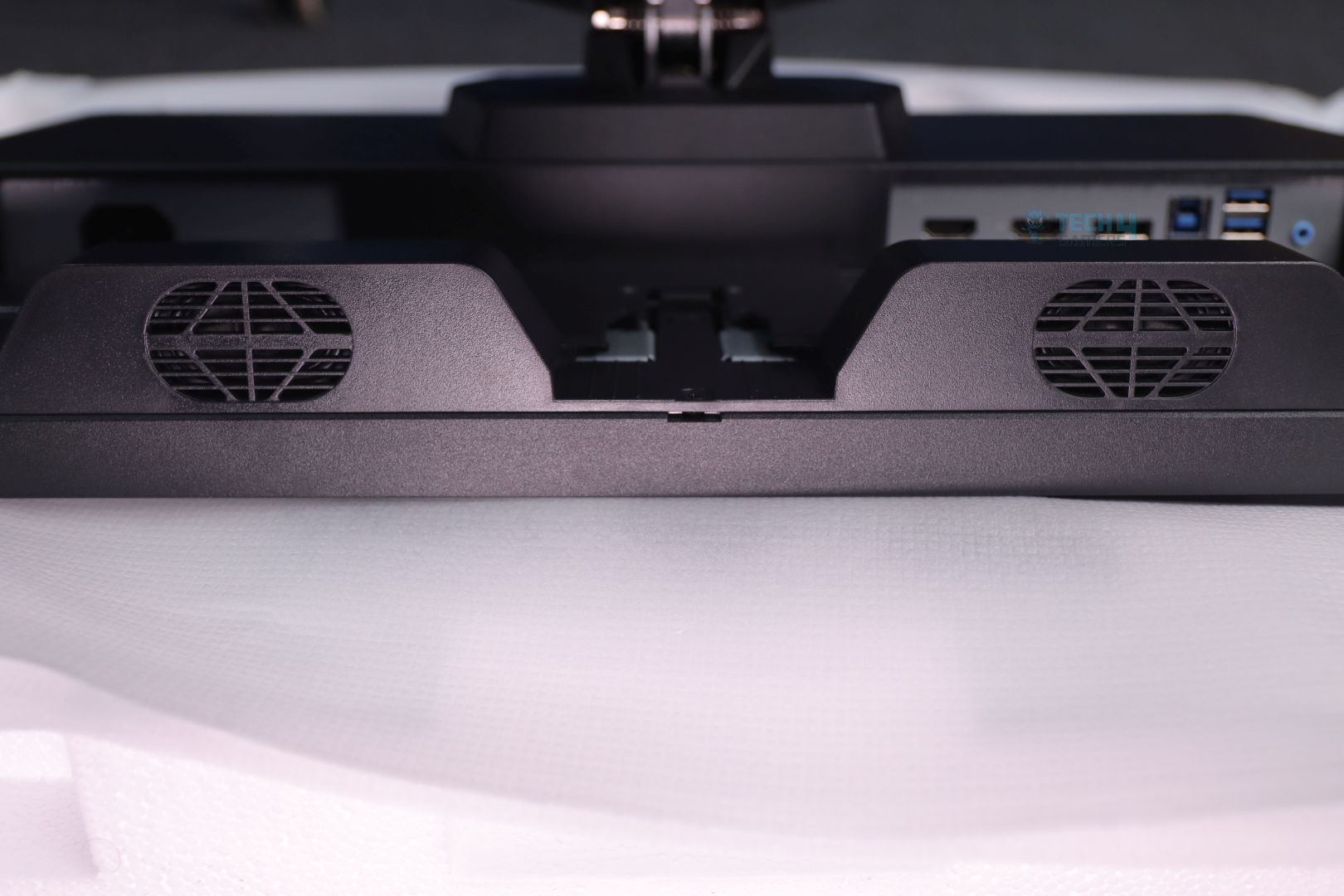
The stand on the PG27FFX2A is sturdy and wide, so the monitor stays stable even if your desk takes a few knocks. The splayed legs do take up a fair amount of space, so you’ll need to make sure you have enough room for it, but on the flip side, this design keeps the monitor from wobbling around.
One standout feature is the built-in Wi-Fi antenna ports on the back of the stand. If your motherboard supports external antennas, you can actually run the connection through the monitor’s stand and use it as your antenna. This can be handy if your PC is hidden away under the desk or in a spot with weaker Wi-Fi, since the monitor is usually out in the open and might get a stronger signal. Of course, this depends on your setup; not everyone will use this feature, but it’s a smart extra that might help if you struggle with spotty wireless.
Adjustment-wise, the stand gives you the basics you’d expect. You can tilt the screen up or down, raise or lower the height, and swivel it side to side. It doesn’t support rotating the screen to portrait, but you can always use a VESA mount if you need that. Moving the monitor around feels smooth, and there’s just a bit of shake if you use the OSD controls, not enough to be annoying.
ASRock also paid attention to cable management. There’s a hole in the arm for your wires and even a branded cable sleeve in the box, which helps keep things tidy. The included Wi-Fi cables are long enough to reach your motherboard with no problem and can be neatly tucked away.
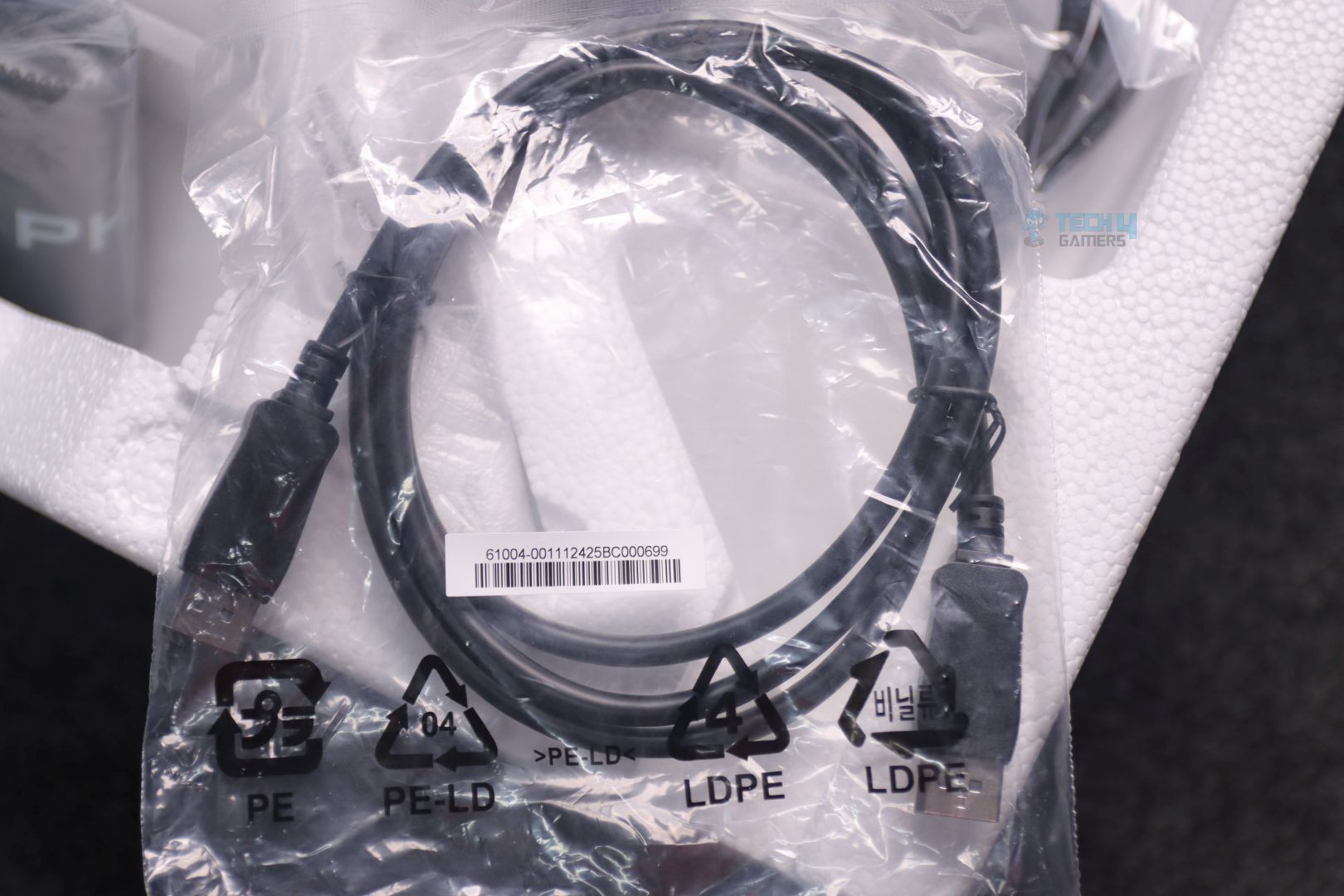
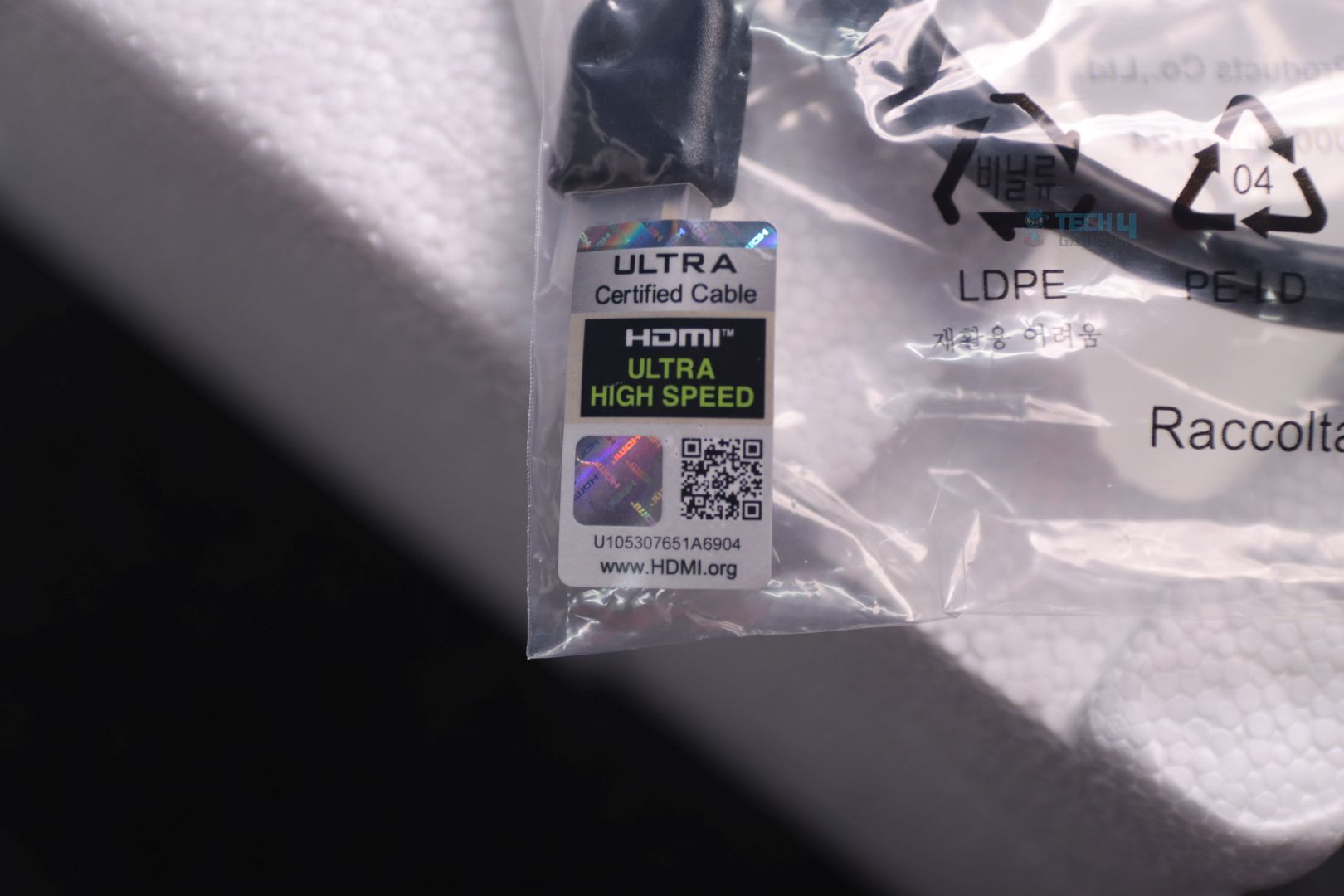
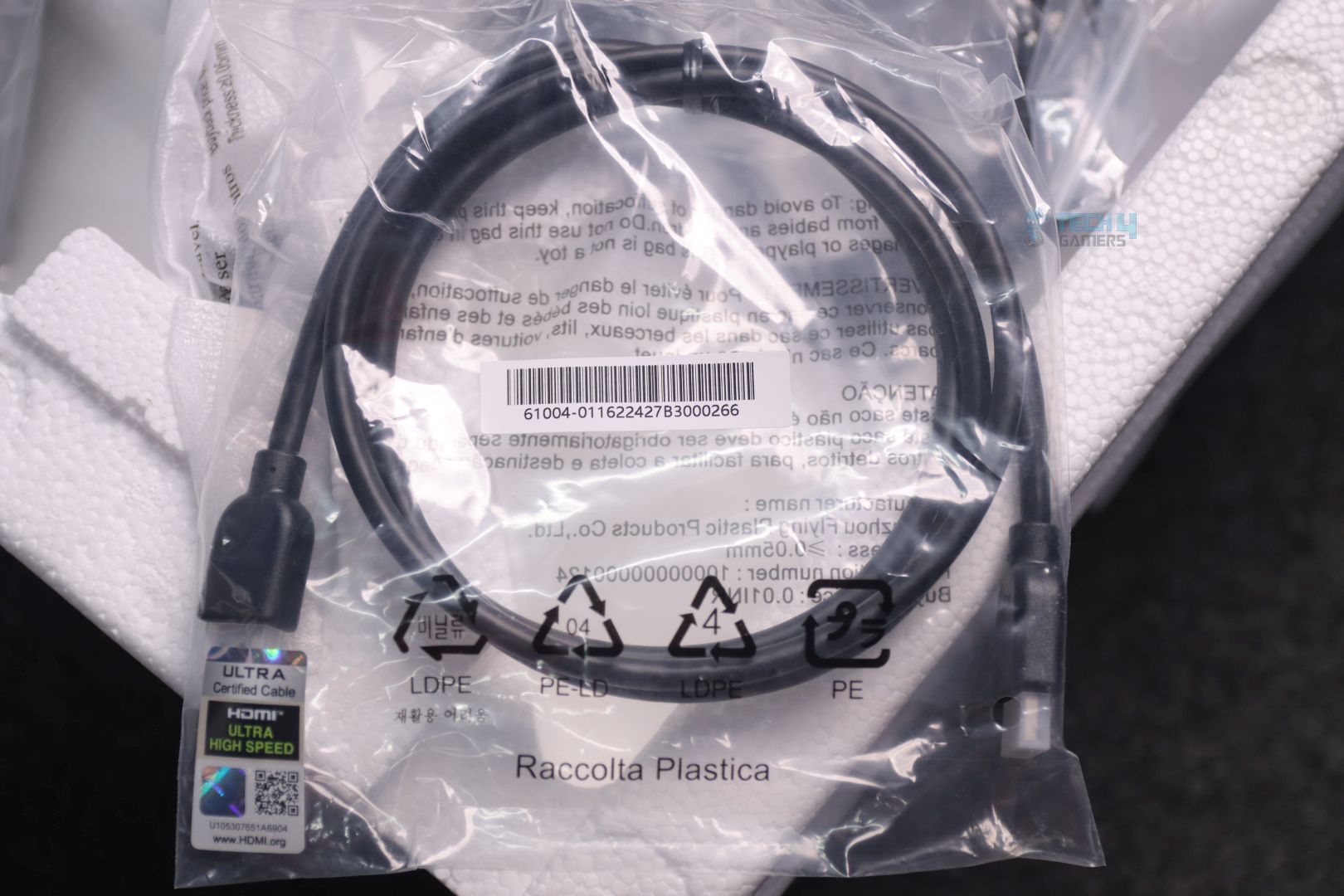
When it comes to connectivity, the ASRock PG27FFX2A gives you all the essentials for a modern gaming setup. You get a single DisplayPort 1.4 and two HDMI 2.1 ports for hooking up your devices, both of which are more than capable of handling high refresh rates, even up to 520Hz with DSC if you have a system that can keep up. ASRock includes both a DisplayPort and an HDMI cable in the box, so you’re set whichever way you prefer to connect. While there’s no DisplayPort 2.1 or USB-C here, the basics are covered well, and for most users, that’s all you really need.
There are also two USB 3.1 Gen 1 Type-A ports, which you can use for high-bandwidth peripherals like webcams or external drives. These are linked via a single USB Type-B upstream connection to your PC. While it’s not a true KVM switch, it’s handy if you want to keep your setup tidy and connect a couple of devices through the monitor. Lastly, you also get a 3.5mm headphone jack.
The built-in speakers are a nice extra for basic use, but don’t expect anything impressive. They’re rear-facing and only 2W each, so sound quality is about what you’d get from a laptop, fine for system sounds or a quick YouTube video, but not much more. If you care about audio quality, you’ll definitely want to use external speakers or headphones.
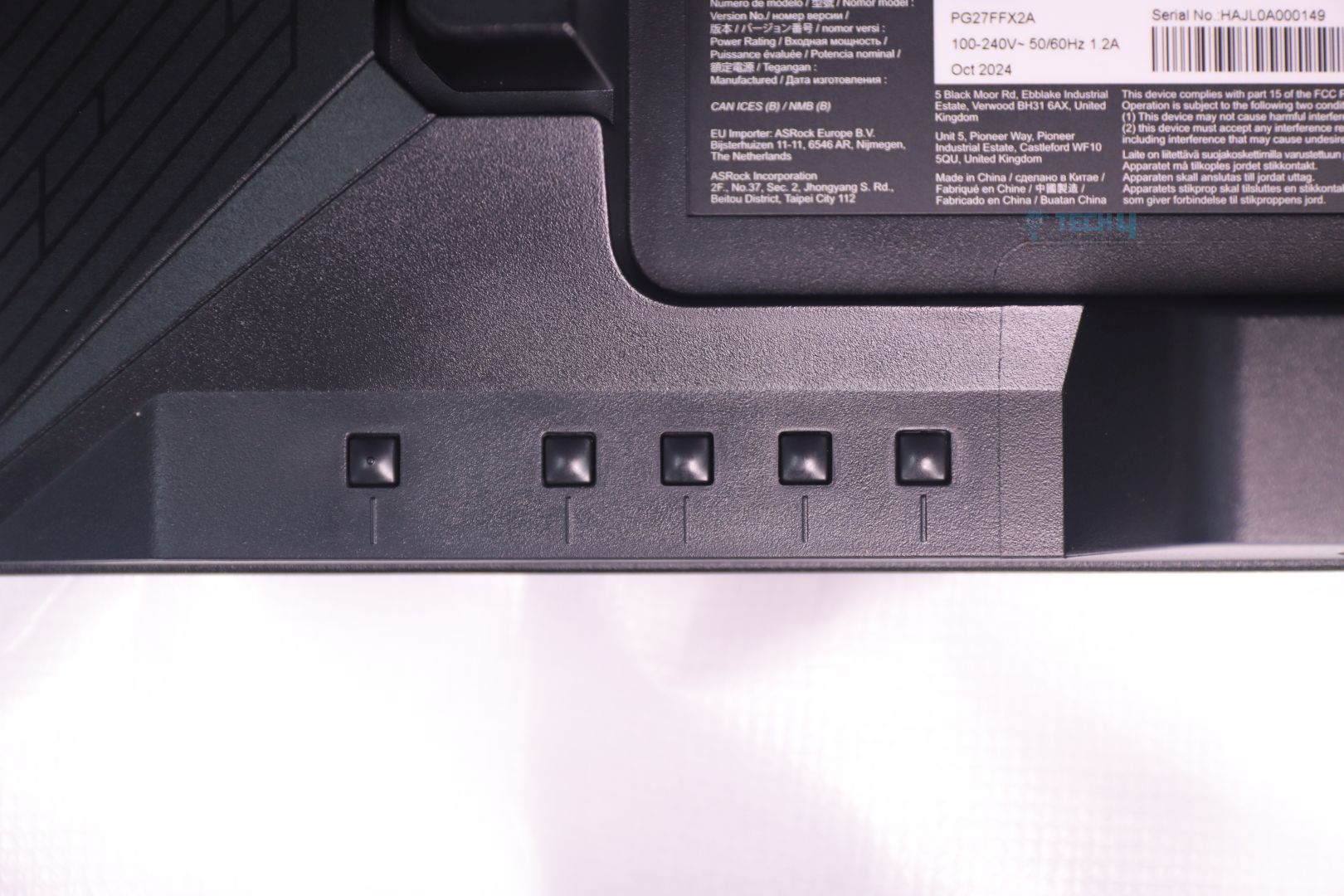
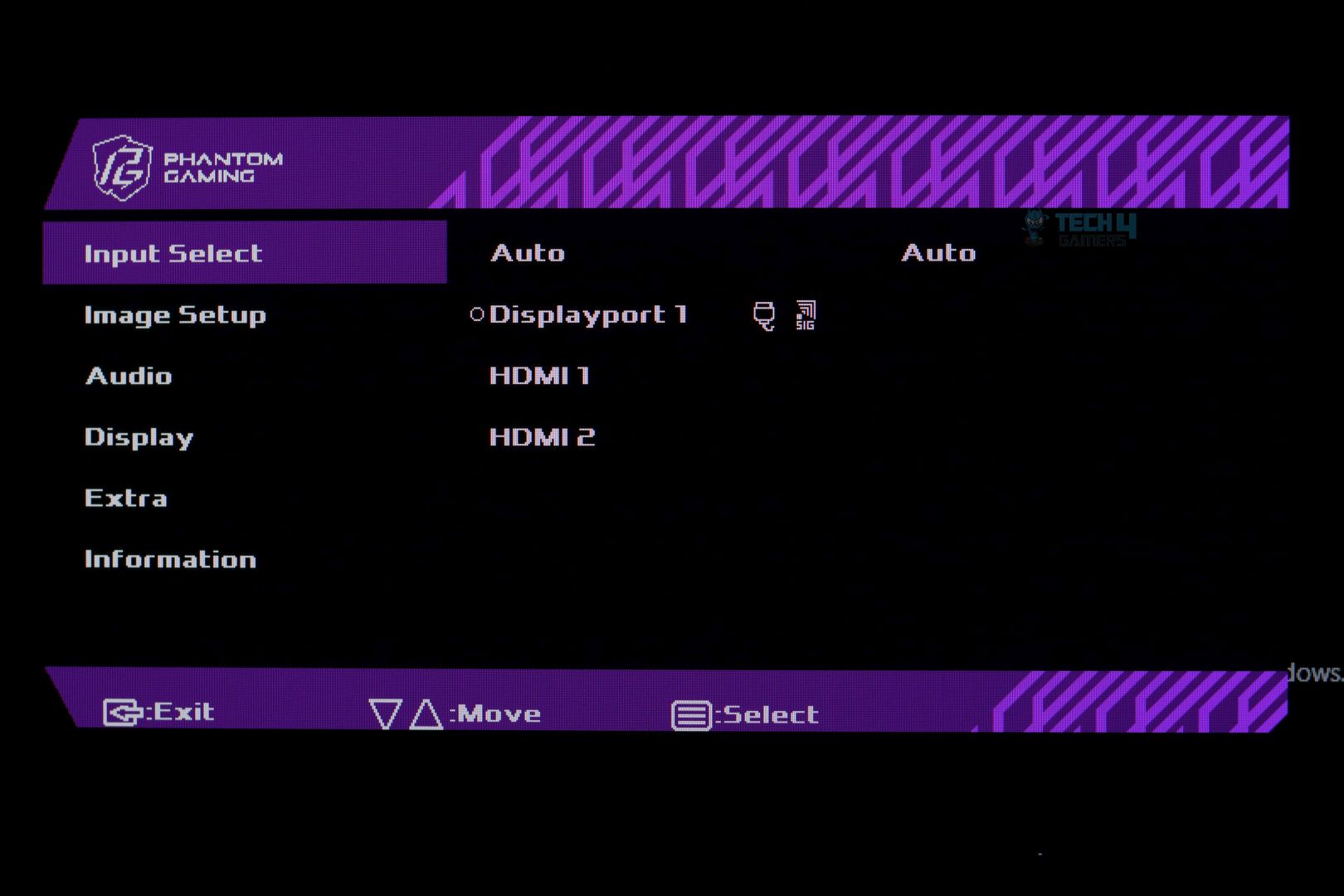
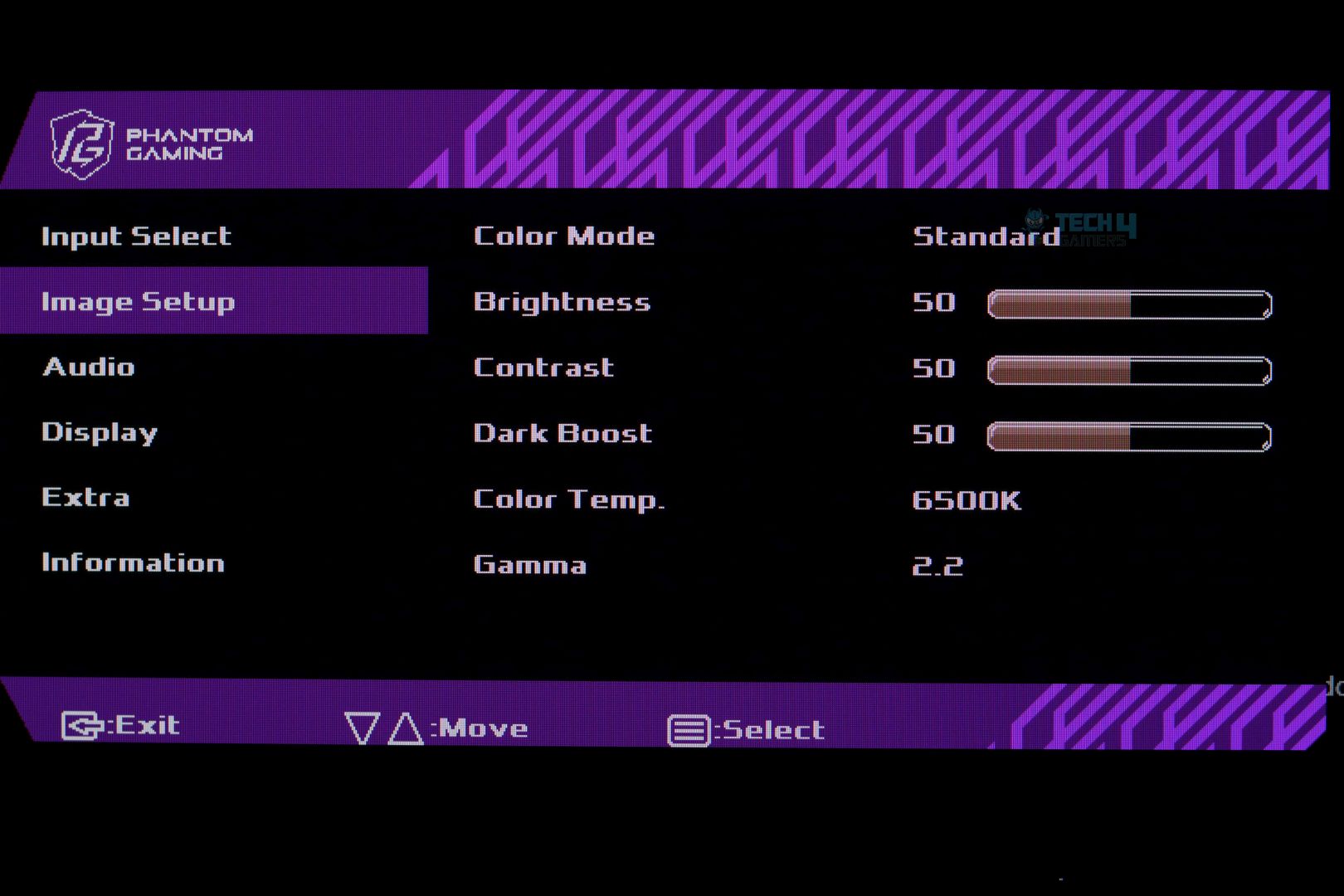
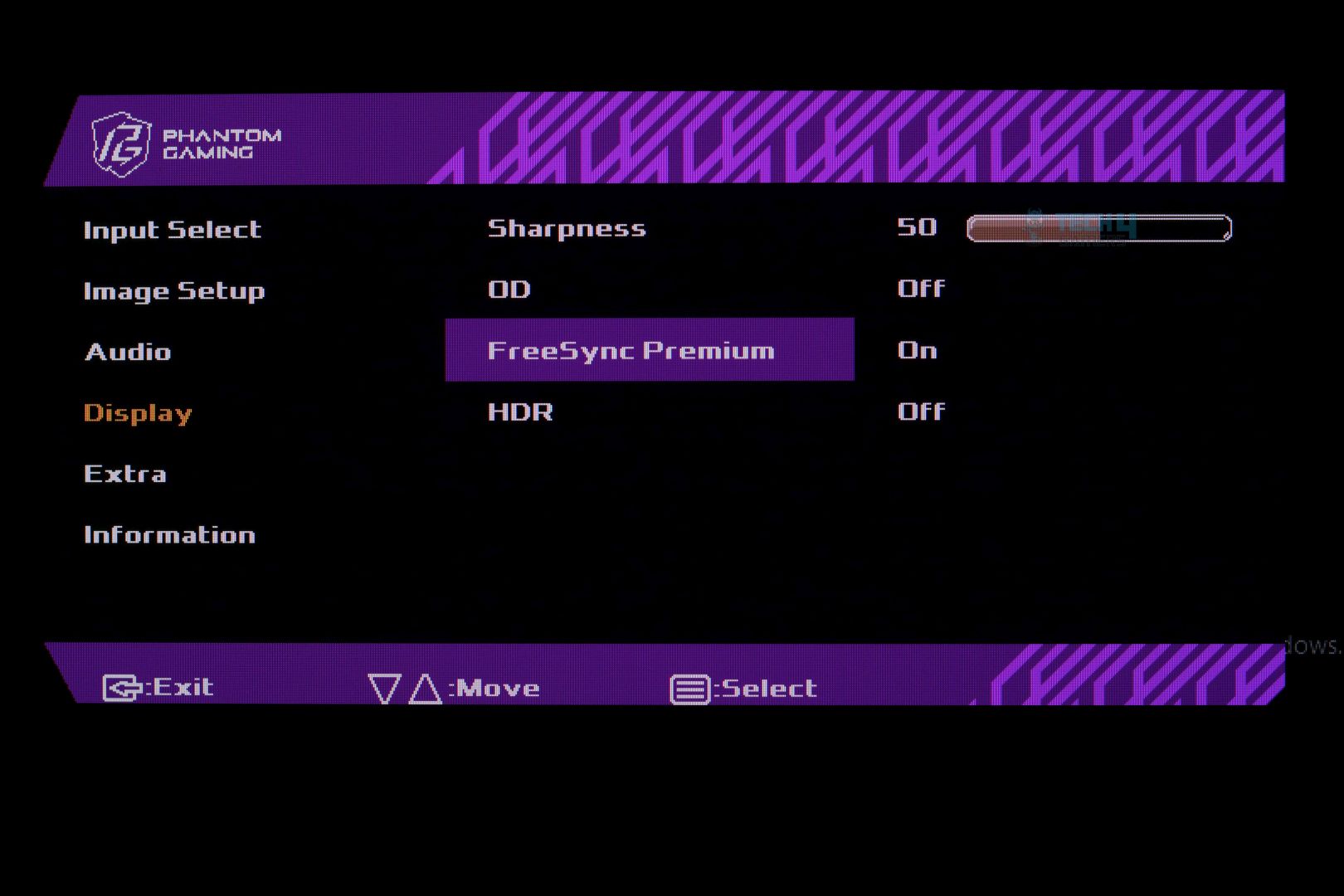
For controlling the monitor, the OSD (on-screen display) buttons are found on the bottom right edge. Quick access options for brightness and volume are a nice touch, so you don’t have to dig through menus for basic adjustments. The OSD itself is clean and simple, with most of the important settings easy to find.
OSD Walkthrough
1 of 3
Response Time
Response Time (RT) is the most important factor in a gaming monitor as this defines how smooth & crisp a moving image feels. Unlike OLED panels, pixels in IPS, VA, and TN Panels tend to take time in transitioning from one pixel to another (when an image changes/refreshes). This transitioning period is what’s referred to as Pixel Response Time, and it is measured in milliseconds (ms). The slower the RT, the more trails an image leaves behind, and this image trail is called Ghosting.
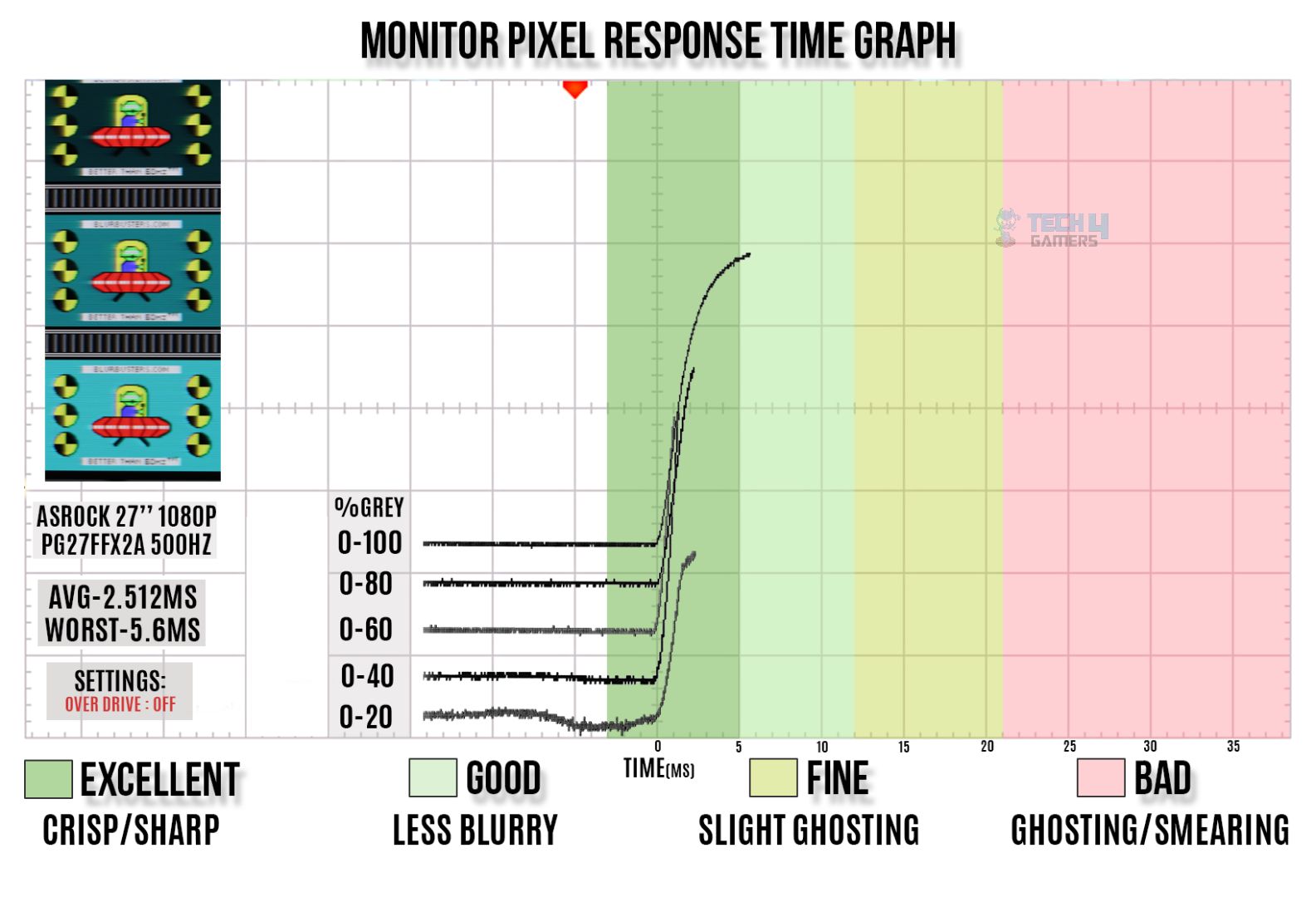
A better way to measure RT is to take into account the time it takes for a pixel to transition from one state to another. An industry standard practice is to make a monitor transition to different shades of grey (GtG), in our test specifically, from 0% to 20%, 0%-40%, to 60%, 80% and to 100%.
The numbers we usually see being advertised on the box for GtG are highly manipulated by brands themselves and differ vastly from the actual real-life observations.
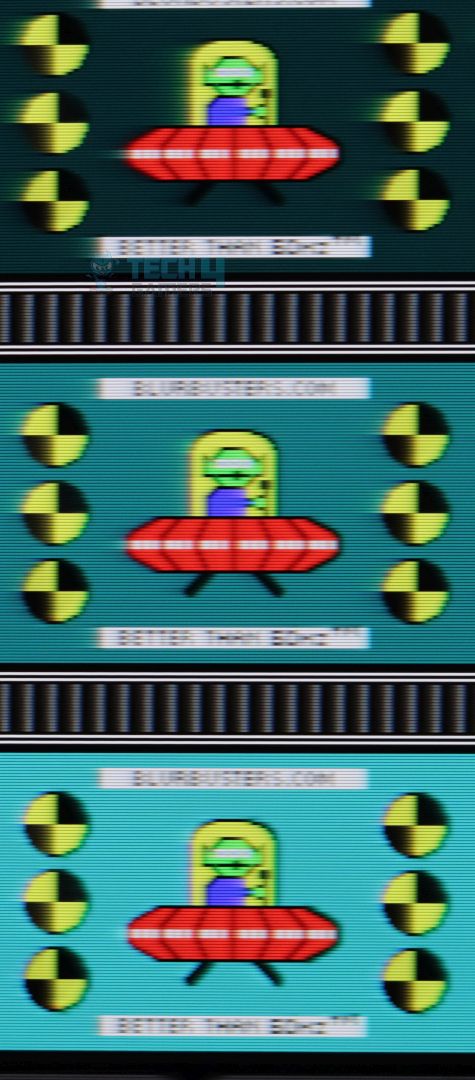
ASRock PG27FFX2A shows impressive overall RT performance for a high refresh rate IPS monitor, reaching a staggering average RT of 2.5ms.
Response Time Results
UFO Test Results
UFO Test OD-OFF
It is to note that for a 520Hz refresh rate, one frame should take around 1.9ms (1000/520=1.9230ms) to complete, this is the territory where only the OLED Panels excel, as they can instantaneously transition from one pixel to another, resulting in a crisp and trail/ghosting free image. For an IPS panel, it is technically impossible to be extremely fast without any Ghosting artifacts; it then comes down to some very clever techniques that a manufacturer has to implement to make such inevitable flaws nearly imperceptible.
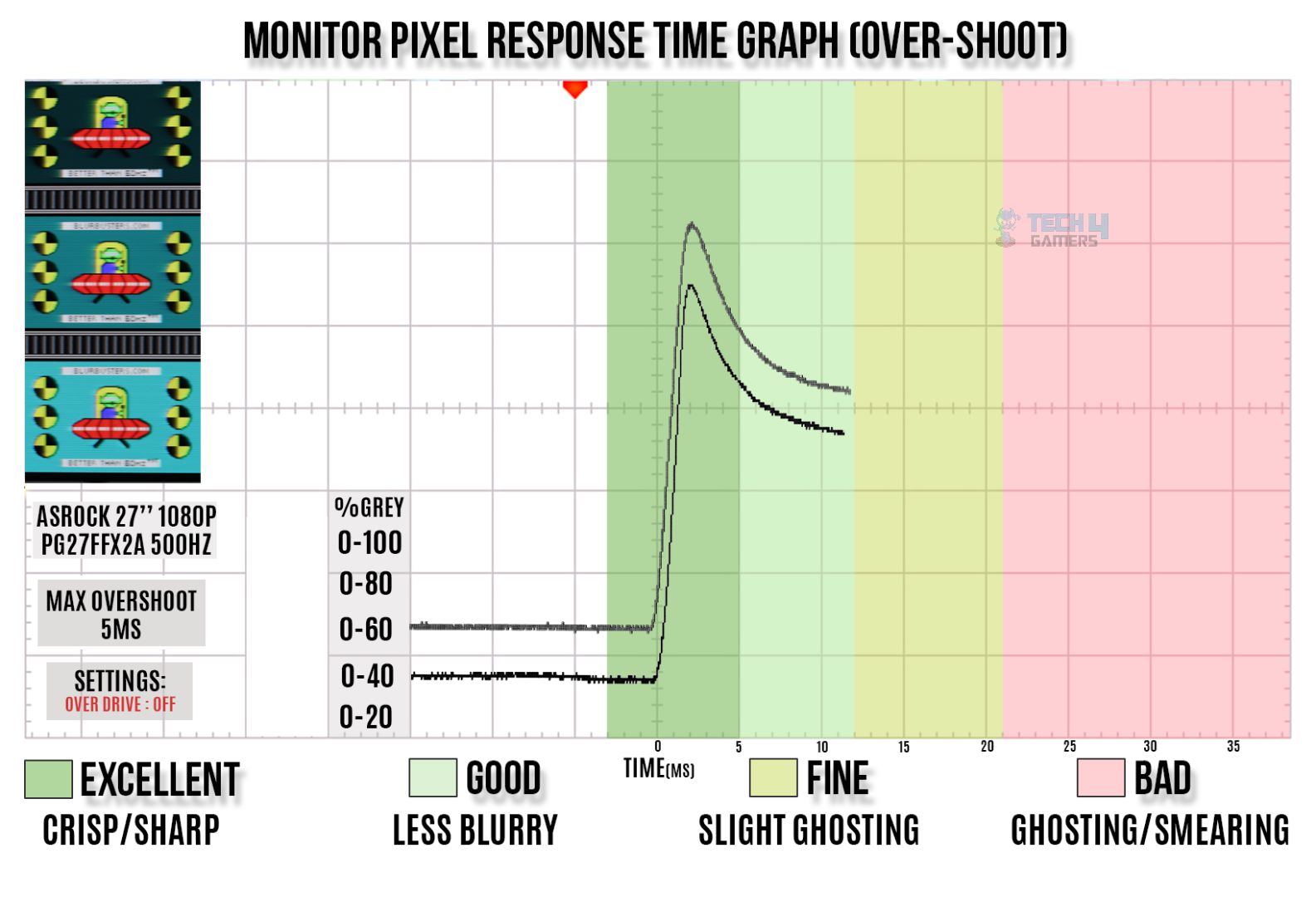
One of such techniques that ASRock is mainly relying on for their PG27FFX2A monitor to achieve an insanely fast 520Hz refresh rate with 2.5ms of RT is Over-Shoot, also called Over-Drive (OD). ASRock has a well-controlled Over-Shoot throughout different transitions as the pixels very rapidly change themselves back to the intended color.
Over-Shoot is a phenomenon where, to make a transition from one color to another extremely fast, e.g, a pixel goes from black to showing the color RGB 102 (40% grey), it will first overshoot to RGB 127 (50% grey) and then come back down to RGB 102. This causes a slight halo effect on the edges of the fast-moving image.
Doing this Over-Shoot trick with fast precision doesn’t cause a significant issue, as can be seen in the ASRock PG27FFX2A.
Over-Drive (OD) Setting
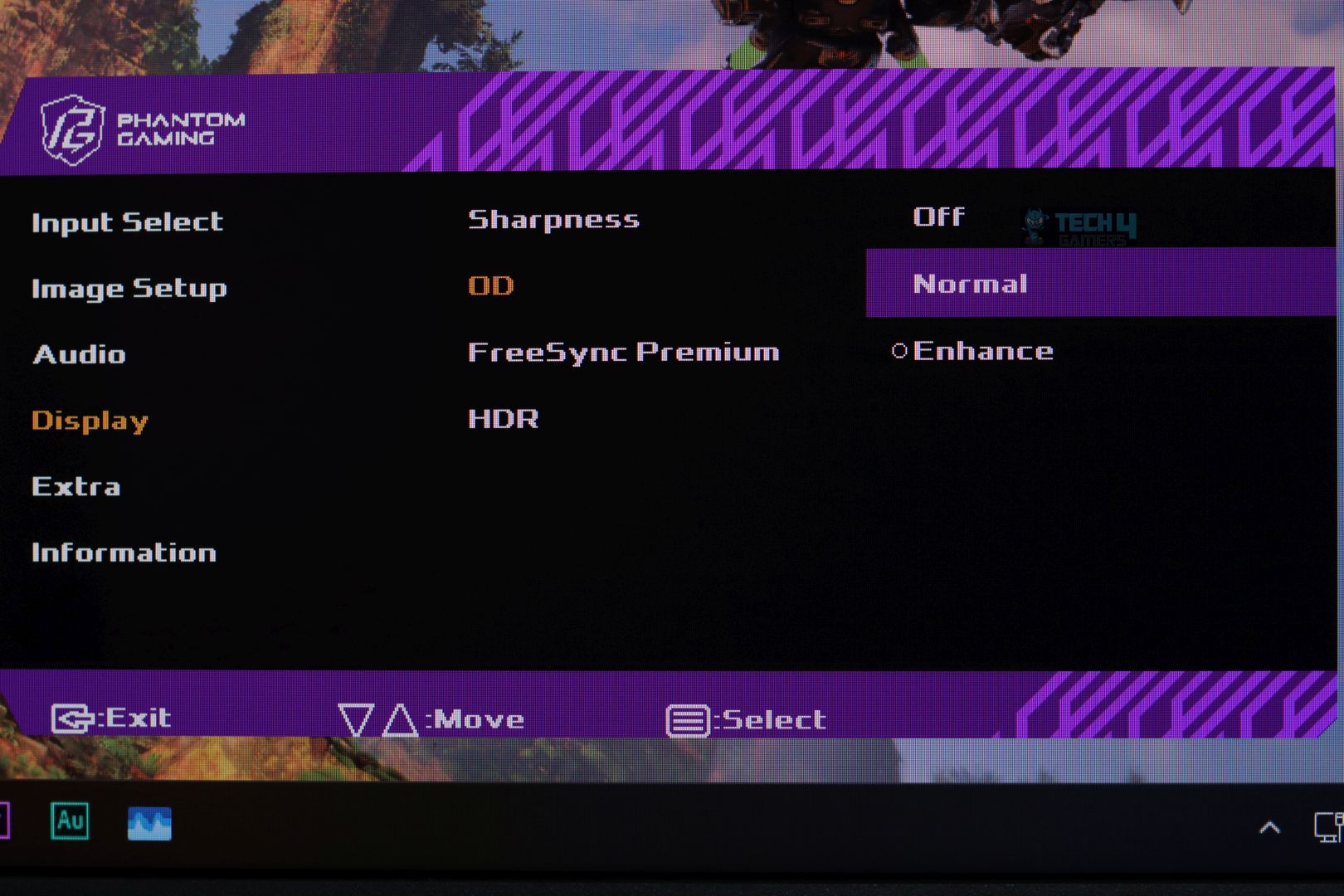
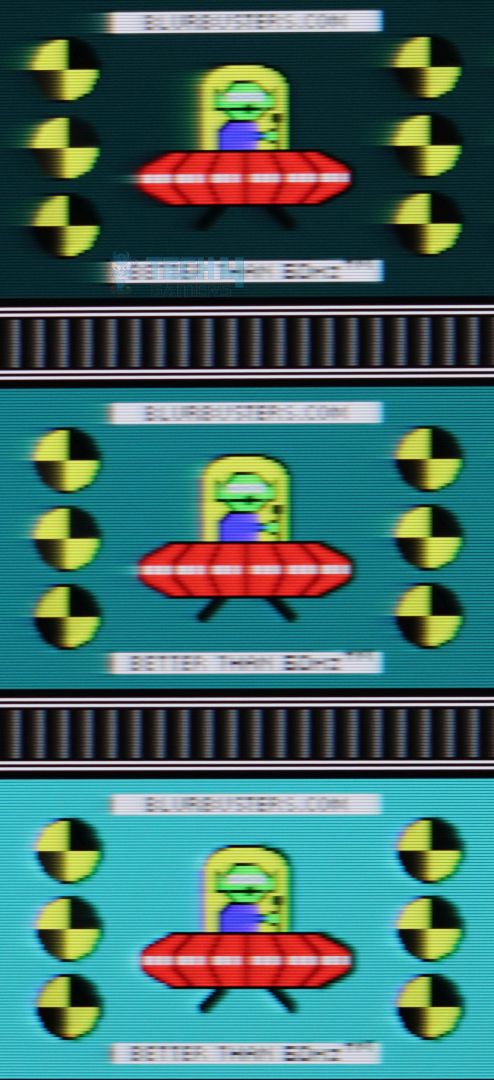
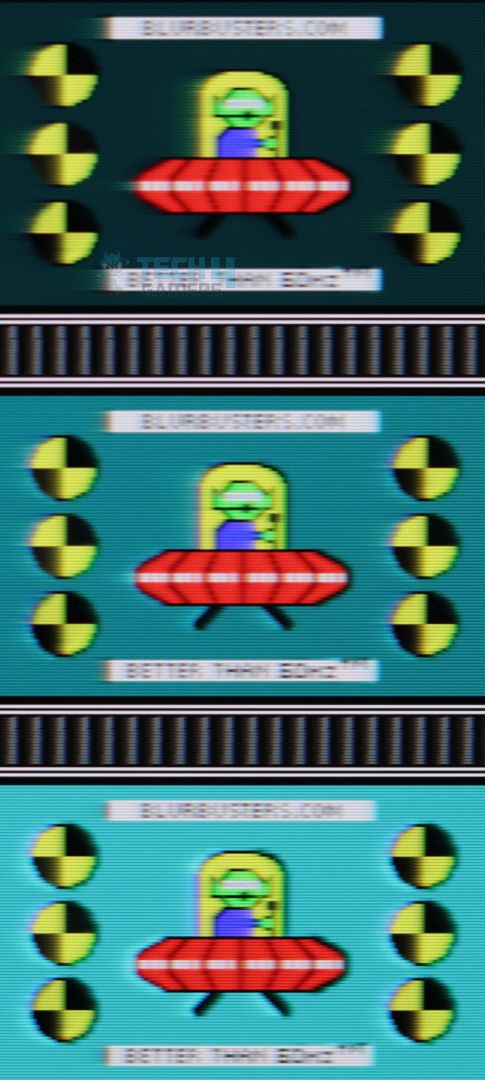
From the OSD, the ASRock PG27FFX2A has an option to make the RT even faster. Users can choose from Normal and Enhanced mode. Although Normal mode doesn’t do much, Enhance mode is where the Inverse Ghosting artifacts become largely visible.
OD Normal vs Enhance
1 of 2
UFO Test OD - Normal
UFO Test OD - Enhance
Looks like ASRock is already running the IPS panel in PG27FFX2A to its max limits, and tweaking beyond the default settings doesn’t bring any impactful results; instead, it causes Inverse Ghosting artifacts due to excessive overshoot.
Pixel RT Over-Shoot Graph
MONITOR PIXEL RESPONSE TIME – OverShoot – 40-60
Brightness & Contrast
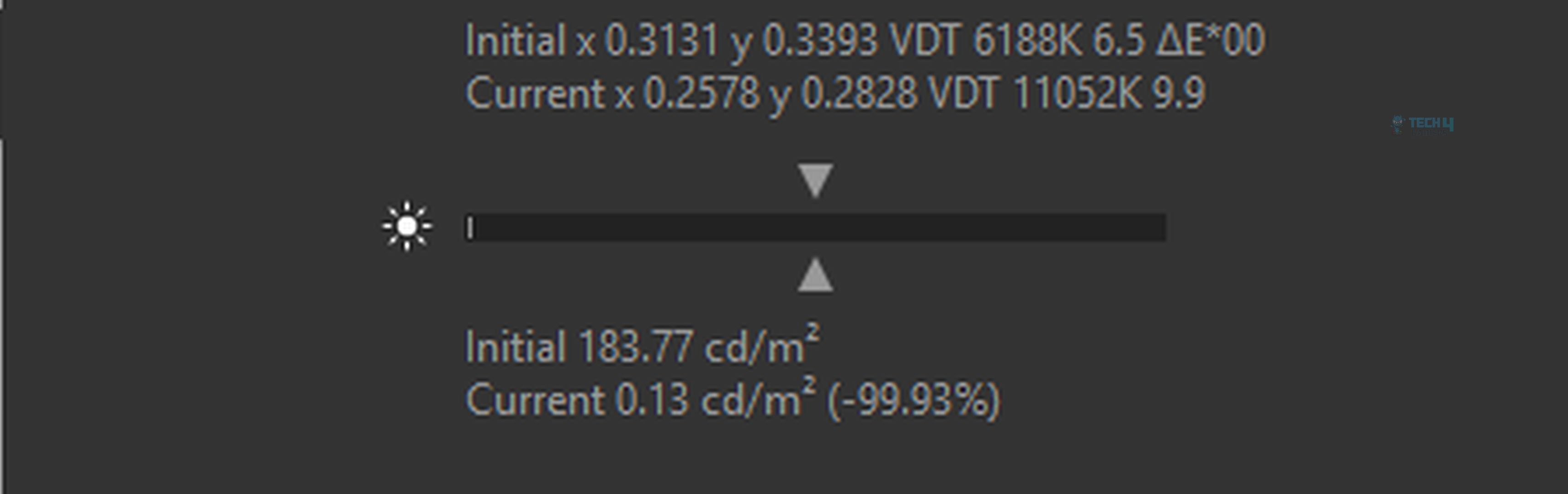
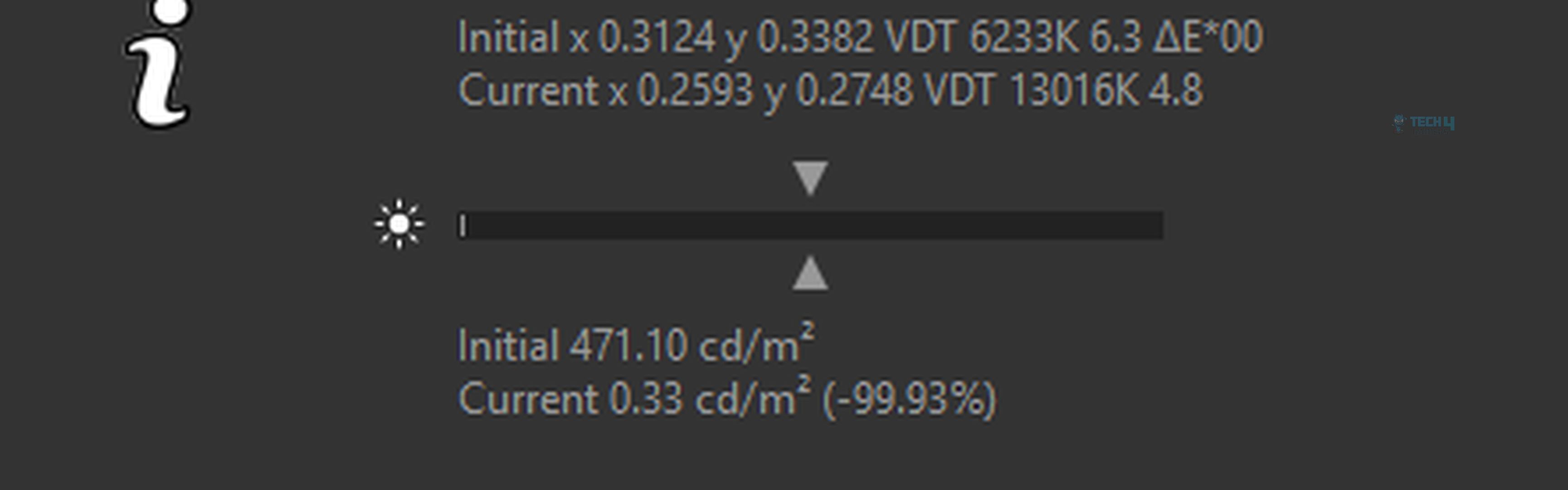
ASRock advertises brightness and contrast numbers to be 400cd/m² and 1000:1, respectively. In our test, the measured brightness came out to be 471cd/m² which is super bright and more than capable of being fully compatible for HDR400 certification. When it comes to the contrast, it is considered IPS’ Achilles heel and rightly so, as only a VA panel can produce closer to the true blacks than IPS, and an OLED is the only viable and widely available technology as of yet that can produce true blacks with an infinite contrast ratio. Still, ASRock PG27FFX2A impressed me with its surprisingly high 1341:1 contrast.
Default Brightness – Brightest To Darkest Measurement
Max Brightness – Brightest To Darkest Measurement
Color Accuracy
As per the AsRock PG27FFX2A specifications, this monitor seems to have very good and accurate color rendition. AsRock claims 123% sRGB and 94% DCI-P3 color space.
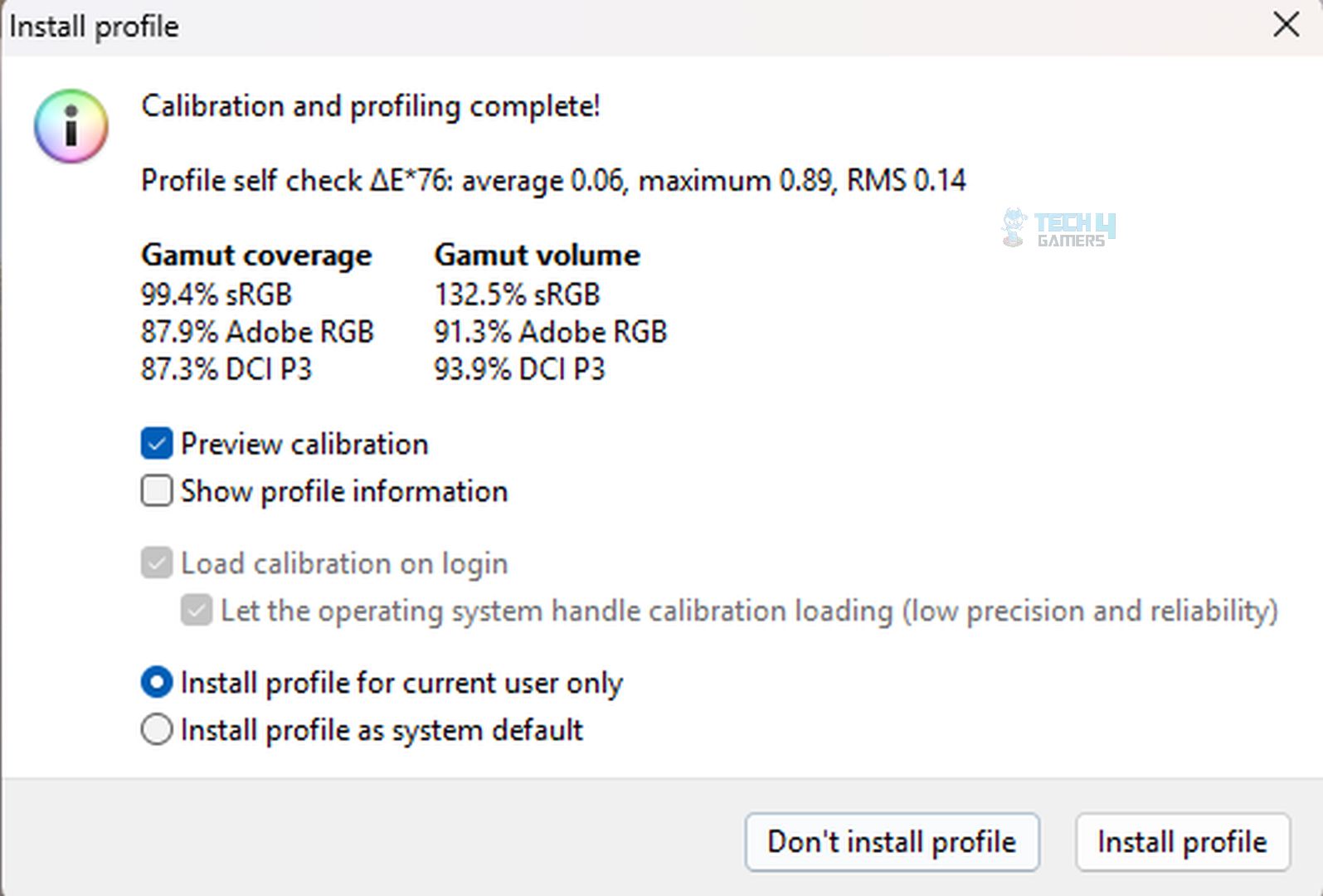
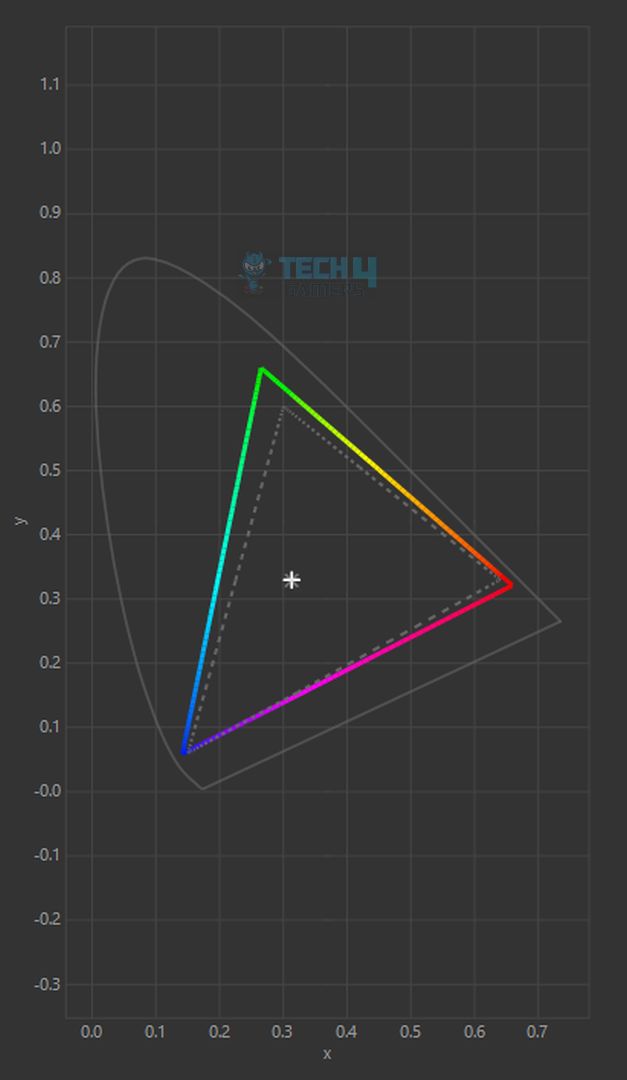
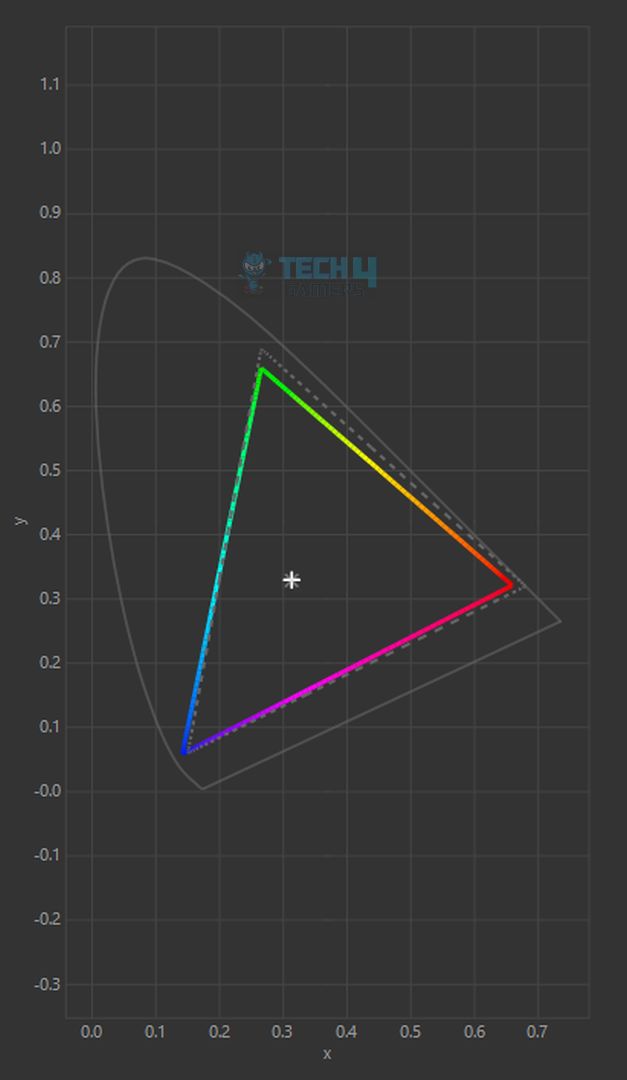
During our Color Accuracy testing using Calibrite Display Plus HL color calibration tool, PG27FFX2A produced good enough results for both sRGB (99.4%) and DCI-P3 (87.3%) Gamut Coverage. The majority of users will be using applications (gaming, surfing) that only take sRGB into account, for such applications, AsRock PG27FFX2A is going to perform with very accurate color information.
Color Accuracy
1 of 3
Default Color Gamut Report
Gamut sRGB_Default
Gamut DCI-P3 Default
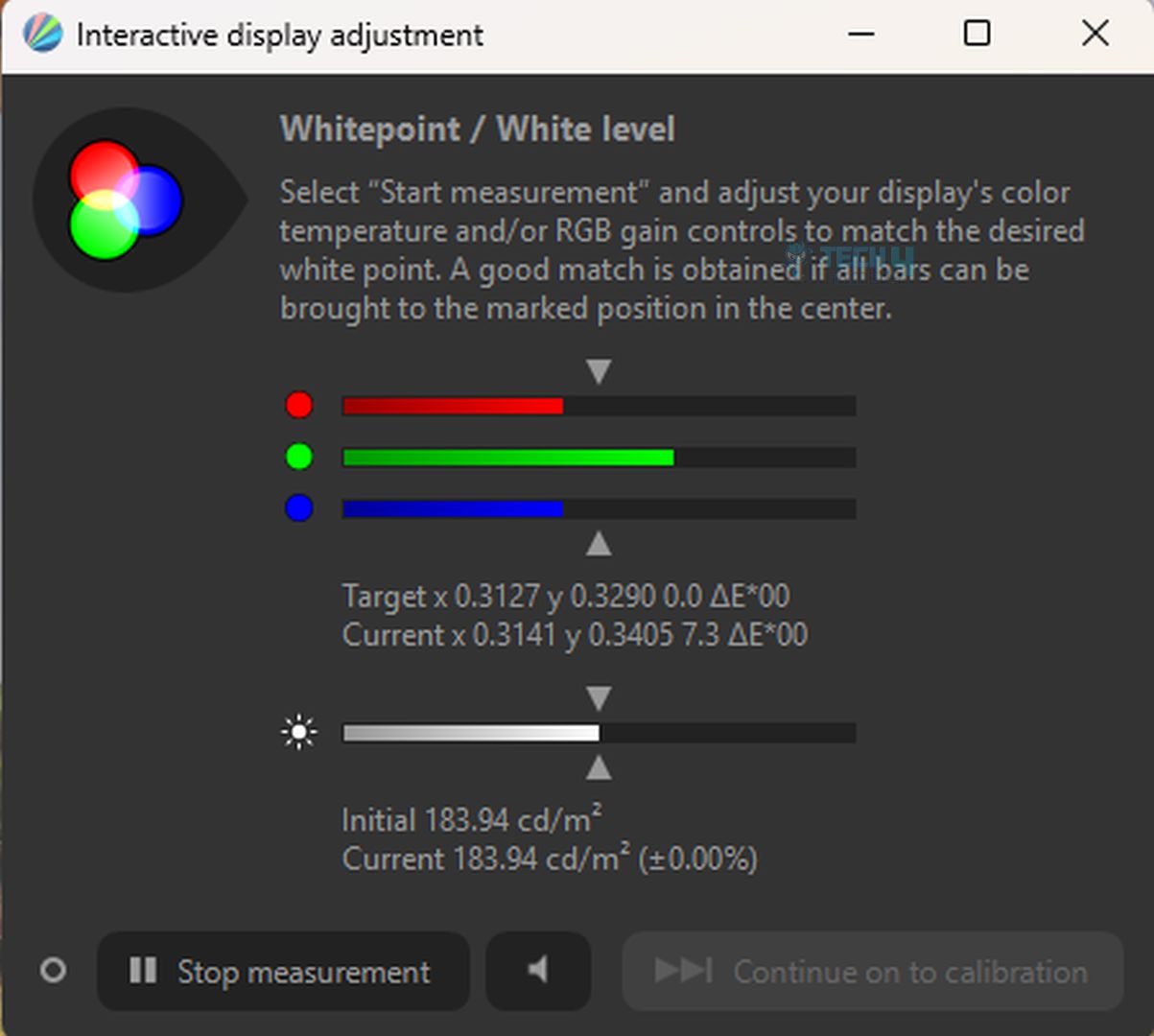
On its factory default settings, PG27FFX2A had too much Green dialed in. Though this is pretty normal to make the display and its colors look slightly brighter but when doing extremely accurate and professional color work, you may face a little issue matching the colors to the actual source. But I don’t think anyone who’s buying this monitor will be using it other than for gaming.
Default Color Gamut
I am still attaching the color profile below, which will make the colors and white balance a lot more accurate than the factory default.
✅You are a serious competitive‑FPS player: All things are secondary, the incredibly fast 520Hz refresh rate makes the ASRock PG27FFX2A the right choice for anyone who wants the fastest gaming experience.
✅You want reliability without dropping top money: The PG27FFX2A costs way less than its OLED counterparts, and thanks to its IPS panel, you won’t ever have to worry about screen burn-in, which OLEDs are quite famous for.
✅You want good color accuracy: The ASRock PG27FFX2A has good sRGB gamut coverage, which is going to show accurate colors when consuming content from the internet as well as gaming.
Don’t Buy It If:
❌You play too close to the monitor: ASRock should have released a 24.5″/25″ variant of the same monitor if it really wants to compete with the likes of BenQ, LG, and Alienware in eSports tournaments. The pixel density, due to its 27″ size and 1080p resolution, makes it a hard pill to swallow if you sit too close to the monitor.
❌Your graphics card is not pushing north of 400-500 FPS: The highlight of this monitor is its high, 520Hz, refresh rate, so make sure your GPU can play competitive games at ~500 FPS to utilize such a refresh rate.
Final Thoughts
Manufacturers seemed to have reached their limits with high refresh rate IPS monitors, leaving only expensive OLED options fast enough for true competitive play. However, with the PG27FFX2A, ASRock has managed to deliver an IPS panel that stands out for its exceptional performance and quality. Featuring a 2.5ms pixel response time, well-controlled overdrive, minimal ghosting, and solid overall build quality, the ASRock PG27FFX2A is an easy recommendation for serious esports gaming enthusiasts.
Currently serving as a News Reporter at Tech4Gamers, I have the privilege of combining my love for gaming with the art of storytelling. My role involves crafting engaging narratives that keep our audience abreast of the latest developments in the gaming world.
Story Highlight
Former Blizzard CEO says that Xbox needs to figure out what to change and to do it fast.
He says that they should ditch the hardware strategy and instead focus on becoming the largest entertainment publisher.
Fans also debate whether to buy future Xbox consoles now that exclusivity is dead.
Recent times have been confusing for the Xbox fandom, especially with the gaming giant’s publisher route. As such, fans have been questioning why Xbox would still make consoles if the exclusivity selling point is now diminished.
Former Blizzard CEO has also stepped into the conversation to share his opinions. According to him, Xbox is confused about its identity, and it should focus on becoming the world’s largest entertainment publisher, ditching console strategy entirely.
Why it matters: Recent acquisitions by Xbox over the past five years have made it one of the largest entertainment brands ever. Completely going down the publisher route, akin to SEGA, would certainly guarantee unprecedented success for the gaming giant.
Former Blizzard Boss Not Pleased With Microsoft’s Current Approach Towards Gaming || Source: X
Mike Ybarra recently took to social media to express his disappointment over Xbox, saying that they need to figure out what to change and do it fast. Further in the thread, replying to a fan, he said that Xbox should embrace the publisher route and not be afraid of what to say.
In another reply to a fan, he said that from his perspective, he no longer sees Xbox as a console manufacturer, and that “straddling the fence is not a winning plan.”
Ybarra’s words do make sense, especially when Xbox is evolving itself as a gaming brand beyond a publisher, with collaborations amongst third-party manufacturers. As such, first-party hardware doesn’t make sense.
Reports also suggest that the next-gen Xbox will be a PC, and the way they’re merging the Xbox and Windows ecosystem, fans are raising the question of whether they should even buy a first-party Xbox device.
An Xbox founding team member also seems to share the same opinion. According to her, the gaming giant’s hardware is dead, and there’s no reason why gamers would buy their new ROG Ally handheld.
At Tech4Gamers, I contribute as a Senior News Reporter, combining my skills and gaming enthusiasm to keep our audience updated on the latest developments.
Story Highlight
Assassin’s Creed 4 Remake has been teased yet again, and the latest teaser comes from Edward Kenway’s voice actor.
He states that fans will soon have a reason to revisit this particular entry in the series.
His involvement in the project could also be a sign of re-recorded voice lines or new dialogue for Edward Kenway.
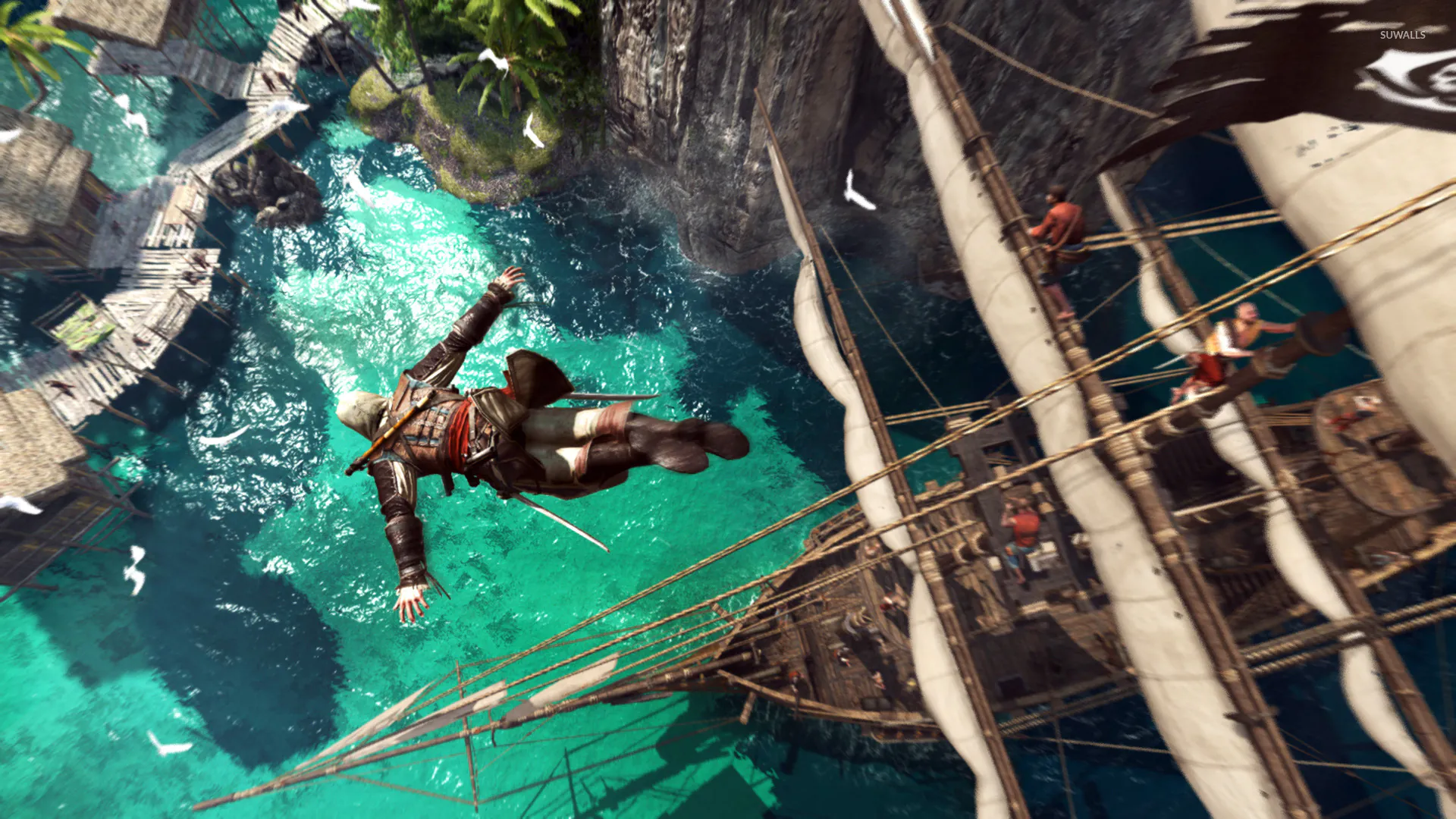
Assassin’s Creed 4 Black Flag is expected to receive a remake from Ubisoft in the near future, and this project has basically become an open secret at this point.
Although substantial evidence has already hinted at the existence of this remake, the latest teaser comes from the voice behind Edward Kenway himself. In a recent statement, the voice actor has basically confirmed that the remake is real.
Why it matters: Fans of the classic Assassin’s Creed games finally have something to look forward to after the reports of upcoming remakes.
Assassin’s Creed 4 Black Flag Remake
During a recent fan interaction, Matt Ryan, the voice of Edward Kenway, asked a fan if he had beaten Assassin’s Creed 4. Following this statement, the voice actor stated that fans would soon have to play the game again.
He then went on to say that there was a reason behind his statement that he could not share yet. Although Matt Ryan did not say it out loud, he more or less confirmed work on Assassin’s Creed 4 Remake because of these statements.
You may have to beat it again. There’s a reason, but I can’t say anything.
The voice actor’s statement also suggests that he is involved in the project. Perhaps Ubisoft has re-recorded old lines for the project or added new dialogue for Edward Kenway.
If the latter ends up being true, the same could be the case for other characters. As long as the team stays true to the original title, expanding on the iconic characters and themes of Assassin’s Creed 4 would likely be well-received by the fans.
AC 4 Remake Could Become A Fan-Favorite
Because Ubisoft just released Assassin’s Creed Shadows earlier this year, the remake is likely to launch at some point in 2026. This gives the team the perfect opportunity for an official announcement later this year.
Ubisoft is still officially silent, but the frequency of recent teasers suggests that something official regarding the remake is coming rather soon.
What do you think about the latest teaser? Have you kept up with the rumors regarding Ubisoft’s first major Assassin’s Creed remake? Let us know in the comments and on the Tech4Gamers Forums.
At Tech4Gamers, I mainly cover new gaming news, leaks, and rumours. Aside from that, I love to write features about my favourite games while inserting my opinion about their different aspects.
Story Highlight
Recently, a major poll has revealed that the majority of fans think difficulty makes a boss fight unforgettable.
While a boss battle being hard matters a lot, components like music, setting, and mechanics matter equally, if not more.
Some of the most popular boss fights strike a perfect balance (perhaps with a slight emphasis on the difficulty side) in each of the components mentioned above.
Boss fights in videos are perceived as one of the most critical factors. In fact, they are considered the main factor in Soulslike and Soulsborne titles, which makes sense given how much thought is behind every single boss.
Most of the bosses in Soulslike and Soulsborne titles, or even in a different genre, require the players to be committed to the battle system and learn their movesets (of course, there are cheese options available). However, other than the difficulty, their mechanics, music, and setting also matter; it seems that the former option makes the fight the most memorable.
Why it matters: You may get blown away by the setting or the music of a particular boss fight, but if it is too difficult for you to win, you will be coming back again and again to fight that boss and focus mainly on how difficult it is to win.
Fans Believe That The Difficulty of Boss Fights Makes Them Memorable
FaulesGaming recently posted a poll on YouTube asking fans what makes a boss fight unforgettable. There are over 1.3 million votes, and 43% of the fans think that the difficulty of a fight makes it memorable.
14% of the votes are allocated to the setting, 13% to the mechanics, and 30% to the music. While difficulty matters a lot in a boss fight, it should be noted that without any of the options mentioned in the poll, the fight can’t be memorable. If a boss fight is just difficult and lacks good music, setting, and mechanics, it won’t attract much attention from the fandom.
It is also true that if the fight is just extremely difficult, then it may become an unforgettable experience for the players, but not in a positive manner. There are bosses like Malenia, Maliketh, Isshin, the Sword Saint, Midir, Bayle, Messmer, and Radahn that are considered some of the hardest bosses in gaming history. Still, all of them have outstanding music, mechanics, and setting.
Games like Clair Obscur: Expedition 33 have also demonstrated the importance of music in gaming, as many people were left in awe when they fought Renoir for the second time.
What do you think about the majority thinking that difficulty makes the fight memorable? Which factor do you think is the most important? Please share your thoughts with us in the comments section below or join the official Tech4Gamers forums for discussion.
I’ve previously worked for eXputer as a Senior News Writer for several years. Now with Tech4Gamers, I love to devoutly keep up with the latest gaming and entertainment industries. I have a Bachelor’s Degree in Computer Science and years of experience reporting on games and breaking exclusive stories. Besides my passion for gaming journalism, I love spending my leisure time farming away in Stardew Valley. VGC, IGN, GameSpot, Game Rant, TheGamer, GamingBolt, The Verge, NME, Metro, Dot Esports, GameByte, Kotaku Australia, PC Gamer, and more have cited my articles.
Story Highlight
CD Projekt Red narrative lead Philipp Weber said that The Witcher 4 will follow narrative lessons from the last entry.
The upcoming RPG will bring new mechanics but retain the same philosophy as The Witcher 3 to satisfy fans.
The developers do not want to break or change the systems that already work well for the new game.
Whether it’s because of the Ciri controversy or all the anticipation, The Witcher 4 has been on everyone’s radar since the reveal trailer earlier this year. Some users are also concerned that its RPG mechanics might turn out to be quite different from the last title.
However, CD Projekt Red has now squashed these worries and clarified that The Witcher 4 will follow the narrative lessons learned from The Witcher 3. In other words, the studio will not break the systems that worked well in the last RPG.
Why it matters: The Witcher 3 was popular due to its narrative elements, so CDPR will not change the system and will follow the same philosophy with the upcoming RPG to appease fans.
The Witcher 4 NPCs will be fleshed out and feel unique.
In an interview with GamesRadar, The Witcher 4 narrative director Philipp Weber claims that developers want to add new and ambitious mechanics, but they are also hyper aware of everything that made The Witcher 3 stand out in the RPG genre.
A lot of the narrative lessons from The Witcher 3, we use them exactly the same way. […] Sometimes we have new things for new features, but the core stuff, it’s that same philosophy we wanted.
The studio even has rules on how to do quests for new developers to ensure the core Witcher 3 philosophy is preserved. Philipp says CDPR understands that everything that people expect from The Witcher 4 should not be changed under the guise of innovation.
We know the things that The Witcher 3 was good at, that we wanted to do on The Witcher 3, and we have to really push that. We can’t break that.
The Witcher 4 tech demo has impressed many fans of the franchise.
In the past, it was confirmed that The Witcher 4 has some of the best talents in the industry developing it. The RPG will also feature more player freedom and tougher choices.
Do you think The Witcher 4 will stand out as a unique narrative experience while following The Witcher 3’s structure? Let us know your thoughts in the comments below, or join the discussion on the Tech4Gamers forum.
At Tech4Gamers, I mainly cover new gaming news, leaks, and rumours. Aside from that, I love to write features about my favourite games while inserting my opinion about their different aspects.
Story Highlight
A reliable leaker states that Nvidia is preparing at least three RTX 50 Super graphics cards.
The RTX 5070 Ti Super and RTX 5080 Super are reportedly equipped with 50% more memory.
Neither GPU will be significantly faster than the base variant, suggesting that VRAM is the primary focus for Nvidia this time.
Nvidia’s latest GPUs hit the shelves a few months ago, but the reception varied from mixed to poor. Many did not like how expensive the new GPUs were, and VRAM woes continued to haunt all but the flagship graphics cards.
It seems at least one of those problems is set to be fixed very soon. As per reports, Nvidia is working on its latest Super refresh, and the RTX 50 series is about to get a lot more VRAM.
Why it matters: Modern games consume a significant amount of VRAM. Nvidia’s advertised features, like frame generation, can also be quite VRAM-intensive.
The Super Refresh Already Sounds More Exciting Than The Blackwell Gaming Launch
As reported by the reliable Kopite7Kimi, Nvidia is working on at least three RTX 50 Super GPUs.
His latest leak is related to the RTX 5070 Ti Super and suggests that this particular graphics card will come with 24GB of VRAM. The leaker also suggests that everything else except the TDP has remained the same between the standard and Super RTX 5070 Ti.
Elsewhere, he points to 16GB of memory for the RTX 5070 Super and 24GB of memory for the RTX 5080 Super. For context, Nvidia’s last generation flagship, the RTX 4090, offered the same amount of memory as the RTX 5070 Ti Super and RTX 5080 Super.
The Blackwell gaming Super refresh already sounds more enticing than the Ada Lovelace Super lineup, and it will be interesting to see how the Super RTX 50 GPUs are priced compared to their base counterparts.
Because Nvidia is typically quite stingy with its VRAM capacities, the right price for these GPUs could restore a lot of goodwill toward the company among the PC gaming crowd.
Those looking for alternatives can also consider the Radeon RX 9060 XT and 9070 XT, both of which offer 16GB of VRAM at decent prices. Similarly, the RTX 5060 Ti can be purchased with 16GB of memory at a decent price.
I’ve previously worked for eXputer as a Senior News Writer for several years. Now with Tech4Gamers, I love to devoutly keep up with the latest gaming and entertainment industries. I have a Bachelor’s Degree in Computer Science and years of experience reporting on games and breaking exclusive stories. Besides my passion for gaming journalism, I love spending my leisure time farming away in Stardew Valley. VGC, IGN, GameSpot, Game Rant, TheGamer, GamingBolt, The Verge, NME, Metro, Dot Esports, GameByte, Kotaku Australia, PC Gamer, and more have cited my articles.
Story Highlight
Bungie has made many gameplay and visual improvements to Marathon following the negatively received playtest.
The game looks much better visually and has incorporated multiple balance changes based on fan feedback.
Leaks say the live-service title will go through more improvements following the delay.
Sony’s live service push has been nothing to write home about so far, with Helldivers 2 being the only outright success while other titles like Concord have ended up failing miserably. The future of the company’s multiplayer ambition, more or less, relies on how Bungie’s Marathon performs, but even that had a rough PR hit recently.
The game was met with a negative reception internally and also faced plagiarism allegations, leading to an indefinite delay. Now, a new report suggests that Bungie is using the extra time to its full effect, and Marathon is in much better condition than before.
Why it matters: Bungie listening to fans and delaying Marathon to make much-needed improvements might save the game from humiliation.
How Marathon looked in the first Alpha build.
According to a Forbes report by Paul Tassi, new screenshots leaked by a user on X showcase the improved visual fidelity of the live-service title with better lighting and more density. As per Tassi, these improvements were made after the last alpha build, which had tested negatively among players.
In addition, the screenshots depict bodieslying on the floor after kills, which means Bungie listened to the players’ complaints regarding bodies disappearing. UI changes and a more coherent map legend have also been added to the game, making it easier for players to track anomalies.
Other additions include amedic runner, which functions like the Lifeline in Apex Legends, providing you with a healing drone to restore health. Resurrection time, however, has seen an increase, but of course, this can change as Marathon develops further.
Marathon currently has no specified release date.
With these new changes, it will be interesting to see how the game performs once it releases.
At Tech4Gamers, I contribute as a Senior News Reporter, combining my skills and gaming enthusiasm to keep our audience updated on the latest developments.
Story Highlight
The ShadPS4 emulator continues to go through significant upgrades.
A new video shows games like Killzone Shadowfall and God of War 3 running on the emulator.
Although these games still need to be polished, ShadPS4’s improvements are a great sign for the future.
PS4 emulation has come a long way over the last year. What started as a project to make Bloodborne playable at 60FPS on PC has now turned into a major accomplishment as shadPS4 continues to make strides.
Previously, the emulator showed potential by running games like Driveclub and Gravity Rush. A new video shows that this potential continues to be realized, with even more games becoming playable earlier this month.
Why it matters: Emulation typically require a long time to reach an acceptable standard. The likes of RPCS3 have only recently become really good at emulating the libraries of older consoles.
As seen above, shadPS4 now supports a rather impressive selection of PS4 games.
The video shows already supported games like Driveclub running with further improvements. It also highlights a title like Killzone Shadowfall being playable to an extent, which previously failed to launch on the emulator.
This goes without saying, but shadPS4 is still not perfect at running these titles. In fact, games like God of War 3 demonstrate that there is still considerable work to be done, with visual bugs and other issues persisting in many games.
Others like Killzone Shadowfall leave much to be desired in the frame rate department. However, the results are still impressive for an emulator that began development not too long ago. At this rate, the entire PS4 library could be fully supported on PC in a matter of a few years.
PC Offers The Best Version of Bloodborne Thanks to ShadPS4
This would be handy, of course, for games like Bloodborne and Infamous Second Son that have yet to receive a PC port.
What are your thoughts on the emulator’s progress so far? Do you hope to play the PS4 library on PC at some point? Share your opinions in the comments, and visit the Tech4Gamers Forums for more discussions.
At T4G, my task is to cover the latest news around the gaming globe ASAP and with the utmost precision. I adore all the games and respect all the devs behind the amazing games that we get all year. So, whether it’s a PC or a Console game, I got it all covered.
Story Highlight
Shuhei Yoshida says $80 games provide great value and are very affordable.
He says each game has its worth, and it’s for the publisher to decide how much it costs.
Most of the fans are still against the idea of the inflated price tag.
For a long time, games priced at $60 and $70 have remained a standard in the gaming industry. However, with Mario Kart World’s $80 MSRP, other companies have started following the trend, including Xbox.
Even a former PlayStation boss believes that $80 games are affordable due to the value they provide. Using Mario Kart as an example, he noted that it offers numerous hours of gameplay with just one purchase.
Why it matters: Fans aren’t in favor of the inflated price tag, as seen from a recent poll, but they do say that they can make exceptions for certain games if they are worth it, like next year’s GTA 6.
Speaking on the Kit and Krysta podcast, former PlayStation executive Shuhei Yoshida talked about how game prices are one of the most heated topics of discussion right now. He defended the $80 games for their affordability and value.
When you look at the value that the amount of entertainment a good video game provides, like Mario Kart 8, so many people play hours and hours and hours right with just one purchase.
He did say that each game has its value, so you can’t price every game at $70 or $80. There are even live service titles that can cost up to $100, but fans still buy them because they offer a lot of replayability.
Mario Kart World was the first game to kick off the $80 price tag.
Although we’re still seeing massive AAA games costing $70, especially with Kojima’s recent Death Stranding 2, the trend is here to stay. Xbox has already announced Outer Worlds 2 at $80, and PlayStation is expected to follow suit at some point.
What are your thoughts on the former PlayStation boss calling $80 games affordable? Let us know your opinions in the comments or join the discussion at the official Tech4Gamers Forum.
Lead the comparison and blog writing teams at Tech4Gamers.
Oversee teams with a keen eye for detail and precision.
Ensure hands-on writing, with benchmarks and testing as guiding principles.
Guarantee the delivery of the best possible results in concise yet impactful tech tales.
Story Highlights
Lighter mice below 40g are extremely responsive that allow you to make snappier micro corrections that lead to better flicks and effortless tracking.
Since it is super lightweight, it feels like you aren’t holding anything, and the lift-off is also seamless, which significantly reduces the strain.
But lighter ones require a claw or fingertip grip if you want to operate it with full control.
There’s been a lot of buzz about mouse weights. Some people lean towards the heavier ones, while others prefer lighter ones. For the people who’re into lighter mice, there’s an ongoing quest to go even lighter. But does that actually equate to better performance? Let’s find out.
Light Weight Mice (Image Credits – YT/Optimum)
Going Below 40g: Is There Any Difference?
Lightweight mice have existed for quite some time, and they usually range from 60g to 80g. The lightest is usually around the 60g mark, but now brands have shifted to even lighter ones as per people’s demand.
Popular Demand
We see this pattern taking place everywhere. Logitech’s G Pro 2 Lightspeed was loved by the masses and weighed 76g, but then they had to innovate, so they released the G Pro X Superlight 2, which shaved off around 18g and weighed 58g.
Lighter = More Responsive
But what about going even below the 40g mark? Well, it’s plain physics that the lighter the mouse, the less the inertia. This means you don’t have to exert much force to get the same result as a slightly heavier mouse.
It does make a difference because even shaving 10g is a drastic change, let alone entirely 20g if you compare it with a 60g mouse. With this, you get precise control over your aim, and micro-adjustments feel snappier.
Subconscious Ease Of Control
Not only that, but flicking becomes a breeze, especially because the lift-off is almost effortless, and the mouse glides across your pad seamlessly. Believe it or not, but lifting even a slightly heavier mouse is a slight obstacle, as if your brain has to train itself to remember the action as muscle memory.
But once you switch to a mouse lighter than 40g, you’d be surprised to find how easy it has become to lift and reposition it. The subconscious ease of control is real with these mice.
Subconscious Ease Of Control (Image Credits – YT/DiamondLobby Reviews)
Weightless Tracking
The best part about it is that you’d feel like you’re holding nothing. This equates to a weightless tracking in games, which would feel like cheating because you won’t feel any resistance.
If you pair these mice with a glass mousepad, it’s like putting your mouse on steroids; it doesn’t get better than that. Now, the small friction that a cloth mousepad had is also removed, which would give you more precision.
Reduced Strain
Another great thing about using these mice is how much of a relief they’ll feel compared to a 60g mouse. You’d think that it’s going to have the same level of comfort, but a lighter mouse relieves a surprising amount of strain.
Perfect For Gaming (Image Credits – Fantech)
Brands Jumped On
Many brands have jumped on to create their own versions of extremely light weight mouse, with Finalmouse UltralightX being one of the most popular contenders, weighing only 38g.
Currently, the official world’s lightest mouse is the Zaunkoenig M2K, which comes in a fully carbon case and a compact design that feels alienated but gets the job done since it weighs only 24g.
Should You Make The Switch?
With the benefits of using an extremely light weight mouse, there are a lot of things that you need to take into consideration before you make the switch, either from a heavy mouse or lighter one.
Holes = Dust Magnet
Firstly, most brands opt for designs with lots of cut-out holes in order to reduce the weight of the mouse. While many big brands claim to have dust-resistant designs, they still tend to get dust and debris inside the circuitry.’
Lightweight Mice Come With Holes (Image Credits – IGN Southeast Asia)
Not As Comfortable
Moreover, the design with the hexagons or holes may compromise comfort since your palm won’t be greeted with a plain, hard back mouse design. This can be a downside for most people who are comfortable with the standard mouse’s design.
Claw Or Fingertip Grip Is A Must
Another thing to keep in mind is that lighter mice tend to work better with a fingertip or claw grip because it gives you the most amount of control. So, if you’re an avid palm grip user, you might feel out of control with an ultra-light mouse.
Verdict
If you’re switching from a very heavyweight mouse that ranges from 100g up to 150g, then it is better to switch to a lighter mouse (60g to 80g) first, then adjust to it. If you’re already using a lighter one and have a claw or fingertip grip, then you can switch to an even lighter one without any issue.
At Tech4Gamers, I mainly cover new gaming news, leaks, and rumours. Aside from that, I love to write features about my favourite games while inserting my opinion about their different aspects.
Story Highlight
Pawel Sasko, a key figure from CD Projekt Red, recently revealed that in the era of The Witcher 2, mature themes weren’t as compelling in games.
He said that they only consisted of two things, and those were just simple killing and nudity.
Sasko further stated that The Witcher 3 is one of the games that effectively expands on this theme.
The latter has contributed in many aspects, and broadening the mature theme in gaming was one of them. One of the popular figures from CDPR has recently revealed that this game has helped in popularising mature themes in gaming, which is absolutely true.
Why it matters: As Pawl Sasko argues, in the era of The Witcher 2, mature games only featured simply killing or nudity, which may seem bland to many.
Geralt of Rivia Shirtless in The Witcher 3
Speaking to Gamesradar+, Pawel Sasko, the associate director of Cyberpunk 2077 and the lead quest designer of The Witcher 3, revealed that the latest Witcher game contributed significantly to popularising the mature theme in gaming.
He said that in the era of The Witcher 2, the mature theme was bland and focused on just two things, but the latest game in the franchise changed that.
Mature games were mostly associated with two things. One of them was aggression, just simply killing. And the second thing was nudity. It would be incredible to think that Witcher 3 added something to it. I think it was part of a broader process.
-Pawel Sasko
This change happened mainly because the developers were in their 30s or even 40s. Sasko explained that by the time The Witcher 3 was in production, the developers had reached a certain age where straightforward bloodshed no longer seemed enjoyable; instead, they wanted to do something more.
Due to this, the developers were able to innovate and create one of the most memorable and best games in the history of gaming. While Sasko acknowledges the contribution of this game to popularising mature themes, he does agree it didn’t create the wave.
What do you think about Pawel Sasko’s comments regarding the popularising of mature themes in gaming? Do you agree with him? Share your thoughts with us in the comments section below or join the official Tech4Games forums for discussion.