
Home Blog Page 390

Activision Spent Nearly $2 Billion From 2015-2020 For Development of 3 COD Games

Story Highlight
  • Call of Duty games released from 2015-2020 development cost has been recently revealed. 
  • Black Ops 2, Modern Warfare, and Black Ops Cold War cost over $450 million, $640 million, and $700 million, respectively. 
  • This means that Activision spent nearly $2 billion in the development of these three titles’ lifetime. 

The Call of Duty franchise is well-known in the gaming industry. It is one of the oldest franchises that is still going strong, which is a massive achievement. However, fans were extremely concerned with the release of Modern Warfare 3 as it had literally the worst campaign out of all COD.

While the fandom was concerned, Activision won back its trust with Black Ops 6 as it received a highly positive reception, but still, the old COD games were something else. 

One might wonder how much money the gaming giant spent on games that were loved by a dedicated fandom and are still played to this date. It should be noted that the Call of Duty games released from 2015 to 2020 cost $450-700 million to develop

 Why it matters: Call of Duty games bring big bucks in profit, and that is a well-known fact. However, it is pretty surprising that the developer spends a hefty amount of money to keep it running. 

Call of Duty: Black Ops 6
Call of Duty: Black Ops 6 Sold Like Hot Cakes Despite Being Available On Game Game Pass Day One

GameFile has recently discovered the cost of three COD games developed between 2015 and 2020 from Activision’s response to a lawsuit regarding the 2022 school shooting at Robb Elementary in Uvalde, Texas. 

The lawsuit reveals Kelly’s statement regarding the development costs of three games. Treyarch developed Black Os 3 (2015) over the course of three years, and it cost a total of $450 million over its lifetime. Kelly also revealed that the game has sold 43 million copies. 

Modern Warfare (2019), developed by Infinity Ward, took several years of development and cost over $640 million in its lifetime. Also, it has sold 41 million copies. 

Black Ops Cold War (2020) developed by Treyarch and Raven Software took years to create and cost over $700 million in its lifetime. The game sold 30 million copies.

Old Call of Duty Titles Were Ahead of Their Times

Call of Duty Black Ops Cold War costing the gaming giant $700 million is pretty surprising, making it the biggest-ever game budget disclosed officially. Concord’s development cost was reported to be over $400 million, and Skull and Bones reportedly cost $650-$850 million.

However, neither of these figures was officially confirmed, making the Black Ops Cold War the most costly title ever.

It seems like Activision spent nearly $2 billion to develop three COD games. What do you think about this report? Did you think a COD game could cost this much to develop? Share your thoughts with us in the comments section below or join the discussion on the official Tech4Gamers forums.

DLSS 4 To Use A New AI Model; Will Be Compatible With All RTX GPUs

Story Highlight
  • Nvidia revealed the new DLSS 4 at CES 2025, confirming new features for all RTX GPUs.
  • RTX 50 GPUs are getting DLSS Multi Frame Gen, while enhanced frame gen is supported across the 40 series as well.
  • The rest of the old RTX lineup will support the enhanced Ray Reconstruction, Super Resolution, and DLAA. 

Nvidia has upped the competition by announcing the RTX 50 series GPUs with the Blackwell architecture. However, the newly revealed DLSS 4—which uses AI techniques like Multi Frame Gen to further improve FPS—was among the most popular showings today.

Nvidia also confirmed that these features would be compatible with the older RTX GPUs.

Why it matters: Nvidia’s new DLSS 4 is a direct rival to AMD’s AI-based FSR 4.0, utilizing the new Transformer AI model to improve temporal stability, enhance Ray Reconstruction in complex lighting scenes, and eliminate ghosting.

The graph shows all the DLSS 4 features that are available on RTX GPUs.
The table shows all the DLSS 4 features that are available on RTX GPUs.

As shown in the chart announced by Nvidia, the RTX 50 series GPUs will have all the features. However, the RTX 20 series, for instance, will only have Ray Reconstruction, Super Resolution, and DLAA. Multi-Frame Generation, on the other hand, is exclusive to the new RTX 50xx series.

Nvidia has enhanced all the old DLSS features, including Frame Gen, Ray Reconstruction, Super Resolution, and DLAA. So, they will also perform better and remove annoying setbacks like ghosting.

DLSS 4 is using the all-new Transformer AI model, which will also add greater details in motion while removing visual artifacts caused by upscaling.

GeForce RTX 5000 Series Pricing
The GeForce RTX 50 Series GPU pricing starts at $549 and ends at a steep $1,999 figure.

DLSS 4 will also be backward compatible with all games that support the upscaler and can be forced from the new Nvidia app. The feature will be rolled out with the launch of the new cards.

Do you think the DLSS 4 will continue being the best upscaling technology? Let us know your thoughts in the comments below, or join the discussion on the official Tech4Gamers forum.

NVIDIA Reflex 2 With Frame Warp Reduces Latency In Competitive Games By Up To 75%

Alongside the GeForce RTX 50 series graphics cards and NVIDIA DLSS 4, it’s now time to talk about another technology, NVIDIA Reflex 2. We’re talking about a technology focused primarily on competitive gaming. It’s designed to reduce latency, where a few milliseconds of input lag can decide the victory or defeat of your team.

NVIDIA Reflex 2 comes as a major evolution of NVIDIA Reflex, which was launched in 2020. This second generation of the technology further reduces latency. And it makes sense since it is a widely used technology.

An example of this is that it is available in more than 100 games, in which 90% of users have activated this technology, resulting in “tens of millions” of players who use NVIDIA Reflex every time they play.

For reference, NVIDIA Reflex arrived in 2020, reducing latency by an average of 50%  Now NVIDIA Reflex 2 doubles down on its bet, reducing latency by up to 75%. To do this, the company indicates that Reflex 2 is the combination of a new mode called Reflex Low Latency, together with Frame Warp technology.

Reflex 2 Frame Warp is the result of four years of NVIDIA research into the world of eSports. The gist of it is that the GPU renders a frame, and the CPU calculates the camera position for the next frame based on the last mouse or controller input.

Frame Warp samples the new camera position from the CPU and warps the frame just rendered by the GPU to this new camera position. The warping is done as late as possible, just before the rendered frame is sent to the display, ensuring that the last mouse input is reflected on the screen.

Nvidia Reflex 2 Performance Test With VALORANT

What you can see is a latency test with NVIDIA Reflex 1 and Reflex 2 versus not using this technology. The reference is an NVIDIA GeForce RTX 5070 with an AMD Ryzen 9 9950X. The game THE FINALS was chosen at 4K resolution at maximum quality. This results in a latency or input lag of 56 milliseconds. When Reflex is activated, the input lag drops to 27 ms while Reflex 2 further decreases the latency to 14 ms.

In other words, NVIDIA Reflex 2 improves the time of  Reflex 1 by 48.15% and improves by 75%  compared to not using any technology.

Regarding the Reflex Low Latency feature t is most effective when a PC is experiencing a GPU bottleneck. But with Frame Warp, it helps with both GPU and CPU bottlenecks. This allows VALORANT to be able to run at over 800 FPS on a GeForce RTX 5090 with a latency of just 2ms. This is the lowest figure ever reported in a shooter.

Why The Live Service Mode In WWE 2K24 Is A Blessing And A Curse

Key Takeaways

  • The live service mode in WWE 2K24, MyFaction mode, is one of the most despised modes in WWE games.
  • This mode provides players with unlockable versions of superstars and new attires but requires a lot of grinding and sometimes money as well.
  • Though this mode may require a lot of time from players, it is a blessing as well. Before this, we never used to get additional game content apart from the DLCs.

It’s been almost a year since the release of WWE 2K24, and it wouldn’t be wrong to say that it is one of the best WWE games ever. The reason is that this game took all the goods of the previous WWE 2K games and introduced a handful of new useful features.

Because of its extensive content, it can be called the ultimate WWE 2K game. However, most people don’t appreciate some game features, one of which is the live service mode called MyFaction.

Why I Believe It’s A Blessing

MyFaction was introduced in WWE 2K22, but most fans haven’t appreciated it since. I also have similar opinions about this mode, but not entirely. MyFaction contains live events that get updated over time.

You need to compete in those events with your superstar cards. Winning the events will get you MyFaction points, with which you can unlock more superstar cards to expand your faction and other abilities available in the mode. Some events get you exclusive rewards upon completion as well.

Superstar Cards In MyFaction
Superstar Cards In MyFaction (Image By Tech4Gamers)

This mode is a blessing because it opens doors to new content in the game, which was impossible before the mode existed. Some of the superstar cards that you can unlock in MyFaction offer alternate attires for the respective superstars.

Some cards also offer alternate versions of superstars from the past, with entrances, move sets, and appearances unique to those cards. Moreover, the best part is that if a superstar card has a “Persona” tag, you can also use that card to play as that superstar in the exhibition mode.

This method has allowed 2K to bring some of the fan-favorite versions of superstars, like Celtic Warrior Sheamus from 2009, The Shield Seth Rollins from 2014, Straight Edge CM Punk from 2010, and American Alpha Chad Gable from 2016 to the game.

If MyFaction didn’t exist, we wouldn’t have gotten these versions of these superstars and many others. This thing alone makes MyFaction a worthy mode to be in the game, in my opinion.

CM Punk '10 Persona Card
CM Punk ’10 Persona Card (Image By Tech4Gamers)

As we saw in the previous 2K games where there was no live service mode from 2K, we were stuck with the in-game content we got in the release, except for the DLCs, for which we had to pay separately.

Thanks to MyFaction, we get different attires and persona cards for free through various live events. However, it still comes at a cost.

Why Players Still Hate It

We may not have to pay real money for these superstar cards, but to obtain them, one must grind for hours. These superstar cards can sometimes cost a lot of points; to earn these points, you have to win matches in live events.

This can get exhausting if you are not a fan of the mode and want to earn extra skins/attires for your superstars. Not to mention that when you first start your MyFaction career, you will be given very few superstar cards to compete in live events.

This can make things boring as you have to compete in all the events using the same superstars every time until you unlock new superstar cards. That’s one way to get new superstar cards.

Alternate Method To Obtain Superstar Cards

However, if you don’t want to spend that much time, you can download the superstars cards available to purchase in MyFaction for free from the community creations feature.

Many creators download alternate versions of the superstars from MyFaction and upload them to the community creations, which become free for everyone to download.

Community Creations In WWE 2K24
Community Creations In WWE 2K24 (Image By Tech4Gamers)

However, this shortcut sometimes provides poor-quality character models, like glitchy hair physics, or causes the game to crash. Therefore, obtaining alternate versions of your favorite superstars from MyFaction is better.

NetEase’s Marvel Rivals Is A Direct Challenge To Blizzard

Story Highlights
  • Blizzard’s 14-year contract with NetEase ended in January 2023 over licensing disputes, leading to the shutdown of Blizzard games in China.
  • NetEase sued Blizzard for $43.5 million, but the issue was resolved in April 2024 after Microsoft acquired Blizzard and renewed the deal.
  • NetEase’s Marvel Rivals, a free-to-play hero shooter, is seen as a competitor to Overwatch 2.
NetEase filed a lawsuit against Blizzard Entertainment, seeking approximately $43.5 million in damages. NetEase claimed that Blizzard had violated various licensing agreements and caused NetEase huge financial losses by their abrupt exit.
 

The lawsuit also included claims related to the refund and customer service obligations that NetEase had to handle after Blizzard shut down its games.


The lawsuit

Overwatch Bound Demon skin

On January 23, 2023, the contract between Blizzard Entertainment and NetEase Games expired as the companies failed to renew their licensing agreements, citing disagreements over intellectual property control.

Blizzard objected to NetEase’s proposal that it should control licensing rights in China entirely. Furthermore, Blizzard required a substantial upfront payment of around $500 million from NetEase.

NetEase claimed that the demands made by Blizzard were “unreasonable.” It is rumored that the dispute was a long time in brewing. However, the particulars were not revealed.

This stalemate led to the end of the 14-year-long contract between Blizzard Entertainment and its publisher in China, NetEase. Following this, Blizzard Entertainment shut down several major titles in China, including World of Warcraft, Overwatch 2, and Hearthstone.

This decision left millions of players without access, sparking disappointment in the gaming community. Over a million players demanded refunds, leading to revenue losses for Blizzard and damage to its reputation.


The resolution

overwatch-2
overwatch-2

The spat ended after Microsoft gained ownership of Activision Blizzard. With Microsoft’s management changes at Blizzard Entertainment, the agreement with NetEase was renewed in April 2024.

Under the renewed publishing agreement, World of Warcraft, Hearthstone, Overwatch, Diablo, and StarCraft universes, were brought back to China.

Blizzard made many concessions for the players. The players were given access to their previous accounts. The players were also given in-game rewards to help them catch up to the new content.

NetEase offered a cash reward for Chinese guilds competing in an event in the WoW. This shows the companies’ appreciation for their loyal players.

Microsoft and NetEase also entered an agreement to explore bringing new NetEase titles to Xbox consoles and other platforms.


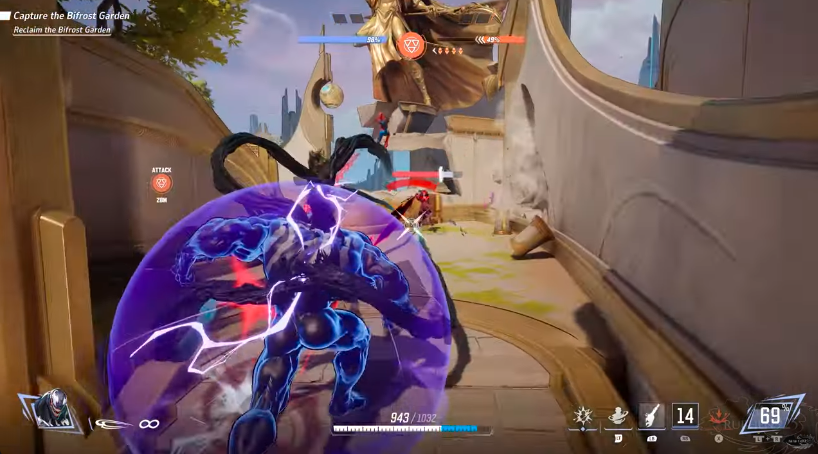
Marvel Rivals

vemon marvel rivals
vemon marvel rivals
Marvel Rivals is a third-person hero shooter video game developed and published by NetEase Games in collaboration with Marvel Games.
 
It came out on 6 December, 2024 on Microsoft Windows, PlayStation 5, and Xbox Series X/S. The game will be free-to-play with an ever-expanding roster of characters from Marvel Comics and 6v6 combat.

A Challenge to Overwatch 2

overwatch-2-pve-mode-abandoned

Marvel Rivals and Overwatch 2, being hero shooters, are natural competitors, although Overwatch 2 is First Person Shooter while Marvel Rivals is Third Person.

Unlike Overwatch 2, Marvel Rivals has free-to-play characters from the launch and beyond, which gives it a significant advantage over the former, in which the characters became free in a later update.

Many people interpret the decision to launch the game with free-to-play characters as a direct challenge to Overwatch 2.


Overwatch’s Downfall

Overwatch 2
Overwatch 2

Moreover, some controversial decisions taken by Blizzard regarding Overwatch 2 have caused frustration among the players. This led to them looking for alternatives. Conveniently, Marvel Rivals became available.

It is quite clear from the trailer and the beta of the game that it is inspired by Overwatch. Marvel Rivals also has 6v6 combat, which was a beloved feature of Overwatch but was removed in Overwatch 2.

Despite all this, Overwatch fans mostly hope that Marvel Rivals will pose enough of a challenge to prompt Blizzard into improving Overwatch 2. Between 2 games competing for the top, it is always the fans that win.

Core Ultra 9 285K vs Ryzen 9 9900X: Our Thoughts

AMD Ryzen 9 9900X

Rated: 8/10

Intel Core Ultra 9 285K

Rated: 6.7/10


Pros And Cons

CPUProsCons
Ryzen 9 9900X✅ Slightly better in terms of performance
✅ Has 28 MB larger L3 cache size
❌ Fewer physical cores
Core Ultra 9 285K✅ Has 12 more physical cores
✅ More modern manufacturing process
❌ Much more expensive

Key Takeaways

  • The gaming performance of both processors is about the same. The productivity performance was also not that much different on both processors. 
  • The 9900X surprisingly took about 23% less power than the Intel processor, whereas the temperatures were only 3% between the two.
  • The price of the 9900X is much lower than the Core Ultra 9 285K. As of December 2024, the 9900X is about $210 cheaper than the Core Ultra.
  • If you are about to build a new PC, we think going with the 9900X is a no-brainer when considering its low price and very comparable performance.


Comparison Table

FeatureCore Ultra 9 285KRyzen 9 9900X
SocketFCLGA-1851AM5
CodenameArrow LakeZen 5 (Granite Ridge)
Model number285K-
Integrated GPUArc Xe2 (Arrow Lake-S)Radeon Graphics
Shading Units512-
Memory Size192 GB192 GB
Best MotherboardsBest Motherboards For Core Ultra 9 285KBest Motherboards For Ryzen 9 9900X
Best CPU Coolers-Best CPU Coolers For Ryzen 9 9900X
Best RAM-Best RAM For Ryzen 9900X
Processor ReviewIntel Core Ultra 9 285K ReviewAMD Ryzen 9 9900X Review

Architectural Differences

  1. Core Count: Intel’s 285K has 24 cores (8 performance and 16 efficiency) and 24 threads, while the 9900X uses 12 cores and 24 threads.
  2. Clock Speed: The base clock speed of the performance cores on the 9900X is 4.4GHz, which is higher than the 3.7GHz clocks of the 285K. The boost clocks are 5.6GHz on the Ryzen and 5.5GHz on the Core Ultra.
  3. Process NodeThe Ryzen uses a 4nm processing node, which is a bit older than the 3nm manufacturing process of the Core Ultra 9 285K.
  4. TDPThe TDP of the 990X is 120 watts, which is slightly lower than the 125-watt TDP of the Core Ultra 9 285K.
  5. Cache: The 9900X has the advantage when it comes to the cache with a 64-megabyte buffer, whereas the 285K has a 36-megabyte buffer.

Intel has gone through a complete rebrand with their new Core Ultra chips. While this has been happening, AMD has more or less stuck to its roots. Let’s see how both of these approaches differ in the Core Ultra 9 285K vs Ryzen 9 9900X comparison!


Gaming Benchmarks – 1080p

Now that we have talked about the specifications of these two chips, we will take a look at how they perform in games. The specs of the test bench we used with these processors are written below:

Test Bench

 Star Wars Jedi: Survivor

Star Wars Jedi: Survivor
Star Wars Jedi: Survivor @1080p (Image By Tech4Gamers)
  • The first game we tested ran with an average framerate of 155 FPS on the Ryzen, which was about 2% lower than the 158 FPS of the Core Ultra 9 285K.
  • The minimum framerates were the same on both these processors. They plateaued down to 132 FPS in the hard-to-render scenes.

The Last Of Us Part 1

The Last Of Us
The Last Of Us @1080p (Image By Tech4Gamers)
  • The 9900X ran The Last Of Us at an average framerate of 172 FPS, whereas the Core Ultra 9 285K was about 13% faster with a framerate of about 194 FPS.
  • The minimum framerates were around 19% higher on the 285K at around 138 FPS, whereas the Ryzen 9 9900X went down to around 116 FPS.

Cyberpunk 2077

Cyberpunk 2077
Cyberpunk 2077 @1080p (Image By Tech4Gamers)
  • The 9900X made a comeback in our Cyberpunk test, with an average framerate of 158 FPS, which was about 20% faster than the 132 FPS of the Core Ultra 9 285K.
  • The 1% lows of the 9900X were about 15% higher than the Core Ultra at about 115 FPS, while Intel’s chip got a minimum framerate of 100 FPS.

Hogwarts Legacy

Hogwarts Legacy
Hogwarts Legacy @1080p (Image By Tech4Gamers)
  • AMD’s 9900X took another loss in our test of Hogwarts Legacy with a framerate of 116 FPS, which was about 5% lower than the 122 FPS of the Core Ultra 9 285K.
  • The 9900X lost out big time in the lows, with lows of 66 FPS, which was about 30% lower than the 86 FPS of the Core Ultra 9 285K.

Remnant 2

Remnant 2
Remnant 2 @1080p (Image By Tech4Gamers)
  • The 9900X lost out once again with an average framerate of 114 FPS, which was 6% lower than the 122 FPS of the Core Ultra 9 285K.
  • The 1% lows were about 9% lower on the Ryzen 9 9900X, with a framerate of 97 FPS, while the 285K hovered closer to lows of 106 FPS.

Homeworld 3

Homeworld 3
Homeworld 3 @1080p (Image By Tech4Gamers)
  • Ryzen took a big leap forward, with a framerate of 91 FPS, which was about 26% higher than the 72 FPS of the Core Ultra 9 285K.
  • The minimum framerates were 83% higher on the Ryzen at about 44 FPS, whereas the 285K got a minimum closer to around 24 FPS.

A Plague Tale: Requiem

A Plague Tale Requiem
A Plague Tale Requiem @1080p (Image By Tech4Gamers)
  • The Ryzen took another win in our test of this game, with an average framerate of 147 FPS, which was about 19% higher than the 123 FPS of the Core Ultra 9 285K.
  • The minimums took a large lead on the Ryzen once again at around 109 FPS, which was about 45% higher than the 75 FPS of the Core Ultra 9 285K.

Hitman 3

Hitman 3
Hitman 3 @1080p (Image By Tech4Gamers)
  • Sadly, the Ryzen lost in our last test in Hitman 3, where it got an average framerate of 246 FPS, which was about 10% lower than the 271 FPS of the Core Ultra 9 285K.
  • The Ryzen had 1% lows of 214 FPS, which comes out to about 12% lower than the Core Ultra 9 285K’s minimum framerates of 240 FPS.

Productivity Tests

Now that we have gone through the gaming tests, the next thing on the platter is the productivity tests. The test bench we did these productivity tests on is the same one as in the gaming benchmarks, so take a look at that if you are curious.

Cinebench R24

Cinebench R24
Cinebench R24 (Image By Tech4Gamers)
  • The single-core performance was higher on the Core Ultra 9 285K at around 150 points, whereas the Ryzen 9 9900X had a performance of 139 points, which creates a delta of around 8%.
  • Multicore performance was higher on the Intel chip as well, with a performance of about 2516 points against the 1834 points of the Ryzen 9 9900X. This was a huge 37% win for the Intel.

7-Zip 

7-Zip
7-Zip (Image By Tech4Gamers)
  • The compression test ran better ran better on the Intel, unsurprisingly. The Core Ultra had a score of 196 points, which was about 13% higher than the 173 points of the Ryzen 9 9900X.
  • The decompression test ran with a score of 208 points on the Ryzen, netting it a tiny win over the Core Ultra, which had a score of 206 points.

Photoshop

Photoshop
Photoshop (Image By Tech4Gamers)
  • The Ryzen knocked the Core Ultra out of the park in Photoshop, where the former had a score about 31% higher than the latter.
  • The Ryzen had a score of about 11853 points, which was much higher than the 9025 points of the Core Ultra 9 285K.

Overall Gaming Performance

Featured
Ryzen 9 9900X
Core Ultra 9 285K
Average FPS
📈149.875
📈149.125
1% lows
📉111.625
📉112.625
Productivity Score
✏️7/10
✏️5.96/10
Winner
AMD Ryzen 9 9900X
-
Featured
Ryzen 9 9900X
Average FPS
📈149.875
1% lows
📉111.625
Productivity Score
✏️7/10
Winner
AMD Ryzen 9 9900X
Buy Now
Featured
Core Ultra 9 285K
Average FPS
📈149.125
1% lows
📉112.625
Productivity Score
✏️5.96/10
Winner
-
Buy Now

Average Framerate

The 9900X had a very small 0.5% advantage when it came to the gaming tests, which is something you would not notice at all. Taking a step back, the Ryzen won in some titles whereas the Core Ultra took the lead in others. Carefully read the game-to-game performance to see how both processors perform in the games you want to play.

1% Lows

The minimums were a very frail 0.9% higher on the 285K across the games that we tested. This difference is, once again, too small to notice. The performance behaviors were about the same as the average framerates, with the Core Ultra being better in some games while the Ryzen clapped back in others.

 Productivity Tests

Both processors performed about equally in the productivity section. Yes, the Core Ultra performed better in the synthetic benchmarks, but the performance of the Ryzen in Photoshop made up for it in our testing suite.


Power Consumption

GameRyzen 9 9900XCore Ultra 9 285K
Star Wars Jedi: Survivor113140
The Last Of Us Part 1109154
Cyberpunk 2077103142
Hogwarts Legacy119156
Remnant 2121158
Homeworld 3111139
A Plague Tale: Requiem109138
Hitman 3111133
Average Power Draw112⚡145⚡
Winner: Ryzen 9 9900X

When we measured the power consumption on both these chips, we were surprised to see that the Core Ultra 9 took significantly more power than the Ryzen. The Ryzen took around 23% less power than the Core Ultra 9 285K.

Temperatures

GameRyzen 9 9900XCore Ultra 9 285K
Star Wars Jedi: Survivor6769
The Last Of Us Part 16663
Cyberpunk 20776776
Hogwarts Legacy6779
Remnant 26866
Homeworld 36865
A Plague Tale: Requiem6568
Hitman 36764
Average Temperatures66.87🌡️68.75🌡️
Winner: Ryzen 9 9900X

The temperatures were barely different between these chips. We measured that the Ryzen was only about 3% lower in temperatures. This difference is nowhere near a significant amount. The individual temperatures were also well within safe ranges, so temperatures should not factor into this decision.


Price And Availability

CPURyzen 9 9900XCore Ultra 9 285KPrice Difference
Launch MSRP💲499💲58918.04%
Current Price💲409💲61951.34%

The 9900X has been discounted in price since it came out (partially because it is selling really well on sites like Amazon), while the Core Ultra has only risen in price. The price is currently 51% apart, with the Core Ultra being much more expensive. You would be paying about $210 extra with the Core Ultra


Our Recommendation

Core Ultra 9 285K: In our testing with these chips, the Core Ultra seems slightly worse in the areas that matter and better with some productivity tests. The biggest drawback of this chip is its high price. If it wasn’t a whole $200 more expensive than the Ryzen, it would be a competitive processor.

Ryzen 9 9900X: Testing this chip showed us that it is a bit worse than the 285K when it comes to gaming performance, a difference that is certainly unnoticeable. The price, however, has a very noticeable difference. The price is what drives all the purchases behind the Ryzen 9 9900X, even if its performance isn’t staggering compared to the Core Ultra.

For anyone making a computer in 2024, or even in to 2025, we would recommend going with the 9900X over the Core Ultra 9 285K because of the former’s equivalent performance and low price.

FAQs

Who is the foundry of the Core Ultra 9 285K and the Ryezn 9 9900X?

Both the Core Ultra 9 285K and the Ryzen 9 9900X have the same foundry, that being TSMC.

Are both of these chips overclockable?

Yes, both the Ryzen 9 9900X and the Core Ultra 9 285K can be overclocked. 

Do both of these processors have ECC support?

Yes, both the Ryzen 9 9900X and the Core Ultra 9 285K have support for error-correcting memory.

Do both of these chips have integrated graphics?

Yes, both the Ryzen 9 9900X and the Core Ultra 9 285K have integrated graphics.

How many PCIe lanes does the Ryzen 9 9900X have?

The Ryzen 9 9900X has 28 PCIe lanes.

GeForce RTX 5070 Will Have RTX 4090 Level-Performance At $549 MSRP; Says Nvidia

Story Highlight
  • The new lineup RTX 50 series lineup features Blackwell architecture and GDDR7 memory.
  • RTX 5070 mid-range boasts 6144 CUDA cores, 12GB GDDR6, and 250W power consumption.
  • RTX 5070 has 72% fewer cores than the RTX 5090, raising questions about its performance claims, especially considering the 12GB VRAM limit for high-end gaming.

Nvidia today unveiled its next-gen GeForce RTX 50 series graphics cards, featuring the powerful Blackwell architecture and cutting-edge GDDR7 memory. The lineup includes the flagship RTX 5090, along with the RTX 5080, RTX 5070 Ti, and RTX 5070. All new graphic cards will use the latest 16-pin power connector, known as the 12V-2×6 connector

The head turner of the event was GeForce RTX 5070, which many of us didn’t expect to be announced today. This powerful mid-range graphics card features 6,144 CUDA Cores, 12GB of GDDR6 memory running at 28Gbps, and a 192-bit interface for a massive 672GB/s bandwidth. All this while consuming just 250W.

The most exciting part? The RTX 5070 is priced at $549 and promises performance on par with the $1599 RTX 4090.

Nvidia RTX 5090 GPU Core

On the other side, on paper, if we look at the specification number, you will find a pretty big difference between RTX 5070 and RTX 5090 showcasing the impressive performance one can expect from these graphics cards which wasn’t revealed by both AMD with their Radeon RX 9070 and 9070 XT and Nvidia with RTX 5000 series for some reason.

For context, the RTX 4070 arrived with 64% fewer cores than the RTX 4090. The RTX 3070 has 44% fewer cores than the RTX 3090. The RTX 2070 has 47% fewer cores than the RTX 2080 Ti, and the GTX 1070 has 46% fewer cores than the GTX 1080 Ti. That’s where the big difference lies, with the RTX 5070 having 72% fewer cores than the RTX 5090.

With these data in hand, the GeForce RTX 5070 looks very unappealing, but Nvidia claims otherwise. Not to mention the 12 GB of VRAM memory in a high-end range. When Intel is offering those 12 GB of VRAM in a mid-range.

We are talking about graphics cards, priced at $549 offering 12 GB of memory. An insufficient capacity to enjoy current games at the highest visual quality at 4K resolutions. Which is where these graphics would be aimed. Although of course, that is “solved” by activating NVIDIA DLSS 4.0 which now with Frame Gen adding 3 additional frames, means if you are getting 30FPS in the game with DLSS 4.0 and new Frame Gen expect 120FPS!, thus preventing VRAM from having a greater impact on the performance of a game.

Now we have to wait for the performance number to see if this claim from Nvidia seems valid. What’s your thought on the GeForce RTX 5070? Share your thoughts in the comment section below. 

NVIDIA GeForce RTX 5090: The World’s Most Powerful GPU Arrives for $1,999

In no surprise, NVIDIA today announced its new next-generation graphics cards lineup, these are the GeForce RTX 5090, RTX 5080, RTX 5070 Ti and RTX 5070. These are the company’s first graphics cards based on the Blackwell architecture. They are also the first GPUs on the market to use the next-generation GDDR7 memory.

And of course, they all come with the latest 16-pin power connector, known as the 12V-2×6 connector. RTX 5090 and RTX 5080 will also use the PCI-Express 5.0 x16 interface.

These graphics cards make use of the new Blackwell architecture. Which has been materialized thanks to the use of TSMC’s 3nm manufacturing process. Thanks to this process, they have managed to create a graphics chip with up to 92 billion transistors. If you are interested in AI performance, it is capable of offering up to 4,000 TOPS, three times more than its predecessor.

NVIDIA GeForce RTX 5090, RTX 5080, RTX 5070 Ti, and RTX 5070 Specifications and Price

GeForce RTX 5000 Series Pricing

The NVIDIA GeForce RTX 5090 is the company’s top-of-the-line GPU for the consumer market. NVIDIA didn’t mention the specs at the conference, but it is expected to arrive with 21,760 CUDA Cores along with a  32GB configuration of GDDR7 memory at 28Gbps.

Memory coupled with a 512-bit interface results in a bandwidth of 1,792 GB/s. All of this results in a GPU that consumes 575W of power. 125W more than the RTX 4090. The most interesting thing about this GPU is its price: $1,999. A truly impressive price.

The NVIDIA GeForce RTX 5080, for now, will be the company’s second most powerful GPU within this range. Now, there is a drastic difference in performance compared to its older sister. We are talking about a GN203-400 graphics chip with 10,752 CUDA Cores along with  16 GB of GDDR7 memory at 30 Gbps and a 256-bit interface.

So we are talking about the fact that all RTX 5090 specifications have been cut in half to make RTX 5080. If we talk about bandwidth, it reaches 960 GB / s, making its consumption 360W. Obviously, in the future, we will see at least an RTX 5080 Ti or SUPER variant, or both, that will reduce the huge performance gap. This graphics card comes for $999.

GeForce RTX 5090 Reference Design

The NVIDIA GeForce RTX 5070 Ti uses a GB203-300 chip with 8,960 CUDA Cores along with 16 GB of GDDR7 memory at 28 Gbps and a 256-bit interface to achieve a bandwidth of 896 GB/s. Its consumption is 300W. This model comes for $ 749.

The most interesting model is the NVIDIA GeForce RTX 5070, which we didn’t expect to be announced today. This graphics card would have 6,144 CUDA Cores along with 12 GB of memory at 28 Gbps with a 192-bit interface to reach a bandwidth of 672 GB/s with a consumption of 250W.

The most interesting thing of all comes knowing that with a price of $549, the GeForce RTX 5070 promises to offer the same performance as the GeForce RTX 4090. A graphics card that went on sale for $1,599.

What are your thoughts on the new GeForce RTX 50 series graphics cards from Nvidia? Share your thoughts in the comment section below. 

AMD Reveals Next-Gen Radeon RX 9070 And AI-Based FSR 4

Story Highlight
  • AMD has officially unveiled the Radeon RX 9070 and 9070 XT.
  • The new graphics cards will support AI-based FSR 4 and boast improvements with the RDNA 4 architecture.
  • More details on performance and specifications will be shared soon.

AMD’s CES keynote was far from the most eventful presentation, but it gave gamers a glimpse into the company’s future graphics cards. Following past leaks, the AI-based FSR 4 has been officially announced.

The leaks also discussed the Radeon RX 9070 graphics card; sure enough, AMD has publicly revealed the Radeon RX 9070 series.

Why it matters: The RDNA 4 architecture comes with the promise of a major generational leap. It is also expected to mark a focus on mid-range and budget markets for the company.

AMD RDNA 4
RDNA 4 Details via AMD

The most interesting part about AMD’s keynote was the fact that the Radeon RX 9070 GPUs were completely missing from the event. Instead, the press has shared details that were provided to them beforehand.

The gaming giant focused on FSR 4 for the keynote, confirming the use of artificial intelligence for this version of the upscaling technology. FSR 4 is also confirmed to be exclusive to the Radeon RX 9070 and RX 9070 XT.

According to images from the press, fans can expect improved ray tracing and better AI compute from the RDNA 4 graphics cards. Unfortunately, not much else is known about RDNA 4, FSR 4, or the RX 9070.

AMD is presumably waiting for Nvidia to unveil its Blackwell graphics cards before sharing more information about its own gaming plans. Still, a Q1 2025 launch for the GPUs has been confirmed.

Black Ops 6 FSR 4
Black Ops 6 Will Be The Showcase Title For FSR 4

During the keynote, Xbox’s Matt Booty also took to the stage and confirmed FSR 4 support for Black Ops 6. As such, it will be interesting to see how well the technology performs in its debut title.

With AMD’s CES keynote out of the way, Nvidia is next in line. The green camp will share information on Blackwell graphics cards in just a few more hours, creating buzz in the PC gaming community.

What are your thoughts on the Radeon RX 9070? Do you feel confident in AMD’s upcoming gaming GPUs? Let us know in the comments, and discuss your thoughts with other tech enthusiasts on the Tech4Gamers Forums.

AMD Ryzen 9950X3D Officially Unveiled, Up To 64% Faster Than Intel Core 9 Ultra 285K

Story Highlight
  • AMD has officially announced the Ryzen 9950X3D at CES 2025. 
  • The highly anticipated CPU has exceeded expectations as it is up to 64% faster than the Intel Core Ultra 9 285K. 
  • It also offers significant performance improvements over its predecessor.

AMD recently released 9800X3D, which exceeded expectations by a mile. It instantly outsold on all of the platforms due to massive demand. Despite that, a massive fandom was awaiting the release of 9950X3D.

Its leaked benchmarks fueled the excitement among fandom by revealing significant improvements over 7950X3D. The Zen 5 architect was also pretty hyped as just recently, a leaked screenshot revealed a 5.65 GHz turbo frequency.

Now, AMD has officially revealed the highly anticipated CPU, and it is up to 64% faster than the Intel Core 9 Ultra 285K.

Why it matters: Fans have been waiting to hear the official news regarding the Ryzen 9950X3D, and its reveal has surpassed expectations, showcasing AMD’s dominance in the CPU market. 

AMD-Ryzen-9-9950X3D-20-Percent-Faster-Than-Intel-Ultra-9-285K
AMD Ryzen 9 9950X3D Is, On Average, 20% Faster Than Intel Ultra 9 285K In Gaming

 Just recently, at CES 2025, it was revealed that the much-anticipated CPU is a new king in content creation as it delivers an average of 13% performance increase across the most popular content creation workloads over the prior generation (7950X3D). In popular benchmarks like Cinebench and Blender, there is over 15% performance improvement, which is pretty good. 

In comparison to the Intel Core Ultra 9 285K, the beast shows massive improvements. In comparison, it was hailed as the world’s best 16-core processor for both gamers and content creators. 

AMD Ryzen™ 9 7950X3D 16-Core, 32-Thread Desktop Processor
  • THE ULTIMATE GAMING PROCESSOR FOR SERIOUS CREATORS

For reference, the AMD 9950X3D is 36% faster in Cyberpunk 2077, 40% faster in Space Marine 2, 41% faster in Final Fantasy 16, and 64% faster in Watch Dogs: Legion when compared with the Intel Core Ultra 9 285K. On average, when tested on more than 40 games, it was 20%.

Ryzen-9-9950X3D-Specs
The Highly Anticipated CPU Has Exceeded Expectations

This is a massive leap for AMD and isn’t surprising anymore, given it is now the king of the CPU market. It should also be noted that the CPU is arriving in March 2025 with no specific date. 

What do you think of the tech giant’s new reveal at CES 2025? Are you excited to buy the CPU? Share your thoughts with us in the comments section or join the official Tech4Gamers forums for discussion

MSI Reveals New Intel B860/ H810 & Ryzen B850/ B840 Motherboards

[Press Release] MSI is releasing brand new motherboards based on the Intel B860 and H810 chipsets. These motherboards aim to offer an exciting combination of performance and reliability, providing important features like overclocking and a range of connectivity options.

As per MSI, the B860 chipset sports PCIe 5.0 slots and M.2 storage options. It also delivers solid performance with 24 PCIe lanes, while Thunderbolt 4 is supported across both the B860 and H810 chipsets.

Alongside this lineup, Intel is launching new non-K Core Ultra desktop CPUs. A total of 12 new options will arrive on the market, offering low-power CPUs that consume as low as 35W of power.

MSI states that its B860 motherboards will feature overclocking up to 9200+ MT/s. AI features also elevate performance further, offering NPU overclocking. Elsewhere, ease of use is a common theme across both chipsets.

MSI MAG B860 Tomahawk WiFi and MAG B860 Mortar WiFi
The MAG B860 Tomahawk and MAG B860M Mortar WiFi Offer Advanced Features Like Thunderbolt 4 Support

MSI promises streamlined M.2 heatsink installations, while the EZ PCIe release enables instant removal of graphics cards for streamlined DIY PC building. The same is true of WiFi connection installation, which is made easier than ever with the EZ Antenna.

In terms of connectivity, MSI promises features like WiFi 7 and up to 40Gbps data transfers. Thermal management is also impressive, with up to 12 power phase VRMs. As part of the new release, MSI has shared new details on the following models:

  • MAG B860 Tomahawk WiFi and MAG B860M Mortar WiFi
  • Pro B860 Series
  • Project Zero Series

The Project Zero lineup consists of new back-connect motherboards with three new flagship Z890 models. The MAG Z890 Tomahawk WiFi PZ, Tomahawk WiFi PZ White, and Pro Z890-S WiFi offer a clean and minimal build for visually appealing PC builds.

MSI has also confirmed its collaboration with SignalRGB for seamless RGB control across all motherboards. More details on the full Intel lineup can be found here.

MSI B850 and B840 Motherboards AMD
New Motherboards For AMD PCs Are Coming Up

In addition to the aforementioned Intel lineup, MSI has announced new AMD Ryzen boards. These include various options for the B850 and B840 chipsets, apart from two new X870E models, the MPG X870E Edge Ti WiFi and MAG X870E Tomahawk WiFi.

The B850 series is designed to work with the latest Ryzen processors and deliver stellar results. On the other hand, the B840 series is more focused on value and budget-friendliness.

A feature set similar to the Intel counterparts can be found here, including WiFi 7 and 5G LAN support. Multiple M.2 slots are also included in the motherboards, and the thermal management continues to be impressive across the lineup.

The following options have been unveiled for the Ryzen desktop CPUs:

  • MPG X870E Edge Ti WiFi
  • MPG B850 Edge Ti WiFi
  • MAG X870E Tomahawk WiFi
  • MAG B850 Tomahawk MAX WiFi
  • Pro B850/B840 Series

To learn more about these motherboards, follow this link to explore MSI’s offerings for AMD desktop processors.

ASRock Officially Reveals Full Slate of AMD B850 Motherboards

[Press Release] ASRock has confirmed new motherboards based on the AMD B850 chipset for the Phantom Gaming, Steel Legend, and Pro RS lineups. These include various designs, like an ATX form factor, a white PCB design, and various budget-friendly options.

As per the manufacturer, these motherboards boast a 14+2+1 power phase in addition to an 8-layer PCB. Other exciting features include 2.5Gbps LAN and WiFi 7 support on specific models.

Like many other ASRock motherboards, the B850 variants sport the DIY-friendly “Lite Release” GPU latch and the toolless M.2 heatsink. All variants also support BIOS Flashback, offering easy BIOS updates.

Elsewhere, the LiveMixer variants come with extensive expansion and connectivity options. These include 23 USB ports and dual PCIe x4 slots for peripherals like capture cards.

To make the lineup even better, ASRock has partnered with SignalRGB, which unifies RGB control for all devices and provides seamless control. System monitoring and macro automation are also included in SingalRGB. For the full details on the B850 motherboards, visit the official motherboard product page.