At T4G, my task is to cover the latest news around the gaming globe ASAP and with the utmost precision. I adore all the games and respect all the devs behind the amazing games that we get all year. So, whether it’s a PC or a Console game, I got it all covered.
Story Highlight
A new report suggests that Ubisoft has 10 Assassin’s Creed games planned in the next 5 years.
The release timeline might have been affected after the delay to Assassin’s Creed Shadows.
Black Flag 4 Remake has been tipped for a November 2025 release date with the upgraded engine.
Ubisoft is going through one of its worst phases of all time. As the stocks plummet and the company finds ways to stay afloat, their plans for the future of the Assassin’s Creed franchise have surfaced online.
A new rumor suggests that Ubisoft has plans to release 10 Assassin’s Creed games in the next 5 years.
Why it matters: Ubisoft seems to be trying to win back its fans with its critically acclaimed franchise. However, the recent Assasin’s Creed games haven’t been as good as the classics, so it’ll be interesting to see what the future holds for the franchise.
Multiple Assassin’s Creed games are planned in the next few years
According to an industry insider, 10 Assassin’s Creed titles of various lengths and scopes are planned for the next 5 years. However, the roadmap might now be affected a bit due to the troubles at Ubisoft and the delay in the release of Assassin’s Creed Shadows.
The projects that are rumored or are currently confirmed to be in the works include:
Assassin’s Creed 4 Black Flag Remake tipped for November 2025 release.
However, the plans for some of these games could have been altered because of everything going around. Notably, the lineup doesn’t include all AAA titles; it is a mix of remakes, multiplayer, and mobile games.
Another thing Insider Gaming has confirmed is the release window for Black Flag 4 Remake. The remake of unarguably one of the best Assassin’s Creed games is reportedly set to release in November 2025.
The source also received brief gameplay footage that showed Edward Kenway sailing a ship using Ubisoft’s upgraded Anvil Engine. But just like the other projects, the delay to Shadows might have affected plans for the remake as well.
I’ve previously worked for eXputer as a Senior News Writer for several years. Now with Tech4Gamers, I love to devoutly keep up with the latest gaming and entertainment industries. I have a Bachelor’s Degree in Computer Science and years of experience reporting on games and breaking exclusive stories. Besides my passion for gaming journalism, I love spending my leisure time farming away in Stardew Valley. VGC, IGN, GameSpot, Game Rant, TheGamer, GamingBolt, The Verge, NME, Metro, Dot Esports, GameByte, Kotaku Australia, PC Gamer, and more have cited my articles.
Story Highlight
Dave the Diver is the epitome of serenity in gaming, and we need more titles like it.
The game’s simple yet engaging mechanics and soothing score make it a calming experience.
It proves that you don’t need an overarching storyline to be a great game, simple things work too.
In the past decade or so, gaming has elevated itself into a medium where artistic stories can be told with as much satisfaction as movies or TV shows. Games with overarching storytelling and mature themes have become a common trend, with AAA titles giving us stories as poignant and touching as Oscar-winning pictures.
Sometimes, one doesn’t want to figure out the cure to brain-eating fungi or travel across dimensions to solve a murder but just relax while playing through a simple and less mind-consuming storyline.
Dave The Diver Makes Something As Simple As Diving One Of The Most Beautiful Experiences In Gaming
That is exactly why we need more relaxing games with less world-ending consequences and more laid-back fun, like Dave the Diver.
Why It Matters: We all love overarching storytelling in games, but sometimes you just want to lay back and experience a simple arcade title with engaging gameplay and that is why we need more games like Dave the Diver.
Why Dave The Diver Is So Fun
The evolution of gaming over the past few decades has certainly made it more expressive and artistically viable. But, even at its simplest, gaming is really enjoyable, and nothing proves that better than Dave the Diver.
The indie title truly captures the fun and carefree soul of early-era video games with a simple premise, basic controls, and fun challenges. In the game, you take control of the titular character, Dave, who is unsurprisingly a deep sea diver.
Mintrocket’s indie title has a pretty basic gameplay loop, you dive in the blue hole to hunt for fish in addition to completing other challenges during the day, and at night Dave helps run the Sushi Restauraunt he is working for.
Despite the simplicity, Dave the Diver never gets repetitive or dull as it keeps putting you into interesting situations and consistently thickens the plot.
Every new day brings fresh in-game challenges, side quests, more dangerous fish, and impatient customers, keeping the experience lively and engaging but with the same controls you learned during the tutorial.
The Indie Game Is Built To Calm You Down
Arguably the best thing about Dave the Diver is how calming playing the title actually is. Its serene and oceanic music score, which makes you feel like an actual deep sea explorer, makes the title an utterly relaxing experience.
Its humorous cutscenes, fun minigames, whacky characters, and wholesome moments make playing through Dave the Diver rather soothing.
Unlike most modern AAA games, where you have to stress about a maniacal villain and your complex power set, Dave the Diver is made to alleviate your worries.
The Game’s Musical Score, Especially In The Underwater Scenes, Is The Standout.
You can just put it on after a busy day and lose yourself in the simple yet charming mechanics of the title while not having to worry about any overarching storyline.
For sure, Dave the Diver’s plot is a little convoluted but it’s simple enough that one can enjoy the game without paying much attention to what’s going on.
And, because of its length, you can take your time to finish the Mintrocket title and immerse yourself in Dave’s adventurous world. Dave the Diver is a beautiful love letter to a time when video games were a lot more primitive but still a bundle of joy.
The title’s pixelated graphics, 2D gameplay combined with 3D art, and a basic yet very appealing gameplay loop make the indie title a fun and laid-back experience you can have any time without needing to remember any details, just like older video games.
We Need More Titles Like Dave The Diver
The gaming world is in dire need of more indie flicks like Dave the Diver, which allow players to take a seat and immerse themselves in the game world through interesting mechanics without hours of backstory.
No one has anything against the current trend of story-based AAA titles, but sometimes players don’t want to play through something heavy and want an uncomplicated gaming experience that engages them.
In addition, gaming has always taken pride in the variety it provides to the players and that is why the industry needs more Dave the Diver’s to counteract the more stressful experiences like Elden Ring.
I’ve previously worked for eXputer as a Senior News Writer for several years. Now with Tech4Gamers, I love to devoutly keep up with the latest gaming and entertainment industries. I have a Bachelor’s Degree in Computer Science and years of experience reporting on games and breaking exclusive stories. Besides my passion for gaming journalism, I love spending my leisure time farming away in Stardew Valley. VGC, IGN, GameSpot, Game Rant, TheGamer, GamingBolt, The Verge, NME, Metro, Dot Esports, GameByte, Kotaku Australia, PC Gamer, and more have cited my articles.
Story Highlight
One of the best-selling indie titles of all time, Stardew Valley, was developed by one person.
Eric Barone, also known as ConcernedApe, singlehandedly created the indie project in four years.
He handled every development aspect, and the game sold over 30 million units.
Whether it’s an indie title or a massive AAA game, game production takes a lot of care and hard work. Hence, it’s only logical that it takes a group of people to create the best product possible, and one wouldn’t expect an individual to create something successful.
But, believe it or not, it has happened, and that too quite recently with one of the most successful titles of all time: Stardew Valley.
Why It Matters: One person developing one of the most critically acclaimed and best-selling titles of all time is a feat that might not be achieved again.
Eric Barone, The Sole Creator Of Stardew Valley
Known professionally as ConcernedApe, Eric Barone started working on the game in 2011 after not being able to get a job. The Story of Seasons series inspired Eric Barone, who originally envisioned Stardew Valley as a fan-made franchise version that would give players more freedom.
Titles like Animal Crossing and Minecraft also inspired the developer, who added features not found in Story of Seasons.
Across Its Development Cycle, Stardew Valley Massively Expanded In Scale
Everything in Stardew Valley, from the pixel art to the music was made from scratch by Eric Barone by using tools like Paint.NET. Originally, he wanted it to be a small indie title on Xbox Live Indie Games but after a year, he realized that the game’s scope was far too broad.
Hence, Barone decided to publish the game on Steam and announced it in September 2012 while trying to garner interest through the Steam Greenlight System.
Due to the game’s reflection of Story of Seasons, Stardew Valley gained a lot of support from fans and Barone started to engage with the communities on Reddit and Twitter.
Realizing Stardew Valley’s True Potential
In 2013, Finn Brice, the director of game publisher Chucklefish, approached ConcernedApe and offered him help in publishing Stardew Valley. Barone would continue developing the game, but the publisher would take on other responsibilities like creating site hosting.
The developer liked working alone, saying he got bored doing a single thing and liked that he could switch anytime. This freedom also allowed Barone to make Stardew Valley open-ended and flexible.
Unlike Story of Seasons, it wouldn’t end after two in-game years, and players had a lot of freedom in how they used farming mechanics.
Eric Barone Focused On Immersion And Community While Making The Villagers
In addition, solely developing Stardew Valley allowed Eric Barone to convey his message of the significance local communities have and the struggles of the working class against capitalism.
Barone worked on the game for four more years, foregoing Steam Early Access because he only wanted to launch the game when he felt it was ready.
Throughout the farming simulator’s development, ConcernedApe’s programming skills improved massively and he moved Stardew Valley from C# to MonoGame, allowing mods to have 4 gigs of RAM.
The Release Of Stardew Valley
After developing the title for almost 5 years, Eric Barone finally released it for PC on February 26, 2016, and the rest is history.
The developer continued working on the title to patch bugs, and over the years, Barone added a lot more end-game content to make Stardew Valley more expansive while also creating a co-op mode that took two years to perfect.
The result of all this love and care was one of the biggest hits in gaming history. Critics and fans loved it, with many calling it one of the greatest titles in history, and even the creator of the Story of Seasons was happy with it.
Publications stated that Stardew Valley breathed new life into the genre and that was because every aspect was crafted with utmost care.
The title sold 1 million copies in a month, but as of 2024, 30 million people have bought Stardew Valley, with 19 million sales being PC-specific.
Eric Barone became one of Forbes’ “30 under 30” inclusions in 2017, and a name forever etched in gaming ethos.
Stardew Valley is proof that with sheer will, passion, and talent, you can create one of the biggest commercial hits in gaming history all alone. The farming simulator is one of the most profound tales in the industry and only came to fruition because the creator had love and care for his video game.
I’ve previously worked for eXputer as a Senior News Writer for several years. Now with Tech4Gamers, I love to devoutly keep up with the latest gaming and entertainment industries. I have a Bachelor’s Degree in Computer Science and years of experience reporting on games and breaking exclusive stories. Besides my passion for gaming journalism, I love spending my leisure time farming away in Stardew Valley. VGC, IGN, GameSpot, Game Rant, TheGamer, GamingBolt, The Verge, NME, Metro, Dot Esports, GameByte, Kotaku Australia, PC Gamer, and more have cited my articles.
Story Highlight
Even though it’s a great game, the ending of Firewatch lets it down.
It is anticlimactic and feels incomplete as we don’t get to meet Delilah.
The message of the game is beautiful, but the ending is not so much.
In my opinion, a good ending is one that gets people talking about the product in question and divides opinion, imploring the consumer to draw their own conclusions. And no other game pulls off this trope better than Campo Santo’s Firewatch.
With rave reviews from both critics and fans alike, Firewatch is considered a cult classic with only one gaping flaw: its rather unsatisfying ending.
Why It Matters: Firewatch is one of the best depictions of grief and its consequences in gaming, but its ending fails to hold everything together.
The Plot Of Firewatch
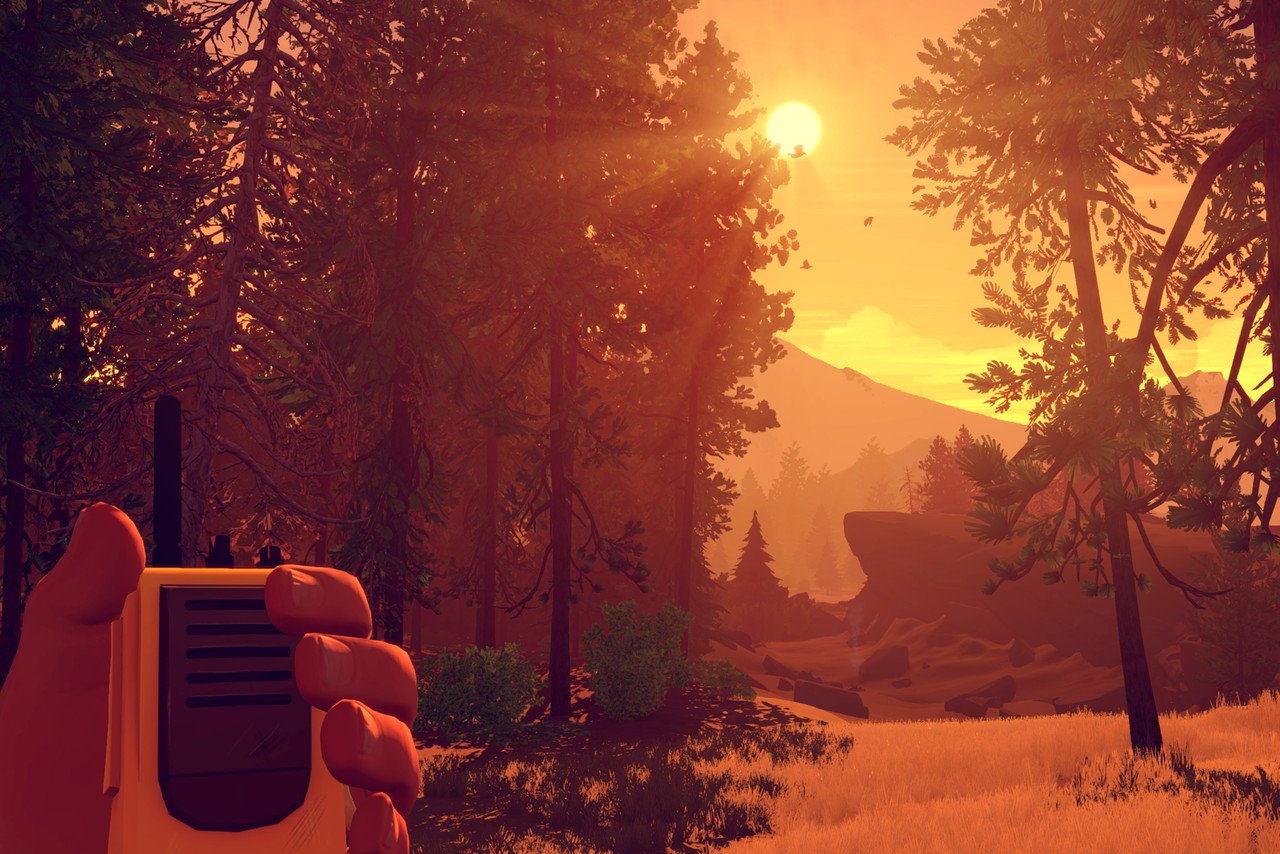
The narrative adventure game set in a national park during the ‘80s isn’t your run-of-the-mill title with blockbuster gameplay, rather it’s a story with heart that touches on some serious themes like grief, loss, and regret built upon dialog options.
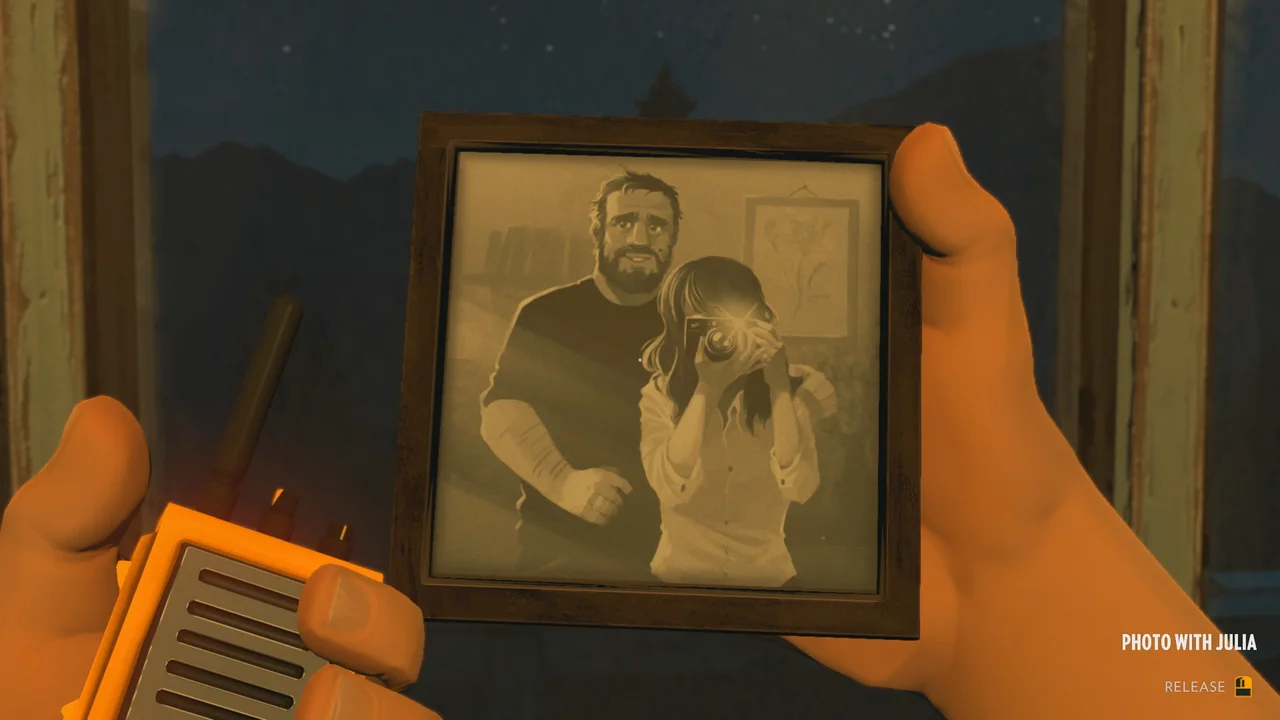
Our protagonist is Henry, a middle-aged man who takes up the job of a fire lookout at the Shoshone National Forest. A small prologue shows us how Henry gets the job after his wife Julia gets diagnosed with dementia and moves out.
Through a walkie-talkie, Henry is contacted by Delilah, a lookout in another tower and our main companion in Firewatch, who becomes a close friend.
Throughout the first days, we keep coming across mysterious stuff like an abandoned campsite, Delilah talking to someone else about Henry not knowing something, and a bag belonging to Brian Goodwin, the son of a former lookout who was stationed at Henry’s tower.
On day 76, Henry is near the lake when he finds a notepad detailing all of his conversations with Delilah before he is knocked out by an unseen figure following strange radio static.
When the protagonist wakes up, the evidence is gone, and a strange noise leads him to a fenced-off portion of the park at Wapiti station.
Firewatch Is A Game About Grief And Loss
Unable to get through, Henry contacts Delilah, and they find out someone has been listening on their line. Day 77 of Firewatch sees us finally break into Wapiti station and find an abandoned government site with a camp that contains detailed folders on both him and Delilah.
Scared by this new reveal, Henry takes a receiver from the camp and goes back just to see the station go up in flames minutes later. On day 78, two different fires are burning and you are cut off from Delilah and explore Cave 452 on your own.
The Ending And Why It’s Bad
Here, Henry discovers the hideout of Brian Goodwin and some of his memorabilia, with Firewatch unveiling its biggest secret. Deeper into the cave, Henry finds the corpse of Brian Goodwin, who died from a climbing incident.
Day 79 is where Firewatch draws to a close, with the two fires combining to wreak havoc on the park. A helicopter is supposed to come to pick you and Delilah up, setting up a first meeting. But before that, the mystery behind Brian Goodwin is solved when we find a tape recorder his dad Ned leaves for Henry.
Firewatch unveils all it’s a mystery to be a lonely man dealing with the loss of his son
Neddiscloses to Henry how Brian died while learning how to climb with him, and he just hid at the park because he was scared to face the world.
The teenage girls were safe, and the government researchers were on hiatus, meaning that everything mysterious happening at the park was just a grieving man afraid to face the world. While heading to Delilah’s lookout, Henry finds out she has already left on another helicopter because of the fire.
The player doesn’t get to see the person they have spent the entire game with and Henry can only roam through her watchtower, waiting for his helicopter.
The Ending Feels Incomplete
It is an understatement to say that the ending of Firewatch is anticlimactic. The game beautifully crafts a mystery throughout the four hoursjust to pin it on one aggrieved man.
Firewatch isn’t about an overarching mystery; it’s about the grief humans go through every day.
Of course, there is the part where we don’t get to see Delilah, the one person whom Henry had connected with. But grief is isolating, and no one can resolve it for us, and maybe that is what the ending wants to convey to the user.
I’ve previously worked for eXputer as a Senior News Writer for several years. Now with Tech4Gamers, I love to devoutly keep up with the latest gaming and entertainment industries. I have a Bachelor’s Degree in Computer Science and years of experience reporting on games and breaking exclusive stories. Besides my passion for gaming journalism, I love spending my leisure time farming away in Stardew Valley. VGC, IGN, GameSpot, Game Rant, TheGamer, GamingBolt, The Verge, NME, Metro, Dot Esports, GameByte, Kotaku Australia, PC Gamer, and more have cited my articles.
Story Highlight
Time loops are an interesting concept, but they can be repetitive in gaming.
Unlike movies, which skip most of the loop when the plot is progressing, games can’t do that.
This, mixed with the absurd plot twists, makes time loops a plot mechanic not really suited to games.
Ever since the release of Groundhog Day in 1993, the time loop concept has been frequently used in movies, TV shows, and books due to its interesting and gripping nature.
Even though there are critically acclaimed titles based on time loops like The Outer Wilds, Returnal, and The Legend of Zelda: Ocarina of Time, the concept hasn’t been used as excessively as it has been in other forms of media. And, in my opinion, there are good reasons why.
Outer Wilds Is Arguably The Best Time Loop Video Game
Why It Matters: Time loop games can be a really profitable niche genre, but due to certain factors, they don’t translate well.
Time Loops In Games Are Repetitive
The basic premise of a time loop is that the person going through it has to live the entire duration over and over again until they figure a way out. Hence, if an important event is taking place later in the loop you still have to go through the entire loop.
When the plot progresses in time-loop movies, the first part of the loop is skipped, and we go straight to the important events in question, but that’s not the case in games, making loops repetitive.
Take Annapurna Interactive’s 2021 adventure title, Twelve Minutes, which gives you control of a husband stuck in a 12-minute time loop.
Twelve Minutes Is Proof That Translating Time Loops To Gaming Is Hard
In the game, you have to stop a hitman from barging in and killing you by trying to figure out the mystery behind this break-in. Initially, the loop’s duration seems short, but once you finish two-thirds of the game, the first half of the time loop is redundant.
You Still Have To Go Through The Loop
Once the husband figures out the hitman’s motivation and finds a way to stop him, you have nothing new to do in the first 5-6 minutes of the loop, making it a slog to get through.
Furthermore, you still have to perform the tasks that stop the hitman over and over again in the final third of the game so you can move the plot ahead and find who killed your wife’s father.
At one point, the repetition gets so excessive that you have nothing to do but watch your wife cry before the hitman arrives while still having to do the tasks that stop the hitman, making the experience feel like more of a chore in the final third.
Twelve Minutes Time Loops Renders It Partially Unplayable Near The End
You can say that this is due to bad writing, and you may be right because even the developers give up and make you wait the first 5 minutes near the game’s ending. However, the concept of time loops does restrict creativity, and you can’t deny that.
In addition, even when we reach the point in Twelve Minutes where you can do nothing but wait, the tasks required to stop the hitman still need to be performed, making the entire experience rather exhausting.
Absurd Plot Twists
Another facet of the time loop genre that doesn’t really translate well to gaming is the ridiculous plot twist ending. Some movies like Happy Death Day pull this trope off but others use the plot device just for the sake of it and Twelve Minutes is one example.
At the end of the Annapurna Interactive title, you learn that the loop and all the events you went through were taking place inside your head during a conversation with your father. This is the game’s canon ending, and it is rather unsatisfactory.
There is no build-up or hints to suggest this will happen, making it seem like the ending is just for the shock gotcha value.
Other time loop media also have this problem, and it is a defect in the concept itself as it tries to make the experience feel worth it by putting an absurd twist in the end. Hence, this aspect, in addition to other things, makes translating the concept into gaming tricky and tedious.
I’ve previously worked for eXputer as a Senior News Writer for several years. Now with Tech4Gamers, I love to devoutly keep up with the latest gaming and entertainment industries. I have a Bachelor’s Degree in Computer Science and years of experience reporting on games and breaking exclusive stories. Besides my passion for gaming journalism, I love spending my leisure time farming away in Stardew Valley. VGC, IGN, GameSpot, Game Rant, TheGamer, GamingBolt, The Verge, NME, Metro, Dot Esports, GameByte, Kotaku Australia, PC Gamer, and more have cited my articles.
Story Highlight
The sports genre used to be a well of creative ideas, but the lack of competition has diminished that.
Nowadays, sports games are a way to sell you microtransactions, not a fun experience.
Even if a modern sports title is good, the experience is ruined by the in-app purchases being pushed on you.
Over the past few decades, the sports genre has evolved into one of the most financially viable assets of the industry, with major franchises like EA’s FC and NBA 2K selling in millions every year.
However, even though the genre has been producing more realistic simulators that mimic real life, it has become stale and unimaginative. For example, even though every FC game makes hundreds of millions, the fan reception has been getting worse.
In my opinion, the reason games in the genre have become increasingly uninspiring over the years is the lack of competition.
Why It Matters: Sports games constitute one of the most financially reliable avenues in the gaming world, but with the titles slowly becoming lacklustre, this might not stay true for long.
The Sports Genre Lacks Choice
Looking at the state of sports video games at the start of this century, you will notice the variety of choices players had. If you didn’t like the EA Sports Madden games, you could just grab the iteration developed by 2K.
The same was true for NBA titles (2K and EA), football (Konami, EA, and Dino Dini), and almost every major sport.
With such ferocious competition from rivals, there was a sense of emergency amongst the developers that they had to make the most innovative and engaging video game to attract fans and make money, imploring them to come up with new and imaginative.
For instance, Madden 2005 gave us the brilliant franchise mode that forever changed the landscape and made it one of the best offerings in the series’ history.
However, NFL 2K5 wasn’t any less groundbreaking. Its realistic broadcast package mimicked real life and made the players feel like they were playing a live NFL match.
Sports Games Don’t Have The Same Variety They Had Two Decades Ago
Hence, people had the freedom to choose what kind of experience they wanted and that choice was only present because different developers were competing with one another.
But now, that isn’t the case, with many of the franchises we once loved dying, such as PES. Because of this development, developers have made sports games a means to sell microtransactions instead of innovating and delivering a fun experience.
Even if a sports title is enjoyable in this day and age, you can’t just boot up your console or PC and enjoy a game for 3-4 hours without seeing multiple ads for a paid in-game purchase you don’t really need, which turns the experience sour.
And, the ones to blame aren’t the people directly making these titles, but rather the executives and the business model they have implemented.
A lot of these new sports games have interesting modes and engaging mechanics but all of that is overshadowed by corporations using these titles as psyops to force kids into purchasing loot boxes.
Lack Of Gameplay Innovation
There is no doubt that these new sports games look amazing graphically, but that has been the case for almost a decade now, and in that time, no real gameplay innovations have really been introduced besides hair and clothes physics.
EA Sports FC 25 Has A New AI IQ System, But Will Anyone Really Notice It?
For sure, we are told that there is a new AI system that affects player movement or a new physics system. But, in reality, we barely ever notice these small changes as the impact is insubstantial, which makes us question the $70 price tag these titles have every year.
And, it’s not that gameplay innovations aren’t possible anymore, the reality is just that studios are more interested in selling you microtransactions than making a sports simulator feel fresh and fun to play.
The lack of competition in the sports genre has made studios lazy, and instead of thinking of new innovations for the genre, they use it to shove microtransactions down our throats.
No doubt, these titles still make heaps in revenue, but the soul of the games has been taken away because of corporate greed.
At Tech4Gamers, I work as a guides expert. My role involves writing about solving different gaming and tech-related topics that pique my interest and that I believe more people should know about. This position allows me to share my insights and discoveries with a broader audience, enriching their gaming experiences with the unique perspectives I bring.
Story Highlights
For the past few patches, Tanks have been dominating the meta to the point that no other picks have been viable.
Exchanters and healers aside, even Assassins and other burst Junglers have been replaced by Tanks like Barats or Hylos.
The upcoming items may give other roles a chance to stand their own, but only time will tell.
In a multiplayer game that’s been up and running for as long as Mobile Legends has, the meta is bound to change. With each patch, nerfs and buffs to prior heroes and items, as well as revamps and new additions altogether help to keep the meta fresh.
However, for the past 4-5 patches, Mobile Legends has been extremely stale with what works and what doesn’t. What doesn’t work is half the character roster.
The Tankiness Problem
Terizla screaming in his intro animation (Captured by Tech4gamers)
Tanks are one of the staples of any kind of multiplayer game. Their job is to tank damage for their team and provide utilities or peels. However, in Mobile Legends, there’s been a trend of Tanks that can not only frontline and tank damage but also deal absurd amounts of damage while doing so.
Heroes like Uranus always existed which had enough sustain to survive the enemy team’s barrage of attacks while also dealing a significant amount of damage. Uranus was balanced around the fact that he had no CC, so you could simply ignore him and focus on the backline. Antiheal items also countered him.
Arlott in his intro animation (Captured by Tech4gamers)
The newer (and revamped) tanks seem to follow a different design philosophy. Terizla has one of the highest early game single instance damage out of any other Hero while also being absurdly difficult to kill. Akai deals damage based on his own HP and also has one of the strongest CC Ultimates in the game.
This makes any other damaging role pretty much useless. The most popular Junglers in the past few patches have been Friederin, Akai, and Barats for a reason. Each of these can initiate, assassinate, tank, and provide consistent DPS.
No Need To Support Your Team If The Enemy’s Dead
Minotaur’s elite skin (Captured by Tech4gamers)
This advantage that tanks have goes beyond just their ability to deal damage. The most used supports in the past patches have mostly consisted of Tigreal, Atlas, and Minotaur. Tigreal being perma-banned in every match despite the recent nerf on him is something very concerning.
Setter tanks are so strong that no other supports can compare. No amount of healing and buffs can compete with a 5-person hard CC effect. This specific thing is healthy for the game if done in moderation.
Having good setters in the game is important, but other supports should have a power level that can compete.
Nolan Is The Only Assassin
Nolan in his Starlight skin (Captured by Tech4gamers)
Assassins perhaps got an even shorter end of the stick that supports. In a meta defined by tankiness, heroes that specialize in picking off squishy heroes are kinda useless.
Your 3000 matches Fanny might be able to barge in and one shot the enemy Layla, but an Akai can do so while also providing disruption and CC to help your team, and also tanking damage.
On his initial release, Nolan was absurdly broken and had a purify on his ultimate. In pro play, he was the only assassin being used (this was before the Helcurt revamp). When Moonton decided to remove the purify, assassins took a backseat once more.
Even Marskmen Can Tank
Perhaps the funniest and most extreme example of this is the reign of tank-build Karrie. She could out-damage the enemy MM early game because of her passive and early game items such as Thunderbelt and still scale well late.
Granted, Moonton fixed this quickly because a tanky marksman isn’t fair. Still, the most popular Marskmen for several patches being a Tank build Karrie shows just how important being chonky is in Mobile Legends.
Is This Being Fixed?
There are items Moonton has been testing such as Skypiercer and Wishing Lantern among others that may bring back other roles, but not enough time has passed to make a solid assumption.
With how things stand, as a salty assassin main, I hope the meta shifts again very soon.
At Tech4Gamers, I work as a guides expert. My role involves writing about solving different gaming and tech-related topics that pique my interest and that I believe more people should know about. This position allows me to share my insights and discoveries with a broader audience, enriching their gaming experiences with the unique perspectives I bring.
Story Highlights
Viture Pro smart glasses turn your iPhone into a bright, multi-screen portable workspace.
The glasses’ electrochromic dimming feature reduces ambient light by 99.5%, ensuring clear visibility even in bright environments.
The SpaceWalker app enables smooth cursor control across virtual screens, which is perfect for multitasking.
The glasses are compatible with various devices, including Android, MacBook, and Windows.
As someone constantly on the move, I’ve always searched for tech to transform my mobile workspace into something akin to my multi-screen home office setup. With smart glasses projected to become more mainstream and drive higher market revenue, my quest led me to explore the Viture Pro smart glasses.
What started as a quest for the best portable desktop solution has become a surprising journey into a new computing experience: spatial computing.
A Bright Upgrade
Before Viture Pro, I tried almost everything, including Xreal’s Air 2, which had decent features but significant drawbacks. Like others, I encountered issues with the internal battery and found it frustrating to control the cursor on virtual displays.
Enter the Viture Pro smart glasses. These glasses caught my eye with their 1,000-nit brightness and crisp displays, making them the brightest on the market. Whether I’m working indoors or taking a break outside, the clarity of the displays is impressive.
According to users, the electrochromic dimming feature is awesome. It reduces ambient light by 99.5% and ensures you can work comfortably under the sun. Beyond brightness, the Viture Pro transforms an iPhone into a portable spatial computer, offering a multi-screen setup that rivals a desktop experience.
The SpaceWalker App
Viture’s SpaceWalker app, specifically its new trackpad mode, lets me use my iPhone as a trackpad. This enables precise cursor control on the Viture Pro’s virtual displays.
Laser Beam Option – Image Credit (Viture)
In previous setups with other smart glasses, I was constantly frustrated by the lack of intuitive navigation. I’d have to pick up my phone to move the cursor, then put it down to type on my Bluetooth keyboard. It was clunky and inefficient.
But with the SpaceWalker app, those days are behind me. Now, I can tap and drag on my iPhone’s screen just like I would with a laptop trackpad, and the cursor glides smoothly across the virtual screens in front of me.
My iPhone and Viture Pro glasses effectively become a spatial computer paired with a Bluetooth keyboard. I can work on multiple tasks simultaneously with three virtual screens that feel as natural as my physical monitors at home.
A Day In The Life With Viture Pro
Let me walk you through a typical workday to understand how these glasses fit into my daily routine. I start by connecting the Viture Pro to my iPhone 13 Pro Max via an adapter, but the XR Glasses are directly compatible with the iPhone 15/ 15 Pro.
HDMI Adapter – Image Credit (Viture)
Once connected, the home screen displays a news feed, preference settings, and a selection of apps, but my focus is on the browser. I do most of my writing in CoWriter, and I like to keep Gmail and a research window open simultaneously. With Viture Pro, I have all three apps in front of me.
As I type away on my Bluetooth keyboard, the trackpad mode allows me to navigate effortlessly between screens. The brightness and clarity of the Viture Pro displays mean that I can work in any environment without worrying about glare or eye strain.
Beyond The iPhone
Even more exciting is that the Viture Pro isn’t limited to iPhone users. The SpaceWalker app is available for Android, MacBook, and Windows devices, each offering a slightly different but equally compelling experience.
For example, when connected to my Windows laptop, I can unlock additional display modes, such as vertically stacked screens or an ultrawide monitor, which is perfect for video editing or coding.
A Step Towards The Future
In conclusion, the Viture Pro smart glasses represent a significant step forward in mobile computing. They offer a unique and powerful solution for anyone looking to take their workspace on the go.
As per user review, the combination of bright, crisp displays, intuitive cursor control, and the flexibility to work across multiple devices makes the Viture Pro a standout choice in the smart glasses market.
Viture Pro XR – Image Credit (Viture)
For iPhone users, in particular, these glasses offer a glimpse into the future of spatial computing. Your phone isn’t just a mobile device but a gateway to a multi-screen desktop experience that fits in your pocket. If you want to upgrade your mobile productivity setup, the Viture Pro smart glasses are worth considering.
As a Hardware Expert at Tech4Gamers, I bring my decade-long expertise in electronics design, embedded solutions, and prototyping. My knack for exposing misconceptions in the tech world finds a perfect outlet here.
Story Highlights
Intel’s CPUs are causing widespread instability, especially in gaming, leading to revenue losses for game developers.
Intel’s response has been slow, with only a forum post and a planned microcode update, leaving users dissatisfied.
Some developers and gamers are switching to AMD CPUs due to ongoing issues with Intel’s processors.
Intel is under increasing pressure to address widespread 13th and 14th-generation CPU instability issues. Intel’s, particularly these two models, are causing most of the crashes.
One user reported frequent crashes with his i9-13900K CPU, affecting various applications and games despite having no overclocking or BIOS tweaks. Other users experiencing Intel Core i9-14900K issues have reported several stability problems during games.
Despite the instability and potentially permanent damage in its 13th and 14th-generation CPUs, Intel continues to sell the processors without issuing a recall or providing a clear explanation.
Fixes Lead To Performance Drops And Revenue Losses
According to ZDNet Korea, Intel’s 13th and 14th Generation Core CPUs were causing instability, especially in games like Tekken 8 and those built on Unreal Engine. This led to gamers returning these CPUs due to crashes.
Moreover, Alder Games has warned users of Intel’s 13th-generation CPUs, stating that these processors may cause crashes in games built on Unreal Engine 5.
In response to these issues, Intel worked with motherboard makers to create a fix called the Intel Baseline Profile. This fix involved changing many BIOS settings to improve stability. However, Hardwareluxx tested the new profile with the Core i9-14900K and observed a performance decrease of about 9% across several tests.
Recently, the issue has resurfaced. The Level 1Techs investigated and found troubling data. According to the Level1Tech YouTube channel, developers are losing significant revenue due to crashes in games running on these CPUs. Around 10% to 25% of these chips have issues.
Analysis And Industry Impact
Level1Techs analyzed crash data over 90 days and found that out of 1,584 crashes, 1,431 were from the Core i9-13900K and Core i9-14900K. AMD CPUs, by contrast, were responsible for only four crashes in the same period, even though AMD CPUs make up about 30% of the CPUs in the data.
No 14th Generation CPU Is Unsafe – Image Credit (Junaid Tech)
The common belief was that these issues were due to motherboards supplying too much power to the CPUs. However, Level 1Techs investigations found instability occurs even with conservative power supplies.
Some game developers, gamers, and server suppliers are advising clients transitioning to AMD CPUs due to these issues, with some describing Intel’s CPUs as defective. Game developers from Alderon Games and Warframe have reported a pattern of crashes with these Intel processors and are moving their servers to AMD CPUs.
Ongoing Issues And Limited Solutions
The problem isn’t limited to just a few users with overclocked systems. Even Epic Games has a support page dedicated to crashes related to these CPUs in Fortnite, which shows how common the problem is.
Intel has been slow to address the issue. So far, the most significant response from Intel is a forum post by Thomas Hannaford. He said Intel had found a faulty microcode issue causing excessive voltage and instability problems in some 13th and 14th Generation CPUs.
Intel advises users to apply BIOS updates and use default power settings. Overclocking or using higher power delivery settings is at the user’s risk and may void warranties. ASUS and other manufacturers have issued updates that include Intel Default Settings to address these issues.
Some users express dissatisfaction with Intel’s handling of situations, citing poor communication and product performance issues. They report system crashes and instability, even with recommended settings.
Intel is committed to supporting customers who experience instability. Intel advises contacting the system vendor’s support team for users with systems from OEMs. Users with boxed or tray processors should contact Intel Customer Support for assistance.
Warranty Extension And Upcoming Fix
Intel communicated regarding Offering 2 Additional Years of CPU Warranty Amid Rampant Crashing regarding CPU instability issues. Further, Intel plans to release a microcode update to fix the ongoing issue by mid-August.
AMD Gained A Major Edge Over Intel – Image Credit (Tech4Gamers)
It’s reasonable to expect Intel to provide a fix after several months, but the issue is complex and involves many factors. Intel should create a dedicated page to address these instability issues, where users can find the latest developments and support.
As users continue to voice their concerns on forums and social media, Intel must resolve these stability issues to maintain its reputation in the market. Despite being a long-time Intel user, I am concerned about upgrading my PC to AMD CPUs in the future due to the difficulty of resolving these issues.
At Tech4Gamers, he is recognized for his insightful features and opinion pieces, where he blends his passion for gaming with a keen understanding of technological trends. His work, marked by depth and accessibility, makes him a respected voice in the tech and gaming community.
Story Highlights
The move from physical media to digital has made games more accessible and more prone to obsolescence if servers shut down.
Preserving games is vital for their cultural and historical value, especially as digital games become inaccessible.
Support full purchases, foster gaming communities, prioritize quality over quantity, and appreciate games for their lasting experiences.
Growing up as a gamer, I’ve watched the gaming landscape shift dramatically from physical to digital. There was a time when buying a new game was a big deal: saving up, holding that cartridge or disc, and proudly adding it to my collection. Each game felt like a meaningful addition to my library.
As digital sales are now dominating the market, the UK supermarkets Tesco and GameStop Ireland have ceased the sale of physical video games due to a significant shift towards digital gaming.
This rapid evolution, while impressive, has brought with it a troubling trend: the disposability of games. In this article, I will explain the implications of this shift and offer suggestions for how we might reclaim the value that seems to be slipping away.
The Shift From Collectibles To Consumables
Take, for example, when I finally got my hands on The Legend of Zelda: Ocarina of Time, the best game of all time, for the Nintendo 64 back in 1998. I eagerly saved up for the game, and holding that physical cartridge felt like having a piece of gaming history.
Legend Of Zelda Kokiri Village – Image Credit (Zelda Wiki)
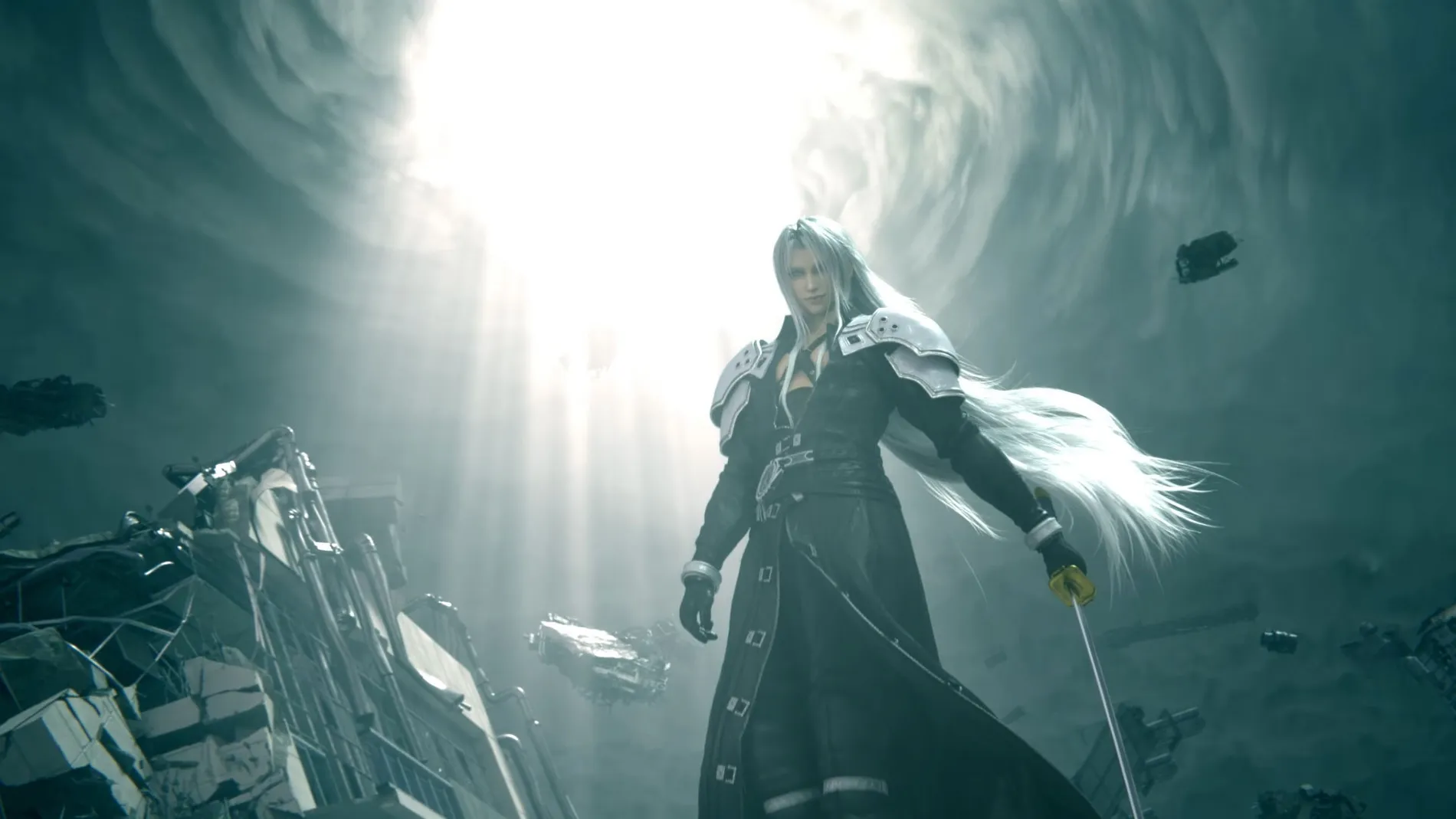
Square Enix is considering using Unreal Engine 5 for the trilogy’s finale to ensure an exceptional experience. However, we should keep these games in pristine condition and remember them fondly.
Final Fantasy VII Remake – Image Credit (Square Enix)
But today, the gaming landscape feels drastically different, with subscription services like Xbox Game Pass and PlayStation Plus games being more accessible. However, Sony’s CEO believes that game subscriptions are less valuable than video streaming services because gamers typically focus on one game at a time.
I found myself downloading and playing games like Returnal from my subscription service, but I switched to the next title within hours because the game didn’t meet expectations. This ease of access often results in games being played briefly and then forgotten, lacking the lasting impact of earlier titles.
Preserving video games is crucial. Unlike the physical media of the past, many modern games rely on online servers to function. Once those servers are shut down, the games become inaccessible.
This reality hit me hard with the shutdown of Atlas Rogues. Although many players loved the game, it vanished almost as quickly as it appeared, highlighting how rapidly digital games can become obsolete.
Preserving games isn’t just about keeping access to them; it’s about maintaining their cultural and historical significance. Games that have shaped the industry or resonated deeply with players deserve to be remembered.
However, the risk of losing valuable titles grows as the industry shifts towards short-term engagement and monetization.
Rediscovering The Value Of Games
So, what can we do to reclaim the value that seems to be slipping away? Here are some ideas based on my observations:
Support Full Purchases: While subscription services are convenient, buying games outright helps give them more value. It’s a way to connect more deeply with the game and support its developers.
Foster Community Engagement: Building strong, dedicated communities around games can help them endure. Games with passionate fan bases are more likely to be remembered and preserved.
Embrace Quality Over Quantity: Games succeed by tapping into players’ nostalgia and craving for quality. By prioritizing substantial experiences over fleeting ones, we can shift the industry’s focus toward lasting appeal.
Encourage Thoughtful Gaming Experiences: Explore and appreciate games that offer unique and memorable experiences instead of rushing through the latest releases.
By shifting our focus from immediate satisfaction to enduring enjoyment, we can ensure that gaming remains about more than just playing. Let’s work towards a future to ensure that we remember and cherish every game.
At Tech4Gamers, he is recognized for his insightful features and opinion pieces, where he blends his passion for gaming with a keen understanding of technological trends. His work, marked by depth and accessibility, makes him a respected voice in the tech and gaming community.
Story Highlights
Esports has grown from being a way to pass the time to a global phenomenon.
The interactivity and community engagement make esports different from traditional forms of entertainment.
The esports industry currently generates millions of dollars in revenue annually.
The industry entertains a generation who grew up with games being a big part of their free time.
In the early days, the esports industry was confined to local tournaments and online communities. However, the industry has become a global giant in recent years.
Now, the annual revenue of the esports industry is in the billions, with it being as high as 1.8 billion USD in 2024. The industry’s revenue is expected to reach around 6.7 billion USD by 2030.
As the industry grows, a question arises: Will competitive gaming become mainstream entertainment? All signs point to yes, it is most likely that in the future esports could rival traditional sports and entertainment.
The Current State of Esports: A Global Powerhouse
Esports has already established itself as a major player in the entertainment industry. Events in competitive gaming such as the Electronic Sports World Cup (ESWC) and the World Cyber Games (WCG) helped the sector grow immensely.
Evo 2024 – Image Credits (Pinterest)
Furthermore, platforms like Twitch and YouTube gaming generate a ton of viewers daily. This has allowed famous players such as f0rest, Diago, and Faker to become household names.
Viewership and Engagement
The sheer number of views generated by the esports industry is staggering. The 2023 League of Legends World Championship, for example, generated around 6.4 million viewers. At the pace the industry is growing it may already be said that competitive gaming is becoming mainstream entertainment.
Esports Tournament New York – Image Credits (Pinterest)
This level of engagement from a recent tournament indicates that people worldwide really love watching esports. The fans not only watch the tournaments but also actively participate in online communities, content creation, streaming, and social media.
Growth of The Industry
Major brands like Intel, Coca-Cola, and Nike have heavily invested in the esports industry and have recognized its potential. The influx of investment by such major brands and companies has legitimized competitive gaming as mainstream entertainment.
Furthermore, online gaming platforms aid esports a lot allowing it to spread its wings. Many people join the industry annually, but some avoid it due to the stress that comes with it. People argue that esports has killed the fun of casual multiplayer and indeed that may be true.
The Appeal of Esports: Why It Resonates with Audiences
One of the prime reasons behind the expansion of the esports industry is its appeal to a new generation of fans. The thing is that our generation, Gen Z and Gen Alpha, grew up with games as a major part of day-to-day activities so esports resonate with us.
International Esports Tournament – image Credits [BBC News]Esports offers competition, entertainment, and a community that resonates with younger audiences who grew up with video games. This makes streaming esports for us the equivalent of watching Cricket, and football for our parents.
Interactivity and Community Building
The interactive nature of the esports industry sets it apart from traditional forms of entertainment. Fans can engage directly with players, streamers, and other viewers through live chats, social media, and community forums.
Dota 2 Esports – Image Credits (Esports)
In our parent’s time dedicating your life to playing games may have been considered stupid, but, in today’s age, it’s a legitimate way to earn. Furthermore, people look up to players in the industry.
Challenges Faced by The Industry
First of all, as the industry grows it has much need of infrastructure otherwise it will collapse in on itself. Other than that, there is also skepticism from people who view it as a lesser form of entertainment as opposed to traditional entertainment.
Esports also requires immense skill and specialized equipment such as gaming mouses, gaming computers and headphones and there is also a need of top-notch hardware. These specifications may not be in the reach of everyone so most find it difficult to go pro.
Integration with Traditional Media
Major networks like ESPN, BBC, and TBS have started airing esports events. Additionally, partnerships between esports organizations and traditional teams, such as the NBA’s involvement in NBA 2k League show that competitive gaming may very well grow to be mainstream entertainment.
The rise of competitive gaming is not just a trend, it’s a shift in how people consume entertainment. Shortly the competitive gaming industry may very well become mainstream entertainment and be on par with traditional entertainment and may even rise above.
At Tech4Gamers.com, I cover the latest news and rumours in the gaming industry, from new game releases to hidden gems and video game leaks. Furthermore, I occasionally write tech articles about video game consoles, providing insights into the hardware and software that powers our gaming experiences.
Story Highlights
The Dahaka is the main antagonist in the Prince Of Persia: Warrior Within game and chases the prince throughout the game.
Upon his arrival, the color theme of the game changes, and music starts playing during the chase.
During the chase, the screen shakes, footsteps become louder, and Dahaka’s roars become closer – all of which induce fear in players.
The Price of Persia series was notable for a lot of reasons. The Warrior Within from the franchise was mostly known for its intense and unnecessarily difficult combat. Its Dahaka chase is considered the most intense moment in gaming history. Here’s why.
Who Was The Dahaka?
In the Price Of Persia: Warrior Within game, the Dahaka is the main antagonist. He is a huge horned beast made of shadow matter and is portrayed as almost an invincible being. He is the guardian of the timeline and his duty is to keep the timeline intact.
Connection To The Prince
In Price Of Persia: Sands of Time, the prince uses the sands of time to undo the catastrophic events caused by one of the enemies. The prince wasn’t supposed to survive this encounter which leads to a disruption in the timeline.
This is when the Dahaka arrives and his sole purpose is to kill the prince to keep the timeline to function correctly as ‘it was meant to be.’ The Dahaka is summoned throughout the entire game and also acts as the final boss.
What Was The Chase?
Let me dive you into the intensity of the pursuit of Dahaka as it is considered the most fear-inducing chase for most gamers.
Unforgettable Footsteps
The Dahaka didn’t just arrive, but he made his presence before entering the scene. Right before his arrival, the atmosphere usually changes. The game goes silent and his loud footsteps approach you before he does.
Game’s Colors Change
Typically, the Dahaka jumps from one plain to another one that is closer to use. Whenever he lands close to us, the game switches to a dusty yellow-colored theme which depicts that this scene is only meant for the Dahaka.
Fans Commenting On The Color Change Upon Dahaka’s Arrival
Metal Music & Screams
Right after the reveal of the Dahaka in cutscenes and after the colors switch, if you hear heavy metal playing, you know that the chase has begun. The whole time you hear the music along with roars, footsteps, and the high-pitched screams of the chasing Dahaka.
The Prince Of Persia team has made Dahaka’s language English, which can be decoded by playing it backward. Everything he says is directed to show his high motivation to kill the prince at any cost.
Powers Of The Beast
During the chase, you can navigate your camera to view the Dahaka, and when you do, you can see this monstrous being walking slowly towards you and then teleporting near you at times. This unpredictability catches players off-guard, who usually look forward to avoid getting caught.
Ubisoft aligned with the chase as the screen trembled whenever he got closer to the prince. This beast also has four shadow tentacles slithering out from his stomach. Throughout the chase, these tentacles emerge through the walls.
Even though they don’t do anything to the prince, it still forms an illusion that they can grab the prince. This is because Dahaka normally uses his tentacles to eat up other people in the cutscenes.
Obstacles In The Way
Along the route, there are barrels placed as well and you can easily get stuck if you don’t destroy them. Destroying them also takes a second or two which usually instills panic in players as they try to make their way away from the barrels without getting caught.
Fans Respond To The Barrels That Get In The Way
You’re also required to go through a wide variety of obstacles using the prince’s parkour ability. It’s also easier to get caught if you mess up the parkour or delay it more than the time limit. The prince also moves slowly, so players typically crouch and roll to get more speed.
Fans Looking Back At The Chase
Since most of the players have experienced Prince of Persia: Warrior Within during their time as teens, they look back at the chase and recall it being the most fear-inducing moment. Most people had their heart pound just by hearing Dahaka’s footsteps.
Fans Comment On The Intensity Of The Dahaka Chase
Some even comment that they used to hand the controller to their elder brother whenever the chase scene arrived. With limited graphics, Ubisoft created a masterpiece and should make more games like this.