At Tech4Gamers, I contribute as a Senior News Reporter, combining my skills and gaming enthusiasm to keep our audience updated on the latest developments.
Story Highlight
Square Enix plans to hand over 70% of its QA to AI in the future.
A Larian developer believes this is a stupid idea since QA is still very important to game development.
He suggests QA roles can even open the path to more important positions in game development.
Square Enix, like many of the industry’s other developers, recently confirmed its plans to invest in AI for development. In particular, the Japanese giant behind Final Fantasy hopes to outsource most of its QA work to AI in the coming years.
However, not everyone saw eye to eye with this announcement. In fact, Larian’s publishing director noted that this decision is a ‘stupid’ one.
Why it matters: AI’s role in game development has led to many interesting conversations over the last year or so, with many developers standing on both sides.
Larian Publishing Director On Square Enix AI Decision
Michael Douse from Larian recently noted that QA teams are among the most involved in the gaming industry.
He then went on to say that AI and automation are not inherently bad for these departments, but the idea that AI can replace them entirely is not the wisest.
According to Douse, QA departments and community teams go hand in hand. Moreover, he says that while QA might be an entry-level position, it can help developers eventually land designer and other key roles in the industry.
Therefore, he is completely against the idea of handing QA over to artificial intelligence, even if it may save costs in the long run.
The idea that QA people can be replaced at a large scale is stupid because it supposes that the conversation with them can be replaced.
Of course, Larian itself has said little about using AI in the future. The team is making steady progress on its next game, which it believes won’t be available anytime before 2029.
Till then, Baldur’s Gate 3 remains one of the finest RPGs of the modern era for players to lose themselves in.
What do you make of the Larian developer’s stance on AI? Do you think AI should be used to replace human teams at big studios? Let’s discuss the implications of AI becoming a part of development in the comments and on the Tech4Gamers Forums.
At Tech4Gamers, I contribute as a Senior News Reporter, combining my skills and gaming enthusiasm to keep our audience updated on the latest developments.
Story Highlight
A key writer and designer from Kingdom Come Deliverance 2 has joined CDPR.
The developer is now working on The Witcher 4 as a quest designer.
Many believe this addition will leave a net positive impact on CDPR’s team.
Kingdom Come Deliverance 2 quickly became one of 2025’s most exciting games after release. Fans continue to praise Warhorse Studios’ work to this day, holding it in high regard compared to other RPGs.
With the likes of The Witcher 4 now set to launch quite soon, Kingdom Come Deliverance 2 has become one of the RPGs to beat for CDPR. In fact, it seems CDPR has even borrowed some talent from Warhorse Studios for its upcoming game.
Why it matters: CDPR’s RPG team is made up of the best developers in the industry, and it appears the latest hire continues this trend.
Warhorse Veteran Karel Kolmann Joins The Witcher 4 Development Team
Karel Kolmann, one of the lead developers behind Kingdom Come Deliverance 2, has recently joined CDPR.
The developer previously worked as a game designer, writer, and scripter at Warhorse Studios. According to Karel Kolmann’s LinkedIn information, he has shifted to CDPR as recently as this month.
This shift should allow CDPR to further refine the RPG elements of The Witcher 4. In particular, the developer is set to handle quest design on the project in an attempt to uphold CDPR’s high standards of lifelike and dynamic quests.
Kingdom Come Deliverance 2 also received quite a lot of praise for its quests and narrative structure. This is encouraging since the developer will bring the same philosophy to The Witcher 4 as part of CDPR.
The developer previously led KCD 2 Development
CDPR has promised to go all out for The Witcher 4, pointing to intentions of raising RPG standards yet again. With a key developer from Warhorse on the team, hopes are high for the fourth mainline Witcher title.
What do you think about CDPR’s latest developer acquisition? Do you think this shift will positively impact the studio’s latest project? Let’s discuss in the comments and on the Tech4Gamers Forums.
The 16 GB RTX 5060 Ti card is facing a supply shortage.
NVIDIA may build more 8GB RTX 5060 models instead, as they are more profitable.
A shortage also impacts the rumored RTX 50 SUPER series.
NVIDIA’s most popular graphics card, the GeForce RTX 5060 Ti in 16 GB, will begin to be in short supply in retailers. This is because this GPU is experiencing a memory chip shortage. As a result, it is believed that this graphics card will begin to disappear from stores within the next several days, if not weeks.
The reasons are the same as for other memory-based devices, such as DRAM (RAM) memory modules and storage memory chips like SSDs. The market is declining because DRAM and NAND Flash memory are being used in massive amounts in servers and data centres dedicated to artificial intelligence (AI).
NVIDIA is apparently experiencing difficulty acquiring 2GB GDDR7 memory chips for its GPUs. The GeForce RTX 5060 Ti requires twice as many memory chips as the other 8GB RTX 5060 models.
If there aren’t enough 16GB RTX 5060 Ti models, they might consider making two 8GB ones instead, which would result in a larger profit margin.
Previously, we mentioned how NVIDIA may discontinue the GeForce RTX 50 SUPER series due to the shortage of 3GB GDDR7 memory chips for these models. Essentially, the RTX 50 SUPER series improves by adding memory. Given the current shortage, this appears to be a highly imprudent decision. It makes producing these graphics cards more complicated and raises prices over expectations, making them a less appealing choice.
According to the newest sources, NVIDIA is not cancelling these GPUs for the time being, but rather delaying them due to the realisation that carrying out their plans would be impossible. A well-known leaker, MEGAsizeGPU, shared information that these graphics cards will be delayed until late 2026.
That is correct; while the GeForce RTX 50 SUPER series was initially expected to ship in the first quarter of 2026, sources now claim it will launch in the third quarter of 2026.
It appears to be a symbolic occasion, as we await the outcome of the market. However, it appears to be a very late date, given the upcoming debut of not only the GeForce RTX 60 series, but also new graphics cards from AMD and, most likely, Intel’s long-awaited Arc B770. AMD is expected to release its next-generation product near the end of 2026 or in the first half of 2027.
At T4G, my task is to cover the latest news around the gaming globe ASAP and with the utmost precision. I adore all the games and respect all the devs behind the amazing games that we get all year. So, whether it’s a PC or a Console game, I got it all covered.
Story Highlight
Red Dead Redemption 2’s opening was supposed to be much more brutal.
Rockstar cut it because Arthur Morgan was very nasty, and it was too tough to keep.
Houser says he loved that Arthur was more rough as it made his redemption more meaningful.
Red Dead Redemption 2’s story covers so many grounds, from morality, character development, to survival, humor, and emotions; it has everything, and at the center of it all is the game’s much-loved protagonist, Arthur Morgan.
While the game’s opening act is quite rough as it is, Rockstar co-founder has revealed that originally it was so brutal that they had to cut it out, as people would’ve hated Arthur from the very start of the game.
Why it matters: Fans love Arthur for his relatability and for how, even in a cruel world, he pushes to make the right choices, fails, and then tries again. But with an even brutal start, it could’ve made things different.
In the recent Lex Fredman podcast, Dan Houser went candid about his work on Red Dead Redemption 2. He stated that in the original starting, Arthur Morgan was ‘very, very nasty’ and it was too tough in some ways.
There was a bit at the start of RDR where (Arthur) had a baby who just died, and we ended up cutting it, which was the right decision. Tt made him very, very nasty at the start.
– Dan Houser
At the start of the game, he was supposed to have a baby who had just died. He wasn’t very sympathetic to his occasional girlfriend, who had the baby. This made him so nasty that people would’ve hated him from the start.
RDR2’s original opening was a lot more violent
Houser says that in a way it could’ve made his redemption arc more interesting, but made him a lot more nasty, and that might not have stirred too well. Therefore, with the final version, they made Arthur more likable.
However, he says that in the end, the current version is what was supposed to happen, so it’s all good, but with the original version, Arthur’s lack of inability to access his emotions was what he really liked.
What are your thoughts on Red Dead Redemption 2’s opening? Did you like it as is? Let us know your opinions in the comments or join the discussion at the official Tech4Gamers Forum.
At T4G, my task is to cover the latest news around the gaming globe ASAP and with the utmost precision. I adore all the games and respect all the devs behind the amazing games that we get all year. So, whether it’s a PC or a Console game, I got it all covered.
Story Highlight
Former Saints Row designer says if GTA 6 turns out bad, it’ll be a disaster for the industry.
He believes that won’t really happen, but the results could be quite catastrophic.
Rockstar has built a franchise that is hard to top off as it’s more of a lifestyle now.
GTA 6 is perhaps the biggest and most anticipated game ever in the gaming scene. So, the recent delay announcement sent a wave of disappointment among, however, other devs and insiders believe Rockstar did the right thing.
Now, a former Saints Row designer says that if GTA 6 comes out and it ‘terrible’, the gaming industry will be doomed. He says that he doesn’t expect it to be, but this would be a catastrophic situation in theory.
Why it matters: Rockstar has, on most occasions, managed to deliver great titles without any compromises, so expectations are skyrocketing. For it to be terrible, there would have to be a huge misstep from the studio.
If GTA 6 turns out terrible, it’ll be a disaster for the gaming industry
Talking to FRVR, Chris Stockman talked about what a global phenomenon the Grand Theft Auto franchise has become, and it is largely thanks to GTA Online, which has propelled it beyond just a game and into a ‘lifestyle’.
If it (GTA 6) comes out and it’s terrible, God forbid the industry, oh my gosh, right?
– Chris Stockman
He also talked about what will happen if GTA 6 turns out to be a disaster. He said if the game turns out terrible, ‘God forbid the industry’, because it’ll create an uproar never seen before, but that is highly unlikely.
The title was recently delayed for a second time, to the disappointment of fans
Stockman says that a misstep will also be the only way any title will be able to top what Rockstar is working on. However, considering the scope of the franchise, it is totally okay to try and be number 2.
For now, GTA 6 is slated to release in November 2026. The title was delayed to further polish it, as the content is reportedly complete already, which is a good idea, as the studio wouldn’t want a Cyberpunk situation.
What are your thoughts on the Saints Row creator on GTA 6? Let us know your opinions in the comments or join the discussion at the official Tech4Gamers Forum.
I’ve previously worked for eXputer as a Senior News Writer for several years. Now with Tech4Gamers, I love to devoutly keep up with the latest gaming and entertainment industries. I have a Bachelor’s Degree in Computer Science and years of experience reporting on games and breaking exclusive stories. Besides my passion for gaming journalism, I love spending my leisure time farming away in Stardew Valley. VGC, IGN, GameSpot, Game Rant, TheGamer, GamingBolt, The Verge, NME, Metro, Dot Esports, GameByte, Kotaku Australia, PC Gamer, and more have cited my articles.
Story Highlight
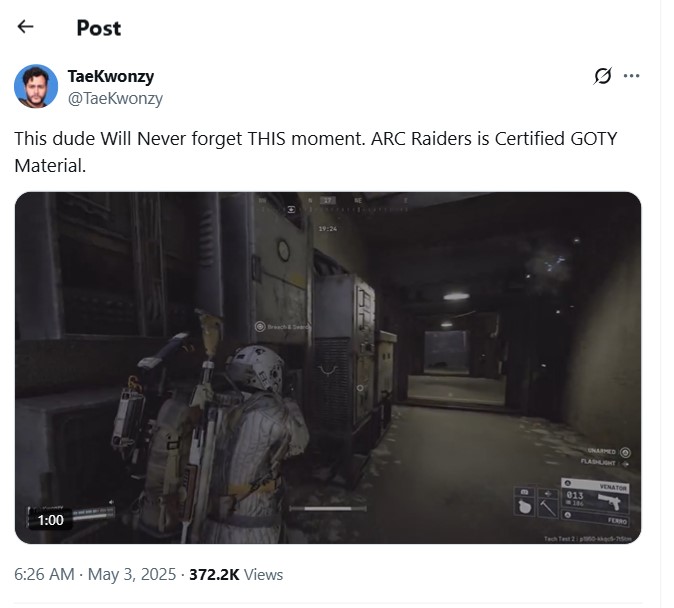
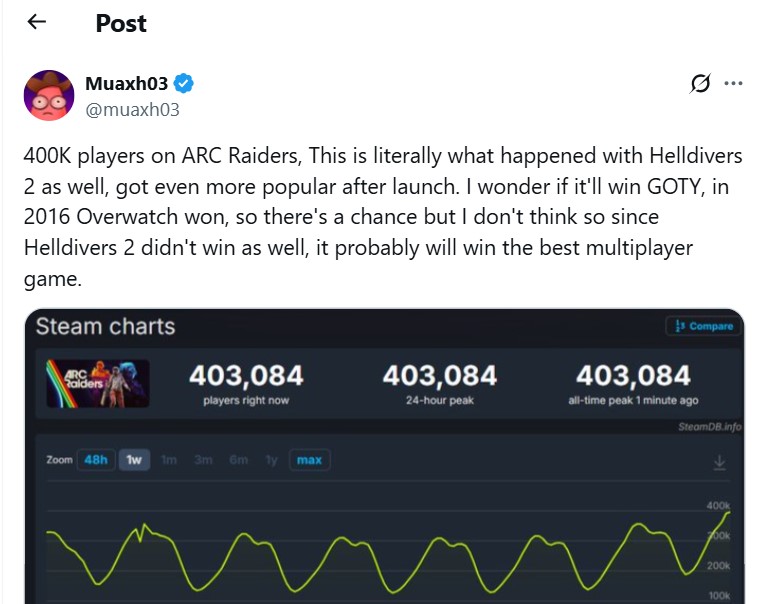
Arc Raiders has hit a new Steam peak of 416K concurrent users.
The game also surpassed Battlefield 6 on the charts this weekend.
Many fans online think the game should win or get nominated for Game of the Year.
The critical reception has also been overwhelmingly positive, with Arc Raiders becoming the highest-rated multiplayer game of all time on Opencritic. And, if Steam charts are any indication, this hype is unlikely to die down anytime soon.
Why it matters: An extraction shooter competing with heavyweights like Battlefield 6 and getting GOTY shoutouts is something the shooter genre needed.
Arc Raiders has once again hit a new player peak on Steam.
Arc Raiders hit a new peak of 416K concurrent playerson Steam last night, smashing its previous record of 350K players. The title is displaying a trend similar to Helldivers 2 last year, which gained more hype after launch before reaching its 458K player peak.
Players online are also speculating about the GOTY potential of Arc Raiders, with many FPS fans saying the game at least deserves a nomination for its take on the extraction shooter genre.
The last multiplayer game to win in the Game of the Year category was Overwatch back in 2016, and some players think Arc Raiders should be the next game to achieve this landmark.
It remains to be seen if the extraction shooter will be nominated for GOTY in 2025, as competition is very tight with titles like Expedition 33, Death Stranding 2, Hollow Knight: Silksong, and Kingdom Come: Deliverance 2 ahead in the pecking order.
Many fans believe Arc Raiders should have a run a GOTY
1 of 2
However, fans online certainly think Arc Raiders deserves it, and its rising concurrent player peak is an indication.
Do you think Arc Raiders will continue to rise in popularity and win Game of the Year? Tell us in the comments below or head to the Tech4Gamers forum for discussion.
Currently serving as a News Reporter at Tech4Gamers, I have the privilege of combining my love for gaming with the art of storytelling. My role involves crafting engaging narratives that keep our audience abreast of the latest developments in the gaming world.
Story Highlight
In its latest financial report, AMD addresses the partnership with Intel and Nvidia.
The company states that it will face increased competition and pricing pressure in the future.
AMD has also secured a deal with OpenAI, and the future of the AI chip market seems unpredictable for now.
AMD is rising immensely in the consumer market and data centres, especially with the recent successful launches of the RDNA 4 GPU and Zen 5 CPU releases. Team Red also saw record-breaking revenue of $9.2 billion in the last quarter and is quite optimistic about its future.
However, the path ahead won’t be smooth sailing for them as they face rising competition from Intel and Nvidia’s partnership. The RTX GPU manufacturer has invested $5 billion into Team Blue to develop multiple generations of custom chips for both data centres and desktop PCs.
AMD has acknowledged this partnership and, in its latest financial report, addressed the future, stating that it will face ‘rising competition and pricing pressure.’
Why it matters: While Intel has been lagging in competition for some time, Nvidia’s backing could potentially give it the push it needs, especially at a time when AMD is experiencing a surge in growth. The competition ahead looks unpredictable.
AMD And Sony’s Partnership Project Amethyst Is Going Really Well
According to a detailed explanation in the report, AMD explained how Intel is threatening its market presence.
“Intel uses its microprocessor market position to price aggressively and target our customers, reducing our unit sales and average selling prices, which adversely affects our business.”
On the other hand, Team Red also addressed competition against Nvidia.
“NVIDIA leverages its data-center GPU dominance, financial resources, and software ecosystem to promote its systems—impacting customers who do business with us.”
Still, though, AMD isn’t going down that easily. OpenAI has also approached the company to purchase AI chips that could revolutionise the market.
What are your thoughts on this story? Who do you think will emerge victorious in this battle? Please let us know in the comments below or at the official Tech4Gamers Forums.
At Tech4Gamers, I mainly cover new gaming news, leaks, and rumours. Aside from that, I love to write features about my favourite games while inserting my opinion about their different aspects.
Story Highlight
In 2025, cooperative games on Steam surpassed $7 billion in revenue, showing a significant rise from $3.5B in 2019 and $6B in 2022.
Popular titles like ARC Raiders, Phasmophobia, and Valheim share large overlapping audiences, emphasizing the social and community-driven nature of co-op gaming.
The rise of co-op reflects a broader trend; gaming is increasingly about collaboration, shared progress, and playing together rather than just competition.
Cooperative gaming has officially taken over 2025, with co-op titles on Steam surpassing a staggering $7 billion in gross revenue. Once a niche corner of the gaming world, co-op experiences have now become a central pillar of the industry’s success.
Recent estimates highlight a remarkable crossover among players of popular titles such as ARC Raiders, Phasmophobia, Lethal Company, and Helldivers 2, showing that nearly half of their audiences overlap. Meanwhile, over 40% of ARC Raiders players have also enjoyed community-driven games like Valheim, Dead by Daylight, and Repo.
Why it matters: The numbers don’t just show financial growth; they reveal a cultural shift. In 2025, gaming isn’t just about winning; it’s about playing together, building communities, and finding fun through cooperation rather than competition.
ARC Raiders, Split Fiction, Lethal Company, and Helldivers 2 played huge role in the revenue
According to new data from Alinea Analytics, co-op games on Steam have now generated over $7 billion in gross revenue.
In 2019, total revenue generated by co-op games were almost $3.5B, whereas in 2022, it increased to almost $6. In three years it went almost double. and now in 2025, it went to all time high of $7B.
Not to ignore that these games Split Fiction, Monster Hunter Wilds, REPO, ARC Raider, Borderlands 4 these were the main games in 2025. Co-op games are not going anywhere because market is huge.
The rise of co-op gaming in 2025 marks more than a financial milestone, with revenues topping $7 billion. Games like ARC Raiders, Monster Hunter Wilds, and Borderlands 4 prove that collaboration, shared progress, and social gameplay now define modern gaming culture.
One thing worth noting is that co-op gaming is most likely to continue existing as long as there are games. This is because co-op can be incorporated into a simple single-player game as well as a multiplayer title.
What are your thoughts on future of co-op games? Which co-op games did you play in 2025 or the past years? Let us know in the comments section below, or join the official Tech4Gamers forums for discussion.
At Tech4Gamers, I contribute as a Senior News Reporter, combining my skills and gaming enthusiasm to keep our audience updated on the latest developments.
Story Highlight
An insider reports that Xbox is working on another OEM device for 2026.
This device is said to be a mini PC based on AMD’s Zen 2 architecture.
Xbox is also working on a proper next-generation console, which is expected to launch in 2027.
Xbox’s hardware plans have been quite interesting, to say the least. Recently, the gaming giant released the ROG Xbox Ally to enter the handheld space. Moreover, Xbox is committed to making a proper next-generation follow-up to the Series S|X.
Adding to the list of interesting hardware prospects from Microsoft, the gaming giant is said to be working on yet another OEM collaboration. As per reports, Xbox will release more OEM hardware in 2026.
Why it matters: Xbox’s first hardware collaboration with ASUS has opened up new possibilities for the gaming giant. It can now partner with various other manufacturers for different hardware.
On the subject of GTA 6 and its recent delay, Jez Corden recently discussed the potential of Xbox releasing its hardware in 2027.
He believes the next-generation console will indeed arrive in 2027, but Microsoft has something planned for next year. In fact, the reliable insider suggests next year’s device could be another piece of OEM hardware from a company like ASUS.
I’ve got strong informed rumors that there could be an OEM Xbox next year.
He further explained that, much like the base ROG Xbox Ally, the OEM Xbox would likely be based on a Zen 2 platform. Jez Corden also stated that this OEM device could take the shape of an Xbox-branded mini-PC.
The Next Xbox Console Is Expected To Be A Hybrid Machine
Should this mini PC come out next year, it would allow Xbox to test the waters of a hybrid approach to the console market by combining Steam, Windows, Epic Games, and other storefronts into one device.
Microsoft could then further refine this approach with its official console in 2027, which is also expected to follow the same hybrid philosophy.
At Tech4Gamers, I contribute as a Senior News Reporter, combining my skills and gaming enthusiasm to keep our audience updated on the latest developments.
Story Highlight
Recent benchmarks suggested AMD was gearing up to release the Ryzen 7 9700X3D.
A social media post has clarified that no such chip exists, with the benchmark being faked through Linux.
The user urges online readers to be more vigilant when looking at one-off benchmarks to avoid such situations in the future.
AMD has now released various 3D V-Cache chipsets, offering incredible performance for games and other workloads that utilize the 3D V-Cache. The recently released Ryzen 7 9800X3D continues this tradition, pushing the limits of CPU technology for PC gamers.
Recent rumors also suggested that AMD would add to this family with the Ryzen 7 9700X3D. However, as it turns out, these rumors were fake, and this chip does not exist.
Why it matters: AMD previously released the Ryzen 7 5700X3D, but the gaming giant did not release a similar chip for the Ryzen 7000 lineup.
AMD Ryzen 7 9700X3D Is Not Real For Now | Image via Reddit
Over on Reddit, user A_Canadian_Boi recently explained how he managed to create a fake PassMark benchmark listing for the Ryzen 7 9700X3D.
As per the Redditor, simply changing /proc/cpuinfo in Linux allowed the Ryzen 7 9700X to be read as a Ryzen 7 9700X3D by PassMark. To the user’s surprise, the software did not see anything wrong with the processor and even registered the score with the online database.
The Reddit post also pointed out how the benchmark showed clock speeds much higher than even those of the Ryzen 7 9800X3D. Of course, the clock speeds could’ve been faked just as easily, but the initial intention was never to fake benchmarks to begin with.
Ultimately, the post attempted to highlight how there needs to be a greater degree of verification and testing when looking at one-off benchmarks from new sources.
As for AMD’s actual plans, including its AI push, the gaming giant should have more to share at CES 2026. The event is just around the corner, so fans will only have to wait till January for more details on CPUs, GPUs, and everything else.
As a Senior Hardware Reviewer at Tech4Gamers with over a decade of hands-on experience, I dive deep into benchmarking GPUs, CPU coolers, and motherboards, pushing hardware to its limits. Passionate about overclocking and fine-tuning performance.
At last, Lian Li has reintroduced the classic Hydroshift design. The Lian Li Hydroshift II LCD-S is the latest addition to the series. We previously reviewed its Hydroshift II LCD-C TL Wireless and were impressed by its design and features. Likewise, it features all the bells and whistles of the Hydroshift II series, including the tubeless design, tube alignment, identical radiator design, and wireless functions.
So, what’s changed? The LCD-S (S stands for square) model now features a hot-swappable, magnetic-mounted 3.5-inch square IPS Display, alongside the new pump design, which has also been improved and expanded in size. The square-shaped LCD is not a new thing in Lian-Li Coolers. If you recall, Lian Li’s First Hydroshift Cooler also featured a square design.
Why Trust Tech4Gamers
Usman Sheikh is one of our most senior and experienced hardware reviewers. He loves spending hours (sometimes days) in his lab, testing and comparing different GPUs, CPUs, coolers, and more.
80+ CPU coolers tested and reviewed by our team of hardware experts (Tech4Gamers Team).
900+ hours spent testing different coolers for our reviews.
At Tech4Gamers, ensuring you get reliable information is our priority. That’s why every hardware round-up undergoes a meticulous review process by our team of experts and editors. Each review is carefully examined against our strict editorial guidelines, guaranteeing you trustworthy insights you can depend on.
Still, this is a welcome change in the Hydroshift II series, as the world is shifting towards larger LCDs on all-in-one liquid coolers. Consequently, it’s good to see that Lian-Li wants to cater to a wide range of people. If you prefer the circular design, opt for the LCD-C series. If you choose a larger LCD and a square design, you can opt for this option.
Let’s start with the specifications.
⚙️ Lian Li Hydroshift II LCD-S 360TL Specifications
Socket Support
Intel: LGA 1700/1851 AMD: AM5 / AM4
CPU Block / Panel Type
3.4-Inch 480x480 IPS LCD, 500-Nits, 60Hz
Magnetic Design
Material: Aluminum
Fin Design: Single Wave
Dimension: 400 x 122 x 25mm
Tube Length: 450/470mm
Radiator Fans
3x 120mm TL Fans (Wireless ) 0, 200-2600 RPM
Features
3.4-Inch Tool Less Magnetic LCD
Tubeless Design – Side Mounted Adjustable Design
Slimmed Down Radiator Design
Pre-Installed Wireless Fans
Wireless Sync Controller
Universal Compatibility
Hidden Cable Design
Warranty
6 Years
MSRP
$239.99
[toc]
What Makes The Lian Li Hydroshift II LCD-S 360TL Different?
Lian-Li has introduced a new model to their existing Hydrosift II LCD series. The latest lineup features 3.5-inch square-shaped LCD coolers, which are also hot-swappable and magnetically mounted on a block. It boasts a brightness of 500 nits and supports a 60Hz Refresh Rate with a resolution of 480×480. The base specifications of the LCD are identical to those of the other Hydroshift II coolers.
However, this cooler represents a significant upgrade over the first-generation Hydroshift Coolers. It brings numerous improvements, including a more compact radiator with redesigned tubing featuring a slide tube clamp, a redesigned pump/block mounting mechanism, and additional fan options, as well as wireless connectivity.
What About The Availability & Pricing?
The Hydroshift II LCD-S is available in three variants and is offered in both black and white. If you want the wireless functionality, you would have to pay an extra $60 (over the non-wireless CL version), which comes with a TL Wireless fan that features better speed and airflow. However, in the 360CL version, you would need to connect the USB to gain complete control over your LCD and fans, as the CL version does not come with an L-Wireless Controller.
The 360N is the fanless version, which means you can opt for aftermarket fans and install them on the cooler.
Model
Color
Wireless Sync
MSRP
Hydroshift II LCD-S 360TL
Black / White
✅ Yes
$239.99
Hydroshift II LCD-S 360CL
Black/White
❌ No
$179.99
Hydroshift II LCD-S 360N
Black/White
❌No
$159.99
The coolers will be available worldwide starting from November 7th, 2025.
Packaging
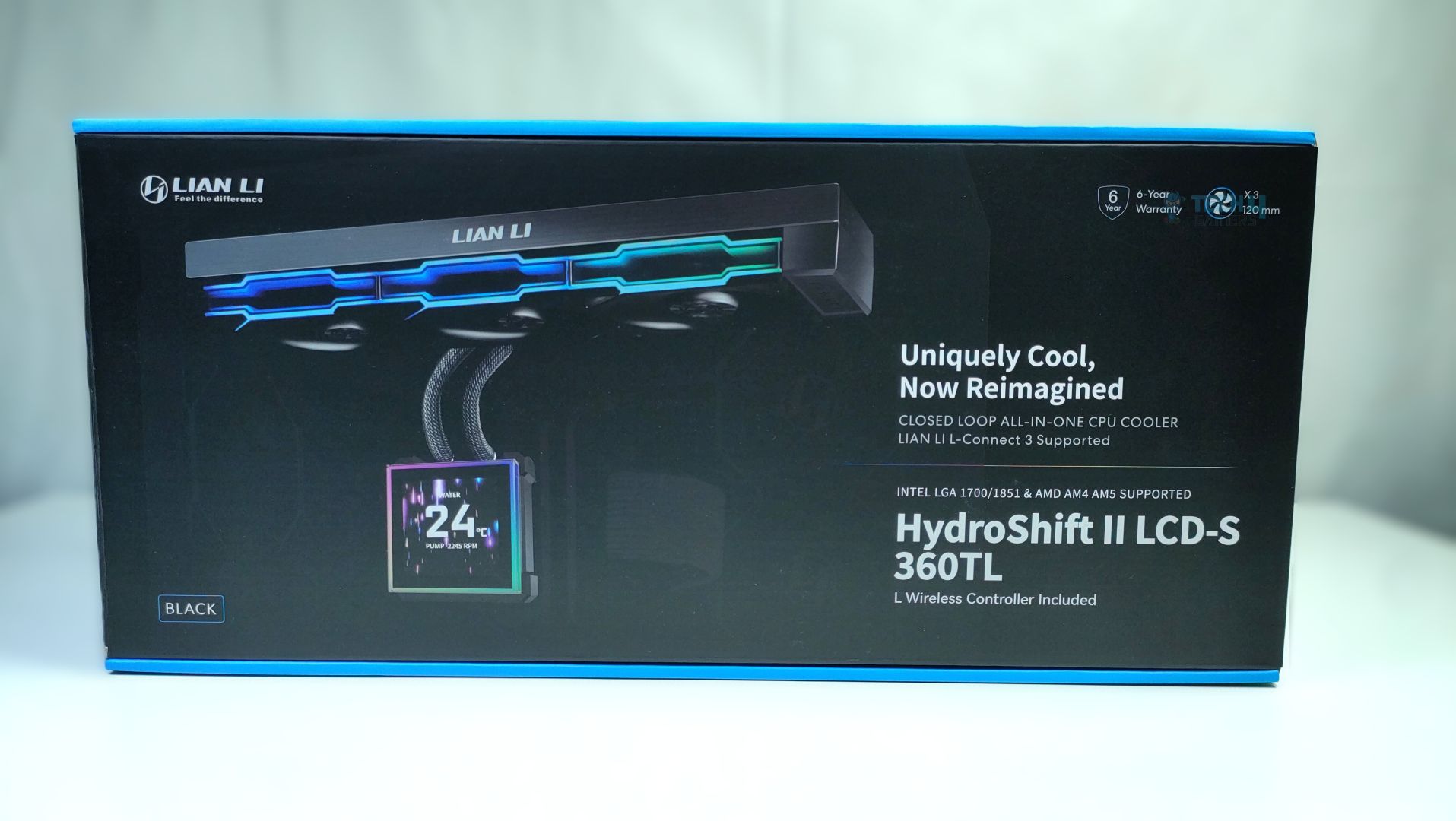
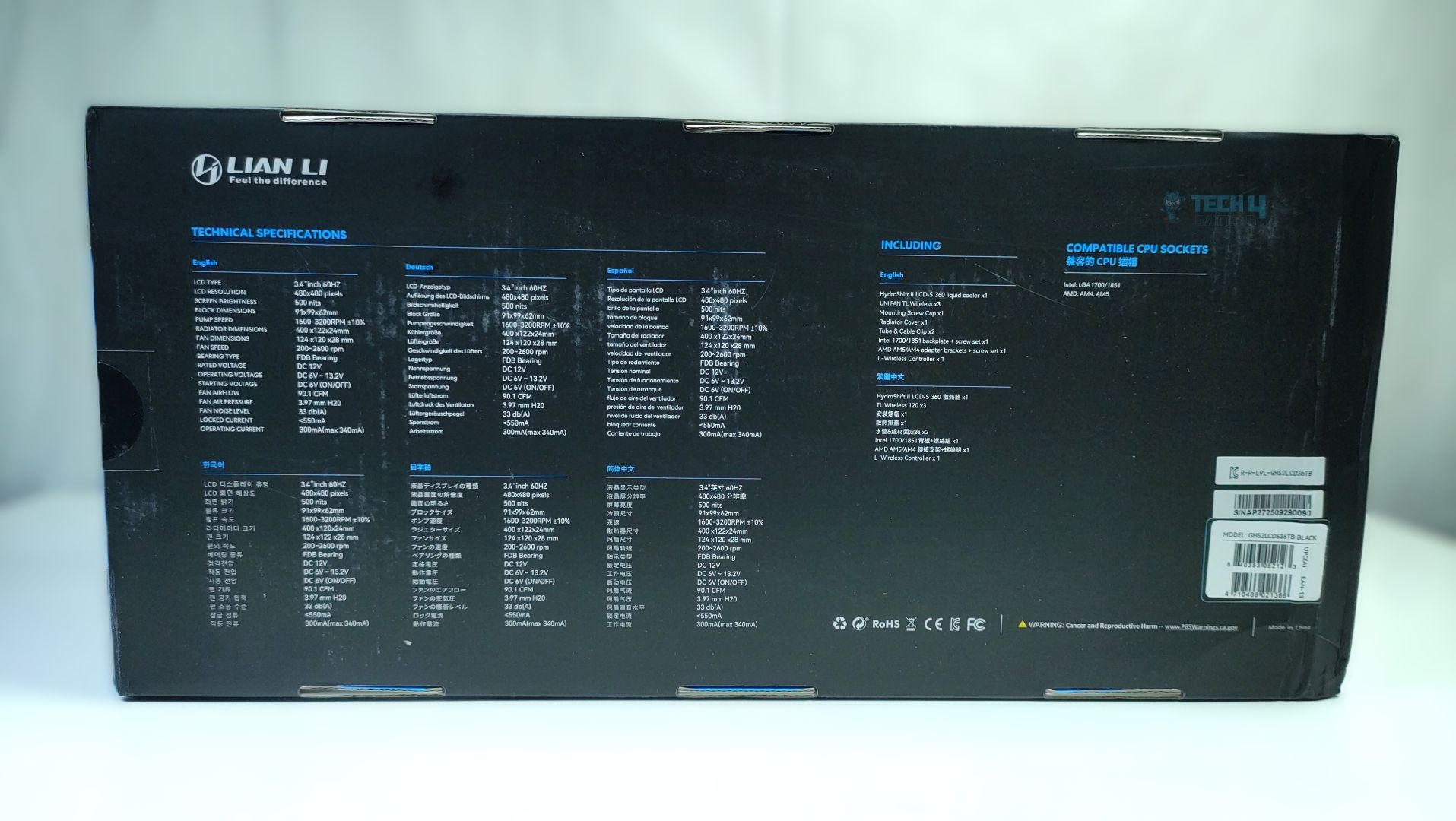
The Lian Li Hydroshift II LCD-S 360TL comes in a sturdy cardboard packaging with a sleek black and blue color scheme. The front prominently displays a rendering of the cooler, accompanied by its model. At the top, two small badges indicate a ‘ 6-year warranty’ and the inclusion of three fans. The back of the box provides a detailed specification list in six languages, along with compatibility information and a list of included accessories.
Front – Lian Li Hydroshift II LCD-S 360TL
Back – Lian Li Hydroshift II LCD-S 360TL
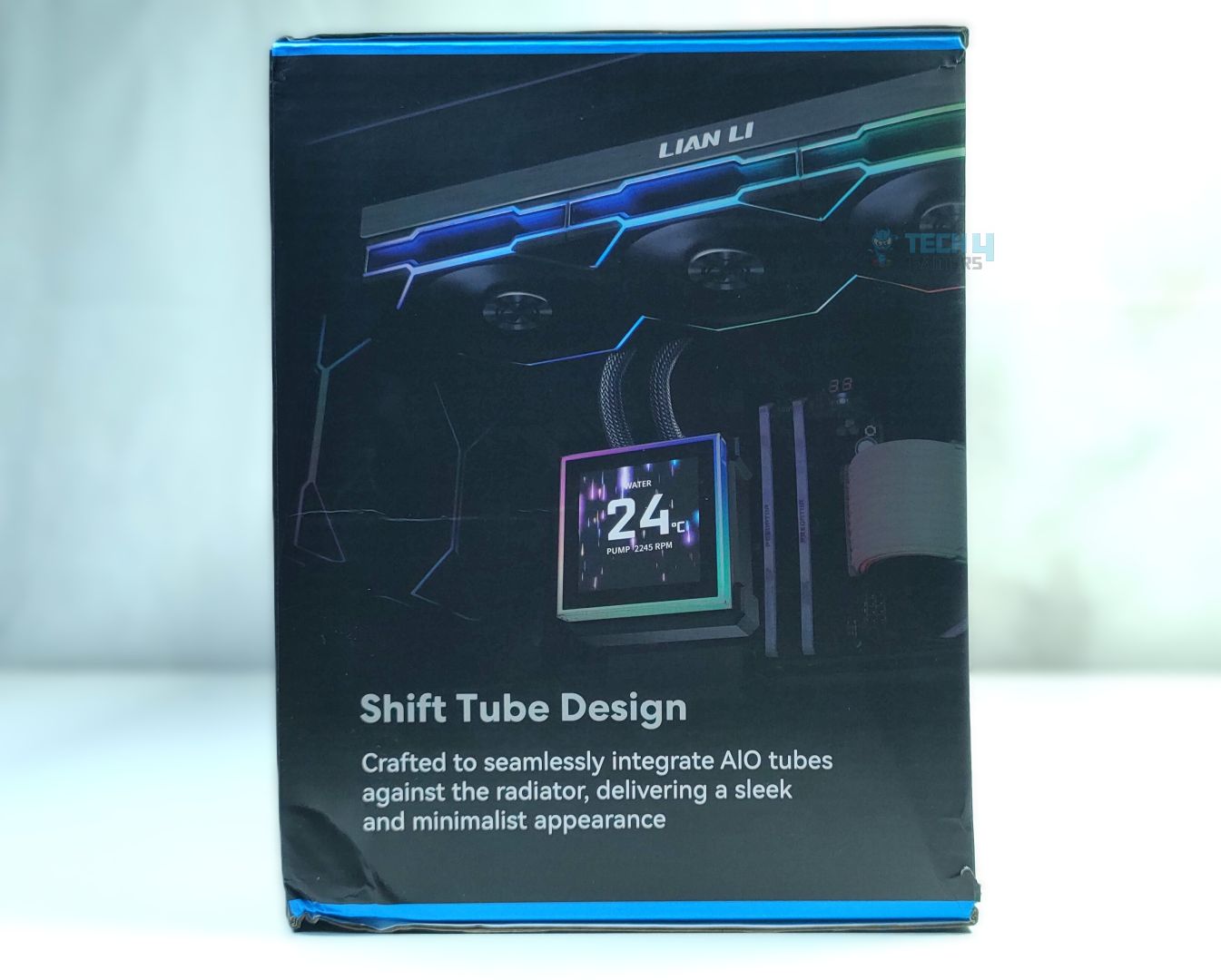
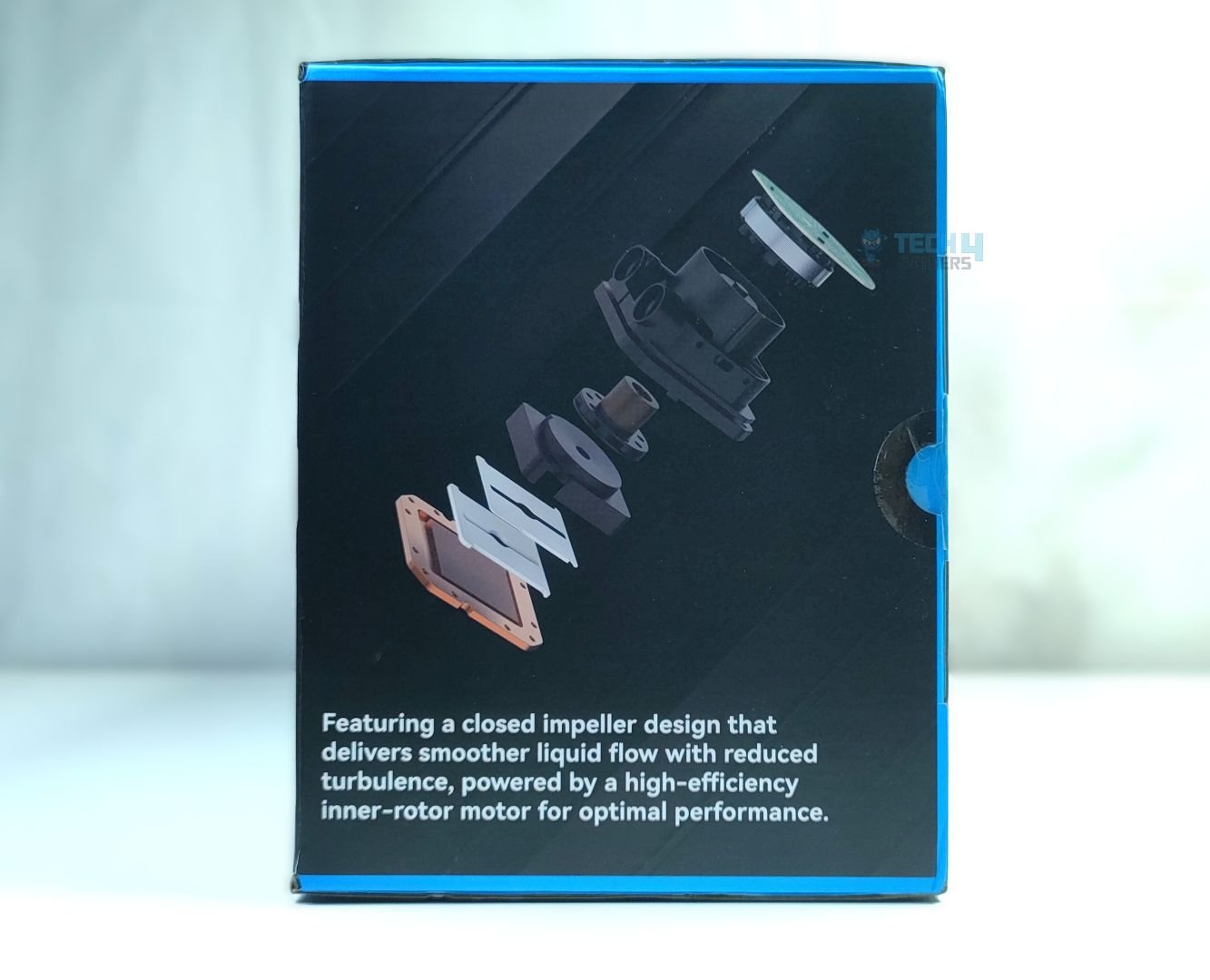
Examining the sides reveals key highlighted features of the cooler, including its shift tube layout and detailed pump description.
Sides – Lian Li Hydroshift II LCD-S 360TL
Sides – Lian Li Hydroshift II LCD-S 360TL
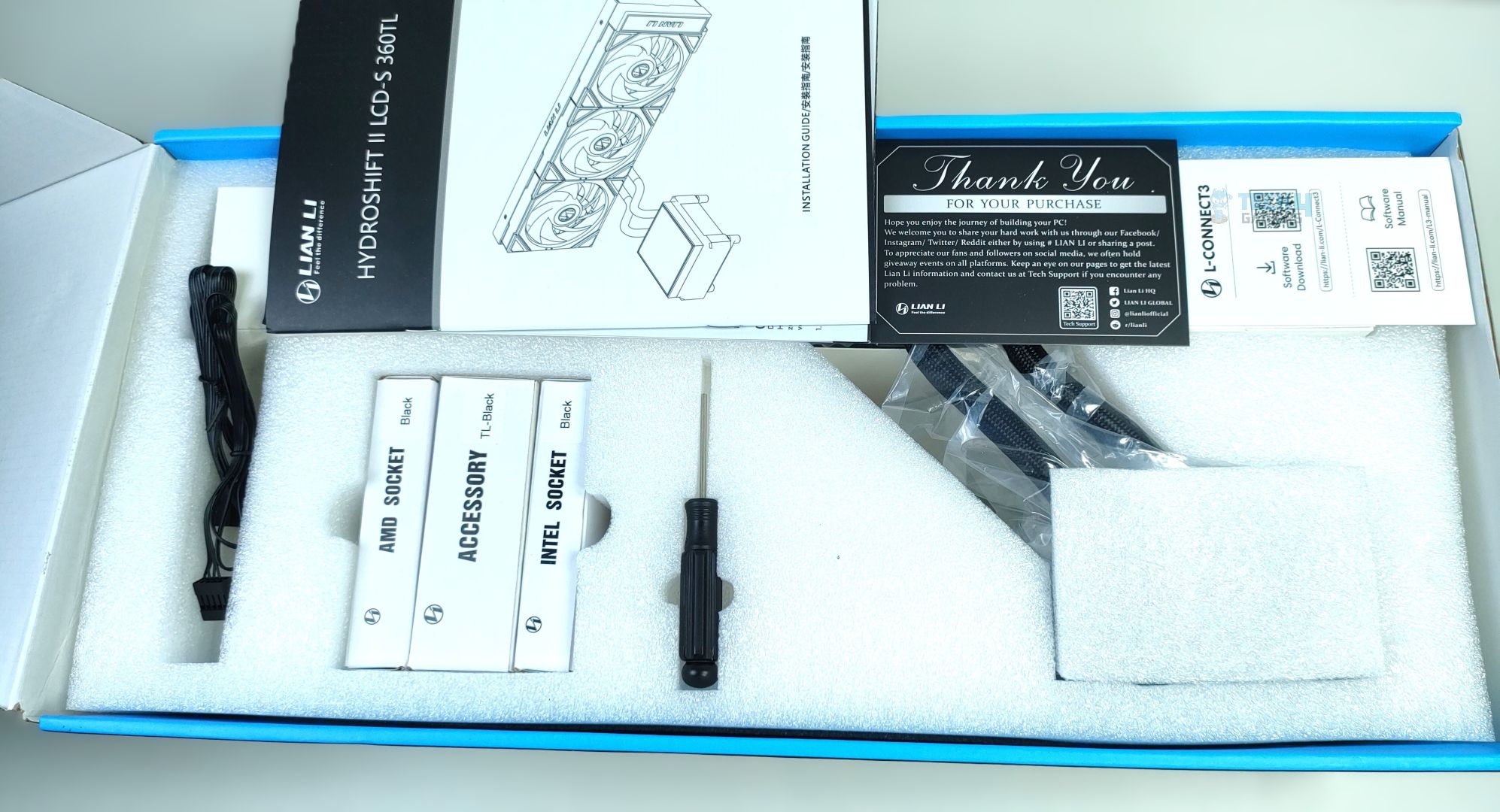
Upon unboxing the box, the cooler is securely housed within moulded form inserts, and the contents are neatly organized, with a hex driver and three accessory boxes clearly labeled as white boxes.
Unboxing- Lian Li Hydroshift II LCD-S 360TL
Accessories
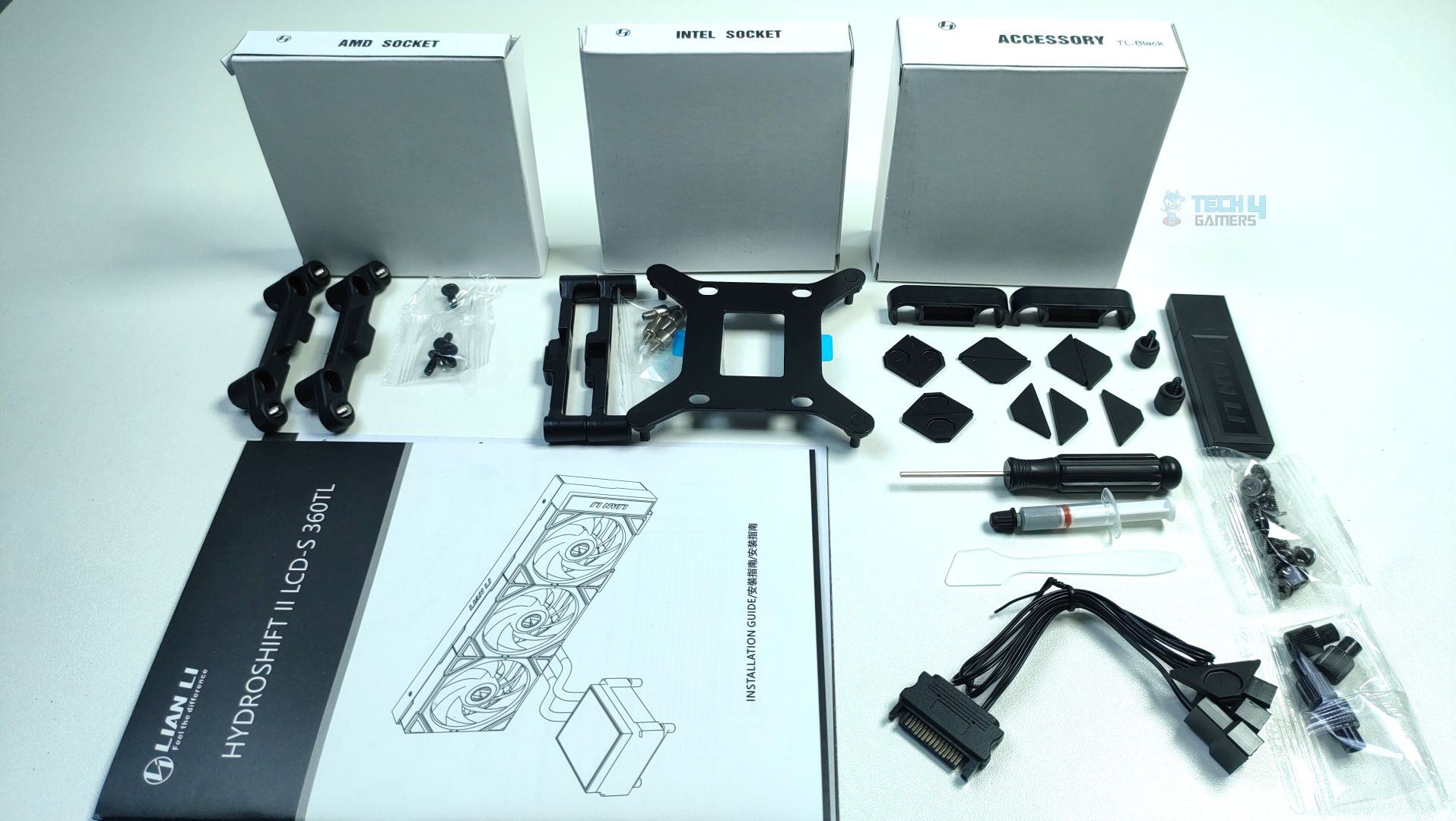
That’s a lot of accessories. All thoughtfully and neatly packed.
Accessories – Lian Li Hydroshift II LCD-S 360TL
Here is the structured table of what you get inside the box:
Category
Item
Quantity
Fans
120 mm ARGB fans
3x
Connectivity
1x Fan extension cable
1x
Radiator Screws
Screws for the Radiator
12x
Mounting Hardware
Universal Bracket For Intel/AMD
2x
Universal Stands Off For Intel/AMD
4x
Thumb Screws
4x
Socket Backplate For Intel
1x
Tools
Thermal Paste
1x
Tubing Clips
3x
User Manual
1x
Close Look At The Radiator and Assembly
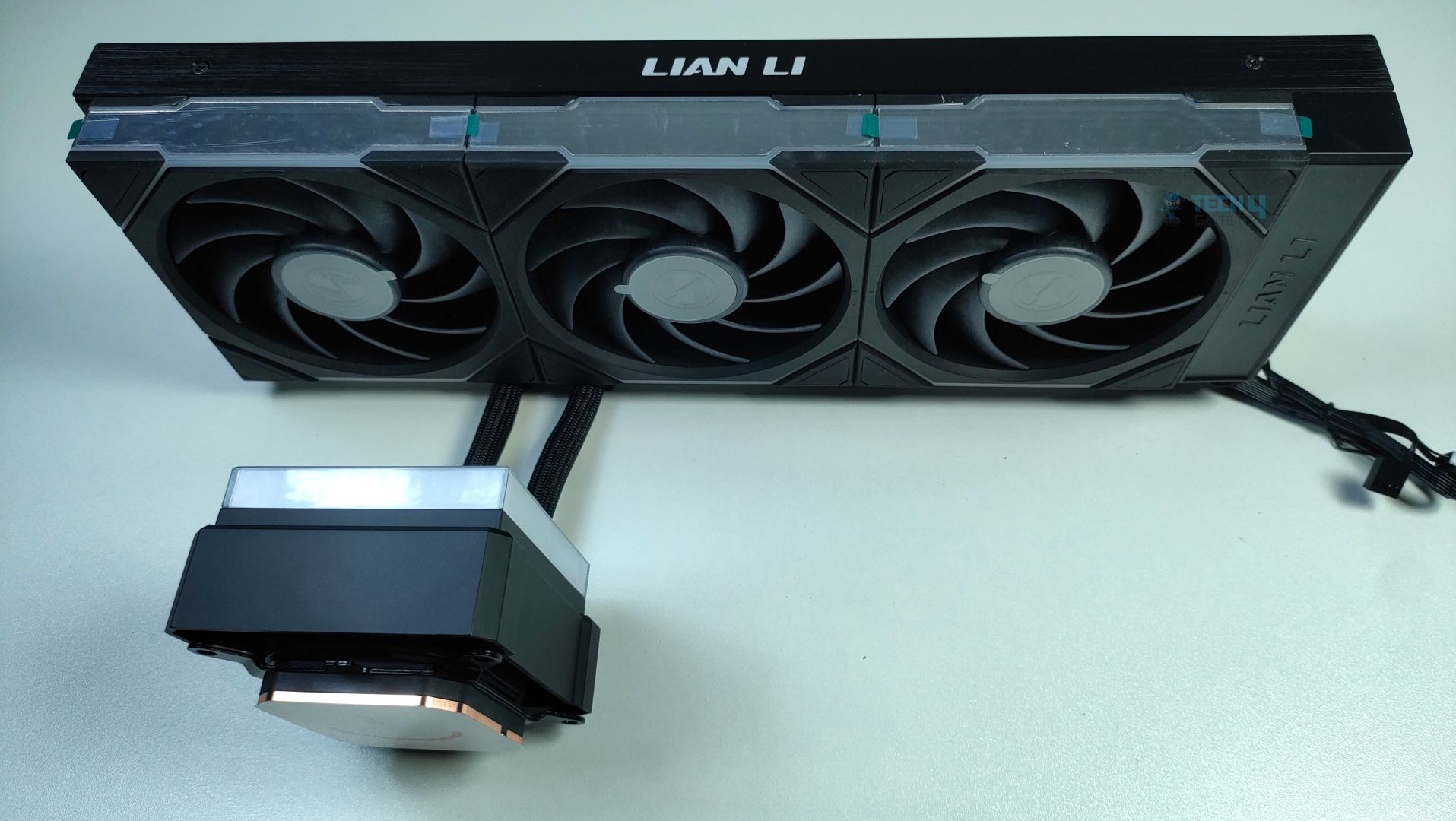
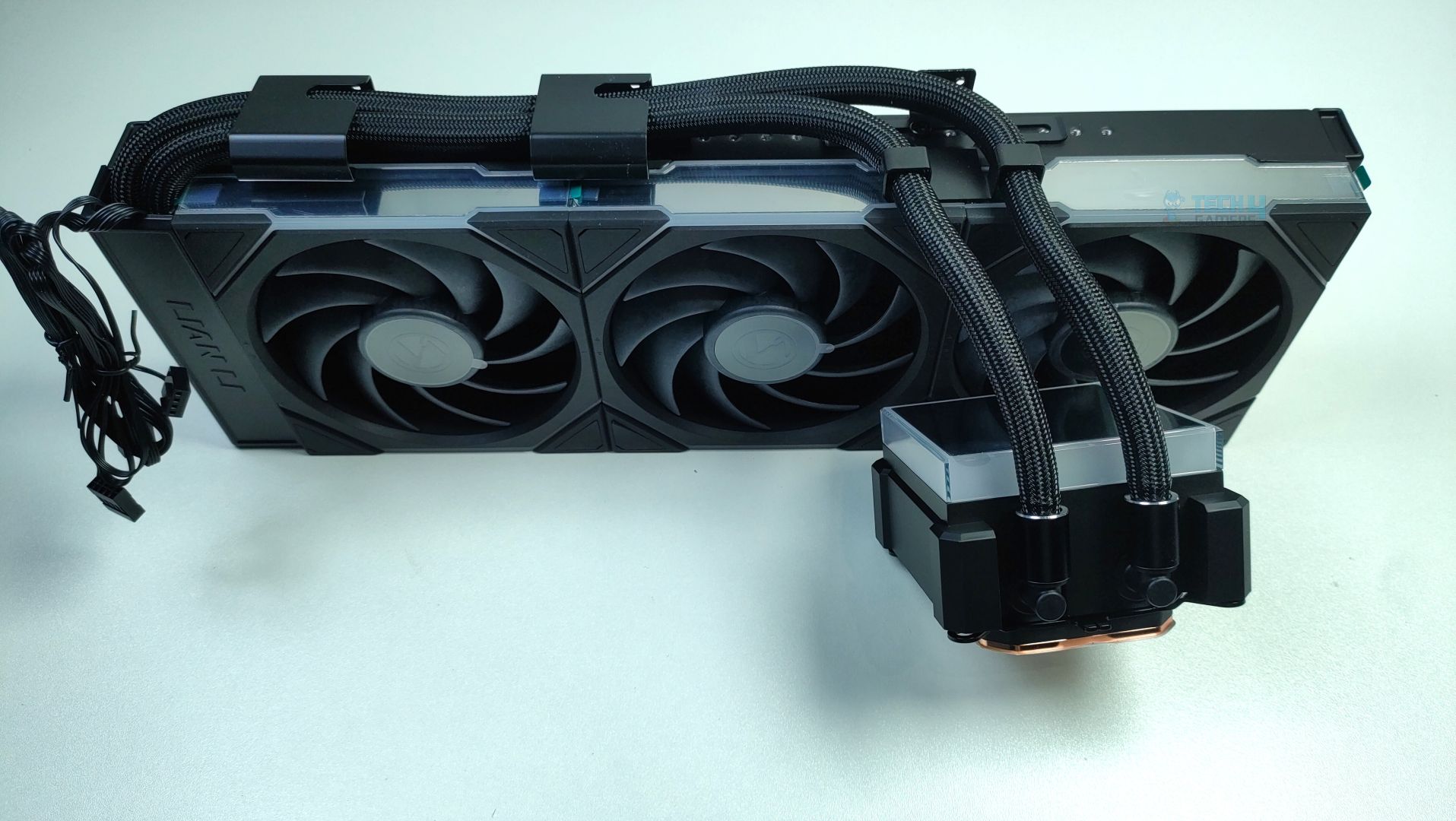
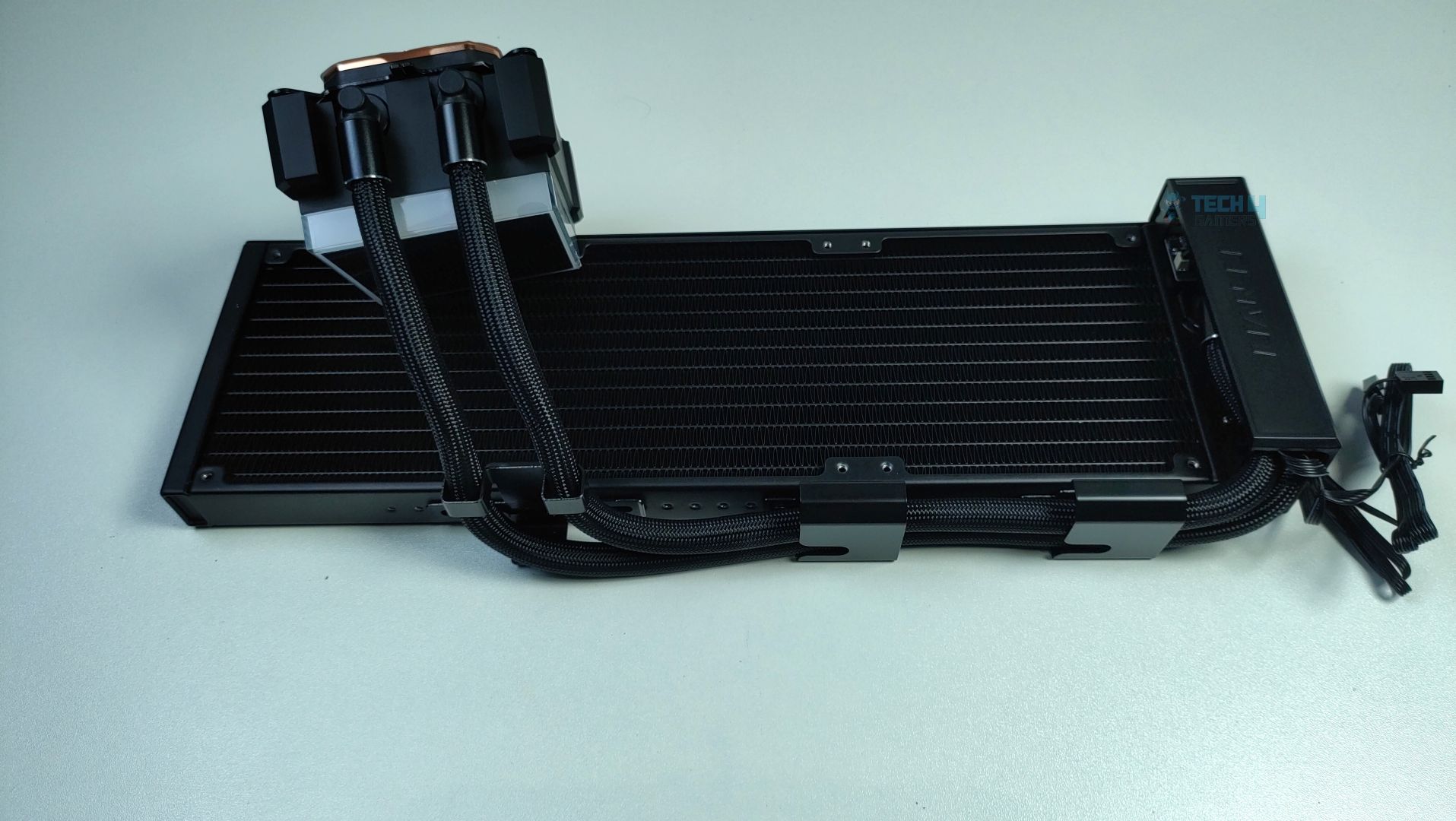
First, look at the assembly out of the box. The fans come pre-installed on the radiator. As you can see, the tubes are mounted on the radiator, with adjustable metal brackets holding the tubes in place.
Assembly – Lian Li Hydroshift II LCD-S 360TL
Assembly – Lian Li Hydroshift II LCD-S 360TL
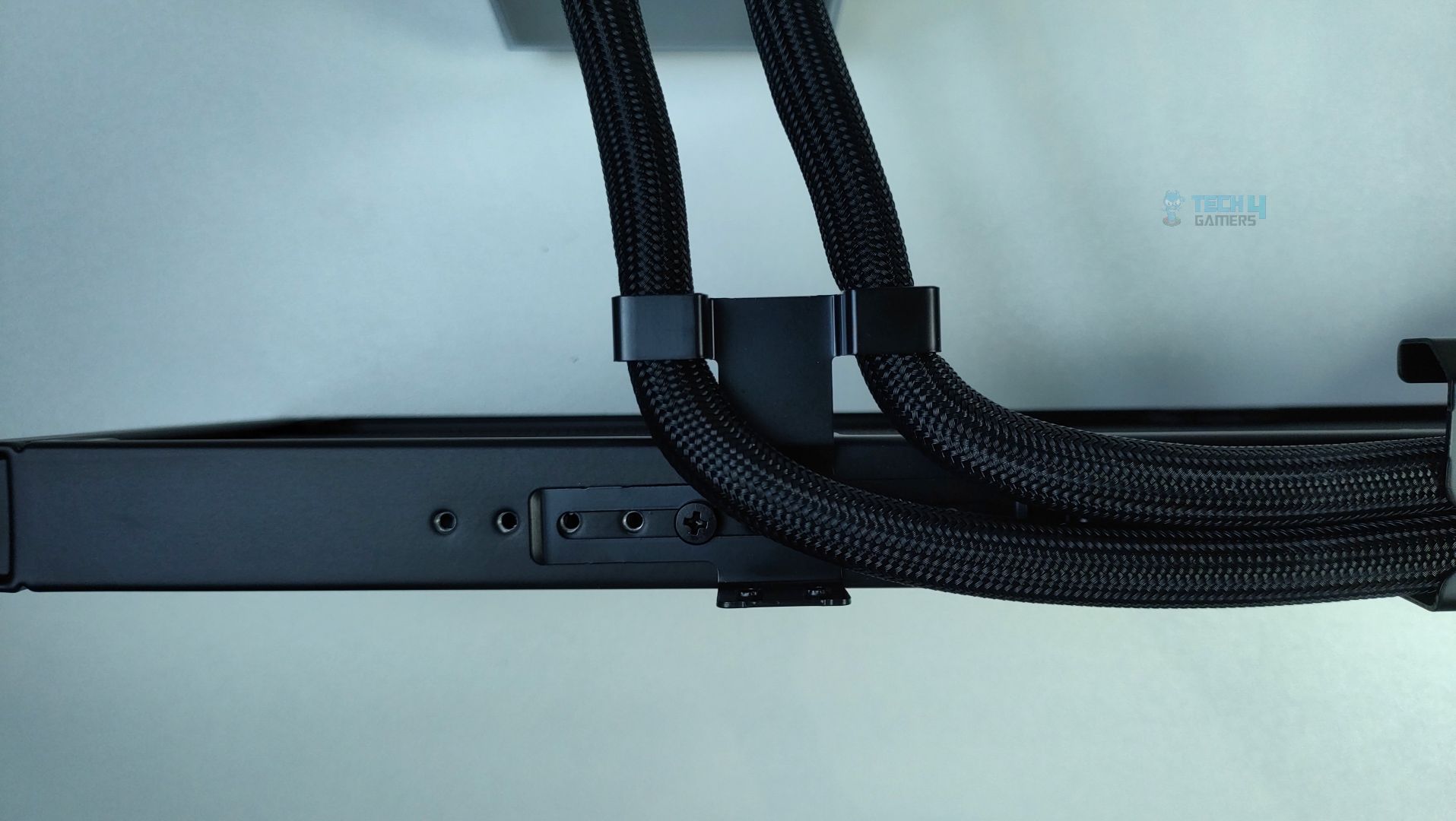
As not all motherboards have the CPU mounted in the exact spot. Adjusting the upright bracket on the radiator by turning the nuts left/right allows you to center the tubes above the CPU block. The tube clamp can also be seen here, which maintains the tube alignment.
Tube Alignment Bracket – Lian Li Hydroshift II LCD-S 360TL
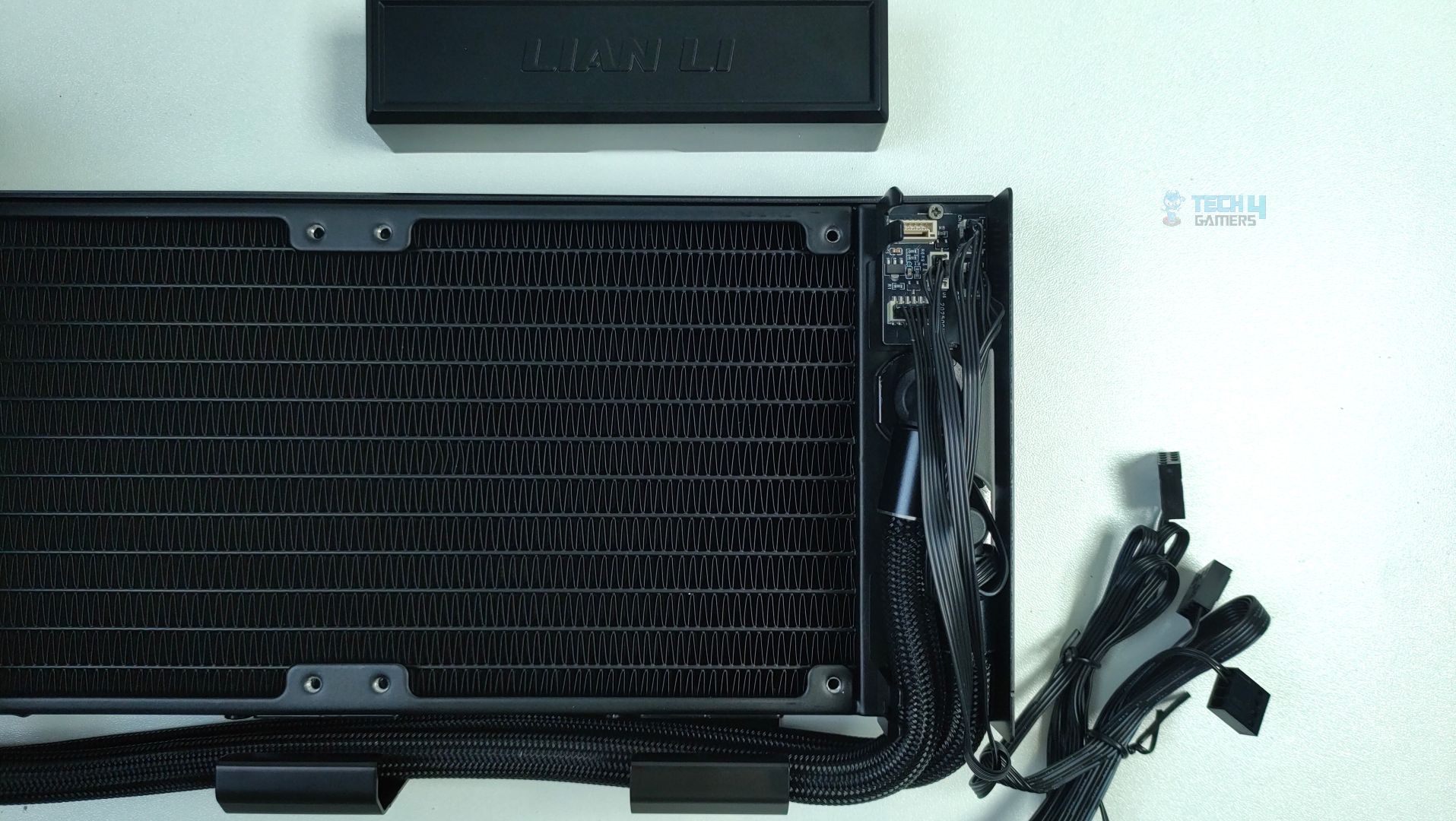
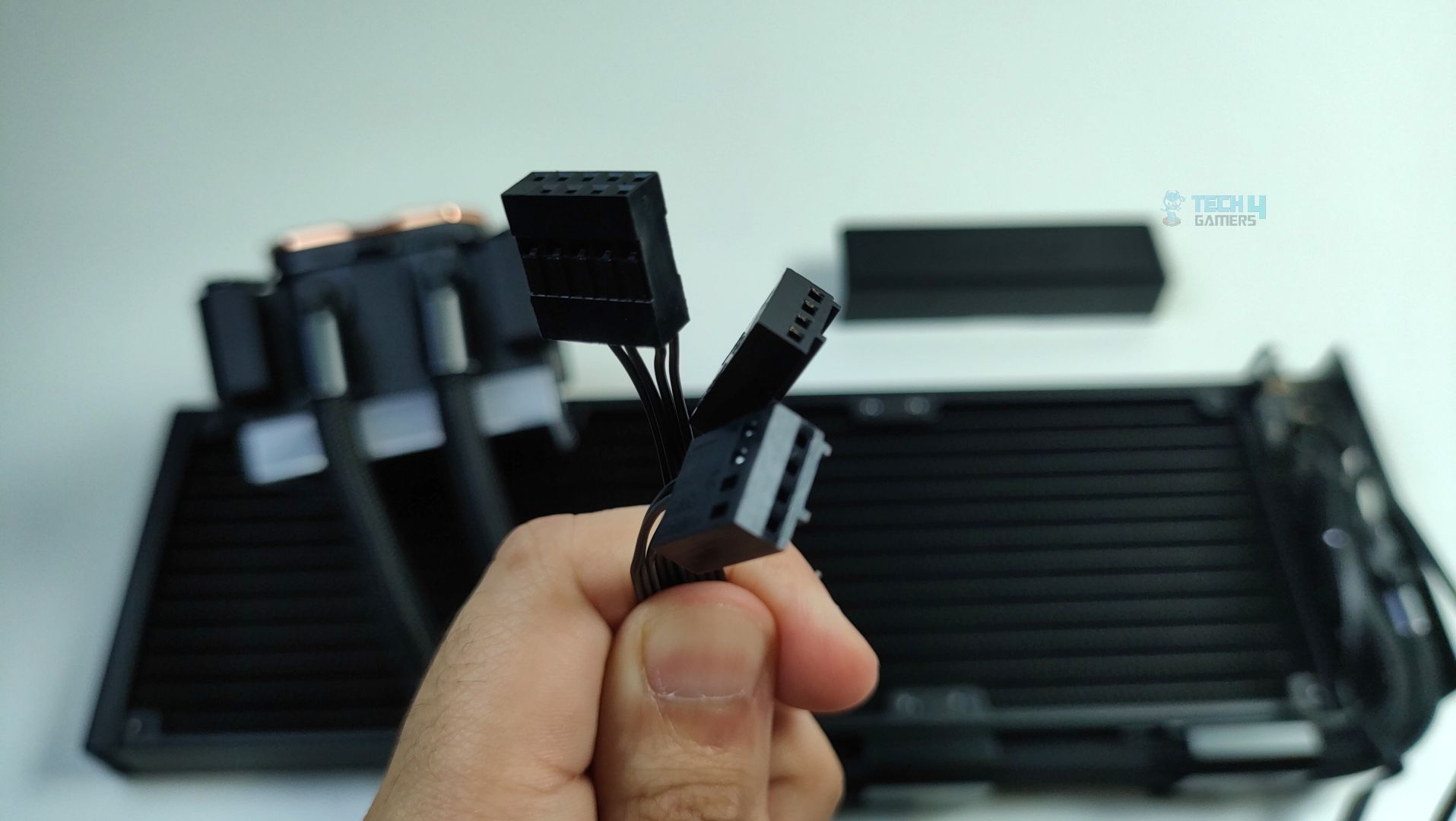
For a truly clutter-free experience, the two 4-pin PWM cables (one for powering the fan and the other for powering the pump and the block’s ARGB) and the removable 9-pin USB cable are neatly hidden under a plastic cover. This thoughtful design ensures a clean and organized setup. If you want to control your cooler in wireless mode, it can be easily removed.
Hidden Cable Design – Lian Li Hydroshift II LCD-S 360TL
Hydroshift II also features enhanced compatibility over its predecessor, providing reassurance to users.
Radiator Size – Lian Li Hydroshift II LCD-S 360TL
Radiator Size – Lian Li Hydroshift II LCD-S 360TL
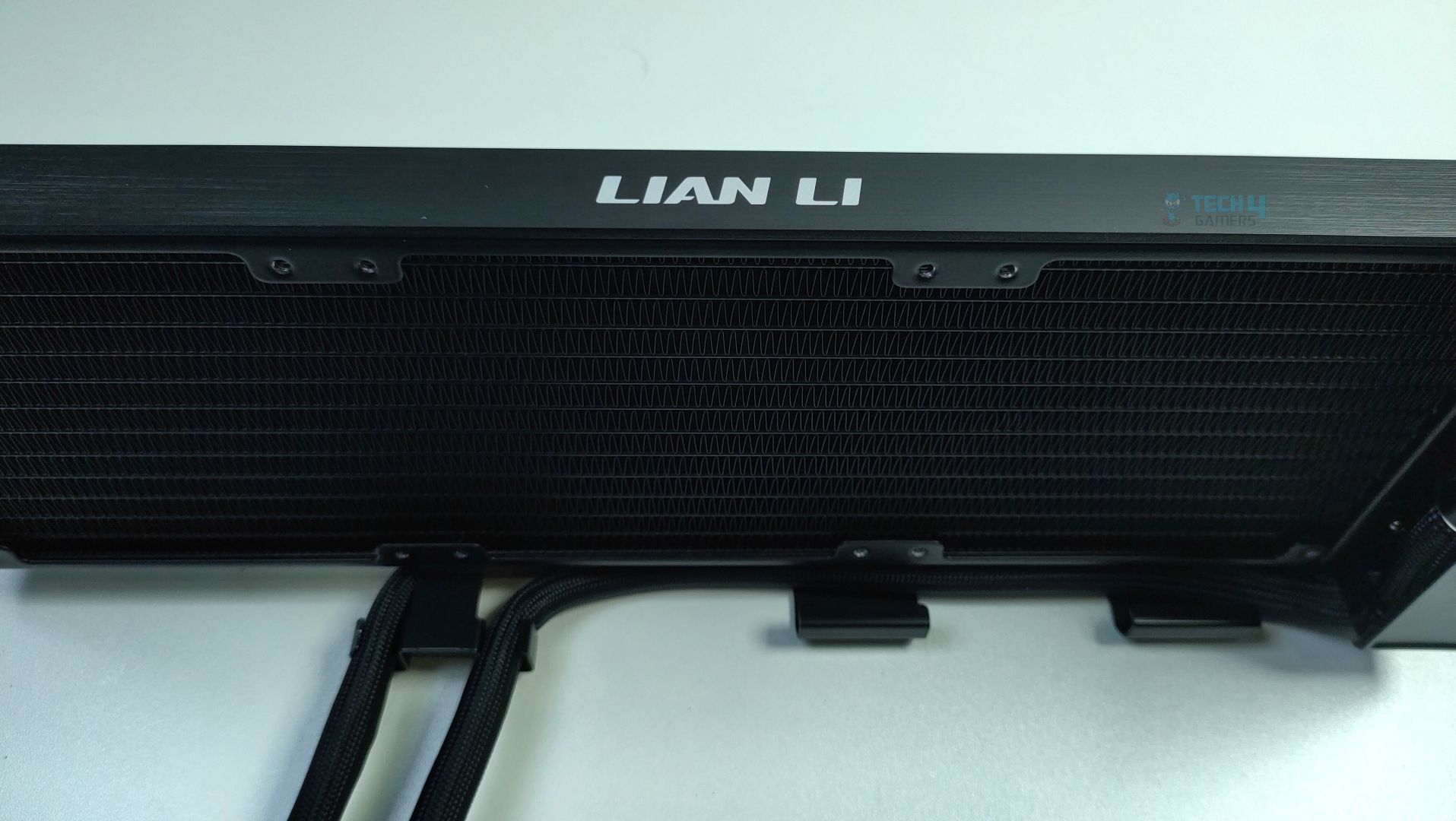
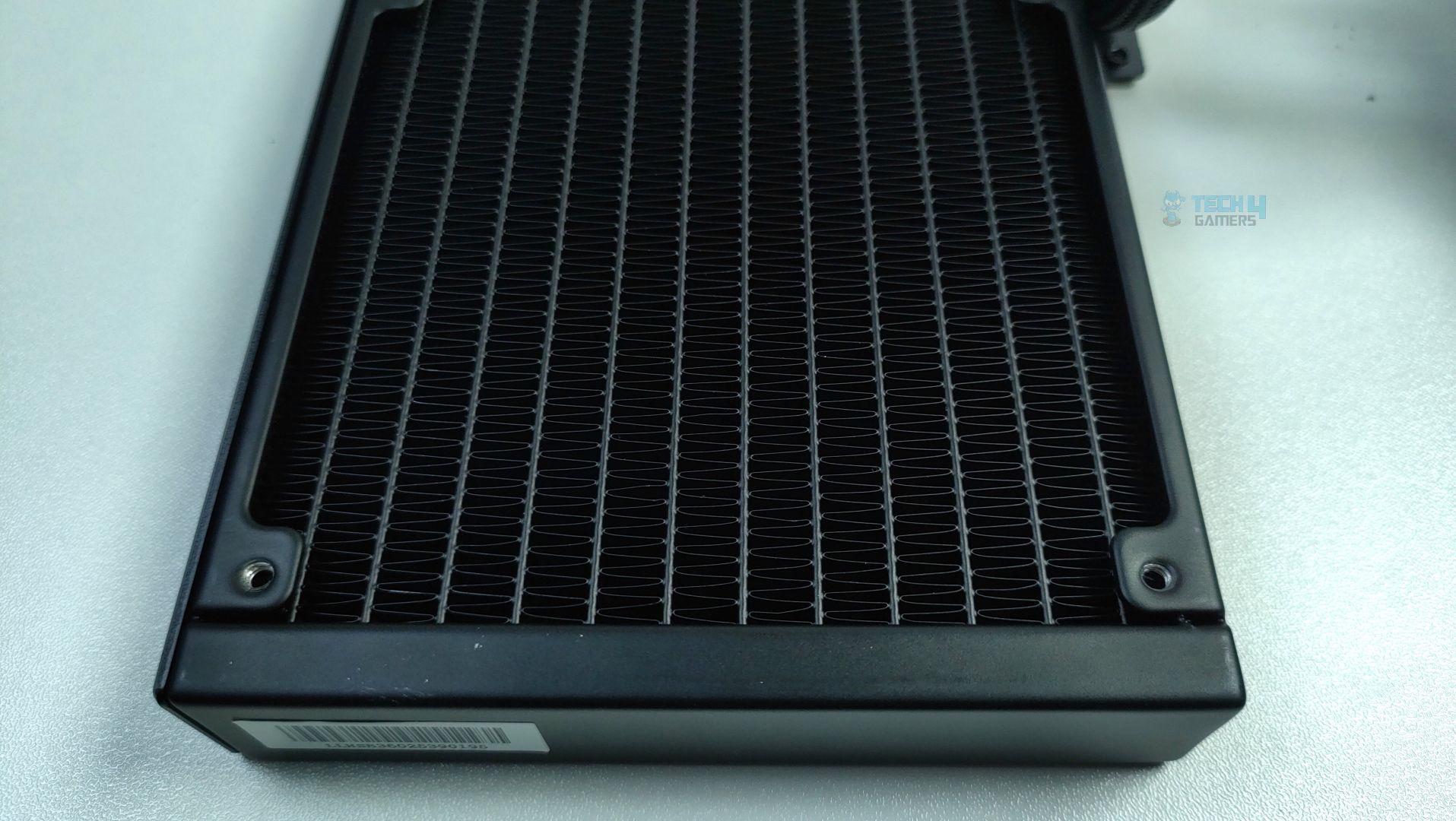
Lian-Li has made adjustments to the thickness, lowering it from 27mm to 24mm, and the width has been revised to 122.5 mm from 124.5mm
Fin Design – Lian Li Hydroshift II LCD-S 360TL
The radiator features 12 water flow channels, and the FPI (Fins per inch) is 20, which is a typical design.
Pump Design / Housing
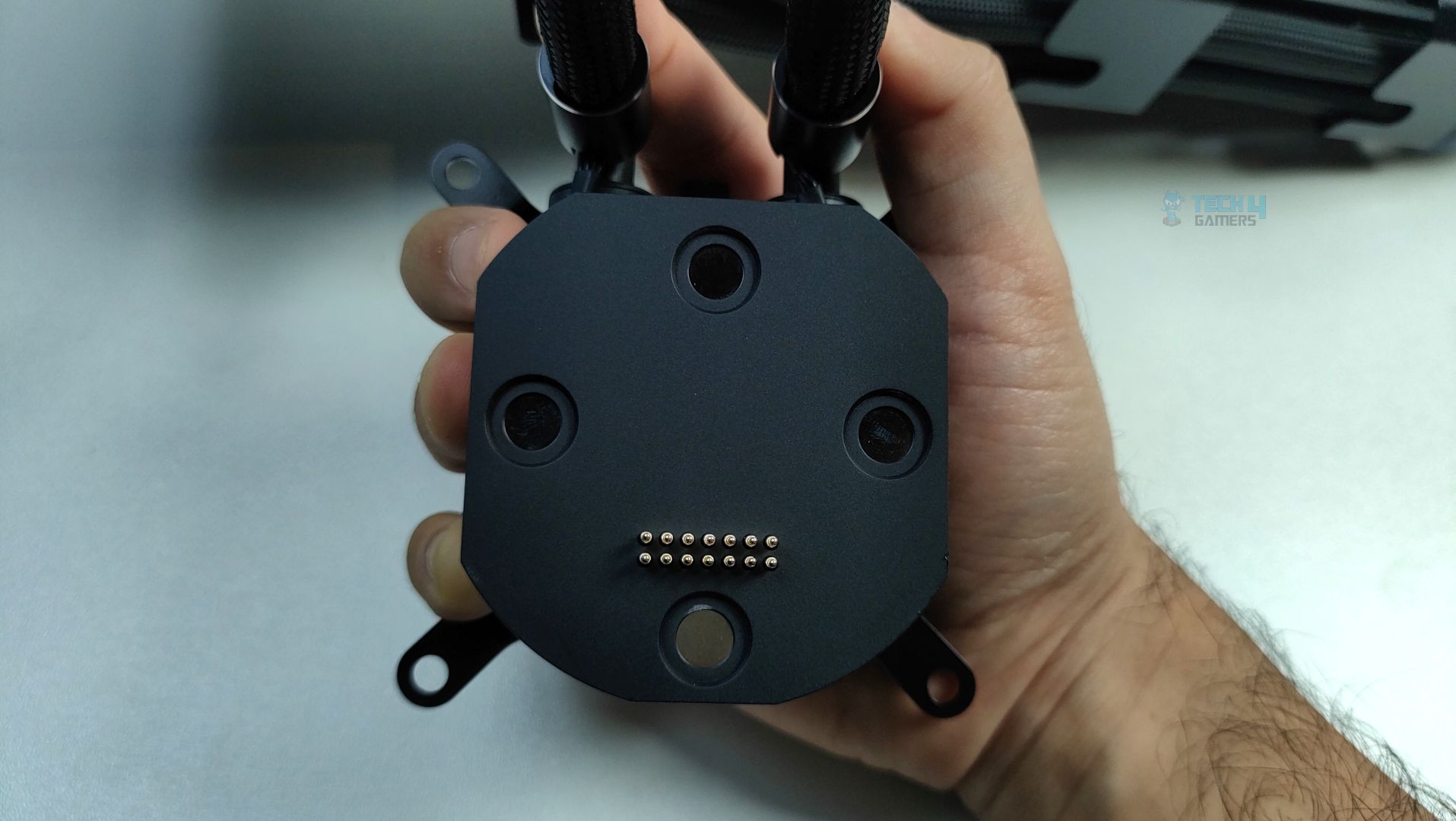
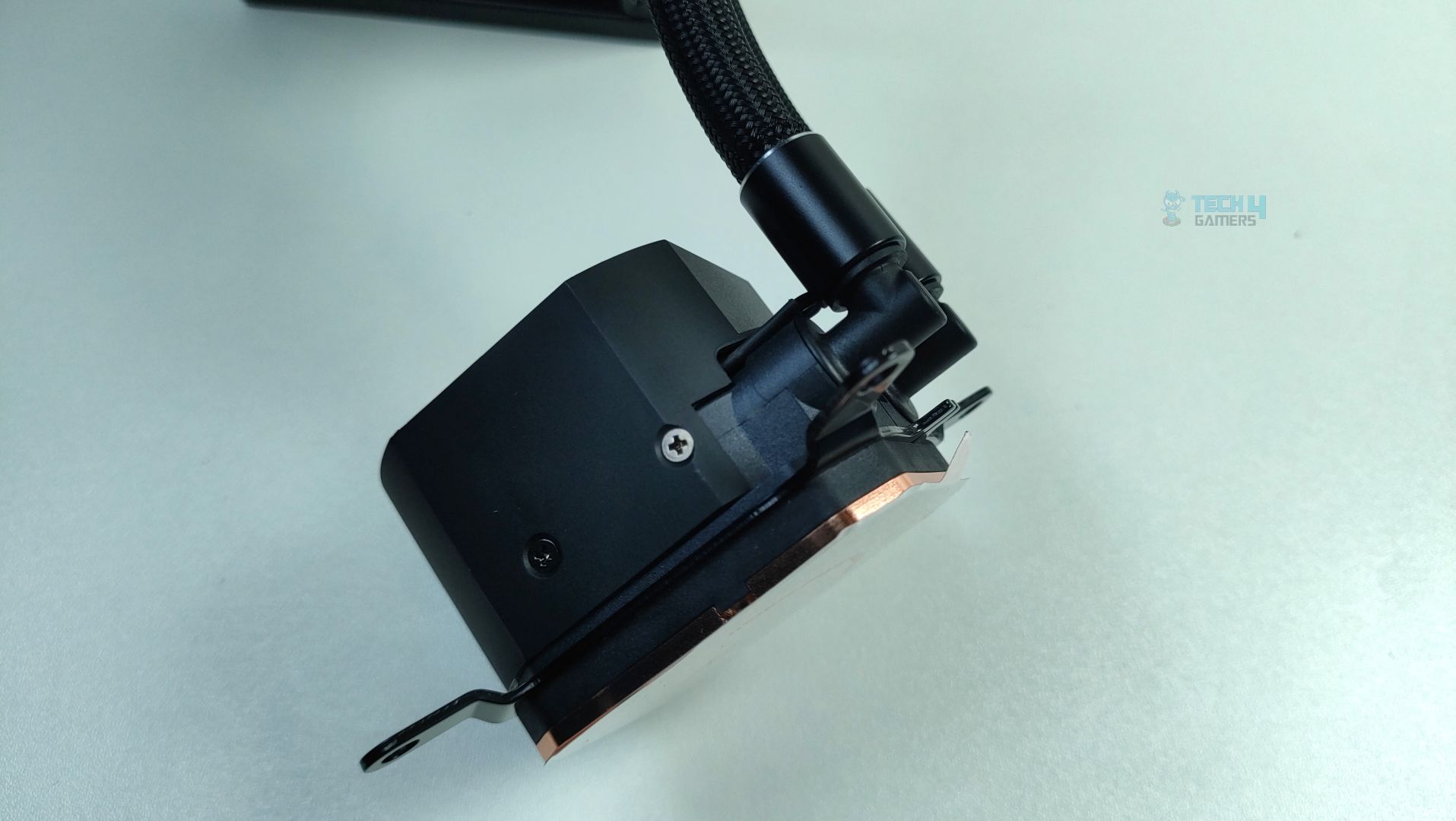
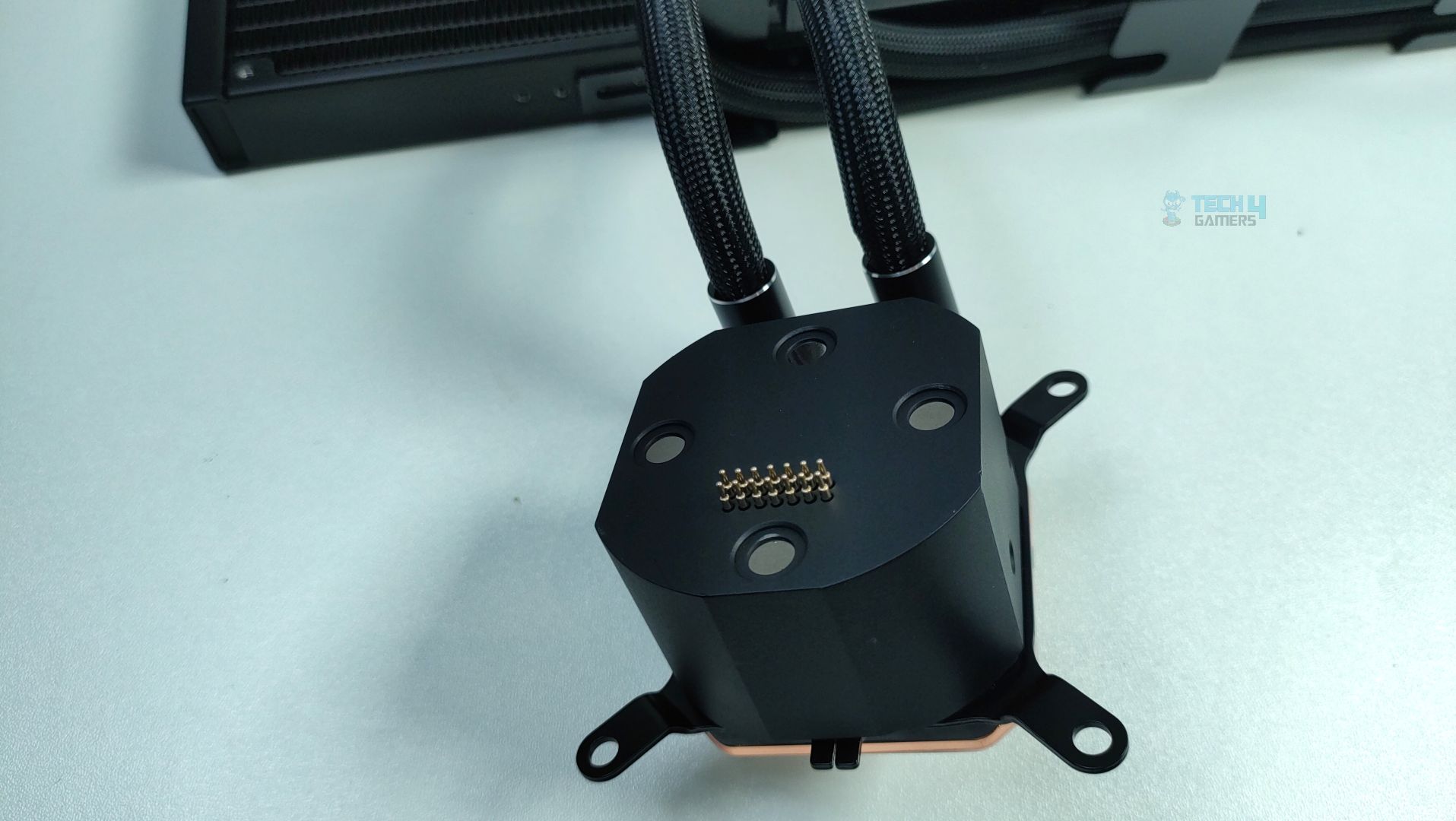
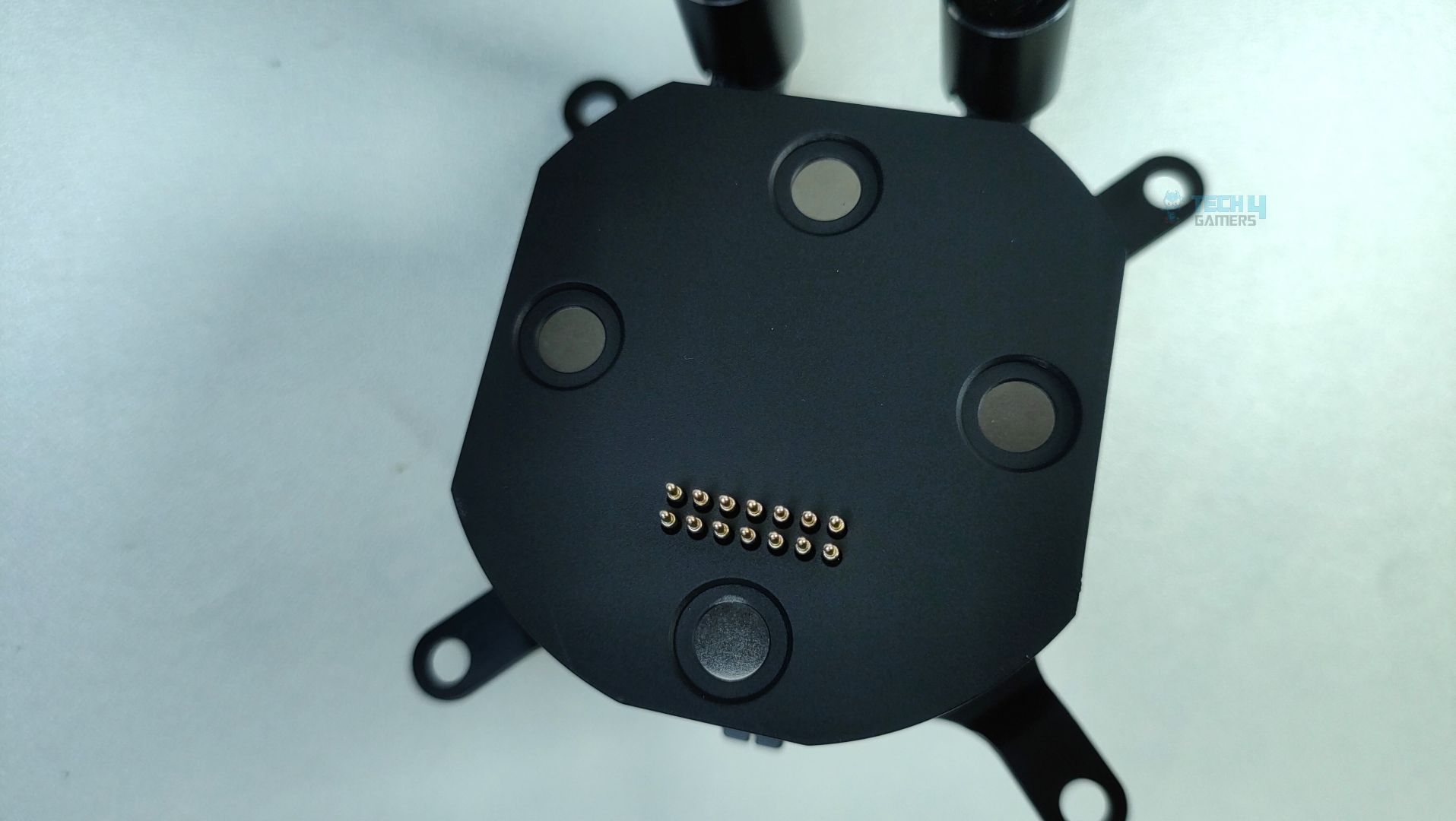
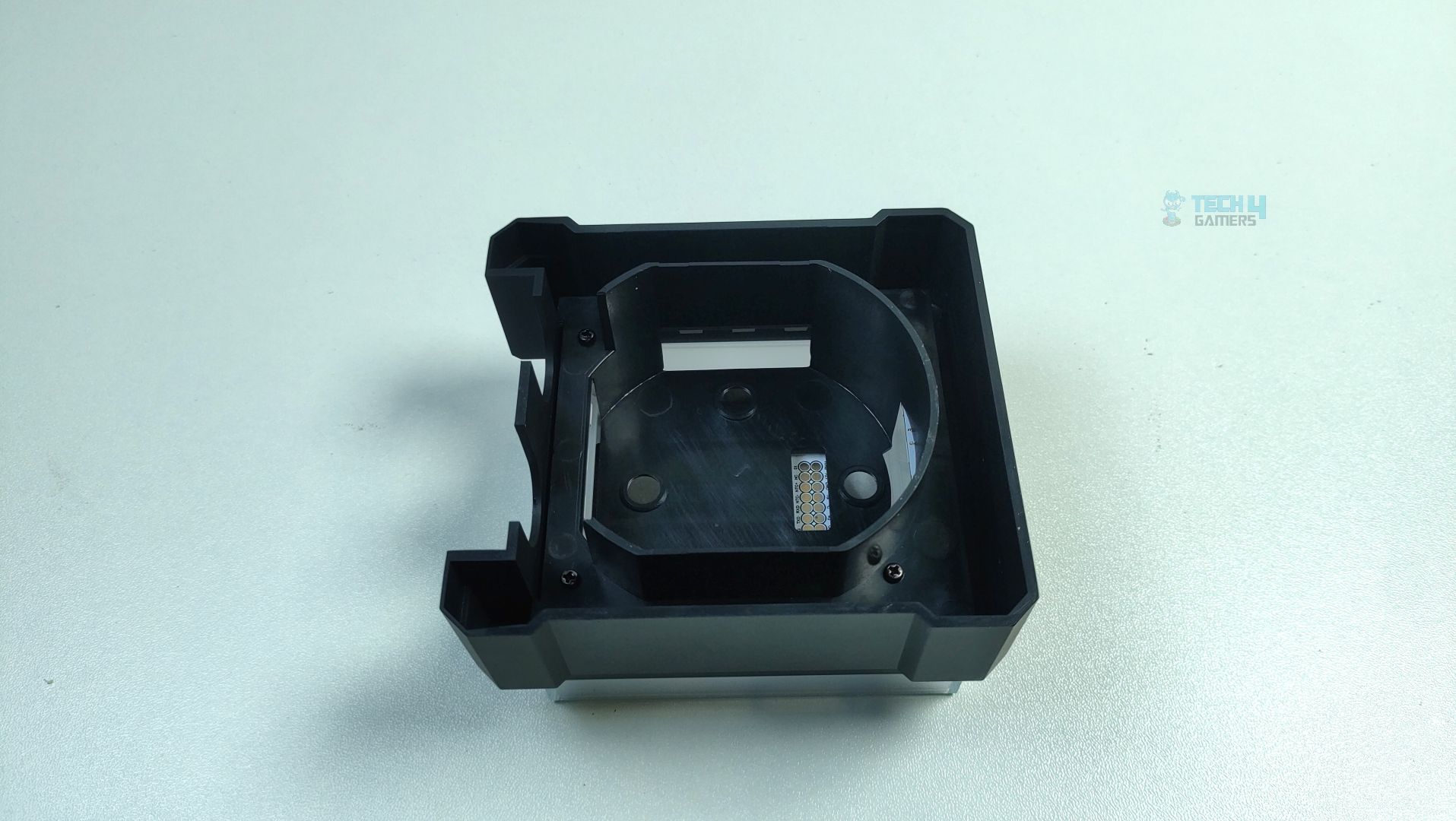
Now, it’s time to discuss its pump design. The outer casing features an angular design. In addition to the housing, you can notice four magnetic connections, distributed symmetrically for the display mount. The POGO pins can also be seen here, which powers the LCD module. In total, the block dimensions are 91 x 99 x 62mm.
Pump/Block- Lian Li Hydroshift II LCD-S 360TL
Pump/Block- Lian Li Hydroshift II LCD-S 360TL
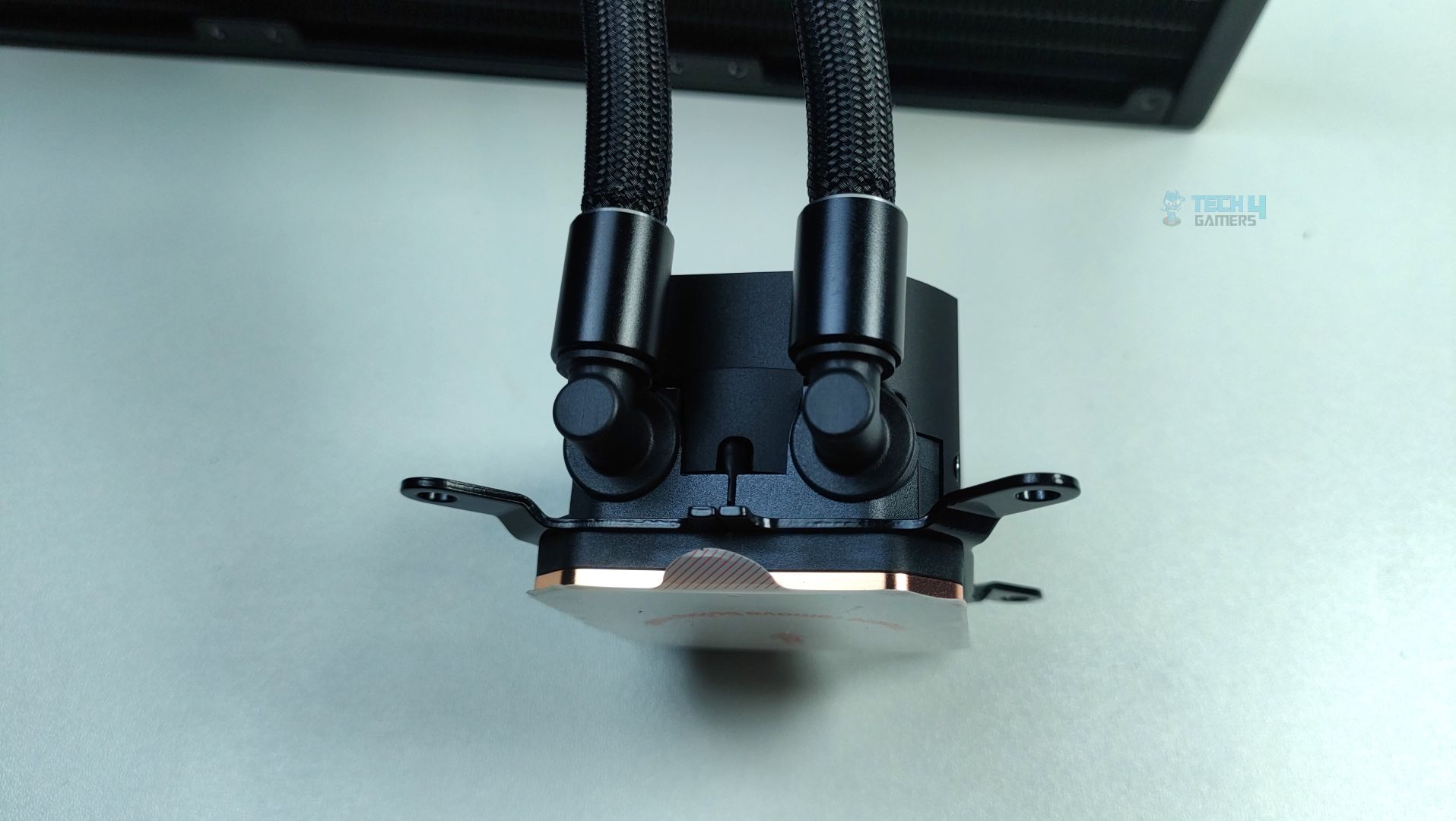
The pump/block is entirely cable-free, allowing for a clean aesthetic. All wires from the pump exit through the tubes, keeping the CPU area neat. The Hydroshift II pump design is innovative compared to the first generation of Hydroshift, as the water is directed by the pump towards the copper plate instead of being pulled from it, resulting in greater flow between the skived fins of the copper plate.
No Cables!- Lian Li Hydroshift II LCD-S 360TL
No Cables!- Lian Li Hydroshift II LCD-S 360TL
The pump features a 38mm impeller, enabling better penetration in compact water chambers and resulting in quieter operations. The pump speed operates at 1600-3200 RPM ±10%, and noise levels of 20.5 dB(A), making it quieter than its predecessor.
Tubes – Lian Li Hydroshift II LCD-S 360TL
The dual braided tubes enter the pump at a 90-degree angle from the top side of the pump through rotatory fittings. Their alignment is nicely maintained by the upright bracket on the radiator, which securely keeps the tube in place and effectively minimizes the tube clutter.
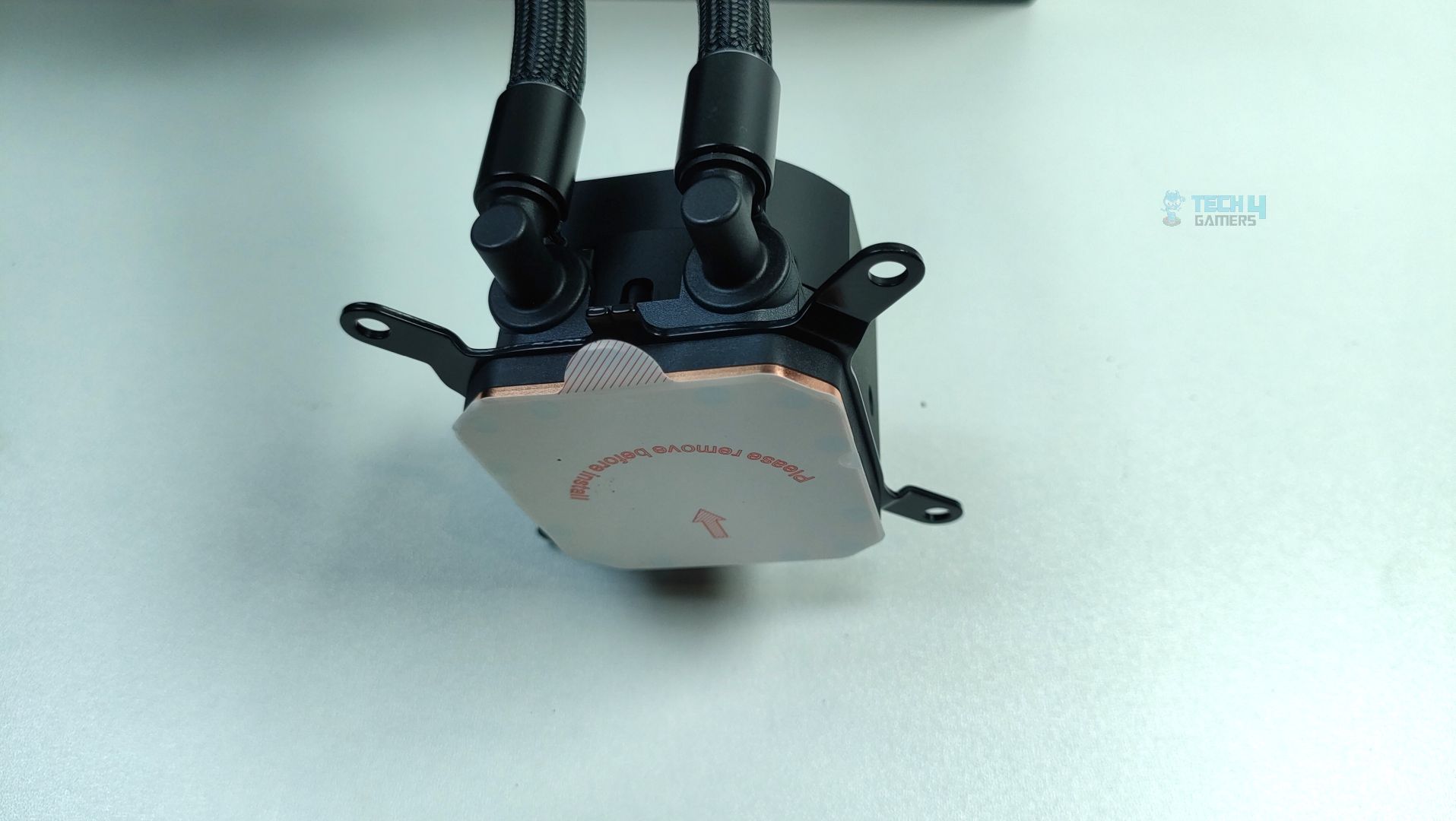
Cold Plate (Remove The Sticker Before Installing – Lian Li Hydroshift II LCD-S 360TL
The Copper plate is smaller in size than its predecessor, which, according to Lian-Li, prevents excessive deformation from mounting pressure. This also increases heat efficiency, as the distance the heat has to travel from the CPU surface to the coolant has been reduced.
Display
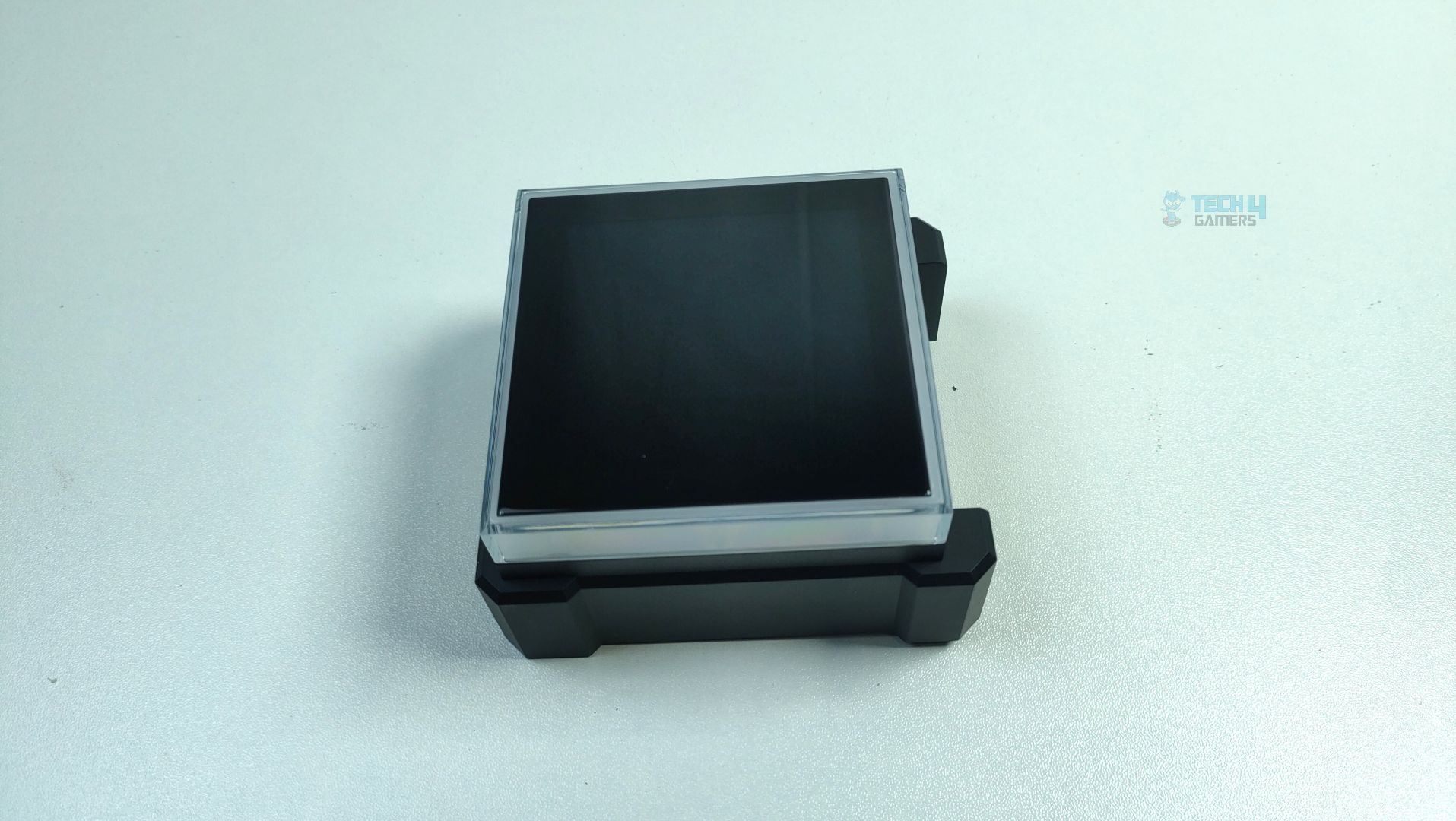
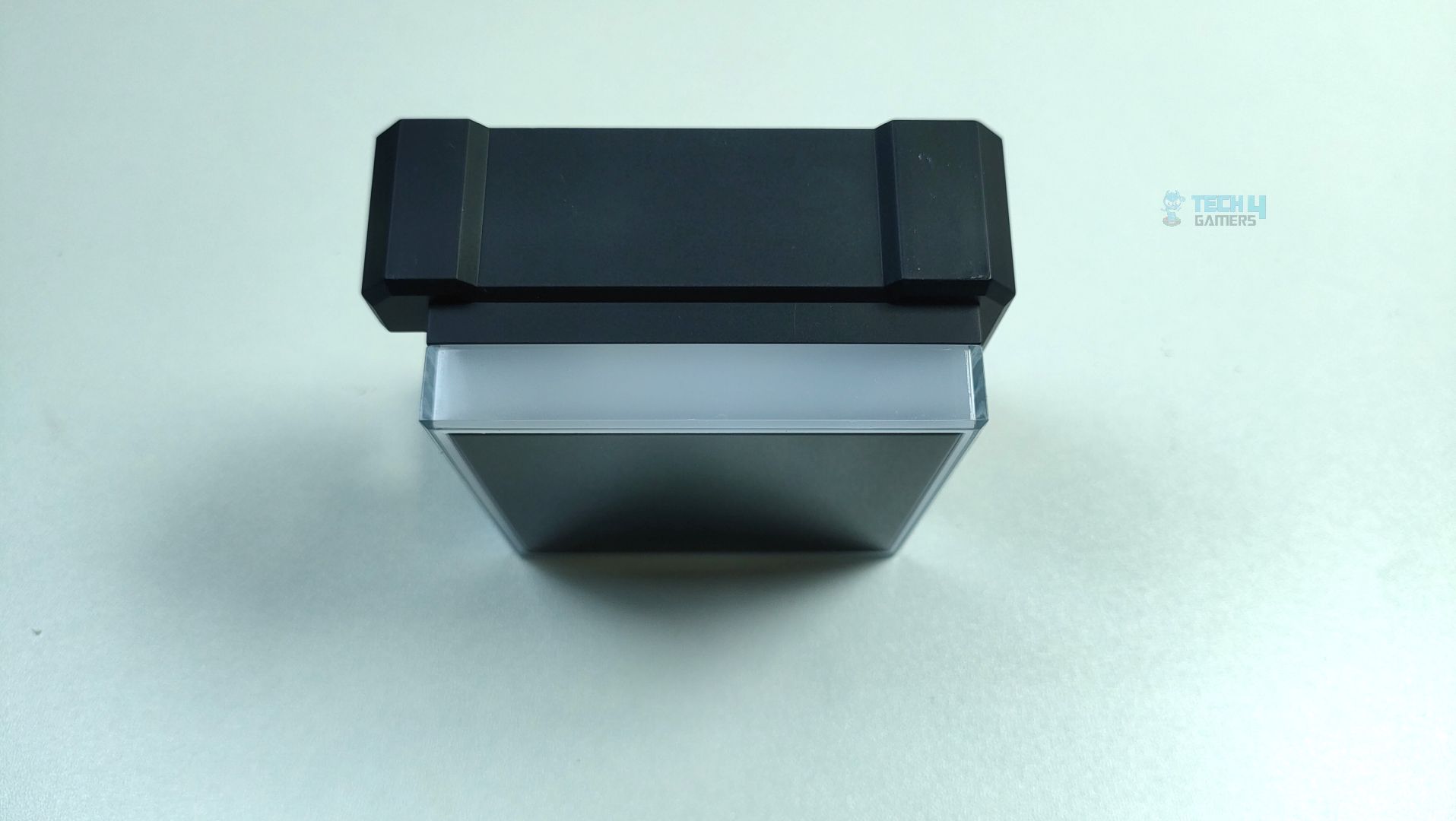
The display is square-shaped this time, featuring a relatively large size of 3.5 inches, which can be mounted magnetically via pogo pins on the block. It features a 480×480 resolution and a 60Hz refresh rate for smooth animation and video playback. The LCD slides onto the pump, and the magnets secure the panel.
Front – Lian Li Hydroshift II LCD-S 360TL
Back – Lian Li Hydroshift II LCD-S 360TL
A thin defused RGB strip frames the LCD. One thing I loved about the Hydroshift II LCD-C version was the rotatable pump cap ring, a nice feature that was satisfying. However, you don’t see such a thing there in the square version. The First Hydershift had a 2.8-inch LCD and identical nits of brightness and resolution, so in technical aspects, you don’t see much improvement over its predecessor, except for the size increase.
Defused ARGB – Lian Li Hydroshift II LCD-S 360TL
That said, a higher resolution would have been preferable given the larger display size. The Hydroshift LCD-C features a 2.1-inch screen with an identical resolution. The PPI (Pixels Per Inch) is drastically reduced from 323 to 194 PPI, resulting in the LCD-C having a 67% higher pixel density compared to this square version. This signifies the LCD-C offers approximately 67% greater pixel density compared to the square variant. Since the display is typically viewed from a distance, the difference in clarity is unlikely to be noticeable in practical use.
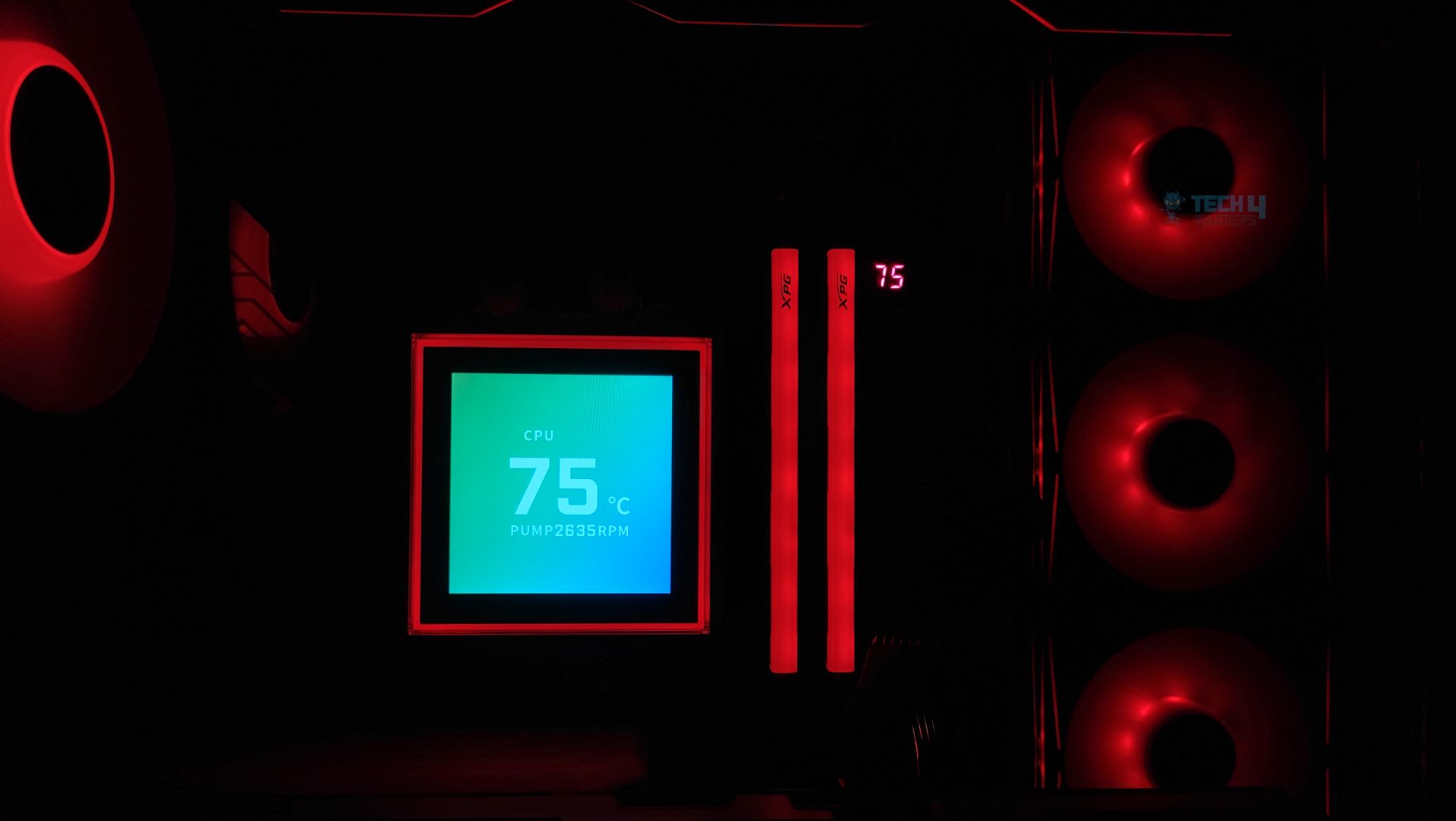
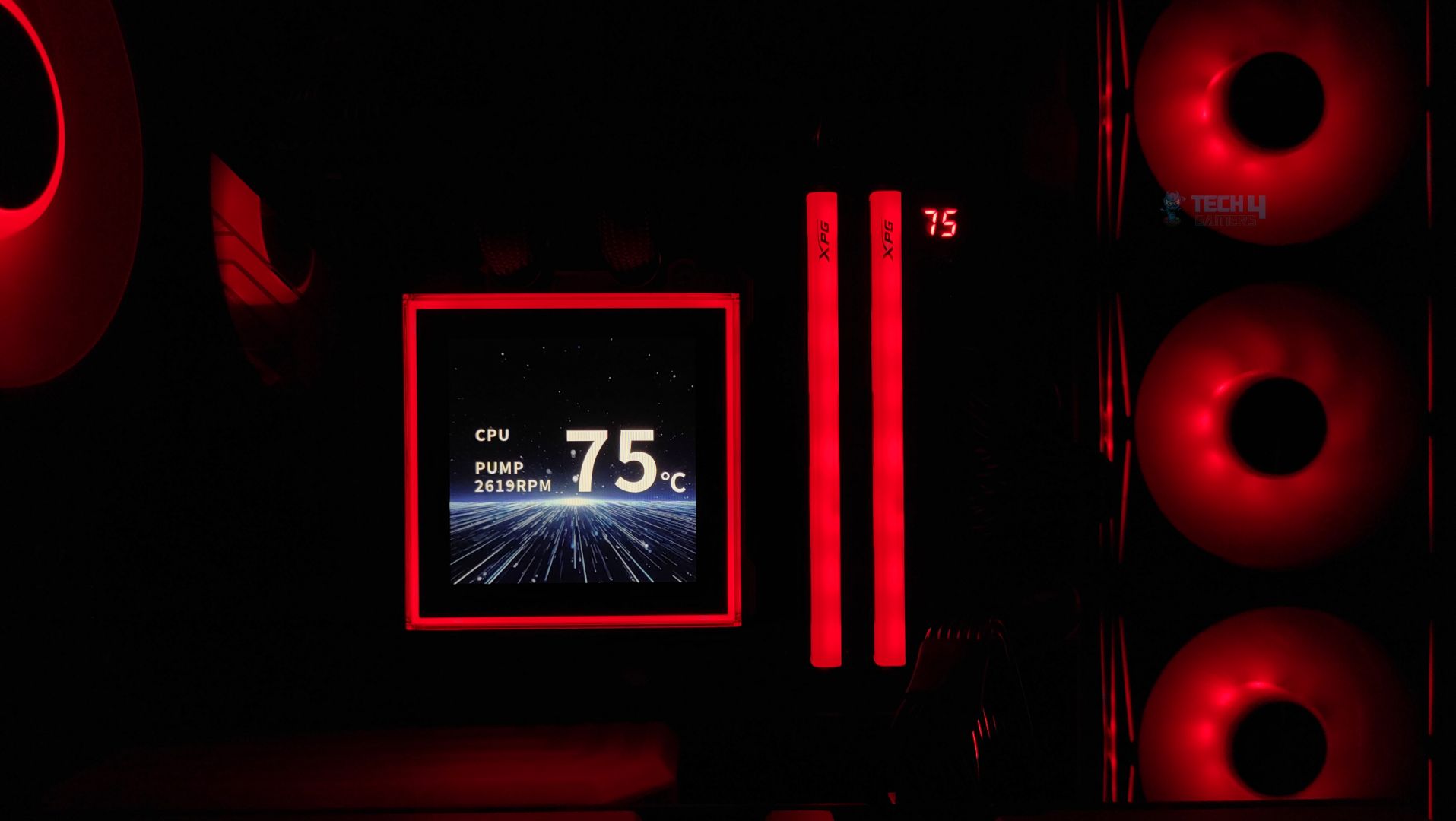
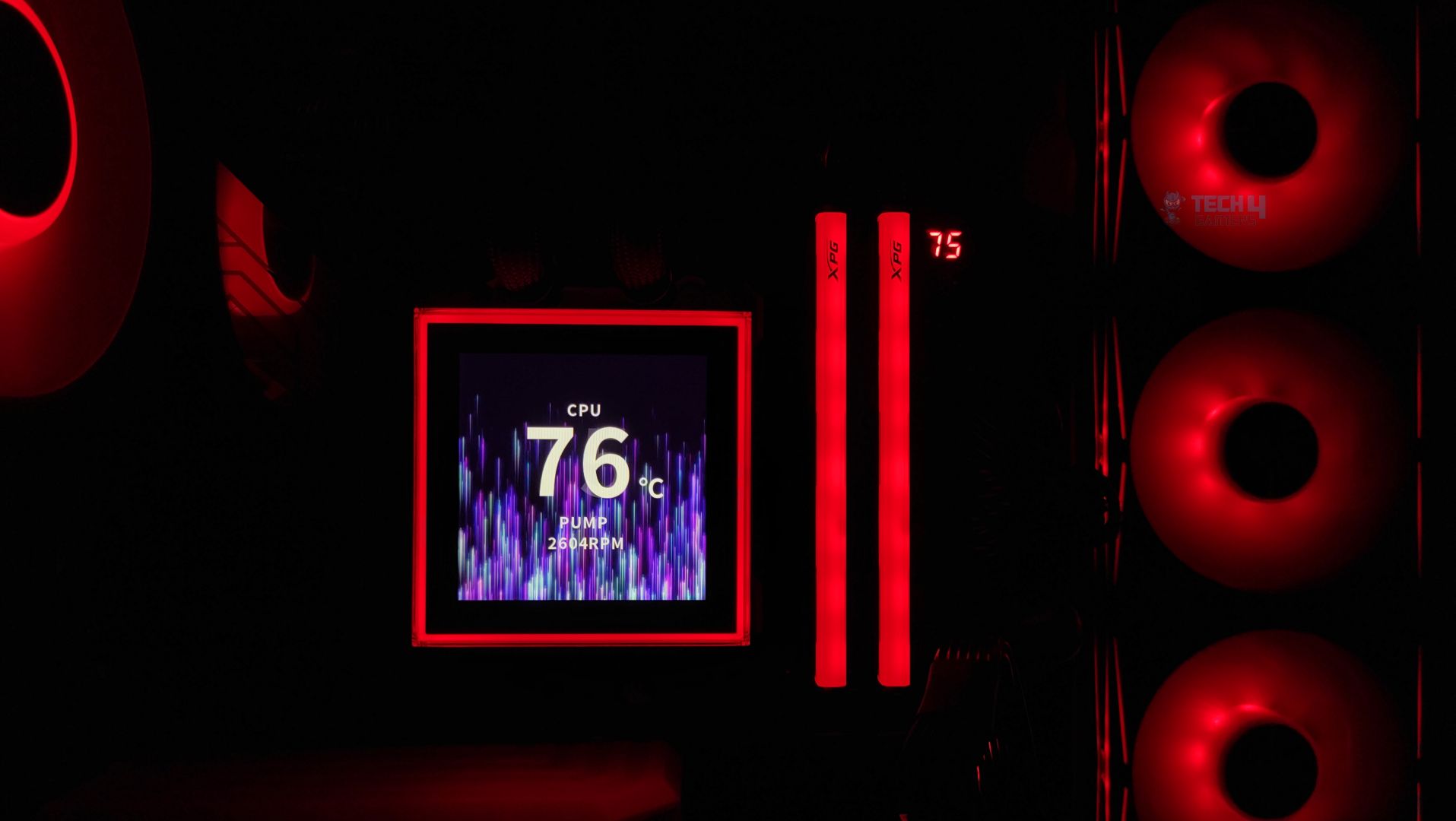
Here are a few demo examples showcasing the display with its preinstalled themes.
Display
1 of 6
oplus_256
oplus_256
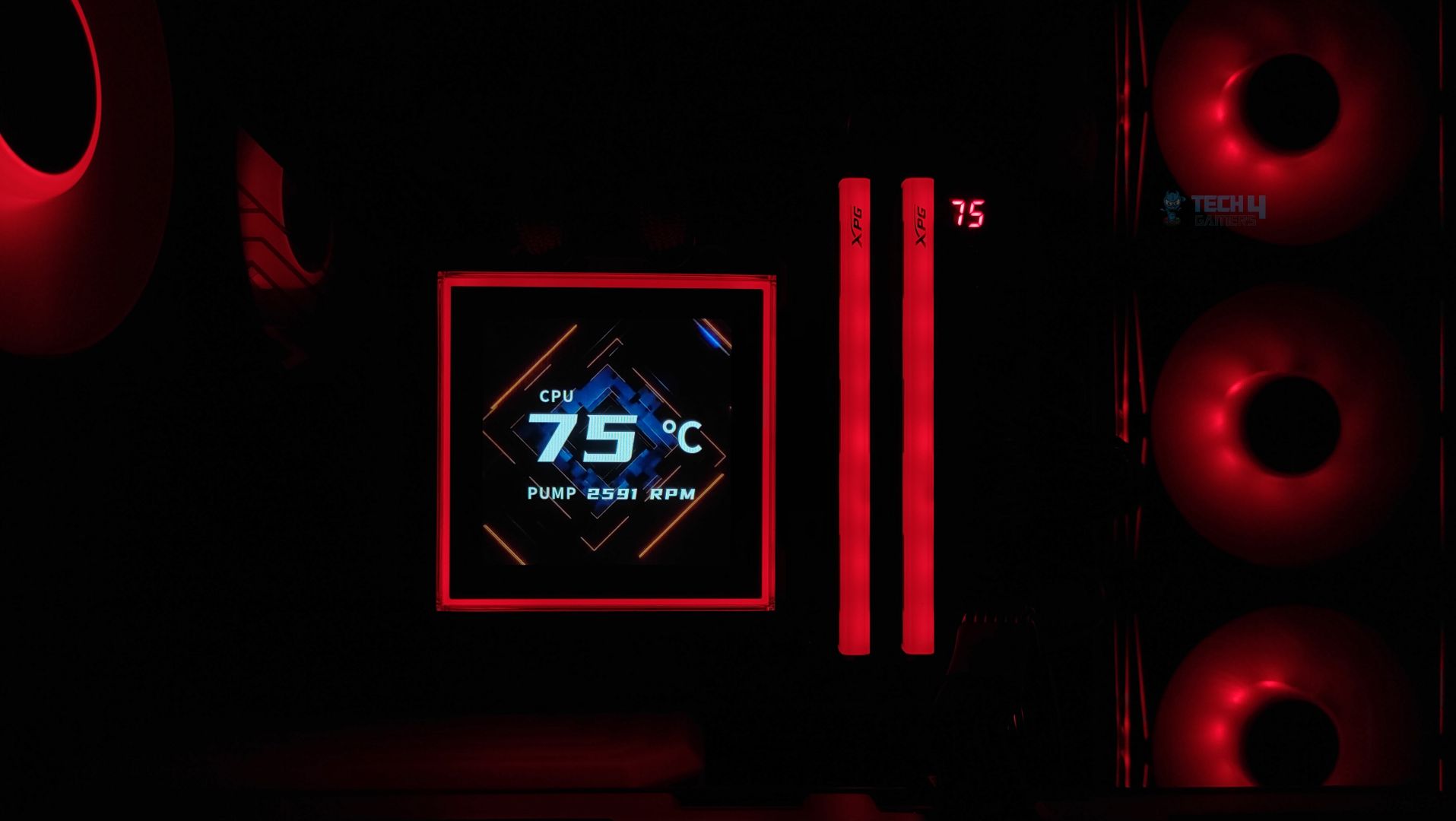
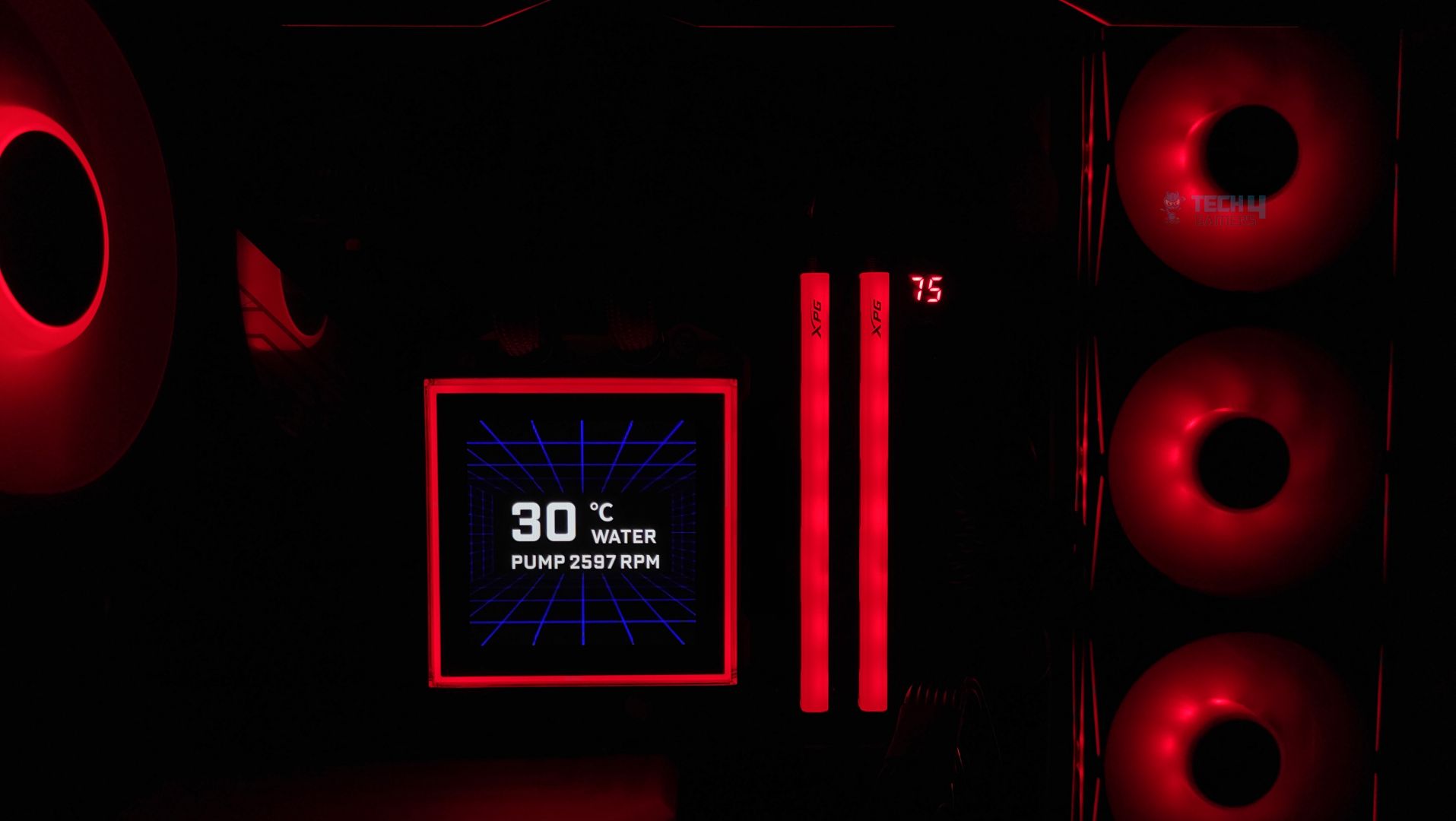
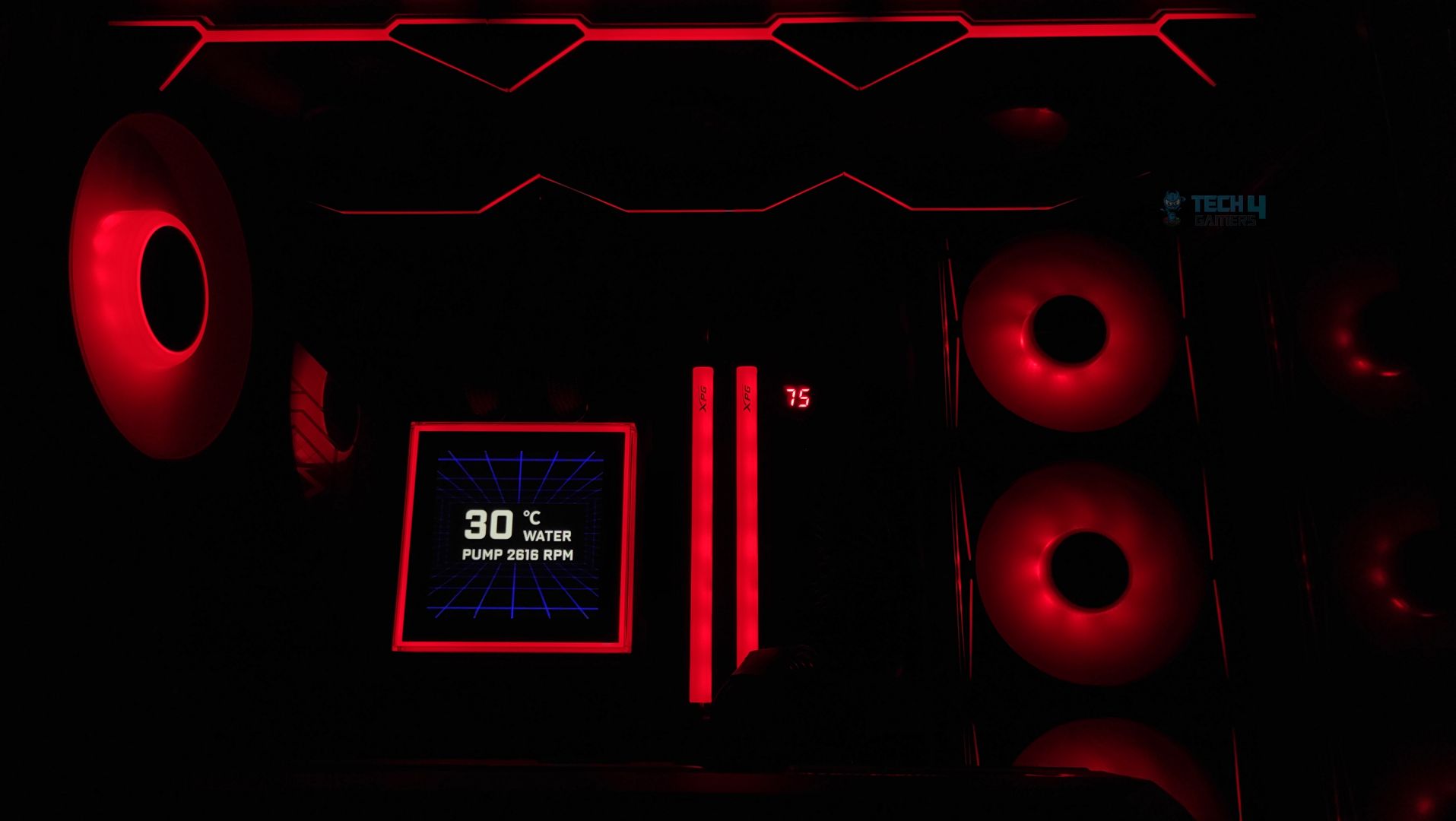
The colors are sharp and vibrant, and don’t seem too warm, even from the viewing angle. The display remains decent. The LCD has a brightness of 500-nits. So, it’s going to be brighter; however, at night, it wasn’t distracting to me, and in daylight, the LCD did not disappoint, providing clear visuals. The LCD can be controlled by three modes, which are discussed in detail below.
Controls / Modes
Lian-Li offers a range of connectivity options for your cooler, giving you the flexibility to select the one that best fits your preferences and needs.
Offline Mode: For those who prefer a simple, software-free approach, the Offline Mode is the perfect choice. When your AIO is not connected to the L-Connect 3 Software via wireless/advanced/USB modes, the LCD will display basic information, such as coolant temperatures and the pump’s RPM. The pump speed is based on the pre-programmed coolant temperature, as determined by the default pump speed curve.
Wireless Mode: No USB Cable Needed!The L-Wireless 2.4GHz Controller enables wireless mode. Through the L-Connect 3 software, users can customize their screen themes and lighting effects.In this mode, users have access to a few PC sensors, including CPU and GPU usage, as well as temperatures. LCD can also be customized in this mode.
Wireless Mode (Advanced): This mode, which is an enhanced version of the Wireless Mode, utilizes the L-Wireless Controller and a 9-pin USB connection from the motherboard. It offers advanced user settings in the L Connect software, including system monitoring with a wide range of sensors, custom layouts and backgrounds, L-Connect screen recording and capture, and support for secondary screens. You will also have access to more templates.
USB Connected Mode: It’s essentially the same as Wireless Mode / Wireless Mode Advanced combined. You don’t need to purchase the additional L-Wireless Dongle. The 360 CL/N version does not include the extra wireless access, so you will rely solely on the USB mode.
Here is the structured and clear table for the modes.
Feature
Wireless Mode
Wireless Mode Advanced
USB-Connected Mode
Connection required
PWM L-Wireless Sync
PWM L-Wireless Sync USB
PWM USB
13 Preset Backgrounds
✔️
✔️
✔️
Water Temperature
✔️
✔️
✔️
Pump RPM
✔️
✔️
✔️
Fan Lighting Presets
✔️
✔️
✔️
CPU Monitoring
✔️
✔️
✔️
GPU Monitoring
✔️
✔️
✔️
RAM Monitoring
✔️
✔️
✔️
Sensor Looping
✔️
✔️
✔️
Quick Lighting Sync
✔️
✔️
✔️
System Monitoring
✖️
✔️
✔️
Custom Layout
✖️
✔️
✔️
Custom Backgrounds
✖️
✔️
✔️
L-Connect Screen Capture/Recording
✖️
✔️
✔️
Secondary Screen
✖️
✔️
✔️
Additional Templates
✖️
✔️
✔️
Fan Speed Control
L-Connect Fan Curve
L-Connect Fan Curve / BIOS Fan Curve
L-Connect Fan Curve / BIOS Fan Curve
Pump RPM Control
L-Connect Curve
L-Connect Curve / BIOS Curve
L-Connect Curve / BIOS Curve
Fans
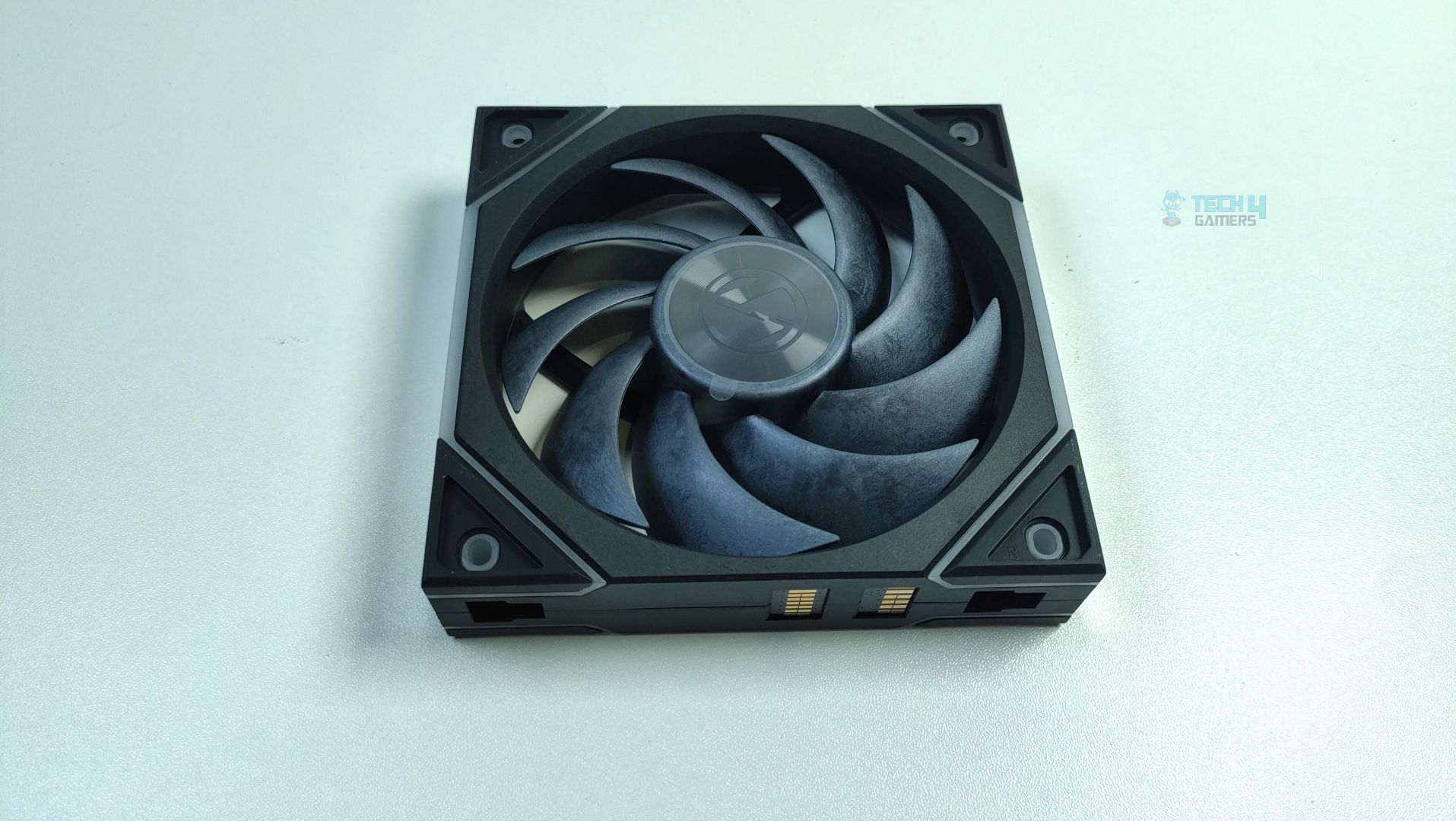
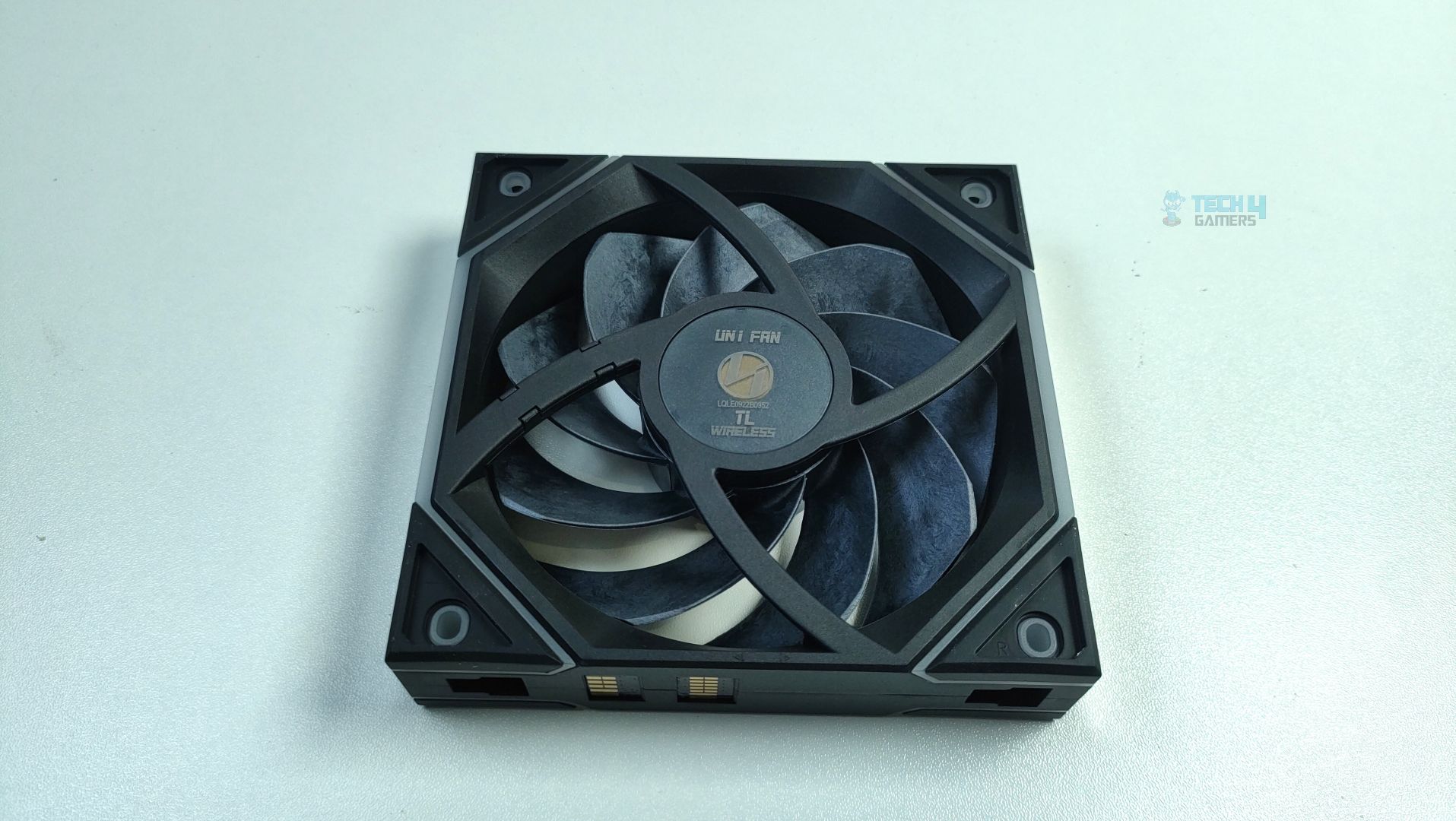
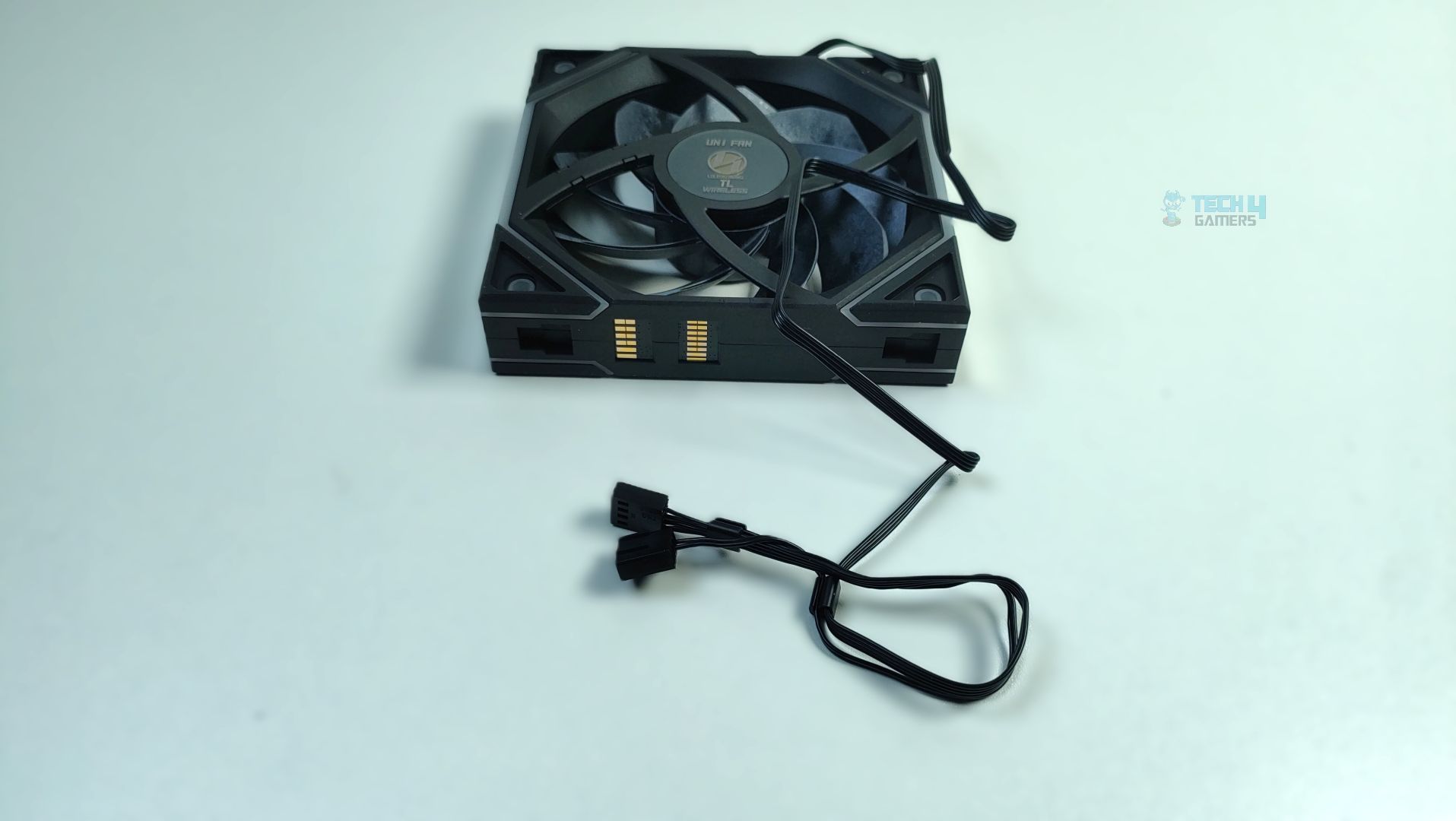
The LCD-S 360TL version comes preinstalled with three TL Wireless 120mm Uni-Fan, which features 9 LCP (Liquid Crystal Polymer) Fan Blades for tight tolerance. The fan features a large infinity mirror on the sides, accompanied by two light zones.
Uni-Fan TL Wireless Front – Lian Li Hydroshift II LCD-S 360TL
Uni-Fan TL Wireless Back – Lian Li Hydroshift II LCD-S 360TL
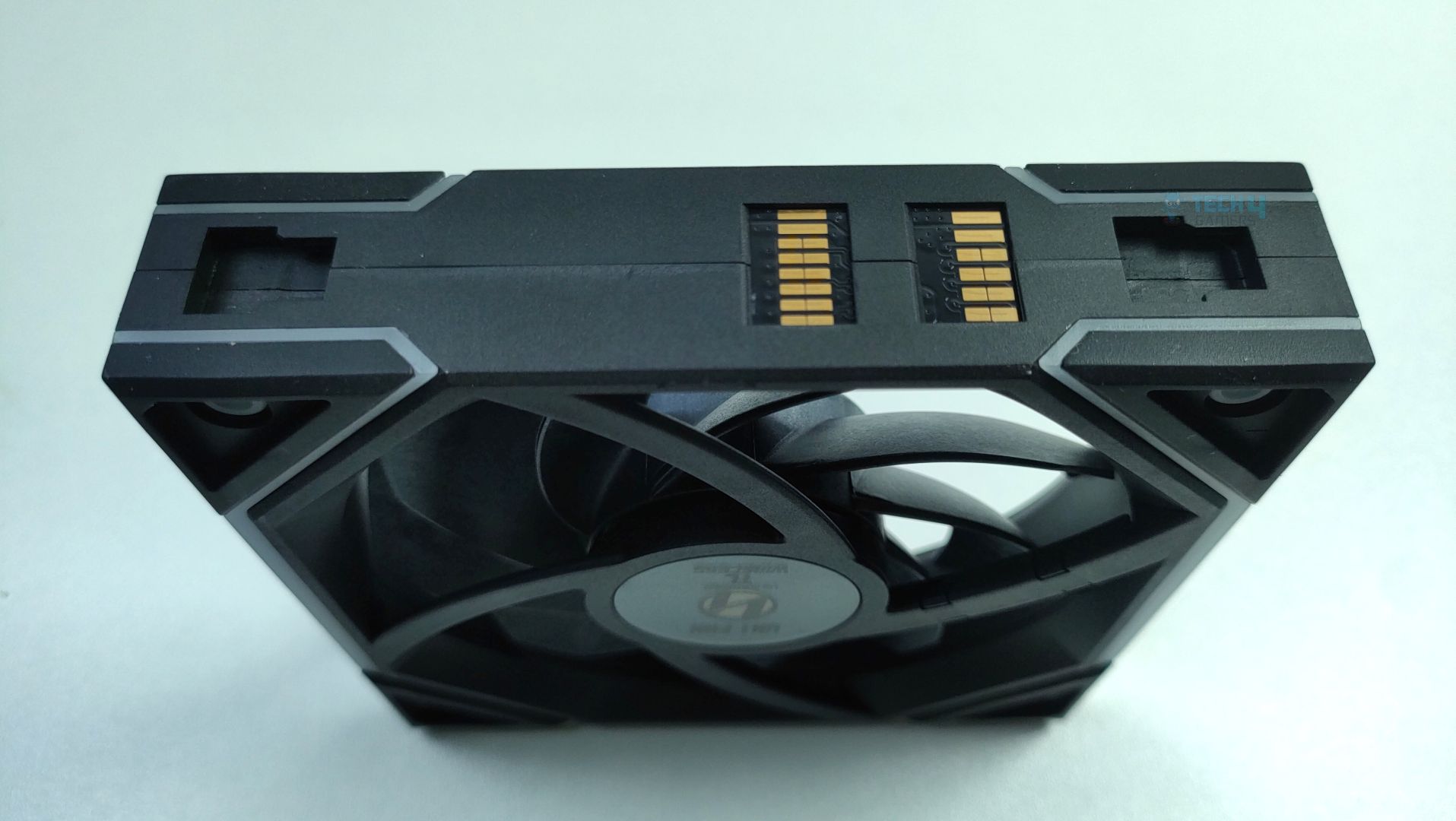
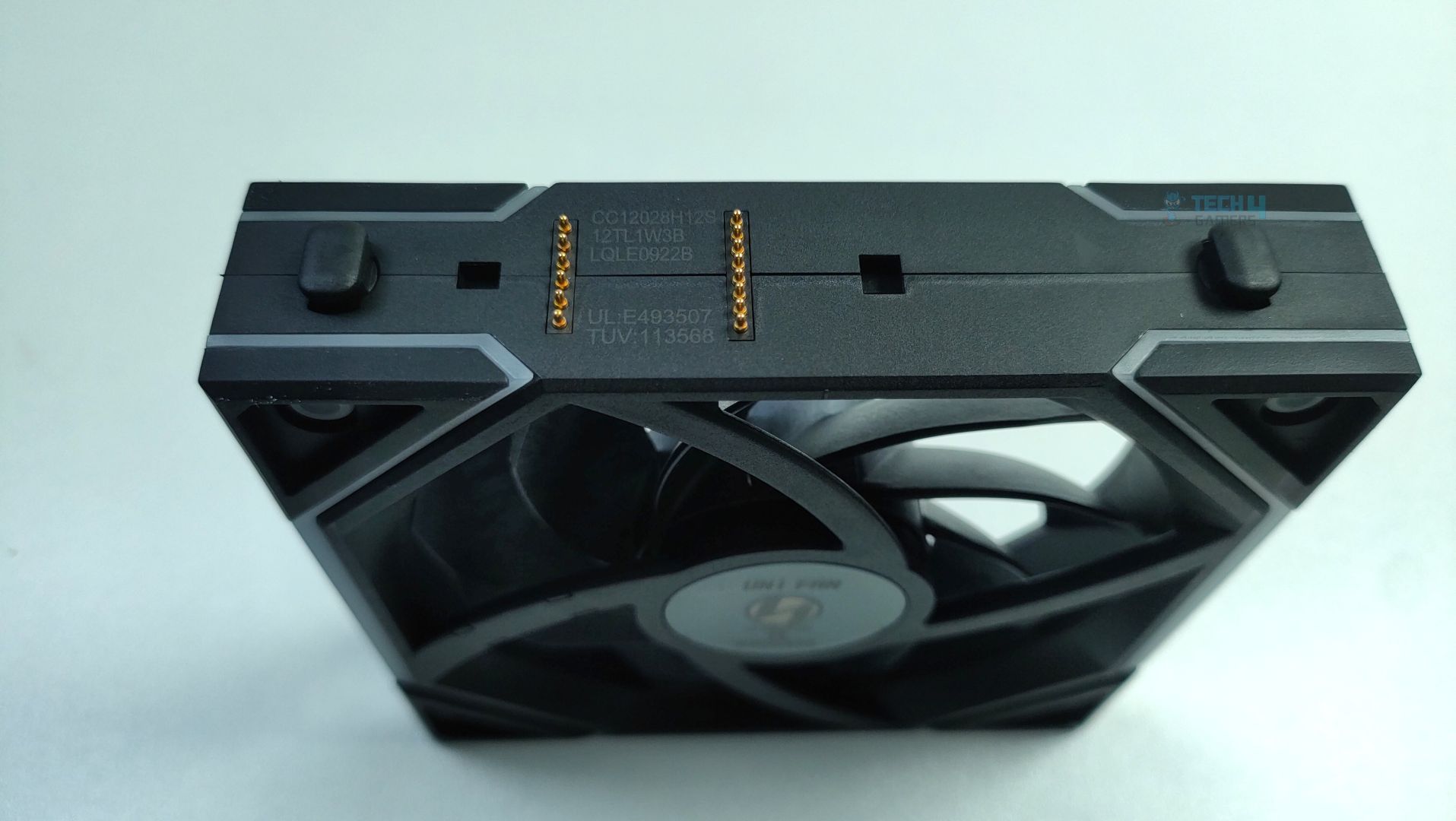
Each side features cable connectors and an interlocking system that supports daisy-chaining. The fans follow a 120mm configuration, with overall dimensions of 124 × 120 × 28 mm. In terms of build, the fans are notably thick, offering a premium and sturdy feel that reflects excellent build quality.
Interlocking Mechanism For Daisy Chain – Lian Li Hydroshift II LCD-S 360TL
Pogo Pins for the Receiver – Lian Li Hydroshift II LCD-S 360TL
Here are the specifications for the fans:
⚙️ Lian Li Uni-fan TL Wireless Specifications
Dimensions (W x D x H)
120x124x28mm
Bearing Type
Fluid Dynamic Bearing (FDB)
Airflow
90.1 CFM
Static Pressure
3.97 mmH2O
Speed
0, 200~2600 RPM
Noise Level
33 dBA
Input Power
5.8W
Operate Voltage
DC12V & 5V
Connector Type
4-PIN PWM /
3-12V PWM to SATA x1
Wireless Support
Yes, via L-Wireless Receiver
Installation (AMD)
We’re using the AMD platform, so our installation steps will only be provided for that.
Prepare the socket
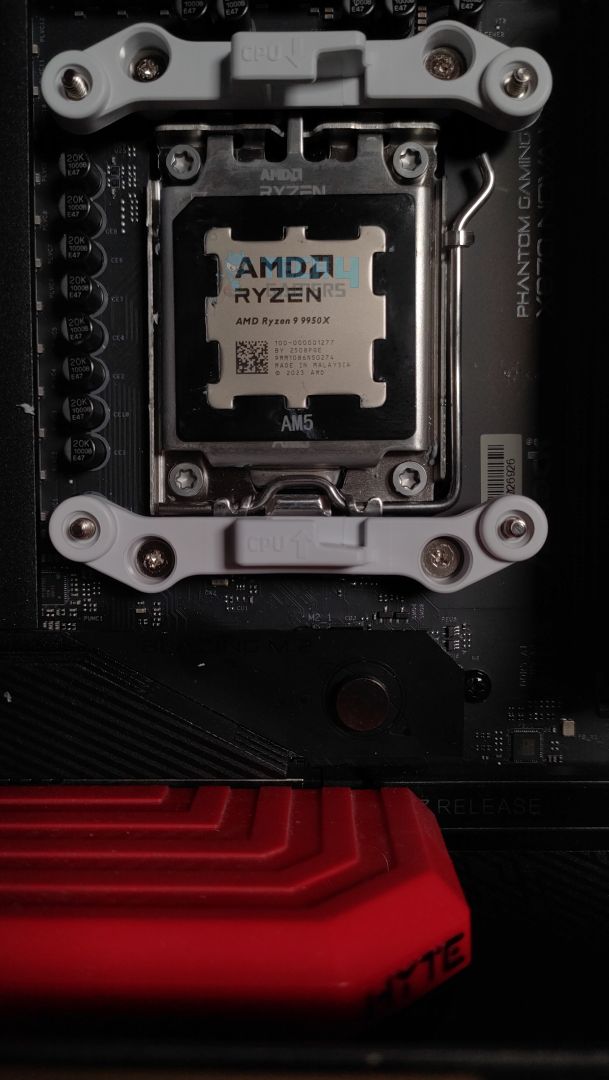
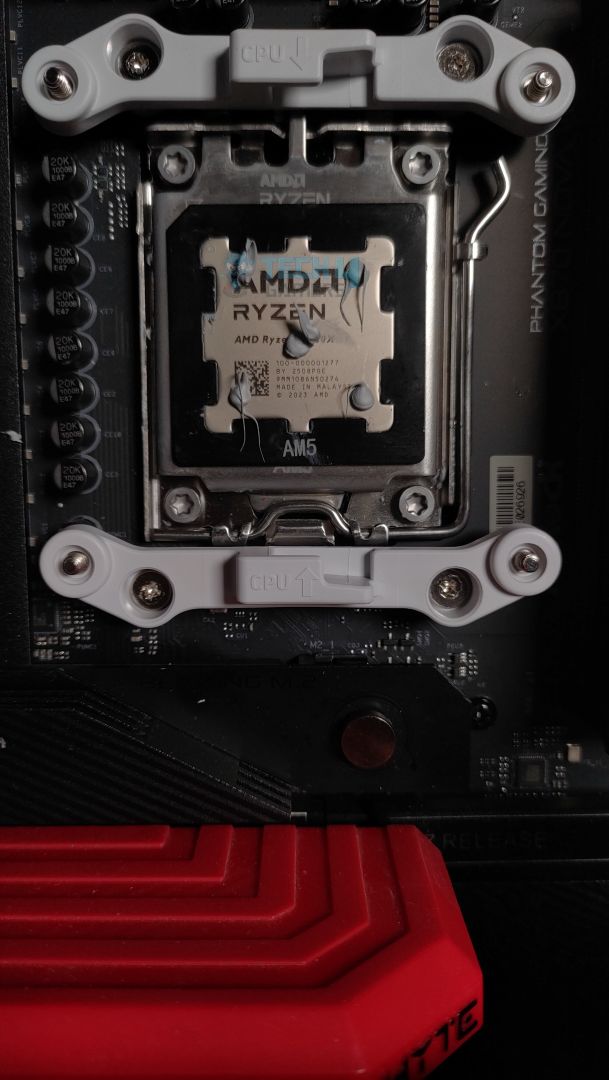
First, you need to remove the motherboard stock retention brackets from your AM4/AM5 motherboards. Then, you must install the Lian Li (AMD) provided bracket. Secure the bracket in place with its bracket screws. Do not over-tighten the screws. Ensure the arrows on the bracket point towards the CPU for the correct orientation. Refer to the image below for an example.
Brackets Installed
Thermal Paste Applied
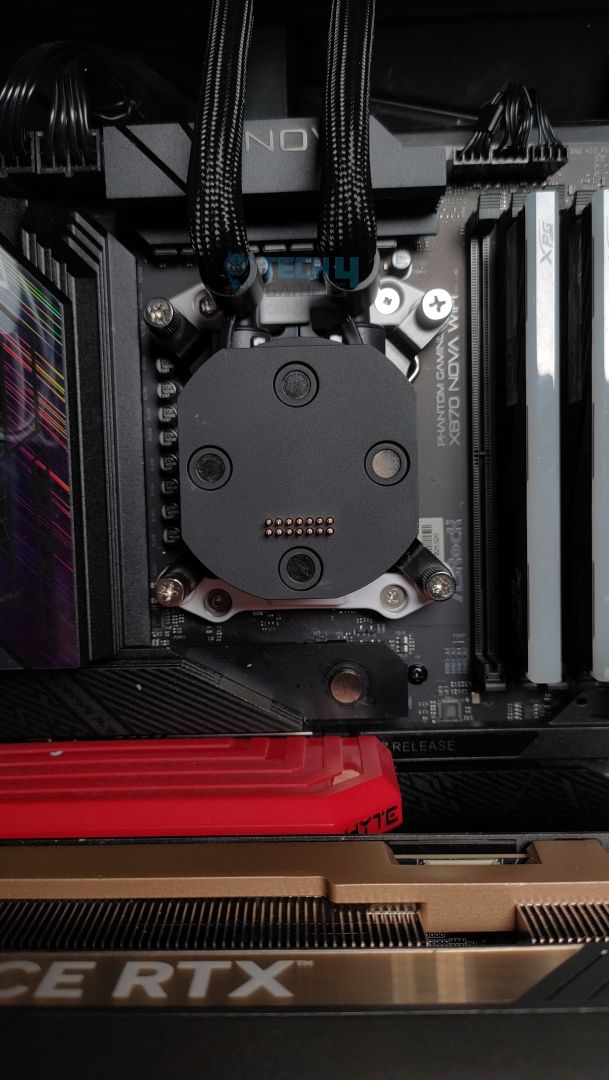
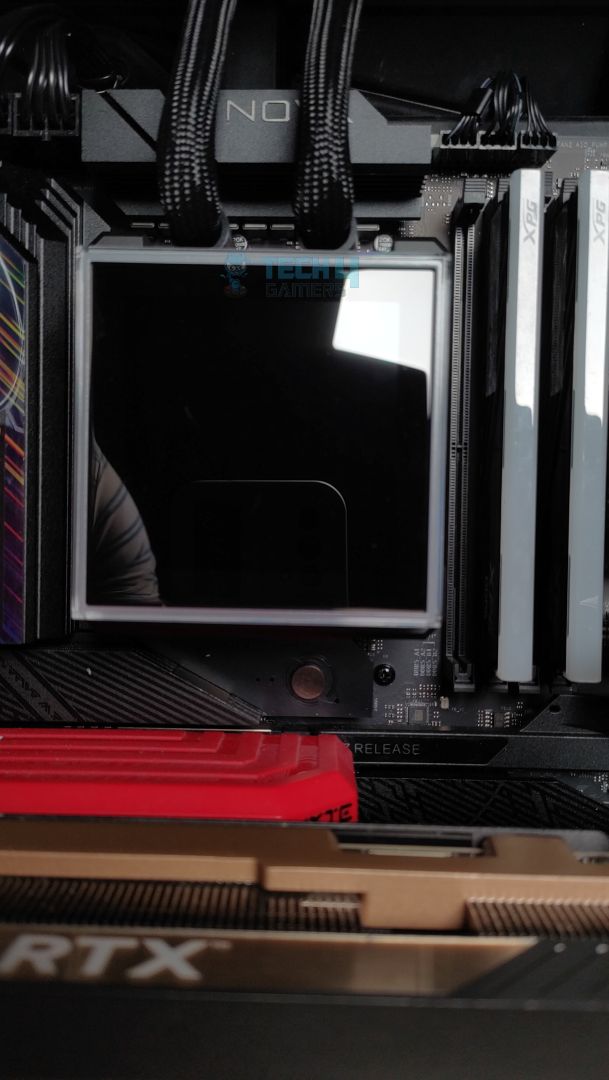
Now, apply the thermal paste to the CPU. Slide the block into the brackets until it reaches the far left of the slot. Now secure the block with the bracket nuts. Once it’s done, slide the LCD onto the pump. It’s magnetic; you will know once it’s secured.
Block Installed
LCD Mounted
The installation process was straightforward; however, at the time of this review, our sample unit from Lian Li included incompatible brackets. As a result, we used the Hydroshift LCD-C 360TL white brackets for testing. Lian Li later shipped us the correct brackets.
Cabling
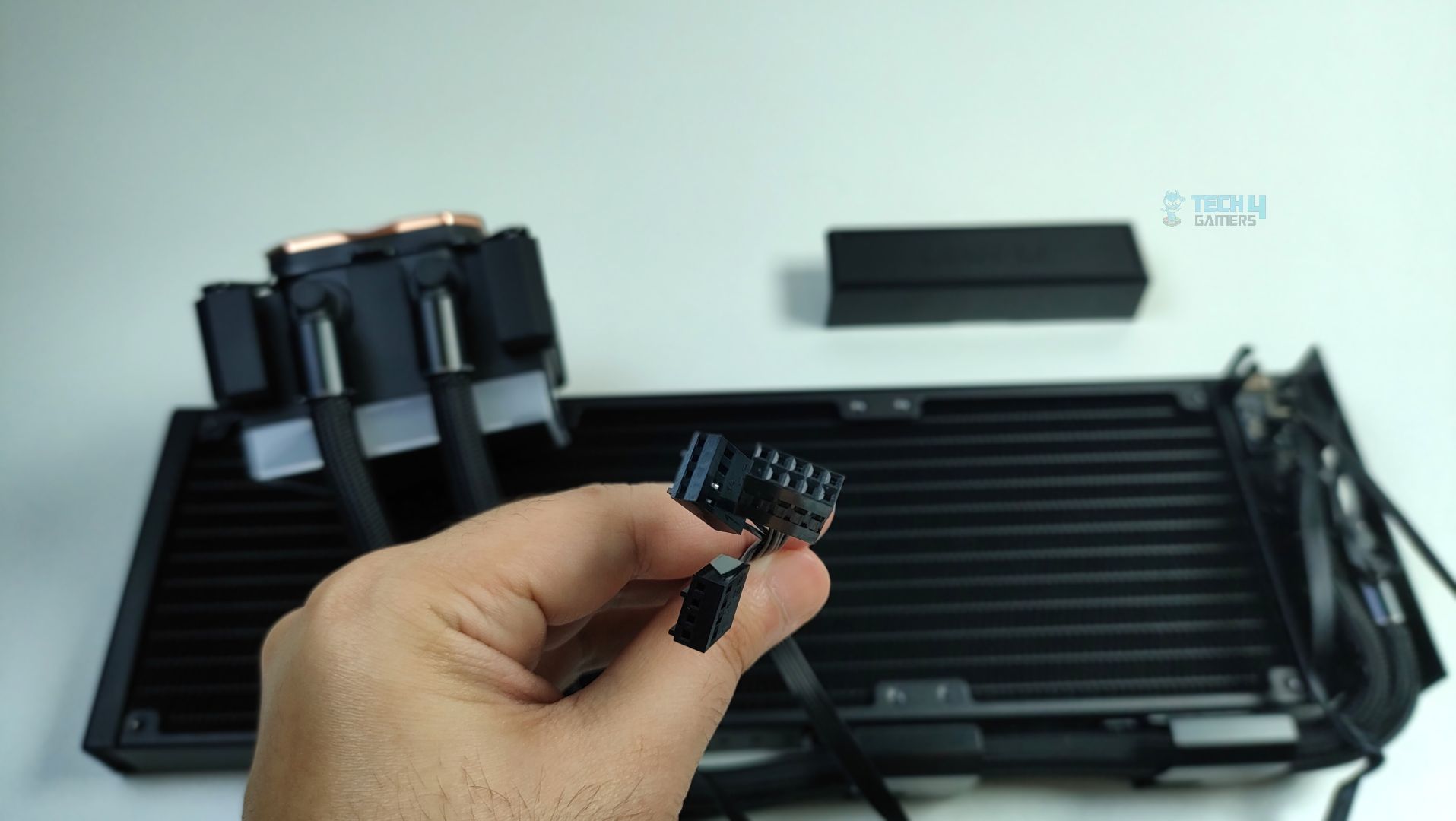
The cabling can be confusing for those installing the cooler for the first time, but don’t worry – we’ve got you covered. As we have already installed the cooler, now it’s time for the cables. There are three cables exiting from the radiator; one is a USB cable that will go into the USB header on the motherboard. The USB connector consists of 9 pins arranged in two rows.
Pro Tip: You can skip the USB cable if you prefer to operate the cooler in wireless mode.
The other cable, a 2-way 4-pin PWM, is used to power the pump and block’s RGB, while the second cable also powers the fans and RGB.
Cables For The Fans/Pump Exiting From The Radiator Side
We’ve the TL Wireless Fans, which feature an integrated wireless receiver attached to them. The two cables extend from that receiver. The first is a 4-pin PWM cable that connects to the CPU_Fan header, and the second is a 2-pin auxiliary power cable, which provides additional power in case the motherboard header cannot supply sufficient power.
Pro Tip: You can skip the 2-Pin Auxiliary Power Cable if your motherboard CPU_PWM header delivers sufficient power. Our test motherboard’s PWM header is rated at 3A (36W), qualifying for the safe operation of up to six Uni-Fan TL Wireless Fans. Please refer to your motherboard manual to confirm the rated power output before installing the fans.
Fans Two-Way PWM connectors coming from the L Wireless Transmitter
Overall, the process was clutter-free, and the CPU area looks clean.
Finished Looks
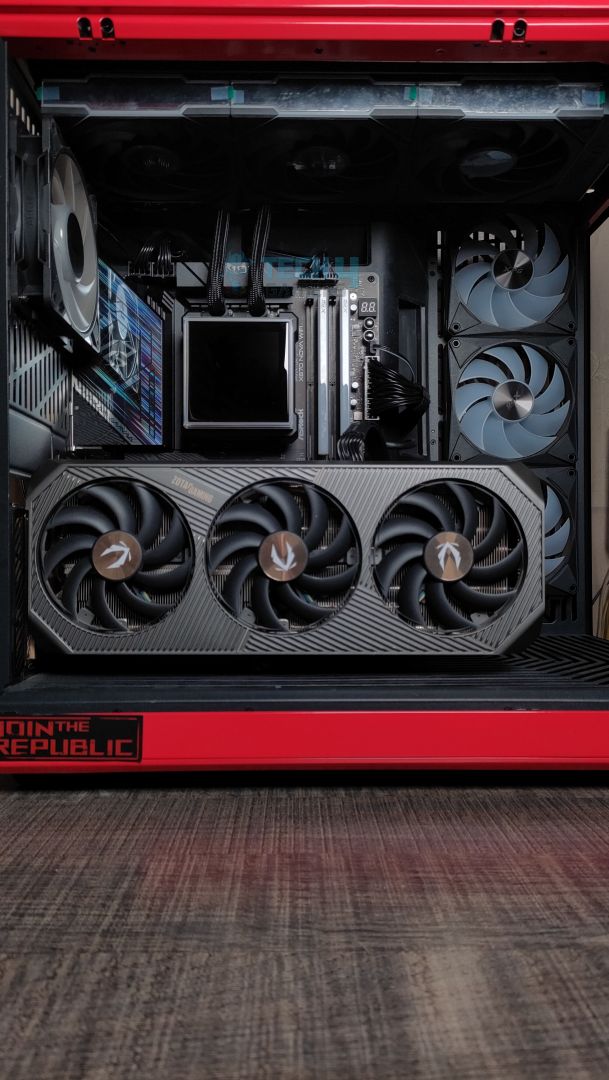
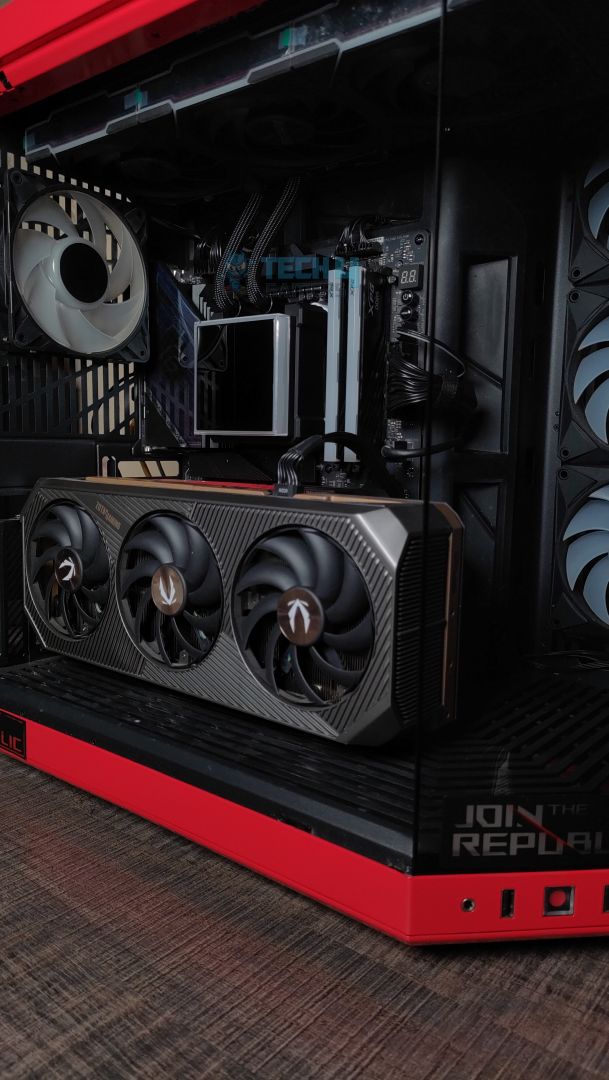
The completed installation of the cooler within the HYTE Y70 chassis is shown below. The unit is mounted at the top and configured for exhaust operation.
Finished Looks
Finished Looks
Testing Methodology
CPU Configuration:
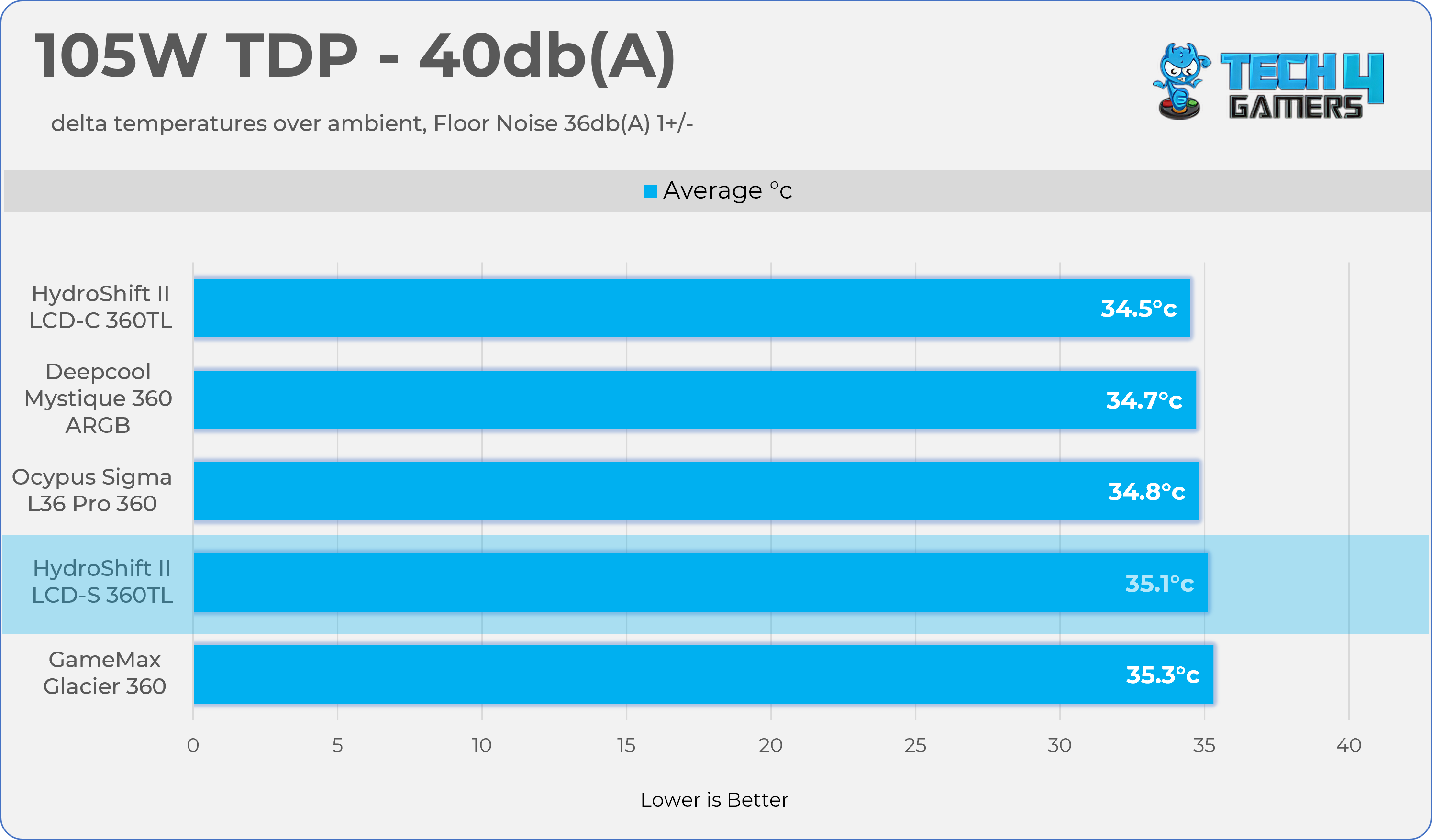
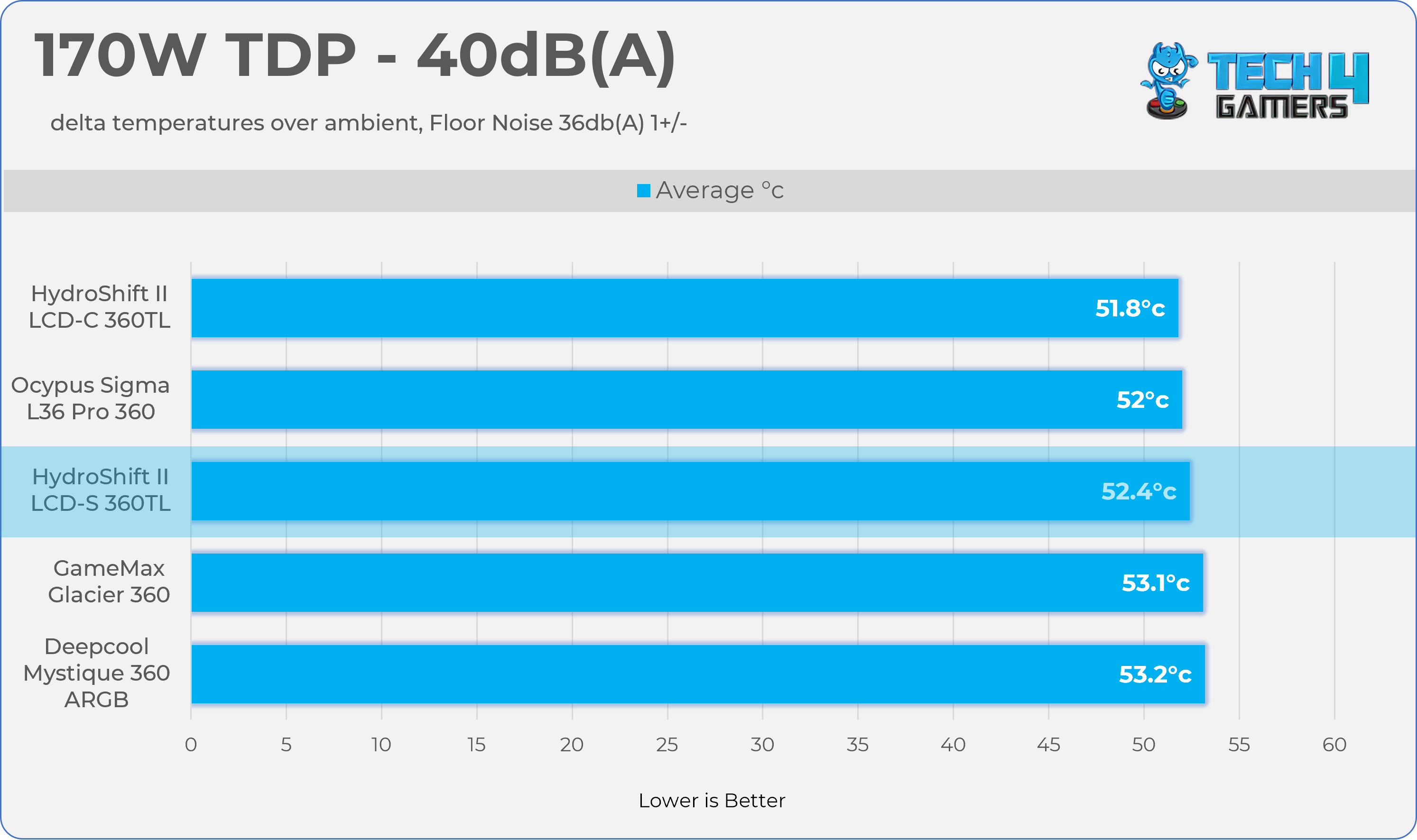
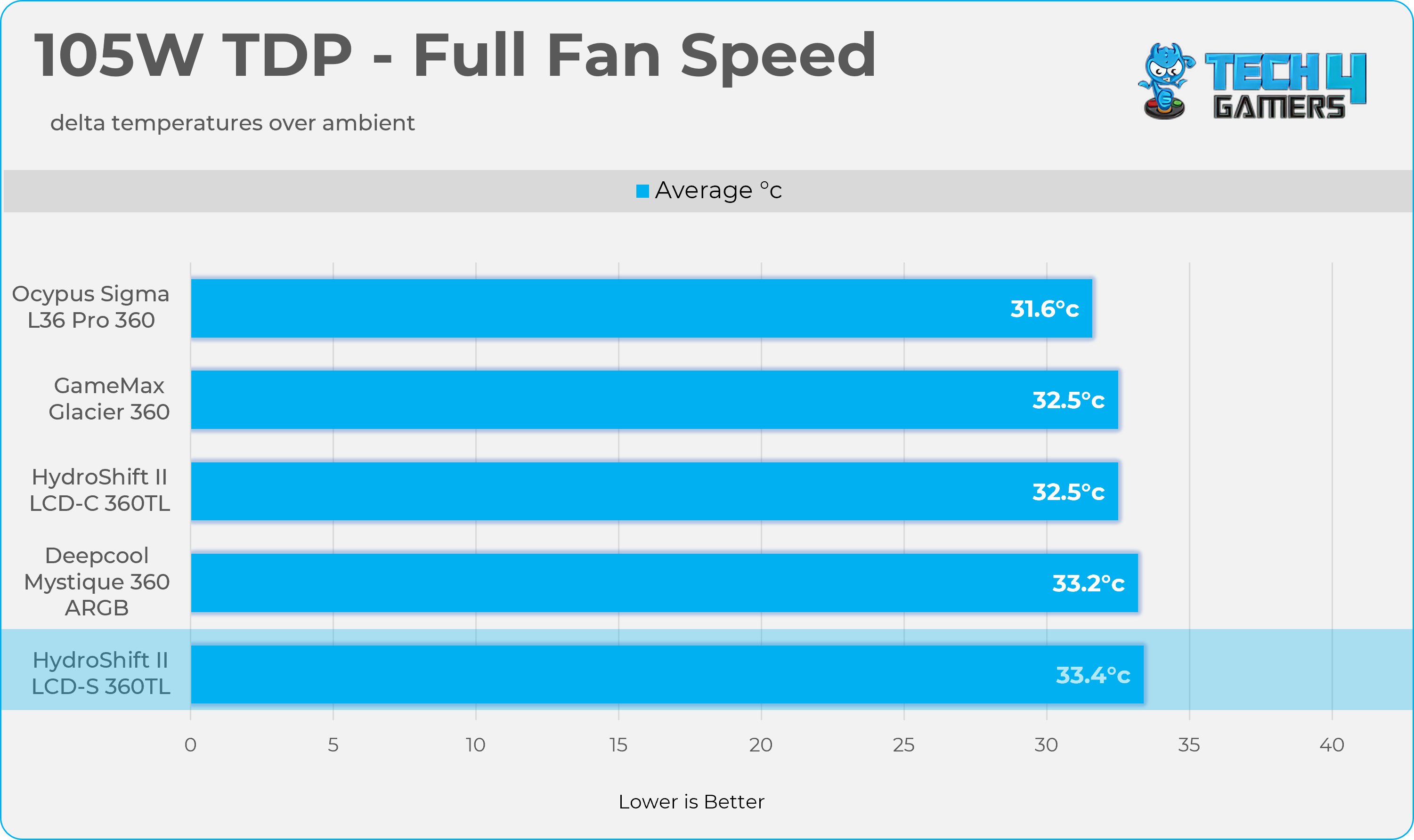
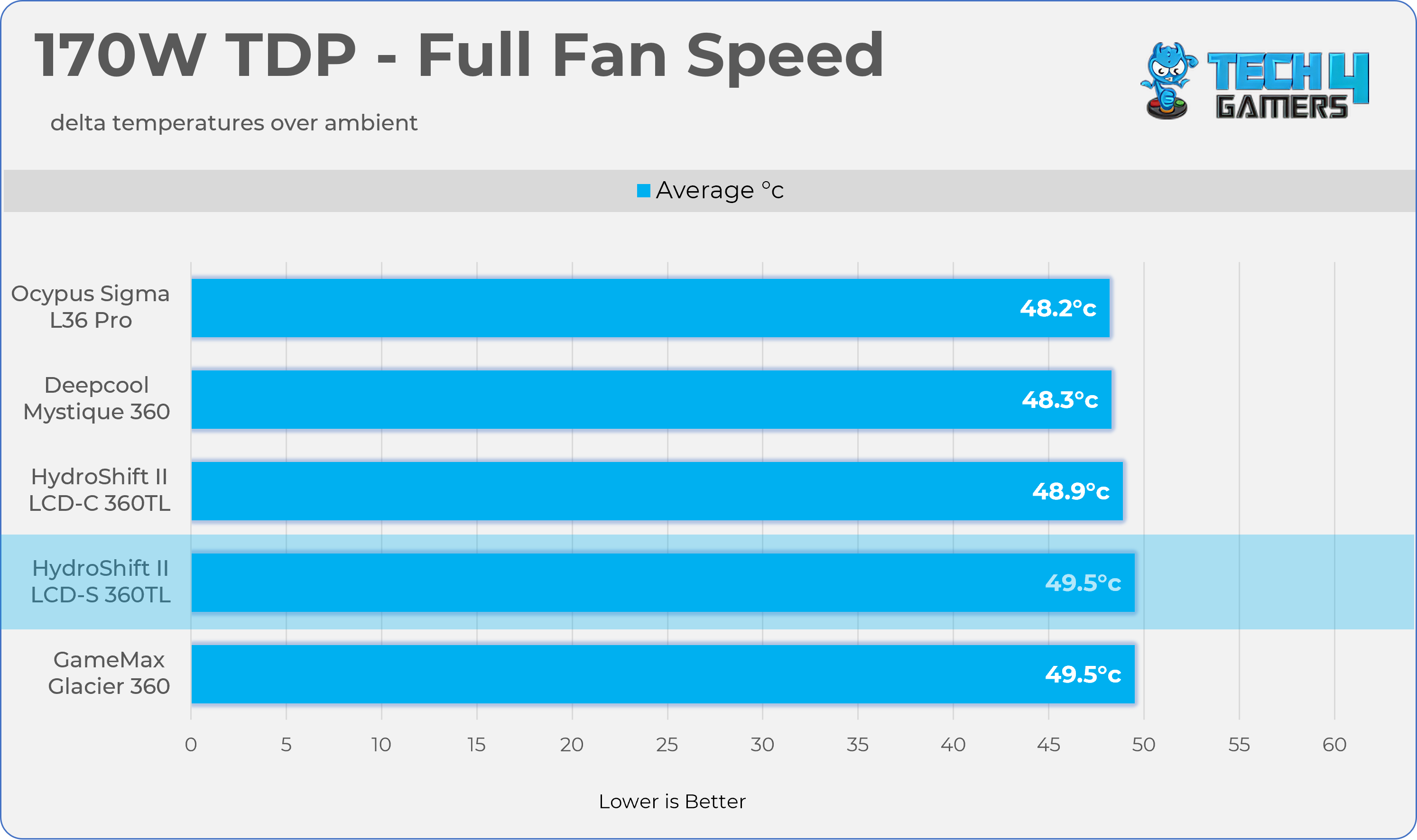
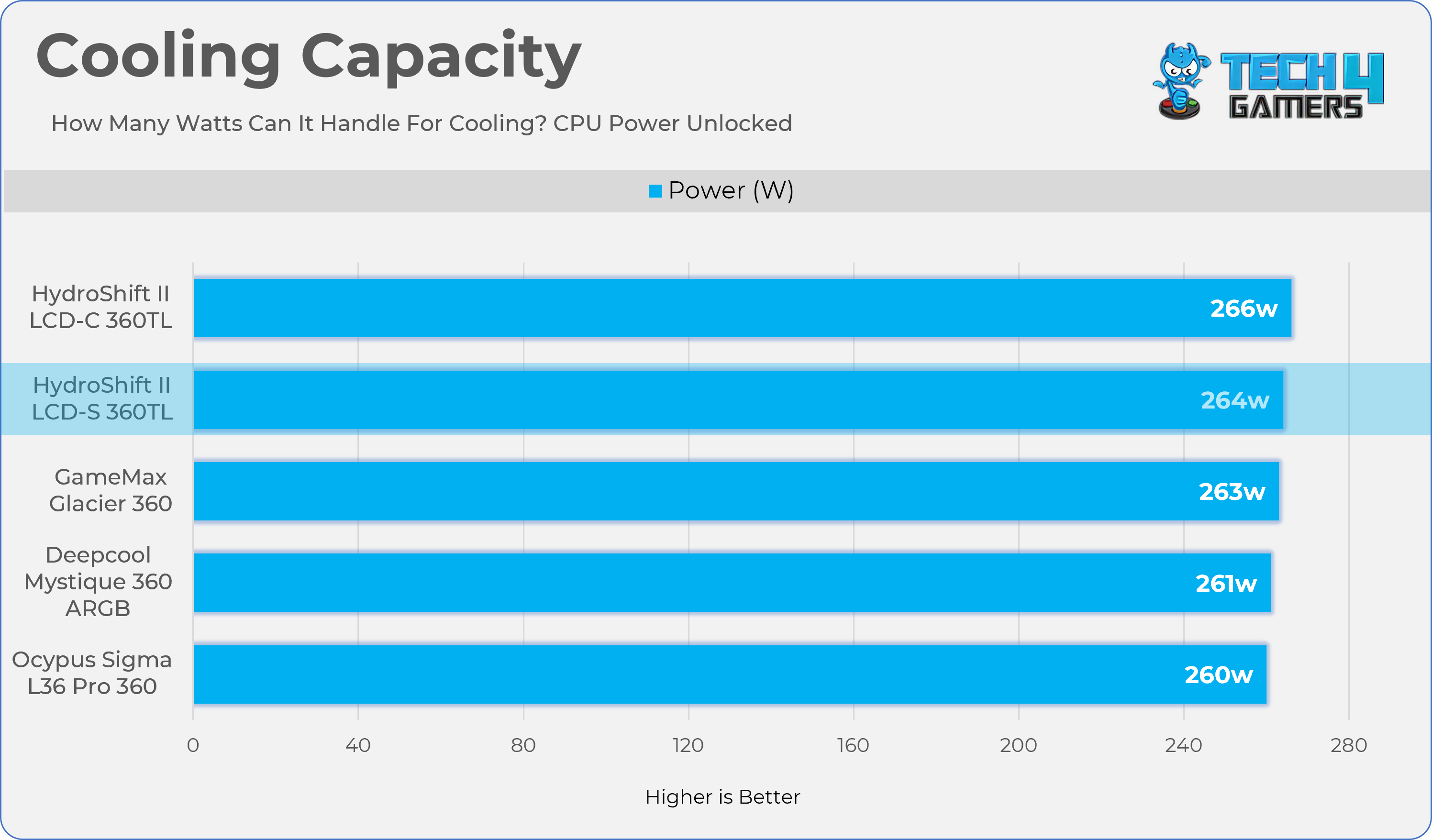
We evaluate the cooler’s performance using three different benchmark methods. Noise-normalized testing is performed at 40dB(A) at the 105W TDP and 170W TDP (Stock) of the Ryzen 9 9950X. We then test the cooler’s performance at the maximum PWM speeds for both TDP configurations. After that, we unlock the power limits of the CPU to see how much cooler it can dissipate the heat in terms of watts at the maximum PWM Speeds.
Controlled Environment:
We have eliminated the influence of ambient temperatures in our data, and all results are presented as deltas over the ambient conditions. The tests were done in a controlled environment with a room temperature of 25°C.
Preparing System:
The Coolers are tested in realistic conditions. We don’t use the open bench system; instead, we have installed the cooler in our HYTE Y70 case, mounted at the top. We ensure the airflow is adequate in the case and that the case fans are running at the fixed PWM speeds.
We are using ID-Cooling X45 thermal paste for all coolers.
Software:
We have ensured that no other software is running on the computer that could influence the CPU load.
We’ll be using the Cinebench R23 Loop for 20 minutes after the warm-up test has been completed. Each test has a 10-minute cool-down time.
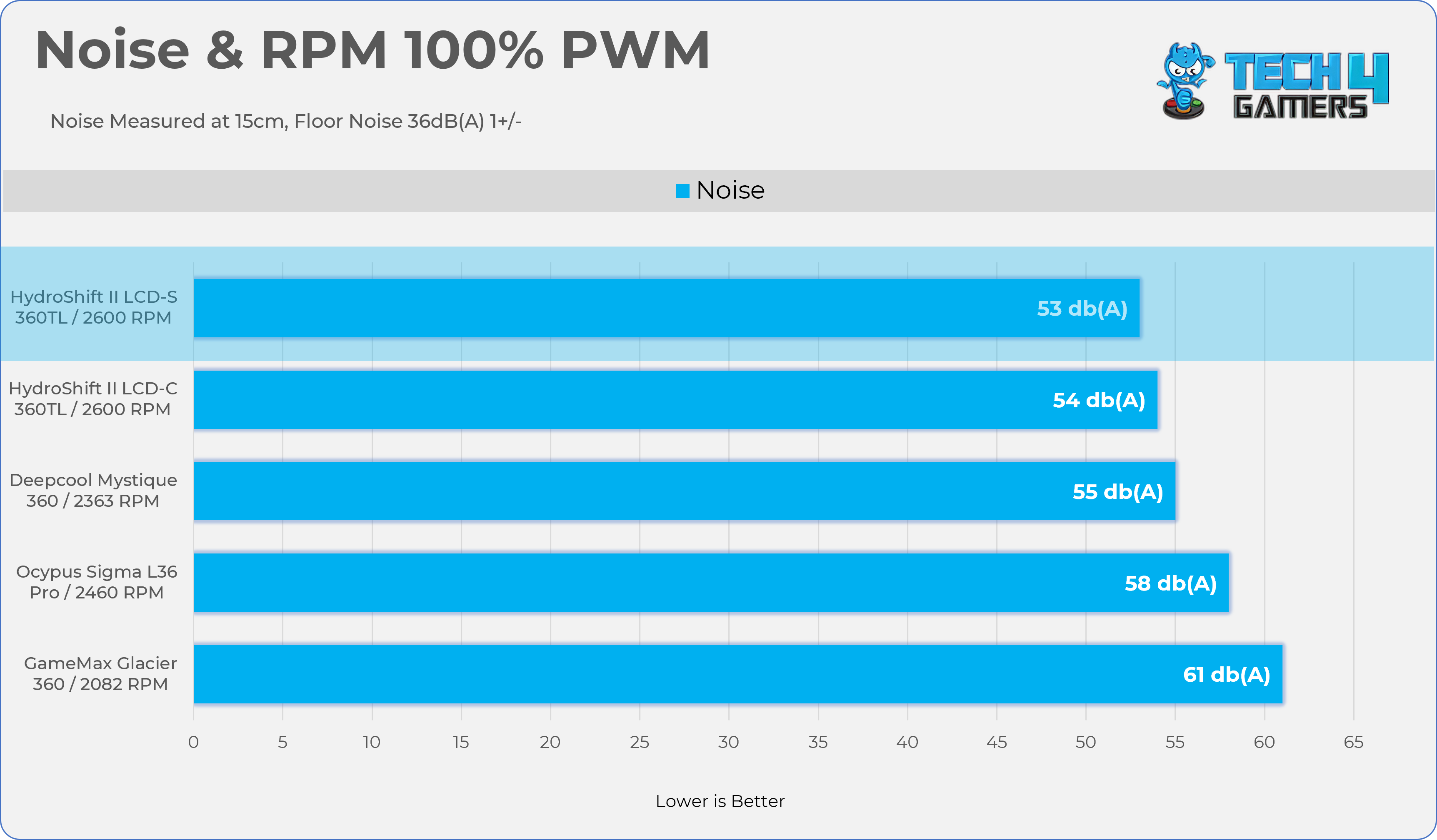
Let’s take a look at the Noise and RPM Readings. We conducted tests across four different PWM range levels.
25-50% PWM
25%
50%
75-100% PWM
75%
100%
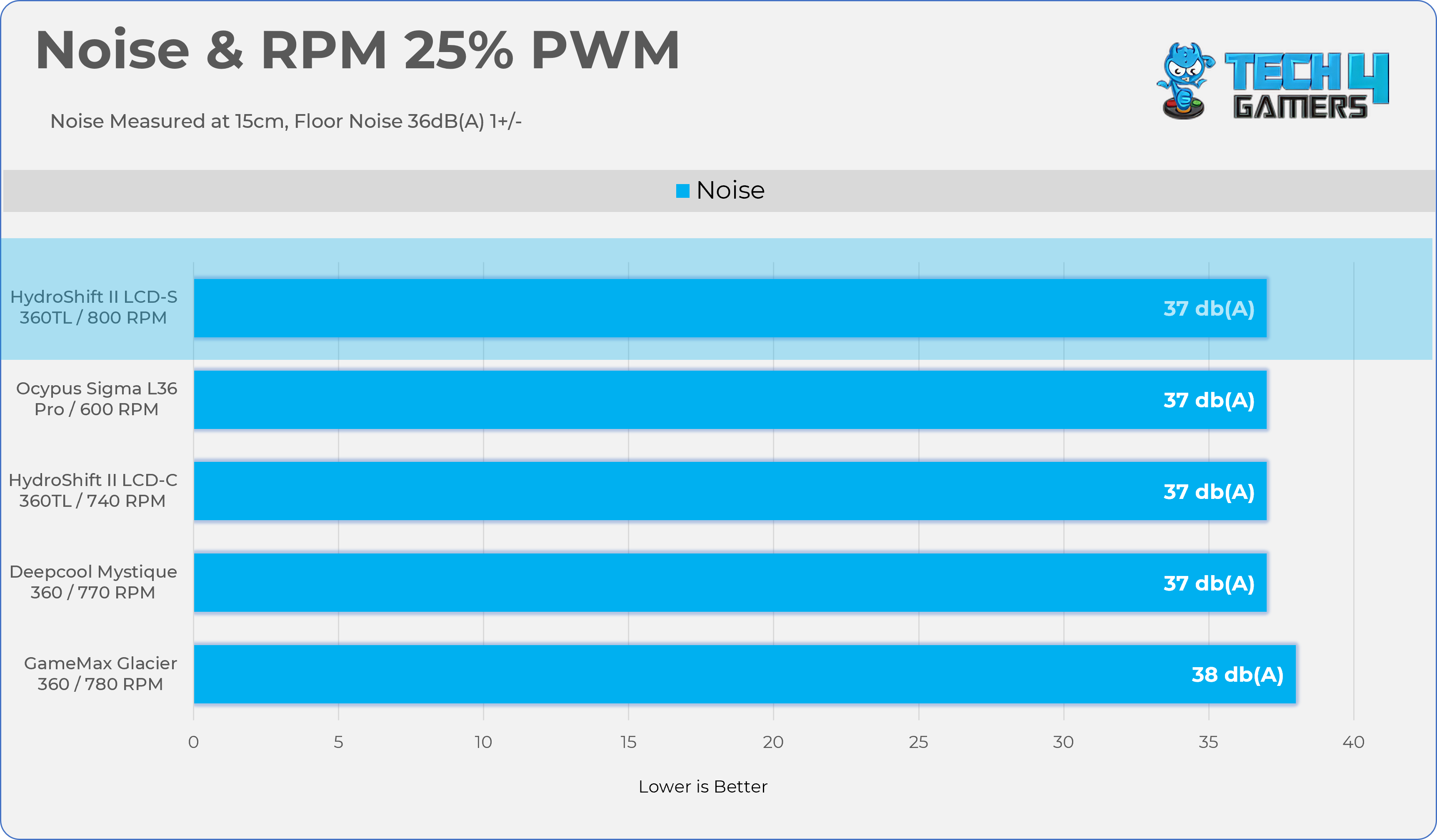
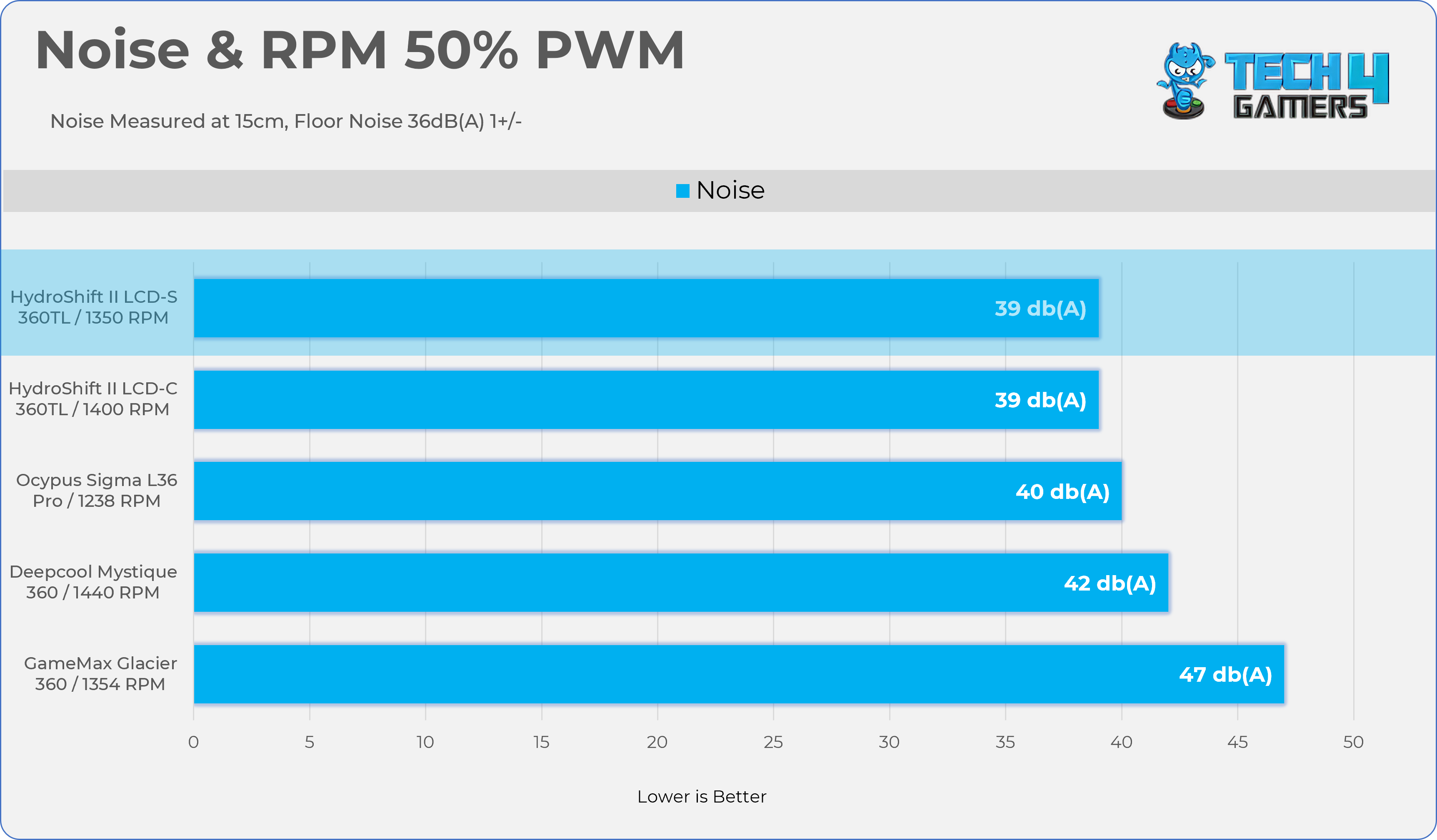
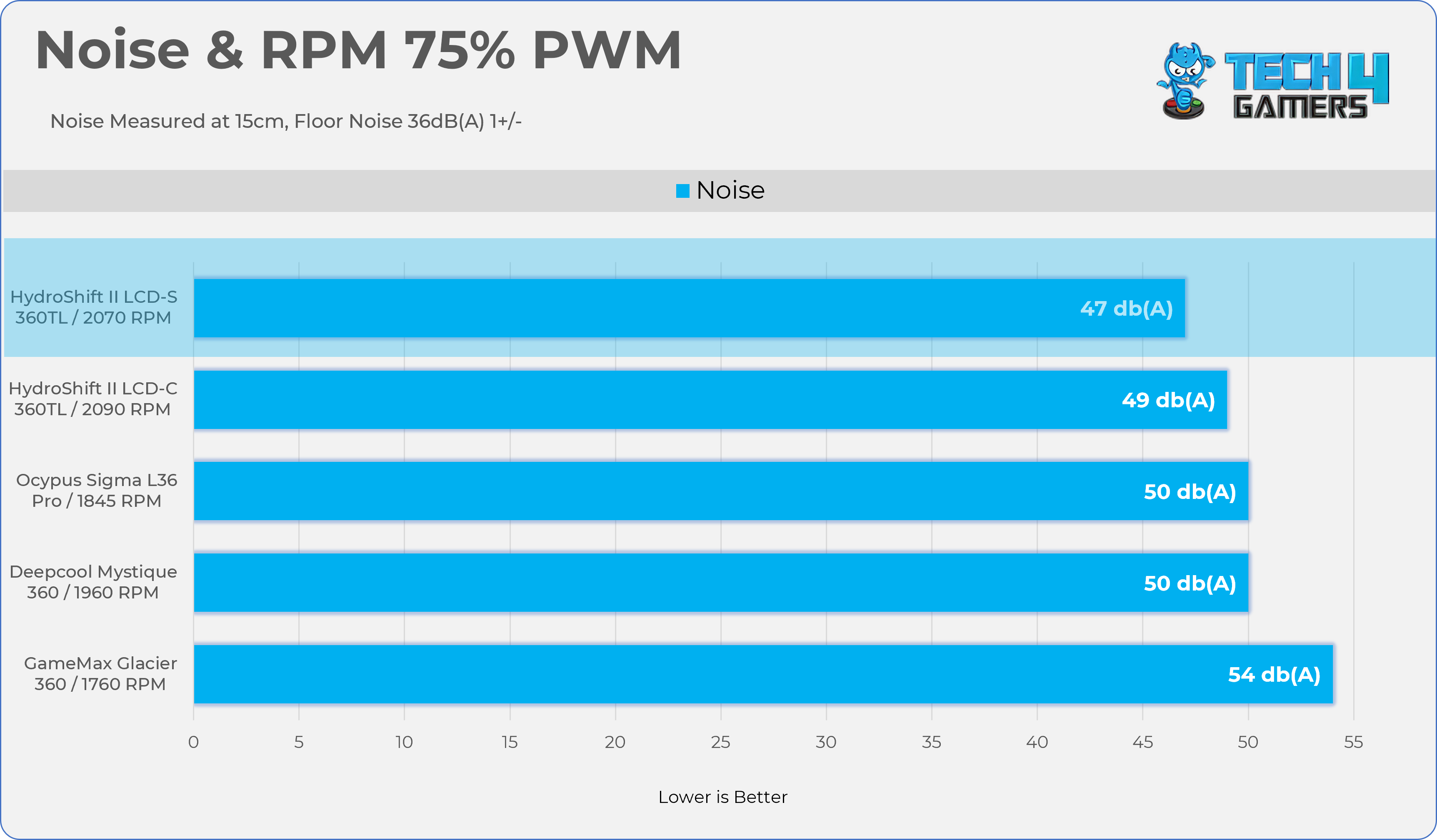
Here is the structured table illustrating fan noise levels at various PWM percentages. The Floor Noise Level is 36dB(A).
PWM (%)
RPM
Noise dB(A)
25%
800
37 dBA
50%
1350
39 dBA
75%
2070
47 dBA
100%
2600
53 dBA
Should You Buy It?
Buy It If
✅ You Want An Exceptional Cooling: Lian Li Hydroshift II LCD-S TL delivers strong performance in our cooling tests at different TDP ranges. If you are using a high-end processor, you should not worry about the temperatures.
✅You Want a Clutter-Free Experience: Thanks to its clutter-free design, this is one of the standout features of the cooler. Lian Li has done an excellent job with the engineering, especially in terms of cable management and concealment. If you prioritize aesthetics and prefer a clean, minimal-looking build, this cooler is a great choice.
✅ You Want a Vibrant and Customizable Display: The Hydroshift II LCD-S TL features a large 3.4-inch high-resolution display that delivers smooth visuals and excellent clarity.
✅ You Want the Peace of Mind: A 6-year warranty backs this Cooler.
Don’t Buy It If
❌If Aesthetics Are Not Your Top Priority: The main USP of the Hydroshift II is its clean, clutter-free design. However, if your priority is purely performance, similar cooling results can be achieved with more affordable options, making this cooler less ideal for you.
❌If You Already Own the Lian Li Hydroshift Cooler: While the Hydroshift II offers an improved pump design and enhanced compatibility, it doesn’t deliver a significant performance upgrade over its predecessor. Therefore, existing users may not find it necessary to upgrade.
Final Thoughts
To conclude, we’d like to share our final observations.
Cooling Performance And Noise
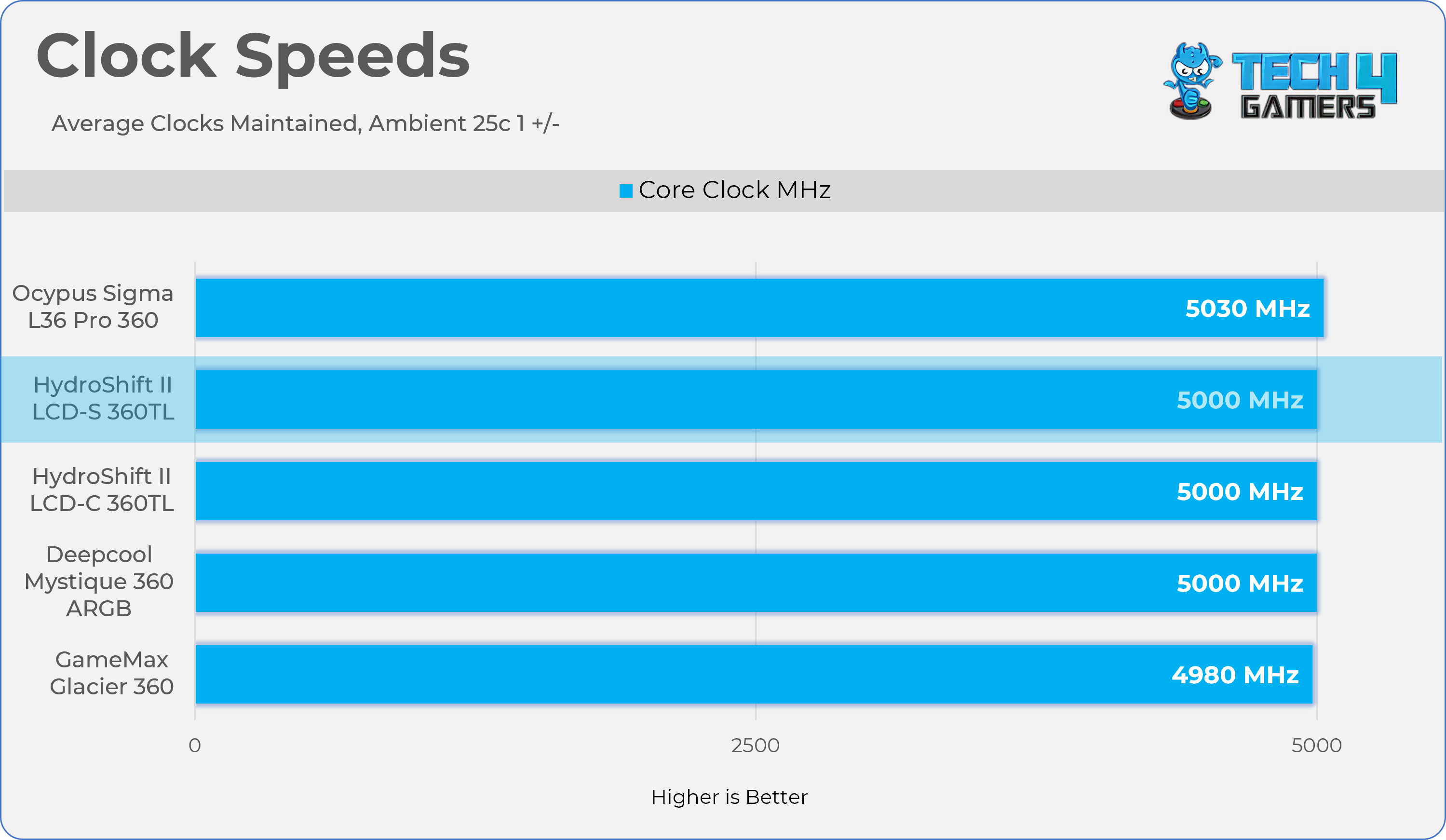
This cooler offers only a marginal improvement in performance. If you’re already using the previous Hydroshift Cooler, upgrading may not yield noticeable gains. In terms of thermal performance, it performs comparably to the Hydroshift II LCD-C 360TL.
Lian Li has done an impressive job with noise optimization. At just 50% RPM, the cooler produced only 40dB of noise, which is excellent. However, the fans do become noticeably loud at maximum speed. In our noise-normalized benchmarks, the cooler maintained strong performance across the board.
For users with high-end processors, this cooler delivers more than sufficient cooling performance to meet demanding workloads.
Wireless
Wireless has made the various functions more effortless, such as you don’t need the ARGB wires anymore. The display can be controlled without needing a USB cable, making cable management easier. However, it adds an extra layer of complexity for users, and you still need the wires and still require the software if you want the full functionality of the cooler. Nevertheless, Wireless mode is great for those people who care a lot about looks and a clean build and want to minimize the cable mess.
Build Quality
The build quality is excellent; I have totally loved the small details on the coolers, whether it’s the installation or the sliding, upright-mounted bracket for the tubes, which offers several adjustments. The LCD is magnetic, and it feels very rigid. The magnets on the LCD and pogo-pins connectivity were seamless. It holds the LCD in place perfectly. The pump cables are routed from tubes exiting the radiators, which keeps the CPU area cable free. Additionally, the fans are pre-assembled on the radiator, saving a significant amount of time. Lian-Li has ticked all the boxes here.
Value
Lian Li has set clever pricing on the Hydroshift LCD-S Coolers. The 360TL Wireless version is priced at $239.99, while the 360CL version is listed at $179. The primary difference lies in the included fans and wireless functionality- the 360CL model does not come with the L-Wireless Controller, despite its CL fans supporting wireless connectivity. This omission results in $60 lower price point for the CL version.
However, the 360TL Fans offer slightly better performance and wireless connectivity. That said, even with this $239 model, you still won’t be able to eliminate the cables. Ultimately, the choice comes down to whether you prefer the added complexity of wireless connectivity or are content with a straightforward setup.
The 360CL model is priced appropriately at $179.99. If you don’t want the wireless complexity, this could be a more sensible and value-oriented option compared to the TL version. The 360N fanless variant only makes sense for users who already have spare fans and are on a tight budget; otherwise, it offers no advantage, as the 360CL model is only $20 more expensive and features very high-quality fans. You will likely find fans of this quality for this price. For those with no value concerns and who want the best, the 360TL remains the best overall choice.
At Tech4Gamers, I contribute as a Senior News Reporter, combining my skills and gaming enthusiasm to keep our audience updated on the latest developments.
Story Highlight
GTA 6 was recently delayed, but insiders say the game has been content-ready for a while.
Rockstar is doing all it can to polish the title and avoid a Cyberpunk 2077-like launch.
The studio hopes to ship this release with zero bugs and glitches.
GTA 6 was just delayed for the second time recently, and the game is now set to arrive in November 2026. Because the game has been in development for so long, there has been plenty of speculation regarding the nature of this delay.
According to a popular insider, Rockstar is purely focused on polishing the game at this point.
Why it matters: GTA games have historically been quite polished at release, but GTA 6 seems to be aiming even higher.
GTA 6 Will Not Hit Shelves In The Fall of 2026
Insider Gaming’s Tom Henderson recently commented that he believes GTA 6 won’t be delayed again.
He then noted that the game is content-ready, so Rockstar does not have to make changes to the content itself. Instead, the team is going all in on bug fixes and polishing to make GTA 6 the best it can be before release.
Moreover, it is said that Rockstar is attempting to avoid a Cyberpunk 2077 situation with GTA 6. As per Tom Henderson, Rockstar is attempting to ship the game with absolutely zero bugs and glitches.
The game is content-ready and from what I’ve heard, it’s been content-ready for a very long time.
The studio does not want the game to fall flat in the face of immeasurable expectations, something CDPR is all too familiar with by now. In fact, the official Cyberpunk 2077 account also responded to the delay announcement, poking fun at its own situation from a few years ago.
GTA 6 Promises To Be Gaming’s Biggest Release To Date
Anyhow, it has become clear now that the studio chose to delay GTA 6 by six months due to polish, potentially costing it an additional $60 million in development costs. Of course, this is good news for the consumers who have been waiting several years to finally play the latest iteration of Grand Theft Auto.