As Tech4Gamers’ Founder and Editor-in-Chief, I bring over 13 years of PC Hardware Reviewing and 8+ years of IT Project Management experience. Certified in Google IT Support , my focus is on providing honest product reviews and analysis and fostering a strong gaming community with 130k+ members in PPG.
Story Highlight
Memory module manufacturers are postponing new product launches from late 2025 until 2026.
The delay is caused by severe memory shortages and rapidly increasing prices.
High demand from AI and data centers is driving price hikes, pushing contract prices up 171% since Q3 2024.
According to the latest reports, numerous DRAM memory module manufacturers are delaying the launch of new memory kits. Specifically, the great bulk of new modules scheduled for announcement in the fourth quarter of 2025 has been postponed until sometime in 2026. This move is entirely due to the large price rise and current memory shortages.
Previously, we heard that Samsung hiked the price of its memory by up to 60% in November compared to September. Meanwhile, other memory chip manufacturers have boosted prices by 40% to 50%.
However, prices are predicted to rise further, with another large increase anticipated in 2026. Delays are intended to wait for memory prices to stabilize.
To put this into context, contract prices for DRAM memory jumped by nearly 171% compared to the third quarter of 2024. This is due to the massive demand for memory across industries such as artificial intelligence, data centres, and high-performance servers. Furthermore, memory manufacturers are unlikely to announce immediate plans to increase consumer PC memory production significantly.
Due to the ongoing AI boom, they are prioritising the production of server-grade DDR5 memory, which is significantly more expensive but has higher margins. As a result, not only is consumer computer memory manufacturing falling behind, but it is also being reduced in favour of other forms of memory.
The difficulty is that DRAM memory module manufacturers such as CORSAIR, Kingston, and G.SKILL will pay more for memory chips manufactured by Samsung, SK Hynix, and Micron. However, these companies are unable to pass on the price hikes to their clients.
Essentially, since end users are unlikely to buy RAM at $200 to $300, manufacturers will absorb some of the price rise, so releasing that memory now would mean selling it at a loss.
As a result, manufacturers want to wait until 2026 to see if they can create a stable recommended pricing. They also want to know whether their current modules will sell and whether they can acquire DRAM chip inventory for the next quarter. So for now, the DRAM memory manufacturers simply want to avoid the current enormous price volatility until it stabilizes.
At Tech4Gamers, I contribute as a Senior News Reporter, combining my skills and gaming enthusiasm to keep our audience updated on the latest developments.
Story Highlight
Gaming headsets have various uses beyond the production of audio for games.
They can be an effective tool for learning new languages due to high-quality mics, clear audio, and more.
The best headsets also come with spatial audio support for enhanced learning.
A complete gaming setup consists of a console/PC and various peripherals to support the entire setup. Depending on your preferences, these peripherals may range from a controller to a keyboard & mouse, but one thing that every gamer needs is a solid headset.
As someone who’s flip-flopped between various headsets, I can’t understate the importance of finding the right headset. The best part is that a proper gaming headset can do more than just produce crisp and clear audio. In fact, it can even be the key to unlocking a new language.
This is important since the pressure of looming deadlines and exams in the past has had me searching for an academic service to write an essay for me. Fortunately, students today can reclaim lost time by utilizing their hardware smartly, which also includes gaming headsets.
Why it matters: In the modern era, learning different languages can lead to new connections worldwide. This can even come in handy when playing games from different regions.
Headsets As Language Labs
The Right Headset Can Open Your Eyes To New Possibilities
A proper gaming headset fundamentally separates itself from standard earbuds in many ways. Effectively, it prioritizes high-fidelity audio input and crystal-clear output, making it perfect for learning a new language.
On the other hand, standard earbuds compress audio and make the listening experience muddier than it needs to be. This can make it challenging to understand subtle phonetic differences that define a language. Fortunately, a gaming headset can reproduce the frequencies needed to differentiate between various audio cues.
Fidelity For Phonetics
An important aspect of coming to terms with a new language is ear training, which essentially boils down to hearing sounds that your native language may have taught you to ignore.
I believe high-fidelity audio drivers are key parts of the process since they can pick up on subtleties of native speakers that would otherwise be difficult to spot. For instance, the difference between the “r” in English and the rolled “rr” in Spanish is not easily understood without proper audio reproduction.
Spatial Audio As Context Tool
Spatial or 3D audio is basically mandatory for gaming headsets. The last thing I would want is a headset that fails to identify directional footsteps for me during an intense CS2 match, so spatial audio is always a major deciding factor when picking up hardware for gaming audio.
Interestingly, spatial audio can allow your brain to form stronger memories through associating words with specific environments or places. For instance, walking into a virtual VR space and hearing murmurs coming from all different directions can lead to an invaluable experience when starting with a new language.
Similarly, watching a movie with a solid 3D audio mix can lead to memories of dialogue and pronunciation tied to specific moments and locations.
Mic And Active Practice
Nobody Wants To Have A Poor Mic During Important Conversations
Of course, speaking is just as important as listening when it comes to picking up a new language. This is why the headset’s mic is just as important.
In a scenario where a person is taking online language classes, a high-quality mic can make for clear and precise communication. Moreover, accurate recordings of oneself can be later used for self-analysis for further improvement.
Clear Input For Clear Output
As discussed earlier, the quality of your pronunciation directly depends on the quality of the feedback you receive. If the former is the output in this scenario, the latter can be considered the input.
A high-quality mic can ensure both input and output are clear, allowing for optimal results. Moreover, Jennifer Lockman from the EssayService blog states that clear and accurate communication is everything when working for an essay writing service.
Ultimately, the point I’m trying to make here is that your headset has a lot more potential than you may realize. Between immersive gaming, 3D spatial audio, and more, a headset can unlock a slew of new possibilities when used right.
At Tech4Gamers, I contribute as a Senior News Reporter, combining my skills and gaming enthusiasm to keep our audience updated on the latest developments.
Story Highlight
Remote QA work is quite popular across the gaming industry.
Studios like Keywords and EA are great for initial opportunities.
These jobs can even pave the path for bigger roles in game development.
The gaming industry is full of behemoths producing one hit after another. However, the recent wave of layoffs, use of AI-generated content, and more can often paint the industry in a negative light.
For those passionate about gaming, diving into the industry is more accessible than ever, particularly due to the rise of remote employment. In particular, game testing is a great job, especially for students passionate about gaming. Because gaming is a billion-dollar industry, QA is inherently a huge part of it, giving students the opportunity to essentially earn money for playing games.
However, balancing the demands of QA and school work can present a big challenge. After all, writing a paper would be the last thing I’d want to worry about when attempting to replicate a game-breaking bug. This is why I frequently look for online services that write a paper for me and free up crucial time that can be spent elsewhere.
The best paper writing platforms, such as WritePaper, often see spikes in usage during midterms and finals. This is also usually when major game betas are released. Is this a coincidence? I think not. Let’s dive into five studios with remote QA opportunities.
Why it matters: Plenty of layoffs in the industry have raised red flags, but passionate individuals can still find their place and contribute to the bigger gaming picture.
Keywords Studios
Keyword Studios Helps Various Studios With Quality Control
Keywords Studios may not be as famous as others on this list, but it serves as the industry’s biggest QA provider behind the scenes.
It’s great, then, that Keywords Studios constantly hires remote workers. Among these opportunities, the studio offers localization QA work, which entails testing of game translations, checking for cultural inaccuracies, and ensuring text scales properly on the screen.
Keywords Studios also offers player support, which is basically a customer service role in the industry. Here, students can learn the ins and outs of live-service gaming, potentially setting up future Community Manager roles.
Playtest Cloud
This is more of a gig platform for mobile game playtesting rather than a game studio. How it works is quite simple. Users create a profile, and when a developer has a test that matches specific criteria, they receive an invite.
These tests often involve playing a game for up to an hour and recording first thoughts out loud for real-time feedback. Payment is also provided directly, with estimates ranging from $9-$15 for a 15-minute test.
I like that applying for the gig work is quite simple, too. All gamers need are a quiet place, a solid microphone, and a modern Android/iOS smartphone.
Electronic Arts
EA Is A Huge Part of The Industry
A behemoth of the industry, EA offers plenty of playtesting opportunities, and there’s no better option for those looking to build a solid resume in the field.
I’ve even seen EA offering specific university and early career programs for students. The gaming giant also provides paid summer internships with remote options that can pave the path for a career in the industry.
In my opinion, the best part about working with EA is the fact that students can apply for other roles, such as QA Analyst Intern or Data Analyst Intern. Moreover, these student opportunities provide real-world experience with large development teams, but securing an internship is not very easy.
Simply prompting write my paper for me and sending an email won’t cut it when attempting to join EA, so a solid resume and cover letter are needed. Anyhow, the EA Early Careers portal is worth keeping an eye on for any open positions.
Side (Previously PoleToWin)
Side competes directly with Keywords Studios, handling everything from QA testing and localization to player support and audio production.
Localization QA work typically involves dealing with non-English languages like German, Japanese, Spanish, etc. Workers in this department handle grammatical corrections and cultural accuracy.
Elsewhere, freelance/contract roles involve 9-5 work. They involve short-term contracts to test specific games, making for short bursts of very intense work. Entry-level jobs also exist, and they require no prior knowledge or experience.
For applications, simply visit Side’s website and filter by Localization QA, Testing, Remote, and Freelance depending on your preference.
UserTesting
UserTesting is a broad User Experience(UX) platform that is used by both indie and massive companies. Like the aforementioned PlaytestCloud, working for UserTesting involves gig-based work, with tests paying close to $10 for 15-20 minutes per session.
Here, students can learn the fundamentals of User Experience, an important skill in the software engineering field. In particular, I appreciate that schedules are also flexible on UserTesting, with invites being sent out, which can then be accepted by students and workers based on their convenience.
Getting started with UserTesting is as simple as signing up on the official website and taking a qualification test.
Ultimately, there is plenty of work in the game testing field for those willing to put in the hours. However, I must warn you that the job can be very demanding at times.
After all, QA workers do their best to break a game, a task that can often require hours upon hours of experimentation. The job isn’t as simple as me going to a website to write my paper for me, so QA isn’t suited for everyone.
Yet, for those passionate about the industry and willing to put in the hours, QA can be a solid stepping stone into the world of games.
At T4G, my task is to cover the latest news around the gaming globe ASAP and with the utmost precision. I adore all the games and respect all the devs behind the amazing games that we get all year. So, whether it’s a PC or a Console game, I got it all covered.
Story Highlight
Major vendors are reportedly buying consumer RAM amid the shortage, which is creating panic.
Suppliers have minimal inventory and have stopped giving quotations for new stock.
The shortage, hence the inflated prices, is expected to continue at least till 2027.
DRAM shortage and prices are going from bad to worse. Prices in recent weeks have reached astronomical levels, and major vendors seem terrified, already stocking up their inventories.
A new report reveals that Asus and MSI are now ‘panic buying’ memory sticks to meet the demand in the future, as the shortage is expected to continue till 2027 at least. This is mainly happening due to the recent AI boom.
Why it matters: With big vendors trying to cover stocks for years to come, RAM prices are likely to rise further due to scarcity. The major effect is on DDR5 memory used in data centers.
DDR5 Memory prices have already reached a new high and are expected to increase further.
As per DigiTimes (paywalled), vendors like Asus and MSI are heavily buying in the spot market for consumer memory amid the shortage. Samsung, the biggest chip manufacturer, is already expected to announce a 60% RAM price hike.
Moreover, RAM suppliers have also halted providing quotations, highlighting how bad things are. Another reason for the shortage is that companies had reduced DRAM manufacturing, and nobody saw the demand coming.
PC gaming could soon become a huge luxury.
This whole scenario could make PC gaming overall really expensive. Recently, a report also suggested that GPU prices could rise. GPU, RAM, and SSDs are the primary components of a gaming PC.
So, until at least 2027, we can expect PC gaming to become a luxury that not everyone can afford due to the AI revolution. We hope the industry can somehow manage demands and resolve the issue soon.
What are your thoughts on big vendors’ panic buying of consumer memory? Let us know your opinions in the comments, or join the discussion at the official Tech4Gamers Forum.
At T4G, my task is to cover the latest news around the gaming globe ASAP and with the utmost precision. I adore all the games and respect all the devs behind the amazing games that we get all year. So, whether it’s a PC or a Console game, I got it all covered.
Story Highlight
Crypto companies are transitioning towards AI as the boom becomes more intense.
The companies saw major losses in recent years and are now cutting down on mining.
Bitfarm is winding down crypto and is expected to completely shift to AI by 2027.
AI is all the talk these days as major companies adopt the technology. The boom has even forced many to shift from one niche to another. The same is now happening with cryptocurrency companies.
A new report reveals that amid the AI boom, crypto companies are now shifting towards AI after suffering major losses in the field. So, the crypto business that also saw a major boom during the pandemic has come to an end.
Why it matters: AI seems to be taking over almost everything. After becoming a central part of the gaming industry, it is slowly becoming a vital part of the rest of the tech industry as well.
Bitfarm is transitioning towards AI after suffering major losses
Bitfarm, one of the biggest crypto mining companies, has released its quarterly results. It has suffered a massive loss of over $46 million and is slowly cutting down mining operations in favor of AI.
The company CEO stated that they’ll be looking to wind down their crypto business throughout 2026 and 2027, and are confident that they can transition over to the AI industry successfully.
This finally marks the end of crypto, which saw a breakthrough in 2020. While it was still going on in the US, mining, in most other parts of the world, had mostly died down since the introduction of Ethereum 2.0.
DRAM and NAND prices have also seen a major hike due to AI
By 2027, Bitfarm expects to become a complete AI company and has the power to do so. It has a total of 12 mining centers that consume 341 Megawatts, so they have all the resources to do what they want.
With Bitfarm doing this, more companies are expected to follow as well. So, as companies will require more processing power in the future, not only RAM and SSDs, but GPU prices could soon increase as well.
What are your thoughts on crypto companies shifting towards AI? Let us know your opinions in the comments, or join the discussion at the official Tech4Gamers Forum.
I’ve previously worked for eXputer as a Senior News Writer for several years. Now with Tech4Gamers, I love to devoutly keep up with the latest gaming and entertainment industries. I have a Bachelor’s Degree in Computer Science and years of experience reporting on games and breaking exclusive stories. Besides my passion for gaming journalism, I love spending my leisure time farming away in Stardew Valley. VGC, IGN, GameSpot, Game Rant, TheGamer, GamingBolt, The Verge, NME, Metro, Dot Esports, GameByte, Kotaku Australia, PC Gamer, and more have cited my articles.
Story Highlight
The Escape From Tarkov 1.0 Steam launch has been a disaster so far, launching to mostly negative total Steam reviews.
The Battlestate servers have overloaded to the point that many players cannot play, even nearly a day after launch.
Players have also criticized the game with negative reviews due to its reliance on a third-party launcher.
It’s fair to say that Escape From Tarkov has shaped the extraction shooter genre since 2016, thanks to its intense gameplay mechanics that have appealed to many players. The title slowly evolved over the long beta period, so fans were really excited for the final launch.
However, the anticipated launch has been a disaster for BattleState Games, as players are bombarding the shooter with negative reviews on Steam. The community is upset after the 1.0 Steam launch brought a slew of overwhelming technical issues.
Why it matters: Battlestate developers messing up Escape From Tarkov’s 1.0 launch could spell disaster for the future of the extraction shooter, even if the technical issues are resolved in the coming days.
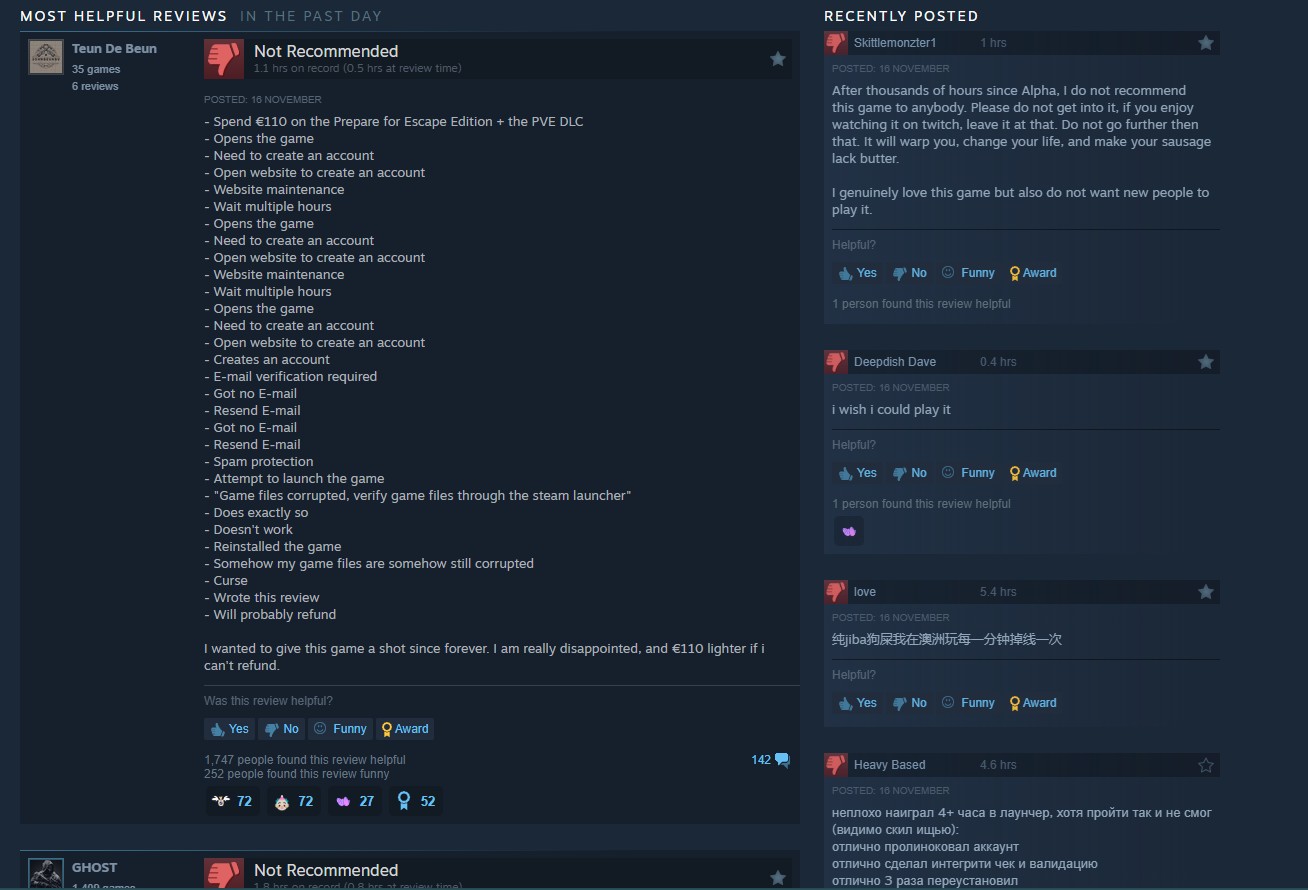
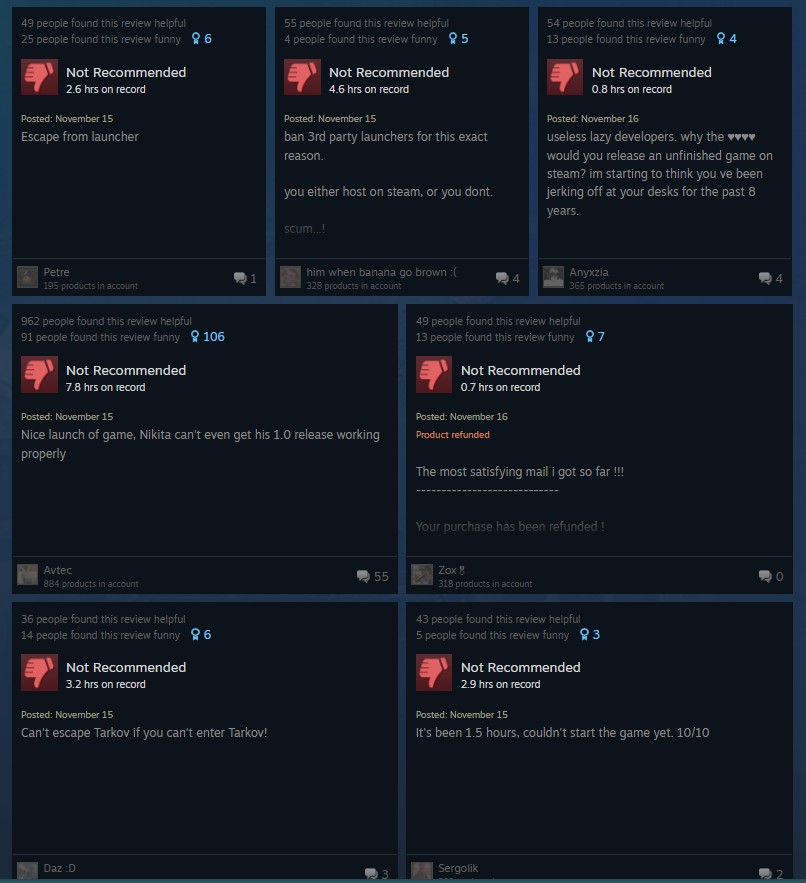
Escape From Tarkov negative reviews on Steam.
1 of 3
The Escape From Tarkov Steam page is full of negative reviews.
The Escape From Tarkov Battlestate servers have been unable to keep up with players.
The players have called out Battlestate after the extraction shooter fumbled the 1.0 Steam launch.
Escape From Tarkov sits at “mostly negative” on Steam reviews across all languages, with only 30% positive at the time of writing. While Battlestate prepared for a new batch of players, demand was so overwhelming that servers couldn’t keep up.
Steam players felt irked because the game is only accessible via a third-party launcher, which requires them to take several extra steps and create a new account.
Battlestate servers overloading also made the game pretty much unplayable, even nearly a day after launch. This has caused players to review bomb the Escape From Tarkov Steam page.
Escape From Tarkov servers are seemingly still broken at the time of writing. | Image Source: Tech4Gamers.
Battlestate Games failed to increase the server capacity to accommodate enough players. Therefore, many have already decided to refund the shooter for the time being.
The Battlestate team has addressed the situation in a new post, claiming that developers are working to fix the servers. But there’s been little to no improvement to the servers for now.
Do you think the game’s reception will stabilize once the Battlestate developers fix the servers, or will this hiccup cause the extraction shooter to flop on Steam? Let us know your thoughts in the comments below, or join the discussion on the Tech4Gamers forum.
At Tech4Gamers, I contribute as a Senior News Reporter, combining my skills and gaming enthusiasm to keep our audience updated on the latest developments.
Story Highlight
Black Ops 7 continues to face a wave of negative user reviews.
The title has fallen to a score of 1.7 on Metacritic, becoming the worst-rated Call of Duty release to date.
The biggest criticisms point to the campaign, always-online requirements, and more.
Black Ops 7 has become one of the most interesting Call of Duty titles released in recent years, but for all the wrong reasons. For starters, the campaign has been a major letdown, and controversies surrounding the use of AI-generated content have only made the situation worse.
The game’s user reviews also highlight just how upset the community is with Call of Duty’s latest outing. Over on Metacritic, the first-person shooter has fallen to a score of just 1.7 after amassing hundreds of negative reviews.
Why it matters: Fans were cautiously optimistic for the latest Call of Duty after learning that Treyarch was making a sequel to the beloved Black Ops 2. It seems the game has done little to live up to its predecessor.
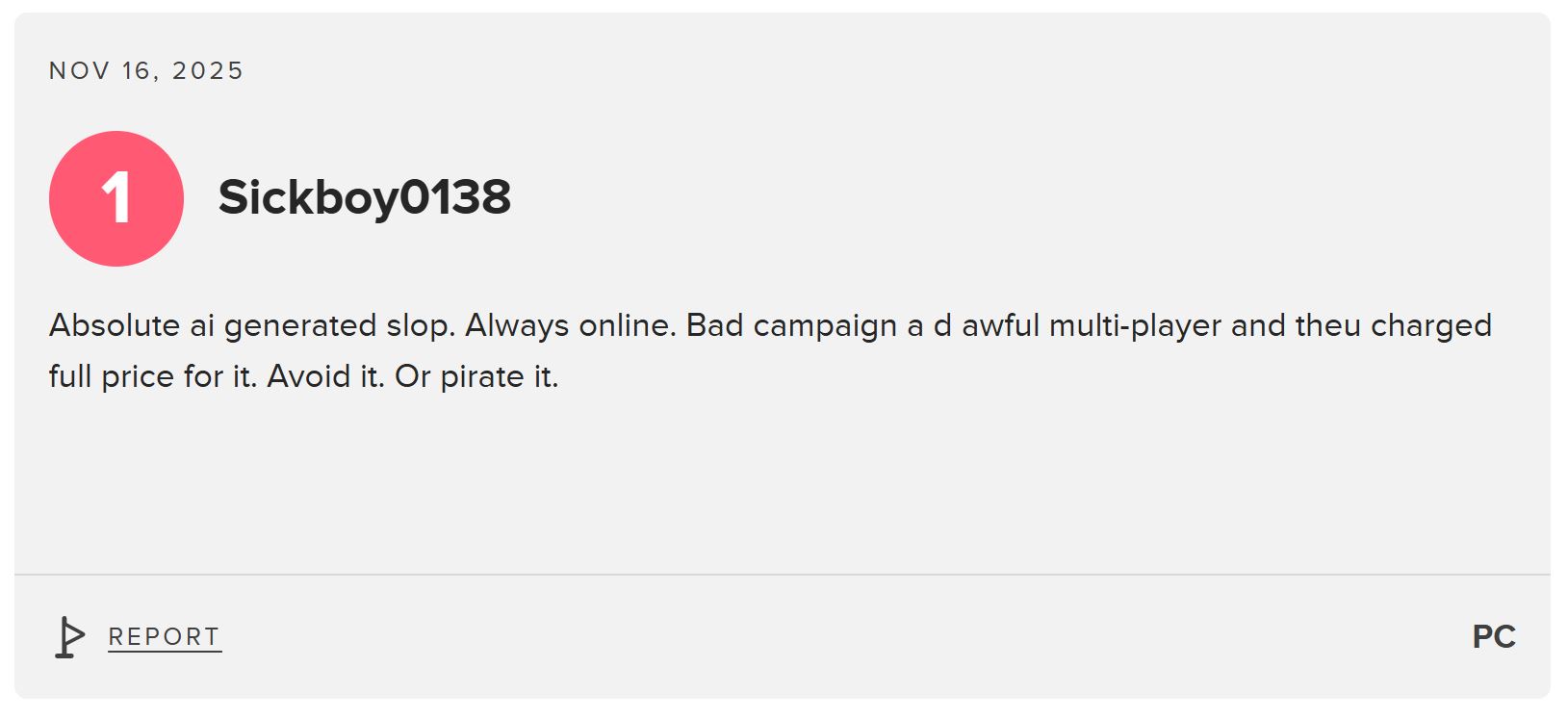
Black Ops 7 User Reviews Are Terrible So Far | Image via Metacritic
With 189 user reviews on Metacritic, Black Ops 7 has made history, becoming the lowest-rated Call of Duty title on the platform by user reviews.
This record was previously held by Modern Warfare 3 after it was heavily criticized for reused multiplayer maps and an incredibly short campaign. Despite all these flaws, Modern Warfare 3 finished with a user score of 2.3 when all was said and done.
The user score aside, there is one key difference between the two. For Modern Warfare 3, the critic score reflected the poor state of the game, with the overall reviews averaging out at a score of 56/100. For Black Ops 7, the critic score is currently much higher at 84/100, but more reviews are yet to arrive.
Anyhow, the criticisms in the user reviews largely revolve around the game’s campaign. Many have noted how the game seems to deliver a worse experience than Modern Warfare 3.
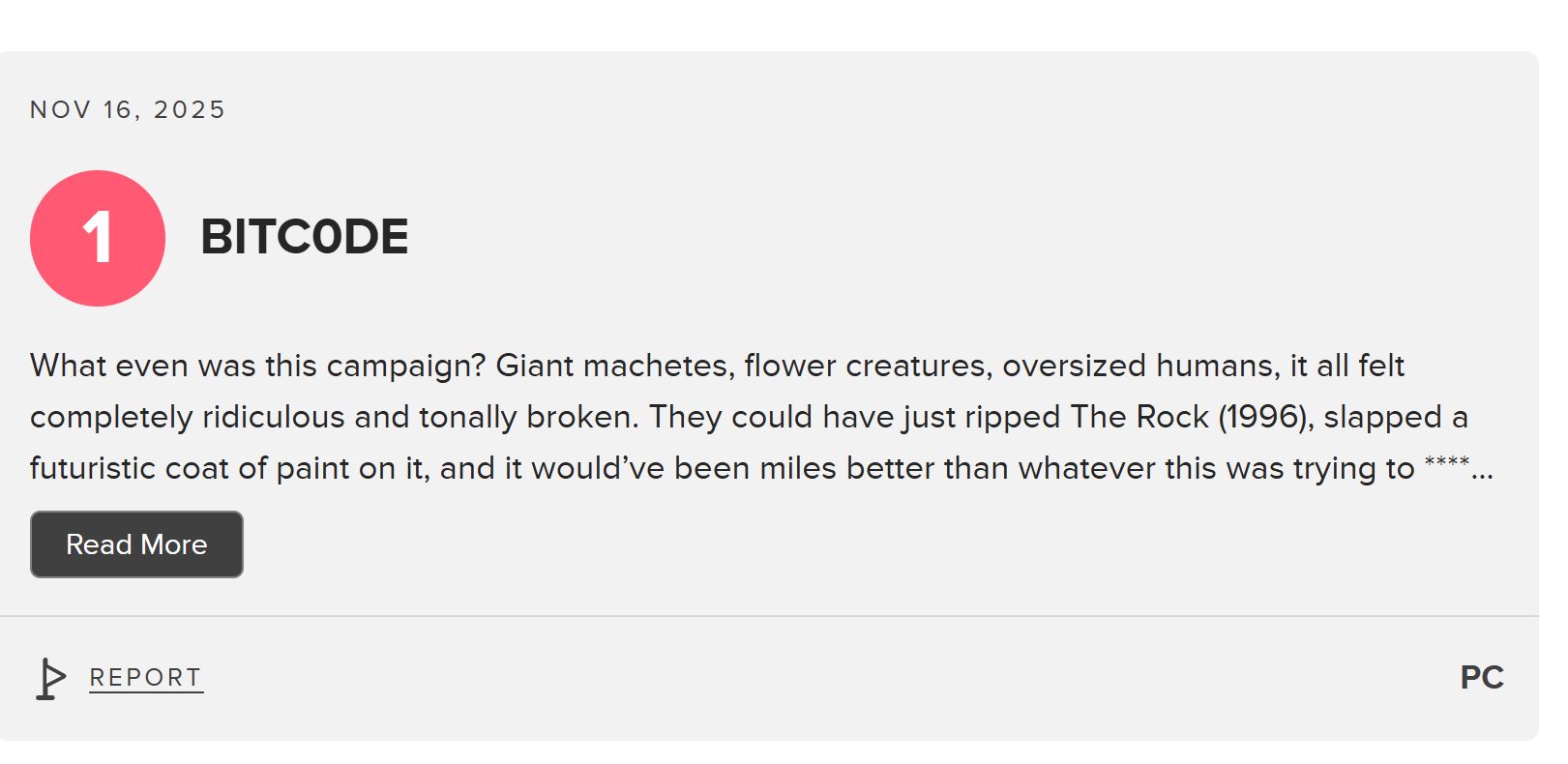
In particular, users have pointed to the ridiculousness of the entire experience, highlighting giant zombie bosses and flying machetes in certain missions. Also, the fact that Black Ops 7 is an always-online title does not appear to have pleased many people.
Black Ops 7 User Reviews On Metacritic
1 of 3
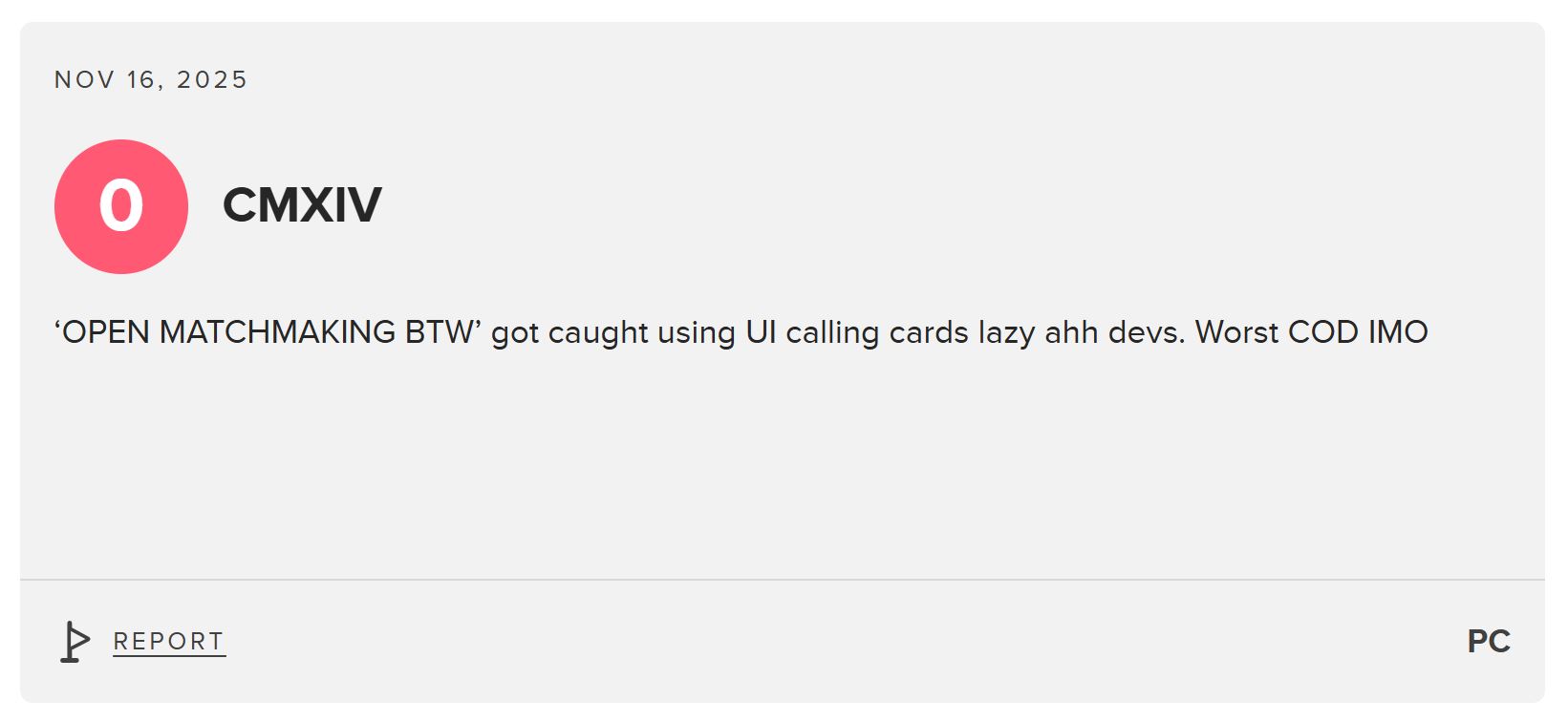
Most of the scores fluctuate between 0/10 and 1/10, so this seems to be a classic case of review-bombing on Metacritic. Recently, games like Pokemon: Legends Z-A faced similar reviews, but the sentiment seems to be much more widespread in Call of Duty’s case.
Lead the comparison and blog writing teams at Tech4Gamers.
Oversee teams with a keen eye for detail and precision.
Ensure hands-on writing, with benchmarks and testing as guiding principles.
Guarantee the delivery of the best possible results in concise yet impactful tech tales.
Story Highlights
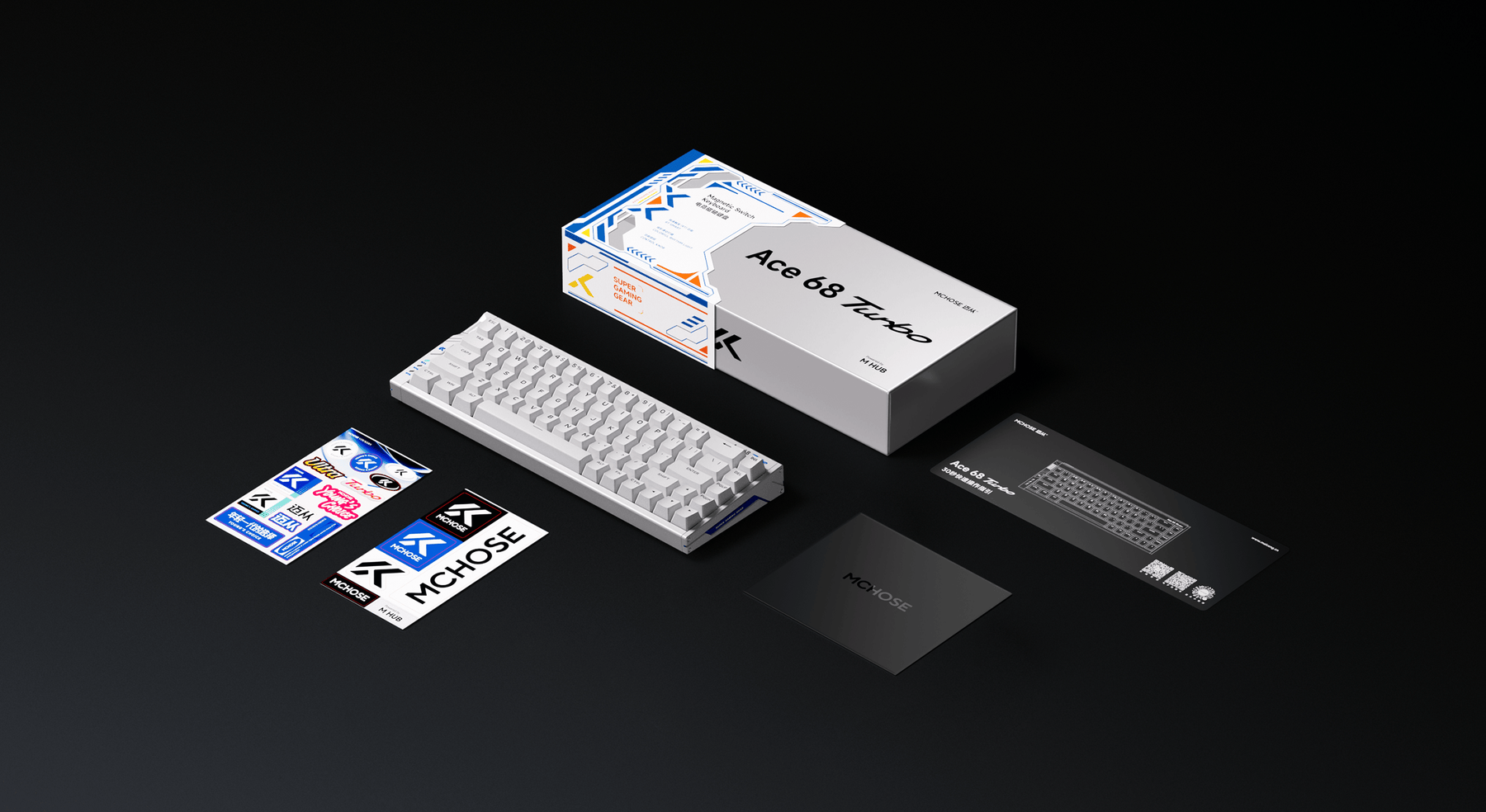
Mchose unveils the Ace 68 Turbo with an advertised 16,000 Hz polling rate
Uses dual-core architecture and Hall-effect switches for adjustable actuation
Launch price lands at a surprisingly accessible 119 dollars
Real-world latency gains remain debated across competitive and casual play.
A mechanical keyboard that polls input sixteen thousand times per second sounds like something pulled from a sci-fi prop table. Yet here we are. Mchose has launched a keyboard, it claims is the world’s first 16K polling rate model, and it has sparked a wave of excitement and skepticism in equal measure. The question is simple. Does it matter?
What Happened
On November 7, 2025, Mchose introduced the Ace 68 Turbo. The company calls it the world’s first 16,000 Hz polling rate keyboard. The claim is bold given that most gaming boards today top out at 1000 Hz, while premium esports-oriented models run at 4000 or 8000 Hz.
KitGuru’s first look broke down the standout hardware. Mchose uses a dual-core, dual-chip design to keep the 16K polling stable across the entire key matrix. The board also swaps traditional mechanical switches for Hall-effect switches. These are magnetic switches that allow users to tune actuation points, shorten travel, and adjust how each key feels under load.
What surprised most observers was the launch price. At 119 dollars, the Ace 68 Turbo sits far below the boutique price tags attached to other “flagship” esports keyboards. Combined with the technical claims, the price instantly fueled discussion across Reddit groups and peripheral communities.
Why This Keyboard Is Creating Buzz
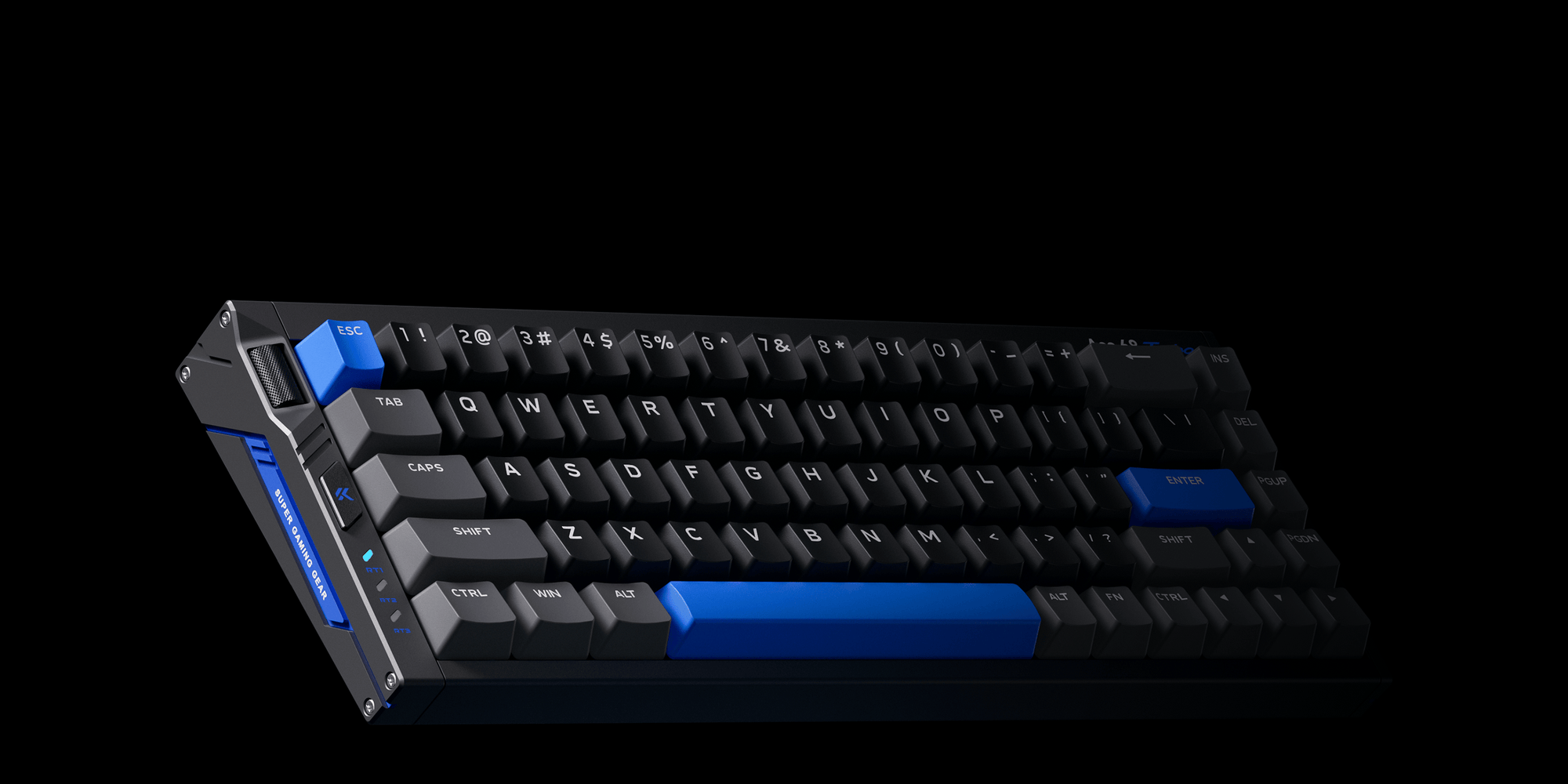
MCHOSE Ace 68 Turbo – Image Credits (MCHOSE)
Polling rate rarely enters mainstream conversation. Most gamers never adjust it. But sixteen thousand hertz breaks the curve. It gives hardware enthusiasts a shiny new spec to point at, and competitive players a fresh number to obsess over. Even for users who never notice a difference, the jump sounds substantial and triggers the same fascination that surrounded 8K mice a few years ago.
Another factor is the timing. Hall-effect boards have moved from niche to trendy thanks to their durability and customization. Adding a 16K polling architecture on top creates a product that feels experimental yet practical. That makes the Ace 68 Turbo something more than a marketing stunt.
And again, the price. You usually see frontier-tech peripherals debut at sky-high prices. Mchose seems determined to push the concept into the general market rather than lock it behind a premium wall.
Does 16K Polling Rate Actually Make a Difference?
This is the real question. A 16,000 Hz polling rate drops raw input latency to fractions of a millisecond. On paper, it delivers cleaner, faster transmission from switch to system. But a keyboard is only one link in a long chain.
Your monitor’s refresh rate, your GPU frame timing, Windows input scheduling, and USB controller behavior all have larger impacts on input arrival than keyboard polling alone. Plenty of players using 8K boards today report that they can’t reliably distinguish them from 1K boards in blind tests.
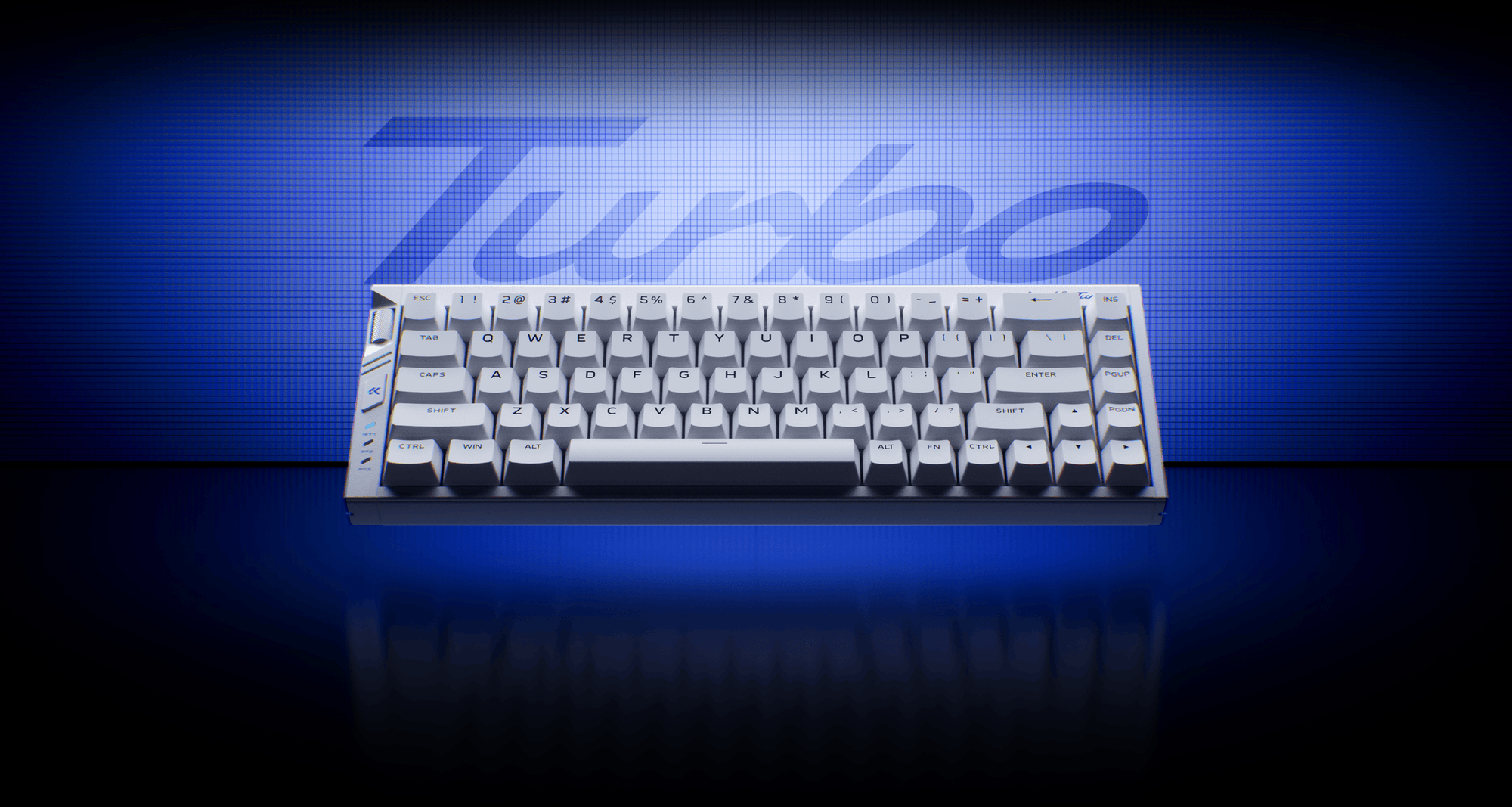
MCHOSE Ace 68 Turbo – Image Credits (MCHOSE)
Where you might see measurable benefit is in games that react sharply to single-tap precision. Think rhythm titles or ultra-high-level FPS movement tech. Even then, the difference sits in the margins. For many players, shaving off a few hundred microseconds will never translate into visible or tactile improvement.
The Hardware Story Behind the Hype
The 16K polling rate is not the Ace 68 Turbo’s only interesting trait. The dual-core layout is designed to handle high-frequency scanning without losing stability. This matters because fast polling can create electrical noise or inconsistent reporting if the board’s firmware cannot keep up.
Hall-effect switches add another layer. Magnetic sensing removes the need for physical metal contacts. This allows for smoother actuation, better longevity, and adjustable trigger points. Many enthusiast boards now use these switches to give players more control over key feel.
The combination of Hall-effect switches and a high-frequency scan loop means the Ace 68 Turbo is built for low latency at every stage. It reflects a larger trend in gaming peripherals. Companies are chasing both precision and personalization rather than just RGB and build quality.
Counterpoints And Risks
As with any early technology, there are caveats. First, the actual benefit of 16K polling depends heavily on the larger input pipeline. If Windows, game engines, or USB controllers do not fully optimize for 16K, the gains may be smaller than advertised.
Second, software support matters. Polling this quickly generates more data and more frequent interrupts. If the drivers or firmware are not tuned properly, users could see inconsistent performance or compatibility issues. New specs often ride on early enthusiasm, only to hit real limitations once they reach everyday setups.
Finally, marketing always walks a fine line. If consumers discover the performance uplift is modest in practice, the narrative could shift toward “overkill” rather than innovation. The industry has seen this happen before with mice marketed at 20,000 DPI or higher.
What’s Next
The Ace 68 Turbo marks a new stage in peripheral experimentation. Whether 16K becomes the next big standard or remains a niche bragging right, the technology behind it will push manufacturers to rethink latency, architecture, and customization.
For gamers, this keyboard won’t transform your skill ceiling. But it does show where the market is heading. Faster input loops, better sensing tech, and more user-tunable components are becoming accessible rather than elite.
If the future of competitive gear is built around modular design and micro-latency engineering, the Ace 68 Turbo may be remembered as the board that nudged that shift forward.
As Tech4Gamers’ Founder and Editor-in-Chief, I bring over 13 years of PC Hardware Reviewing and 8+ years of IT Project Management experience. Certified in Google IT Support , my focus is on providing honest product reviews and analysis and fostering a strong gaming community with 130k+ members in PPG.
Story Highlight
Elon Musk is moving toward the goal of establishing chip production in the US.
A new PCB centre is already operating in Texas, and the FOPLP factory is expected to be operational by 2026.
Ultimately, the CEO of X aims to become self-sufficient and produce chips at a time when others may suffer due to shortages.
We’re seeing how the CEO of X, Tesla, and SpaceX, among other firms, is discreetly working towards a goal that, two years ago, would have appeared impossible.
Elon Musk is establishing an entire chip productionand packaging chain in the United States, including everything from PCBs to FOPLP and a future wafer facility capable of meeting demand from Tesla, SpaceX, and Starlink.
As reported by DigiTimes, Elon is developing his own TSMC, LAM Research, and Tokyo Electron, suited to his requirements and built to function independently in critical situations. The change appears rational when we consider capacity lock-ins, supply problems, and Musk’s failed battle with TSMC to gain manufacturing priority.
This is really going to happen, and the initiative starts with two physical pillars. The new PCB centre in Texas is already operational. Second, the FOPLP (Fan-Out Panel-Level Packaging) factory has begun machinery installation and plans to start limited production in the third quarter of 2026.
SpaceX’s goal is to combine chip packaging for satellites, cut costs, and maintain complete control over Starlink components. Before the production line starts, the ecosystem is powered by RF and power management chips ordered from STMicro and Innolux, but these purchases will be reduced as internal production increases through 2027.
In other words, in just over a year and a half, Elon Musk’s companies will begin pulling production orders from their partners and manufacturing them themselves, in secret, under their terms and designs, from start to finish.
Also, Musk aims to build a wafer mega-factory capable of producing 100,000 wafers per month and eventually 1,000,000. Although it may not compete with TSMC in advanced nodes, it is capable of producing 14-nanometer and smaller circuits, complementing Musk’s vision for robotics, autonomous driving, and satellite networks.
Tesla and SpaceX may use this level of technology to avoid geopolitical concerns and capacity limits in Taiwan and South Korea, aligning with their operational aims. The tech tycoon has recruited personnel from Intel, TSMC, and Samsung, and his words indicate that his mind is totally focused on chips.
The idea of a self-sufficient supply chain meshes with his aim to develop his business without relying on vendors who may fail in supplying during the future peaks in demand for AI.
As Tech4Gamers’ Founder and Editor-in-Chief, I bring over 13 years of PC Hardware Reviewing and 8+ years of IT Project Management experience. Certified in Google IT Support , my focus is on providing honest product reviews and analysis and fostering a strong gaming community with 130k+ members in PPG.
Story Highlight
PUBG remains one of Steam’s most-played games, with 600,000 concurrent players, down from its peak of 3.26 million.
The game’s creator, Krafton, is now focusing on generative AI to compete with new titles.
The company is pushing out employees who do not support this new AI direction.
PUBG was the first “Battle Royale” game we knew of, inspired by the 2000 Japanese film of the same name. This game was a huge success, becoming the most-played game on Steam in history, with a peak of 3.26 million concurrent players eight years ago. Today, it has over 600,000 concurrent gamers, demonstrating its great appeal.
This game remains in Steam’s Top 5 most-played games and is usually in third place, although lately it’s been competing with the recently released Arc Raiders. Now we have a controversial topic regarding PUBG’s creator, Krafton.
While the company is doing very well in terms of profits, exceeding $600 million, it’s now heavily focused on generative artificial intelligence. Krafton has already begun its transition to a future as an AI-centric company, and the first step is to eliminate all employees who oppose artificial intelligence.
As you can imagine, in the video game industry, and generally in any work environment where human creativity is involved, AI isn’t very well received. Therefore, Krafton, being a video game studio, will have many employees who are completely against its use. Here, the shift is even more pronounced, as the company wants to focus on generative AI to the point that we might see it change sectors and take on different projects.
The primary focus of the developer is on generative artificial intelligence to help compete with upcoming titles. Krafton has already begun the transition to an AI-centric future, with the first stage being the elimination of all employees who reject AI.
To be fair to the company, it is paying employees who choose to take advantage of the voluntary resignation program severance benefits based on their length of service:
1 year or less of employment: 6 months’ salary
1-2 years of service: 12 months’ salary
2-5 years of service: 18 months’ salary
5-8 years of service: 24 months’ salary
8-11 years of service: 30 months’ salary
11+ years of service: 36 months’ salary
Do you support Krafton’s new direction, or is it unfair to the developers? Drop your thoughts in the comments!
At Tech4Gamers, I contribute as a Senior News Reporter, combining my skills and gaming enthusiasm to keep our audience updated on the latest developments.
Story Highlight
Black Ops 7 is filled with AI-generated art in its calling cards.
The game is receiving widespread criticism for the use of AI due to its hefty $70 price tag.
Activision claims that while AI was indeed used for development, it ultimately helped the developers accomplish their goals.
Black Ops 7 has been under fire for multiple reasons since its release. The atrocious campaign aside, Call of Duty’s latest release seems to have underperformed on Steam.
If this wasn’t enough, the game has been criticized heavily for using AI-generated art. Responding to the situation, Activision has also come forward and effectively admitted to the use of AI slop in its latest $70 release.
Why it matters: AI is expected to become a major part of gaming eventually, but it seems Activision is ahead of the curve. The studio seems to have expedited AI integration compared to the rest of the industry.
Black Ops 7 AI-Generated Art Spotted | Image via Twitter
Over on Twitter, users were quick to call out Activision for what appeared to be AI-generated art used in various Black Ops 7 calling cards.
In particular, fans observed that Activision had somehow used an art style similar to that of Studio Ghibli for the calling cards. This art style, of course, does not fit well with the game’s themes and setting, and immediately raised eyebrows.
Shortly afterwards, Activision came forward with a statement confirming that AI was indeed used in the development of Black Ops 7. According to Activision, AI tools helped expedite the creative process, which was still overlooked by human developers at the end of the day.
We use a variety of digital tools, including AI tools, to empower and support our teams.
-Activision
However, gamers expressed dissatisfaction with the use of AI-generated content since Black Ops 7 was sold at a premium $70 price. Moreover, Activision received similar criticism when it began using AI in Black Ops 6 earlier this year. Making matters worse, reports suggested AI-generated skins were sold in Modern Warfare 3 as well.
Black Ops 7 Calling Cards Reference The Studio Ghibli Style | Image via Charlie Intel
It goes without saying, but the last thing Black Ops 7 needed was another reason for widespread criticism. Here’s hoping Activision will learn the right lessons from all the backlash its latest release is receiving on social media and various platforms.
What do you think about the AI controversy surrounding Call of Duty’s latest entry? Share your opinions in the comments, and head over to the Tech4Gamers Forums for more updates.
At Tech4Gamers, I contribute as a Senior News Reporter, combining my skills and gaming enthusiasm to keep our audience updated on the latest developments.
Story Highlight
A Valve engineer states that the Steam Machine will perform just as well or outperform 70% of existing PCs.
The company used data from the Steam Hardware Survey when choosing the ideal specifications for the hardware.
When choosing the configuration, Valve focused on ensuring gamers would not have to worry about running their favorite titles.
Valve’s Steam Machine has already become quite the interesting piece of hardware. Not only does it pose a threat to both PlayStation and Xbox, but it also has the potential to bring even more people into Steam’s already expansive ecosystem.
Still, many remain concerned about the actual hardware of the Steam Machine. Although more capable than the Xbox Series S, the Steam Machine is believed to be inferior to both the PS5 and Xbox X.
Addressing the subject of performance and specifications, a Valve engineer states that it should outperform or match 70% of current PCs owned by gamers.
Why it matters: The Steam Machine is positioned to offer the perks of both PC and console gaming, potentially making it the ideal gaming device for a huge audience.
In a recent interview, Yazan aldehayyat from Valve described how Valve landed on the technical specifications of its upcoming hardware.
According to the engineer, Valve effectively used the Steam Hardware Survey for guidance on the most common PC specifications. Looking at this survey, PCs consisting of 6-core CPUs and RTX 3060-level GPUs represent the most popular configurations on the market.
However, older GPUs and CPUs remain quite popular. For example, 3.05% of gamers still use a GTX 1650, and 1.90% of gamers rely on Intel Iris Xe graphics, both of which are quite a bit behind the Steam Machine’s 28 CU RDNA 3 GPU.
We looked at the Steam Hardware Survey. That gives us a good benchmark of people’s home devices in terms of performance. The Steam Machine is equal or better than 70% of what people have.
-Yazan aldehayyat
The engineer states that the Steam Machine should be better or just as viable as 70% of PCs in the Steam Hardware Survey. This statement comes after many raised doubts about the hardware due to its use of 8GB of VRAM and a GPU comparable to the RX 7400.
Valve’s Steam Machine Has Turned A lot of Heads
Ultimately, Valve’s goal is to ensure gamers can conveniently play all the titles from their library.
As Yazan aldehayyat puts it, the company ensured that gamers would not have to worry about the hardware potentially failing to run any of their favorite titles due to its specifications.