



Every controller on the market right now basically looks the same. Most have two sticks, four face buttons, a d-pad, and some shoulder triggers. Xbox, PlayStation, Switch 2, they’ve all converged on the same basic shape, largely because it works.

Sony arguably did the most with that formula when it launched the DualSense back in 2020. It brought adaptive triggers, HD haptics, a built-in mic, and a touchpad that actually gets used in games instead of sitting there as an afterthought. It’s still probably the most feature-packed pad on the market, and Sony has kept tweaking it since then, from PC-focused packaging to patents on magnetic, swappable buttons meant to reduce wear and tear.
However, now, a newly published patent suggests the company wants to go a lot further than button swaps. The application, numbered US-20260199776-A1 and published on July 16, describes a modular gamepad where individual input pieces, thumbsticks, keypads, and notably a small touchscreen, snap onto the controller body using magnets.

Instead of a fixed layout, the controller reportedly has something like a four-by-seven grid where these modules can be placed almost anywhere. That’s a meaningfully different idea from Sony’s earlier button-swap patents. This isn’t about repairability; rather, it’s about letting the controller reshape itself for the player using it.
Someone with limited hand mobility could rearrange inputs to fit their grip. A game that barely uses the right stick could free up that space for something else. It’s the kind of flexibility Sony has already explored on the accessibility side with the PS5 Access controller, and this patent seems to push that thinking into the standard pad.

I think the touchscreen part is probably the headline feature here. Based on the patent language, it sounds like the screen would handle things like notifications, quick menu access, and settings, navigated through a small rotating dial built into the module.
There’s also a mention of pairing it with a phone, so incoming calls could show up right on the controller. It’s up in the air if that ends up being genuinely useful or just a novelty. It probably depends a lot on how responsive the screen is and how Sony implements the software behind it.
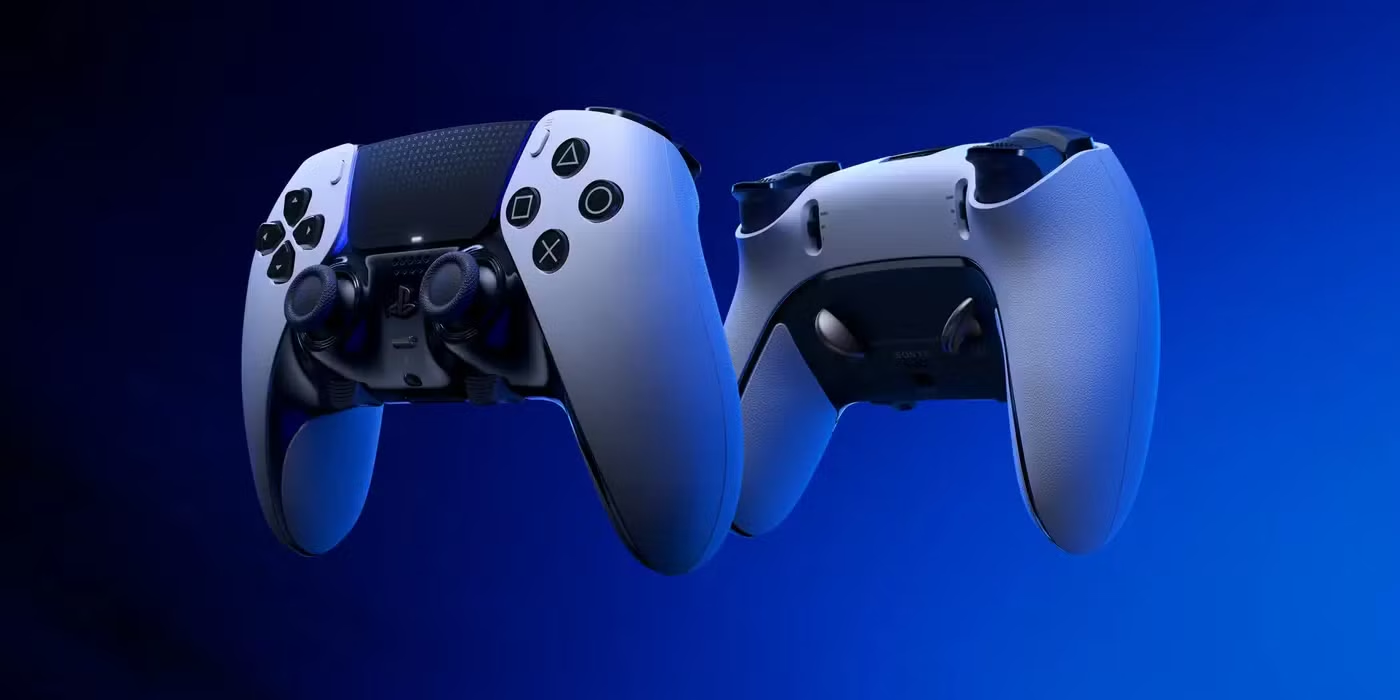
The concept is very interesting, on paper at least. A controller that can physically adapt to different games, different hands, and different needs is a real step past just adding more buttons or better rumble. If Sony can make the magnetic connections feel secure during actual gameplay, and keep the added complexity from pushing the price too high, this could be one of the more useful control innovations in years.
That said, it’s worth being careful here. Patents get filed constantly, and most never turn into shipped products. Sony hasn’t confirmed this is headed for the PS6, and there’s nothing tying it to a specific console generation at all. It might show up in a future DualSense revision, it might end up in something further out, or it might just sit in Sony’s patent portfolio forever.
Until Sony says otherwise, treat this as a concept worth watching, not a confirmed feature.
Thank you! Please share your positive feedback. 🔋
How could we improve this post? Please Help us. 😔

[PC Hardware Specialist]
Usman Saleem brings 8+ years of comprehensive PC hardware expertise to the table. His journey in the tech world has involved in-depth tech analysis and insightful PC hardware reviews, perfecting over 6+ years of dedicated work. Usman’s commitment to staying authentic and relevant in the field is underscored by many professional certifications, including a recent one in Google IT Support Specialization.
8+ years of specialized PC hardware coverage
6+ years of in-depth PC hardware analysis and reviews
Lead PC hardware expert across multiple tech journalism platforms
Certified in Google IT Support Specialization
Get In Touch: usman@tech4gamers.com
 Join Our Community