



- The imbalance between memory supply and demand could persist for a decade due to AI’s massive data requirements.
- AI data is growing twice as fast as the industry’s ability to expand manufacturing capacity.
- SSD manufacturers may face bankruptcy or be forced to merge if they cannot adapt to the current shortage.
In a promising outcome for the future of artificial intelligence and advanced computing, Pan Chien-cheng, founder and CEO of Phison, has highlighted the shortage that the memory industry has been facing for a long time. According to Pan, this issue does not seem to be fixed anytime soon and could last for at least 10 years.
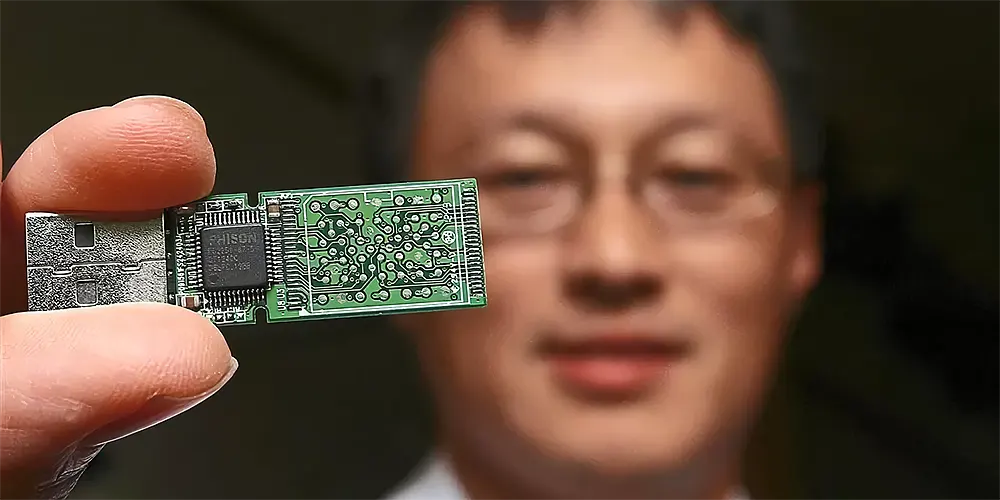
It’s dramatic, and it just so happens that Cheng is always the one with a harsh tone in his comments and is less optimistic about what he sees, so this, coming from him, is more than unusual because it’s not what he’s known for. However, the messages are unpleasant, such as the one stating that SSD companies must combine if they do not wish to disappear. However, he is very clear about it, stating that:
“As long as AI applications continue, the demand for memory will not weaken.”
The CEO of Phison explained that the volume of data generated by AI is expanding at a rate of 100x, whereas memory makers, even by building new facilities, can only improve capacity by 50%. With this supply-demand gap, Pan Chien-cheng stated that this wave of shortages “might not be fully resolved in the next 10 years.”

According to UDN and Economic Daily, in March, it announced its first syndicated loan for NT$12 billion, issued an overseas convertible bond for NT$800 million, and established a total financial capacity of more than NT$43 billion. Furthermore, by the end of March, it had NAND inflows of more than NT$50 billion. Cheng was emphatic about this point.
“In the fourth quarter there may be NAND Flash that, even if you have money, you cannot buy.”
That warning, which we have heard before, for Q4 2026, was directly tied to the release of NVIDIA’s new RTX 60 series and the new iPhone 18. Also, Cheng stated that the strain is already being felt in orders, with reports of US clients making urgent upgrades and a large PC manufacturer placing an exceptional purchase for 1 million SSDs. Cheng explains this simply by saying that:
“What costs $1 is ultimately selling for $90. If AI applications aren’t slowed down, the demand for memory won’t weaken.”
Furthermore, he questioned the profitability of memory producers. According to him, margins have exceeded 80%, and he believes the price increase is not good for this sector’s health. At the same time, Phison contrasts the chaotic retail channel, particularly in China, with what he observes in his higher-value businesses.
The business claims that the recent price decline is centered in retail, while CSP, servers, AI, and industrial remain strong in custom design agreements, which already account for more than 70% of its sales. And increasing. If nothing changes, and Phison is correct, the consumer industry may collapse if it does not integrate, because only a few may survive this level of scarcity.
Thank you! Please share your positive feedback. 🔋
How could we improve this post? Please Help us. 😔

[Editor-in-Chief]
Sajjad Hussain is the Founder and Editor-in-Chief of Tech4Gamers.com. Apart from the Tech and Gaming scene, Sajjad is a Seasonal banker who has delivered multi-million dollar projects as an IT Project Manager and works as a freelancer to provide professional services to corporate giants and emerging startups in the IT space.
Majored in Computer Science
13+ years of Experience as a PC Hardware Reviewer.
8+ years of Experience as an IT Project Manager in the Corporate Sector.
Certified in Google IT Support Specialization.
Admin of PPG, the largest local Community of gamers with 130k+ members.
Sajjad is a passionate and knowledgeable individual with many skills and experience in the tech industry and the gaming community. He is committed to providing honest, in-depth product reviews and analysis and building and maintaining a strong gaming community.
 Join Our Community