
 Threads
Worth It?
Review Summary
The Intel Core Ultra 250K Plus stands out as the best choice for anyone building an entry-level to mid-range PC in 2026. At an aggressive price of $199, it delivers unmatched multithreaded performance with its 18-Core Hybrid Architecture (6P Cores and 12E Cores). Exceptional efficiency and elite frame rates in gaming make it compelling. Compared to its direct $199 competitor, the AMD Ryzen 9 9600X, the 250K Plus provides far superior multi-threaded capabilities and competitive gaming performance.
Hours Tested: 13

Overall
Pros
- Exceptional Value
- Unmatched Multithreaded Performance at $199
- Decent Frame Pacing
- Easy To Cool (Very Efficient!)
- Overclockable
- Great Memory Support
Cons
- Requires Z890 Chipset For Overclocking


The Intel Core Ultra 5 250K, a $199 desktop processor that is probably going to rewrite the script for entry-level and mid-range PC building in 2026. The mid-range desktop market just got the shakeup it desperately needed. It’s just not a minor refresh of the Arrow Lake architecture; it’s probably an upgrade, depending on how you see it. While it shares the same LGA 1851 socket, Intel packed this chip with 18 cores (6P+12E) and a slight increase in L3 cache to 30 MB.
This chip now replaces the Intel Core Ultra 245K with 4 extra efficient cores, a 100MHz Extra P-Core Bump over its predecessor, and an extra 6MB of cache, and it’s $110 cheaper. The Older 245K launched north of $309. The processor aims to compete with the Ryzen 9000 series, notably the AMD Ryzen 5 9600X and AMD Ryzen 7 9700X, while offering better multi-threaded performance at a lower price.
Here are the key specs:
| Specification | Core Ultra 5 245K | Core Ultra 5 250K Plus |
| Architecture | Arrow Lake | Arrow Lake Refresh |
| Socket | LGA 1851 | LGA 1851 |
| Total Cores | 14 (6 P-Cores + 8 E-Cores) | 18 (6 P-Cores + 12 E-Cores) |
| Total Threads | 14 | 18 |
| P-Core Base Clock | 4.2 GHz | 4.2 GHz |
| P-Core Max Boost | 5.2 GHz | 5.3 GHz |
| E-Core Max Boost | 4.6 GHz | 4.7 GHz |
| L3 Smart Cache | 24 MB | 30 MB |
| Total Cache (L2 + L3) | 50 MB | 60 MB |
| Base Power (TDP) | 125 W | 125 W |
| Max Turbo Power | 159 W | 159 W |
| Native Memory Support | DDR5-6400 | DDR5-7200 |
| Integrated Graphics | Intel Graphics | Intel Graphics |
| Release Date | October 2024 | March 2026 |
| Launch MSRP | ~$309 | $199 |
Not Just a Refresh!
Apart from the Core Count, Clock Speeds, and Cache upgrades, Core Ultra Plus Processors have also undergone significant changes under the hood. The Arrow Lake processors suffered from latency issues when CPU tiles communicated with each other and with the memory controller. Intel increased the die-to-die frequency by 900 MHz, bringing it to 3.0 GHz. Also, it offers a faster ring bus, which has now been bumped by an additional 200MHz, bringing it to 3.9GHz in total. These changes have been made to reduce latency, enabling higher frame rates in gaming.
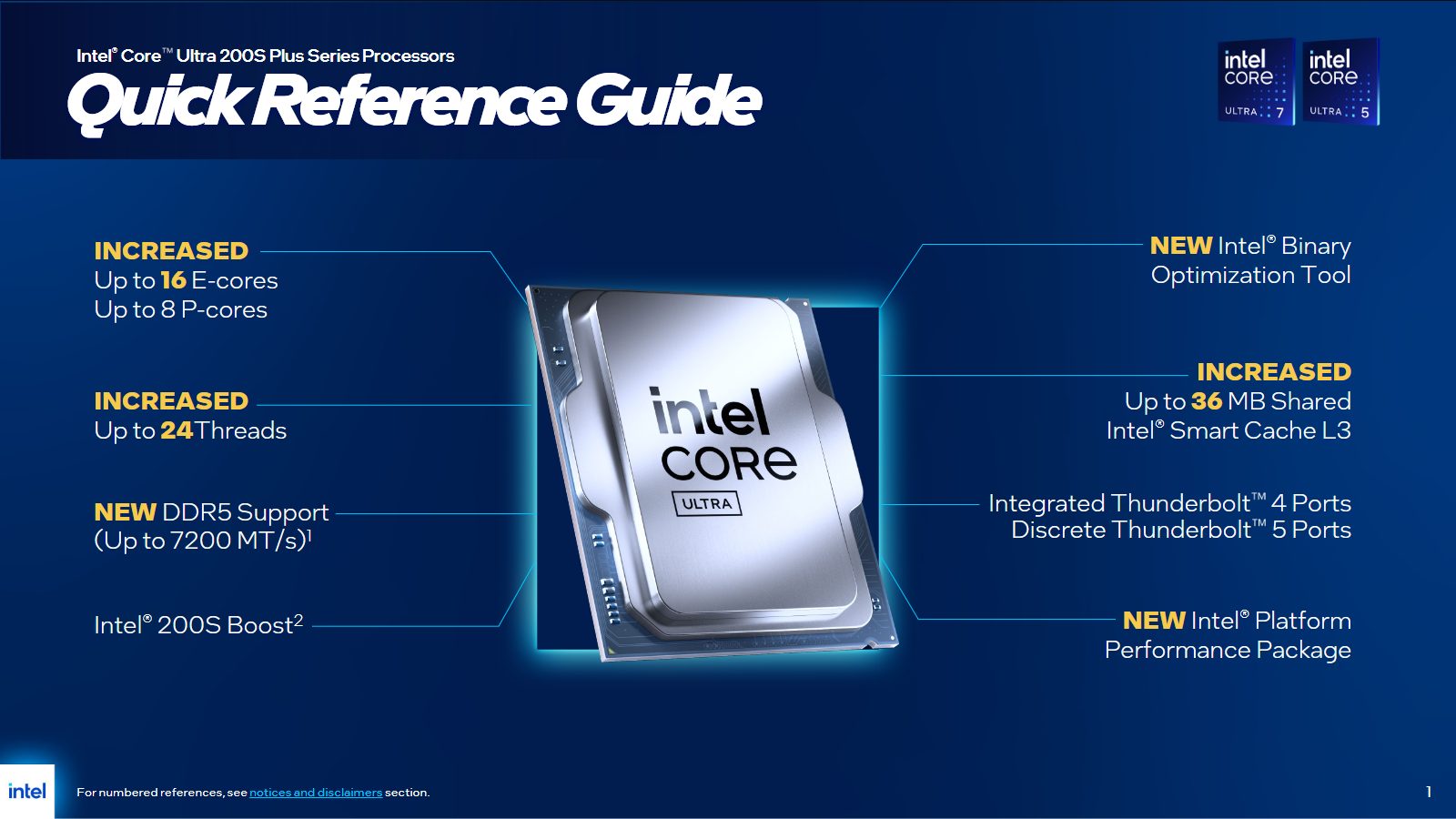
Intel has also upgraded the integrated memory controller (IMC) for the Plus series. The latest CPU now natively supports DDR5-7200MT/s, which is a significant jump from the original Arrow Lake Processors, which were 6200MT/s. It also now supports 4-Rank CUDIMM.

While not a physical hardware change, the 200S Plus series debuted the first-of-its-kind Binary Optimization Tool Software. The main benefit of this tool is that it automatically improves game performance on select titles by optimizing CPU instructions per cycle (IPC) in real-time. If a game is not already optimized for a specific CPU architecture, performance may suffer and addressing this would otherwise require game developers to manually recompile source code. Instead, users can launch and enable the tool for their game, though support is currently limited.
What About The Availability & Pricing?
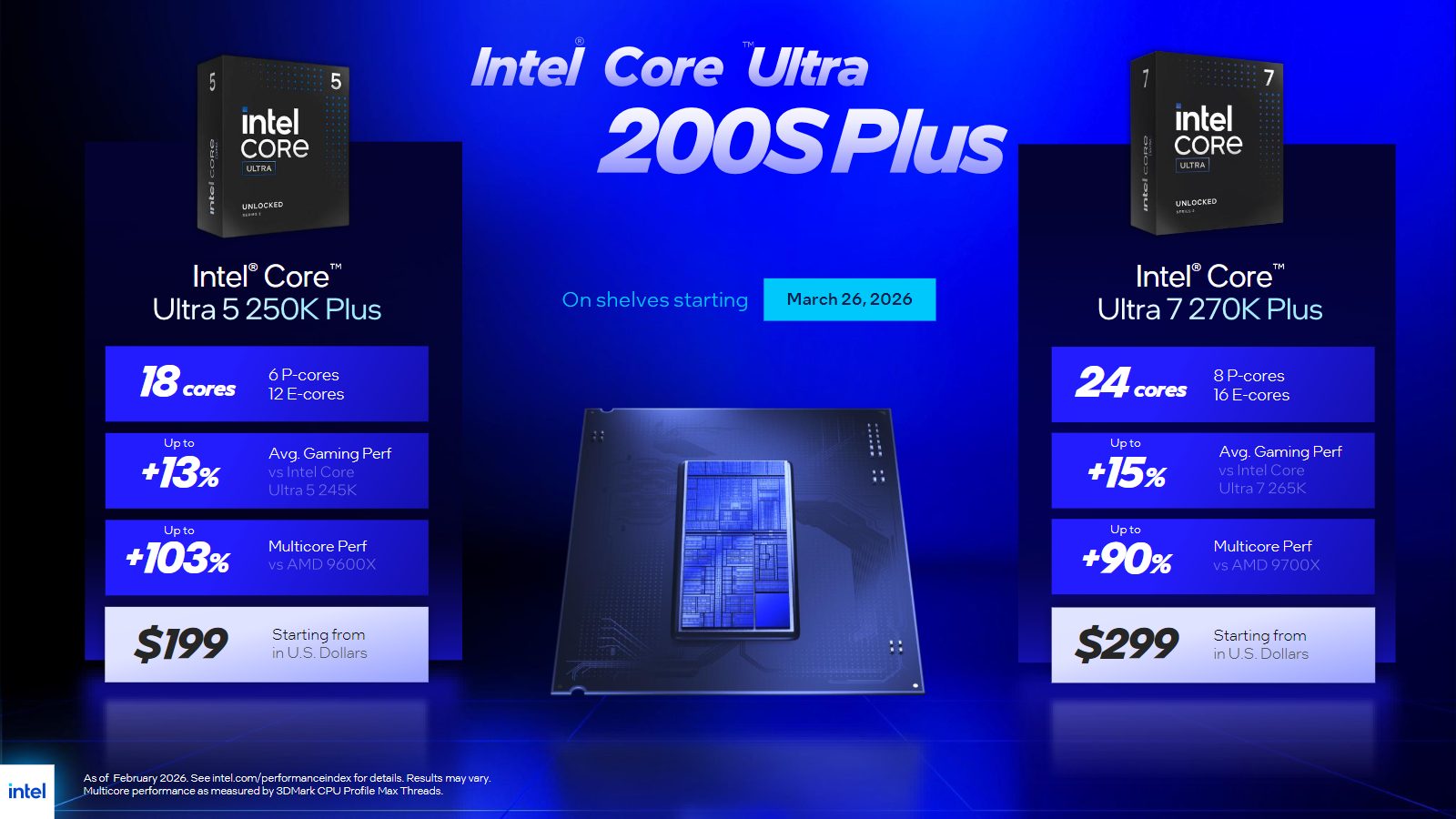
The Core Ultra 200S Processors were launched on March 26, 2026. The 250K Plus has the set MSRP of USD $199, and the 270K Plus will be available for $299.
Packaging
Let’s take a look at the packaging!
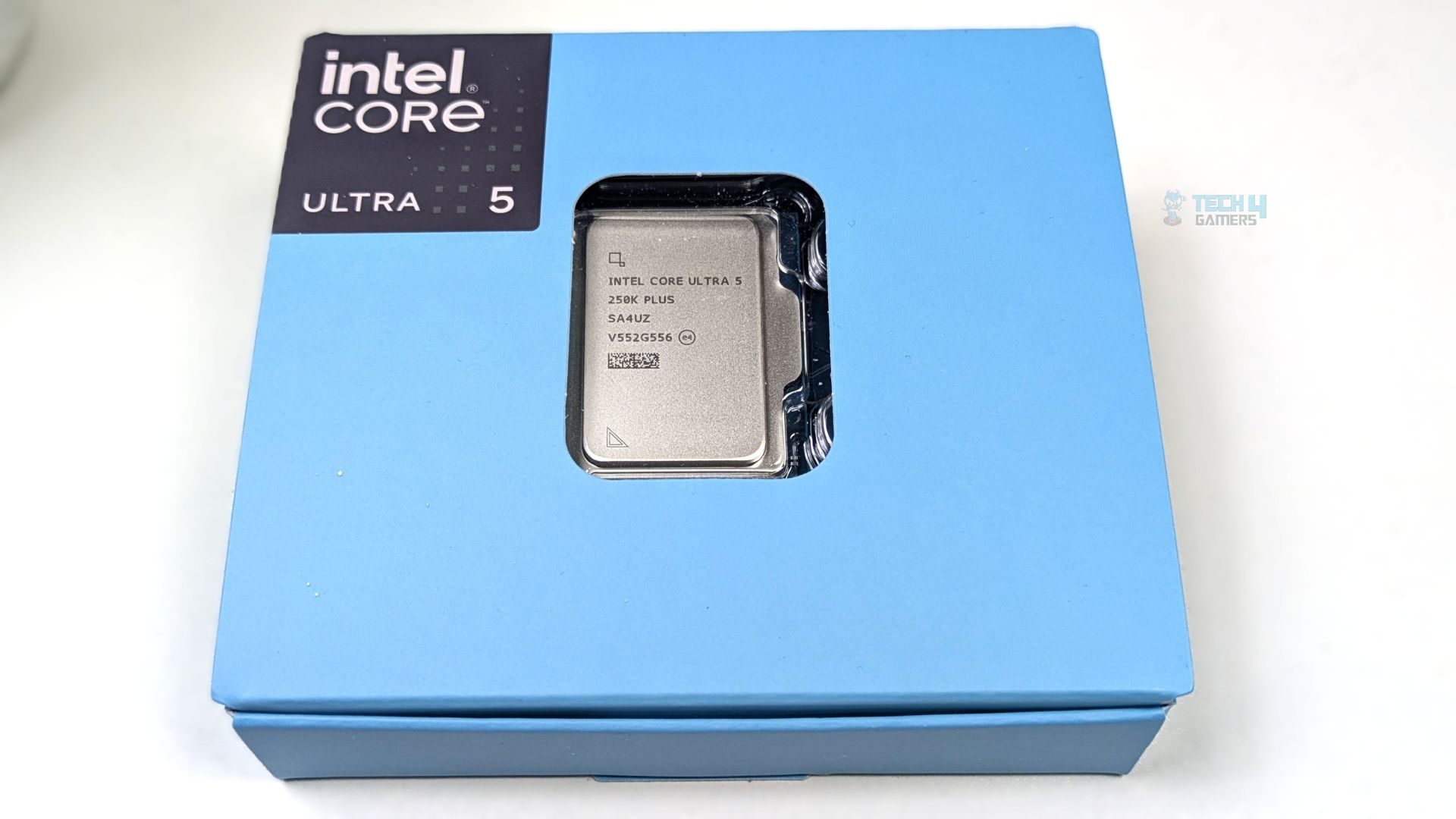
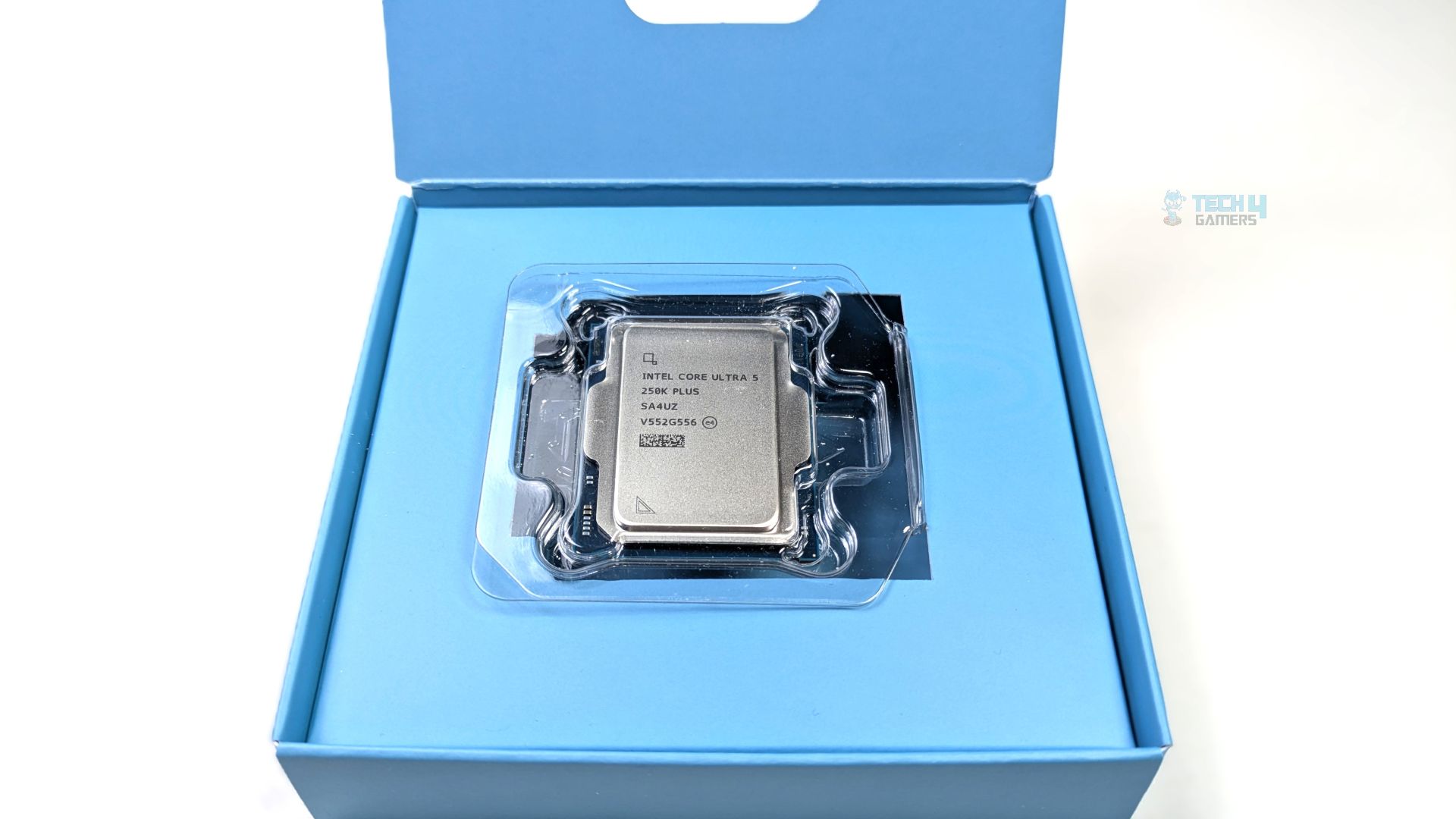
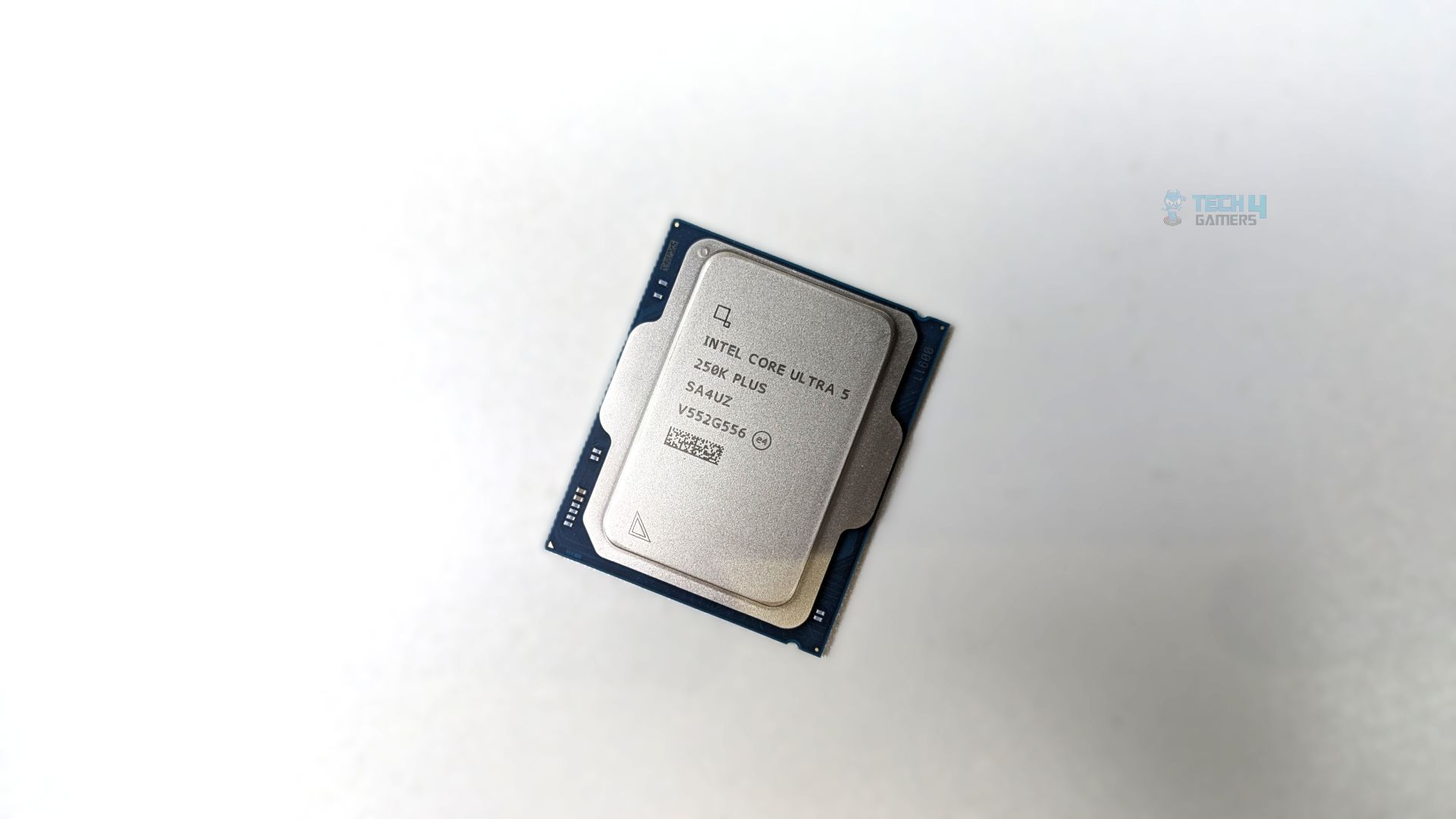
The Intel Core Ultra 250K Plus comes in simple blue cardboard packaging, secured in a plastic tray.
Testing Methodology
Test-bed Standardization.
We have done our best to standardize all non-CPU components as much as possible by using identical storage devices, memory, and cooling components, and the same drivers and Windows versions. Both AMD and Intel platforms are running at a memory frequency of 6000 MT/s with their EXPO/XMP profiles. We have also ensured the Resizable Bar is enabled on both platforms.
Productivity & Content Creation.
We have used a variety of real-world tools to test CPU performance, including Adobe Photoshop, Adobe Premiere, Cinema4D Rendering, Blender, Microsoft Office, Compression and Decompression Benchmarks, and Synthetic Benchmarks from 3DMark and Geekbench 6.
Gaming Performance.
To reveal true CPU gaming performance, testing must artificially induce a CPU bottleneck. We’ll test the games exclusively at 1920x1080p resolution with medium or high settings. Testing at 1440p. or 4K shifts the bottleneck to the GPU, flattening the data and hiding the CPU performance delta. We’ll also be measuring the average FPS and 1% lows.
Power & Thermals
We’ll be using a tool like HWiNFO64 to log Package Power (Watts) and maximum core temperatures during a 20-minute Cinebench multi-core loop and in games.
Test Setup
- CPU: AMD Ryzen 9 9950X, Intel Core Ultra 250K Plus
- RAM: XPG Lancer 6000MT/s CL30
- Motherboard: (AMD) ASRock X870 Phantom Gaming, (Intel) ASRock Z890 Taichi Lite
- GPU: ZOTAC RTX 5080
- Liquid Cooler: ASRock Steel Legend 360 LCD AIO
- Motherboard BIOS: (AMD) 3.5v, (Intel) 3.24v
- Drivers: GeForce Game Ready 596.21
- Windows Version: Windows 11 25H2 (Build 26200.8117)
Test – Synthetic Benchmarks
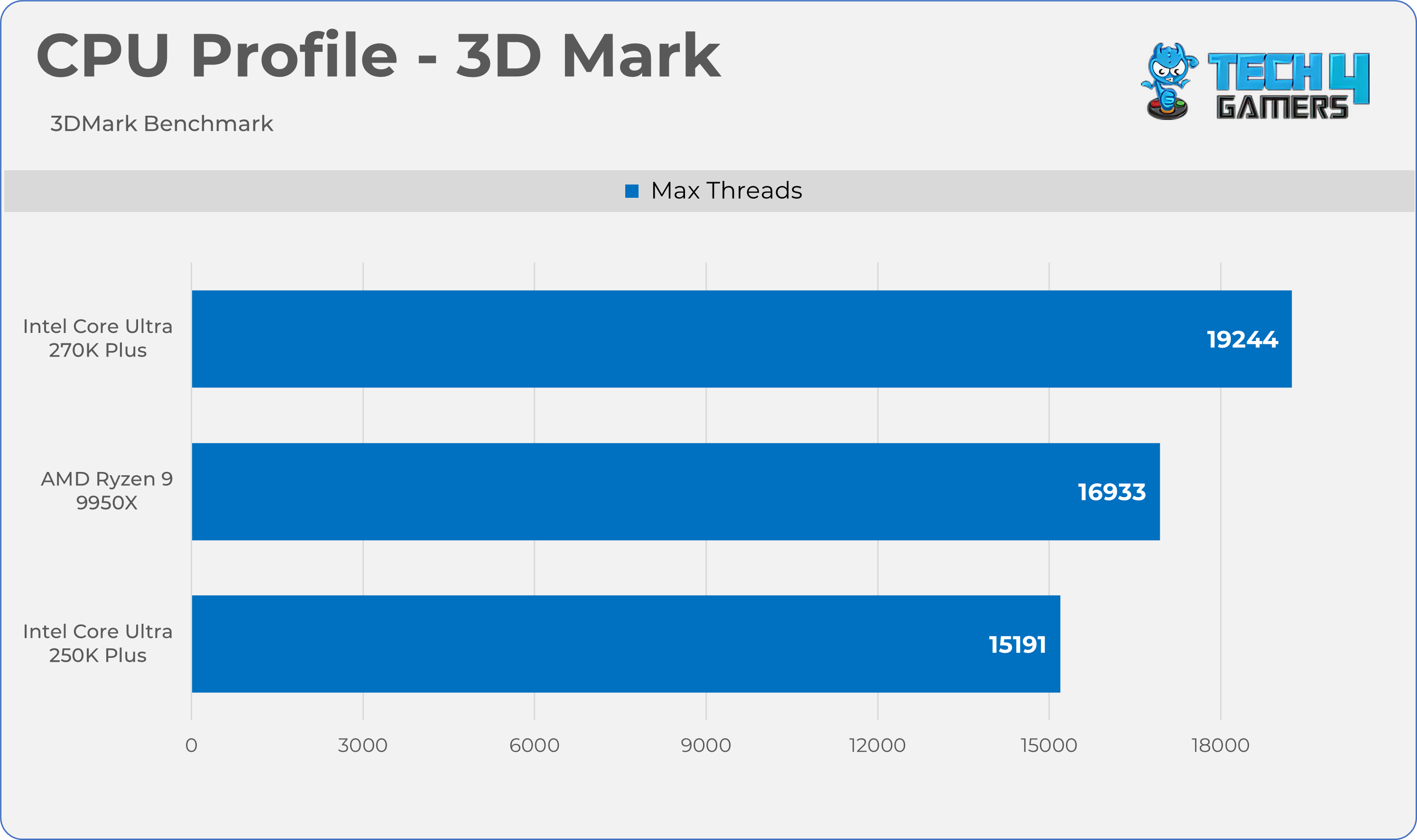
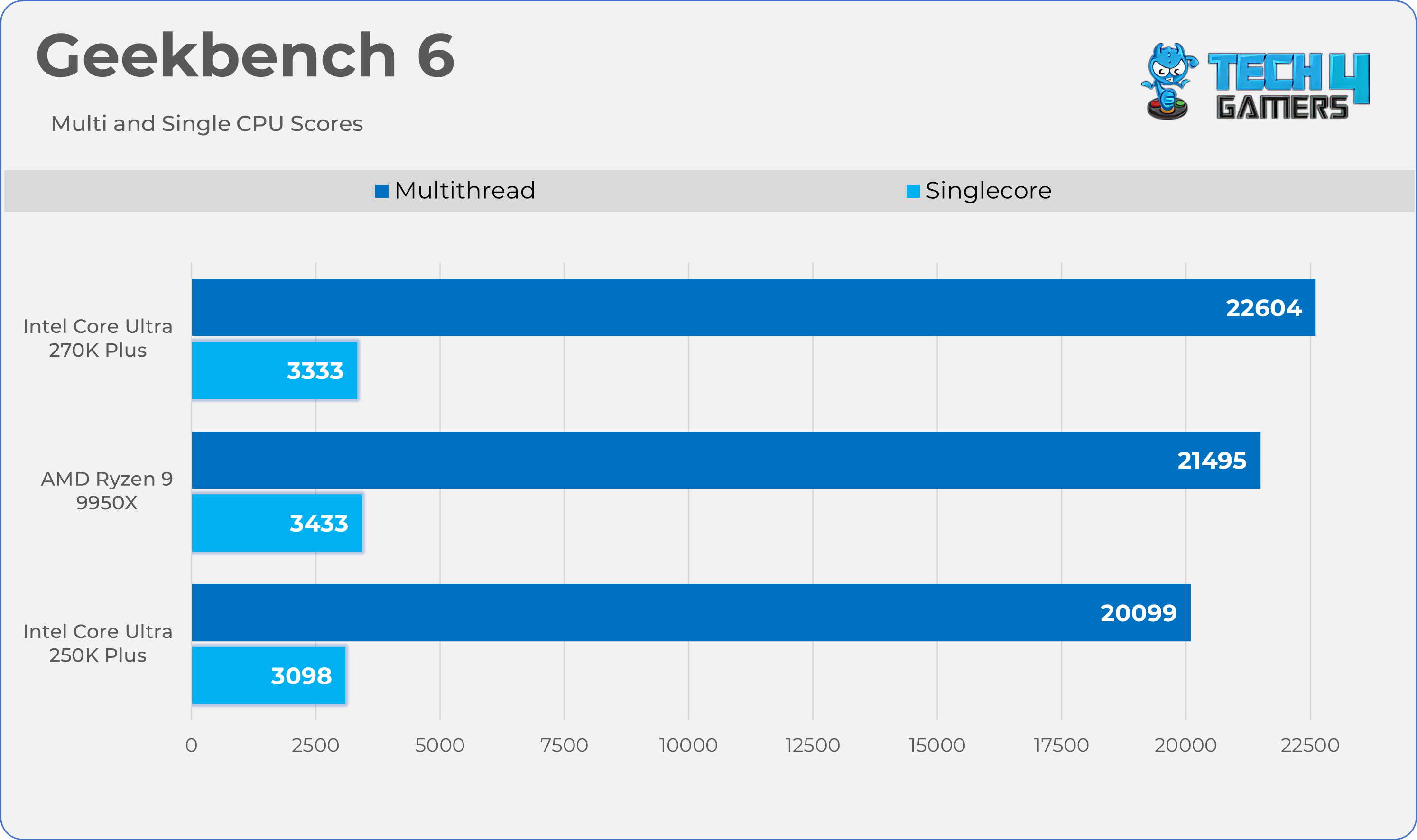
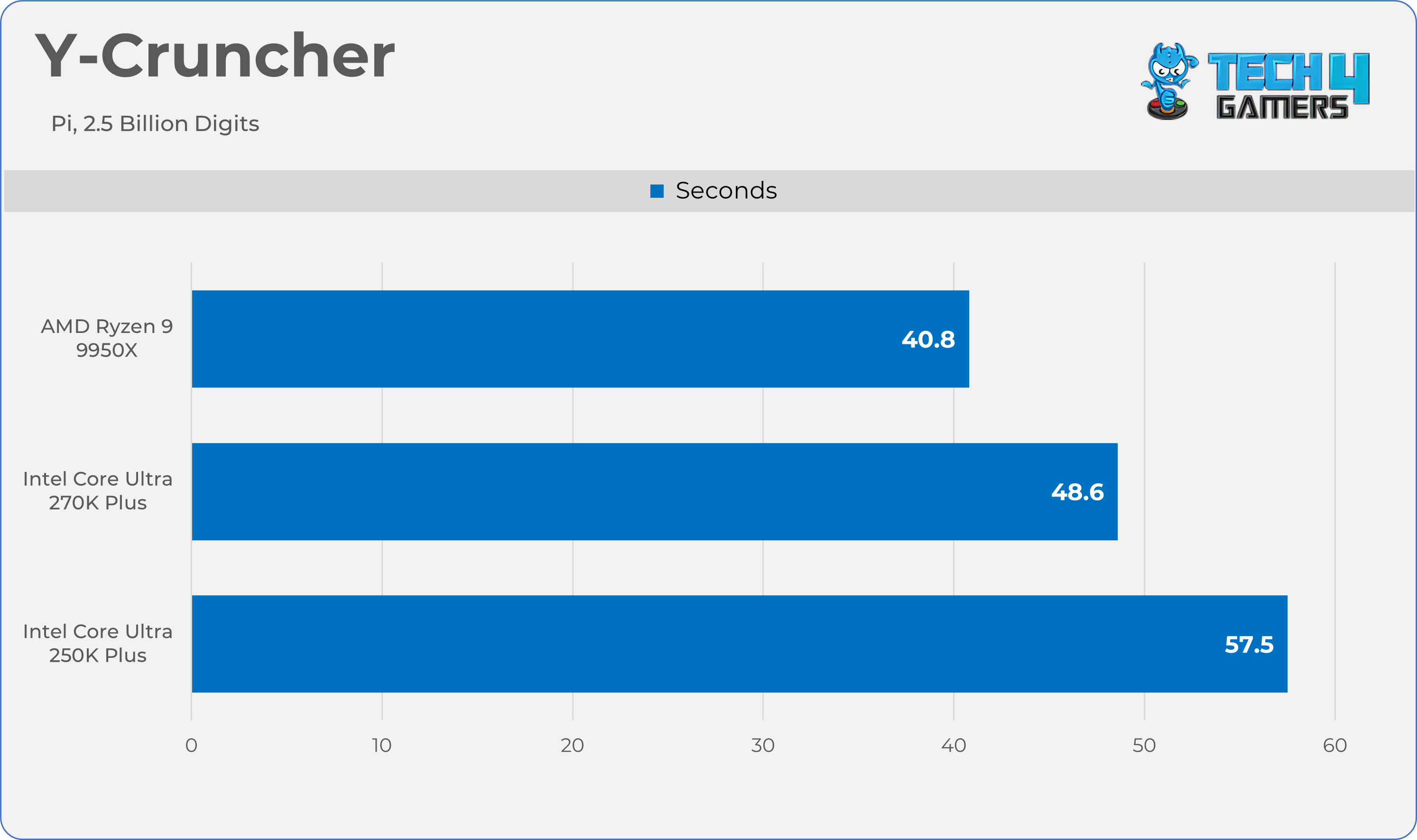
The Intel Core Ultra 250K Plus sits at the bottom of the stack in synthetic benchmarks, scoring about 10.3% lower than AMD’s flagship Ryzen 9 9950X and 21% slower than the Intel Core Ultra 270K Plus. Meanwhile, in Geekbench, it holds its own reasonably well, falling behind the 9950X by just 9% and the 270K Plus by 11%. Additionally, when examining Y-cruncher, the AMD shines due to its multi-threaded capabilities; here, the 250K Plus is 17 seconds slower than the AMD and 9 seconds slower than its older sibling.
Test – Rendering Benchmarks
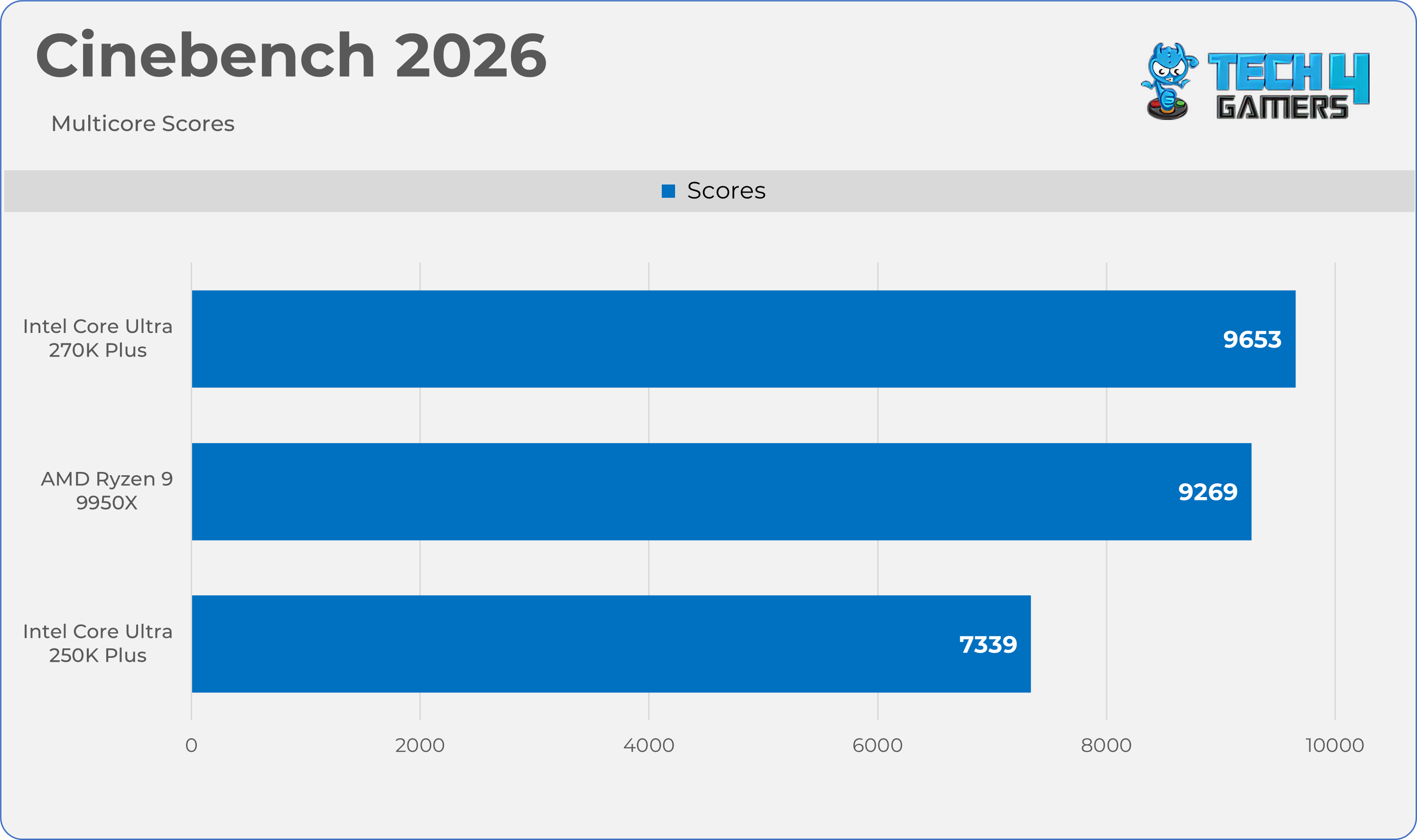
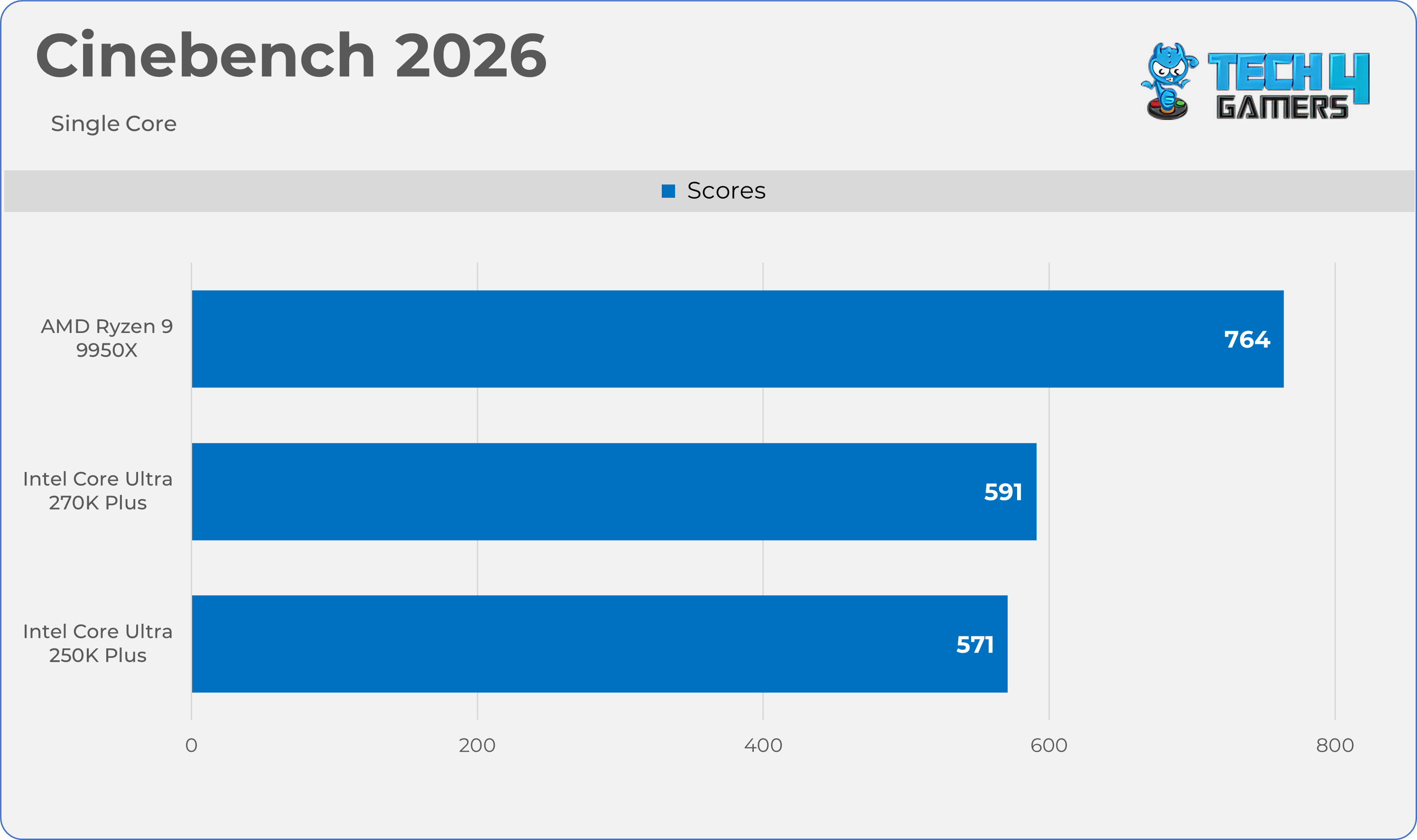
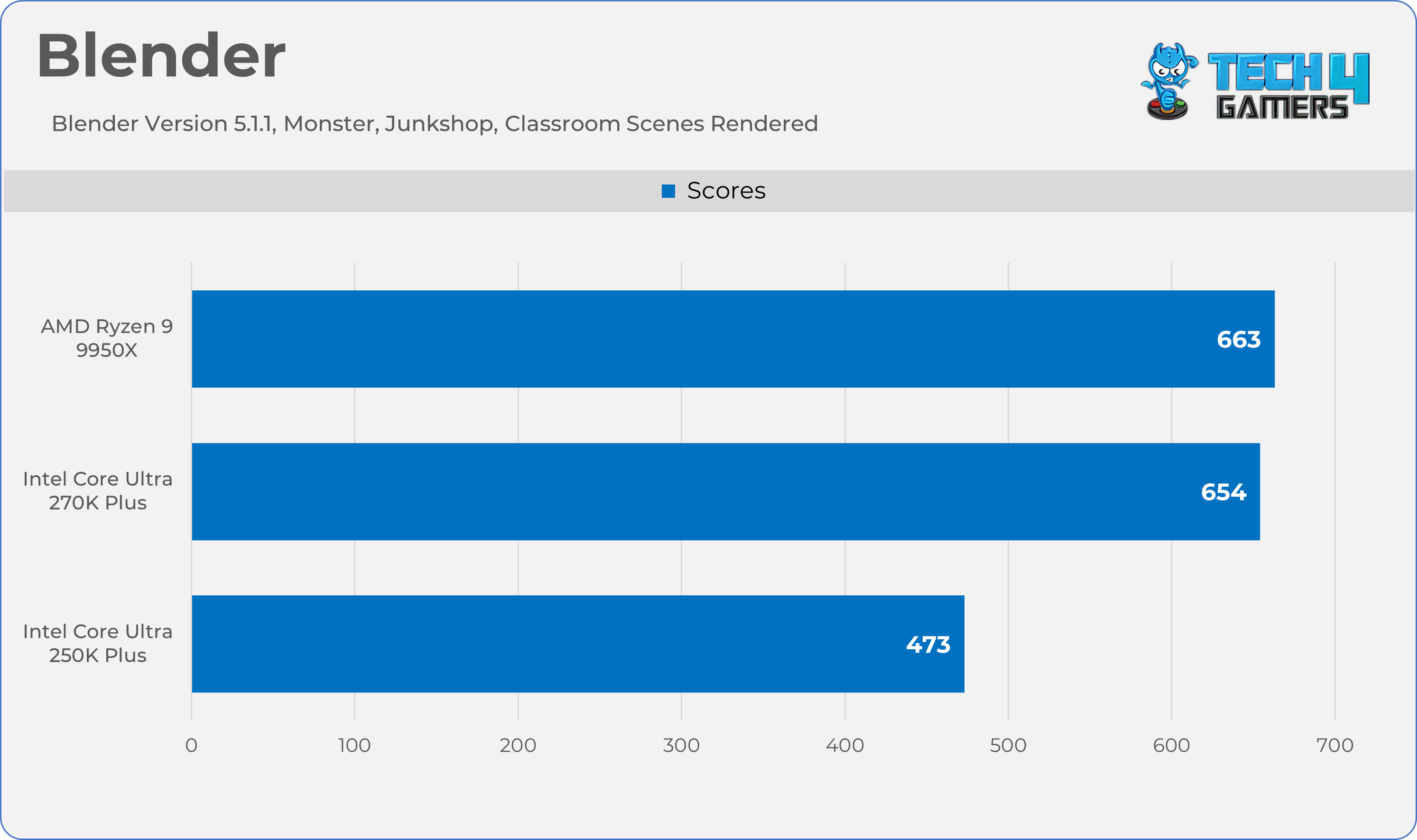
The Intel Core Ultra 250K Plus, priced at $199, demonstrates strong performance compared to its larger sibling. In single-core benchmark tests, it achieves nearly 97% of the performance of the Intel Core Ultra 270K Plus. For multi-core workloads, the 250K is roughly 25% slower than the 270K Plus, and in Blender rendering tasks, it is 28% slower.
Test – Microsoft Office & Productivity
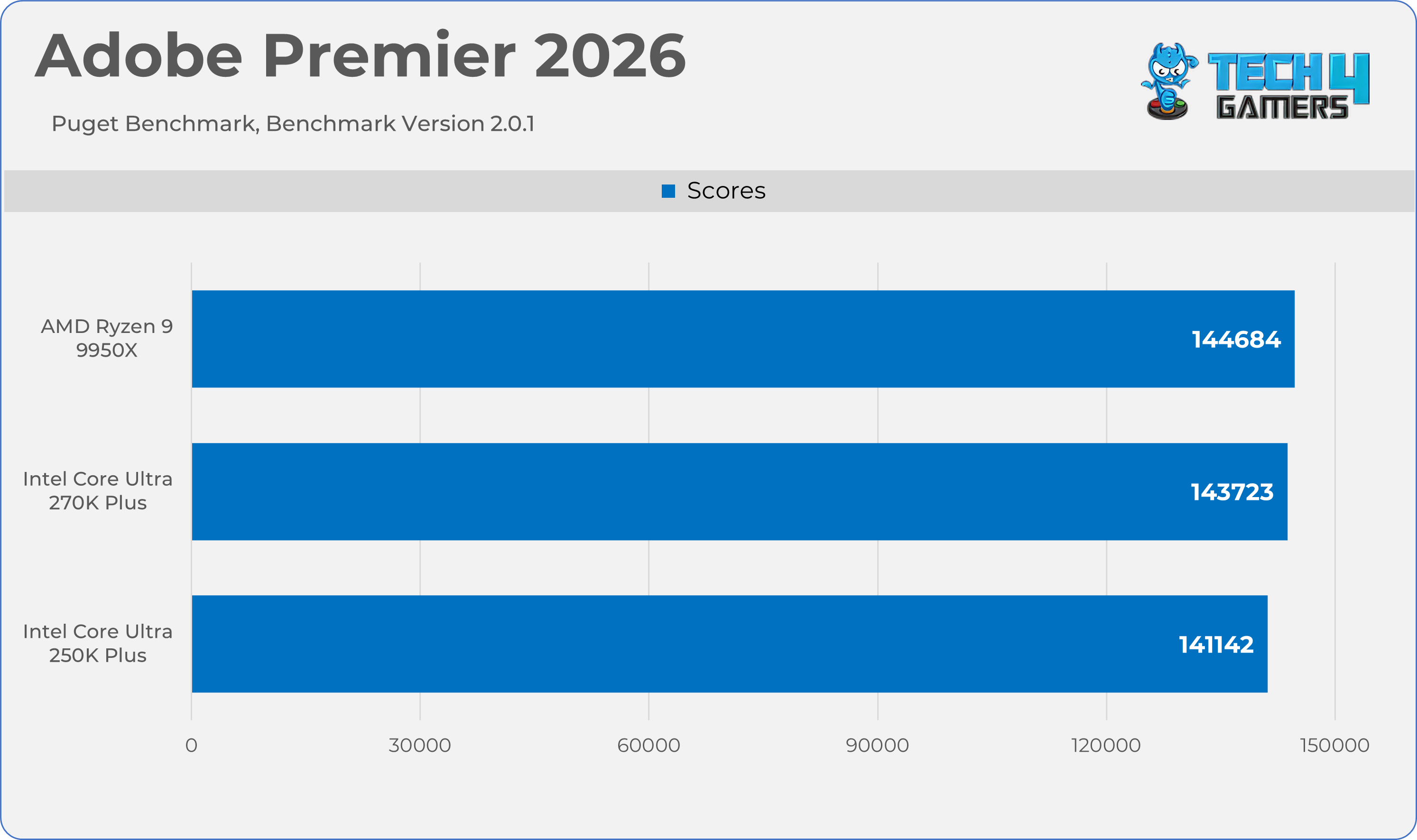
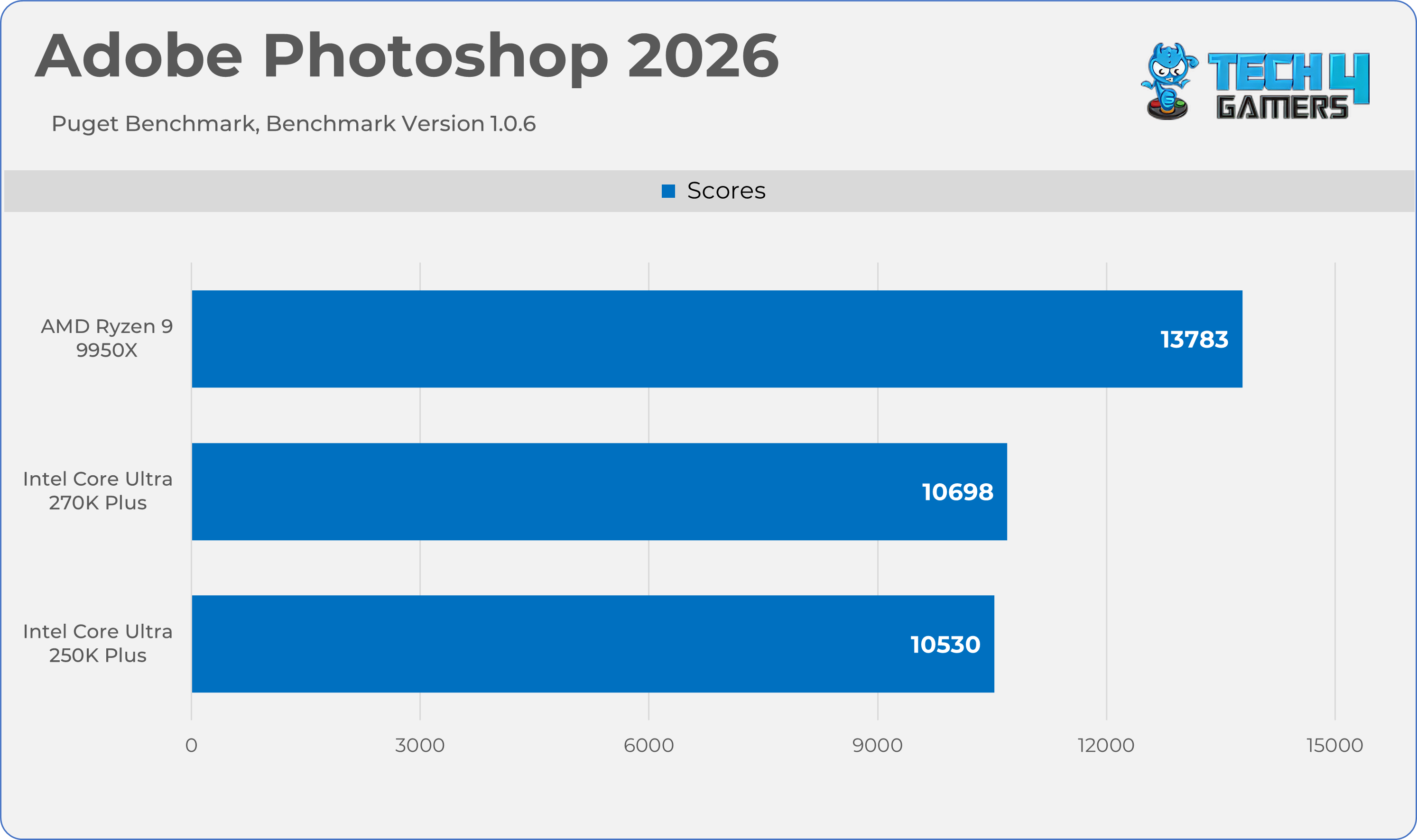
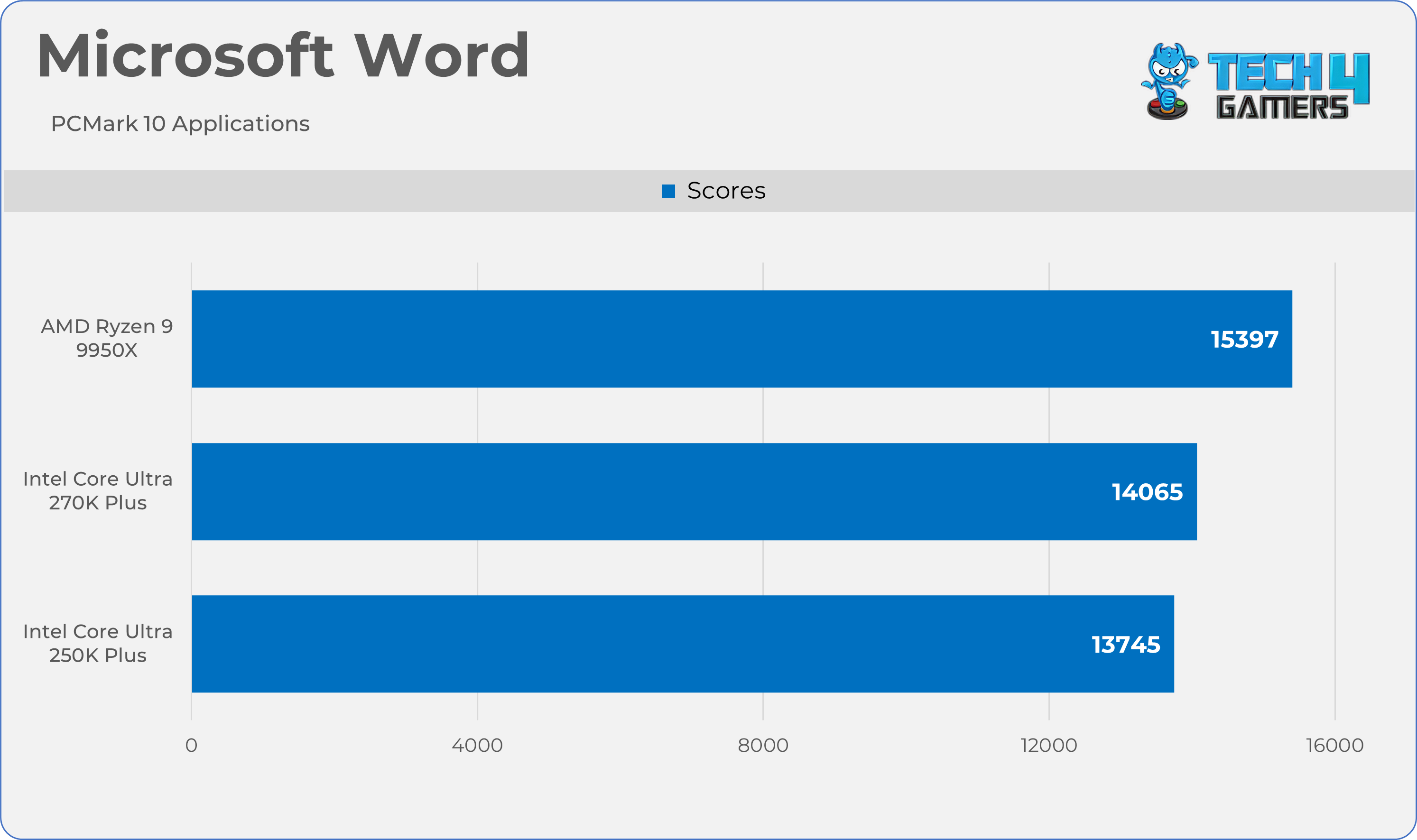
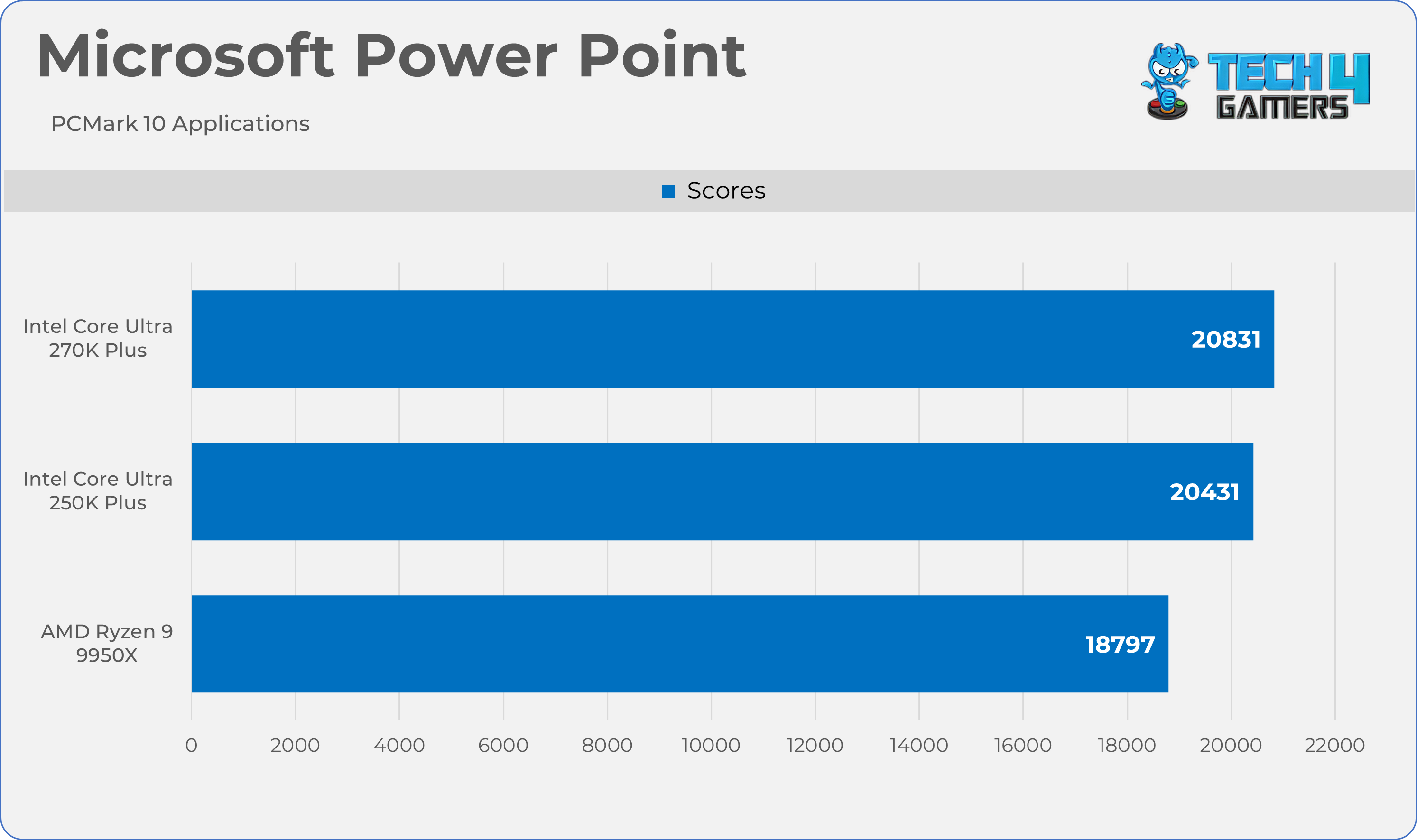
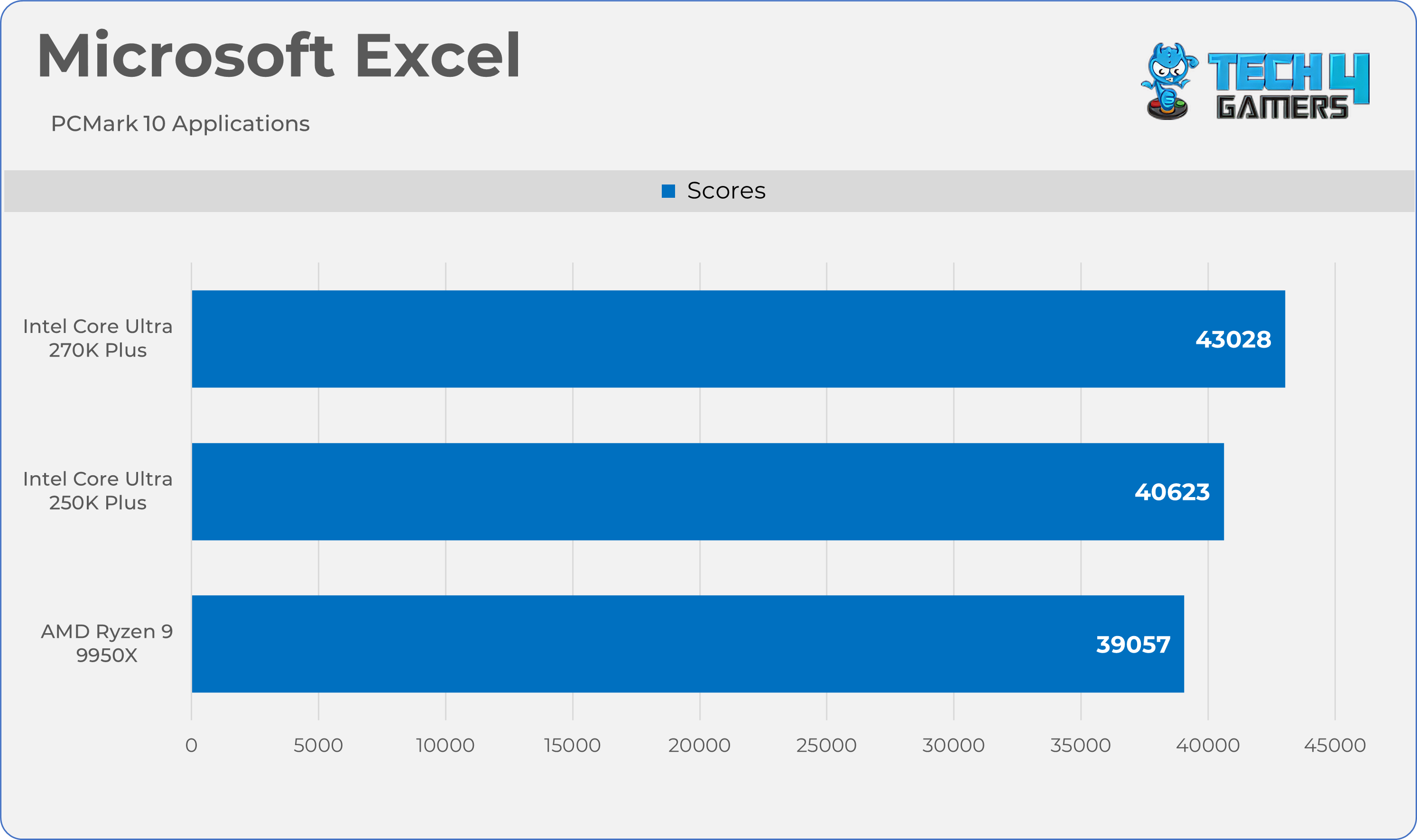
We have used the PCMark10 Applications which simiuluates real-world usage in the Microsoft applications, relying heavily on the single-core burst speed and the memory latency. Intel finally flexes its muscles in the Excel, where it’s on par with AMD’s Flagship Ryzen 9 9950X, while it outperforms in the Powerpoint, however, Core Ultra 250K Plus trails the the Core Ultra 270K Plus by only 2.3% gap.
Adobe applications are notoriously difficult to scale across large core counts; sometimes they heavily favor single-core performance and the processor’s cache speed. For example, the Core Ultra 250K Plus is 2% slower than the Core Ultra 270K Plus in Adobe Photoshop. In contrast, Premier utilizes a mix of multi-core processing, single-core UI, and hardware acceleration. Here, the 250K Plus is only 1.8% behind the 270K Plus and 2.4% behind the top-tier AMD Ryzen 9 9950X.
Gaming Benchmarks 1080p FHD
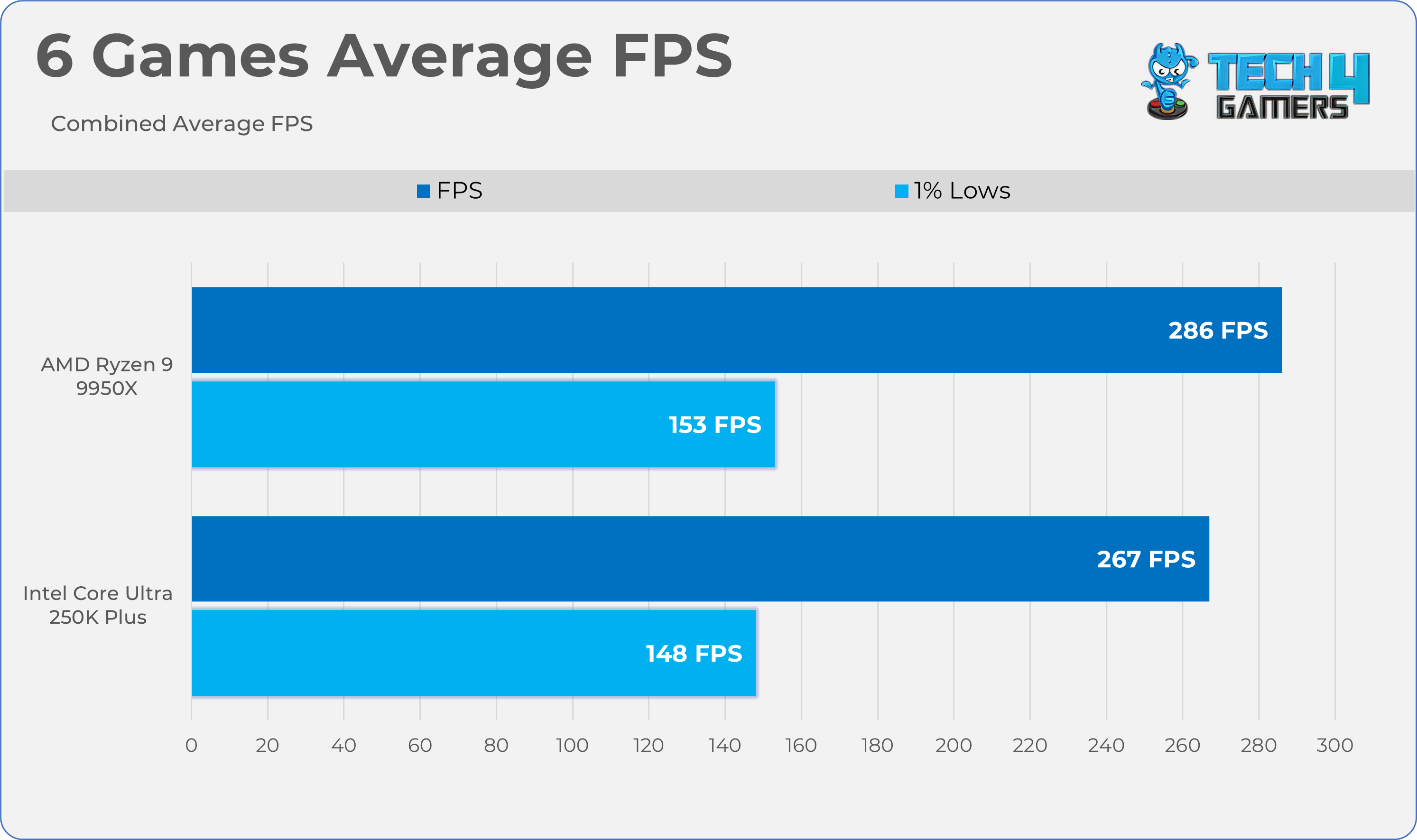
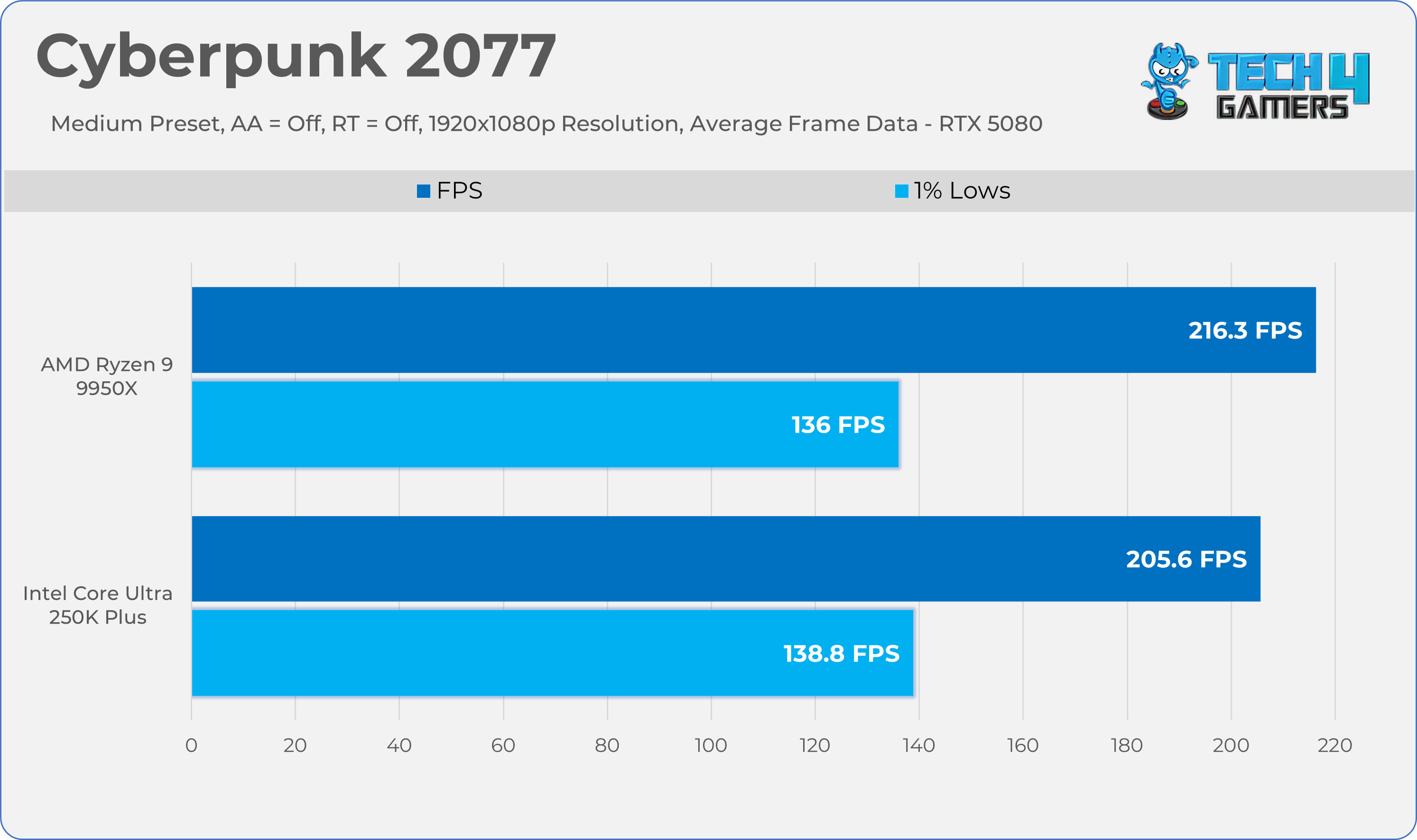
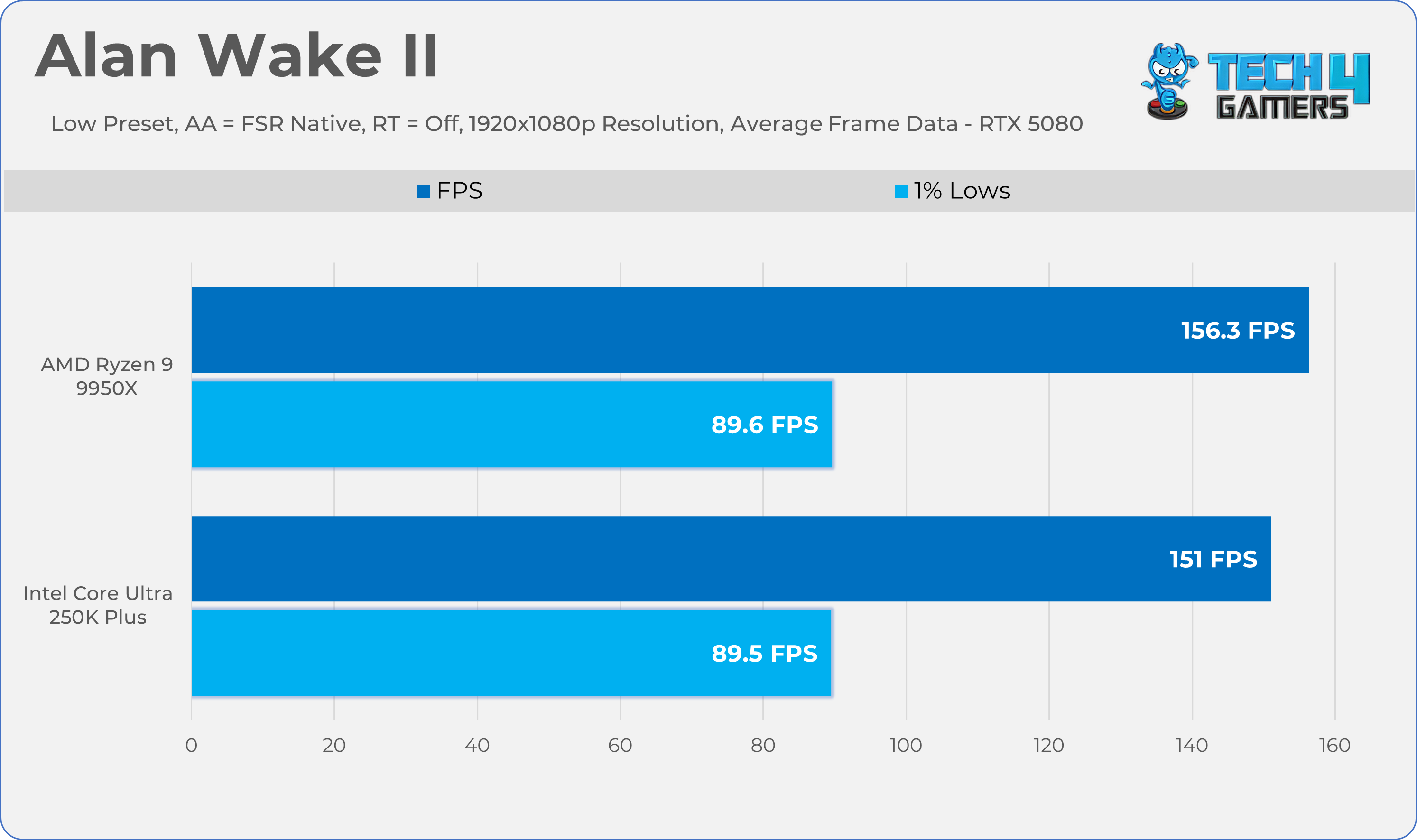
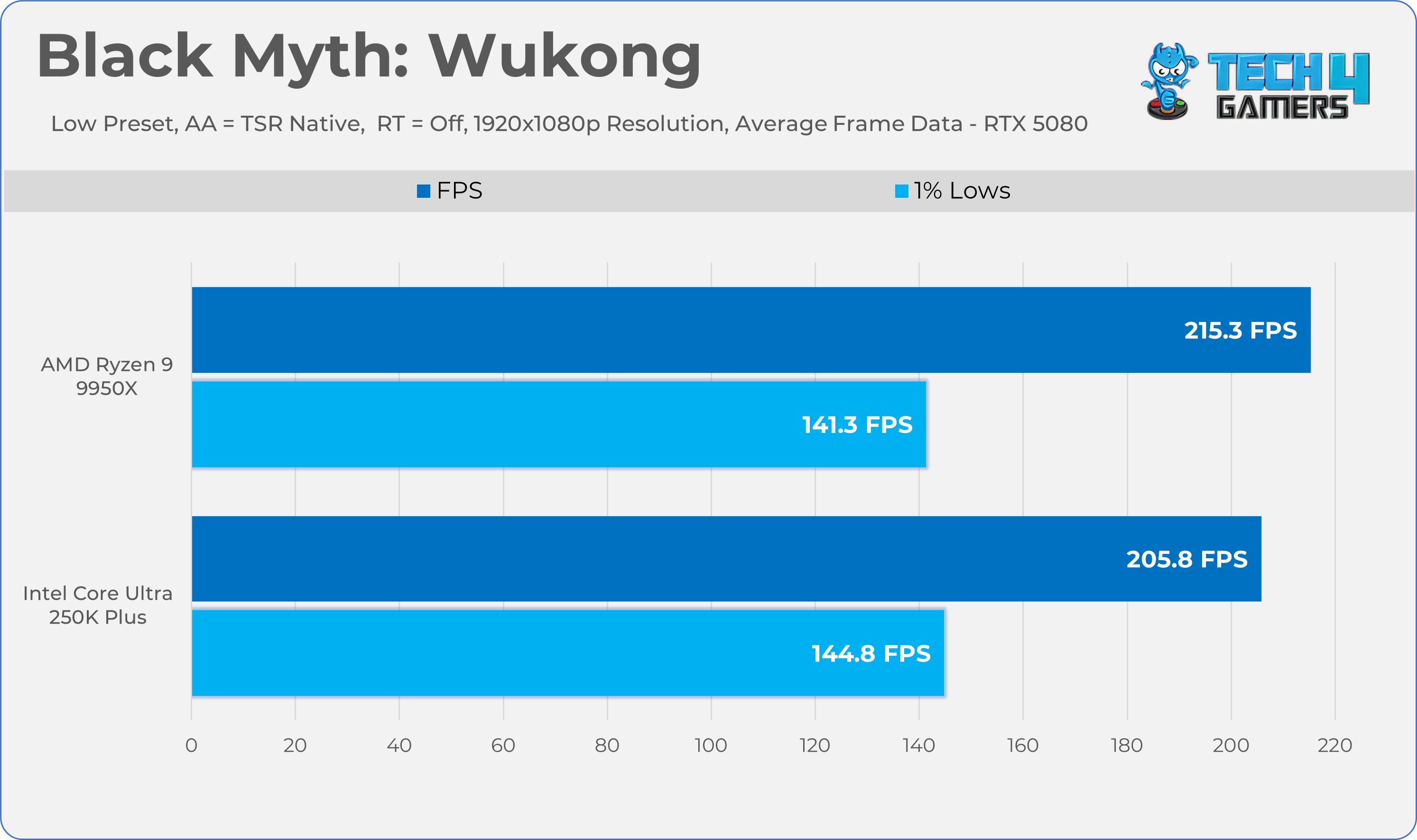
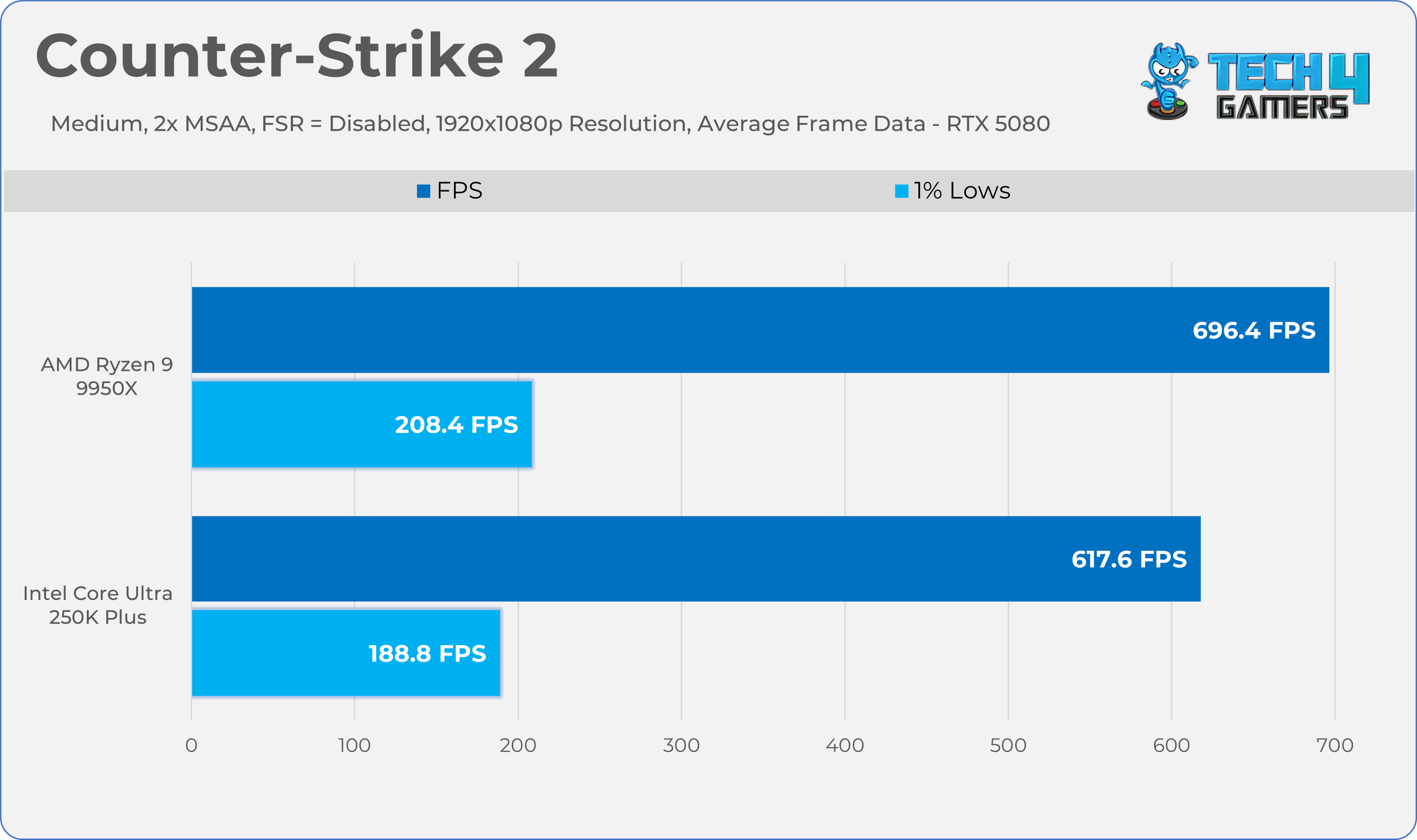
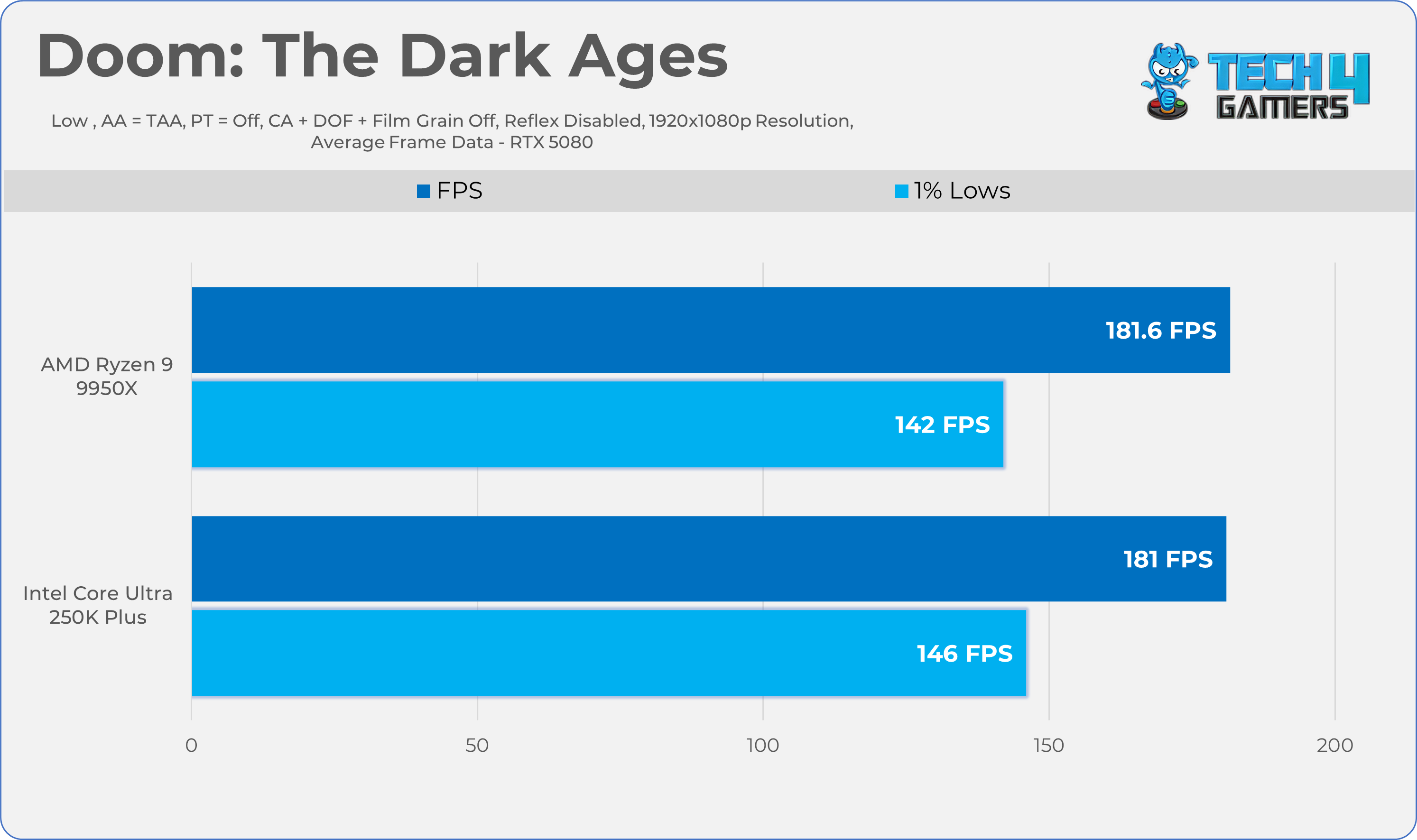
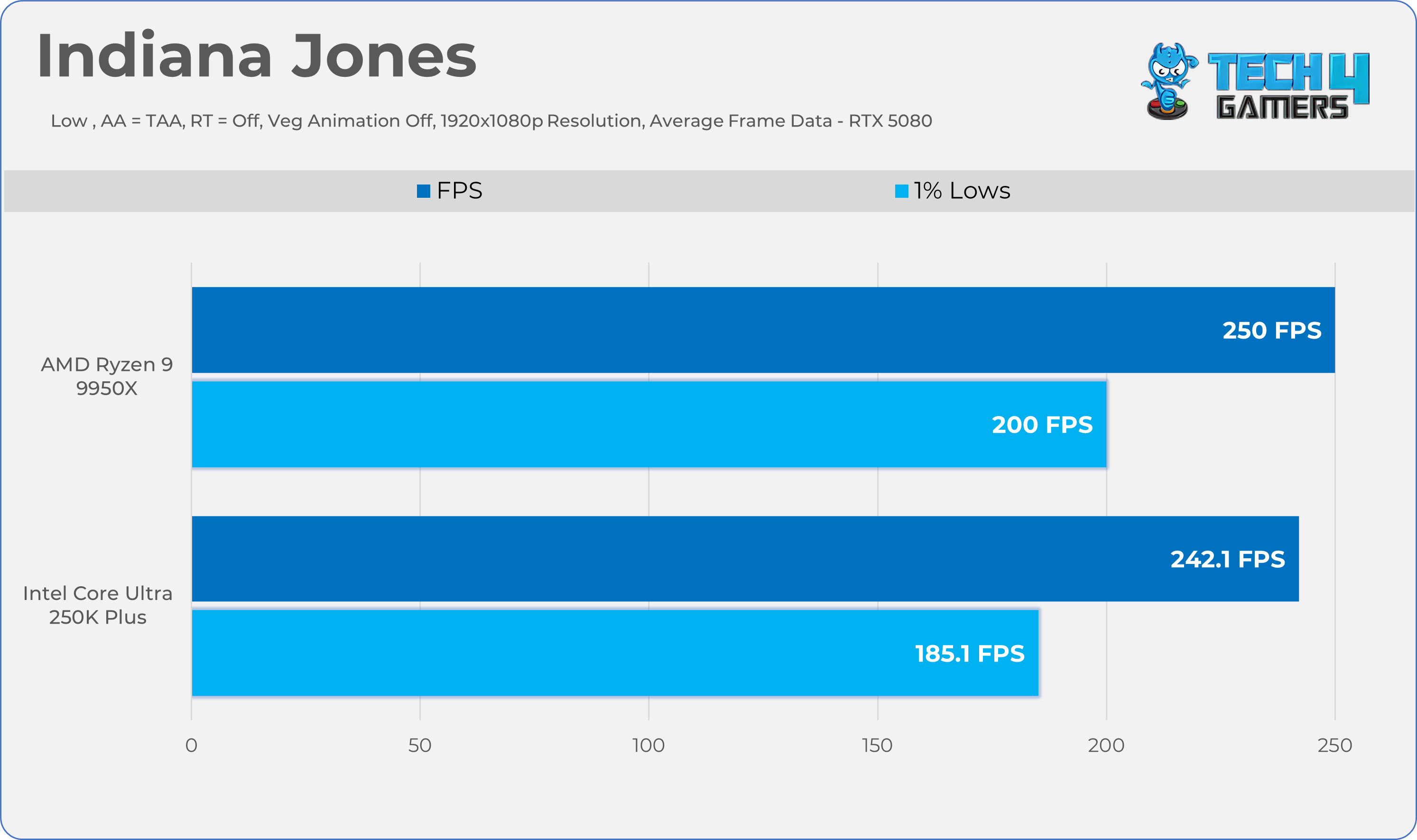
First, looking at the combined average, the Intel Core Ultra 250K Plus gets 267 FPS, compared to the AMD Ryzen 9 9950X’s 286 FPS, which is 6.6% behind. However, the 1% lows are impressive in our results. The 250K Plus is only 3.2% slower, which matters very little. In Cyberpunk 2077, Intel chips keep things smooth, and in Doom: The Dark Ages, they are ahead of the curve. This pattern continued in Black Myth Wukong. In Alan Wake II, both chips were almost equal in 1% lows. Intel Core Ultra chips showed better 1% lows than AMD here.
Clock Speed / Frequency
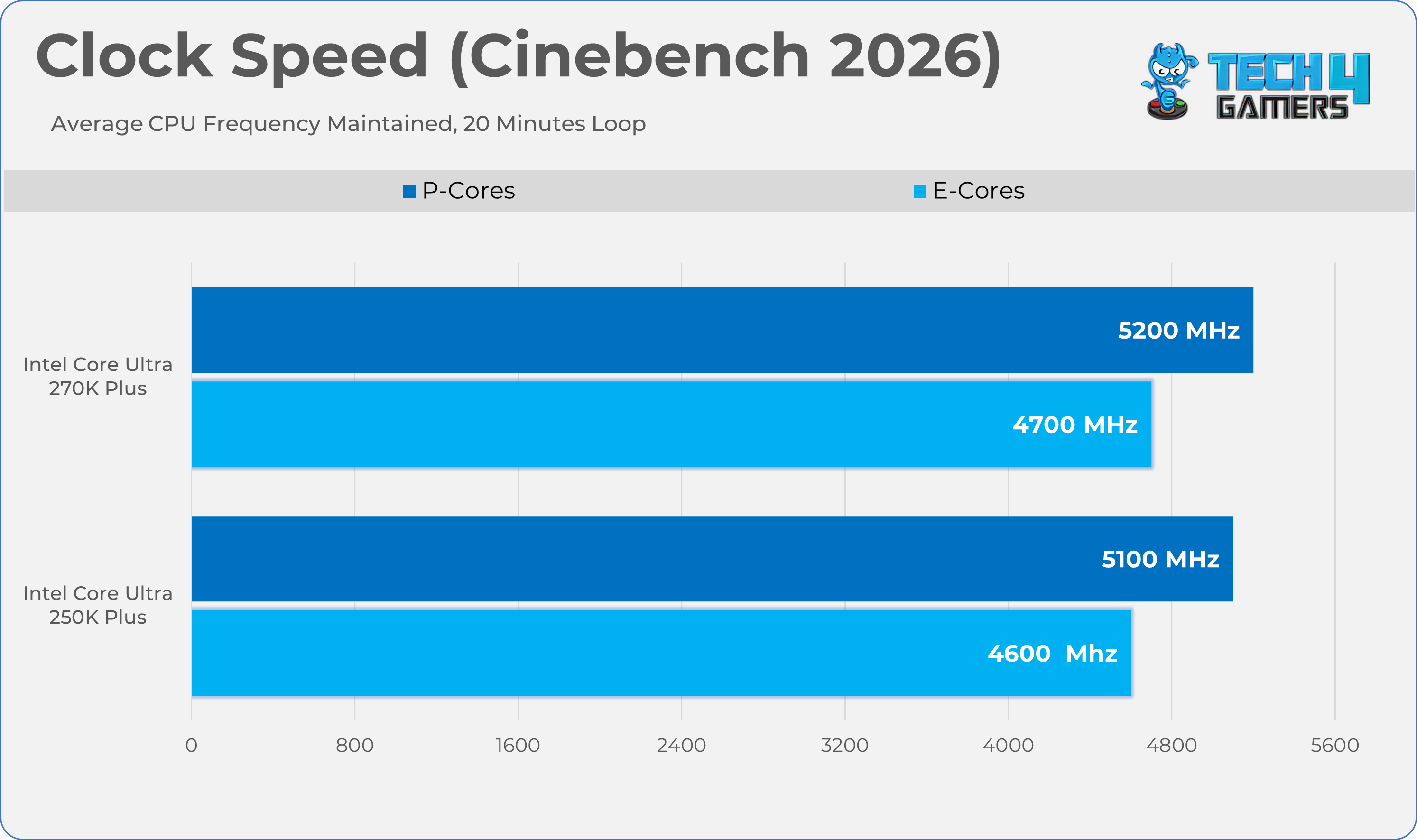
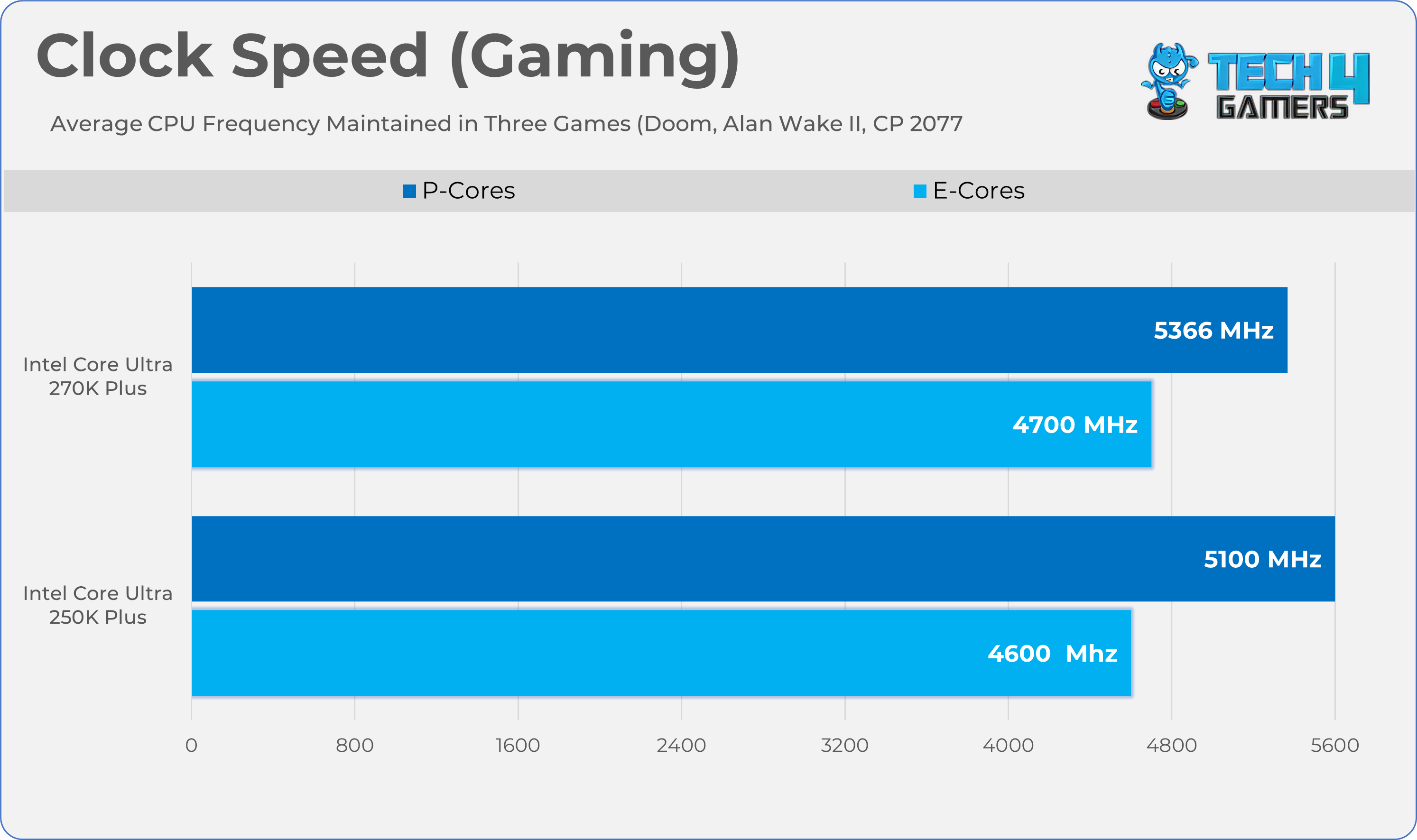
In these charts, the Performance Cores (P Cores) are always boosting to the advertised maximum frequency of 5100 MHz. We did not notice any noticeable fluctuations. The E-Cores always ran at the locked 4.6GHz regardless of the workload.
Power Consumption & Temperatures
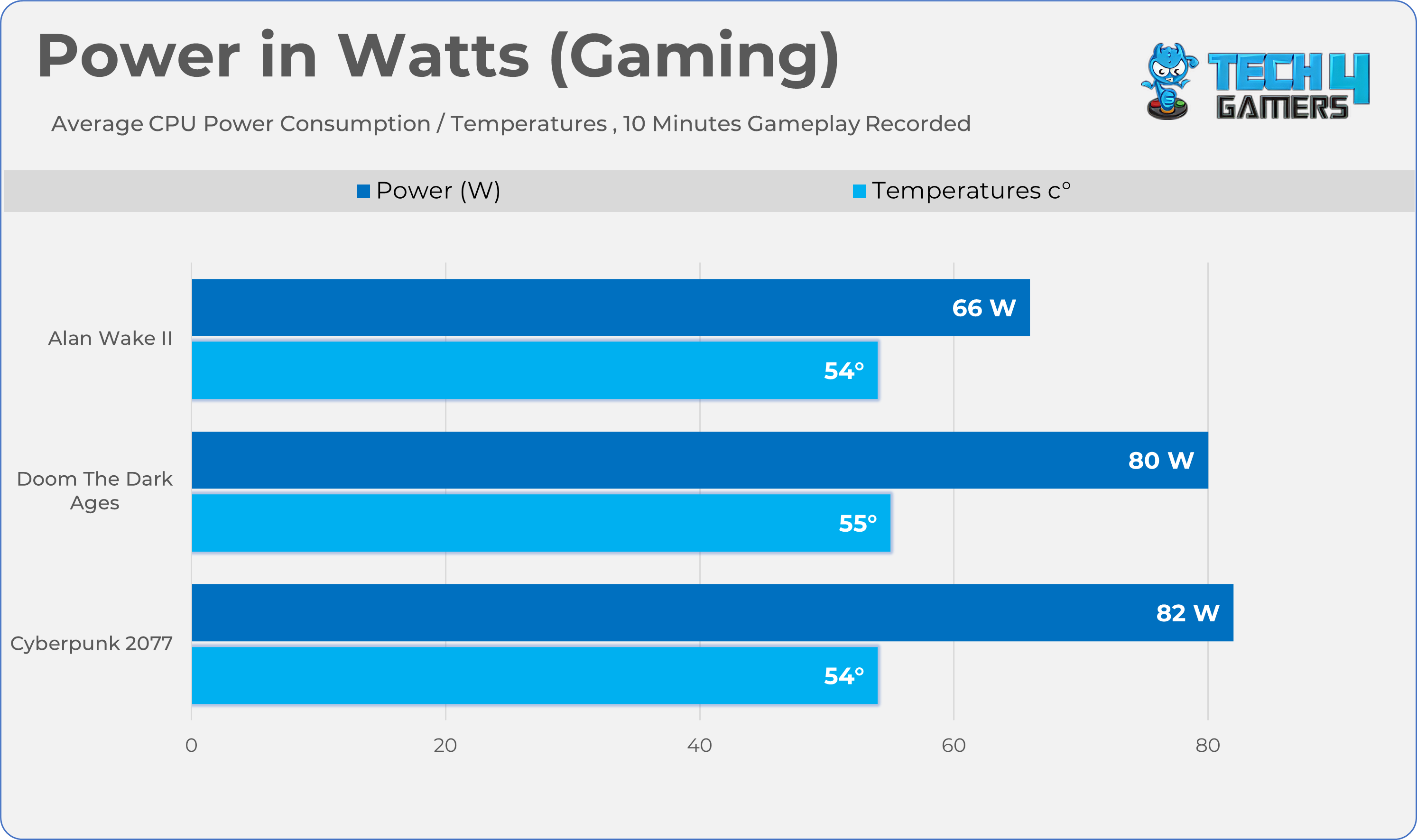
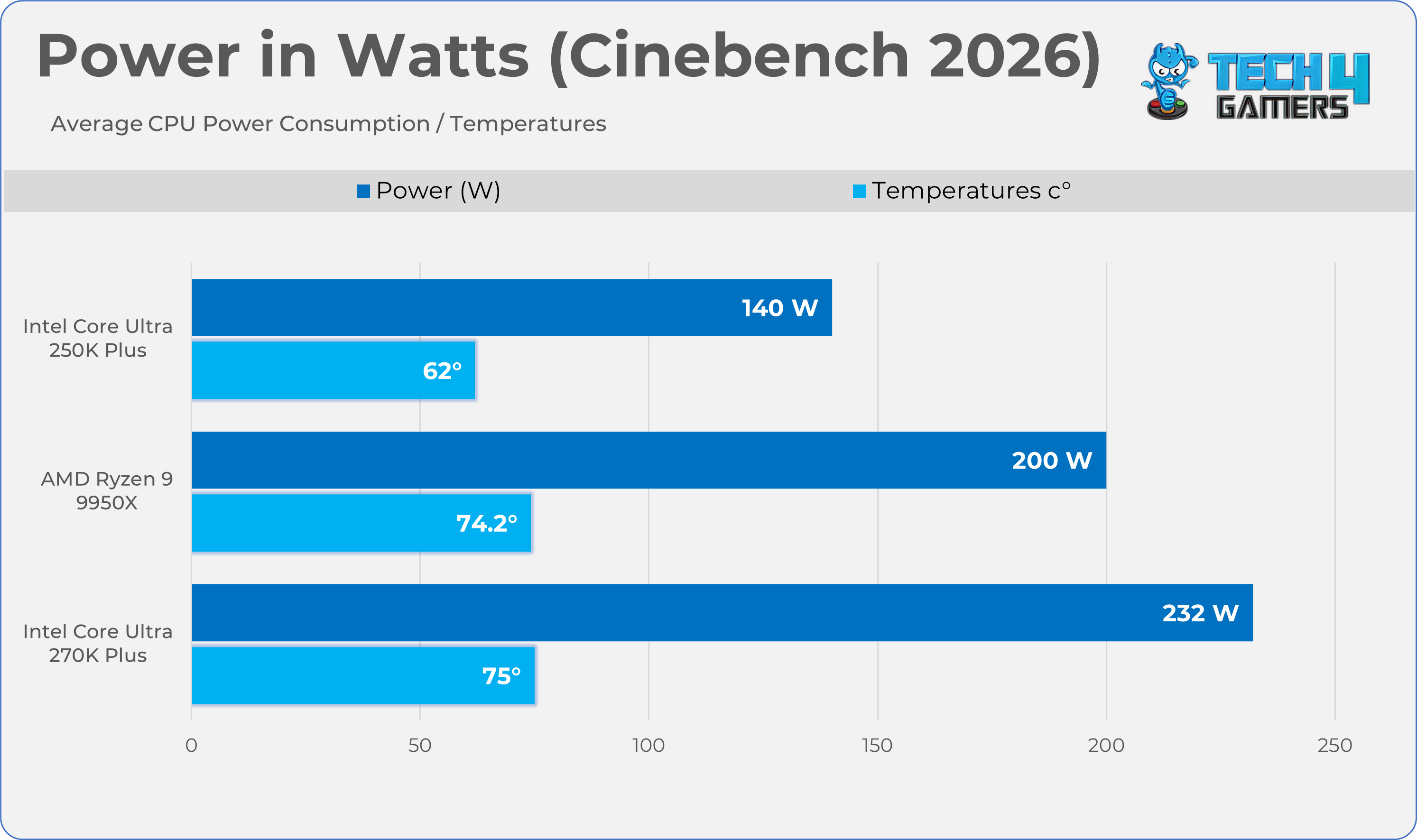
The Core Ultra 250K Plus is a very efficient CPU in terms of power. In Cinebench 2026, it scores 52.6 Points/Watts, while the 9950X is 46.3 Points/Watts and the 270K Plus is 41.6 Points/Watts, translating into 26% greater power efficiency than its bigger sibling in a multi-core workload. In our next review of the Core Ultra 270K Plus, we will also provide the efficiency numbers against that.
Should You Buy It?
Buy It If
✅ If You’re Consistency-Focused Gamer: For gamers who want a smooth, stutter-free experience, it may not be the best gaming CPU on the market, but it will get the job done when paired with a high-end graphics card.
✅ For The Budget users Who Want The Smooth, Creative and Productive Performance at a Low Price: Intel Core Ultra 250K Plus at $199 is an incredible value, offering 18 cores; our data shows this CPU delivers 98% of the performance in Adobe Photoshop and Adobe Premiere.
✅ If You Want Efficiency: The Core Ultra 250K Plus delivers incredible efficiency, scoring 52.6 points per watt in Cinebench 2026. It is truly one of the best multi-core CPUs in this budget so far.
Don’t Buy It If
❌ If You’re Dedicated 3D-Artist or Animator: Intel Core Ultra 250K Plus struggles with heavy, complex scenes, such as those in Blender or Cinema 4D. The CPU hits the hard ceiling in sustained all-core workloads, trailing the Intel Core Ultra 270K Plus or AMD Ryzen 9 9950X by roughly 25% to 28%.
❌ If You’re Competitive/E-Sport Focused: The CPU averages over 615 FPS in Counter-Strike 2, more than enough for most gamers. However, frame consistency (1% Lows) is the key here, where this CPU underperforms; players trying to push past the 300Hz at a professional level will want the absolute highest peak frame rates and consistency.
Final Thoughts
In conclusion, the Core Ultra 250K Plus is now one of my favourite CPUs if you’re building an entry-level or mid-range system in 2026. No other processor in the category delivers such multi-threaded performance thanks to its 6 cores and 12-E cores, while also delivering decent gaming performance at $199. If you’re a creative user who spends a lot of time in the Adobe applications, this processor truly shines. The Single-Core IPC is impressive, as we have seen in the Microsoft Office workloads as well. When paired with the RTX 5080 in games, pushing the CPU to its extreme limits, while the Ryzen 9 9950X wins the overall average frame rate battle by the 6%, the 250K fought back with the elite frame pacing by matching or beating the AMD in the 1% lows.
The efficiency is a main selling point of this processor; pushing over 2.5 FPS per watt in demanding AAA titles is outstanding. The 250K Plus carries a highly aggressive global MSRP of $199, and it competes with the AMD Ryzen 9 9600X (which is also dropped to $199 as well). This CPU packs more cores and delivers better multi-threaded performance while matching the AMD Ryzen 9000 Non X3D CPU at a similar level, as evident in our testing, making this CPU a better choice overall than the AMD counterparts.
Thank you! Please share your positive feedback. 🔋
How could we improve this post? Please Help us. 😔

Senior Hardware Reviewer at Tech4Gamers with over a decade of experience in the tech industry. My journey began in 2014 as a senior administrator for Pakistan’s largest gaming community forum. I specialize in testing and reviewing components like graphics cards, CPU coolers, and motherboards, while also sharing insights on overclocking and system optimization.
 Join Our Community