
 Threads
Great Efficiency!
Review Summary
The Lian Li RS1200G is a refreshing departure from standard power supply designs, offering genuine innovation with its rotatable AC inlet and unique side-mounted connectors that simplify cable management in tight cases. It delivers impressive performance, with efficiency levels that actually rival Platinum-rated units and high-quality internal components that ensure long-term reliability for high-end builds. However, the compact internal layout leads to an aggressive fan profile, making the unit quite loud under heavy loads. Overall, it’s a feature-packed and future-proof choice for enthusiasts who value creative design and efficiency over absolute silence.
Hours Tested: 7

Overall
-
Performance - 9.6/10
9.6/10
-
Build Quality - 9.8/10
9.8/10
-
Efficiency - 9.7/10
9.7/10
-
Value - 9.8/10
9.8/10
Pros
- Unique Design
- Effortless Cable Management
Cons
- Very Loud Fan


While every other and even major PSU manufacturers are sticking with the same old mantra of designing a boring square metal box with some ventilation holes and the only “major” innovation for them these days is to color the 12V-2×6 connector differently for better insertion visibility, I have got to say, Lian Li has surely made PSUs interesting again!
Lian Li has very recently entered the PSU market and even though they first started with decent quality PSUs, they were following the same old footsteps of every other PSU manufacturer without anything new to offer to their customers.
It is important to note that there are only a handful PSU OEMs in the industry and it is extremely rare to see a brand requesting major design changes to the OEMs (may be because “if it ain’t broken don’t fix it”) and that’s why those brands are very limited to innovate anything from their side.
Lian Li must have realized this fact very soon and hence why they went with some new OEMs because they couldn’t resist innovating and applying some very unique and out of the box ideas for their next PSU series.
Lian Li started such crazy innovations from their Lian Li Edge series where instead of using the traditional power connectors design, they extended the PSU length and provided an extremely convenient layout to insert power cables absolutely hassle-free.
This time, with Lian Li’s RS1200G 80 Plus Gold PSU, we see..oh wait, is it for real?
This is the first time I have seen such a creative design on an AC power equipment. Though its actual use-case is very niche, I have got to give props to Lian Li for trying something very unique.
Here are the specifications:
| Specification | Detail |
|---|---|
| 80 PLUS Efficiency | 80 PLUS Gold |
| Modular | Fully Modular |
| Total Power | 1200W |
| Cybenetics Efficiency Level | Platinum |
| Cybenetics Noise Level | 36.27 dBA @ 30°C (100cm) |
| Fan Size | 135mm FDB Fan |
| Protection | OCP, OVP, UVP, OTP, OPP, SCP, NLP, SIP |
| Dimension (L x W x H) | 150mm x 86mm x 150mm |
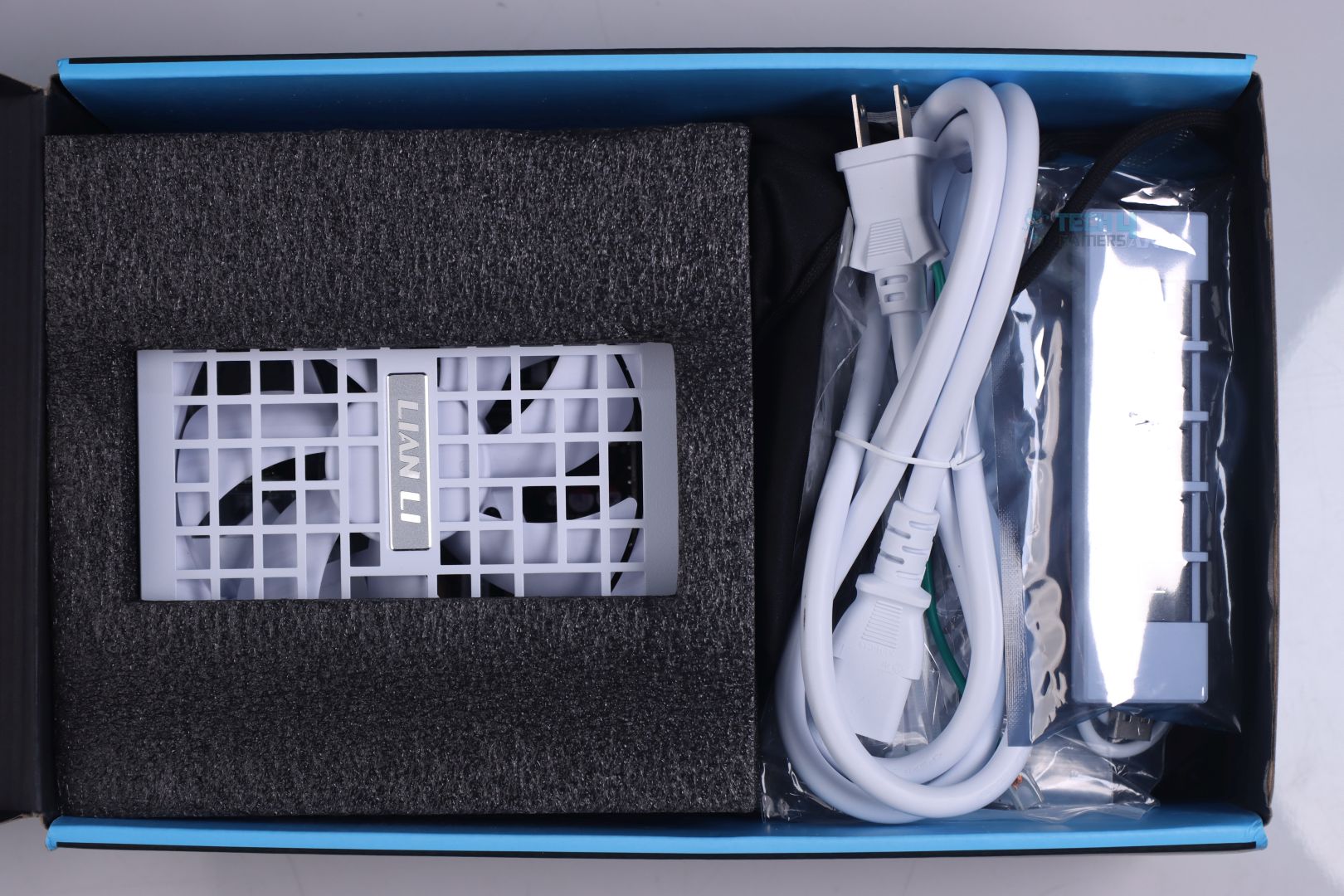
Packaging & Unboxing
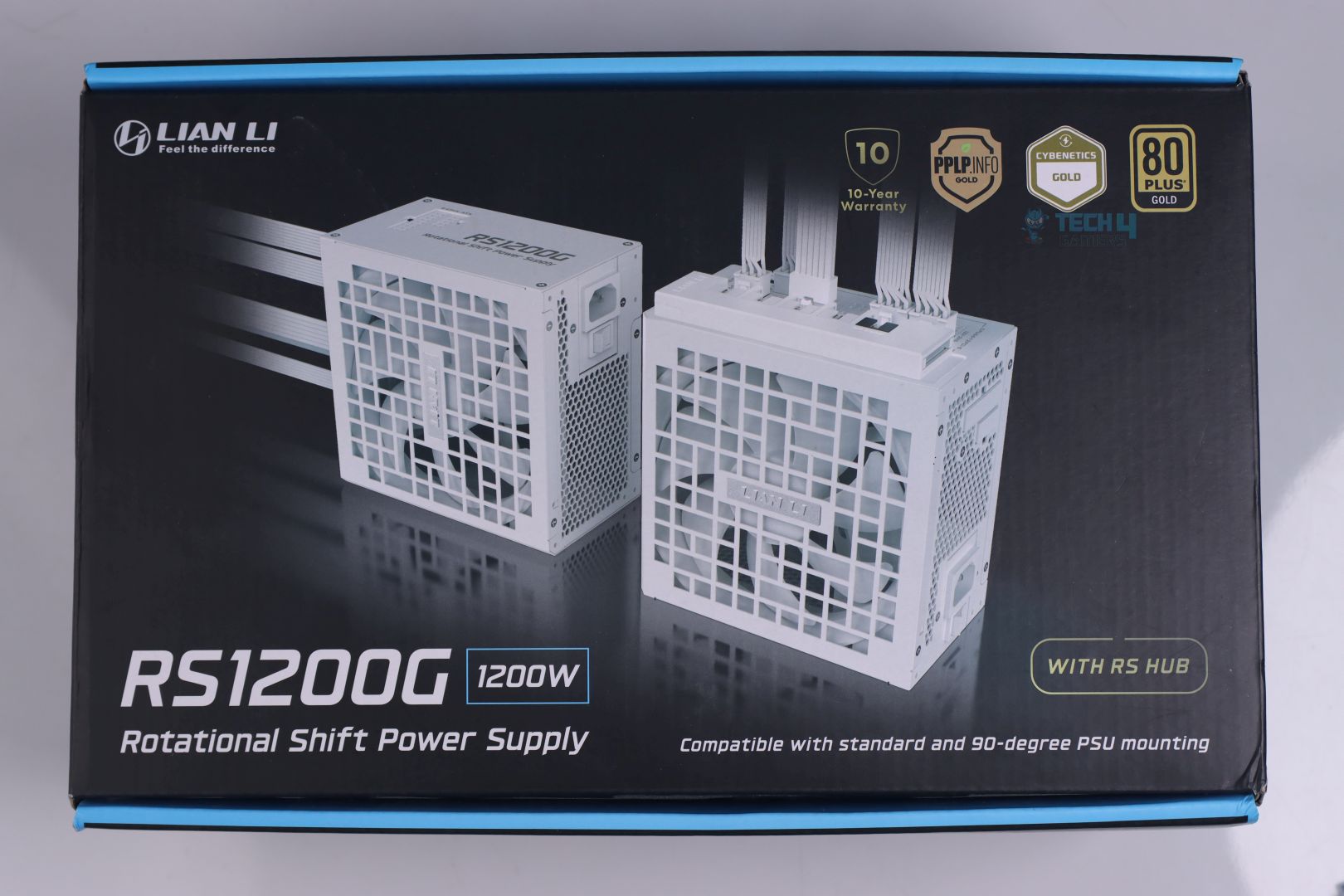
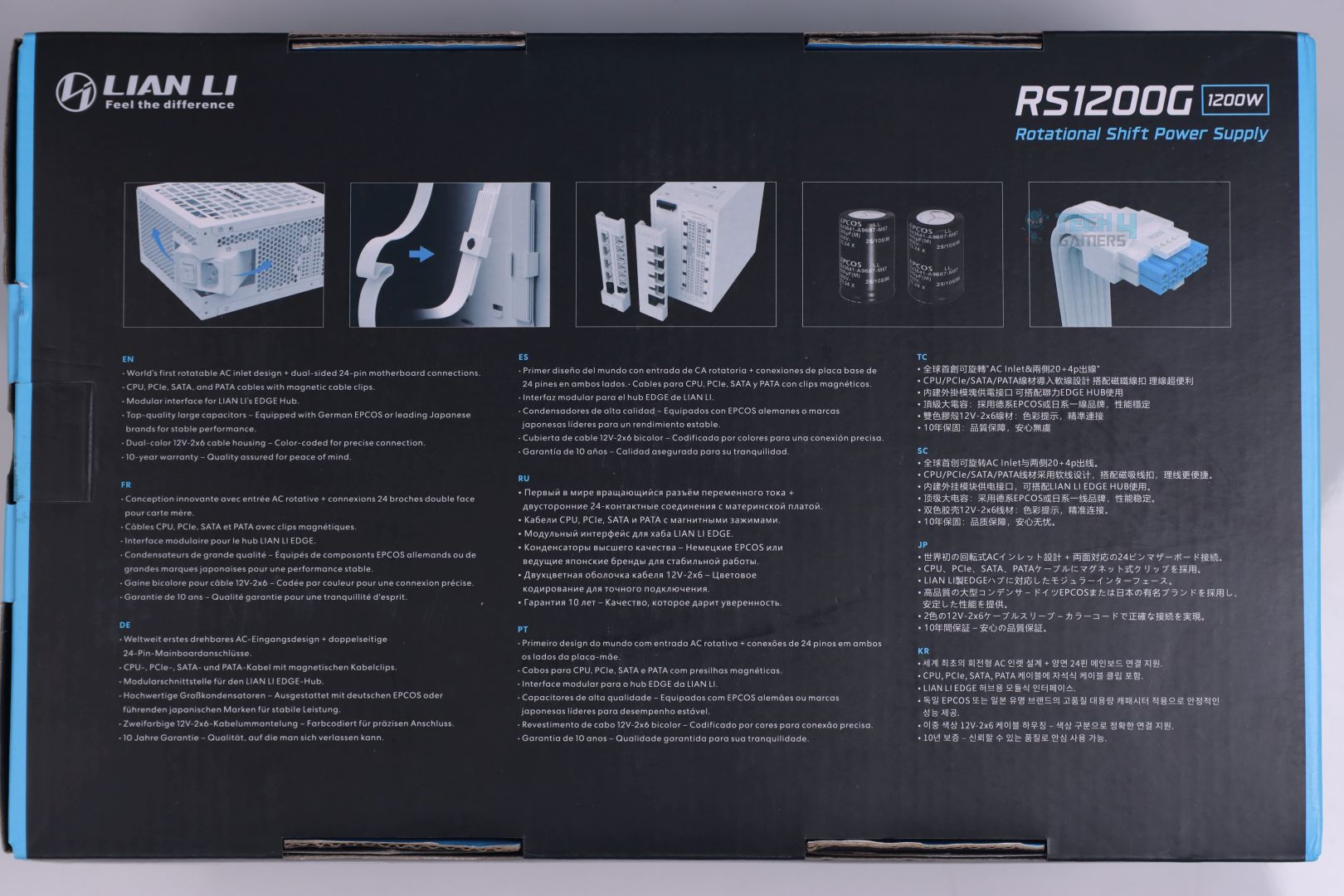
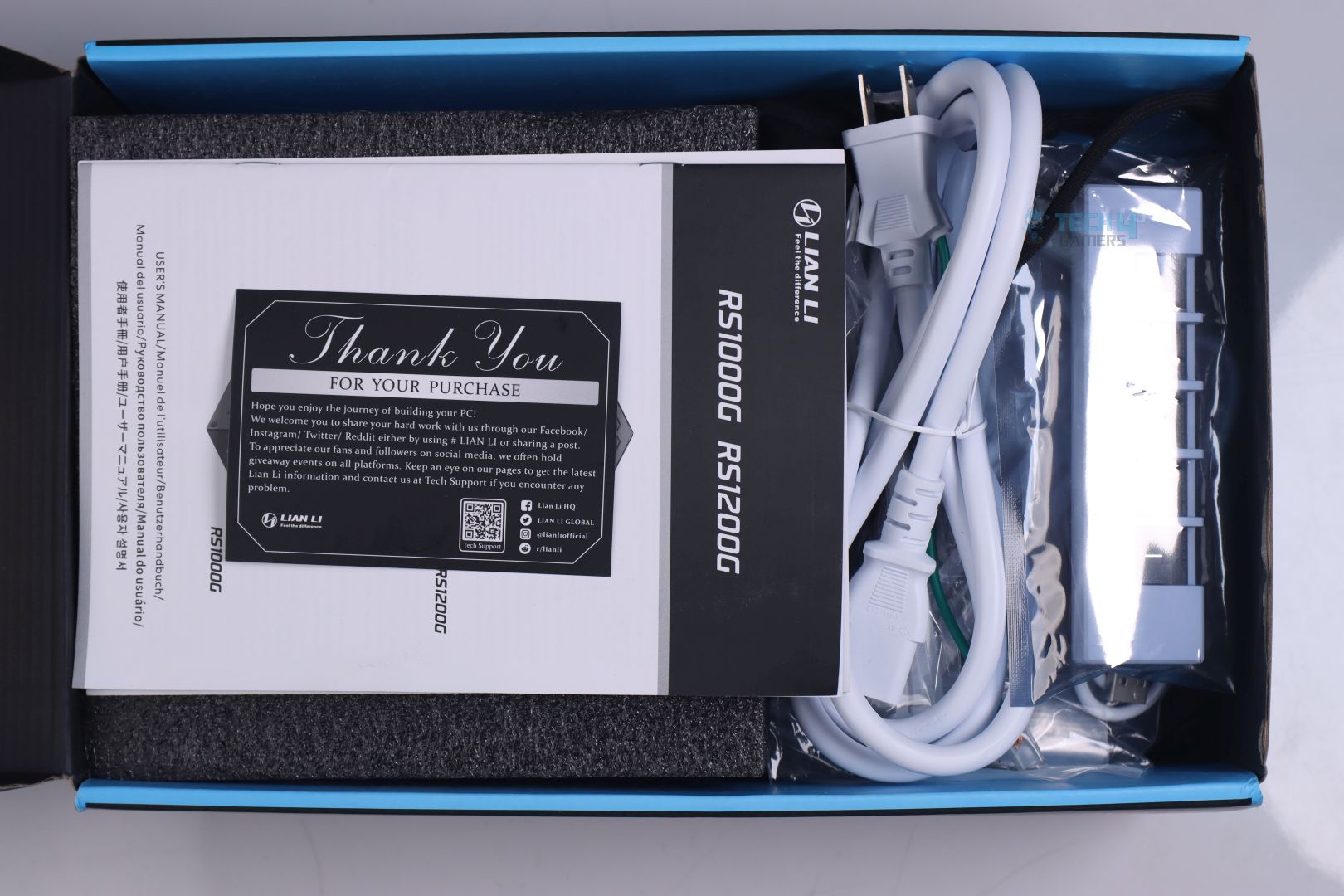
Design
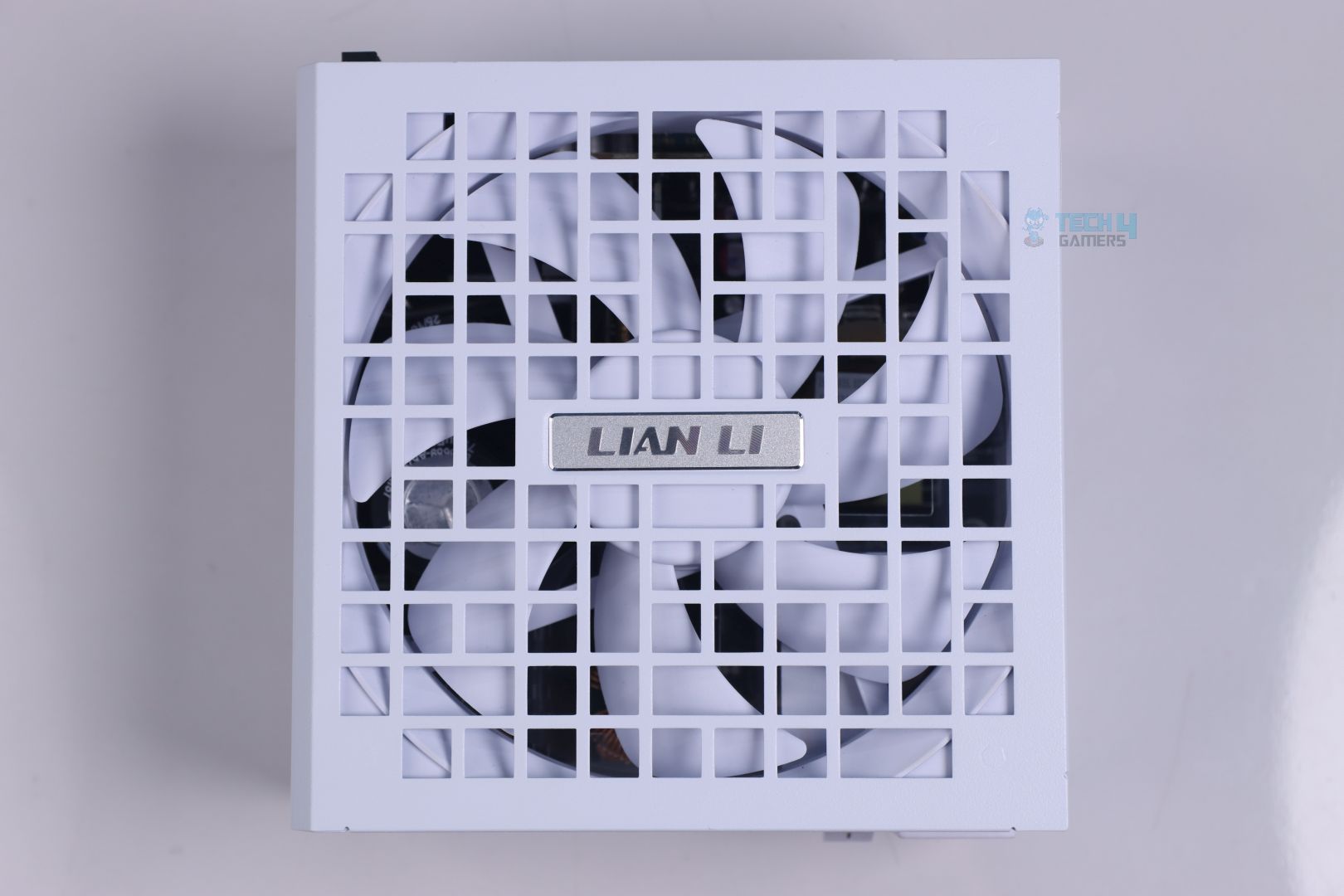
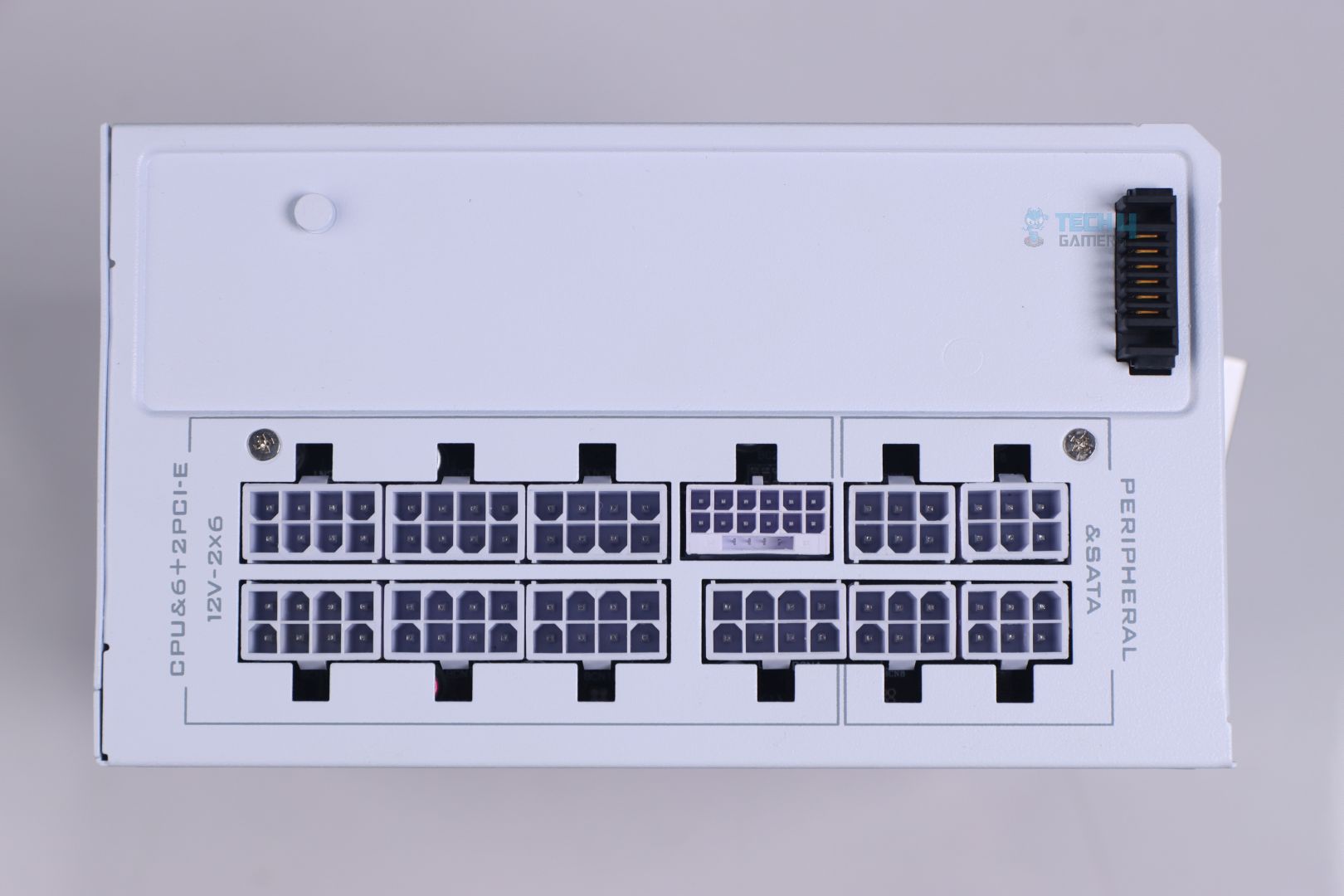
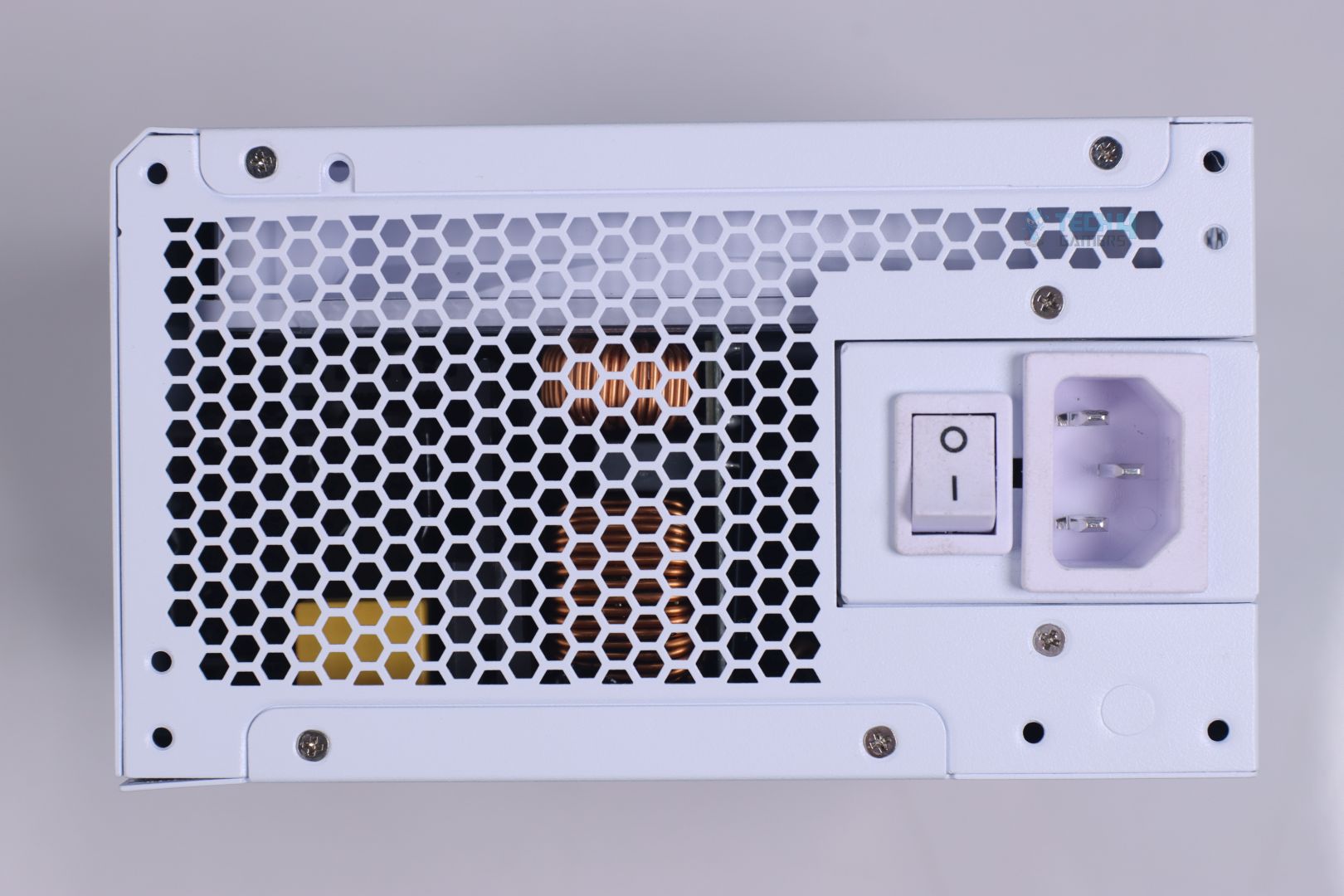
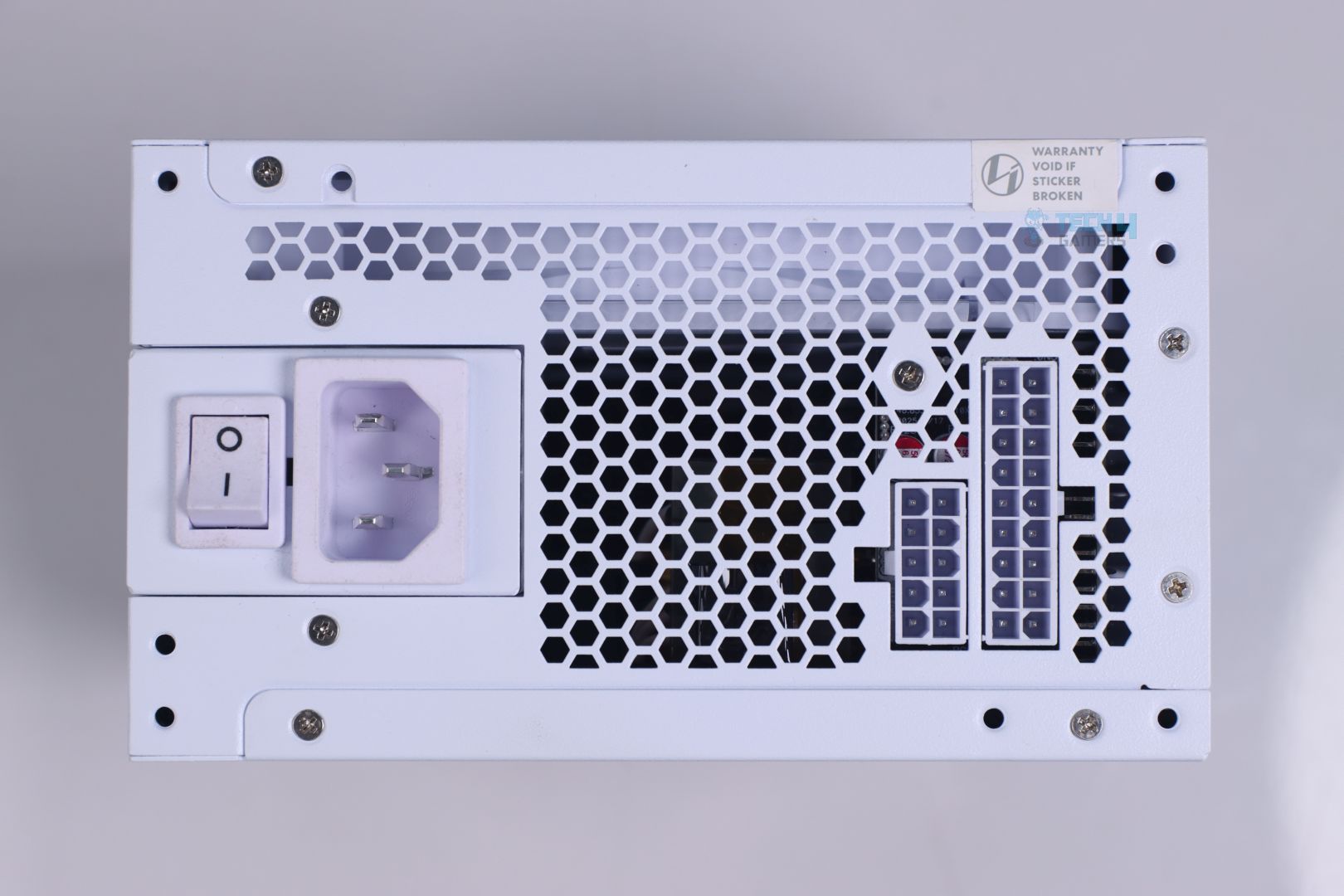
The world’s first rotatable AC inlet design wasn’t enough of a flex for Lian Li because they also implemented the world’s first, dual side-mounted 24-pin connector design where on both sides of the PSU, you have option to plug-in 24-pin connector (imagine the growth of all those companies if they hadn’t thrown that meme guy out of the window).
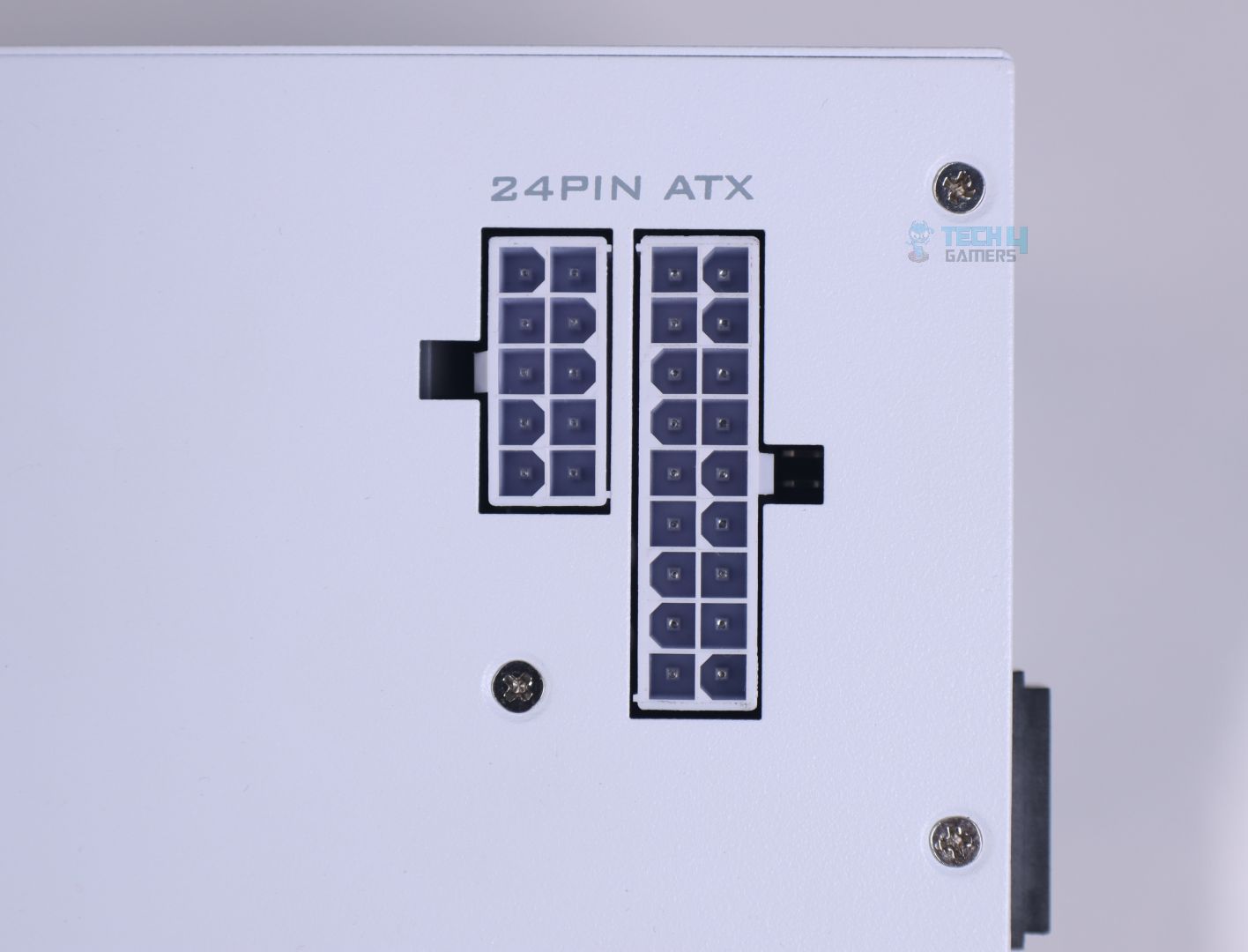
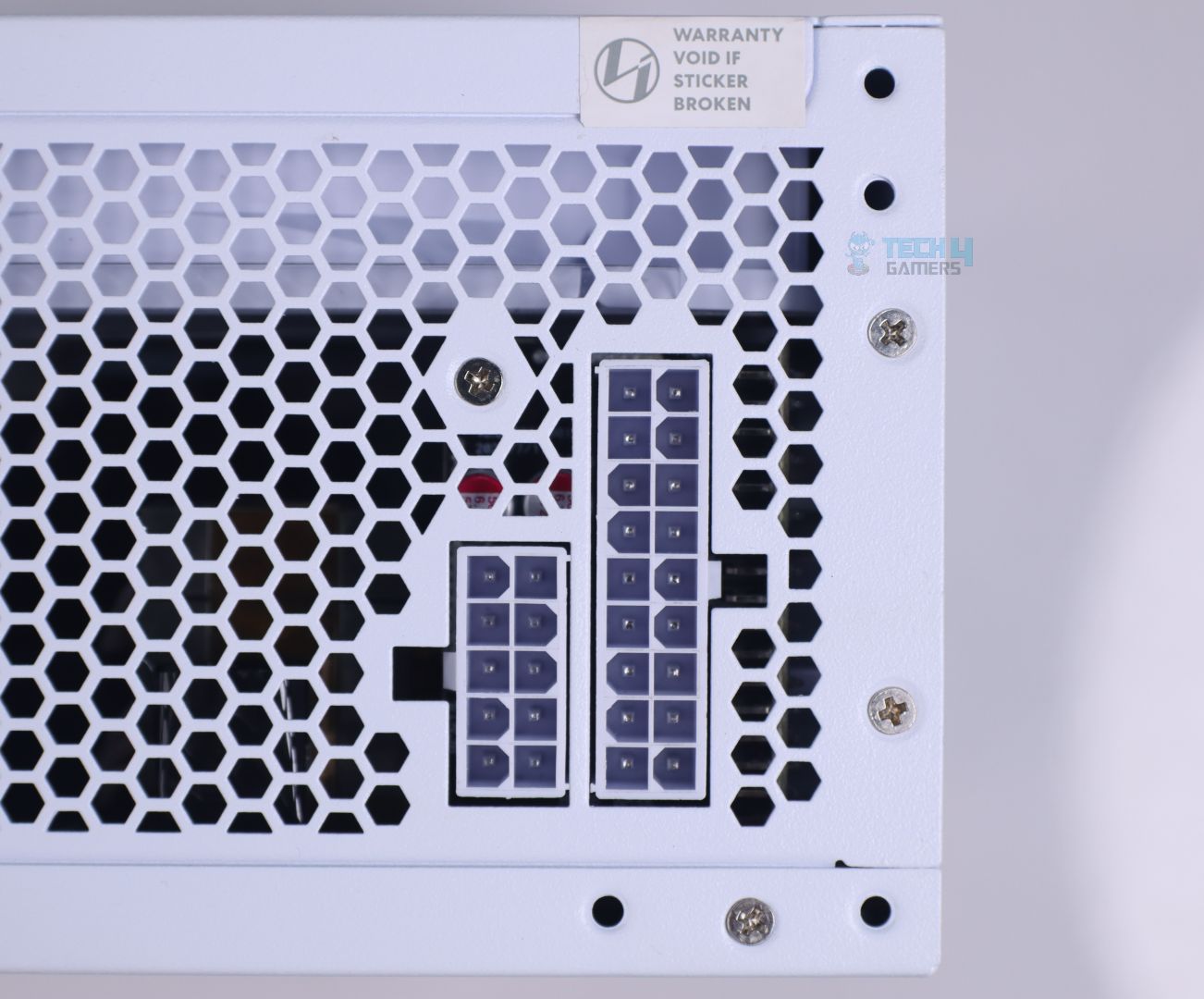
This design implementation can be very handy because the beefy 24-pin connector takes up the space of almost x4 8-pin GPU connectors, placing it on a completely different side makes it super convenient for the user to plug in/out the rest of the power connectors.
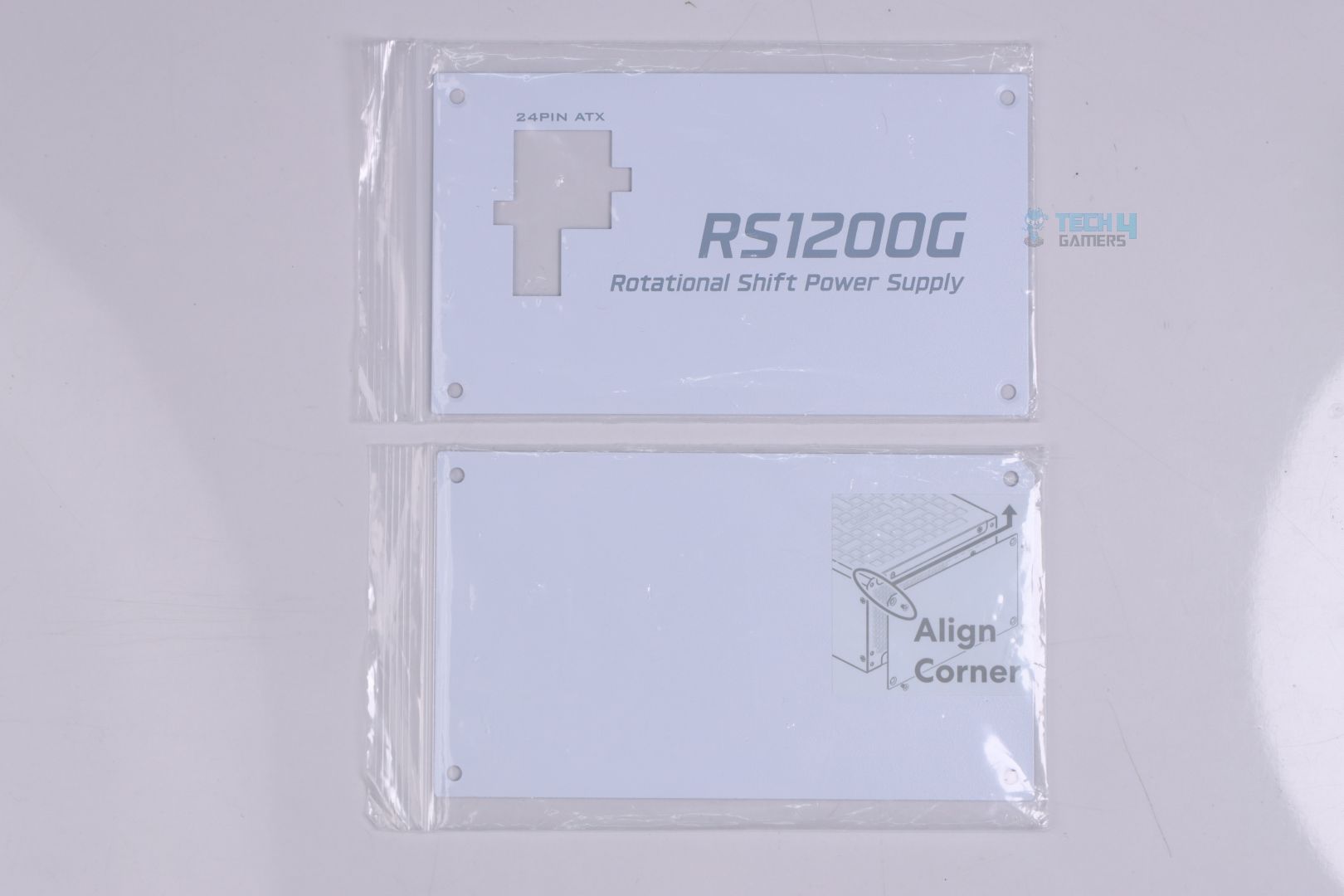
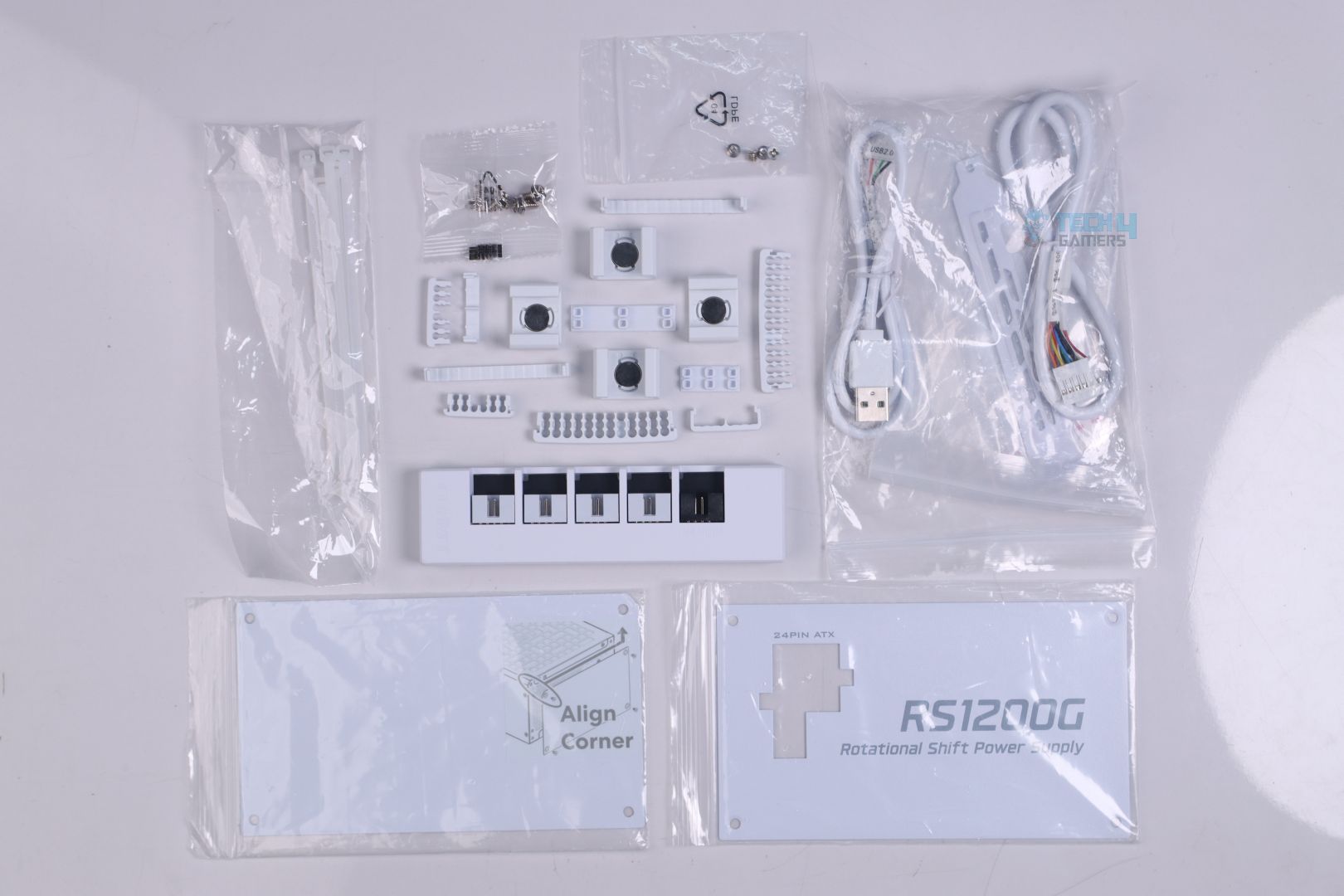
There are two metal plates provided by Lian Li to hide one of the un-used 24-pin connector side – way too much and much appreciated attention to detail from Lian Li (or may be because otherwise the un-used 24-pin connector would be visible in most of the PC cases – if the PSU is used in a different orientation)
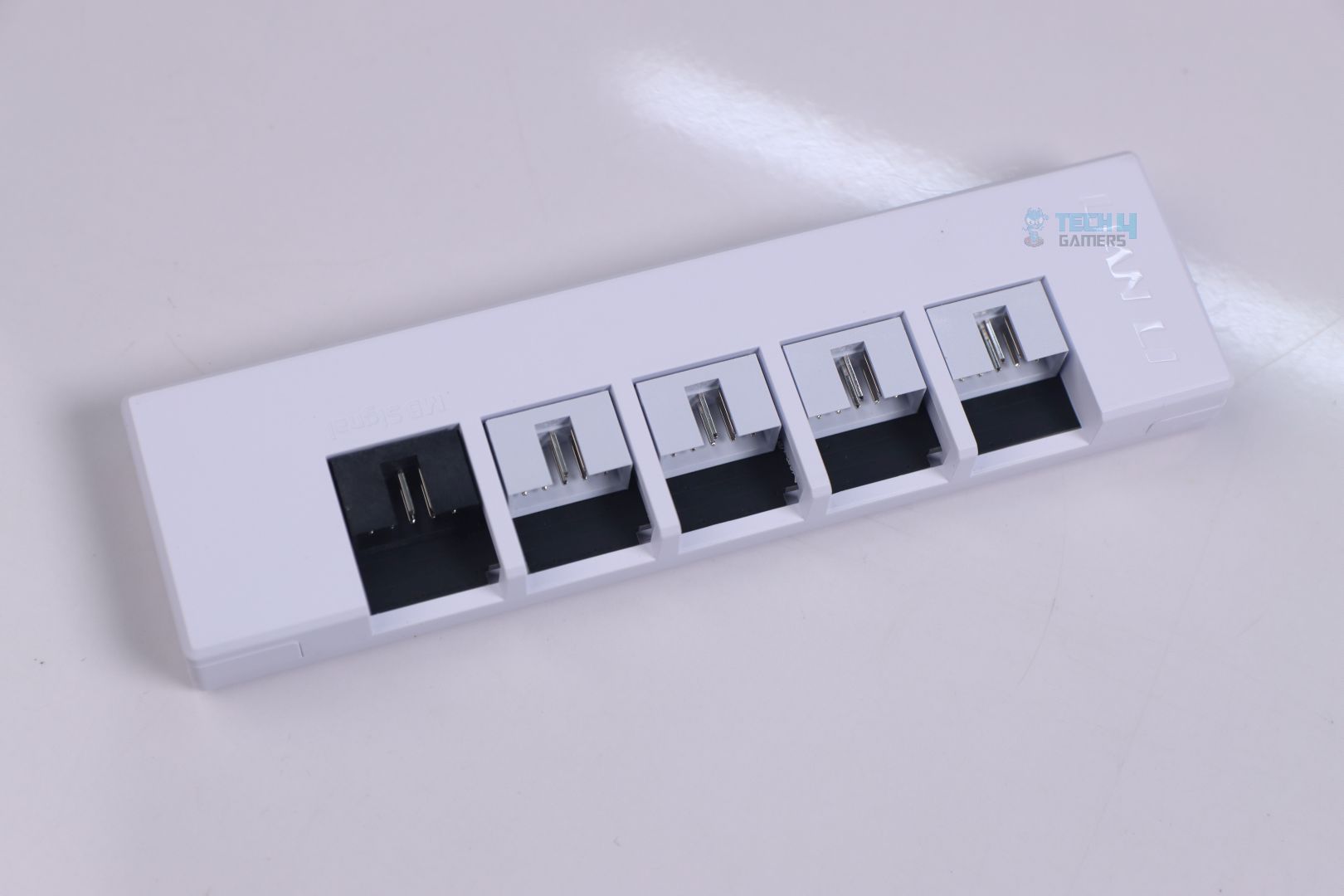
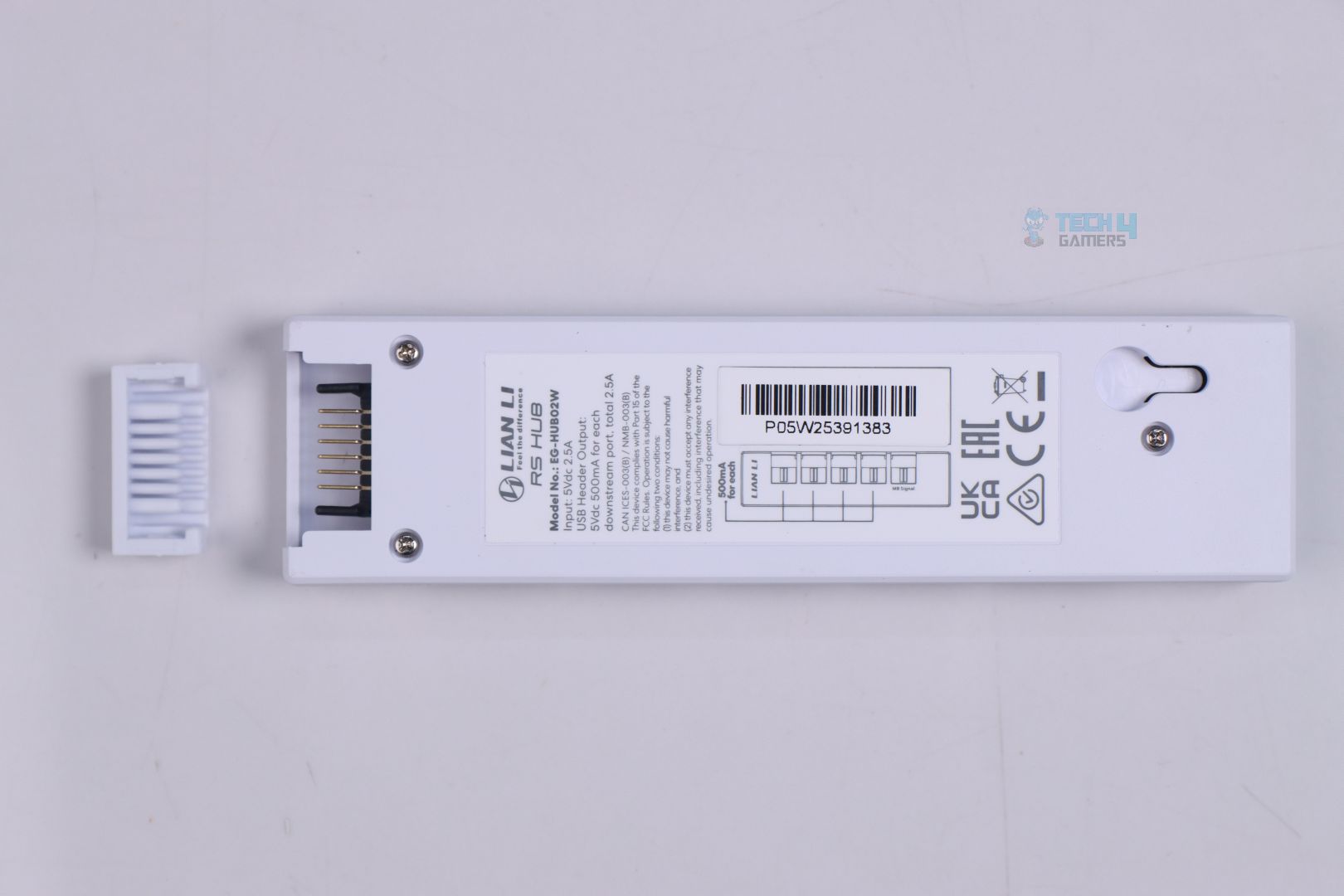
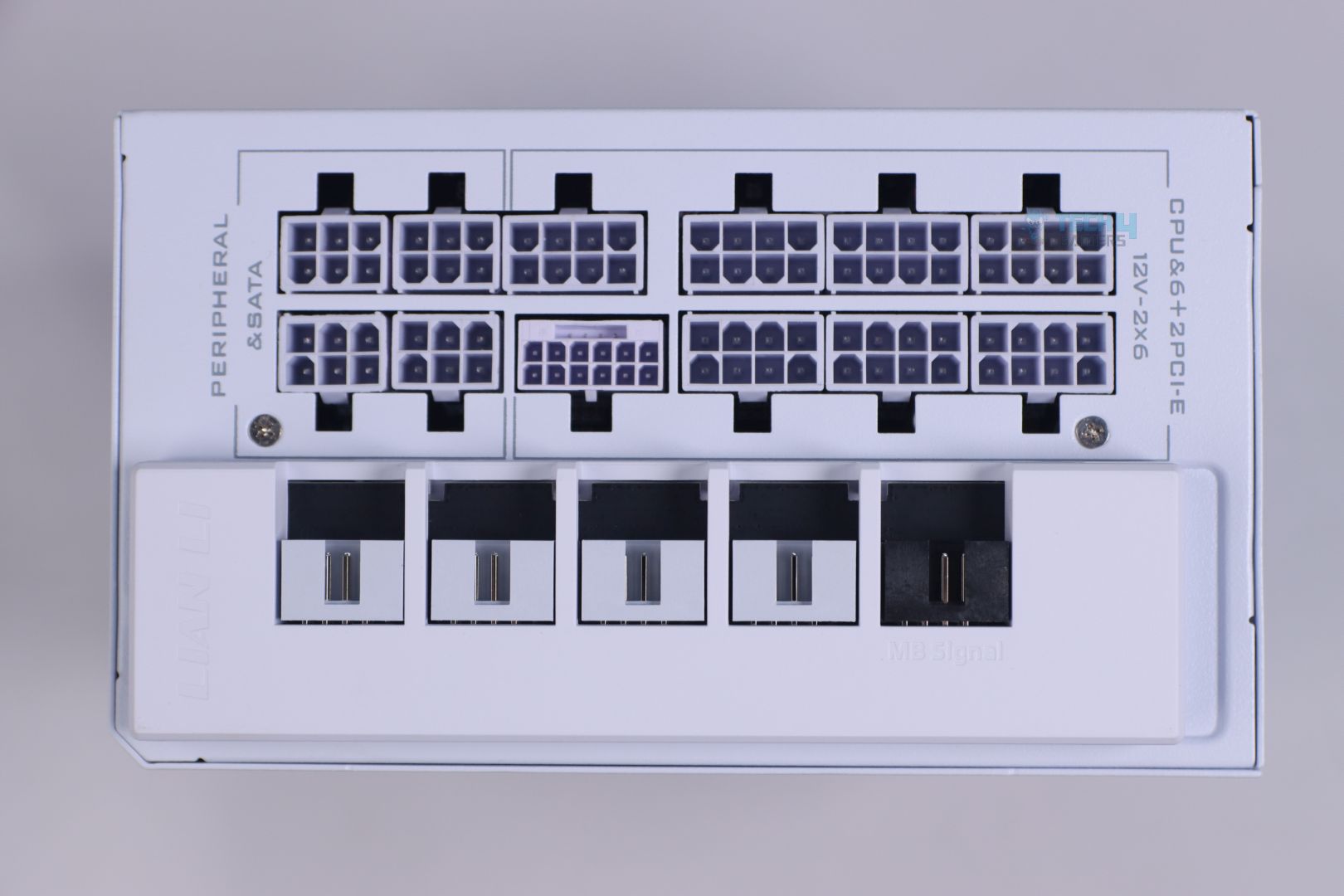
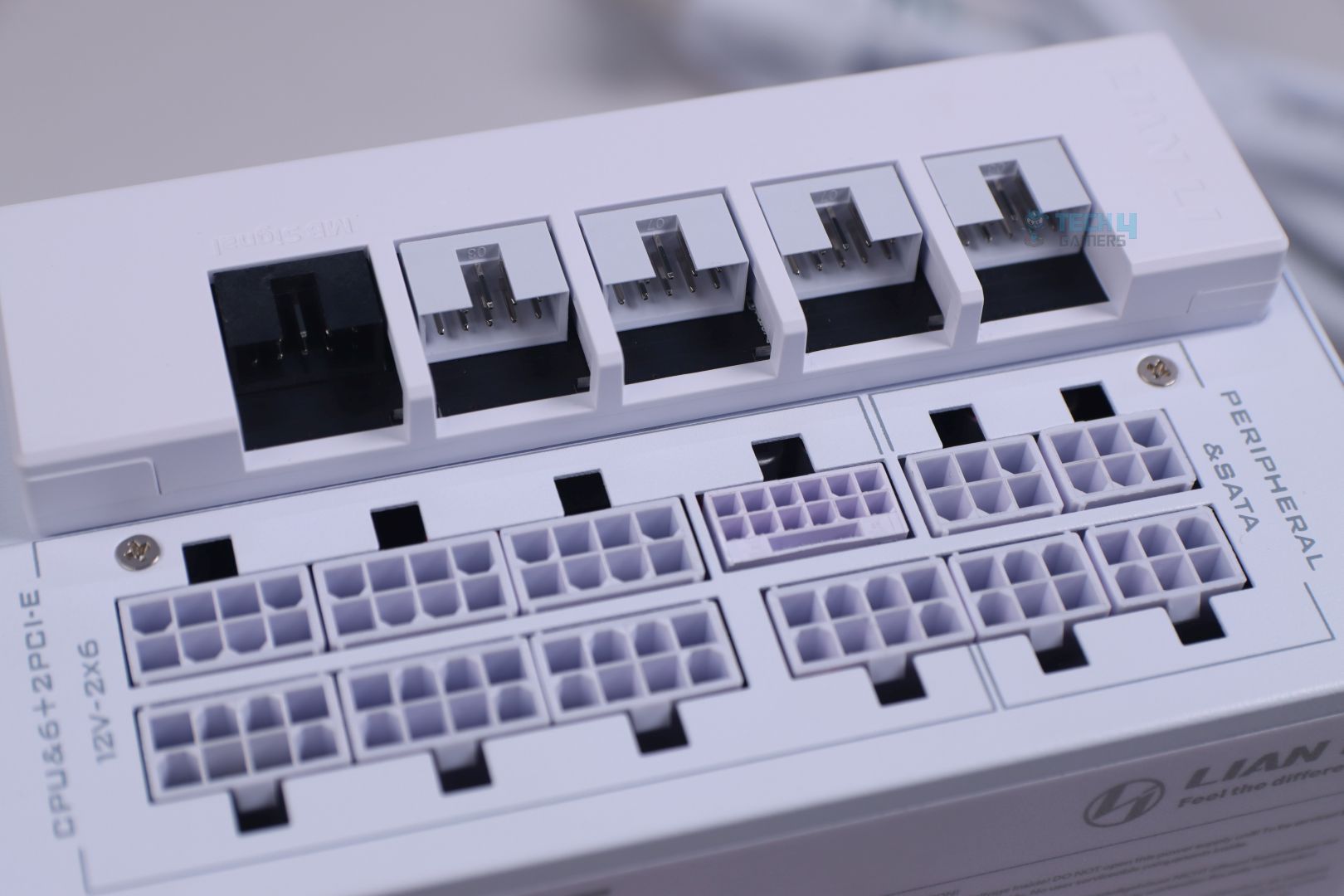
Alongside a few completely unheard of features, let’s add another one and this time it’s R5 USB Hub that attaches on the back of RS1200G like a snap-in battery. This provides 4 user-accessible USB headers for your peripherals to be plugged in. With the recent blings we have been seeing lately in the gaming peripherals market i.e mini LCD screens, LCD/OLED equipped AIOs etc, this H5 USB Hub basically provides an absolute max future proofing.
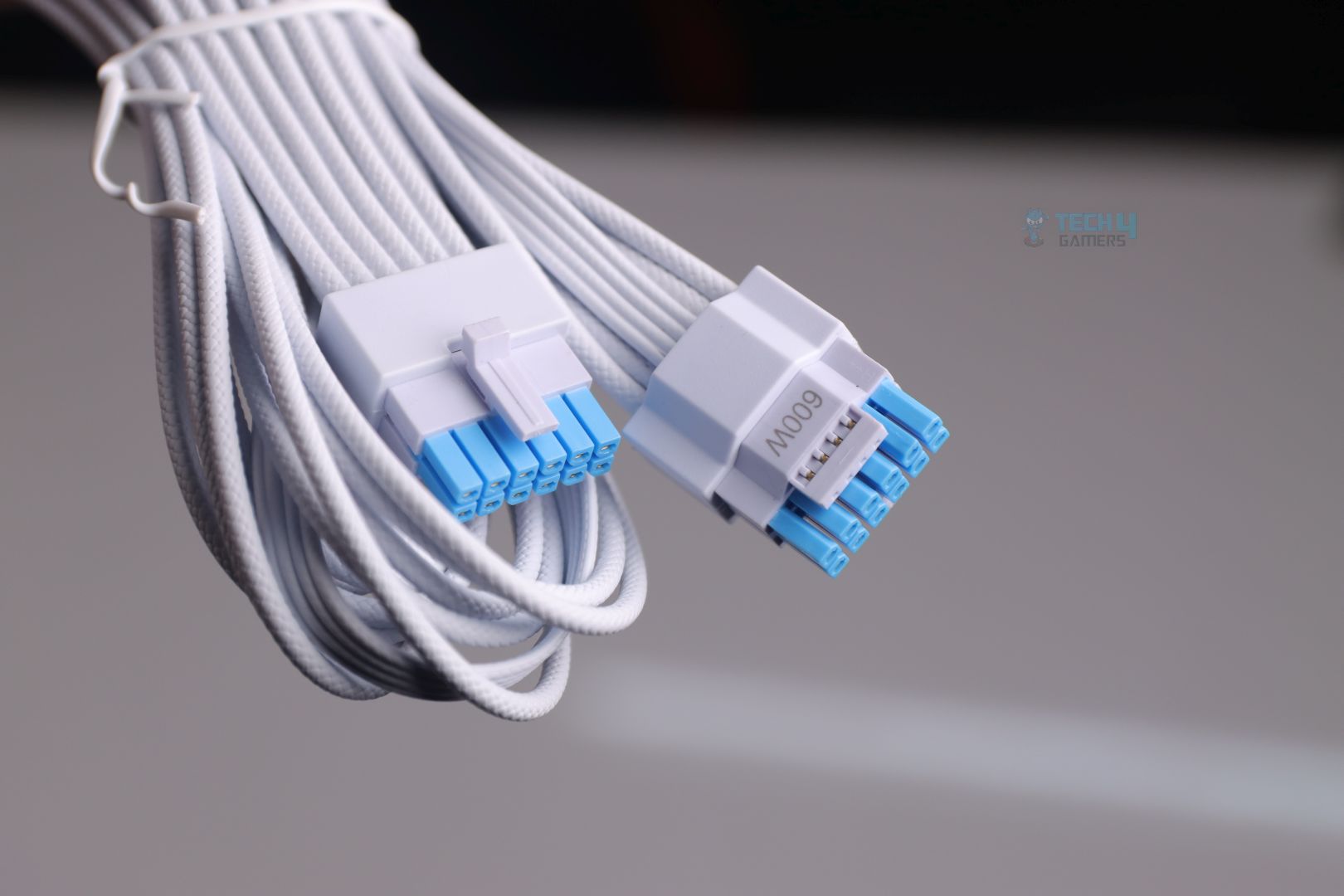
We also get to see some improvement claims on the dual color 12V-2×6 power connector from Lian Li. As per Lian Li, they are using an improved and rugged designed copper pins for their 12V-2×6 connector and instead of crimping the heavy 16AWG wires, they are soldering the wires directly to the connectors for better reliability and much lower resistance.
To be honest, at this point if I tell my viewers that Lian Li also comes with a unique feature that pours champagne in a glass every time they win a game they surely won’t be surprised!
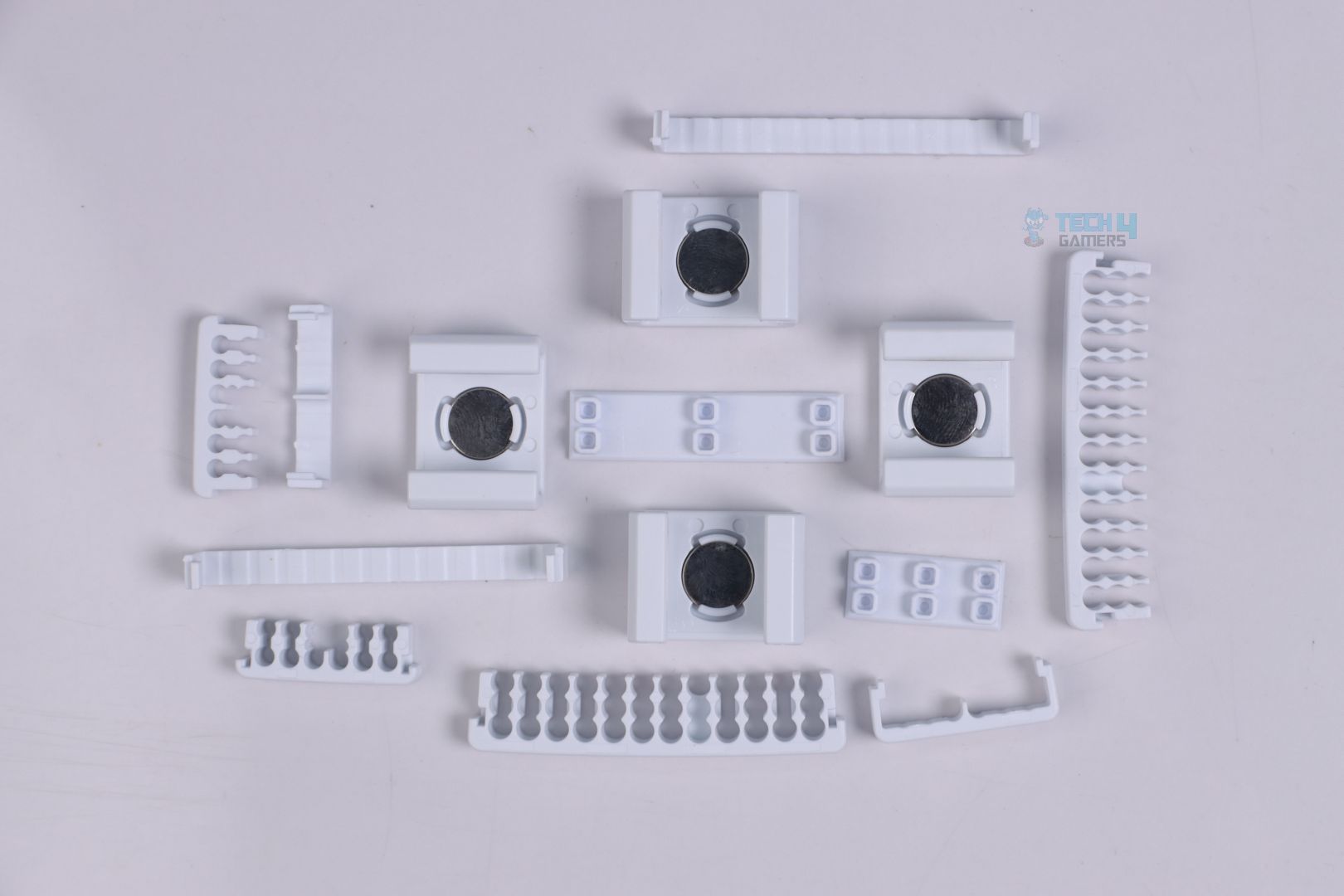
Here we have one last unique and quite an impressive attention to detail from Lian Li – Magnetic cable comb attachments for making your cable management like a soft breeze.
Cable & Connectors
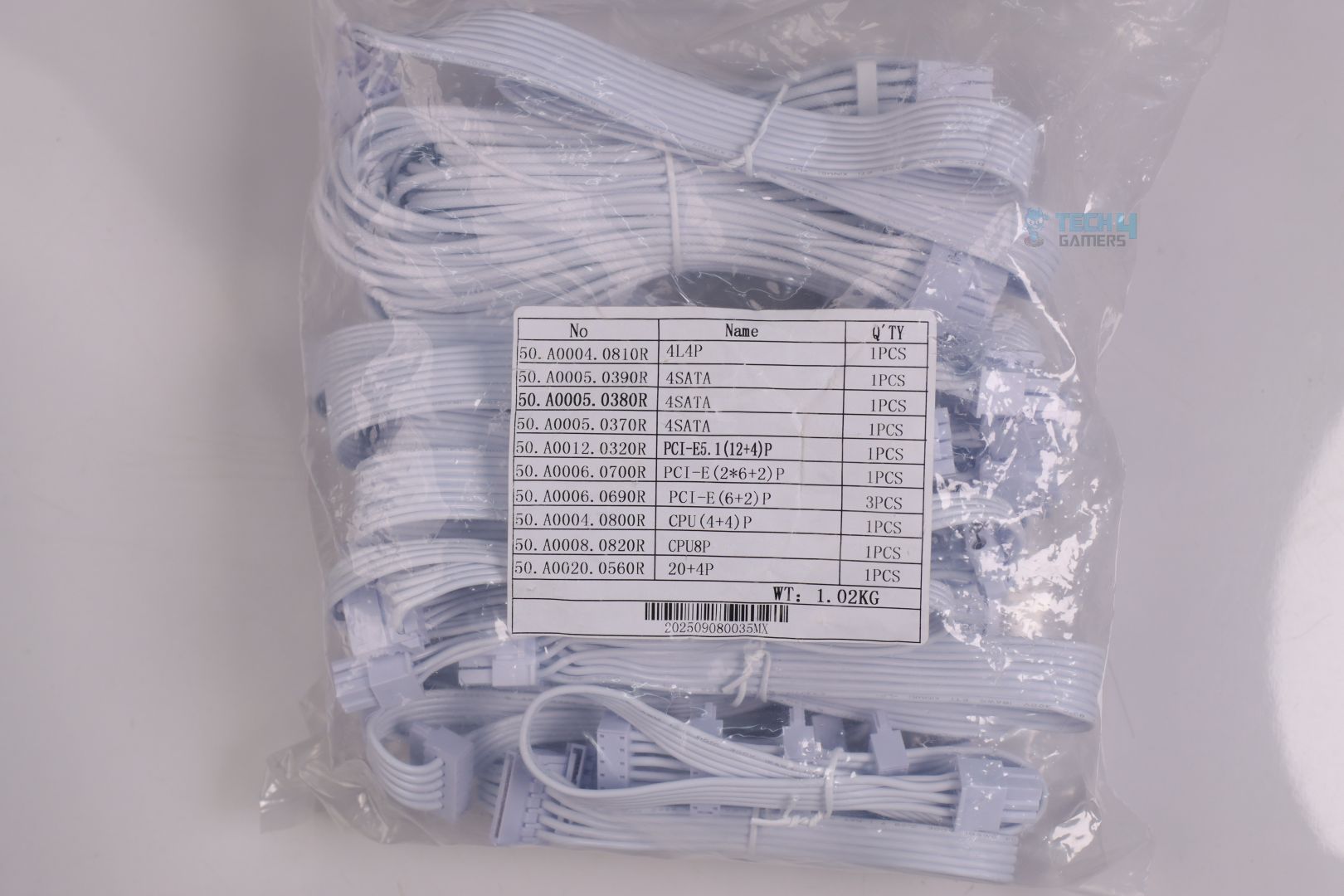
| Connector Type | Quantity |
|---|---|
| Motherboard cable (24/20-pin) | 1x |
| CPU / EPS 12V connectors (1x 8-pin, 1x 4+4-pin) | 2x |
| PCIe 12V-2×6 connector (16-pin) | 1x |
| PCIe connectors (6+2-pin) | 5x |
| SATA connectors | 12x |
| 4-pin Peripheral connectors | 4x |
| USB Cables (Internal & Type A) | 2x |
Teardown & Component Analysis
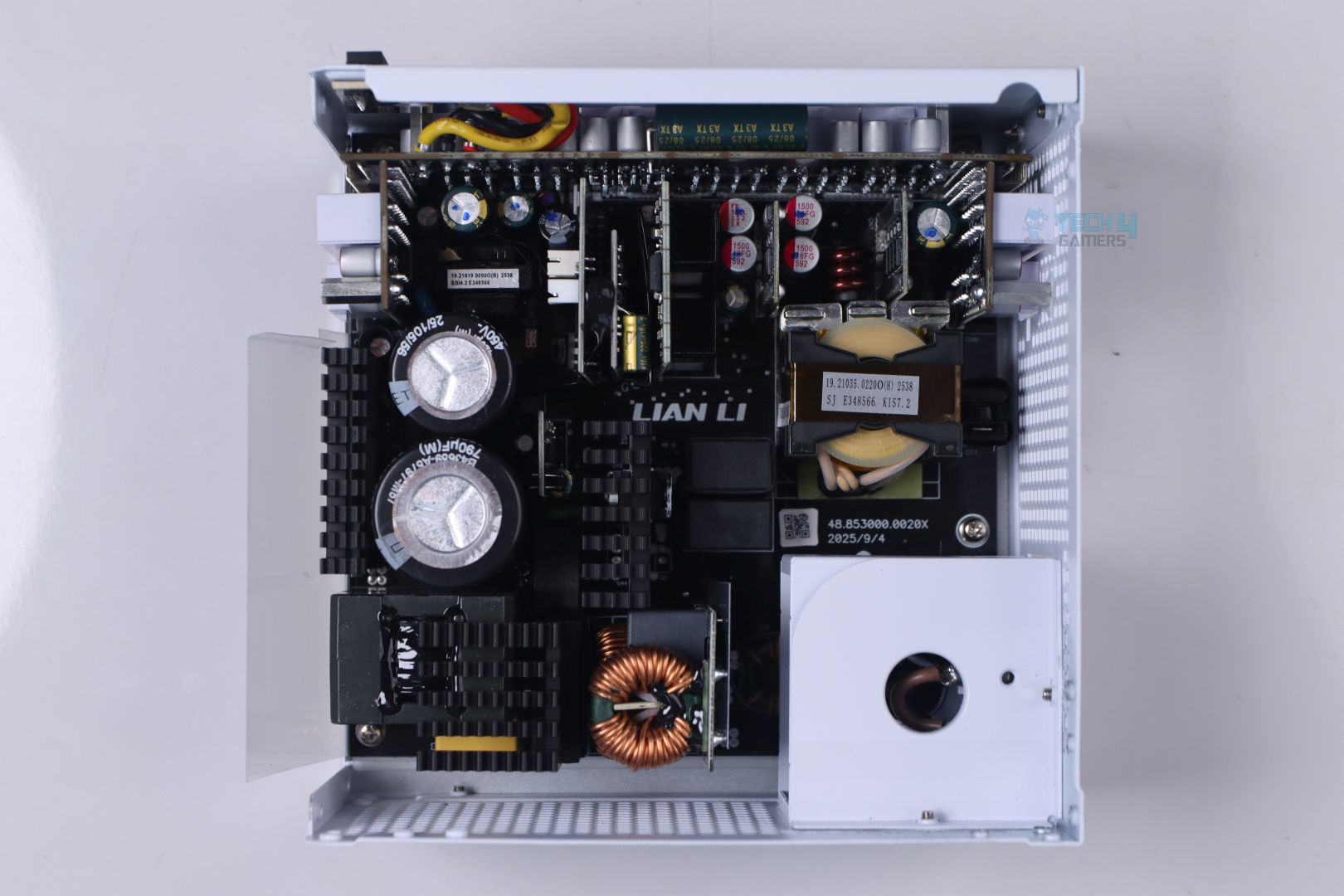
Lian Li seemed to have gone with a new OEM (Sirfa/High-Power) this time for their new PSU lineups, most likely this was the only OEM that could keep up with the extensive and challenging demands from Lian Li’s design team.
The main platform looks densely populated and uses vertically mounted modular PCBs to effectively use the limited space.
Lian Li RS1200G utilises two TO-247 package MOSFETs on its APFC Boost circuit instead of traditional TO-220. The bigger surface area of the TO-247 package allows much better power and heat handling capabilities.
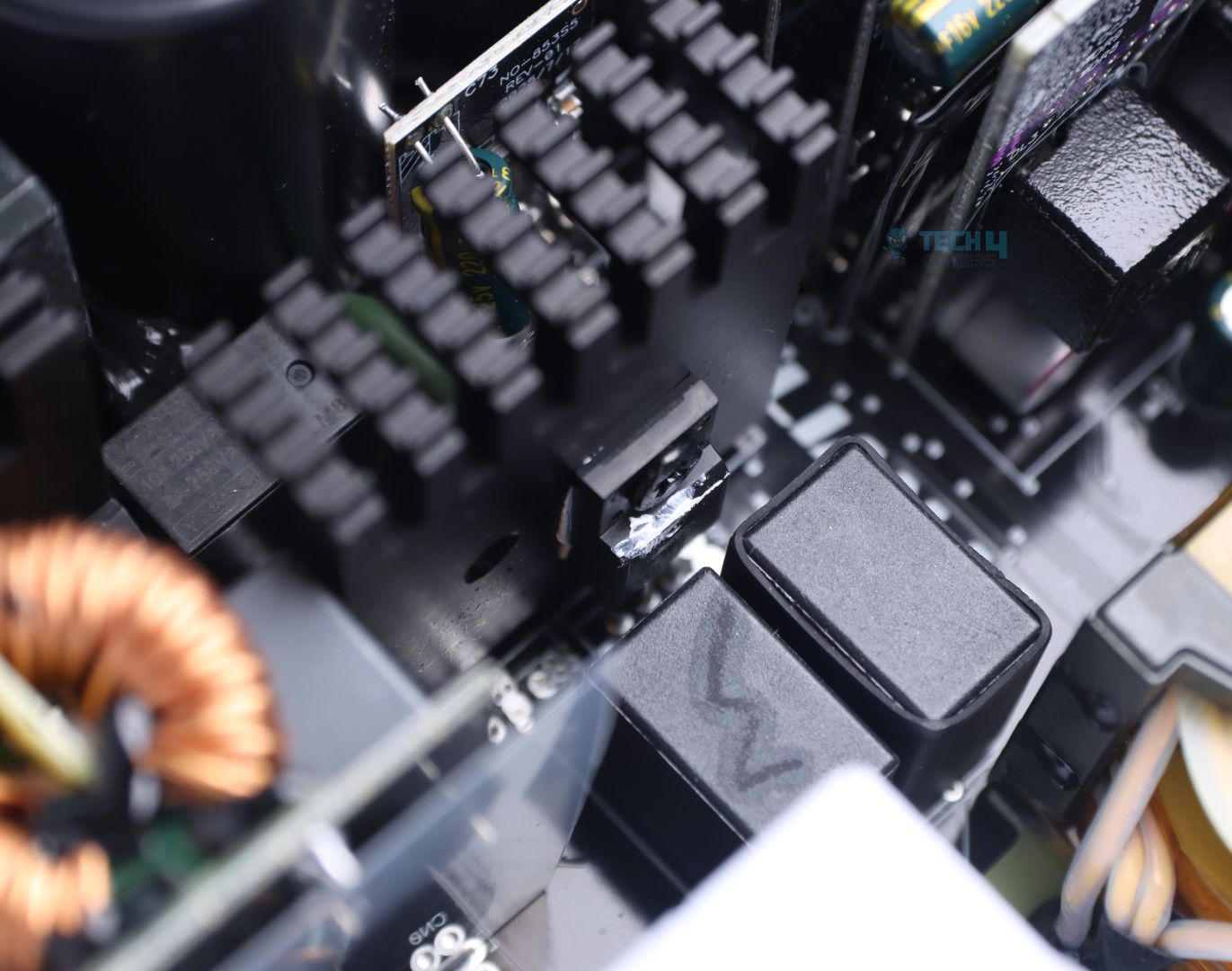
For the secondary rail generation, Half-Bridge LLC topology is used via two MOSFETs. The PCB design allows mounting/soldering of two additional MOSFETs for a Full-Bridge LLC topology, but Lian Li kept it to only two for keeping the cost down.
Keeping the tradition of being unique and different, Lian Li has opted for a capacitor brand (for its primary bulk capacitor) that in my knowledge, hasn’t ever been used in the PSU market (both for consumer and server).
We usually have seen brands bragging about “100% Japanese capacitors” in their PSUs. This has been the utmost quality standard since the beginning and may be according to Lian Li, this has kind of become an old fashioned approach because now enters the new tag-line, “German capacitors” (maximum flex threshold has reached…)
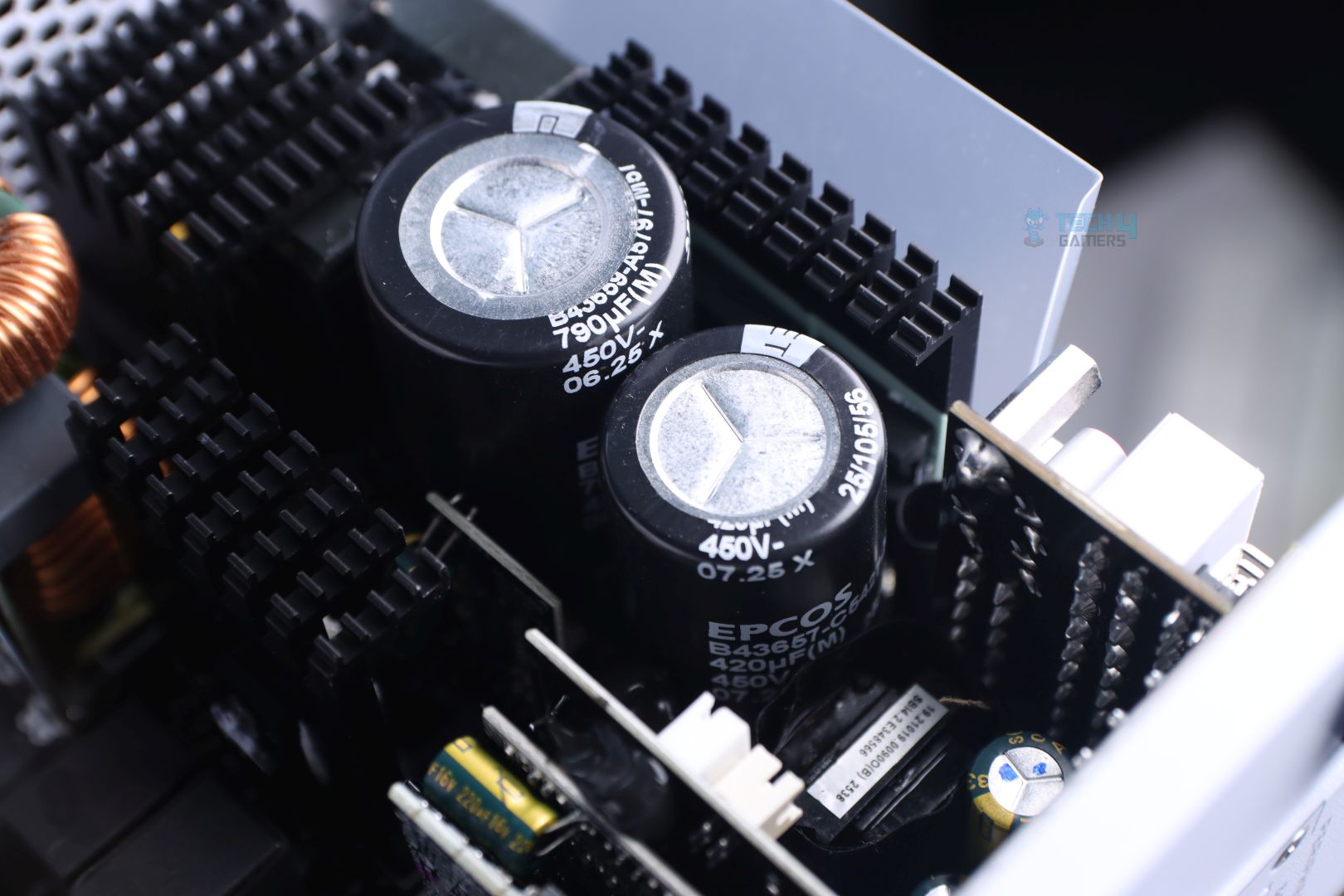
EPCOS has been a widely popular brand in industrial, automotive and power grid applications that require the most rigorous and challenging demands. EPCOS, which was a German brand, was acquired by TDK (a well known Japanese brand that also produces high-quality capacitors) and by the mid of 2026, TDK has decided to replace the EPCOS branding name with their own TDK. Now the funny thing is, how will Lian Li be keeping the “marketing” bar high of being unique and different than others as the German branding wall will fall soon? (you see what I did there? 😀 )
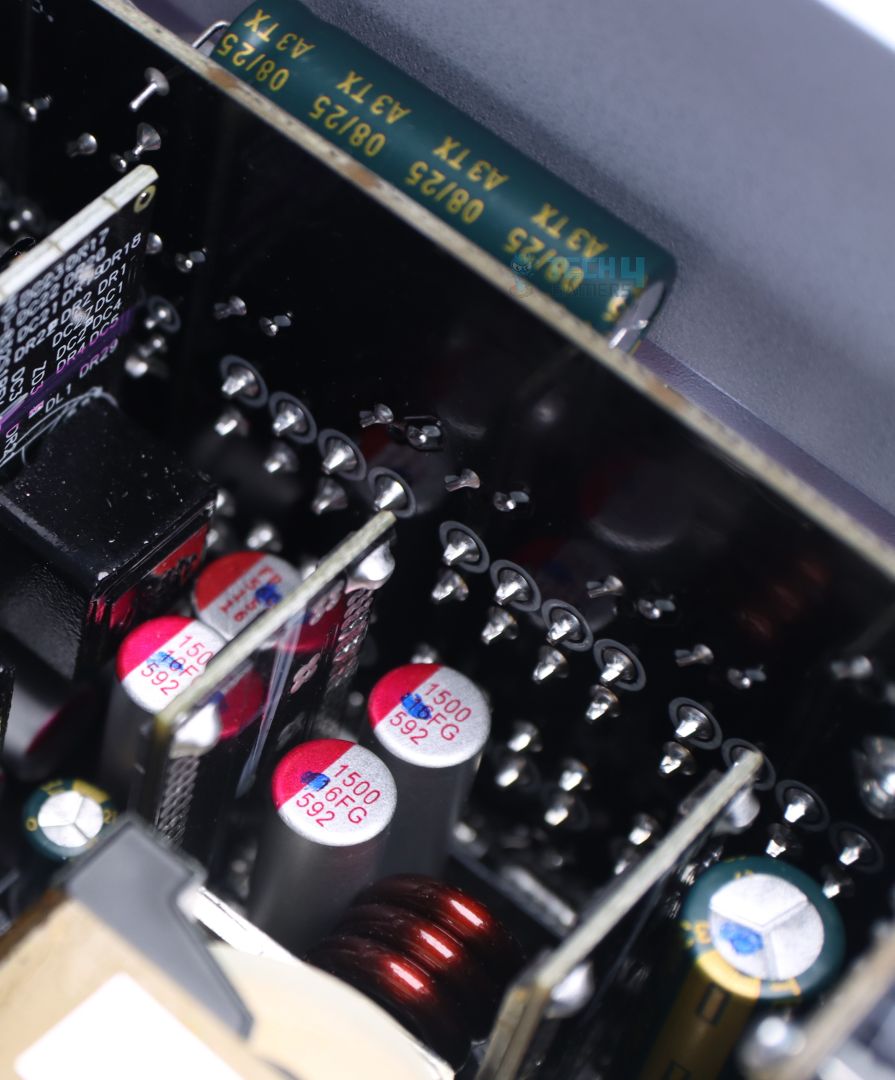
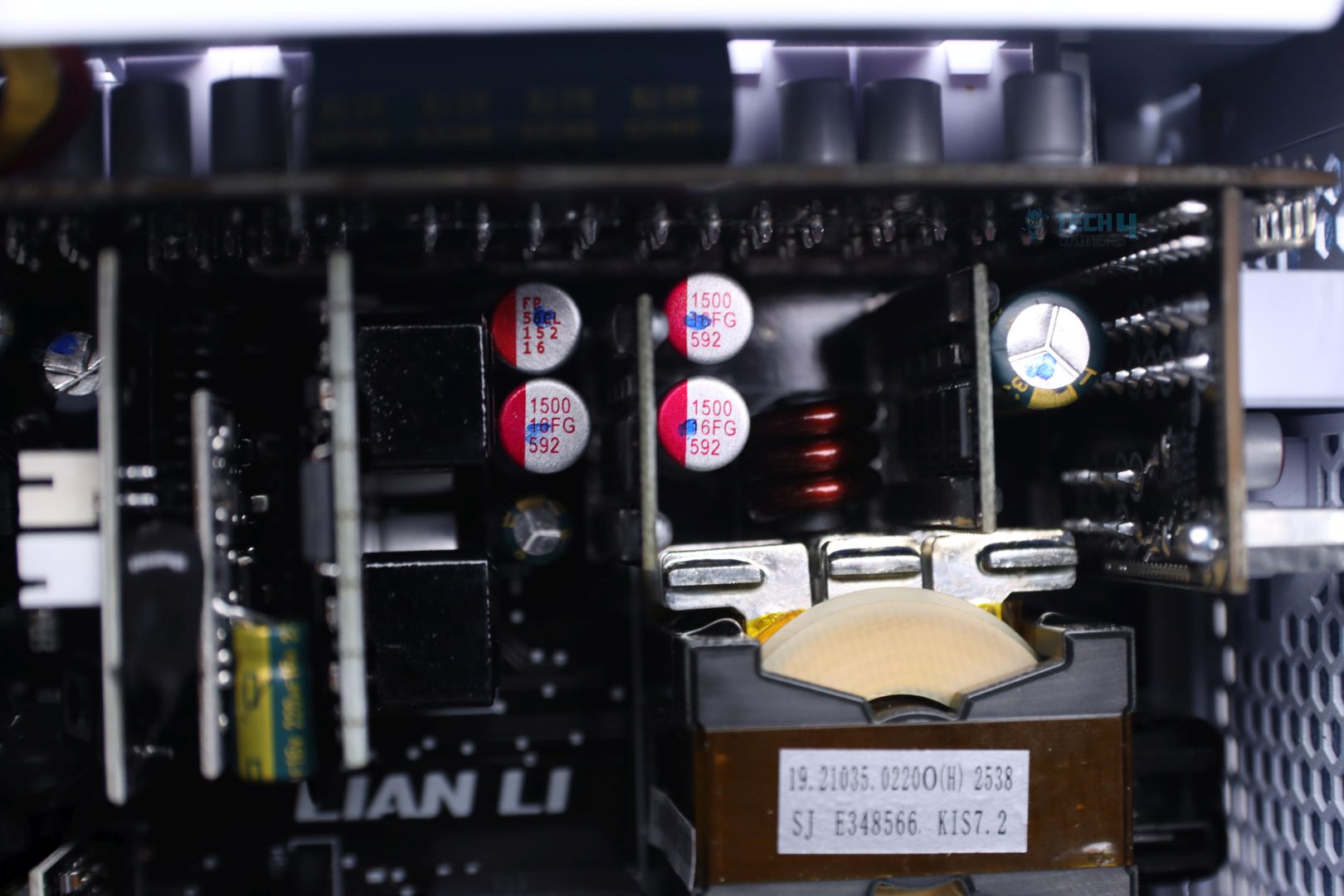
Rest of the electrolytic as well as polymer capacitors are also from well reputable brands i.e Nippon-Chemicon & Teapo. Lian Li doesn’t seem to have compromised on the quality of the components in any way in RS1200G.
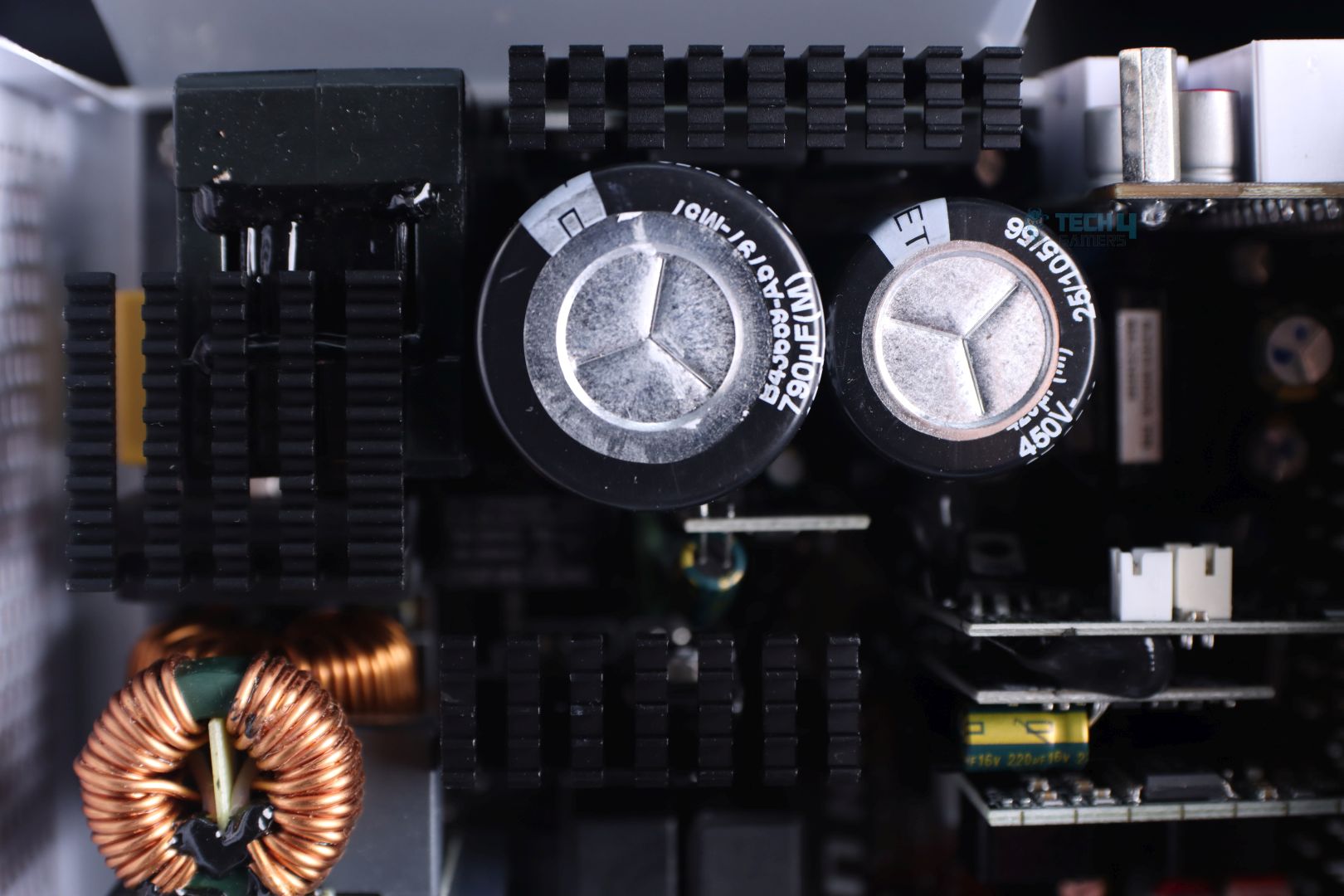
For an 80 Plus Gold rated PSU with 1200W of specs, Lian Li RS1200G seems to be lacking decent chunks of Aluminium heatsinks. This is most likely due to space limitations which for a full form factor 1200W ATX power brick, seems a bit odd but then when you see a huge square plastic block has taken up much of the internal space (the rotatable AC inlet thingy) then it all started to make sense. Due to the densely populated PCB and not much of an empty space for the air to freely roam and cool down the components, Lian Li may either have put an aggressive fan profile or might have just increased RS1200G’S efficiency levels, we will see it in our test.
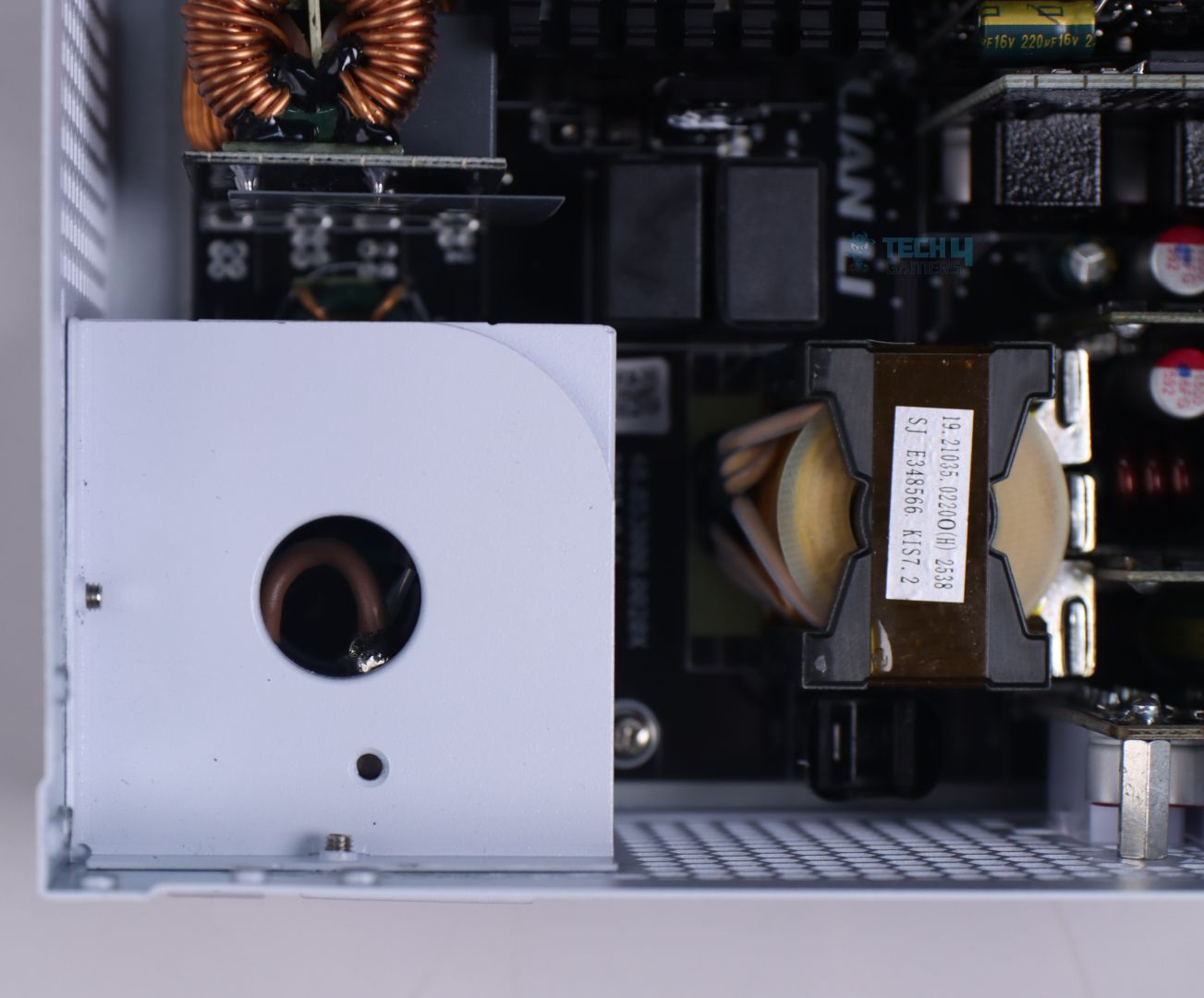
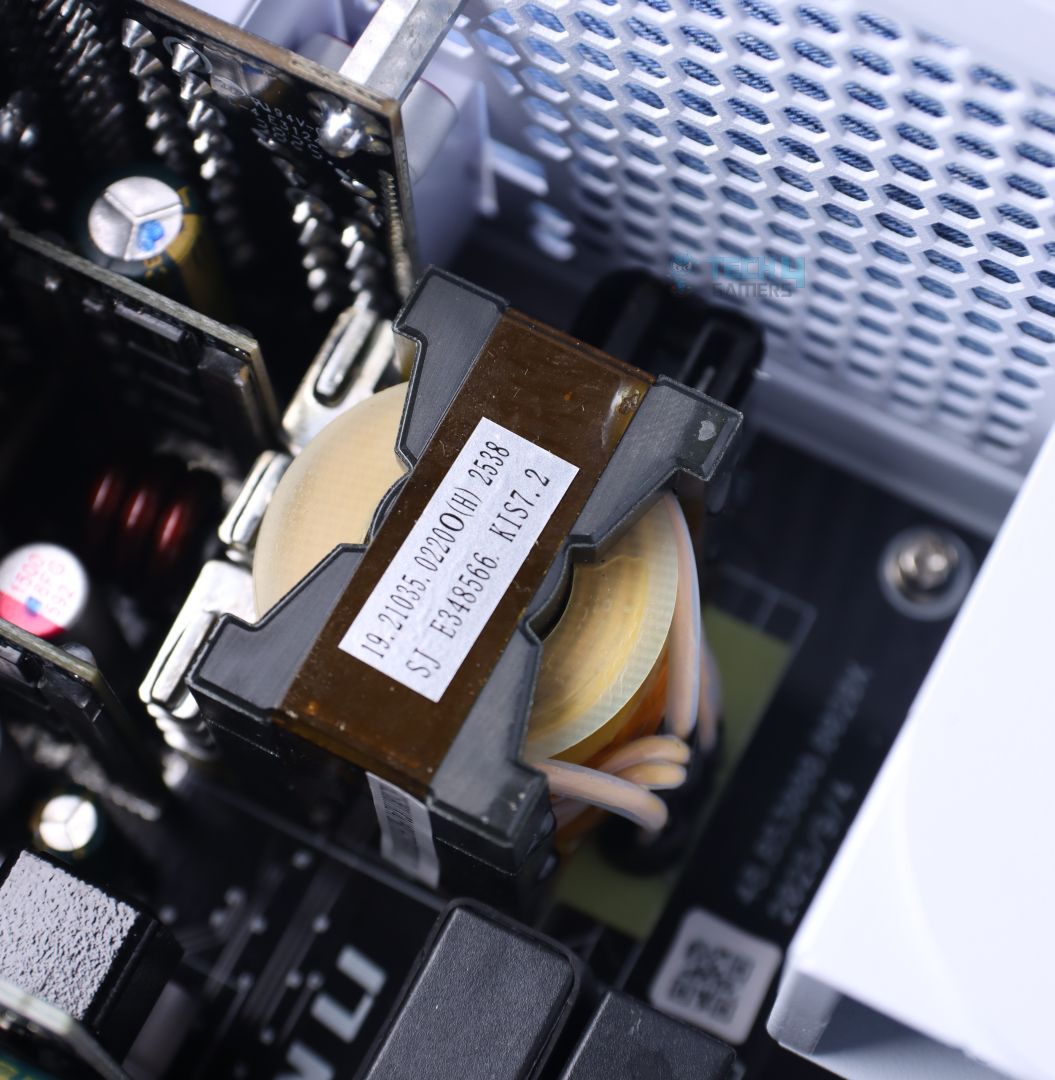
The main 12V rail Transformer design is very similar to what many new OEMs have been implementing lately and we have also seen the similar looking ones previously in the PSUs we have tested before. This unique design uses flat copper coil/wire with more increased surface area than traditional copper wire. This allows the transformer to be switched at a much higher frequency and, as a result, increases its power handling capability as well.
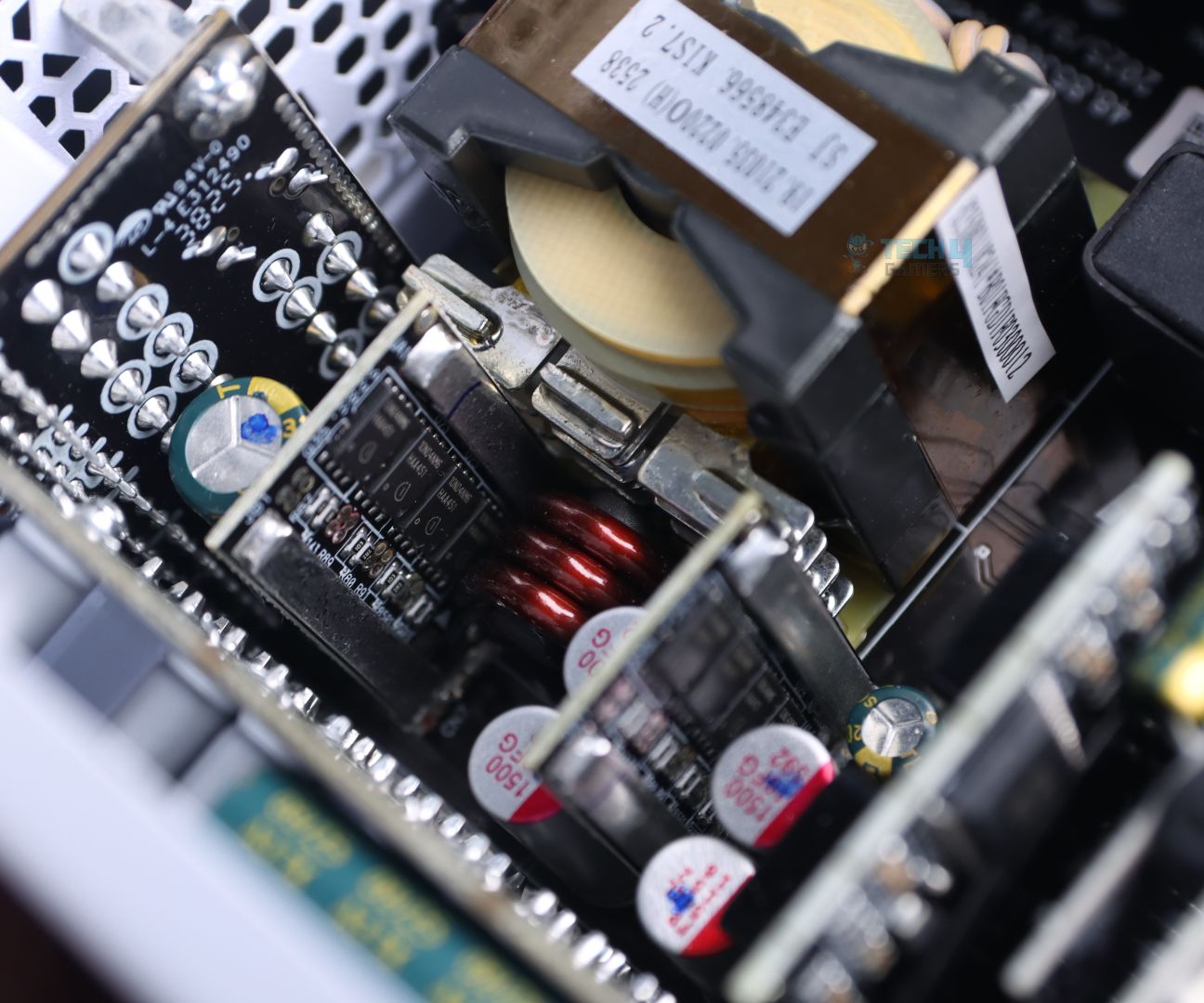
Two vertically mounted PCBs are placed directly near the transformer where 12V rail SMD MOSFETs are soldered.
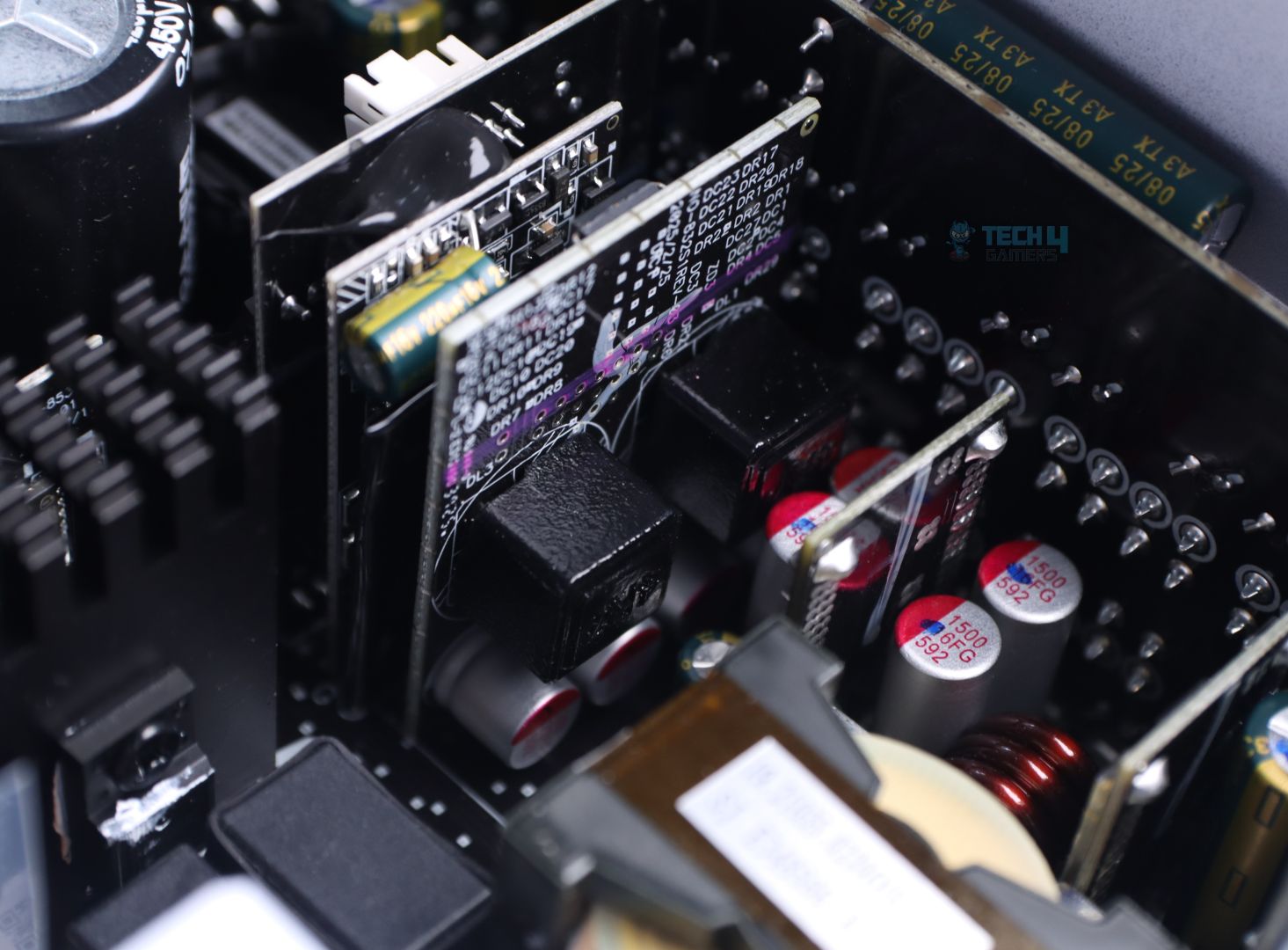
A small vertical daughter board for minor voltage rails (5V and 3.3V)
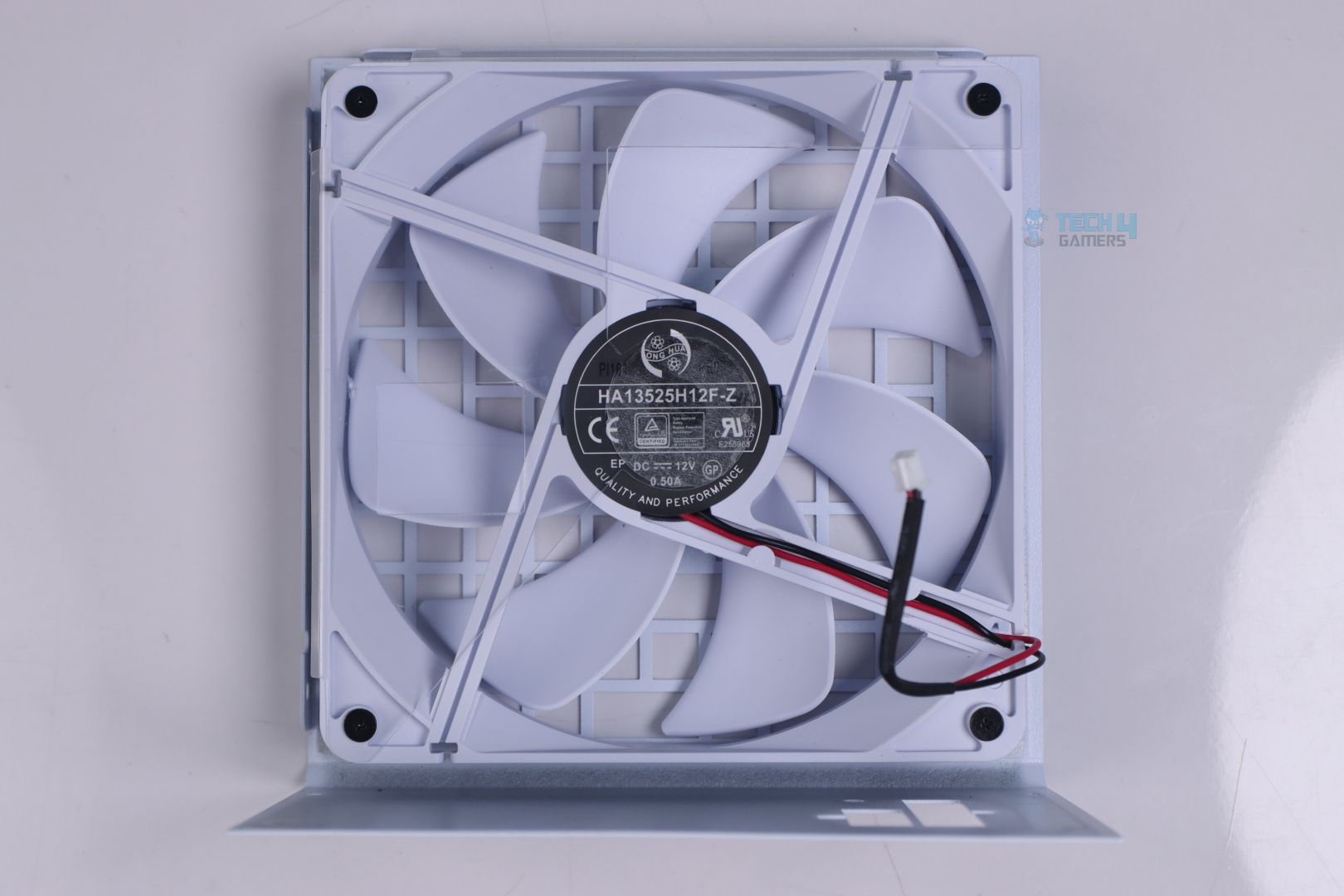
A 135mm FDB (Fluid Dynamic Bearing) fan is used from Hong Hua. The PSU doesn’t feature any Hybrid-Fan mode switch, instead this feature is implemented by default – meaning the PSU will automatically kick in the fan at adequate load.
PSU Load Testing
Voltage Regulation
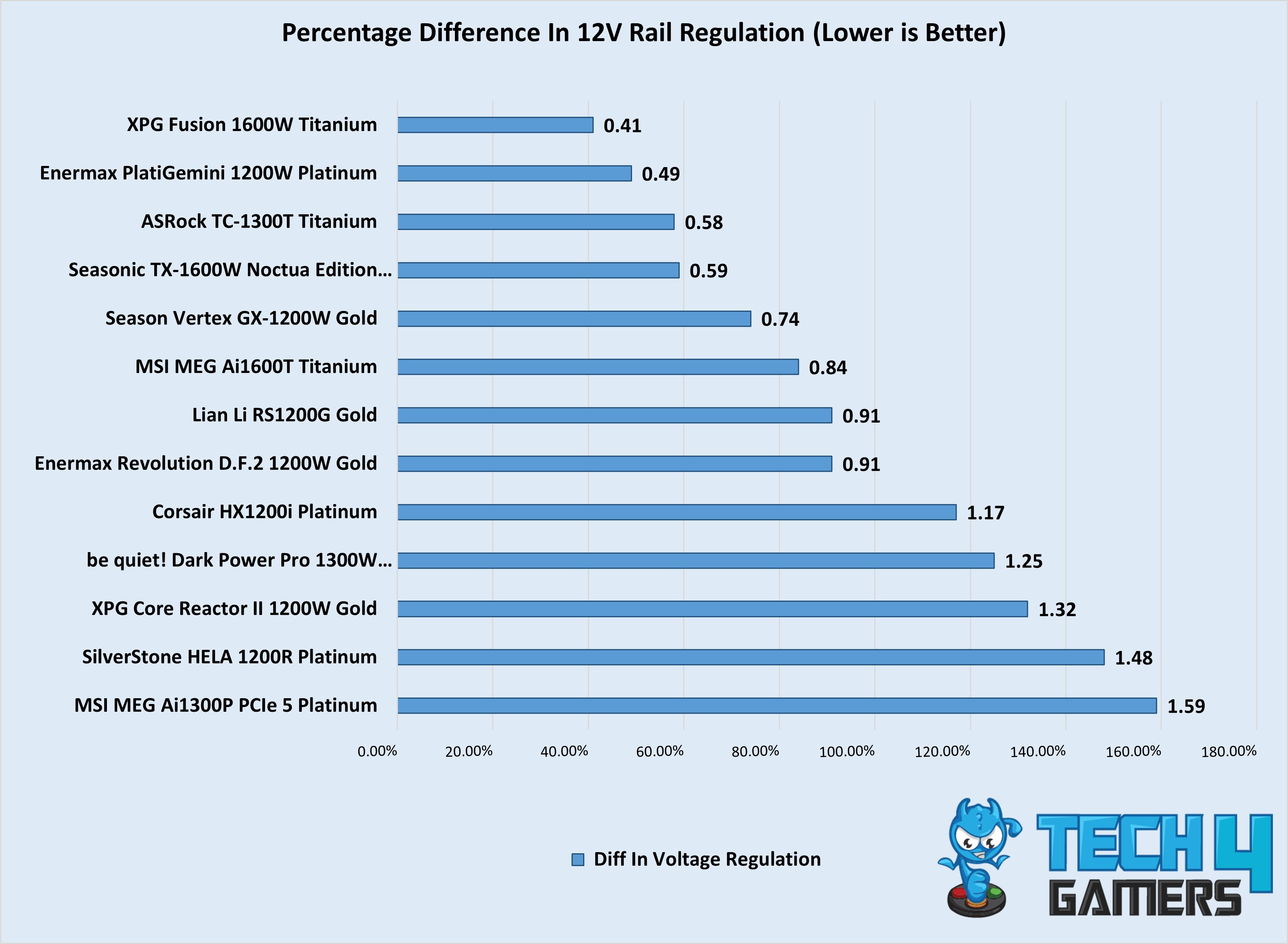
| Load in % | 12V Rail | 5V | 3.3V |
|---|---|---|---|
| 20% | 12.03 | 5.06 | 3.33 |
| 50% | 11.97 | 5.05 | 3.33 |
| 70% | 11.93 | 5.05 | 3.32 |
| 90% | 11.93 | 5.03 | 3.32 |
| 100% | 11.92 | 5.03 | 3.32 |
Lian Li RS1200G has excellent voltage regulation for 12V rail throughout different load variations.
PSU Efficiency
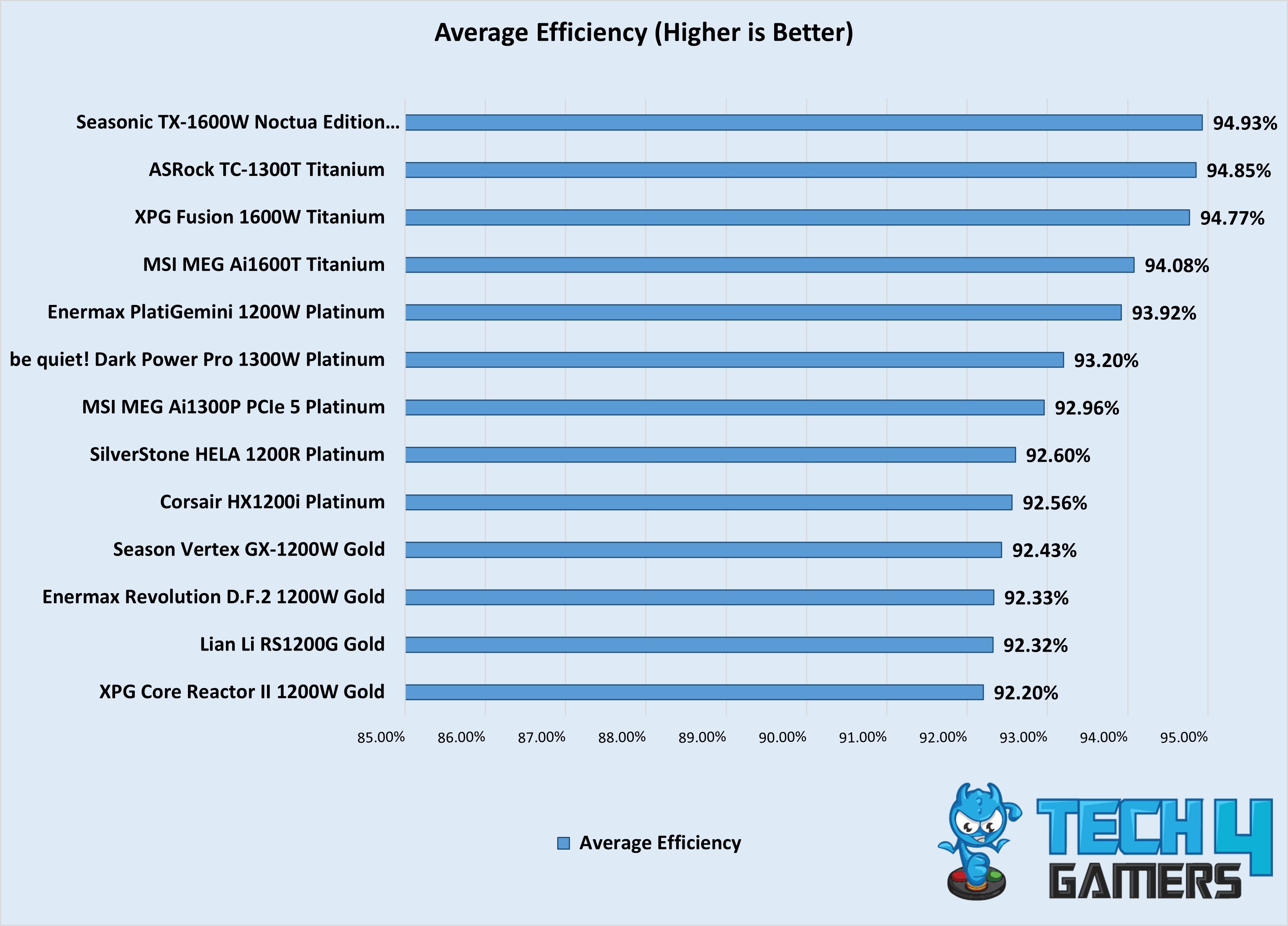
| Load in % | Efficiency | Power Factor |
|---|---|---|
| 20% | 92.59% | 0.953 |
| 50% | 93.38% | 0.989 |
| 70% | 92.71% | 0.995 |
| 90% | 91.75% | 0.998 |
| 100% | 91.18% | 0.998 |
I was skeptical at first for not having adequate aluminium heatsinks in RS1200G but seeing the absolutely amazing efficiency numbers that average out at 92.32%, it easily exceed Gold efficiency and even touches Platinum levels, I am really impressed how Lian Li and Sirfa/High-Power have worked together to make this platform so efficient.
Voltage Ripple Performance
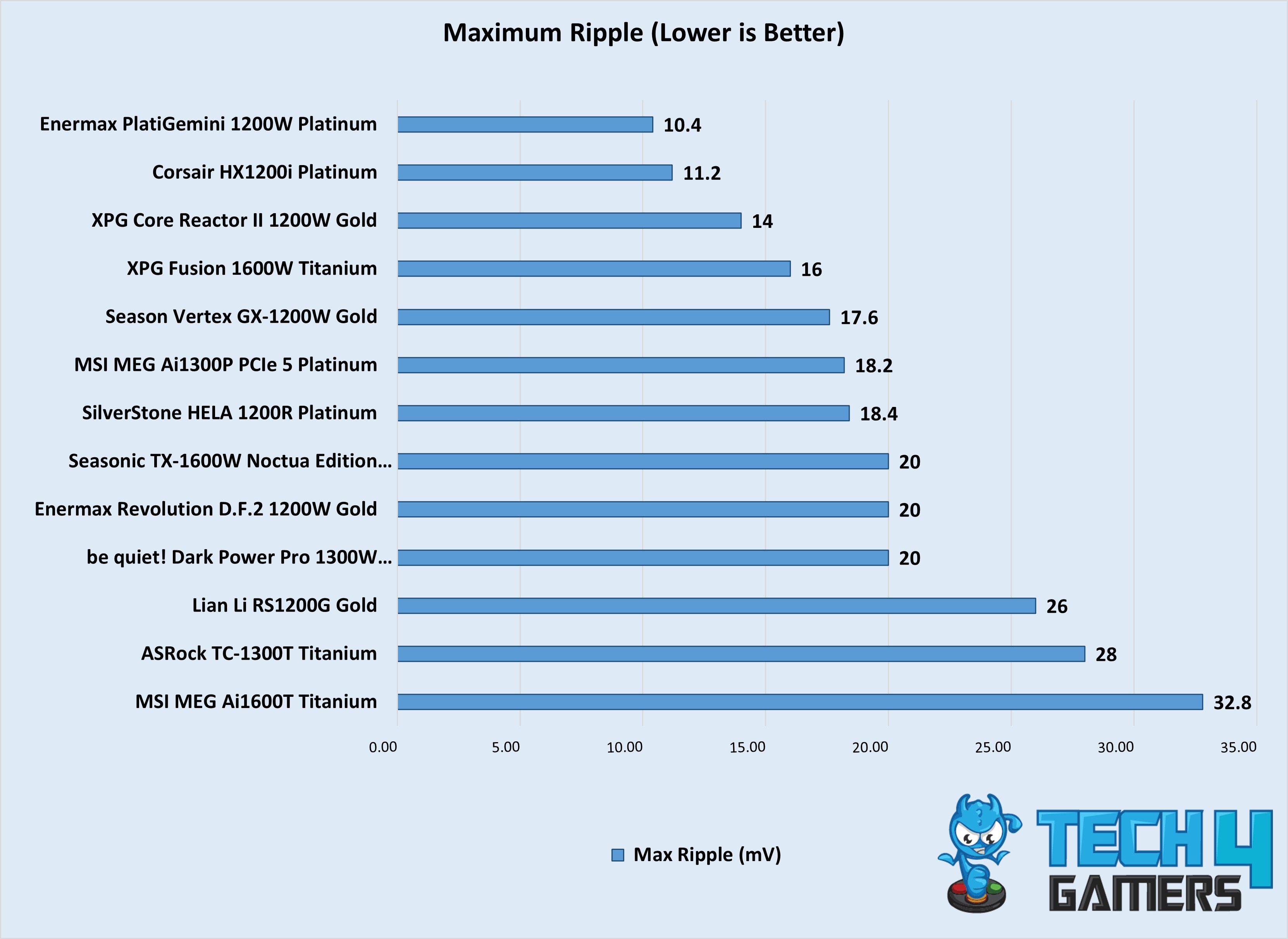
| Load in % | 12V Ripple |
|---|---|
| 20% | 12.8 |
| 50% | 18 |
| 70% | 20 |
| 90% | 24 |
| 100% | 26 |
Voltage ripple performance is very good. This platform from Sirfa/High-Power seems more than capable of even lower voltage ripple numbers. I think if all 4 MOSFETs were used (for the Full-Bridge LLC instead of the Half-Bridge) we would have been seeing some exceptional performance in this test.
Temperature
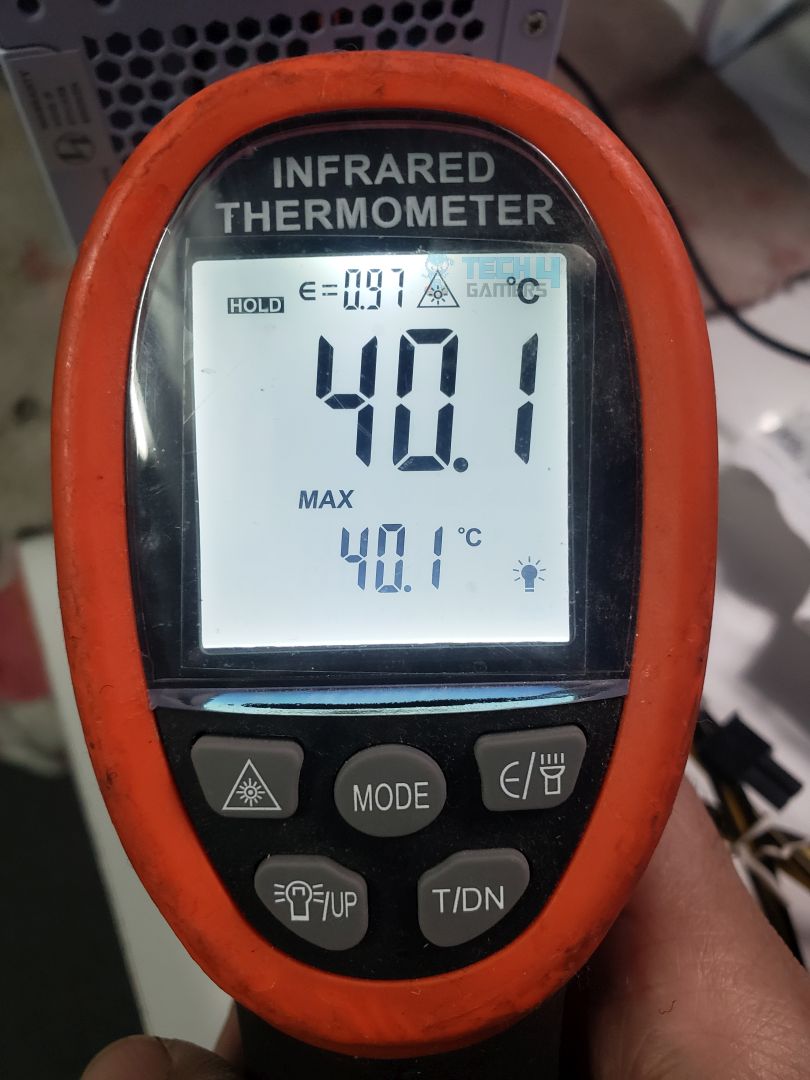
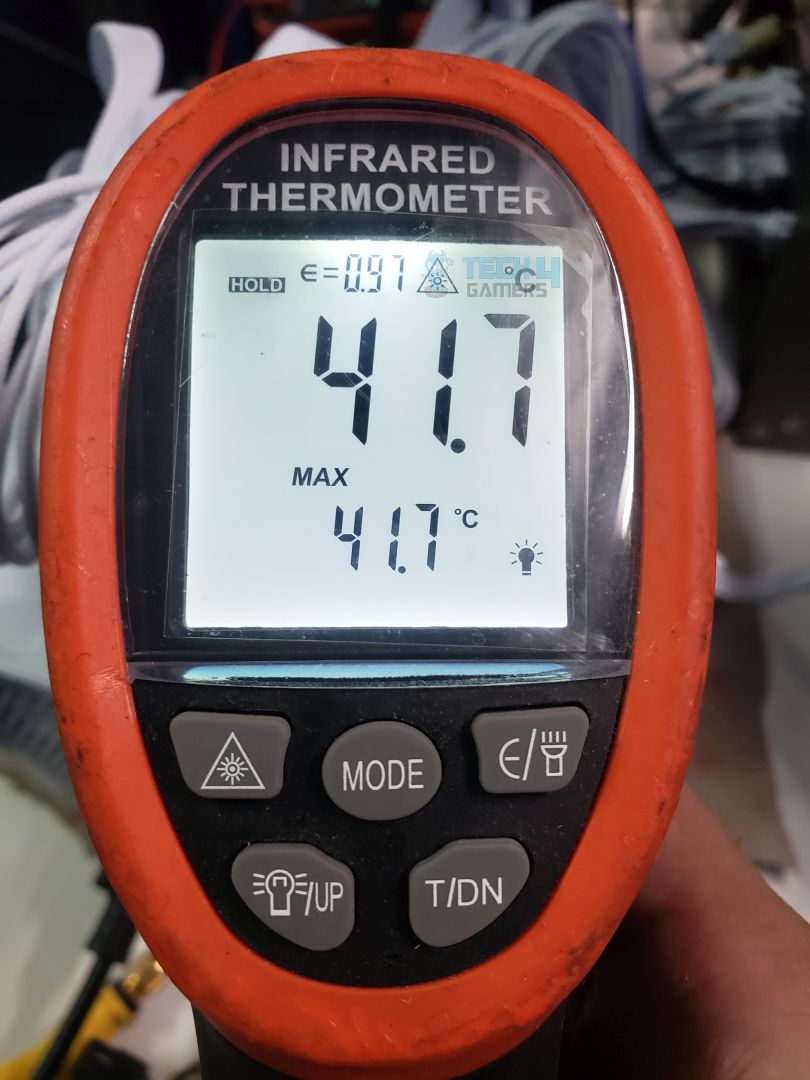
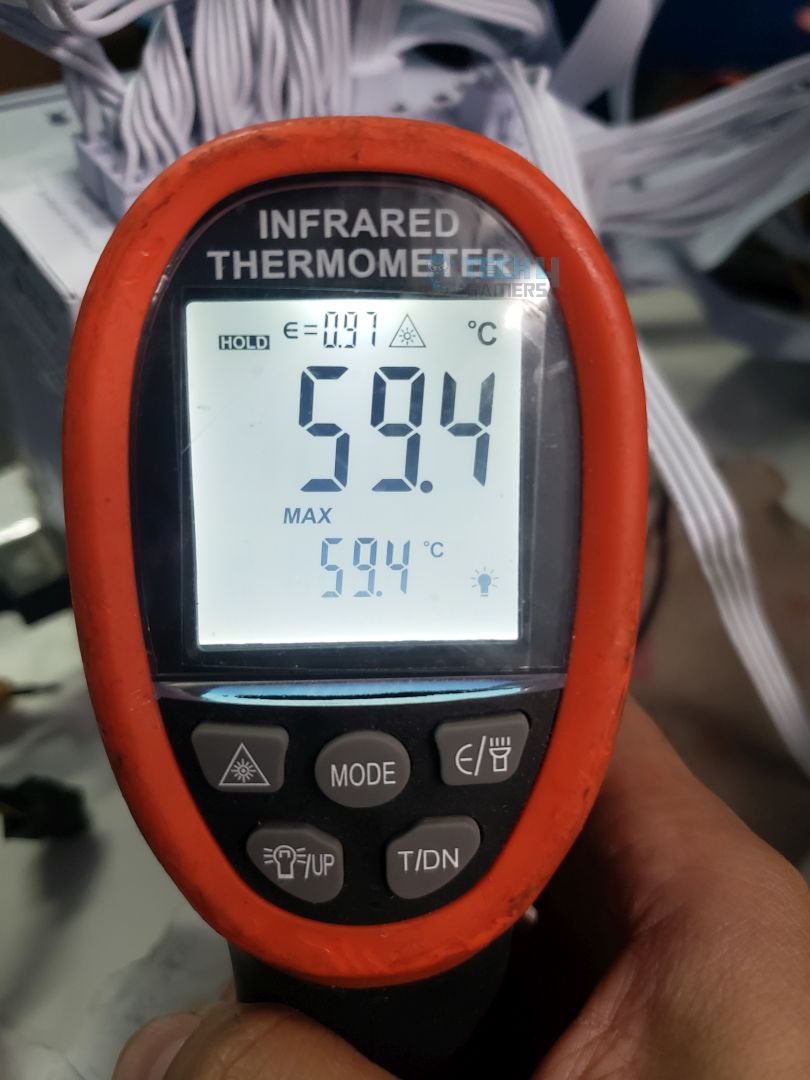
That’s where I am a bit confused. Not because the temperature performance was bad, no! The PSU kept everything cool inside and the max temperature on the back only reached about 59.4C which of course thanks to its Platinum level efficiency. But still Lian Li has made RS1200G’s fan profile very aggressive! When the load exceeds 700W the fan noise gets extremely loud and annoying. Lian Li must take a look at this issue and improve the fan curve because 700W load on a 1200W rated PSU can easily be exceeded using modern high-end gaming PC hardware.
Should You Buy it?
Buy It If
✅ You want versatile mounting options: Lian Li RS1200G features a very unique design for both the 24-pin connector and the mains AC inlet, making it fully compatible with some of the most unconventional and creative PC case layouts out there.
✅ You want extreme efficiency for the price: For what you’d normally pay for a Gold-rated PSU, the RS1200G delivers efficiency that’s basically flirting with Titanium levels.
✅ You want peace of mind with next-gen GPUs: Lian Li includes an improved dual-color 12V-2×6 connector, letting you game worry-free on power-hungry GPUs like the RTX 5090 without stressing about connector safety.
✅ You care about long-term future-proofing: With a hefty 1200W power rating and a feature set that just keeps going, the RS1200G is the kind of PSU you’ll likely stick with for well over a decade.
✅ You want the best bang for the buck: At this price point, most competitors offer “safe but boring” PSUs. The RS1200G stands out by delivering genuinely unique features and thoughtful extras that you simply won’t find elsewhere.
Don’t Buy It If
❌ You want silent operation: Unfortunately, fan noise is the RS1200G’s weak spot. Lian Li clearly poured their energy into innovative design and features, but the loud fan can be hard to ignore if silence is high on your priority list.
My Final Thoughts
Lian Li has genuinely shaken up the boring PSU market with the RS1200G, offering smart features like a rotatable power plug and convenient side-mounted connectors. It performs incredibly well with efficiency that actually beats its rating, making it a fantastic value for high-end builds. The only real catch is the fan noise, which gets surprisingly loud and annoying once you start pushing the power supply hard.
Community Poll
Thank you! Please share your positive feedback. 🔋
How could we improve this post? Please Help us. 😔

[Errors Troubleshooting Expert]
Arsalan Shakil (aka GuyThatDoesEverything on YouTube) is a PC Tech Enthusiast and Electronic Geek. With over 10+ years of experience in Electronics, he then decided to explore Software Engineering to design embedded products and automate existing hardware solutions.
When he started tearing down old cameras to understand how they worked, he was shocked (literally, when he got zapped by a flash discharge capacitor), giving him the power (debatable) to fall in love with videography/photography. He also started making some fun videos that later became YouTube tech reviews.
Skills:
- 10+ years of experience in Electronics design, embedded solutions, and prototyping
- Majored in Software Engineering
- Research paper publication in IEEE for Embedded Military Uniform & LoRa WAN wireless technology
- Specialized in IoT Solutions
- PC Enthusiast & PC Modder
In his local region, he’s known to expose cheap PSU brands, often claiming fake certification or false claims on the box. He’s a true nerd and needed some friends in his life. Then he met some guys who work at Tech4Gamers, and they also came out to be equal nerds who suggested he join Tech4Gamers as a Hardware Expert.
 Join Our Community