



- Intel plans to introduce its “Arrow Lake-S Refresh” desktop processors at CES 2026.
- Detailed specs for the 290K Plus and 270K Plus emerged via an Indian retailer.
- The Core Ultra 7 270K Plus now matches the Ultra 9 with 24 total cores.
- Top speeds reach 5.8 GHz on the flagship; efficiency core speeds have also increased.
Intel is preparing a move ahead of the year’s end, with plans to debut its next-generation CPUs at CES 2026. Today, we have an early confirmation of the specifications for two of its flagship gaming processors after an Indian retailer, PrimeABGB, published or leaked product listings for the Core Ultra 9 290K Plus and Core Ultra 7 270K Plus.
These listings are more than a simple sighting: the level of detail provided offers a remarkably clear look at what Intel’s Arrow Lake-S Refresh line-up will bring to the high-end gaming market.
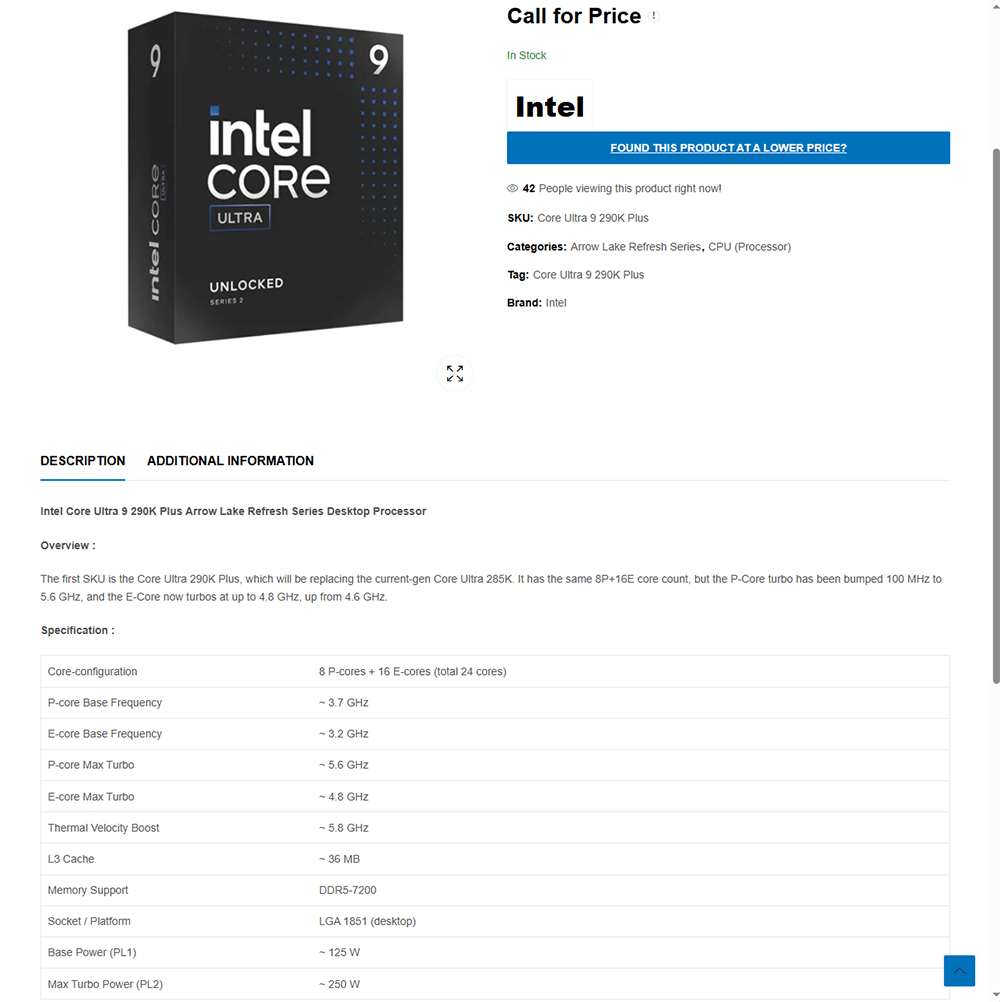
According to leaked specifications from the retailer, both models of the processor feature an 8 P-Core and 16 E-Core configuration (24 cores and 24 threads). This represents a significant upgrade for the smaller model, which moves beyond its previous 12-core design by adding four additional cores.
The Core Ultra 9 290K Plus offers P-Core turbo speeds of up to 5.6 GHz and E-Core turbo speeds of up to 4.8 GHz, with Thermal Velocity Boost up to 5.8 GHz. In comparison, the Core Ultra 7 270K Plus reaches turbo clocks of 5.5 GHz on the P-Cores and 4.7 GHz on the E-Cores, but it lacks Thermal Velocity Boost, a feature reserved for its higher-end sibling.
Both configurations keep a similar base clock (3.7 GHz on the P-Core and 3.2 GHz on the E-Core), as well as a 36 MB L3 cache, the LGA 1851 socket, and standard K-series power limits (125W TDP and 250W MTP), as specified.
However, the 290K Plus equals the 285K in all of the above specifications, while the 270K Plus lowers its base frequency by 200 MHz on the P-Core and 100 MHz on the E-Core, while raising the Turbo Boost frequency of these efficiency cores by 100 MHz.
This is due to the switch from 12 x E-Cores to 16 x E-Cores, therefore, it is a very advantageous adjustment to lose MHz in base and slightly gain it in Boost in return for four of these extra cores, which is why the 290K Plus remains unchanged because its number does not change.
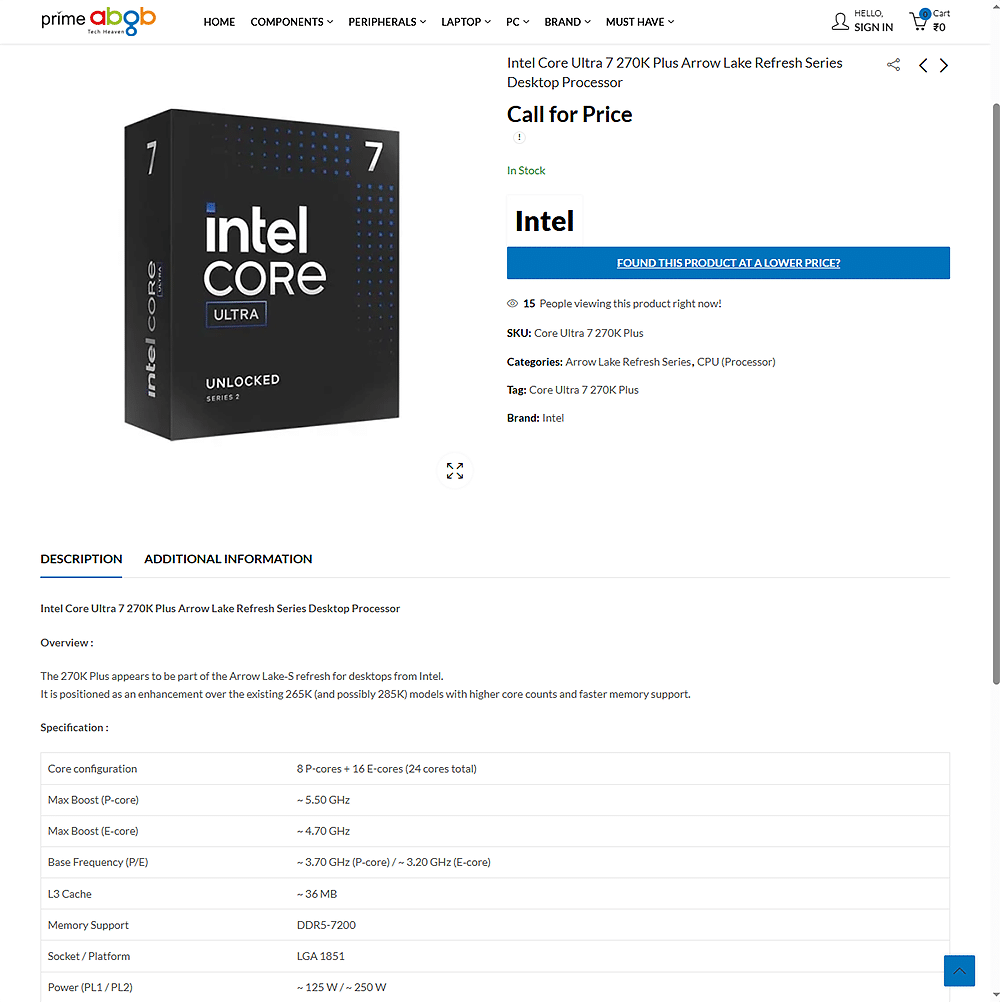
The second notable figure is DDR5 capability at 7,200 MT/s, which is higher than existing models that hit 6,400 MT/s in the basic Arrow Lake-S range, according to JEDEC. If we analyse the intention behind this, boosting the Boost clock speed of the E-Core processors, as leaked for the Core Ultra 9 290K Plus and Core Ultra 7 270K Plus, while simultaneously raising the IMC frequency to support DDR5 at 7,200 MT/s, appears to be a highly planned decision.
Specifically, greater clock speeds for the cores that rely most on data flow, and more accessible bandwidth to power the overall system. Remember, the core configuration of the Tile CPU with the unified Ring Bus was as follows:
P-Core -> 4 x E-Core Cluster -> P-Core -> P-Core -> 4 x E-Core Cluster -> P-Core
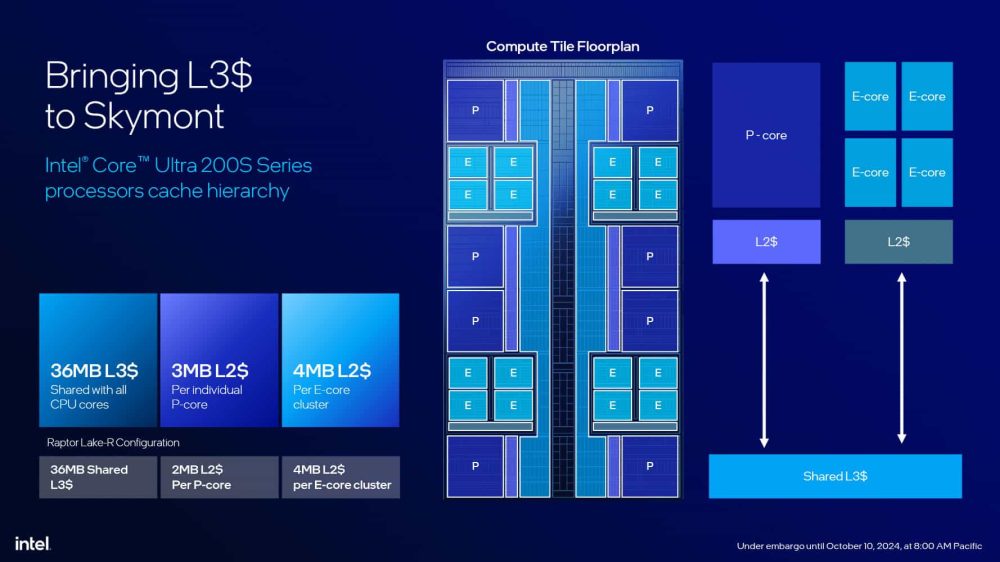
This leak does not confirm that Ring Bus or D2D speeds would increase in these Plus models; therefore, we can only debate it as a technical possibility rather than a proven truth.
If these technical specifications are accurate, the question will not be whether Arrow Lake-S Refresh reinvents the range, but whether Intel has discovered the optimal combination of E-Core, memory, and internal adjustments to reduce weaknesses without increasing power consumption or changing the platform.
| Core Ultra 9 285K | Core Ultra 9 290K Plus | Core Ultra 7 265K | Core Ultra 7 270K Plus | |
|---|---|---|---|---|
| Architecture | Arrow Lake-S | Arrow Lake-S Refresh | Arrow Lake-S | Arrow Lake-S Refresh |
| P-Core | 8 | 8 | 8 | 8 |
| E-Core | 16 | 16 | 12 | 16 |
| Total nuclei | 24 | 24 | 20 | 24 |
| P-Core Base | 3.7 GHz | 3.7 GHz | 3.9 GHz | 3.7 GHz |
| E-Core Base | 3.2 GHz | 3.2 GHz | 3.3 GHz | 3.2 GHz |
| P-Core Turbo | 5.7 GHz | 5.6 GHz | 5.5 GHz | 5.5 GHz |
| E-Core Turbo | 4.6 GHz | 4.8 GHz | 4.6 GHz | 4.7 GHz |
| TVB | 5.7 GHz | 5.8 GHz | No | No |
| L3 Cache | 36 MB | 36 MB | 30 MB | 36 MB |
| Memory | DDR5-6400 | DDR5-7200 | DDR5-6400 | DDR5-7200 |
| TDP | 125W | 125W | 125W | 125W |
| MTP | 250W | 250W | 250W | 250W |
| Socket | LGA 1851 | LGA 1851 | LGA 1851 | LGA 1851 |
These Core Ultra 9 290K Plus and Core Ultra 7 270K Plus are flagship CPUs that will demonstrate the true potential of Arrow Lake-S, even though they’re arriving late and in refresh mode. But they still won’t be able to surpass the current AMD X3D processors, as AMD has an enormous advantage in the vertical cache.
Thank you! Please share your positive feedback. 🔋
How could we improve this post? Please Help us. 😔

[Editor-in-Chief]
Sajjad Hussain is the Founder and Editor-in-Chief of Tech4Gamers.com. Apart from the Tech and Gaming scene, Sajjad is a Seasonal banker who has delivered multi-million dollar projects as an IT Project Manager and works as a freelancer to provide professional services to corporate giants and emerging startups in the IT space.
Majored in Computer Science
13+ years of Experience as a PC Hardware Reviewer.
8+ years of Experience as an IT Project Manager in the Corporate Sector.
Certified in Google IT Support Specialization.
Admin of PPG, the largest local Community of gamers with 130k+ members.
Sajjad is a passionate and knowledgeable individual with many skills and experience in the tech industry and the gaming community. He is committed to providing honest, in-depth product reviews and analysis and building and maintaining a strong gaming community.
 Join Our Community