



- User growth doesn’t always translate to revenue if spending habits remain the same.
- Steam’s ecosystem drives purchases, not just traffic, while Epic Games’ strategy builds accounts more than loyalty.
- Exclusive games attract attention but rarely create long-term customers.
- Revenue reflects the depth of player engagement, not the number of users.
For many years, Steam and Epic Games have been battling it out for the title of the top gaming storefront. Epic entered the gaming market, promising better returns for developers, exclusive titles for players, and aiming to break Valve’s near-monopoly status. Right now, though, Steam is dominating the market, whereas Epic is trying to keep up.
From the surface, Epic seems to be closing in on Steam in the battle for revenue growth. The player count continues to grow, the library is constantly expanding, and millions of accounts claim free games yearly. Yet despite all the user growth, revenue seems to be lower in proportion. Let’s dive right into why this is so.
User Growth Doesn’t Equal Spending
Epic Games’ user growth has increased significantly over the years, but most of that growth is because of incentives, not purchasing intent. Weekly free games, exclusive titles and aggressive promotions have attracted millions of players worldwide to make accounts and log in frequently. But these users are not necessarily spending any money.
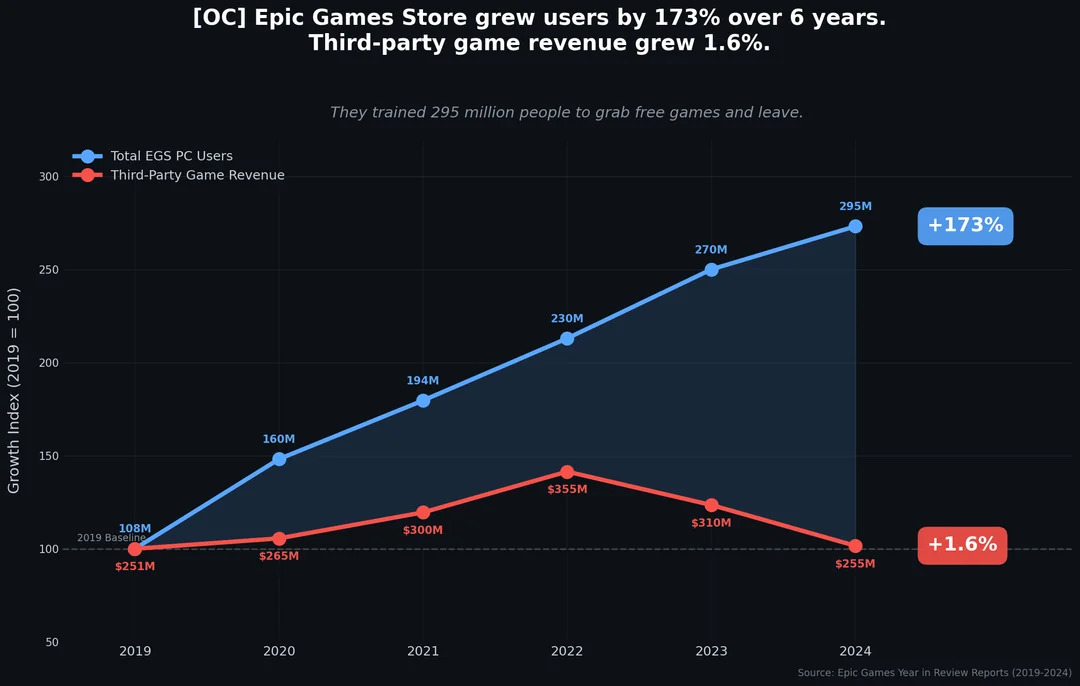
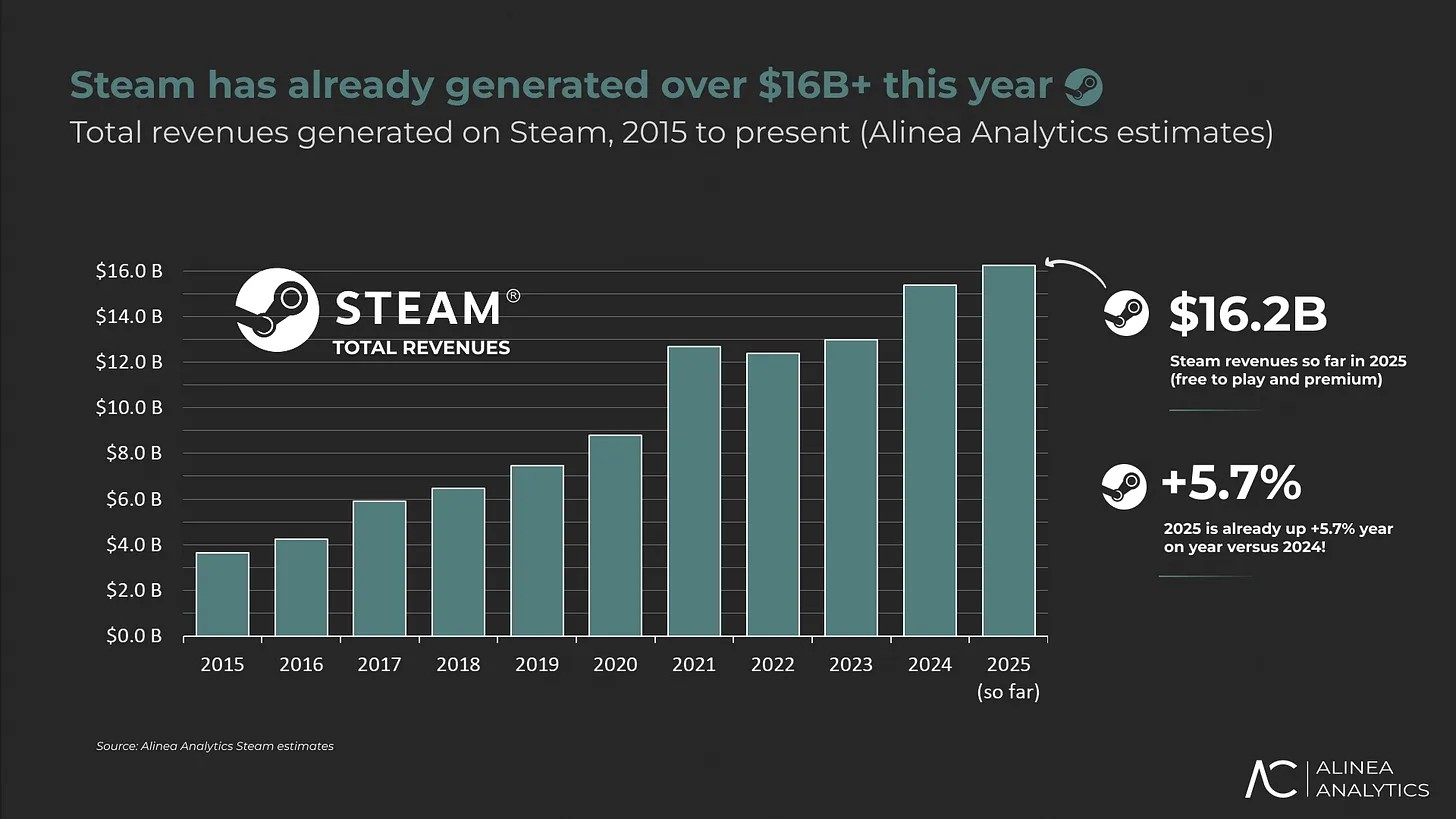
Many Epic users treat the platform as a secondary gaming library whilst continuing to make purchases elsewhere. Steam, on the other hand, has studied user spending behaviour and allows players to browse, wishlist, mod and purchase games under a single roof. Thus, Steam is clearly generating more revenue than Epic.
Steam’s Ecosystem Is Their Product
Steam may look like a store, but it is not; it’s an ecosystem designed to encourage user spending without them realising that they are being nudged. Features like user reviews, community hubs, workshop mods, trading cards and seasonal sales all promote users to purchase. Seeing a game at an awfully high discount may seem like a bargain. The satisfaction in buying an otherwise expensive title at a very low price is its secret strength, helping Steam generate revenue.
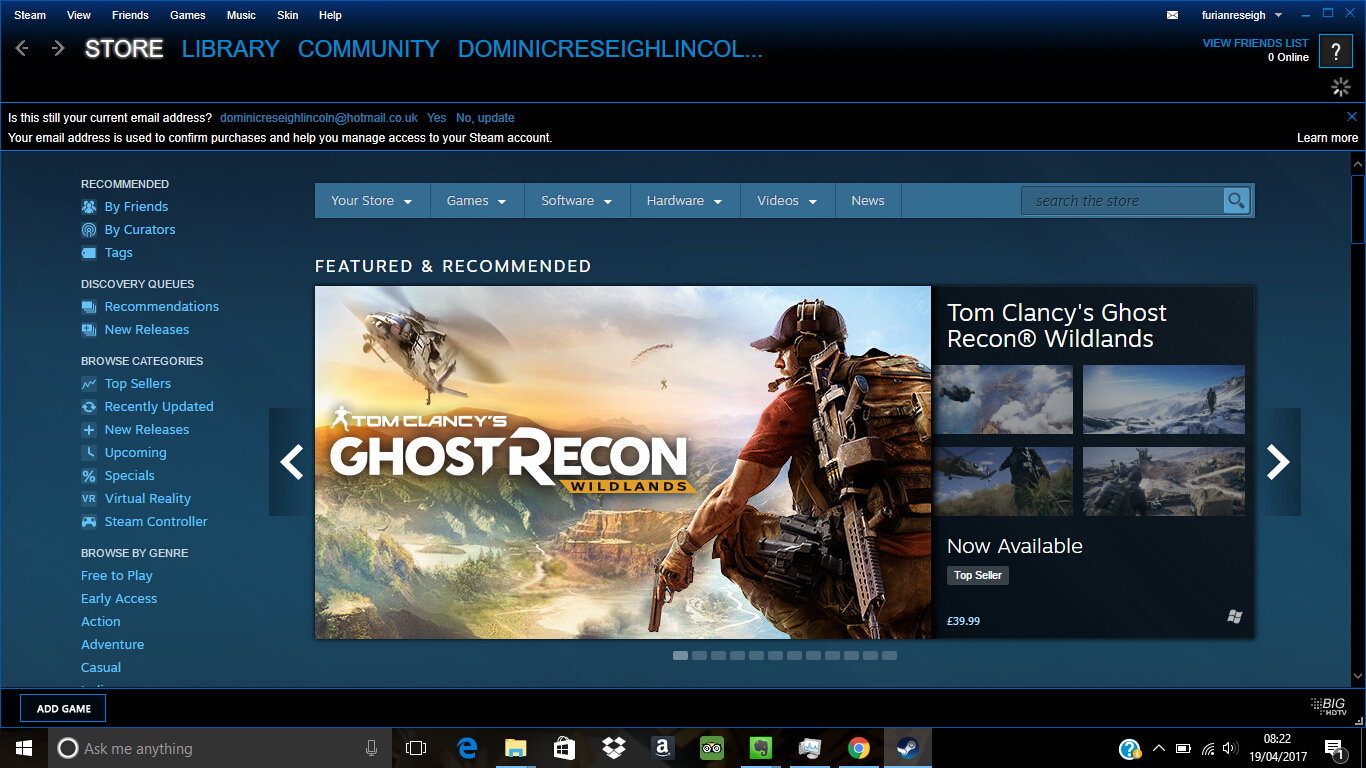
Epic’s storefront, on the other hand, lacks in this aspect. Though it has improved significantly, it does not incorporate the engagement loops that promote impulsive user purchases. To many gamers, Epic seems transactional rather than a social experience. Steam users do not just buy games because they are cheap; they buy them because their entire gaming identity lives on that platform.
Developers Benefit Epic Does Not
Epic Games keeps a lower revenue cut as opposed to Steam and is praised by developers for this. However, this also means that Epic requires a much higher sales volume to match Steam’s revenue generation. At the same time, Epic spends a large amount on providing free, exclusive games and on platform development.

This may work fine as a long-term strategy, but it makes short-term profitability minimal. Epic Games is focusing more on growth rather than revenue at the moment. This makes a revenue comparison with Steam unfavourable at the moment. Steam, on the other hand, has already amortised its platform and can work with higher margins and fewer incentives.
Purchasing Habits Are An Issue
One of the biggest hurdles Epic faces is the spending habits of players. Many PC gamers have spent years and in some cases even decades building their gaming libraries on Steam. They trust the platform’s refund policies, are comfortable with its user interface and rely on its features.
For Epic to try to attract Steam’s customer base, it needs more than just free games and incentives. Players need a compelling reason to force them into abandoning habits that work. To many players, Epic has just not offered a strong enough reason for them to make it their primary storefront. It’s not like players don’t appreciate free games; it’s just that emotional attachment and convenience cannot be replaced.
Revenue Reflects Engagement
The difference in revenue of Epic as compared to Steam highlights a broader truth about gaming platforms. Revenue is not generated by how many users you have, but how deeply those users are engaged. Steam excels because players log in not to collect but to browse and buy. On the other hand, Epic struggles to transform an existing user base into active spenders.
Final Thoughts
The battle of Epic vs Steam is neither a story of Epic’s failure nor Steam’s success. Epic has proven that it can attract a large audience and challenge industry norms. But to match Steam’s revenue generation, it needs to change the spending habits of its active users. Steam dominates in this regard, not because it blocks all competition, but because it understands user spending behaviour.
Thank you! Please share your positive feedback. 🔋
How could we improve this post? Please Help us. 😔

[Comparisons Expert]
Shehryar Khan, a seasoned PC hardware expert, brings over five years of extensive experience and a deep passion for the world of technology. With a love for building PCs and a genuine enthusiasm for exploring the latest advancements in components, his expertise shines through his work and dedication towards this field. Currently, Shehryar is rocking a custom loop setup for his built.
Get In Touch: shehryar@tech4gamers.com
 Join Our Community