
 Threads
Worth It?
Review Summary
The Klevv Cras V RGB DDR5 RAM delivers strong performance with tight timings (CL28) and speeds up to 6000 MT/s, making it ideal for gamers and enthusiasts. It features a large heatsink, sleek design, and vibrant RGB lighting. While it offers great out-of-the-box performance and overclocking potential, its premium price and limited availability may not make it the best choice for budget-conscious users.
Hours Tested: 5

Overall
-
Performance - 9.5/10
9.5/10
-
Build Quality - 9.5/10
9.5/10
-
OC Potential - 8.5/10
8.5/10
Pros
- Hynix-Based ICs
- Great Overclocking Potential
- Features CL28 at 6000MT/s
- Works Well on AMD
- Sleek & Compact Design
- RGB
Cons
- Loose Secondary Timings
- Availability


We previously reviewed one of their memory modules, the KLEVV Urbane V RGB 32GB 6000MT/s CL28, and were thoroughly impressed by its performance and compact design. It stood as one of the best-performing modules we’ve tested. Now, Klevv is taking things a step further with its new Cras V RGB memory. Cras V not only offers a thicker heatsink but also the lowest RAM latency and potentially better overclocking potential, which is sure to intrigue performance enthusiasts. This RAM is designed for those who want the best memory performance out of the box. However, our memory has CL28 latency, but they also have CL26 in the lineup at 6000 MT/s.
The CRAS V RGB series is available in a variety of timing and frequency configurations ranging from 6000MT/s to 8400MT/s, with capacities of 32GB (16×2), 24GB (24×2), and 64GB (32GB x 2). However, it’s important to note that 64GB kits are not offered at speeds of 7200MT/s or higher. At those frequencies, only 32GB and 48GB kits are offered.
In this review, we are looking at the 32GB (16GB x 2) 6000MT/s CL28, a dual-channel kit that supports EXPO and Intel XMP 3.0. Let’s talk about the specifications.
| Category | Specifications |
|---|---|
| Speed | 6000 MT/s |
| Capacity | 32GB (16GB x 2) |
| Primary Timings | 28-36-36-76 |
| DRAM Components | Hynix-A, 16GB A-die |
| EXPO Support | Yes |
| XMP 3.0 Support | Yes |
| Dimensions (L x W x H) | 133.3 (L) x 44 (W) x 8 mm (H) |
| Features | High End Binning, Futuristic Tone-on-Tone Design, RGB , Low Clearance , Aluminum Heatsink |
| Warranty | Limited Lifetime Warranty |
What Makes KLEVV CRAS V RGB 32GB (16×2) DDR5-6000 CL28 Kit Different?
CRAS V is Klevv’s high-performance and overclocking line, focusing on the highest speeds and the lowest possible latency, with RGB features. We have reviewed their previous Urbane V series, which was fast; however, the CRAS V is even better thanks to its large heatsink, which improves heat dissipation.
This RAM offers a base latency of CL28, one of the fastest available on the market at this frequency. It’s slightly larger than Urbane V by 2mm. Still, this increase in size is due to the large, superior aluminum heat spreader compared to its siblings, which makes sense, as with such fast speeds and lowest timings, you need better heat transfer across the module, which could also improve signal integrity on the PCB.
Packaging
Let’s take a look at the packaging.
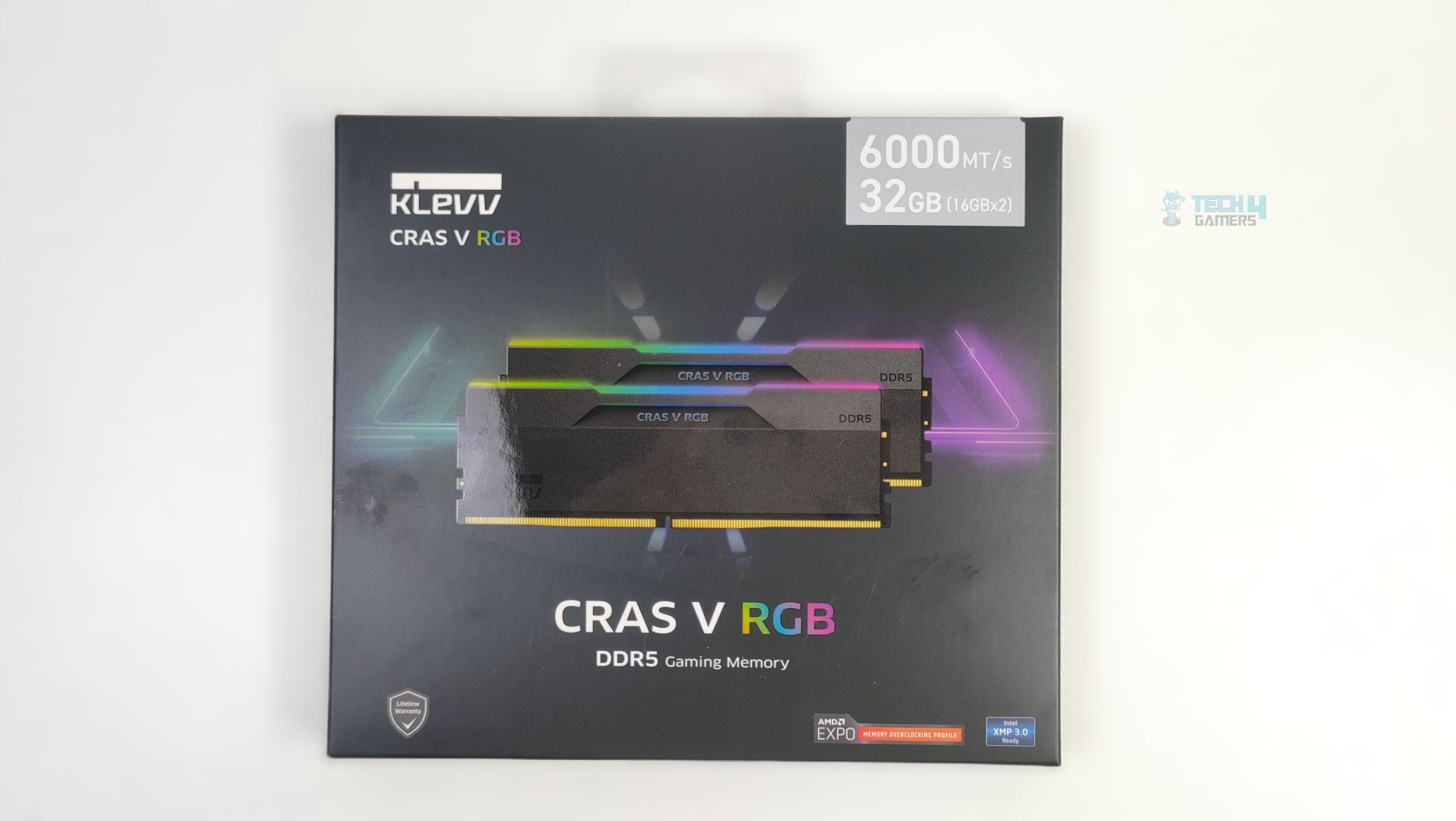
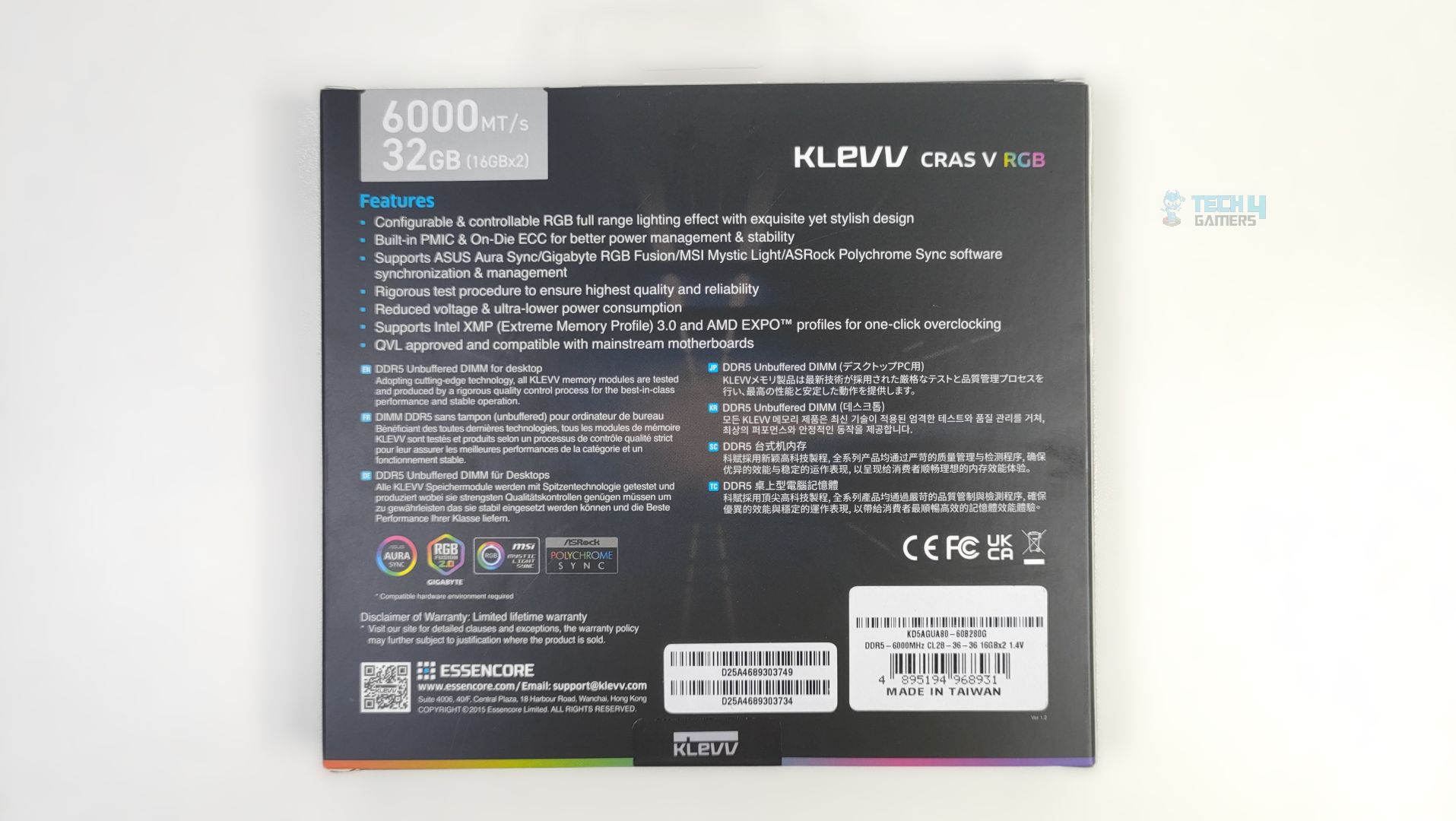
The RAMs come in cardboard packaging. The rendered image of the memory is visible on the front of the box, in the top corner. The box also mentions the capacity and transfer speeds. The Intel XMP 3.0 and AMD EXPO compatibility badges are also visible, indicating this RAM is compatible with both platforms. On the back of the box, it also highlights the RAM features.
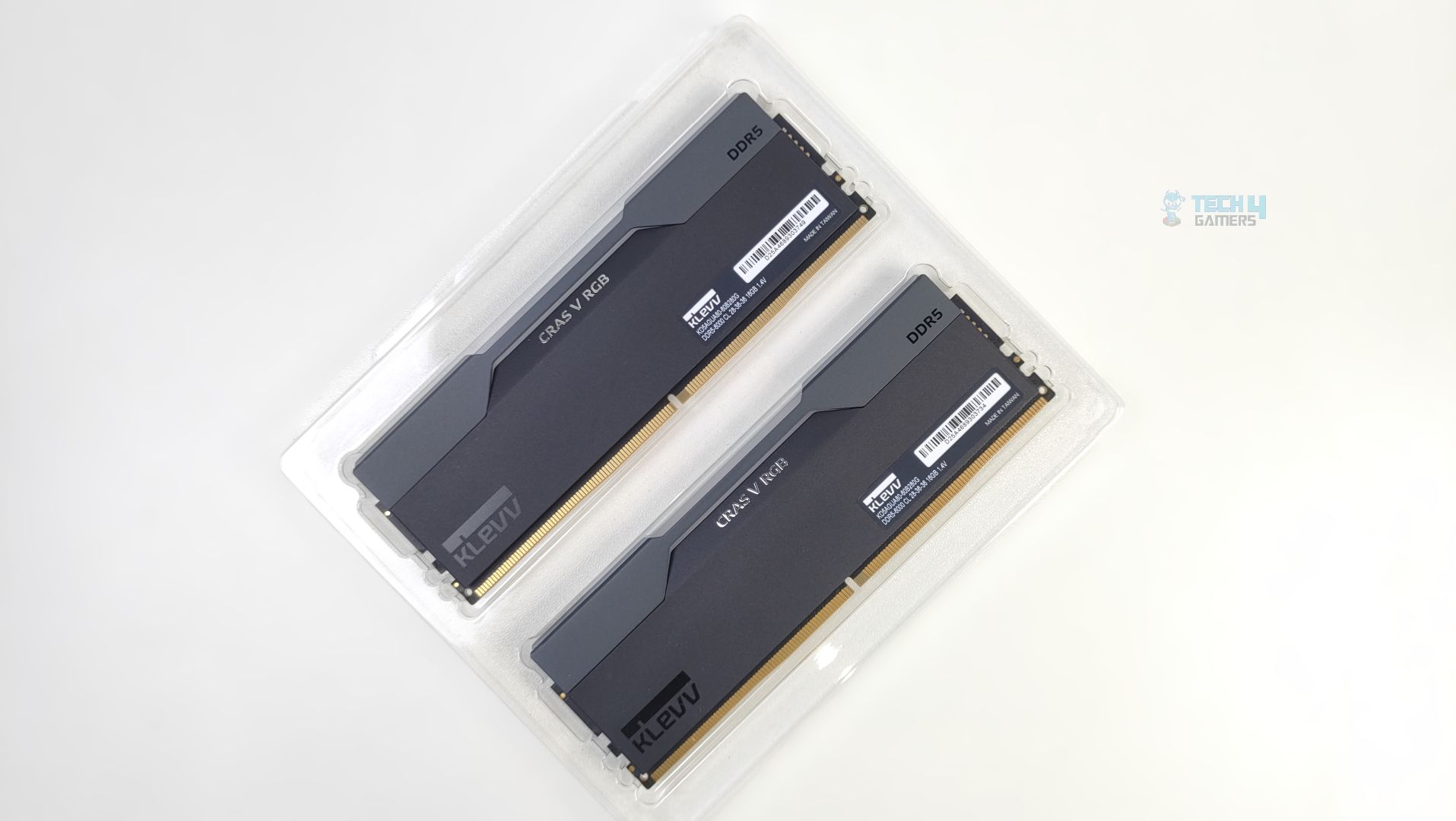
Upon unboxing, the memory is securely packed in a sealed plastic tray. However, the RAM does not include any other accessories, such as a manual, a warranty card, or stickers.
Closer Examination & Build Quality
Taking a closer look at the sticks.
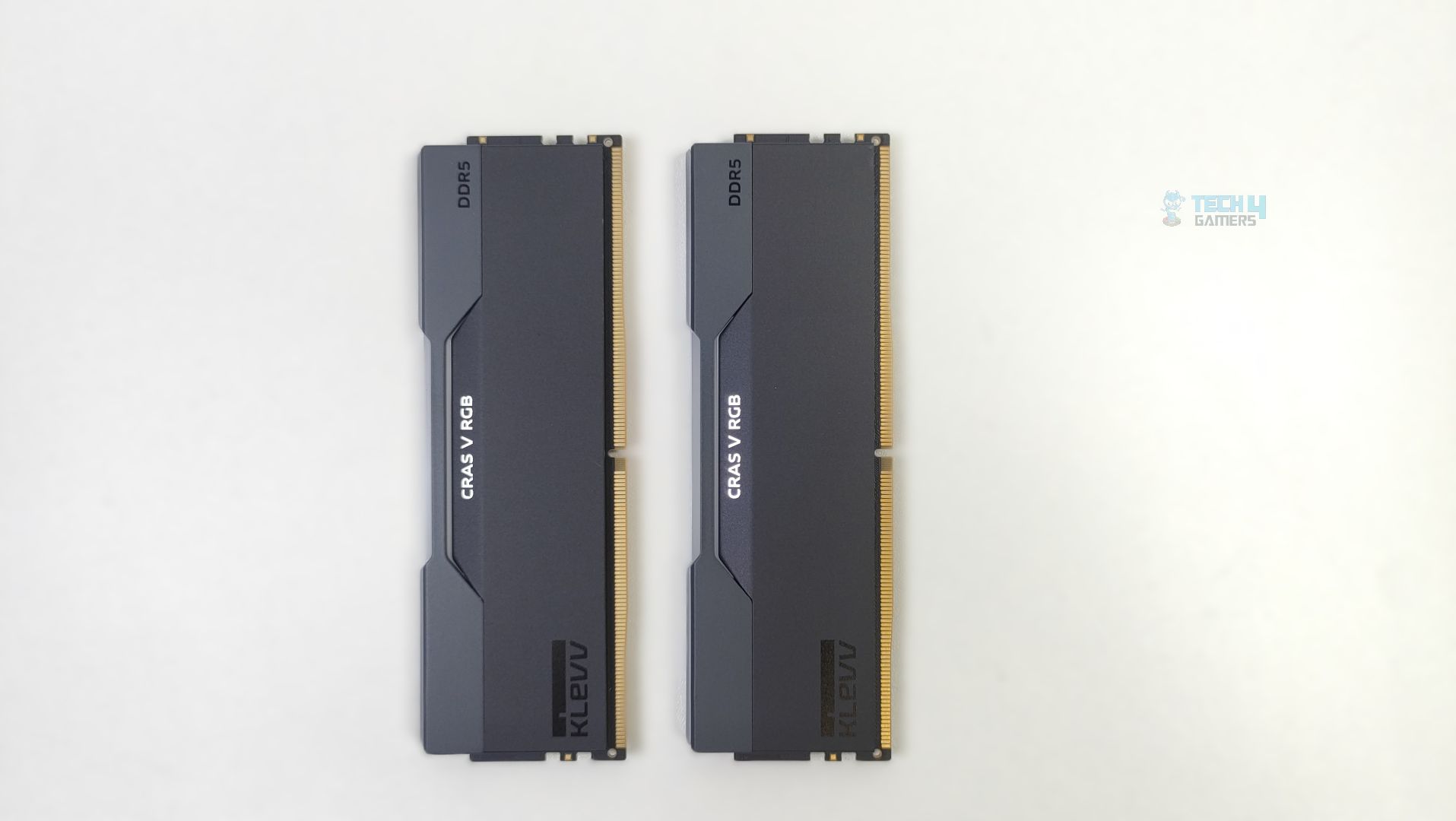
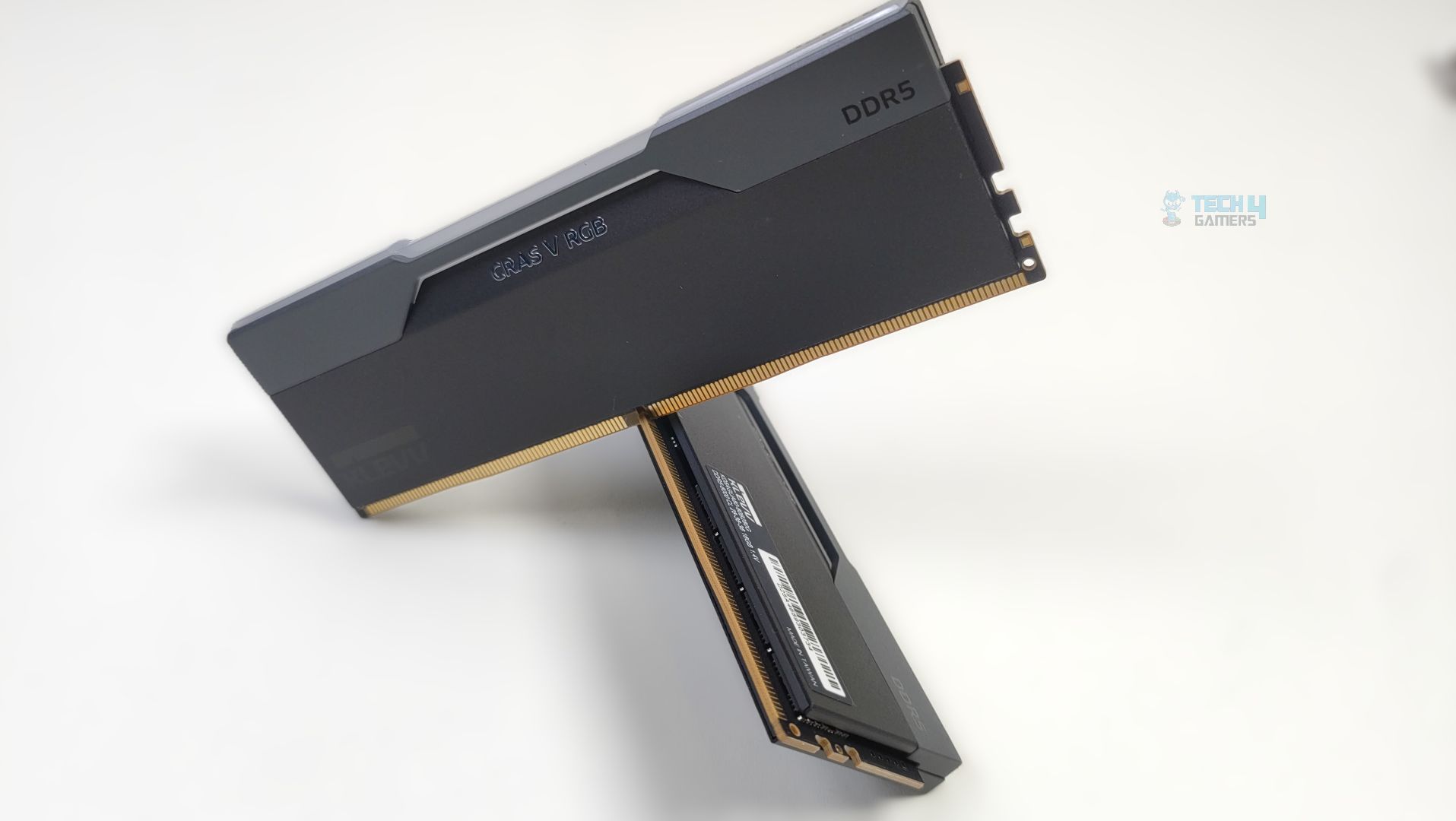
Klevv CRAS V RGB features a matte black aluminum body, which strikes a balance between form and function, as this RAM is only 44mm tall. It also houses a 10-layer PCB and a Hynix-A ICs, which Klevv calls “Strictly Selected IC” in their specifications. Under the shroud, each module is composed of 2GB x 8 memory ICs, which is standard for the DDR5-16GB module.
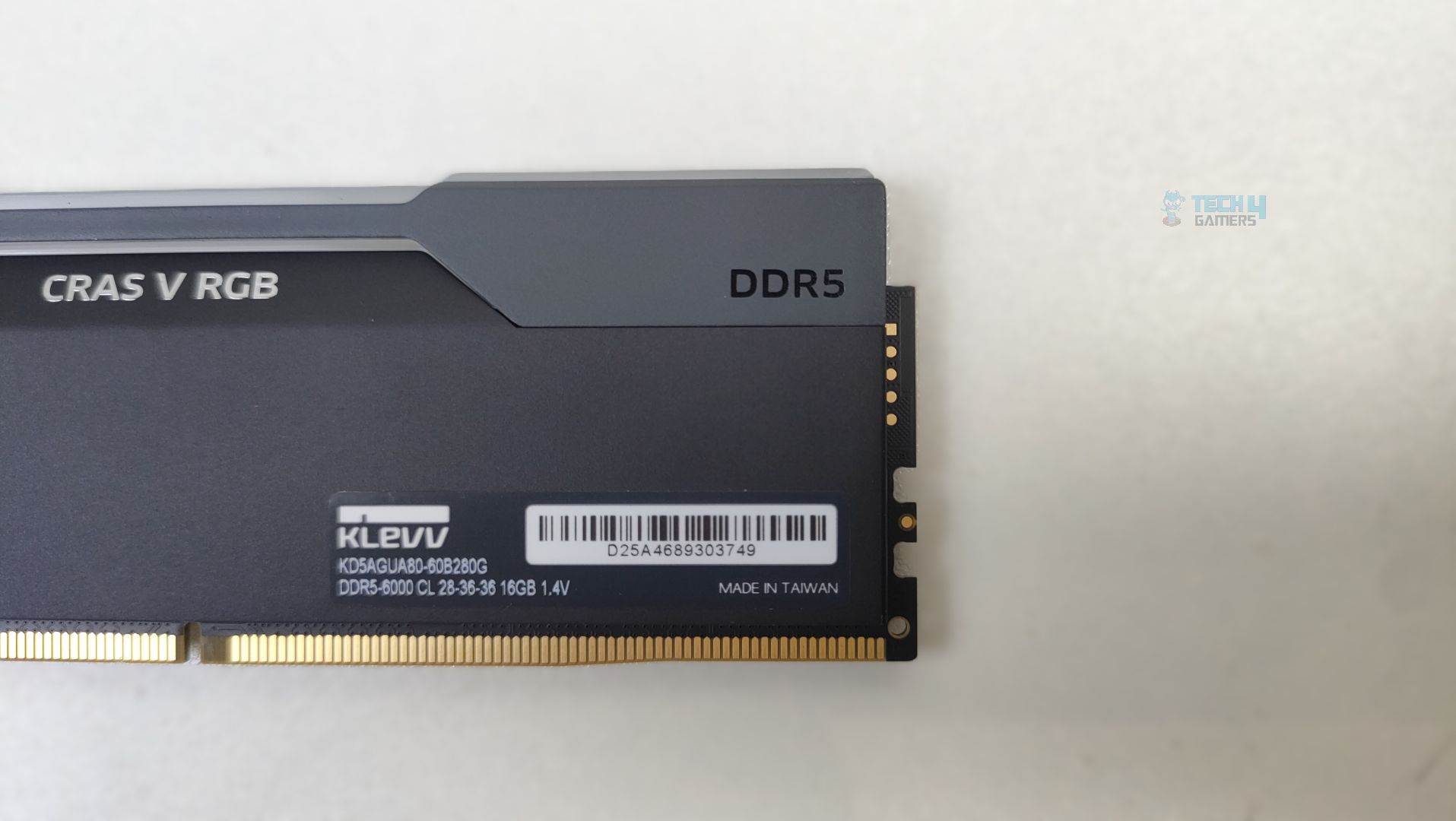
The aluminum frame has a thickness of 2mm. On the back side, there is also a sticker that reveals the speeds and timings of this RAM. However, we don’t see the linear grooves on the heat sink as we have seen in the Urbane V series. I liked that design a lot, though, in this ram it’s missing.
There is also a branding “CRAS V RGB” carved in chrome finish lettering on the heat spreader towards the top center on each stick; the Klevv logo is also prominent on the bottom corner in a darker tone.
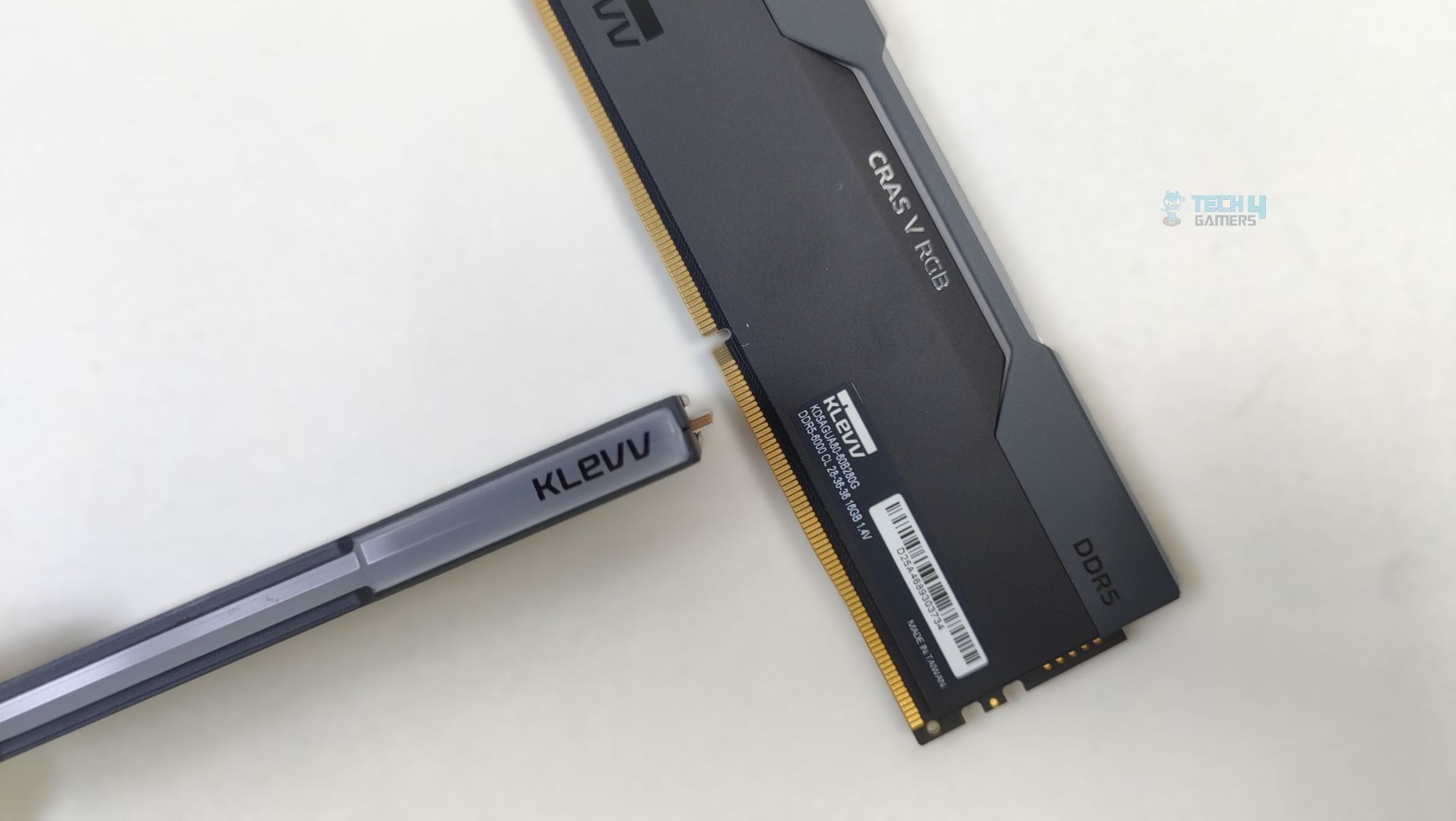
If we look at the top, the RAM features the hollow linear design, the defuser bar runs the full length of the top heat spreader, and it also has the Klevv branding on the defuser.
RAM Timings and Further Details
Let’s begin with the primary timings: this RAM offers a base latency of CL28 at a transfer speed of 6000 MT/s. The timings seem identical to those of their Urbane V RGB CL28 6000MT/s that we reviewed earlier. We report no change in timings whatsoever, so my complaint remains the same: secondary timing is still loose, and tertiary timing is loose, leaving the juice on the table. However, these timings can easily be customized.
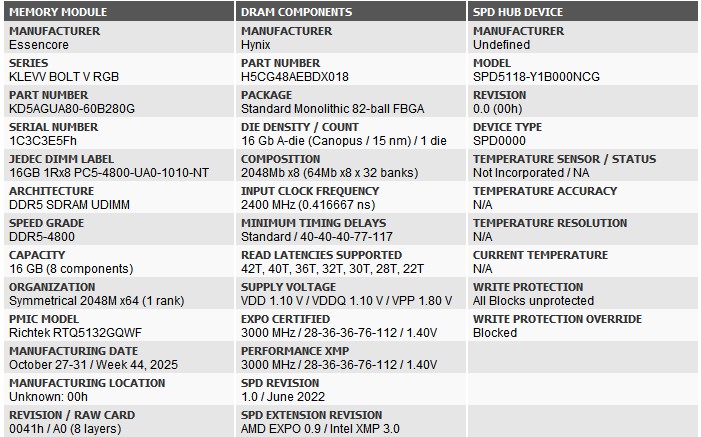
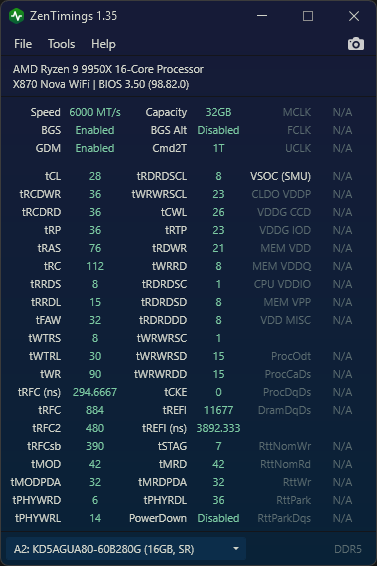
The tRFC could have been better here; a couple of other timings will be adjusted in our tuned memory results. Thankfully, these RAM modules use Hynix ICs, which are heaven for overclocking. Upon closer inspection, the DRAM carries the part number H5CG48AEBDX018, indicating it’s a Hynix-A die and paired with the Richitek RTQ5132GQWF PMIC (Power Management Integrated Circuit), which handles on-module power regulation for DDR5. Each module is composed of 2GB x 8 Memory ICs and manufactured in October 2025.
RAM Overclocking
We have overclocked the transfer speeds and adjusted a few loose timings. Although this overclock may be aggressive, it also demonstrates the potential of this memory. Here is what we did: first, we increased the memory transfer speed to 6200MT/s and adjusted a few timings, such as tRAS, tRC, tRFC, and tREFI, to stabilize these timings at the desired frequency. To do so, we increased the voltage slightly from 1.4V to 1.45V. We feel there is more room for overclocking and tuning, but that would be time-consuming and would cause more stability issues. All the benchmark charts also include the tuned results.
Here is the structured table of what we have tuned.
| Timing/Speed | EXPO | Adjusted Timings |
|---|---|---|
| Transfer Speed | 6000 MT/s | 6200 MT/s |
| tRAS | 76 | 32 |
| tRC | 112 | 68 |
| tRFC | 884 | 421 |
| tREFI | 11677 | 50000 |
RGB Lighting
Let’s take a look at the RGB.
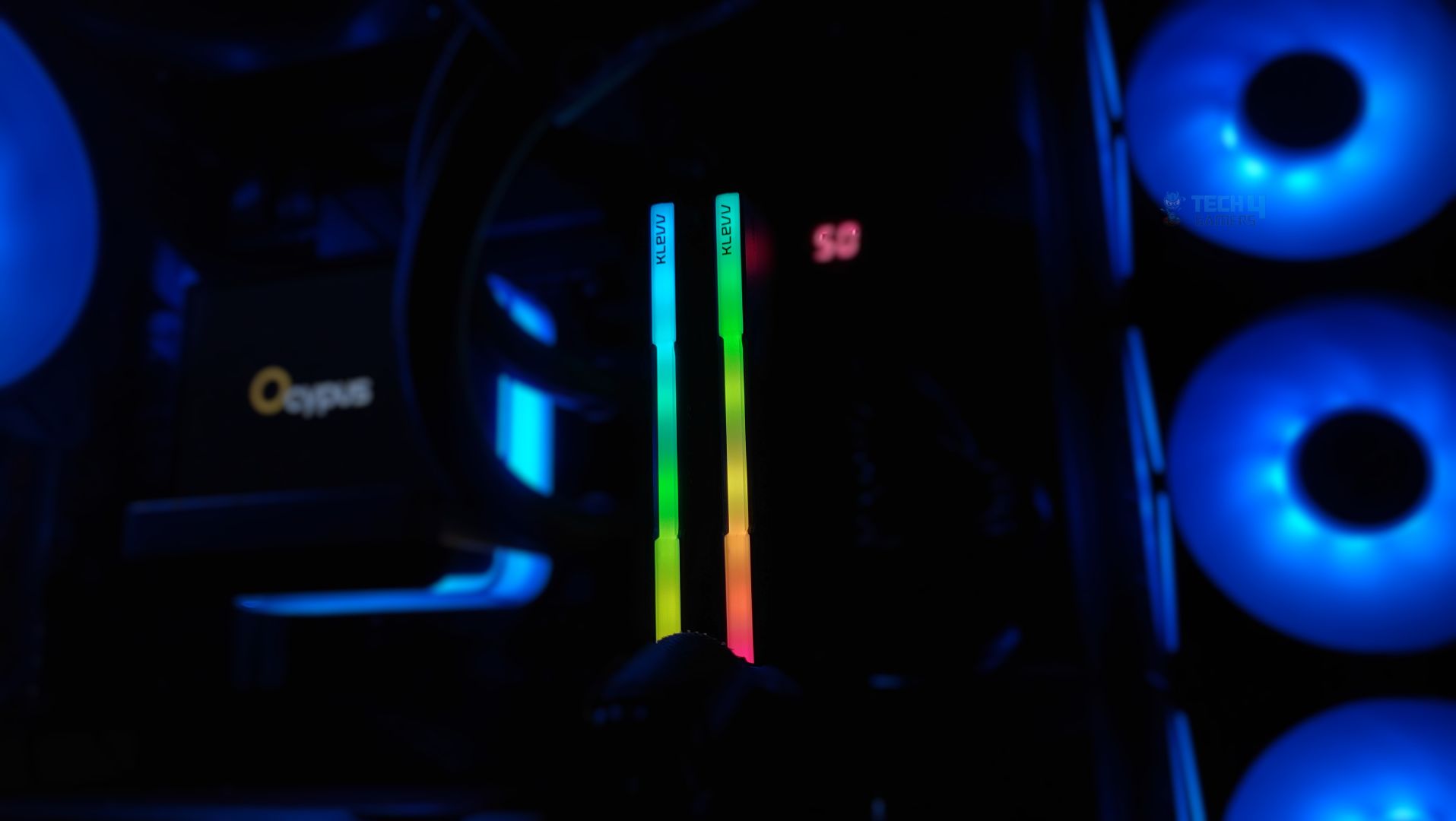
The lighting on this ram is well diffused; you can see a smooth, continuous glow rather than individual LED hotspots. The LEDs on this RAM are capable of a wide range of colors. The light bars also span most of the ram height, and they don’t appear cut off from any angle. The Klev branding can also be observed on the defuser. Overall, it’s a modern design that would appeal to many users.
Testing Methodology
How Do We Test Rams:
- We test the RAMs in various workloads, including synthetic, gaming, and real-world productivity tests, as AIDA memory bandwidth benchmark alone is not sufficient. Rams can be complicated at times, as faster speeds do not always translate into better performance. Therefore, we have tested various software to evaluate the performance of the RAMs.
Gaming Performance:
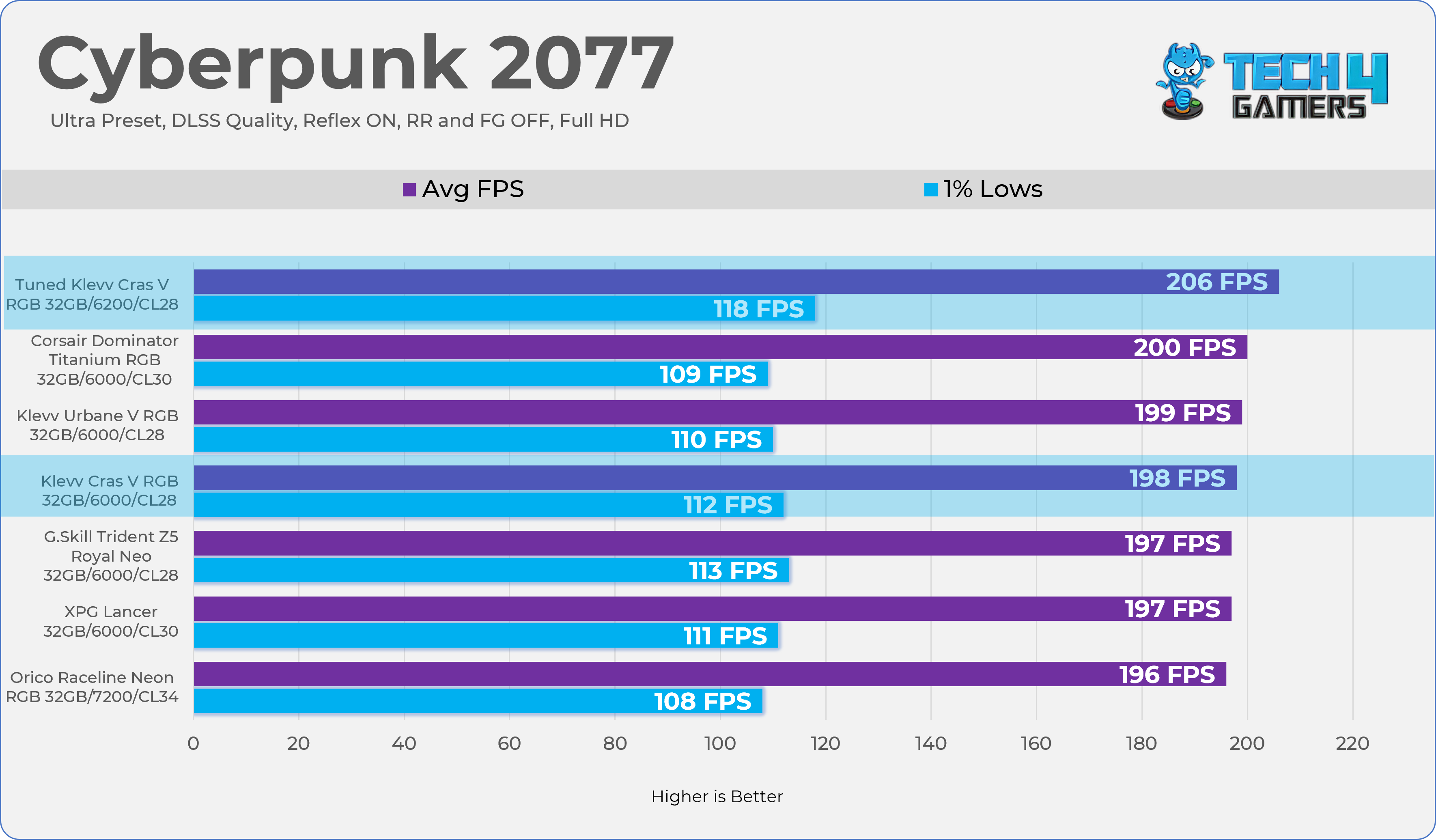
- We have two popular games in our suite, and we’re intentionally running them at slightly more CPU-bound scenarios to see how much their performance scales with memory. Most of the time, the average FPS won’t scale as you’d like, but minimum frames, such as 1% lows, can significantly impact the gaming experience. The faster rams with the lower timings can generally smooth out the frame time graphs.
Preparing System:
- We test the RAMs at the EXPO or DOCP at the stock voltages and timings.
- We use the stock BIOS configuration, so memory context restore (MCR) / latency killer are enabled by default on the AM5 platform for the base benchmarks. However, while tuning the CPU or Memory, we might turn off some features, such as MCR, to achieve the highest performance possible.
- In Windows, we have disabled certain security features, including Core Isolation/Memory Integrity, Virtualization-Based Security (VBS), and Hypervisor-Protected Code Integrity (HVCI), as these can occasionally impact system performance and increase latency.
- The CPU and GPU are operating at the stock configuration.
- Our Primary Test system is assembled in Hyte Y70.
Test Setup
The following setup was used for testing:
| CPU | AMD Ryzen 9 9950X |
| Motherboard | ASRock Phantom Gaming X870 Nova WiFi |
| Cooler | Ocypus Sigma L36 Pro |
| GPU | Zotac Solid RTX 5080 |
| Power Supply | Super Flower Leadex VII Platinum PRO 850W |
| BIOS Version | v3.5 |
| Windows Version | v25H2 OS Build (26200.6899) |
| Chipset Version | v7.06.02.123 |
Test – Memory Bandwidth & Latency
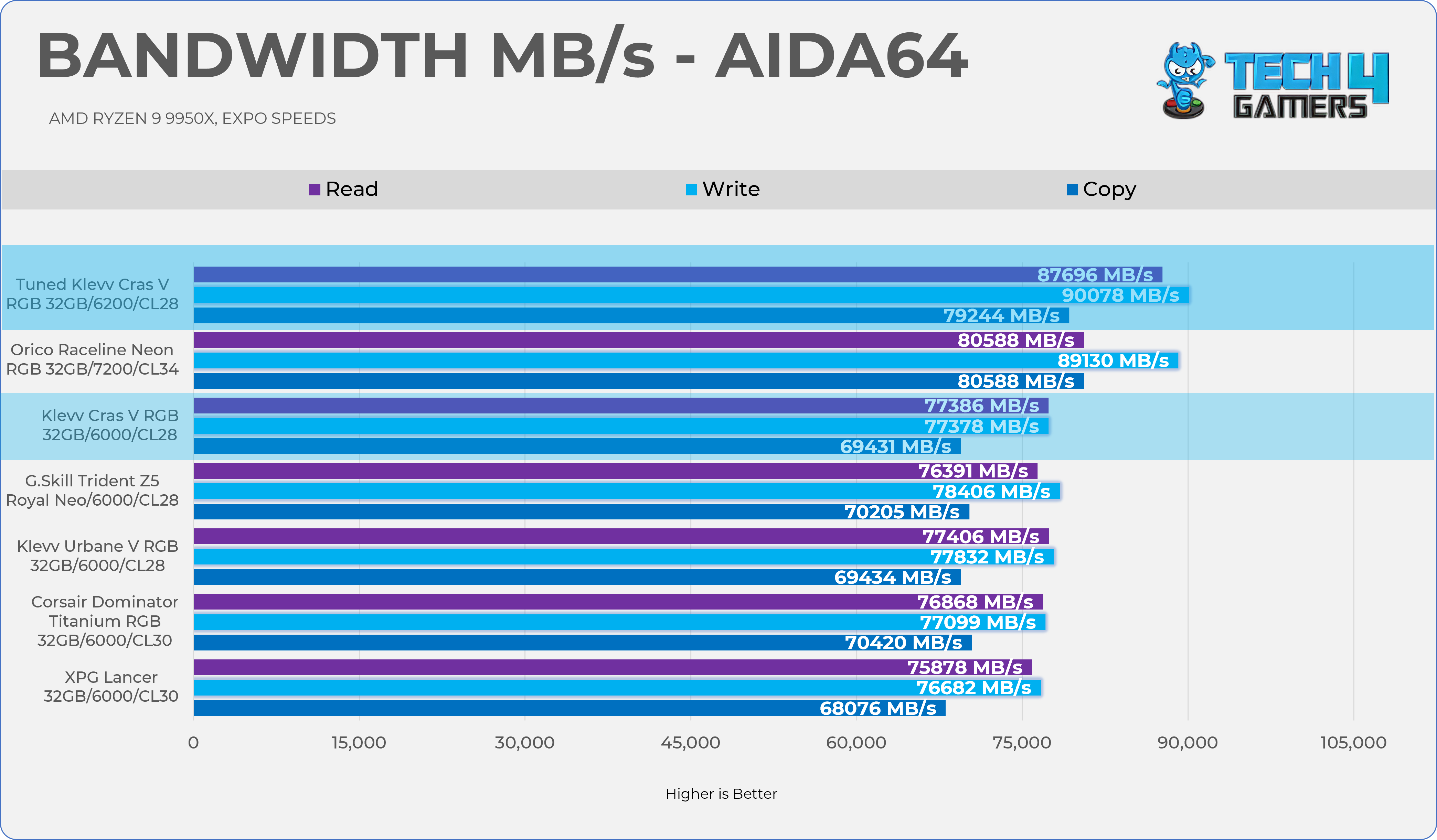
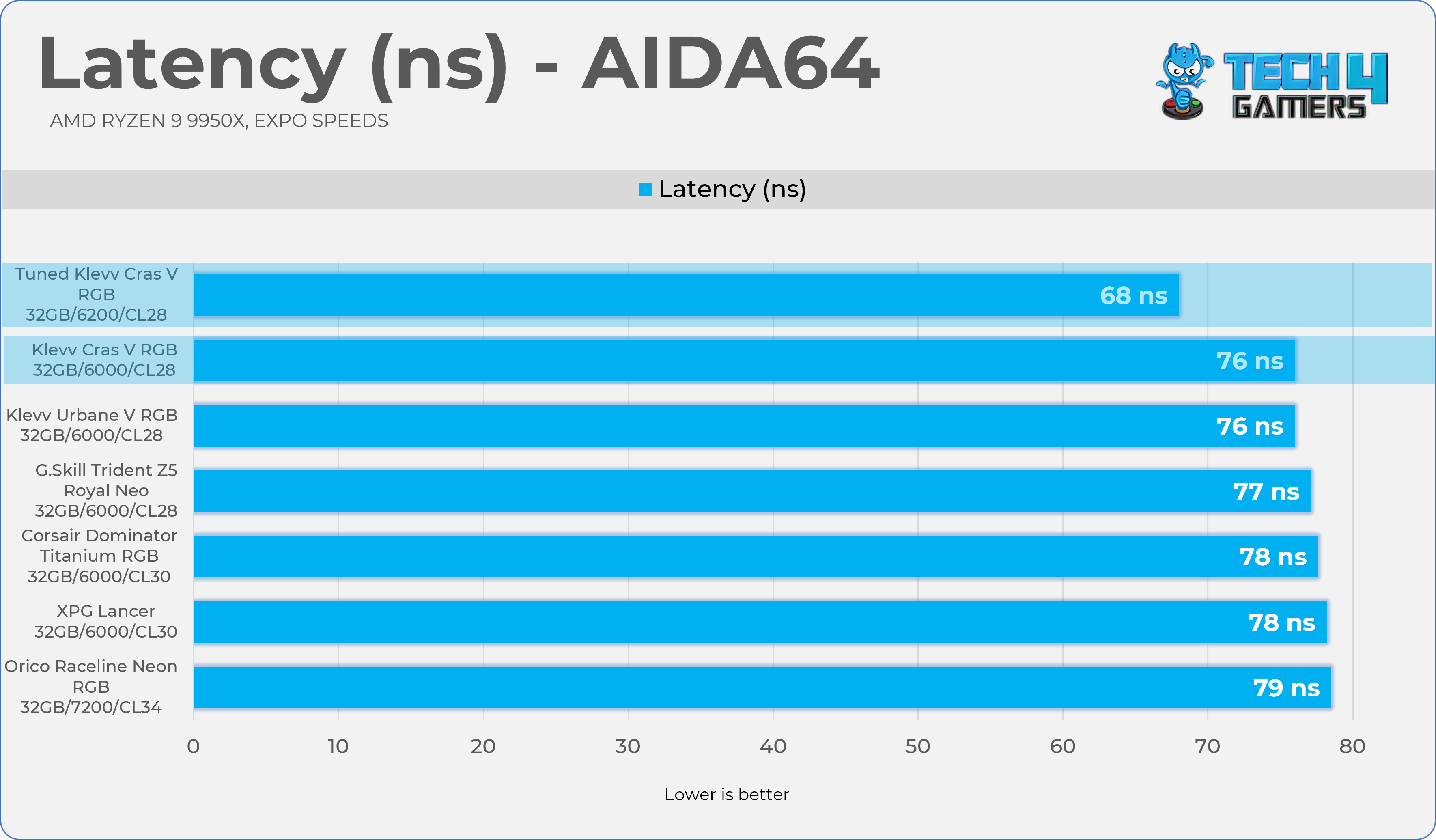
We’ll first check the RAM’s speed in raw numbers. Overclockers and enthusiasts generally use AIDA64 to validate memory tuning or performance.
AIDA64
Test – Office Productivity
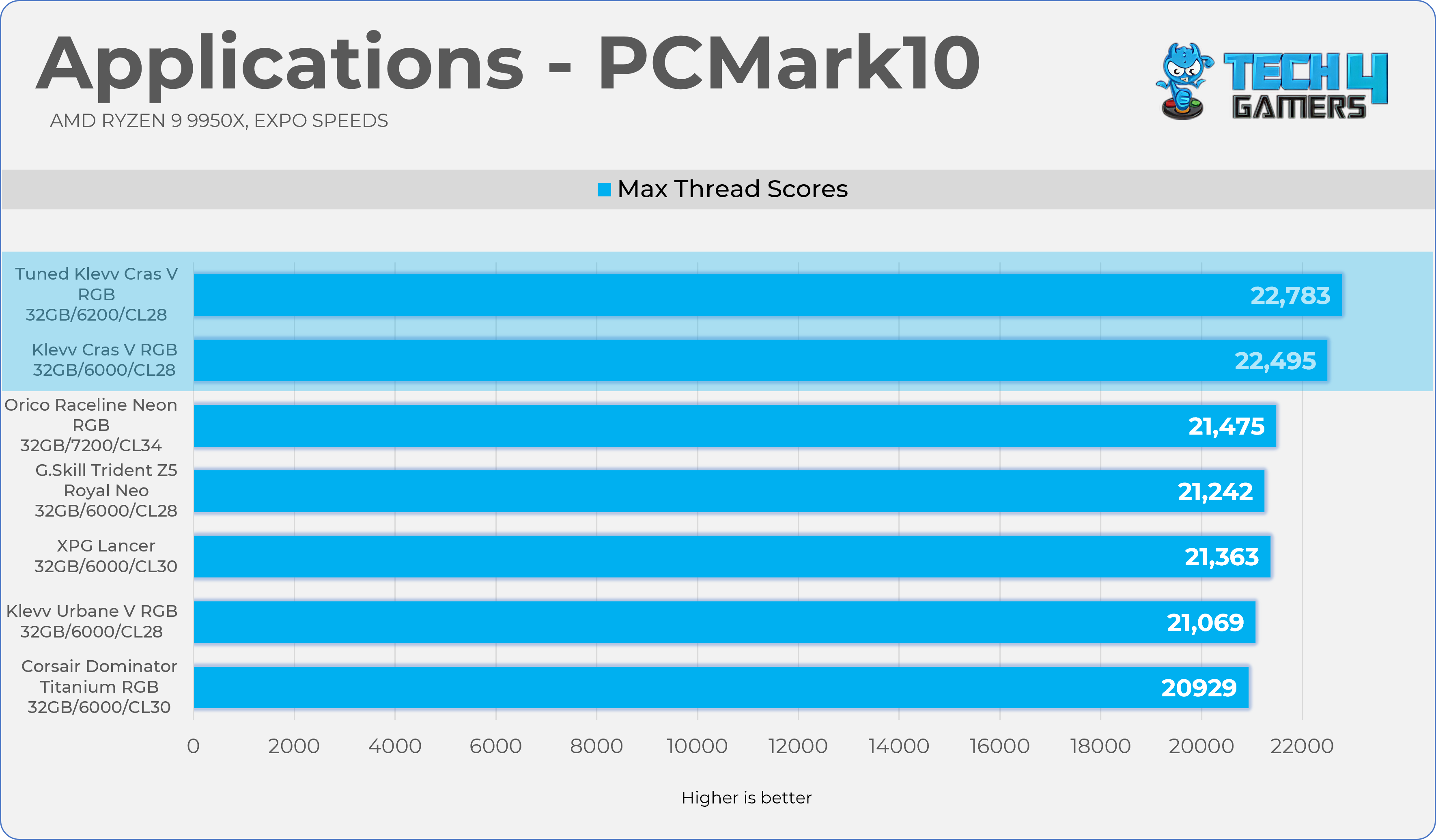
PCMark 10 benchmarks overall system performance in real-world workloads, such as browsing, video conferencing, and Application start-up. Also, it tests Microsoft Office workloads, including Excel and PowerPoint. Faster RAMs can have an impact on productivity performance.
PCMark10 Applications
Test – Compute Performance
When you talk about RAMs, most people would only think of bandwidth and latency, as AIDA64 shows. Faster RAMs may yield better scores, such as higher bandwidth, but can those bandwidth scores translate into real-world performance? That’s where compute tests come in to see how fast the CPU can access the data in the memory.
Cinebench 2024 – MT Scores
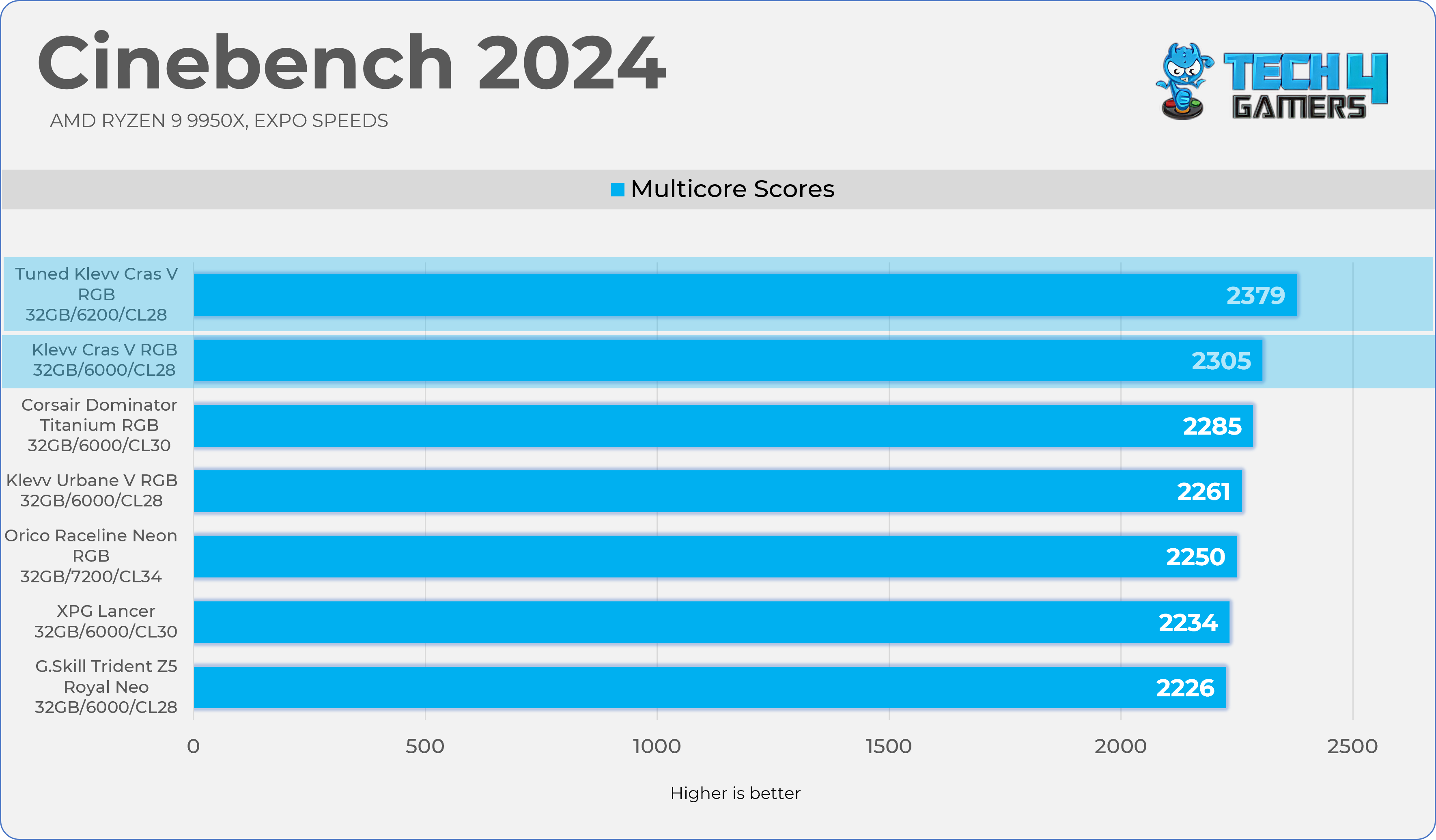
Based on Maxon’s Cinema 4D Rendering Engine, this tool measures how fast your CPU can render a complex scene. However, faster RAM can make a slight difference in the scores.
Y-Cruncher – Pi 2.5b Digits
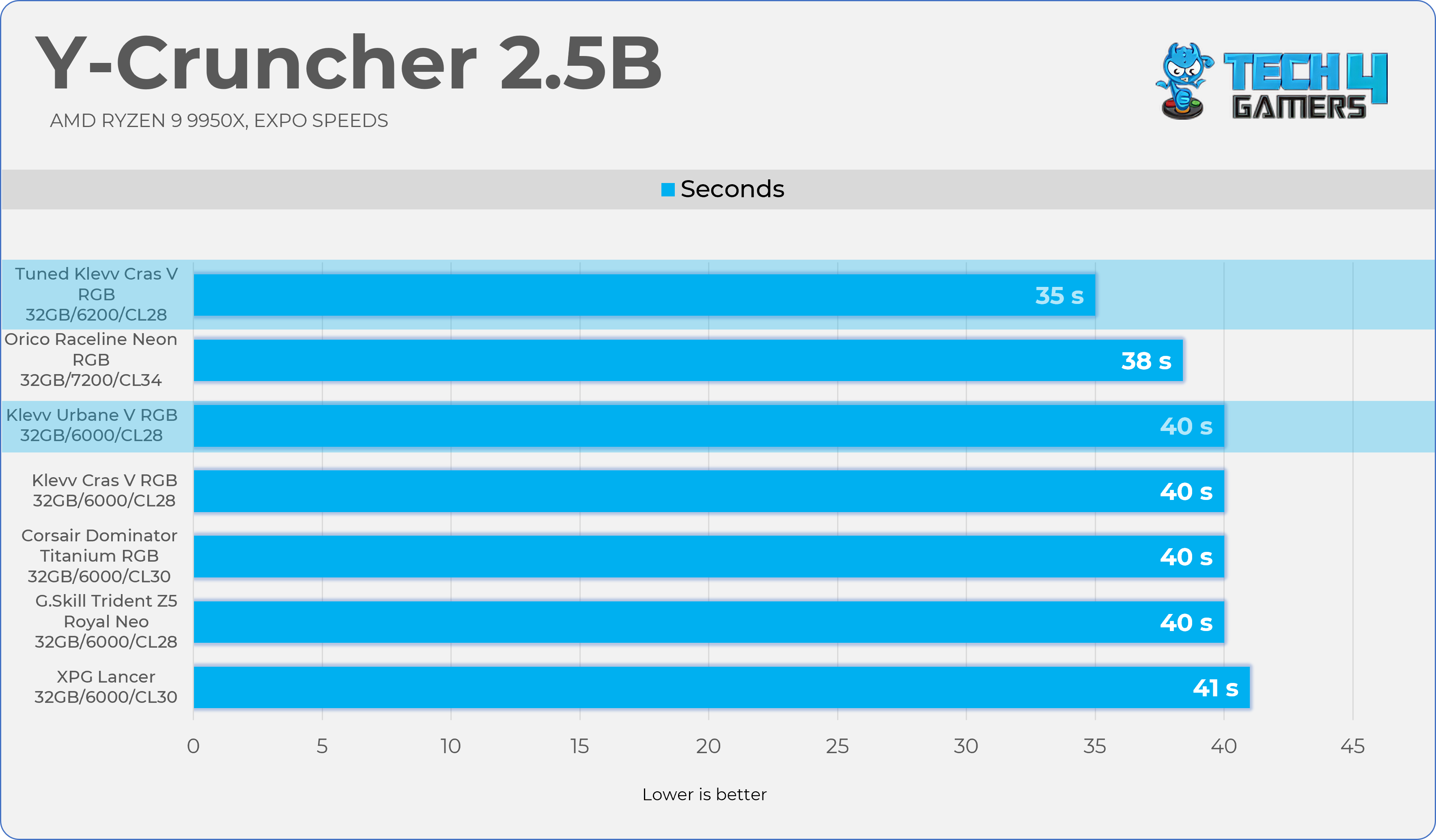
Y-Cruncher can push the CPU and memory to their limits. This tool is very effective as it demonstrates how the system performs in extreme scientific/computational workloads. Y-Cruncher’s primary function is to calculate mathematical constants to a vast number of digits, which can simultaneously stress the CPU and memory. It’s an excellent tool for testing memory stability.
3D Mark CPU Profile – Max Threads
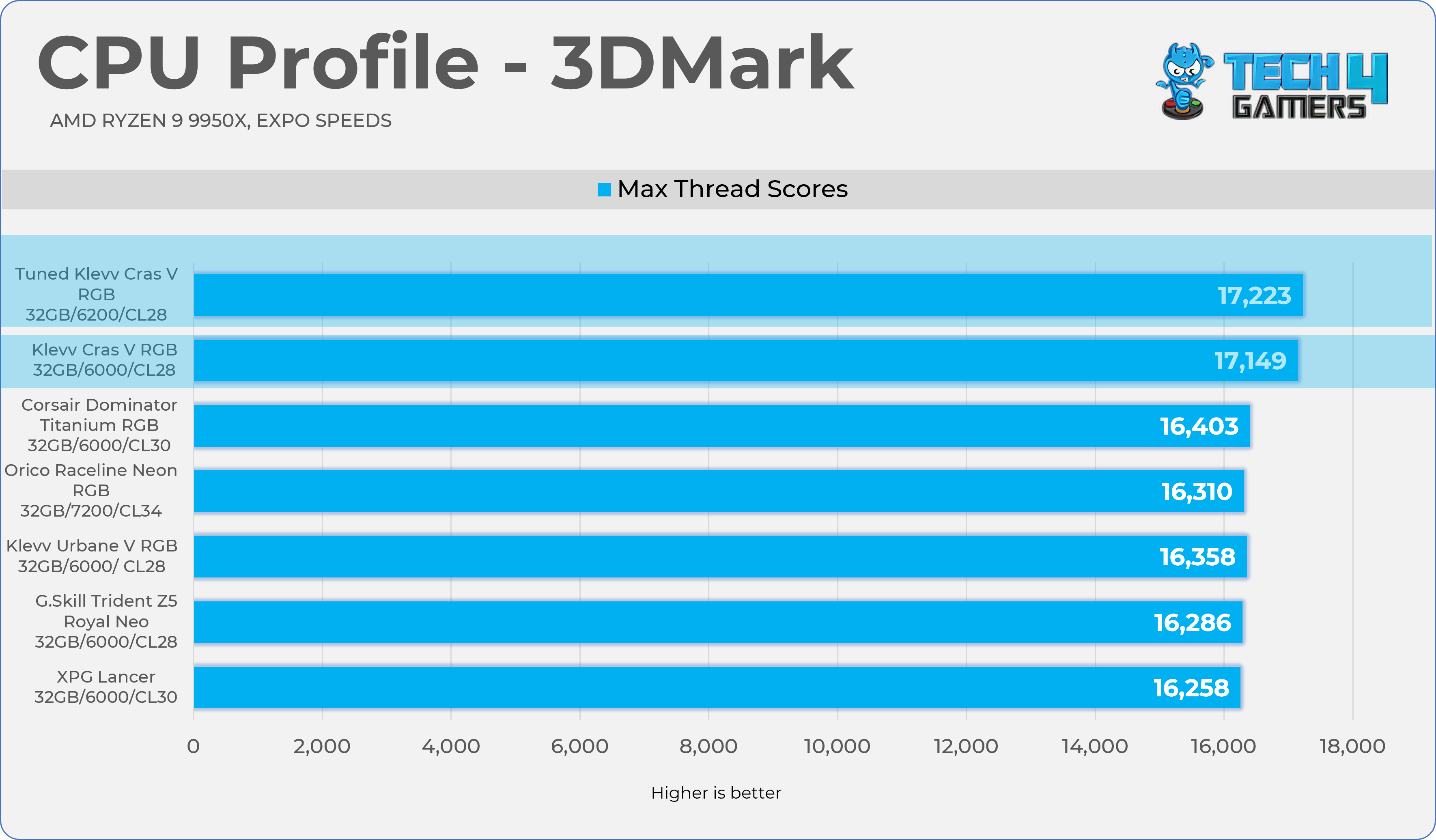
3DMark CPU Profile is an excellent tool for testing CPU Cores and Threads. However, faster RAMs can improve scores as the processor needs to access more data from memory in a multi-threaded workload, but the difference won’t be massive.
Test – Gaming
1920×1080 – Cyberpunk 2077
1920×1080 – Counter Strike 2
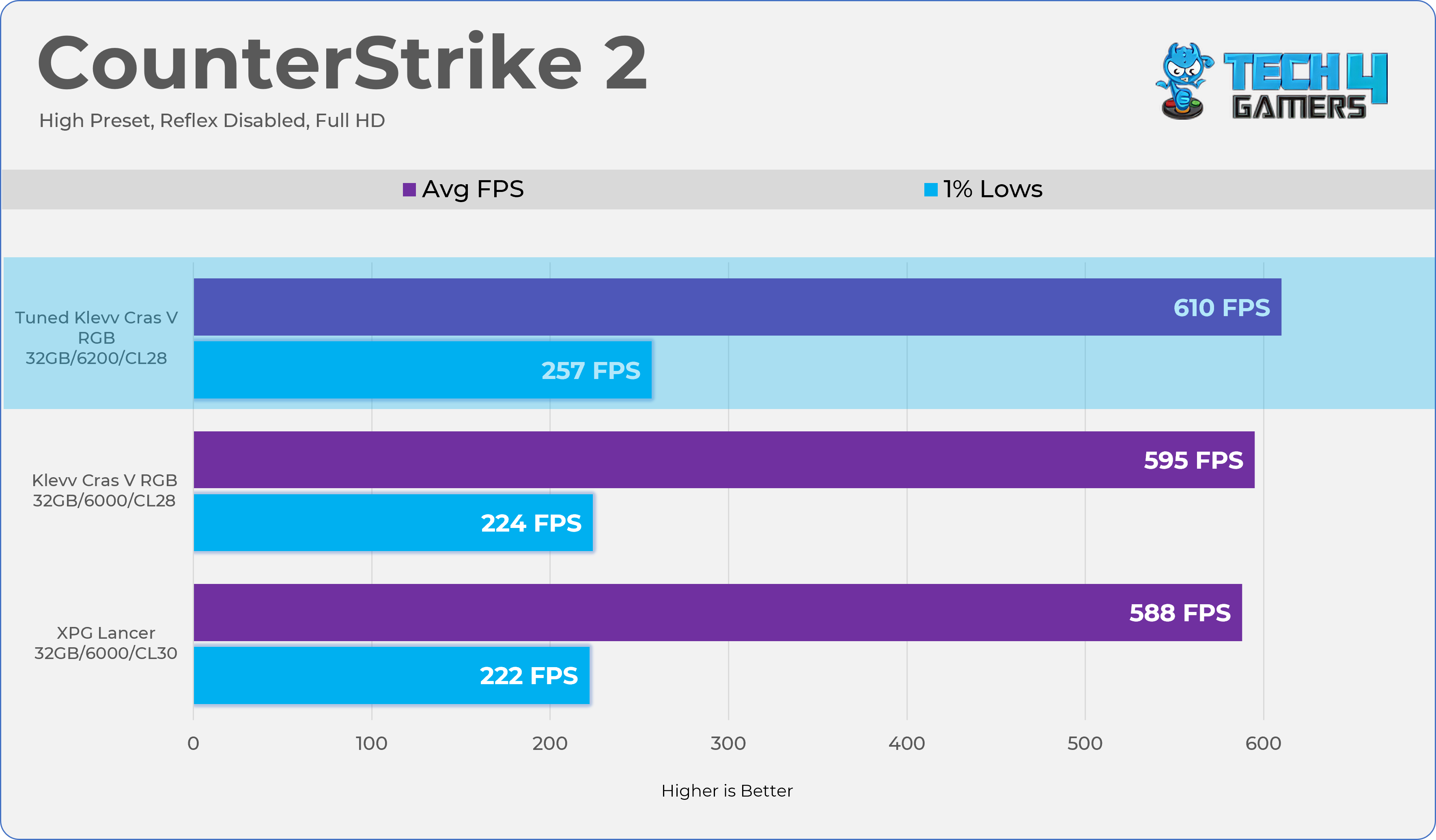
In CS2, we removed the other RAMs from the charts due to frequent game updates that have caused some performance regression. In the future, we will add the other rams for comparison.
Should You Buy It?
Buy It If
✅ You Want the Best Possible Performance Out Of The Box: This RAM offers a CAS latency of only CL28 at a transfer rate of 6000 MT/s, delivering excellent gaming performance and smoother responsiveness in everyday tasks.
✅ You Need A Compact Design: This RAM is only 44mm tall, which will not interfere with large CPU air coolers.
✅ You Need RAM That Overclocks Well: We have seen up to a 15% improvement in FPS at 1% Lows.
Don’t Buy It If
❌ If You’re On A Tight Budget: This is a premium RAM, targeted towards enthusiasts, and the lowest timings or higher transfer speeds might not benefit everyone. Spend the extra money on the GPU or CPU instead.
Final Thoughts
These RAM kits are very hard to find these days due to limited availability and low inventory at the store level, which affects our conclusion and final thoughts on their value. However, let’s focus on their features and performance. This RAM comes with tight primary timings (CL28, 6000 MT/s) and can be overclocked to 6200 MT/s at the same CAS latency with minor timing adjustments, resulting in up to a 15% performance improvement. However, your mileage may vary, as not all chips are created equal.
On the EXPO profile, the RAM performed very well across our benchmark suite. Despite its tighter timings, we had no stability issues at the EXPO profile. If you’re a high-FPS gamer, this RAM might be an excellent option, but again, the question is whether you should invest in it, given its availability and pricing that are going out of hand.
Klevv uses HYNIX ICs in our memory, which are known for excellent overclocking performance. We also appreciate the minimalist design approach. However, the RAM is only 2mm taller than the Urbane V ARGB from Klevv that we have tested before. Still, it fits most ITX builds without any interference.
Design-wise, there are small details, such as the ‘CRAS V RGB’ branding, which is carved in chrome finish on the heat spreader. The RAM also supports ARGB and features the hollow linear Design. The defuser bar runs the full length of the heat-spreader. Now coming back to the value, the RAM was available for retail at $105 USD on the release.
However, it’s unlikely you’ll find this RAM at that price nowadays due to shortages and limited availability. We generally don’t recommend spending much over the original cost, but if you can find this RAM for only a little more than its launch price, I’d call it a day.
Thank you! Please share your positive feedback. 🔋
How could we improve this post? Please Help us. 😔

Senior Hardware Reviewer at Tech4Gamers with over a decade of experience in the tech industry. My journey began in 2014 as a senior administrator for Pakistan’s largest gaming community forum. I specialize in testing and reviewing components like graphics cards, CPU coolers, and motherboards, while also sharing insights on overclocking and system optimization.
 Join Our Community