


- A mouse gathers vibrations from day-to-day verbal communication, which can be used to spy on conversations.
- These vibrations can be easily accessed and decoded using an AI model.
- Malicious or other software can misuse these vibrations in the worst-case scenarios.
A mouse is about as important to a PC gamer as any other component. Often, the difference between a great and an average mouse can make or break a game, so gamers end up going for the best possible option available.
These mice generally serve only one specific purpose, but a study reveals that there is a lot more to a mouse than meets the eye. In fact, under the right circumstances, a mouse can even be used to spy on you.
Why it matters: Data privacy and security are among the major problems plaguing the world today, so it’s never a bad idea to be cautious and informed when it comes to these matters.
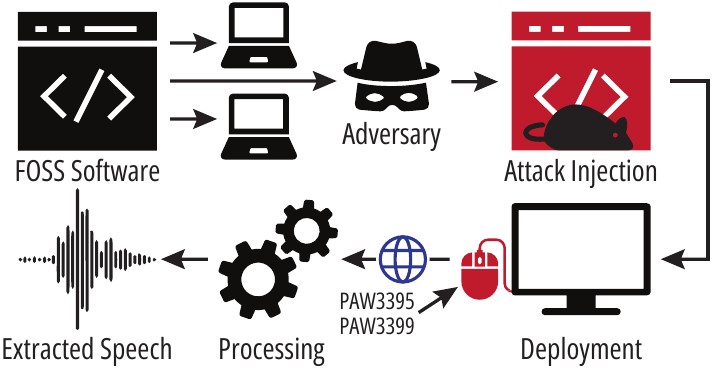
According to Researchers at the University of California, sensors in high-resolution optical mice can detect tiny desk vibrations.
This is so interesting because when a person speaks, vibrations travel through the surface and into the mouse sensor. These readings can be easily accessed and collected if said mouse is connected to a compromised computer.
The researchers noted that this data can be made usable through a series of steps. First, raw motion data packets must be extracted while isolating vibrations from the speech.
Once this signal is processed using digital signal processing techniques, a neural network model can reconstruct the waveform for more clarity. Testing shows that this process can decipher a conversation with up to 60% accuracy, a figure that is enough to make a conversation understandable.
Also, mice with resolutions up to 20,000 DPI or more are likely to be impacted most by such a vulnerability.
While the average gamer is unlikely to be compromised through a mouse, it’s interesting to see how the emerging AI technology can impact existing hardware. Perhaps even more peripherals and devices will evolve in different ways moving forward as AI continues to grow.
Thank you! Please share your positive feedback. 🔋
How could we improve this post? Please Help us. 😔

[Senior News Reporter]
Avinash is currently pursuing a Business degree in Australia. For more than 5 years, he has been working as a gaming journalist, utilizing his writing skills and love for gaming to report on the latest updates in the industry. Avinash loves to play action games like Devil May Cry and has also been mentioned on highly regarded websites, such as IGN, GamesRadar, GameRant, Dualshockers, CBR, and Gamespot.
 Join Our Community