


- ValueLicensing sued Microsoft for $270M in the UK CAT citing monopolistic and anti-competitive behaviour.
- Microsoft responded by claiming that some of its software included original works of creative art, which would mean that ValueLicensing’s business practices constituted copyright infringement.
- However, the judges dismissed Microsoft’s witty argument and validated the fairness of ValueLicensing’s business model, but Microsoft has announced its decision to appeal the ruling.
The Second Hand Software Sheriff Rides Into Town
First, who is ValueLicensing?
Think of them as a brokerage for used software.
To elaborate, they buy up old, perpetual licenses for products like Windows and Office from companies that do not need them anymore.
Then, they resell those licenses at a discount to other businesses. It is a classic second hand market, like a used car lot for bits and code.
Understandably, ValueLicensing argues this is not just smart business, it is fair business, protected by European law. Their entire model is built on a landmark 2012 ruling from the European Court of Justice in the UsedSoft vs. Oracle case.
That decision was clear. Once a software company sells a perpetual license, it is sold. The buyer owns that copy and has the right to resell it, just like a book or a chair.
The principle is called “exhaustion of rights,” and it is meant to prevent companies from controlling a product forever.
ValueLicensing saw this ruling as a green light. Microsoft, however, apparently saw it as a problem to be solved with some creative contract writing.
Microsoft’s Stealthy Move And The $270 Million Lawsuit
Here is where the plot thickens. ValueLicensing alleges that Microsoft did not take the UsedSoft ruling lying down.
Instead, the company quietly slipped new clauses into its volume licensing contracts with organizations.
Microsoft demanded that licenses purchased under volume licensing must be sold in their entirety rather than in multiple batches of small portions.
It was a clever, if sneaky, end run around the law. By contract, they were trying to strangle the second hand market at its source.
For ValueLicensing, this was an existential threat. If you cannot buy old licenses, you cannot sell them. So, they sued.
They took Microsoft to the UK’s Competition Appeal Tribunal, demanding a staggering $270 million in damages.
Their claim was simple. Microsoft’s covert contractual maneuver was an anti-competitive abuse that deliberately damaged their business.
A Creative Defense: Microsoft Claims Office Is An Art Gallery
Now, Microsoft’s response was, to put it mildly, imaginative. They did not just argue about contracts. They reached for a truly novel legal theory.
Microsoft lawyers contended that their software, specifically Office, was not just a functional product. They claimed it was a work of creative art, protected under different copyright rules.
I am not joking. Their argument pointed to the icons, the fonts, the clip art, even the help files as original artistic works.
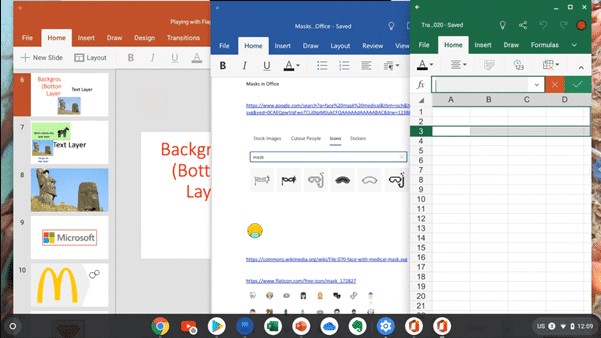
Therefore, reselling a license was not like reselling a tool, it was like illegally copying a painting. This was their attempt to sidestep the UsedSoft ruling entirely by claiming their products were special, artistic creations.
When I first read this, I laughed. It seemed like a parody of corporate legalese. The humble Office Assistant, Clippy, reborn as a protected masterpiece.
It was a breathtakingly witty argument, but also a deeply desperate one.
The Court’s Verdict: Common Sense Over Clip Art
Fortunately, the UK court was not buying what Microsoft was selling.
In a resounding ruling, the Competition Appeal Tribunal dismissed the “creative art” argument entirely. The judge saw it for what it was, a transparent attempt to circumvent well established law.
The court reaffirmed the principle from the UsedSoft case. Microsoft’s perpetual software licenses can be resold. Full stop. The contractual clauses meant to block this were anti competitive.
Why This Fight Matters For You And Your Wallet
So, why should you care about a squabble between a tech titan and a software reseller? Because this is about your wallet.
A healthy, legal second hand market for software licenses creates downward pressure on prices. It gives businesses, schools, and non profits a legitimate way to save significant money on essential software. It challenges the move towards subscription only models by giving value to what you already own.
Microsoft’s attempt to kill this market was, at its core, an attempt to control pricing and eliminate a cheaper alternative. Their loss is a win for competition.
In the end, Microsoft’s relentless drive to stop you from getting a discount may cost them far more than $270 million. It may cost them a measure of their control, and that is a price they never wanted to pay.
The appeal is coming, but for now, the little guy has won a major battle. And that is a story worth knowing.
Thank you! Please share your positive feedback. 🔋
How could we improve this post? Please Help us. 😔

[Wiki Editor]
Ali Rashid Khan is an avid gamer, hardware enthusiast, photographer, and devoted litterateur with a period of experience spanning more than 14 years. Sporting a specialization with regards to the latest tech in flagship phones, gaming laptops, and top-of-the-line PCs, Ali is known for consistently presenting the most detailed objective perspective on all types of gaming products, ranging from the Best Motherboards, CPU Coolers, RAM kits, GPUs, and PSUs amongst numerous other peripherals. When he’s not busy writing, you’ll find Ali meddling with mechanical keyboards, indulging in vehicular racing, or professionally competing worldwide with fellow mind-sport athletes in Scrabble. Currently speaking, Ali’s about to complete his Bachelor’s in Business Administration from Bahria University Karachi Campus.
Get In Touch: alirashid@tech4gamers.com
 Join Our Community