


Naturally, after more than a decade of covering PCMR hardware, I have seen a variety of marketing buzzwords come and go.
But the current AI frenzy has birthed something truly absurd. Walk into any electronics retailer today, and you will see them.
I’m talking about SSDs emblazoned with stickers screaming “AI-Optimized.” They promise next-level performance for the AI era. They carry premium price tags.
And for 99.9% of buyers, they are complete and utter nonsense.
Here is the uncomfortable truth storage manufacturers do not want you to know.
The Firmware Trick: Read-Centric vs. Write-Centric
To understand the deception, you need to understand how SSDs handle data.
Most consumer SSDs are tuned for a read-heavy workload.
You boot your PC (reads), launch a game (reads), open a document (reads). Writes happen less frequently.
This is why standard SSDs use a fast SLC (Single Level Cell) cache to absorb those occasional write bursts and then trickle the data into slower TLC (Triple level Cell) or QLC (Quad Level Cell) NAND in the background.
However, an “AI-Optimized” drive shifts this balance.
To put this into perspective, academic research on AI storage confirms that AI workloads in data centers require entirely different firmware characteristics.
They demand intelligent data placement, dynamic channel load redistribution, and adaptive wear leveling algorithms to handle the sustained, massive write loads of AI dataset training. This is a write-centric workload.
For an actual AI researcher training large language models, this makes sense.
But for a gamer loading Cyberpunk 2077? It is a disaster.
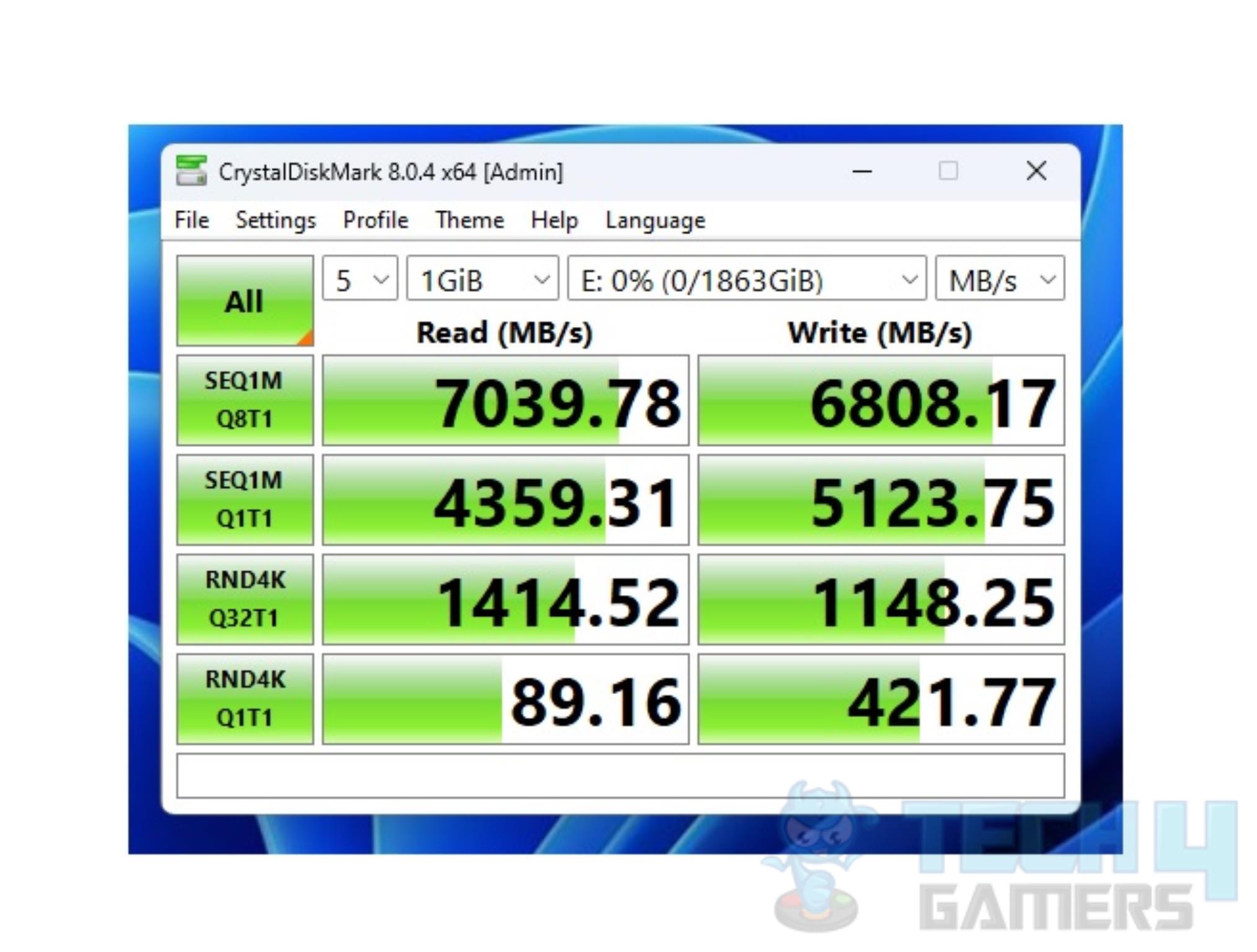
Why? Well, games are read-intensive. They require rapid random reads to stream textures and assets.
By tuning the firmware for sustained writes, you can actually degrade random read performance, the very metric that matters for gaming.
Even worse, aggressively writing data to optimize for AI workloads can accelerate NAND wear, shortening the drive’s lifespan for zero benefit.
The Real Target (And Why It Is Not You)
Here is the critical distinction. True AI-optimized storage exists, but it lives in enterprise data centers, not on retail shelves.
For instance, companies like Micron have developed drives like the 9550 SSD, explicitly designed for AI servers.
It delivers 14.0 GBps sequential reads and is optimized for GPU-to-SSD data transfer methods like Nvidia’s BaM (Big Accelerator Memory).
This drive is for hyperscalers and data center operators, built to handle the punishing workloads of AI training clusters.
What you are seeing at Best Buy is a pale imitation. It is consumer-grade hardware repackaged with a trendy label.
The academic literature confirms that true AI storage innovation involves integrating ARM cores and specialized AI instruction sets directly into the SSD controller.
That is not happening in your $120 1TB NVMe drive. It is happening in enterprise gear that costs ten times as much.
The real irony? Market research shows the global AI Storage SSD market was valued at just $164 million in 2024. That is a rounding error compared to the broader SSD market.
Yet the term is being slapped on millions of consumer drives, diluting its meaning to sell you a product you do not need.
The Crucial Reality Check
The AI boom is genuinely reshaping the storage industry, but not in the way the marketing suggests.
Micron, one of the world’s largest memory manufacturers, recently announced it is pulling its consumer brand Crucial from the market entirely.
The reason? Production capacity is being radically reorganized to focus on high-margin enterprise products like HBM (High Bandwidth Memory) and specialized enterprise NAND for AI data centers.
This means two things. First, the AI-Optimized SSDs you see are increasingly a last gasp from a market segment manufacturers are abandoning.
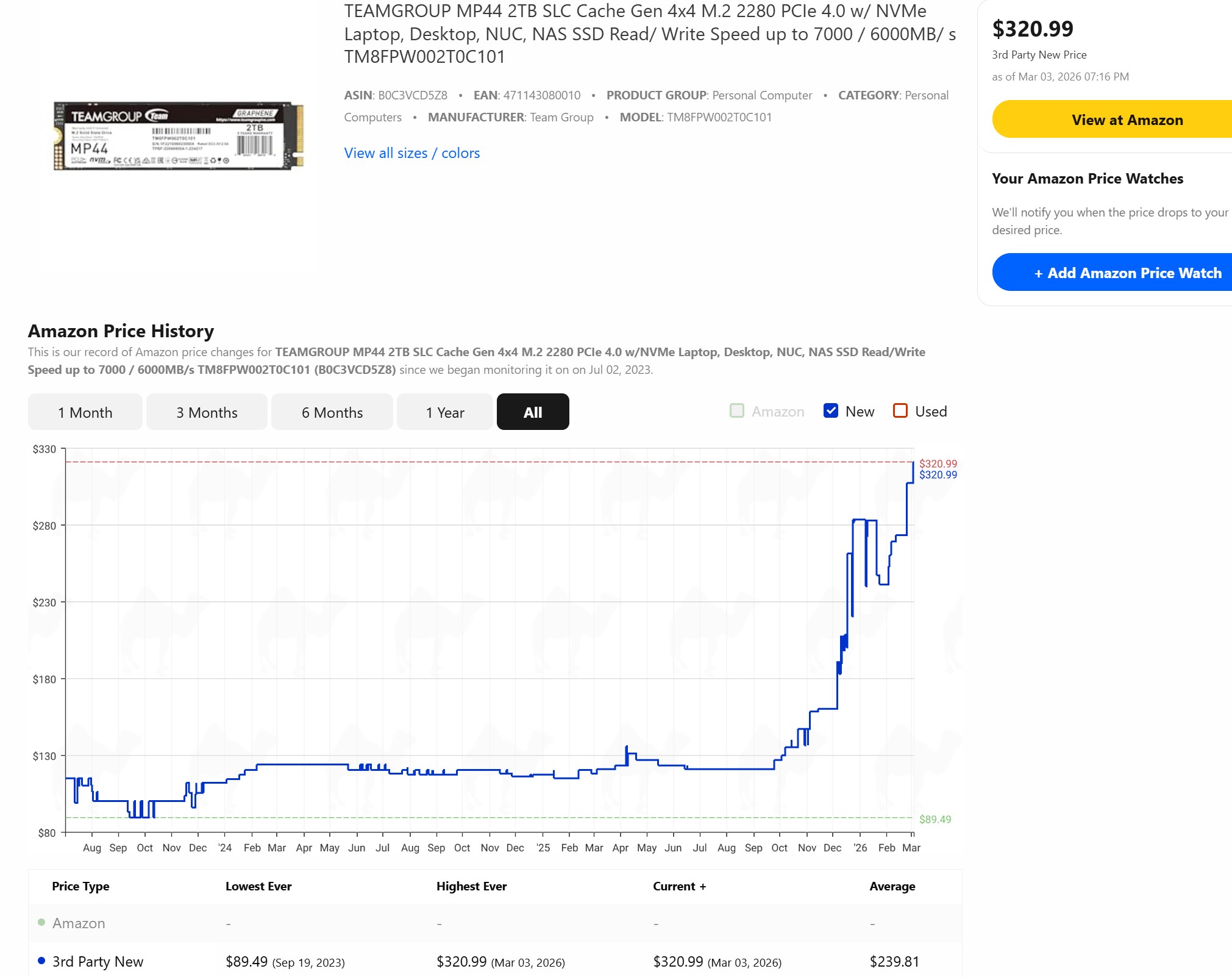
Second, the AI boom is actually driving prices up for consumers by diverting production capacity away from the drives we actually need.
The Better Buy: Standard High-End Consumer SSDs
So what should you actually buy?
For 99% of users, any of the six medalists in our Best SSDs For Gaming roundup will prove to be faster, cheaper, and more reliable.
But if you want to experiment with other brands/models, just look for SSDs with:
- Strong random read performance (IOPS): This is what loads your games and boots your OS.
- Phison or Silicon Motion controllers with proven track records.
- TLC NAND for a good balance of speed and endurance. QLC can be acceptable for pure storage but avoid it for an OS drive.
Thank you! Please share your positive feedback. 🔋
How could we improve this post? Please Help us. 😔

[Wiki Editor]
Ali Rashid Khan is an avid gamer, hardware enthusiast, photographer, and devoted litterateur with a period of experience spanning more than 14 years. Sporting a specialization with regards to the latest tech in flagship phones, gaming laptops, and top-of-the-line PCs, Ali is known for consistently presenting the most detailed objective perspective on all types of gaming products, ranging from the Best Motherboards, CPU Coolers, RAM kits, GPUs, and PSUs amongst numerous other peripherals. When he’s not busy writing, you’ll find Ali meddling with mechanical keyboards, indulging in vehicular racing, or professionally competing worldwide with fellow mind-sport athletes in Scrabble. Currently speaking, Ali’s about to complete his Bachelor’s in Business Administration from Bahria University Karachi Campus.
Get In Touch: alirashid@tech4gamers.com
 Join Our Community