



- US efforts to block Chinese AI chips have backfired by creating a shortage of essential electrical infrastructure that China primarily manufactures.
- Nearly 50% of planned American AI data centers are facing cancellation because the country cannot source enough basic electrical components.
- Current US data center power capacity is at 4 GW, falling significantly short of the 12 GW needed to meet industry goals.
The United States aimed to stay ahead in artificial intelligence by restricting China’s access to advanced chips and chip-making technology. While they have succeeded in doing this, they are now suffering the consequences. Half of the AI data center construction projects in the US have been canceled, as China produces most of the necessary equipment and electrical components, but the overwhelming demand is causing shortages and delays.
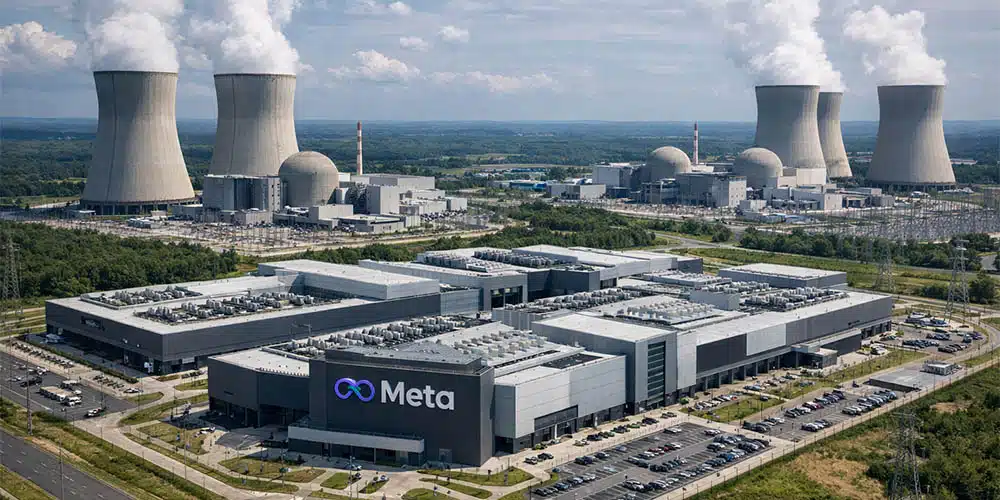
A huge amount of money is being invested in AI than ever before, with companies such as Meta planning to build nuclear power reactors to power more than 6 GW of data centers. Everything appears to be going well, but it is worth noting that the United States does not want to rely on China, and China does not want to rely on the US.
This is problematic because China is the leading producer of electrical equipment and components for data center infrastructure, suggesting the United States will be unable to complete all its data center development projects.
According to Sightline Climate by Bloomberg, the United States expects to consume 12 GW of energy in AI data centers, but has only reached 4 GW (33%), with plans to exceed this limit as the year advances.
The issue is not the chips themselves, as previously thought, but meeting these electrical demands, which they cannot do without components obtained from China. Transformers and batteries account for only 10% of the entire cost of an AI data center, but without them, the centers cannot function.

Further, we saw that Donald Trump wants to reduce the United States’ reliance on other countries by imposing tariffs that raised costs across the board, intending to stimulate domestic companies. However, they are unable to meet demand since they rely on China for basic electrical equipment and components.
Demand is so great that they are experiencing shortages, and their manufacturing capacity is not keeping up. They now have to wait 5 years in 2026 to acquire electricity transformers, up from 2 to 3 years in 2020.
Delays in the construction of AI data centers may result in project cancellation or postponement, despite a three-year deadline. According to Bloomberg, the United States increased its transformer imports from 1,500 in 2022 to more than 8,000 in 2025, with China accounting for more than 40% of battery imports.
This situation does not appear to be improving anytime soon, and tensions between the United States and China must be considered, as they will affect the supply chain.
Thank you! Please share your positive feedback. 🔋
How could we improve this post? Please Help us. 😔

[Editor-in-Chief]
Sajjad Hussain is the Founder and Editor-in-Chief of Tech4Gamers.com. Apart from the Tech and Gaming scene, Sajjad is a Seasonal banker who has delivered multi-million dollar projects as an IT Project Manager and works as a freelancer to provide professional services to corporate giants and emerging startups in the IT space.
Majored in Computer Science
13+ years of Experience as a PC Hardware Reviewer.
8+ years of Experience as an IT Project Manager in the Corporate Sector.
Certified in Google IT Support Specialization.
Admin of PPG, the largest local Community of gamers with 130k+ members.
Sajjad is a passionate and knowledgeable individual with many skills and experience in the tech industry and the gaming community. He is committed to providing honest, in-depth product reviews and analysis and building and maintaining a strong gaming community.
 Join Our Community