



You might have heard the triumphant news.
Governments across the Western world are throwing hundreds of billions of dollars at semiconductor companies.
For starters, the United States passed its CHIPS Act, pouring more than $50 billion into domestic chip production.
Subsequently, the European Union approved its own €43 billion Chips Act back in the first half of 2023.
Japan’s embracing the trend as well by subsidizing Rapidus and TSMC.
Even China’s trying to attain self-sufficiency when it comes to manufacturing semiconductor chips.
The headlines all scream the same thing: we are bringing chip manufacturing home.
It sounds like a patriotic victory for national security and technological sovereignty.
But I have looked under the hood of these deals.
What I found is not a story of public investment for the common good.
On the contrary, it is a story of the most lucrative corporate welfare scheme in modern history.
These are not simple grants.
They are complex financial instruments designed to guarantee profitability for the world’s richest semiconductor giants, using your tax dollars as the safety net.
And the benefits trickling down to you? They are vanishingly thin.
The Fine Print: Profits Are Guaranteed, Losses Are Socialized
Let us start with the heart of the matter: the profit guarantee clause.
These subsidy agreements are not straightforward.
They include provisions that fundamentally alter the risk equation for companies like Intel and TSMC.
Consider the terms buried in the fine print.
For instance, TSMC’s $6.6 billion subsidy package for its Arizona expansion includes what the government calls an “upside sharing” agreement.
If the company’s revenues and profits from the new plants soar “well above projections,” they have to give a portion back to the government.
Sounds fair, right? But flip that coin.
What if the fab operates at a loss?
What if costs overrun, demand softens, or operational inefficiencies pile up?
Well, the deal does not ask TSMC to shoulder that burden alone.
That’s because the government effectively covers it.
How? The subsidies, the low-interest loans, the tax breaks all combine to create a floor beneath which the company’s profits cannot fall.
This is the fundamental inversion of capitalism.
Profits, when they come, are private. They flow to shareholders and executives.
Losses, should they materialize, are public. They are absorbed by the taxpayer.
We have become the silent underwriters of the semiconductor industry’s balance sheet.
The Local Impact Myth: Where Are The Jobs For Local Workers?
Unfortunately, the most persistent and misleading argument for these subsidies is the promise of local jobs.
Politicians love to stand in front of construction sites and tout the “thousands of high-tech jobs” they are creating.
The reality on the ground is far more complex.
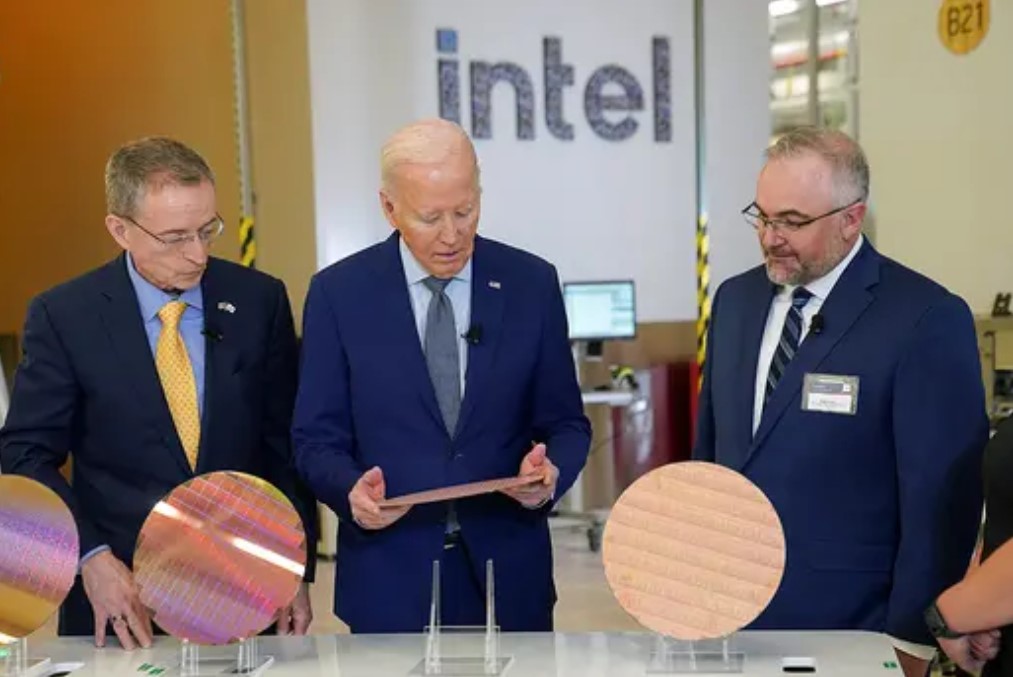
Academic research from the National Bureau of Economic Research confirms that the CHIPS Act is creating jobs, roughly 15,000 to 16,000 direct positions in the semiconductor sector.
That sounds positive, and it is, to a point.
But look closer at who fills those roles.
The jobs being created are for highly specialized engineers and technicians.
These are not positions you can fill by retraining a local retail worker over a weekend.
For example, TSMC itself has a deeply Taiwanese corporate culture; nearly 90% of its global employees and management are Taiwanese.
Meanwhile, the billions spent on subsidizing one company could have been invested in public infrastructure, community college training programs, or small business grants across dozens of communities.
The Bottom Line: A New Era Of Corporate Welfare
Therefore, we must reframe how we see these massive subsidy packages.
They are complex deals designed to ensure that even if the private sector cannot make the math work, the public sector will step in to close the gap.
The semiconductor industry is vital, yes. National security concerns are real.
But the current model, with its profit guarantees, endless subsidy escalations, and inflated job promises, is a raw deal for the taxpayer.
We are paying for the factories, underwriting the risk, and then expected to cheer when the companies post record profits.
It is time to demand more transparency, more accountability, and a guarantee that this public investment actually serves the public interest, not just the corporate bottom line.
Thank you! Please share your positive feedback. 🔋
How could we improve this post? Please Help us. 😔

[Wiki Editor]
Ali Rashid Khan is an avid gamer, hardware enthusiast, photographer, and devoted litterateur with a period of experience spanning more than 14 years. Sporting a specialization with regards to the latest tech in flagship phones, gaming laptops, and top-of-the-line PCs, Ali is known for consistently presenting the most detailed objective perspective on all types of gaming products, ranging from the Best Motherboards, CPU Coolers, RAM kits, GPUs, and PSUs amongst numerous other peripherals. When he’s not busy writing, you’ll find Ali meddling with mechanical keyboards, indulging in vehicular racing, or professionally competing worldwide with fellow mind-sport athletes in Scrabble. Currently speaking, Ali’s about to complete his Bachelor’s in Business Administration from Bahria University Karachi Campus.
Get In Touch: alirashid@tech4gamers.com
 Join Our Community