


- A new report claims that the price of all Samsung memory products is increasing by up to 80%.
- Distributors could hike prices of memory chips, including DRAM and NAND.
- This could affect the prices of consumer electronics in the near future.
It’s become apparent that the memory crisis will only get worse in the next few years. So, huge price hikes are being implemented across all memory products and consumer goods that use them across various industries. However, Samsung might be taking things too far.
The company’s official distributors are reportedly raising the prices of its memory products by as much as 80%.
Why it matters: Samsung distributors hiking the prices of memory goods by 80% could worsen the situation for gaming and other industries already struggling to survive in the ongoing memory apocalypse.
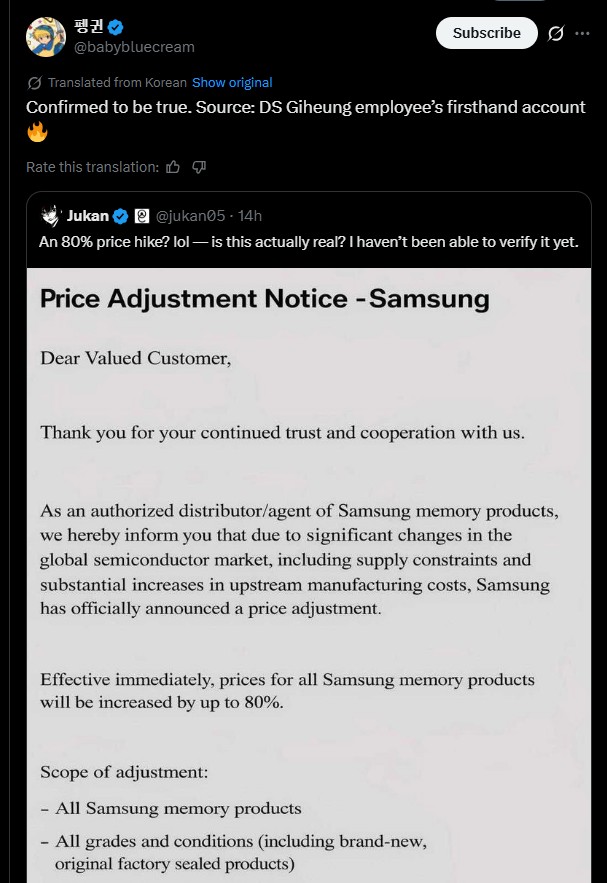
The alleged notice from the Samsung distributor states that prices for all memory products will be increased by up to 80%. This applies to all memory modules, including DRAM, NAND, HBIM, server chips, and the like.
The hike spans across products of all grades, conditions, specs, and capacities. And as you’d expect, Samsung announced a price adjustment due to supply constraints and increased manufacturing costs in the global semiconductor market.
This notice allegedly originated from an employee at Samsung Electronics’ Device Solutions campus in Giheung, South Korea, so it’s being treated as an official document. Samsung has yet to confirm or deny the viral report online.
Regardless, it is reportedly effective immediately, so other authorized and official company distributors and dealerships will also apply the same price increase across memory products.
We can expect the consumer electronic goods that use Samsung memory chips to get even more expensive in the near future, including SSDs, memory cards, and USBs.
Samsung had already raised memory prices by up to 60% late last year, as tech giants continue to invest in the AI industry with no end in sight.
Do you think the price of Samsung memory products being raised by as much as 80% is justifiable, or is this too absurd a hike this time around? Let us know your thoughts in the comments below, or join the discussion on the Tech4Gamers forum.
Thank you! Please share your positive feedback. 🔋
How could we improve this post? Please Help us. 😔

Shameer Sarfaraz has previously worked for eXputer as a Senior News Writer for several years. Now with Tech4Gamers, he loves to devoutly keep up with the latest gaming and entertainment industries. He has a Bachelor’s Degree in Computer Science and years of experience reporting on games. Besides his passion for breaking news stories, Shahmeer loves spending his leisure time farming away in Stardew Valley. VGC, IGN, GameSpot, Game Rant, TheGamer, GamingBolt, The Verge, NME, Metro, Dot Esports, GameByte, Kotaku Australia, PC Gamer, and more have cited his articles.
 Join Our Community