



- Manufacturers are now unwillingly complying with the newly passed bills which mandate consumer access to genuine replacement parts and thorough service manuals.
- Industrial-strength adhesive, integrated PCBs with SoCs, proprietary screws, and specialized tools are a few of the hacks these manufacturers are using to discourage DIYers.
- The economic and practical feasibility of such DIY repairs have taken a detrimental hit with limited access to ridiculously priced parts.
The Malicious Compliance Playbook: A New Kind Of Lock
To begin with, the new laws mandate access to parts, tools, and manuals.
Manufacturers are obeying, but in the most hollow way possible.
They have pivoted from blatant refusal to a strategy of "malicious compliance."
The objective is no longer to lock the door. It is to make the key so difficult and expensive to use that you abandon the attempt altogether.
They are giving us the textbook, then changing the exam to a language we cannot speak.
Adhesive: The Physical Fortress
Let's start with the most obvious barrier.
I recently followed Apple’s official service manual regarding a battery replacement for a 2023 14” MacBook Pro.
Laughably, the manual stated that the battery isn’t removable at all, so you’re supposed to purchase an entirely new top case that will include the new battery along with the keyboard, microphone, and speakers.
Meanwhile, Apple expects users to harvest the majority of their laptop’s original innards like the trackpad, logic board, and display along with the bottom case and marry these components to the new top case. That’s just ludicrous.
Thankfully, this is where iFixit comes in, one of the pioneers when it came to leading the original Right To Repair movement.
iFixit proved that it’s possible to replace the MacBook Pro’s battery without having to splurge for a new top case, but even then, the repair guide is 70 steps long from start to finish.
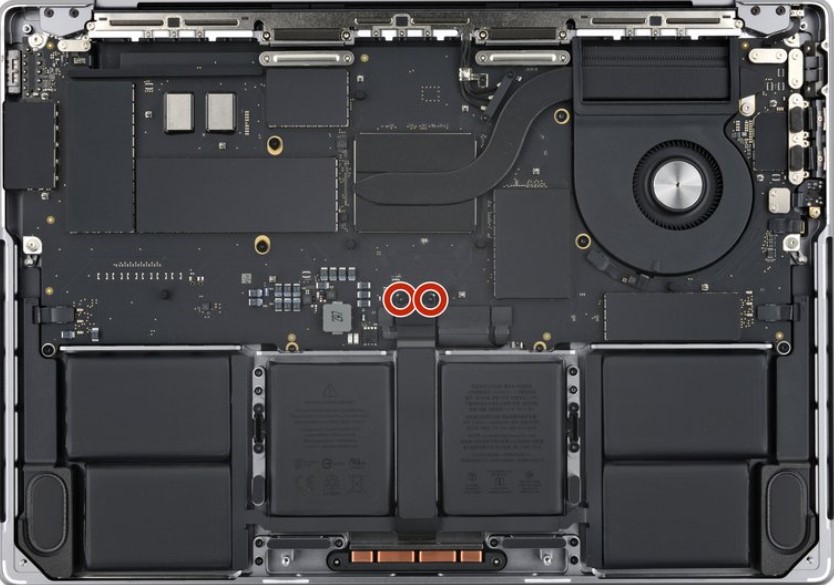
The worst part? Asides from having to disassemble the entire trackpad, you’re required to harvest 14 stretch release adhesive strips (pull tabs) to safely remove the battery.
If you get unlucky and break even one of the pull tabs, I wish you the best of luck.
That’s because you’re going to need to apply 90% concentrated isopropyl alcohol in a desperate attempt to remove any of the battery’s residual adhesive.
Otherwise, you risk puncturing the battery while prying it out, a manoeuvre that could end catastrophically.
Needless to say, the required tools have escalated from simple screwdrivers to specialized pry tools, thermal heating pads, and surgical-grade solvents.
The law provided the map, but the territory is a hostile jungle designed to break your will.
The Software Lockdown: Apple’s Blueprint And The Spread Of Digital Handcuffs
However, the physical glue is just the prelude.
The masterstroke, perfected by Apple and now spreading across the industry, is the software lock. This is called "parts pairing."
Imagine you brave the 130 step guide to install a brand new, genuine logic board for the aforementioned 2023 14” MacBook Pro (M3 Pro).
You power on the laptop, only to find that Touch ID isn’t working anymore.
On recent MacBooks (since 2016), this scenario is standard.
Replace the logic board with even an original Apple board, and you lose Touch ID, the fingerprint recognition feature.
The laptop’s software sees a new, unauthorized serial number and disables core functionality for the Touch ID board.
Unfortunately, the only workaround is to buy a new Touch ID board for just under $100 and use Apple’s Repair Assistant to mate the new parts to each other.
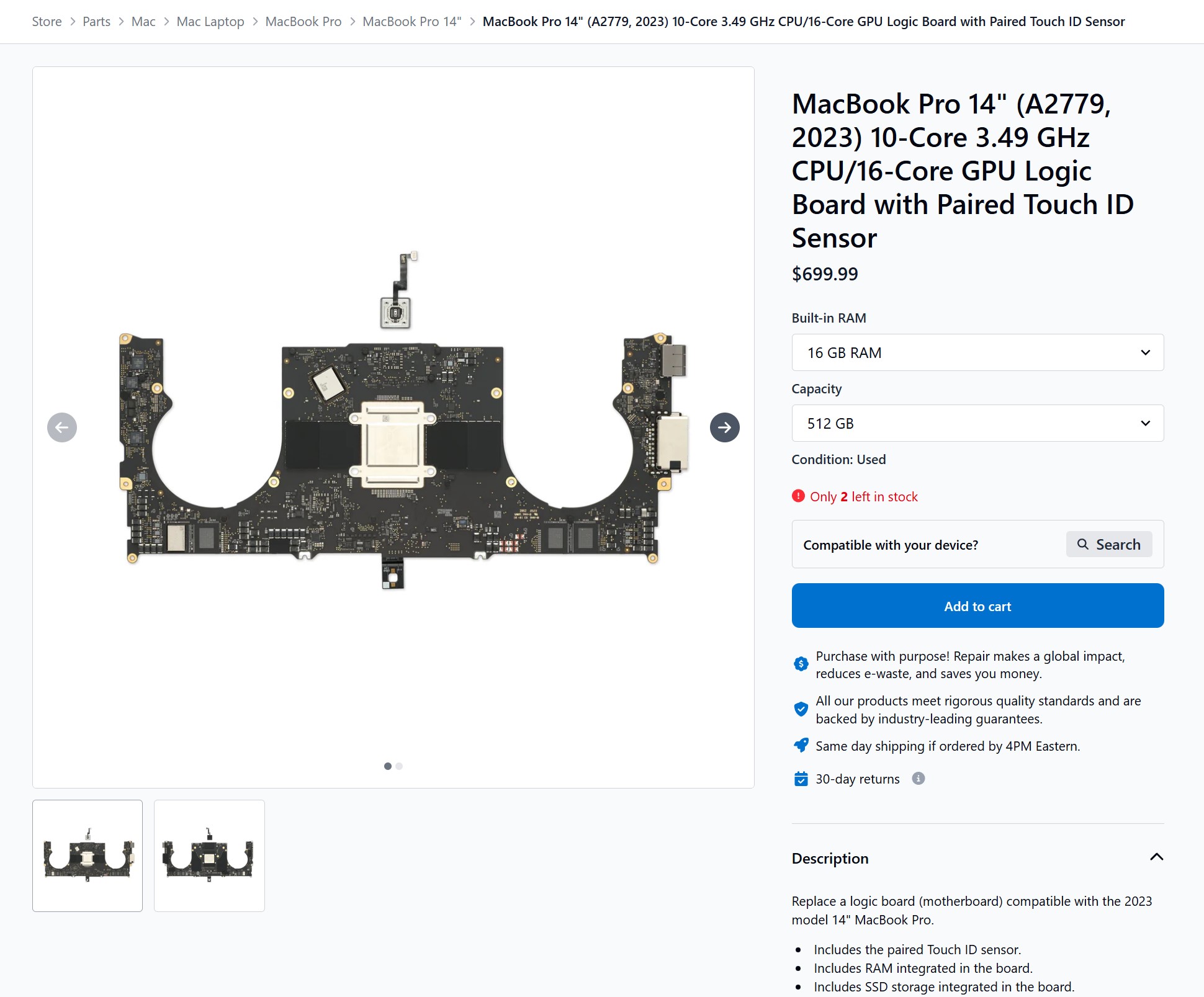
Alternatively, you could buy a used logic board that already has a pre-existing “married” Touch ID board off of third party marketplaces like eBay or even iFixit, but this isn’t really a confidence-instilling solution.
The Economic Vice: Pricing You Out Of Ownership
Let us say you conquer the glue and circumvent the software. The final barrier is purely financial.
Manufacturers are complying with laws to sell parts, but they are pricing those parts with breathtaking aggression.
For example, the previously mentioned MacBook Pro’s Logic Board costs more than $700 to replace when you order a brand new, genuine unit from Apple’s Self Service Repair Store.
Factor in the $90 or so for the Touch ID Board and you’re looking at a repair bill of over $800 for just parts.
When you add the cost of the specialized tools, the hours of risk-filled labor, and the very real possibility of a software locked component, the economic equation collapses.
The right to repair is meaningless without the right to an affordable repair.
By controlling the parts market, corporations have ensured that the right to repair was never about a screwdriver, it was always about control.
Thank you! Please share your positive feedback. 🔋
How could we improve this post? Please Help us. 😔

[Wiki Editor]
Ali Rashid Khan is an avid gamer, hardware enthusiast, photographer, and devoted litterateur with a period of experience spanning more than 14 years. Sporting a specialization with regards to the latest tech in flagship phones, gaming laptops, and top-of-the-line PCs, Ali is known for consistently presenting the most detailed objective perspective on all types of gaming products, ranging from the Best Motherboards, CPU Coolers, RAM kits, GPUs, and PSUs amongst numerous other peripherals. When he’s not busy writing, you’ll find Ali meddling with mechanical keyboards, indulging in vehicular racing, or professionally competing worldwide with fellow mind-sport athletes in Scrabble. Currently speaking, Ali’s about to complete his Bachelor’s in Business Administration from Bahria University Karachi Campus.
Get In Touch: alirashid@tech4gamers.com
 Join Our Community