


- Intel is shifting to the LGA1954 socket with five distinct chipsets targeting different user tiers.
- The lineup uses feature locks and hardware restrictions to force users into specific price brackets.
- Intel has disabled the ability to bypass thermal limits or overclock efficiency cores across the entire platform.
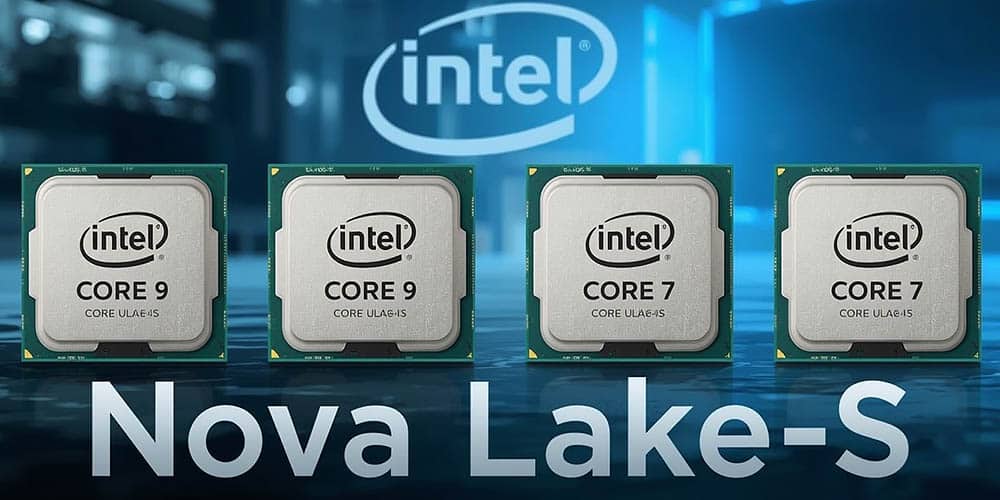
Intel is shaking up its desktop PC platform with Nova Lake-S, and the headline isn’t just about the new CPU architecture. Intel is reshaping its motherboard ecosystem. With five distinct chipsets, B960, Z970, Z990, Q970, and W980, all built around the new LGA1954 socket, Intel is drawing great interest among the consumer, enthusiast, and professional platforms.
Differences in PCIe lane allocation, connectivity, overclocking support, and target audience are expected, but the real surprise is how features and limitations are being distributed. In this new lineup, there’s a clear loser, and it’s not the one most people would initially expect.
With Nova Lake-S, Intel abandons the concept of a “single” or “small” platform in favor of a very clear segmentation for the Core Ultra 400S series. Each chipset serves a unique purpose, and in some situations, but not all, the differentiation is based on restrictions rather than actual capabilities. As a result, the shift affects both enthusiast users and those searching for a well-balanced PC for gaming or work.
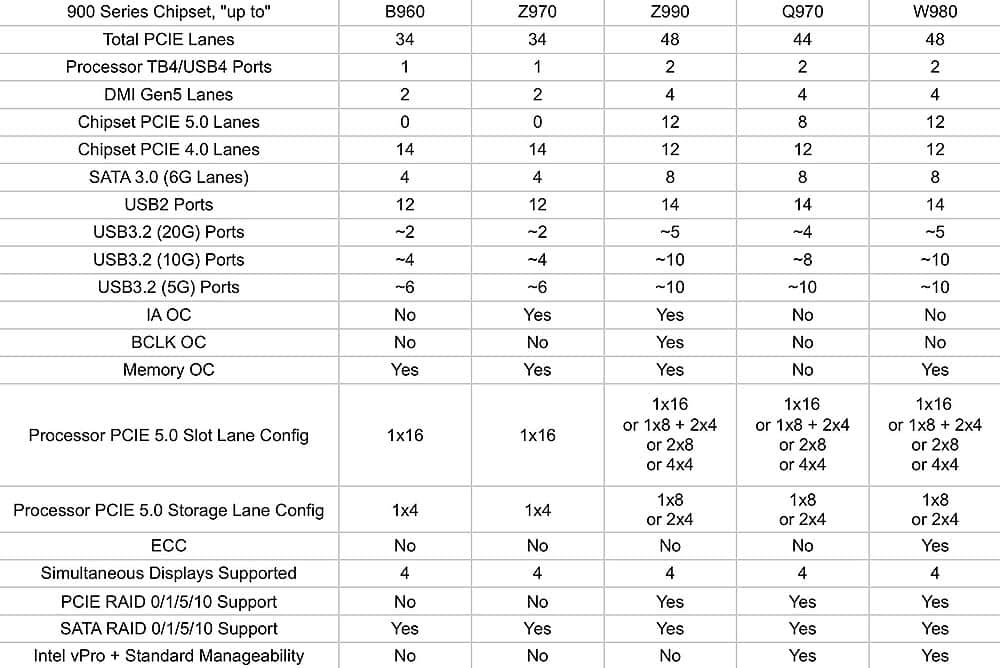
The B960 chipset serves as the base of the range. It has 34 total PCIe lanes, including 14 PCIe 4.0 lanes from the chipset, DMI Gen5 x2, and support for a PCIe 5.0 x16 link from the CPU to the GPU, as well as a special PCIe 5.0 x4 link for NVMe storage.
It does not support CPU or BCLK overclocking; however, it does support memory overclocking. In usage, it effortlessly supports a current gaming PC with no noticeable bottlenecks.
The Z970 is simply a theoretical improvement. It retains the same 34 total PCIe lanes and DMI Gen5 x2, does not include PCIe 5.0 from the chipset, and disables BCLK overclocking. It supports AI OC and memory overclocking; its practical performance advantage over the B960 is minimal. It’s more of a transitional chipset than a truly high-end solution.
The Z990 is the only true enthusiast-oriented chipset, designed for gamers who do not want to sacrifice performance and for overclockers who want to push their CPUs to the limit. It has up to 48 total PCIe lanes, including 12 PCIe 5.0 lanes provided by the chipset, DMI Gen5 x4, up to 8 SATA ports, and full support for AI OC, BCLK OC, and RAM overclocking. It is the only chipset that supports high-end motherboards and configurations with many high-speed devices without sacrificing performance.
The Q970 is designed for an enterprise environment. It has 44 PCIe lanes, DMI Gen5 x4, additional management options, and vPro, but does not support overclocking. It favours stability above performance optimization. The W980 is a workstation chipset. It has the same number of lanes (48) and DMI Gen5 x4 as the Z990, but lacks CPU overclocking and BCLK. In exchange, it enables ECC and validations intended for sustained professional workloads.
In addition to all of this, there’s one important technical aspect of Nova Lake-S we can’t ignore: LP E-cores cannot be overclocked; cores are disabled per cluster; TJMax is not adjustable; and thermal throttling cannot be disabled. Even on Z990, Intel limits the original severe tuning margin, which is a completely new feature for all CPUs, not just the K or KS series.
As a result, while Intel provides more options than ever before, it also controls how and where you may personalize your PC, CPU, and memory. Choosing the proper chipset is just as important as selecting the CPU; it can be critical in certain situations. The question now is whether we will accept this extreme segmentation or seek alternatives that offer a more flexible balance of pricing, control, and performance.
Thank you! Please share your positive feedback. 🔋
How could we improve this post? Please Help us. 😔

[Editor-in-Chief]
Sajjad Hussain is the Founder and Editor-in-Chief of Tech4Gamers.com. Apart from the Tech and Gaming scene, Sajjad is a Seasonal banker who has delivered multi-million dollar projects as an IT Project Manager and works as a freelancer to provide professional services to corporate giants and emerging startups in the IT space.
Majored in Computer Science
13+ years of Experience as a PC Hardware Reviewer.
8+ years of Experience as an IT Project Manager in the Corporate Sector.
Certified in Google IT Support Specialization.
Admin of PPG, the largest local Community of gamers with 130k+ members.
Sajjad is a passionate and knowledgeable individual with many skills and experience in the tech industry and the gaming community. He is committed to providing honest, in-depth product reviews and analysis and building and maintaining a strong gaming community.
 Join Our Community