



- Sapphire 9070 XT’s “Stealth” layout creates constant side-tension on the cable, leading to poor electrical contact.
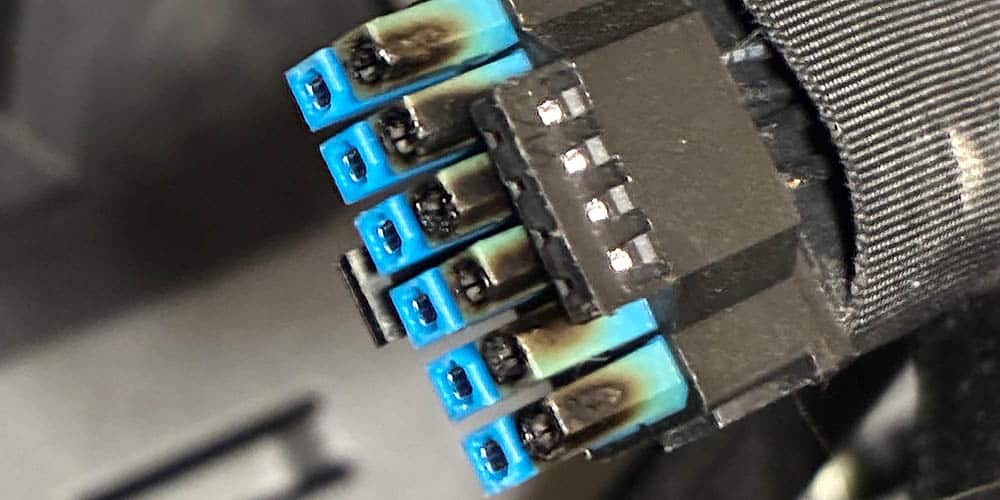
- Damage appears across all power pins, indicating generalized overheating rather than a single loose wire.
- Sapphire acknowledges the reports but calls them rare and has not issued a recall.
The Sapphire RX 9070 XT Nitro+ is once again the subject of debate, and this time it’s not a single case of a burned-out unit or clear improper insertion by a user. The power connector has once again become the center of attention, and for all the wrong reasons.
The Reddit post that began today adds another episode to a growing list of issues: Completely burned 12V-2×6 connectors, with apparent damage to all power pins, on a specific model with high power consumption, a stealth design, and a connecter orientation that adds an extra risk element.
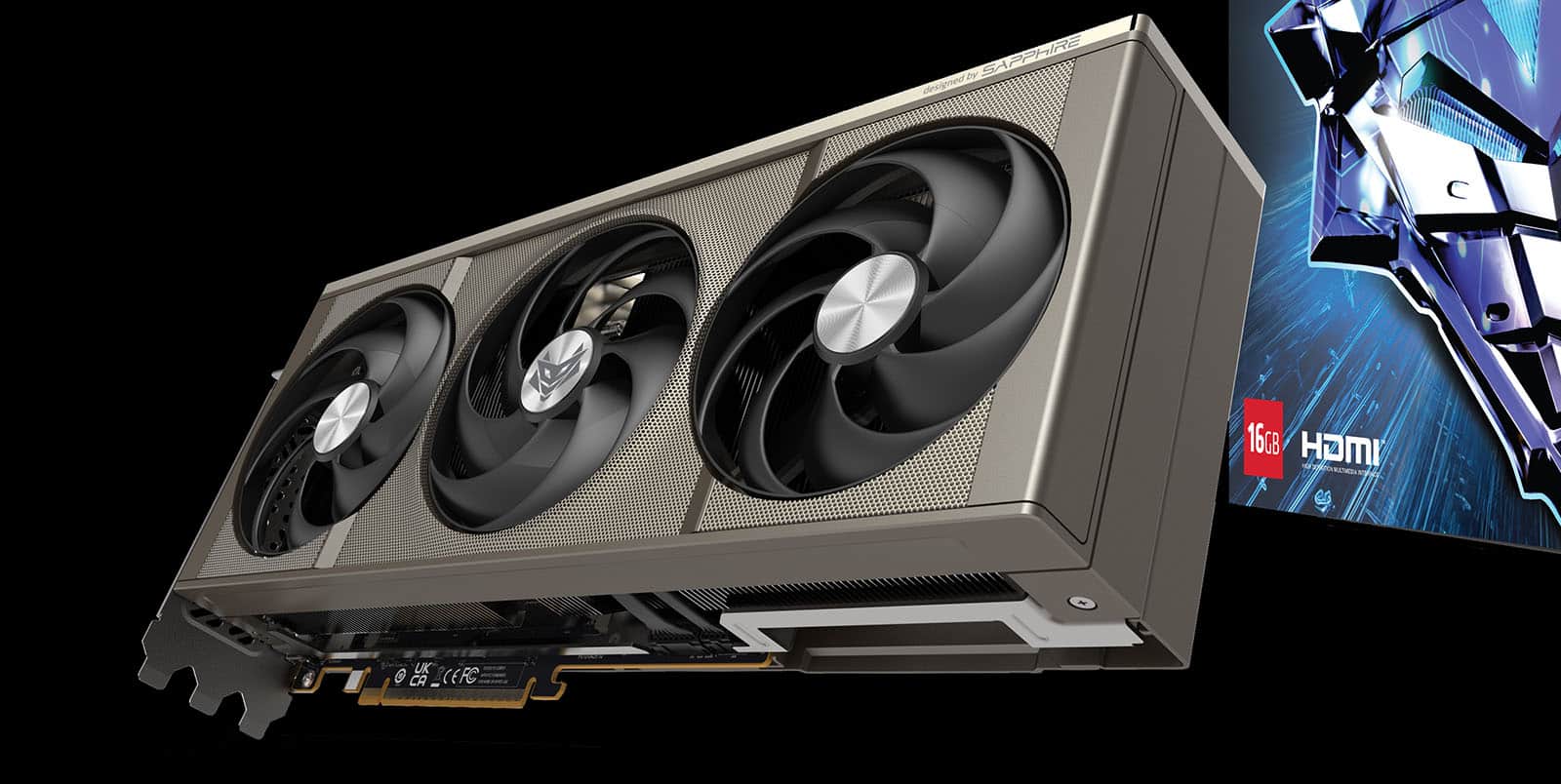
The Saphire’s concept is aesthetically pleasing and functional on paper, but in practice it exposes the cable, or adapter, as the case may be, to permanent lateral tension, which does not appear to be an ideal scenario in any electrical recommendation for this type of high current density connector and, given the design of NVIDIA and PCI-SIG, is not recommended as such, as we have seen numerous times.
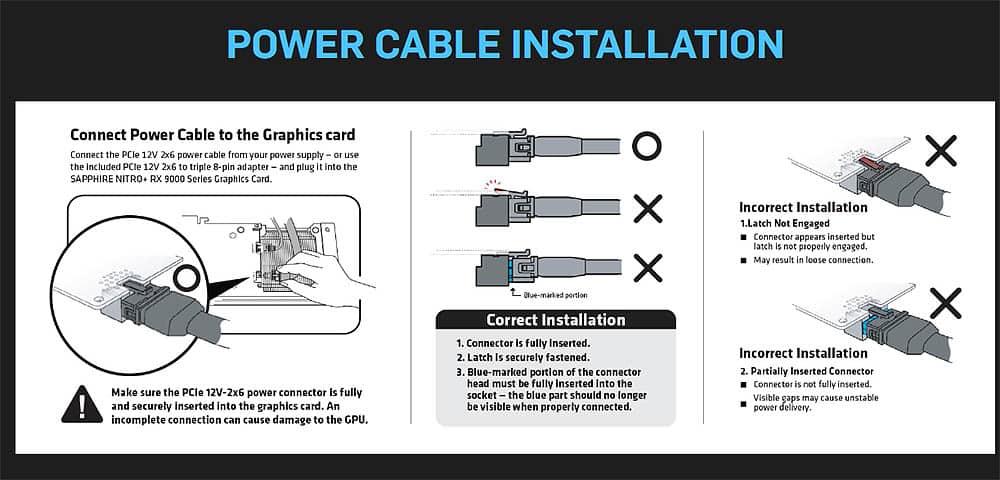
According to the model’s official documentation, Sapphire expressly describes how to make the link. Insert the cable straight, firmly activate the locking mechanism, and ensure the blue-marked connector region is not visible after insertion.
The image in the Reddit post shows clearly that it is not a single overheated pin, nor is it from localized damage, but from a specific bad connection. The paragraph explains the thermal degradation on all 12V power pins of the graphics card, with uniform discoloration, traces of charring, and clear signs of progressive overheating.
This points to a different phenomenon: a generalized increase in electrical resistance across the entire connector of this Sapphire RX 9070 XT Nitro+, which is clearly burning out due to electrical problems.
When a connector of this type is subjected to constant lateral stress, the internal contacts stop working under ideal conditions. Microgaps emerge, the actual contact area diminishes, and resistance rises, a common issue with the 12V-2×6 connector.
From there, the process is well-known: greater resistance implies more heat, more heat damages the plastic substance, the material loses stiffness, the contact pressure drops even more, and the cycle speeds up. The final product is precisely what we see on the screen.
The Stealth design, far from being a minor element, becomes a crucial variable, not because the 12V-2×6 cable is inherently defective (as seen in the RTX 40 and 50 series), but because it does not handle conditions well where perfect insertion cannot be passively maintained. And, due to its design, the Nitro+ cable never rests without lateral load.
The fact that several documented cases showing the same pattern have already accumulated reinforces this interpretation. Sapphire stated that the number of cases with this issue is minimal, so whether they will recall the model from the market remains uncertain.
Thank you! Please share your positive feedback. 🔋
How could we improve this post? Please Help us. 😔

[Editor-in-Chief]
Sajjad Hussain is the Founder and Editor-in-Chief of Tech4Gamers.com. Apart from the Tech and Gaming scene, Sajjad is a Seasonal banker who has delivered multi-million dollar projects as an IT Project Manager and works as a freelancer to provide professional services to corporate giants and emerging startups in the IT space.
Majored in Computer Science
13+ years of Experience as a PC Hardware Reviewer.
8+ years of Experience as an IT Project Manager in the Corporate Sector.
Certified in Google IT Support Specialization.
Admin of PPG, the largest local Community of gamers with 130k+ members.
Sajjad is a passionate and knowledgeable individual with many skills and experience in the tech industry and the gaming community. He is committed to providing honest, in-depth product reviews and analysis and building and maintaining a strong gaming community.
 Join Our Community