


- AMD PC GPU shares have now dropped to a concerning 6%, giving Nvidia 94% of control over the market.
- AMD saw a 2% drop in shares from Q1 to Q2, showing that it is barely manufacturing any RDNA 4 GPUs.
- The company is performing much better in the CPU sector against Intel.
Nvidia has always had a strong monopoly on the GPU market, and the only company that has attempted to make a dent in its shares is undoubtedly AMD. However, new data reveals some pretty concerning news regarding AMD’s little sway in the market.
The analyst JPR reveals that AMD PC GPU shares have taken a drastic hit, giving Nvidia 94% of control over the market. Meanwhile, Intel’s market share continues to stay at 0%.
Why it matters: The data reveal that AMD really needs to step up its game to save the remaining GPU market shares from falling into oblivion against Nvidia.
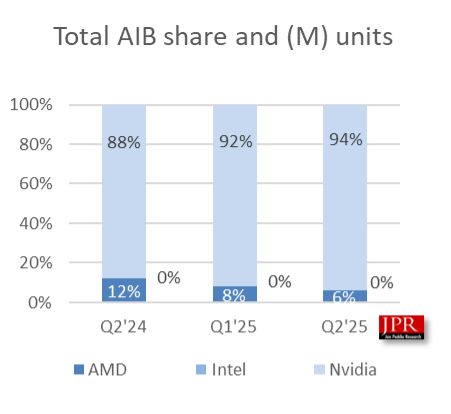
As revealed in the data by JPR, AMD had 8% of the PC GPU market share during the first quarter, which has now dropped further to 6% in the second quarter. These developments show that AMD’s RDNA 4 GPUs are barely being manufactured.
One explanation for falling shares is that Radeon RX 9070 and 9070 XT were the only RDNA 4 GPUs available during the entire second quarter, and they aren’t exactly the mainstream choice due to their respective high $549 and $599 MSRPs.
AMD’s overall AIB market share decreased by -2.1% from last quarter, Intel’s market share stayed at 0.0%, and Nvidia’s market share increased by 2.1%.
-Analyst JPR.
The company’s better-selling past-gen cards have also become less popular in anticipation of RDNA 4 GPUs; all these factors have added up to Nvidia gaining 94% of the entire shares. We’ll likely find out how well AMD’s RDNA 4 lineup holds up during the third quarter.
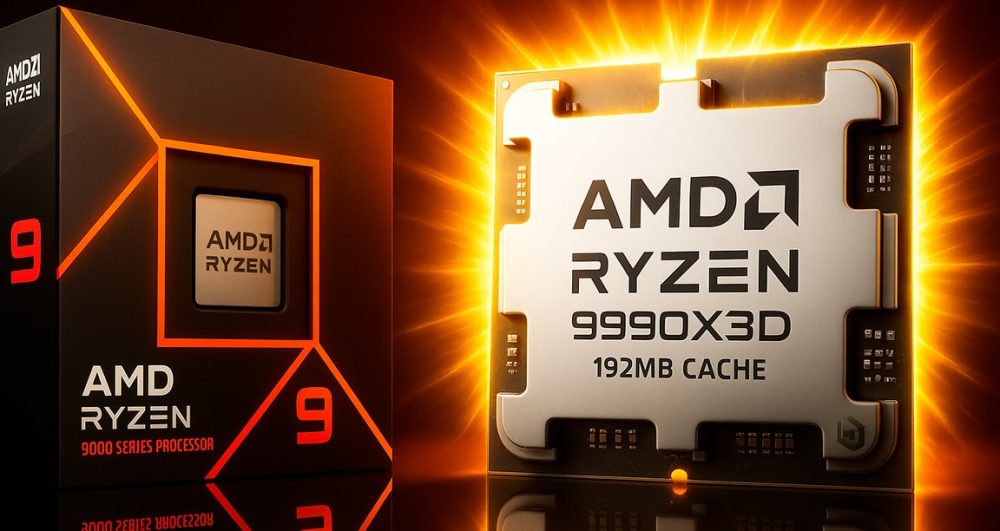
Regarding CPUs, data shows that Intel’s client CPU market share in PCs and laptops fell to 67% in the last quarter from 76% in Q4 2024, a 10% drop in only a year. Meanwhile, AMD’s market share rose to 33% in the last quarter, up from 24% in Q2 2024.
Do you think AMD stands a chance at challenging Nvidia in the GPU sector amid losing market shares, or is that goal too much of a pipe dream at this point? Let us know your thoughts in the comments below, or join the discussion on the Tech4Gamers forum.
Thank you! Please share your positive feedback. 🔋
How could we improve this post? Please Help us. 😔

Shameer Sarfaraz has previously worked for eXputer as a Senior News Writer for several years. Now with Tech4Gamers, he loves to devoutly keep up with the latest gaming and entertainment industries. He has a Bachelor’s Degree in Computer Science and years of experience reporting on games. Besides his passion for breaking news stories, Shahmeer loves spending his leisure time farming away in Stardew Valley. VGC, IGN, GameSpot, Game Rant, TheGamer, GamingBolt, The Verge, NME, Metro, Dot Esports, GameByte, Kotaku Australia, PC Gamer, and more have cited his articles.
 Join Our Community